Loading…
Destinations in Korea
City and region guides for foreign visitors. Filter by area or day trips from Seoul.
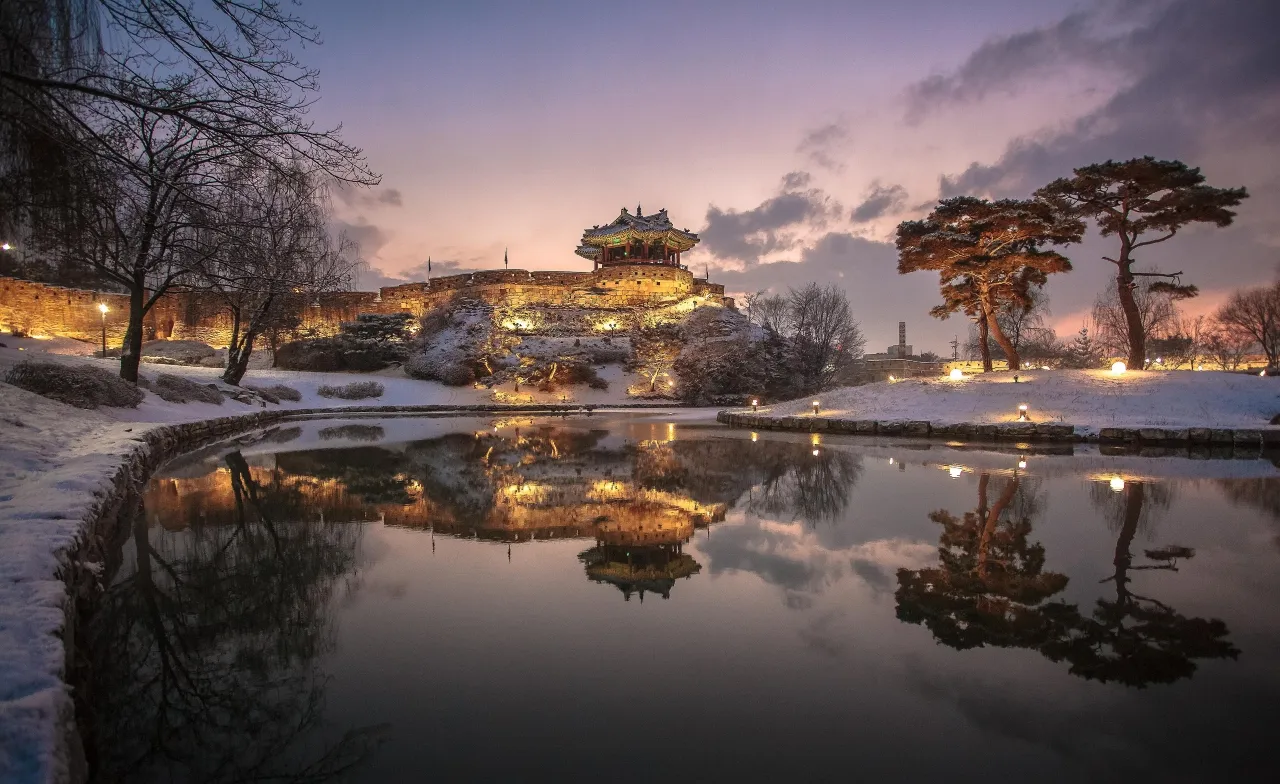
Suwon Hwaseong Day Trip from Seoul: Fortress, Food & Night Views
Take Line 1 or a Korail train to Suwon Station, then a local bus or taxi to the Hwaseong core, because the station is not at the fortress. The walls are free to enter, while Hwaseong Haenggung has its own ticket and hours. You do not need to walk the full 5.7 km: a highlights route fits half a day, and Haenggung, a galbi meal, and an evening wall walk fill a full one.
SuwonGyeonggi-do
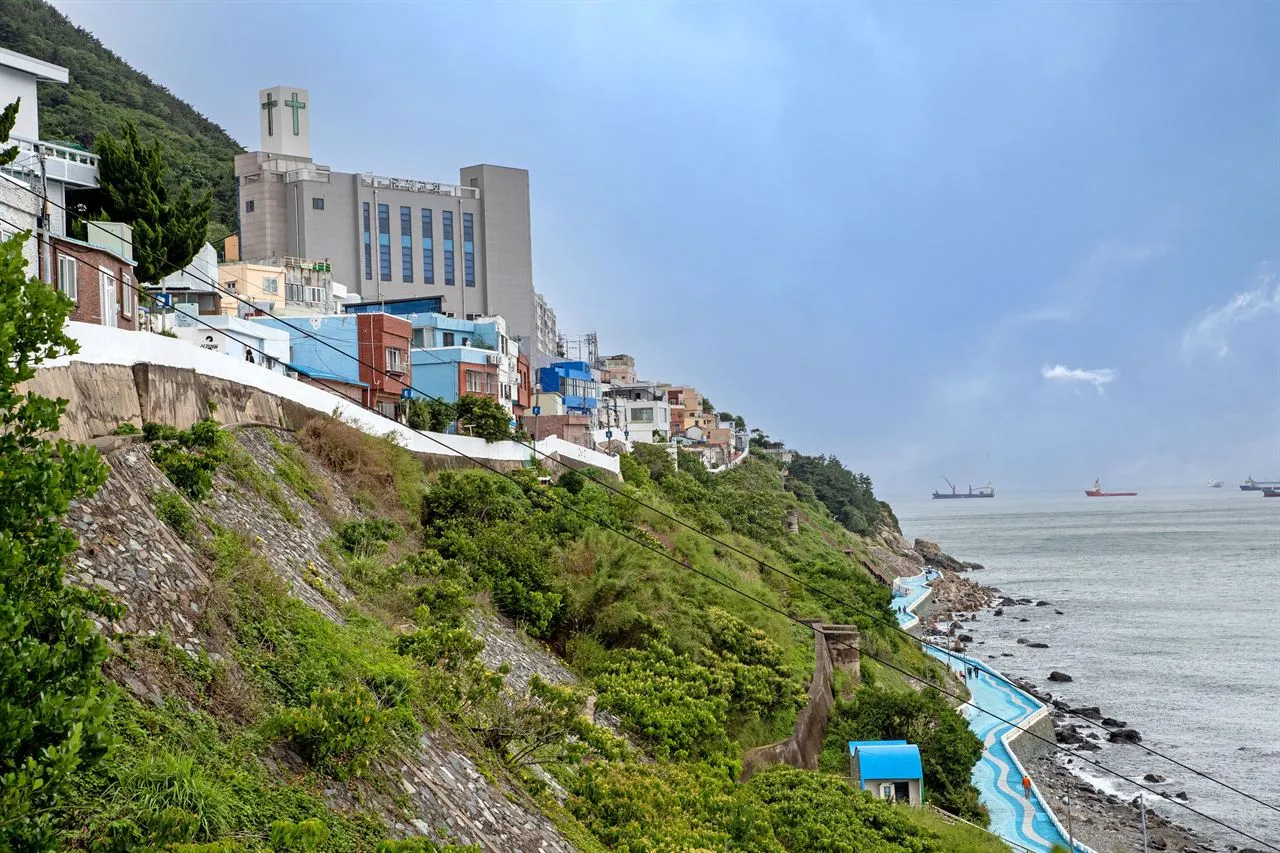
Huinnyeoul Culture Village Busan Guide: Coastal Walk, Tunnel, How to Get There & Tips for Foreign Visitors
Huinnyeoul Culture Village is a cliff-edge lane neighborhood in Busan's Yeongdo-gu where residents still live, with sea views over ships waiting at anchor. Entry is free and there is no gate. The seaside walkway below it and the Huinnyeoul Coastal Tunnel have been closed or restricted for slope works since December 2024, and the district's own timeline runs to 2027 and 2028. Most visitors take a city bus from Nampo Station or Busan Station, so confirm the route in a live map before you go.
BusanYeongdo-gu
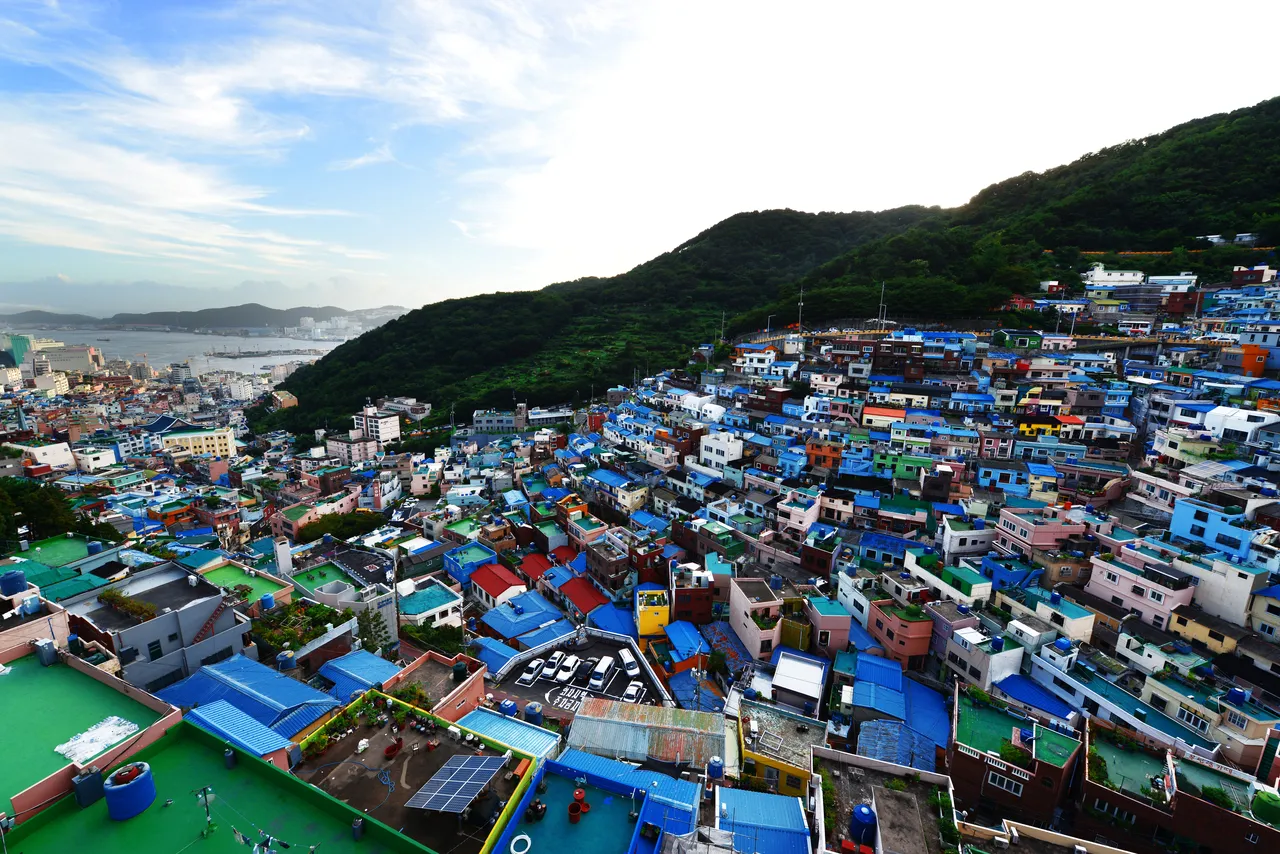
Gamcheon Culture Village Busan Guide: How to Get There, What to See & Tips for Foreign Visitors
Gamcheon Culture Village is a hillside neighborhood of painted houses in Busan's Saha-gu that began as a Korean War refugee settlement and is still home to residents. Entry is free. Since Saha-gu designated it a Special Management Area on August 1, 2026, visitor access to the residential areas is listed as 09:00 to 18:00, tourist vehicles including taxis are restricted on a stretch of the main lane, and groups of 10 or more must buy the official map. Most visitors ride Metro Line 1 to Toseong or Jagalchi Station and switch to a village bus.
BusanSaha-gu
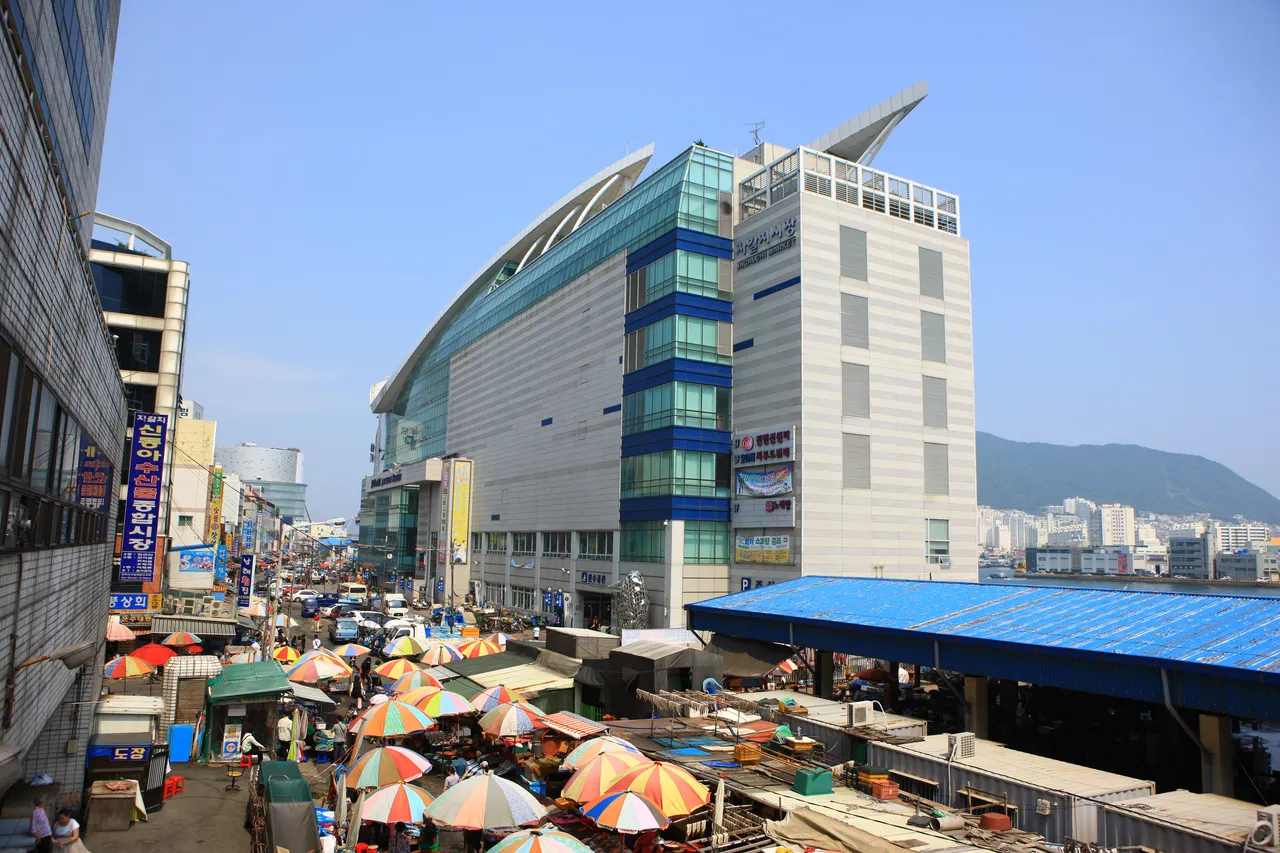
Jagalchi Market Busan Guide: Seafood, How to Order, Hours & Tips for Foreigners
Jagalchi is Busan's best-known seafood market, on the Nampo waterfront by Metro Line 1. The official market building has a seafood market on the first floor and a raw-fish center on the second, while the street stalls outside run like an ordinary traditional market. Official sources disagree on opening hours and on which Tuesdays are closed, and no source publishes fixed prices, so confirm weight, price and preparation before you order.
BusanNampo
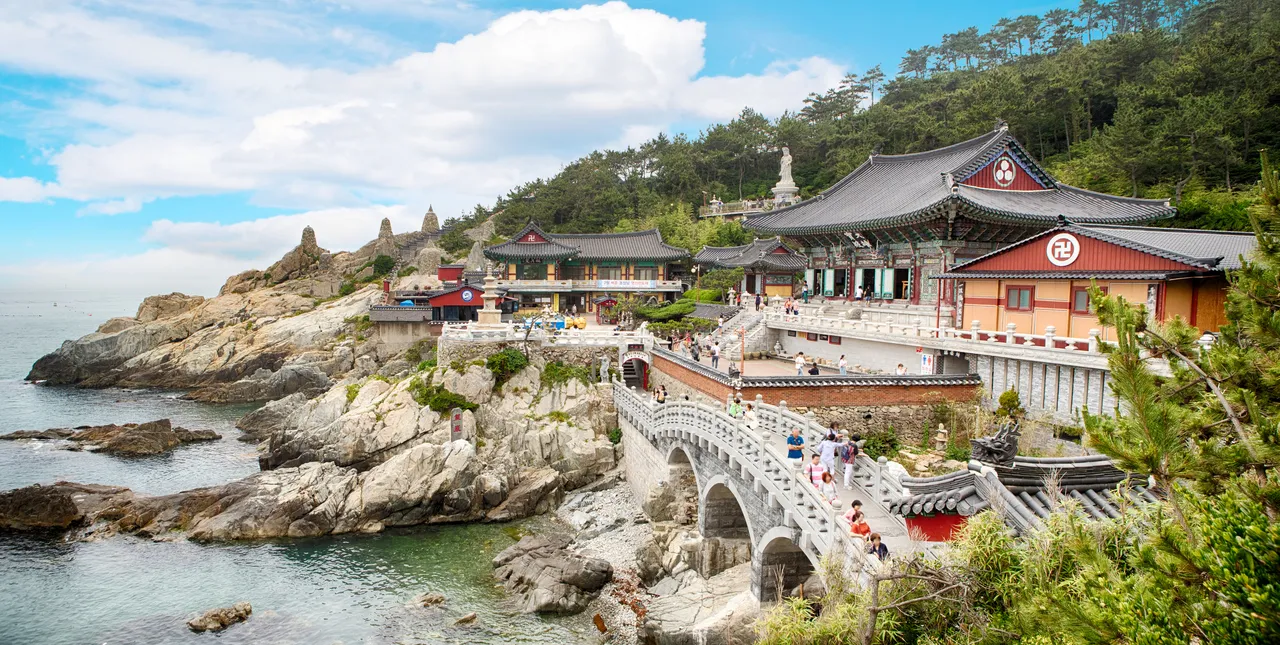
Haedong Yonggungsa Temple Guide: Hours, How to Get There & Tips for Foreign Visitors
Haedong Yonggungsa is a Buddhist temple on the rocky Gijang coast in northeast Busan, with halls and stairways set right above the sea. Entry is free, but parking is charged and two official sources disagree on the closing time, so plan to arrive early. Use the metro to Haeundae or Osiria and then a bus or taxi, and check the current bus number on a live map app.
BusanGijang
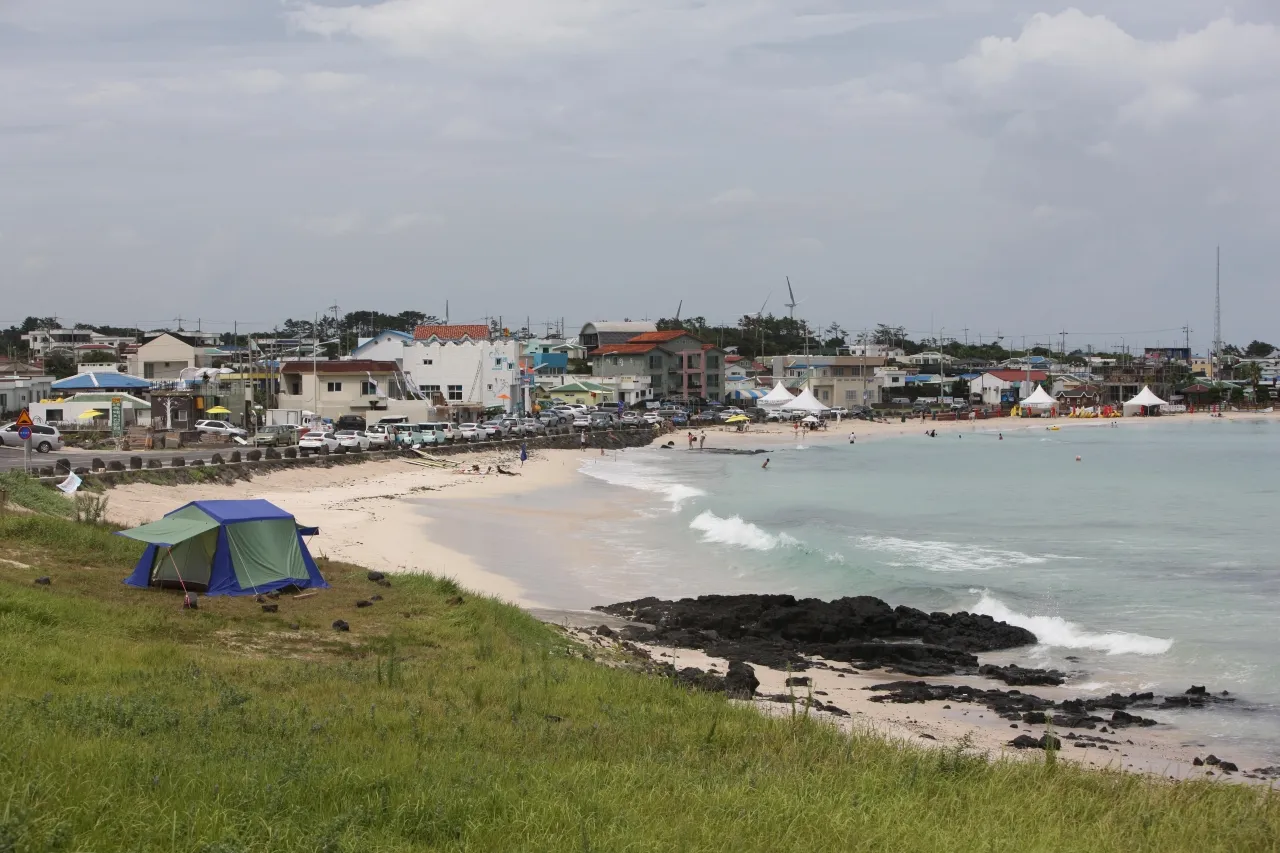
Woljeongri Beach Guide: Swimming, Cafes, Parking & East Jeju Travel Tips
Woljeongri is a beach and cafe village on Jeju's northeast coast, about 17 km from Seongsan Ilchulbong in a straight line. You can walk on the beach at any time, but swimming belongs to the official summer season: in 2026 the province ran it from June 24 to September 6, and other years need a check. VisitKorea lists on-site parking, but I could not confirm a fee, so read the signs.
JejuGujwa
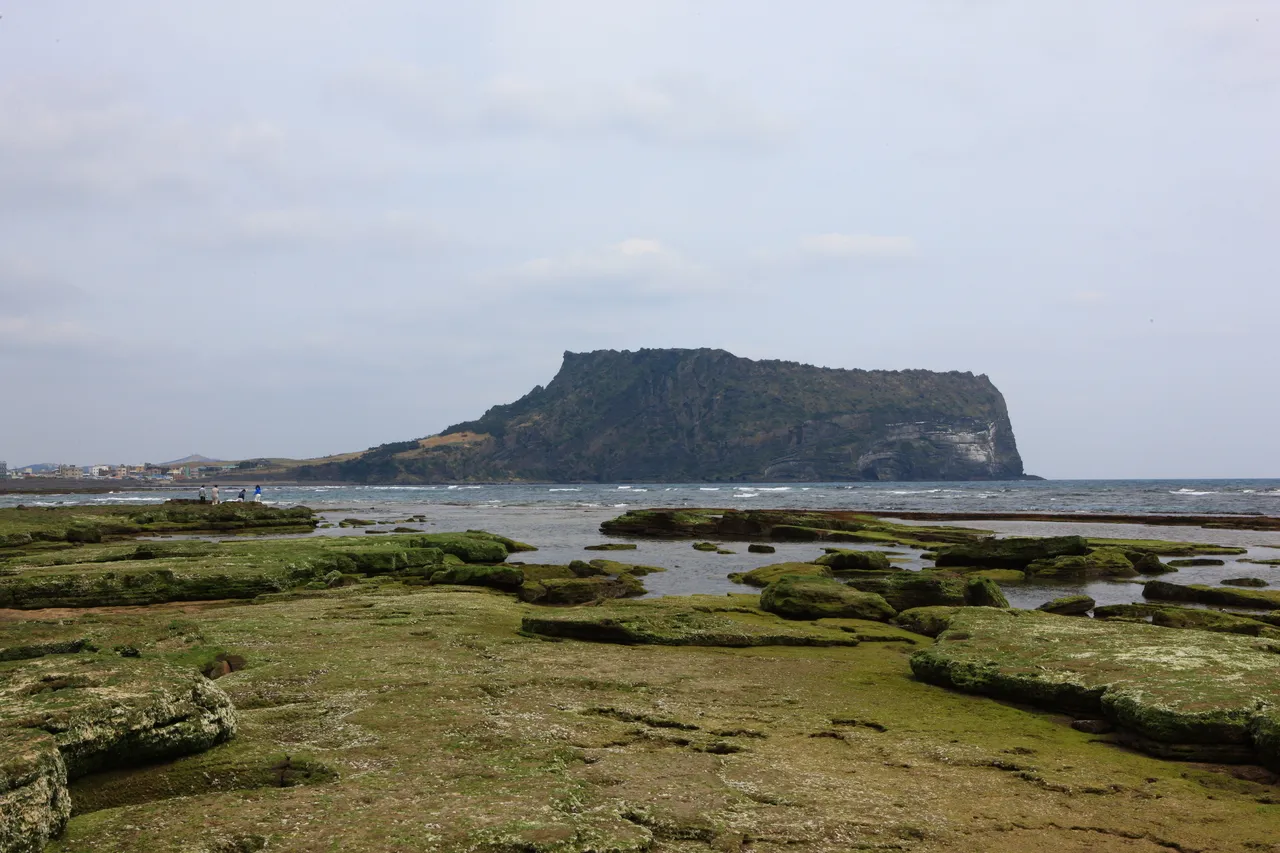
Jeju Island Travel Guide: Food, Hallasan, Olle Trails, Beaches, and Nature
Jeju is Korea's volcanic holiday island: a slower, nature-first counterpoint to Seoul and Busan, built around coastal drives, seafood and black pork, Hallasan, the Olle walking trails, and quiet beaches. Most visitors fly in, rent a car, and give it two to four days.
Jeju
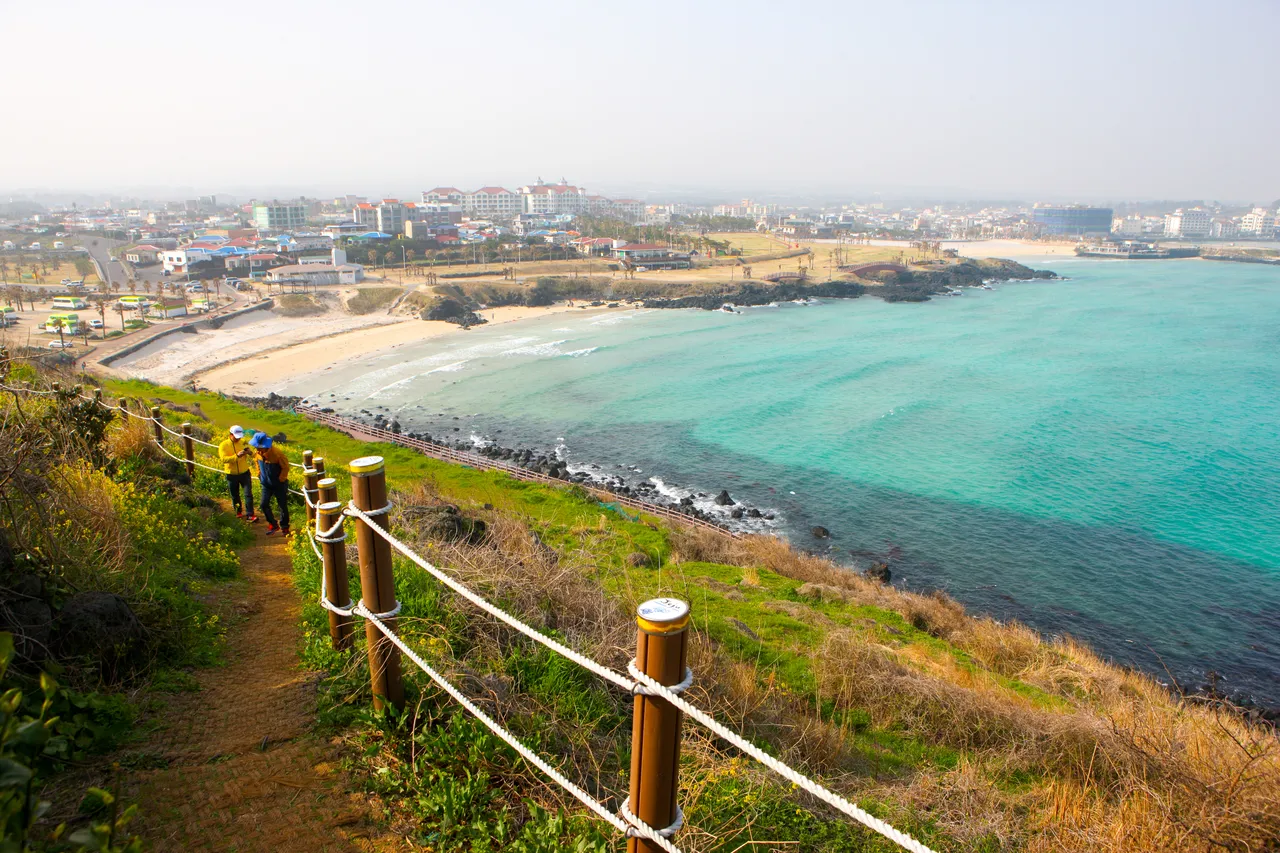
Hamdeok Beach Guide: Swimming, Seoubong, Parking & Northeast Jeju Travel Tips
Hamdeok Beach, also called Hamdeok Seoubong Beach, is one sand beach on Jeju's northeast coast with the Seoubong hill rising beside it. You can visit the shore at any time, but swimming belongs to the official summer season: in 2026 that ran June 24 to September 6, from 10:00 to 19:00, and Visit Jeju says nighttime swimming is not permitted. Parking exists, but I could not confirm a fee, so read the signs.
JejuJocheon
Gimnyeong Beach Guide: Swimming, Parking, Snorkeling & Northeast Jeju Travel Tips
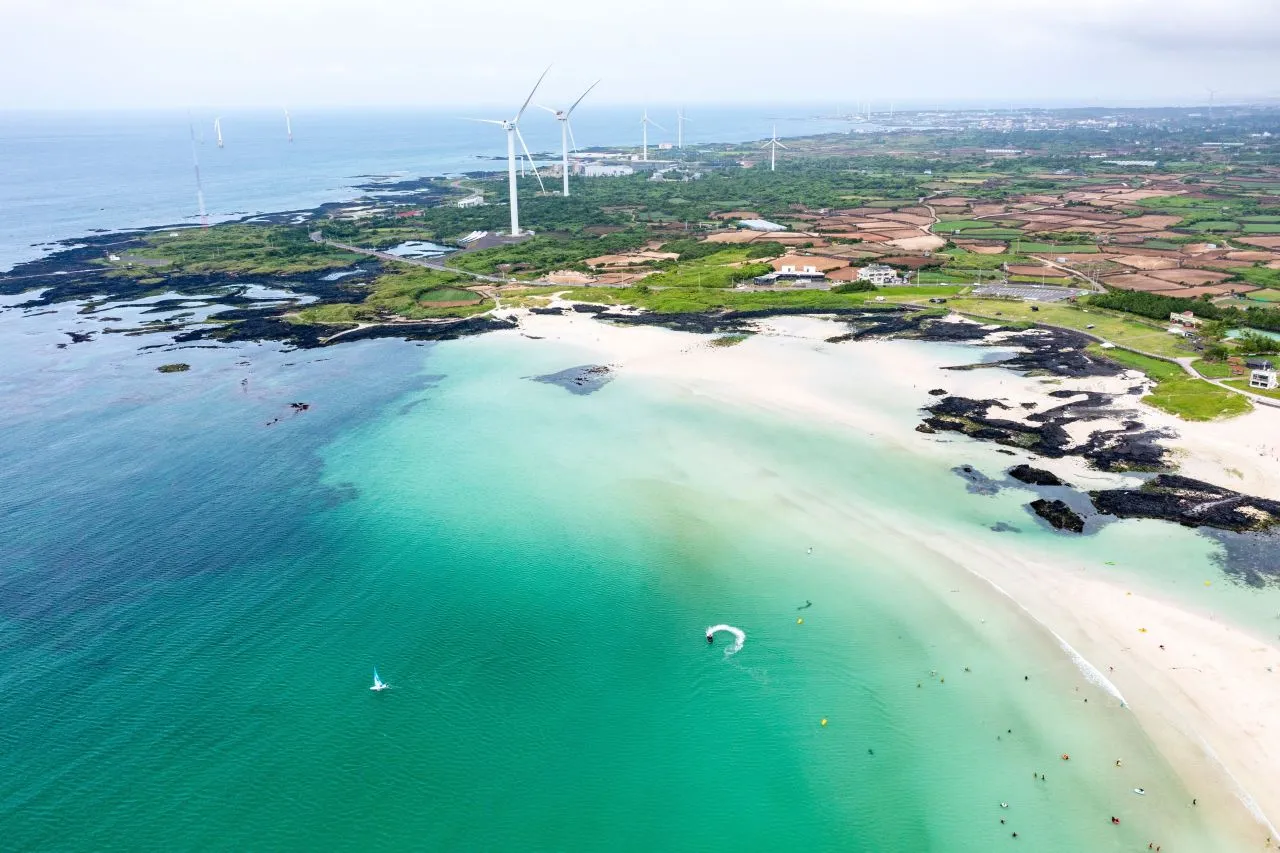
Gimnyeong Beach, also called Gimnyeong Seongsegi Beach, is one white sand beach with dark lava rock on Jeju's northeast coast, about 3 km west of Woljeongri in a straight line. You can visit the coast at any time, but swimming belongs to the official summer season: in 2026 the province ran it from June 24 to September 6, and other years need a check. Visit Jeju lists parking, but I could not confirm a fee, so read the signs.
JejuGujwa
Udo Island Guide: Ferry, Beaches, Getting Around & a Day Trip Plan
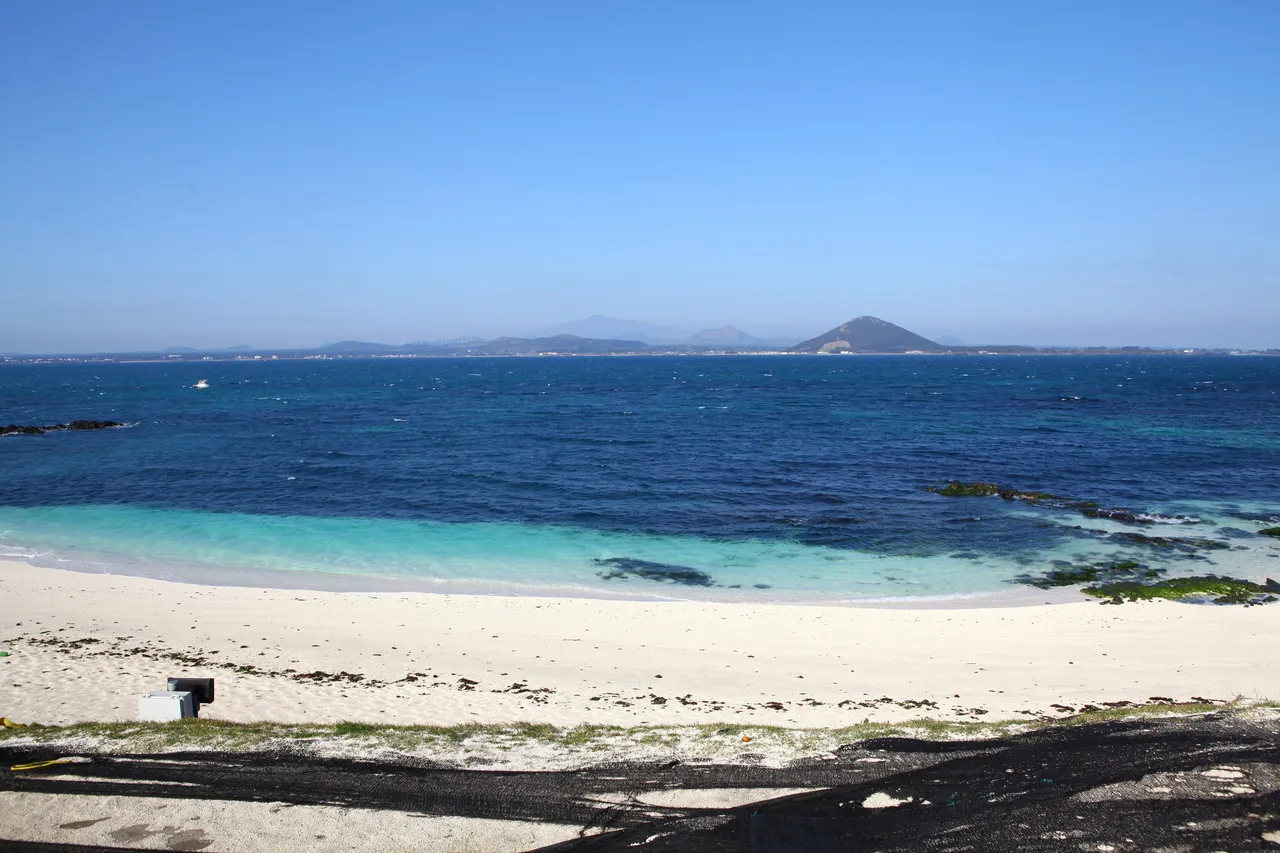
Udo is a small island just off Jeju's east coast, reached by a short ferry from Seongsan Port or Jongdal Port. Most visitors go as foot passengers, bring a passport for the boarding ID check, and get around by bicycle, pedal-assist e-bike, a permitted electric vehicle or on foot. Vehicle rules are strict and change, so confirm them before you rely on a rental car or a two-wheeler.
JejuUdo
Seopjikoji Guide: Coastal Walk, Seongsan Views & How to Visit
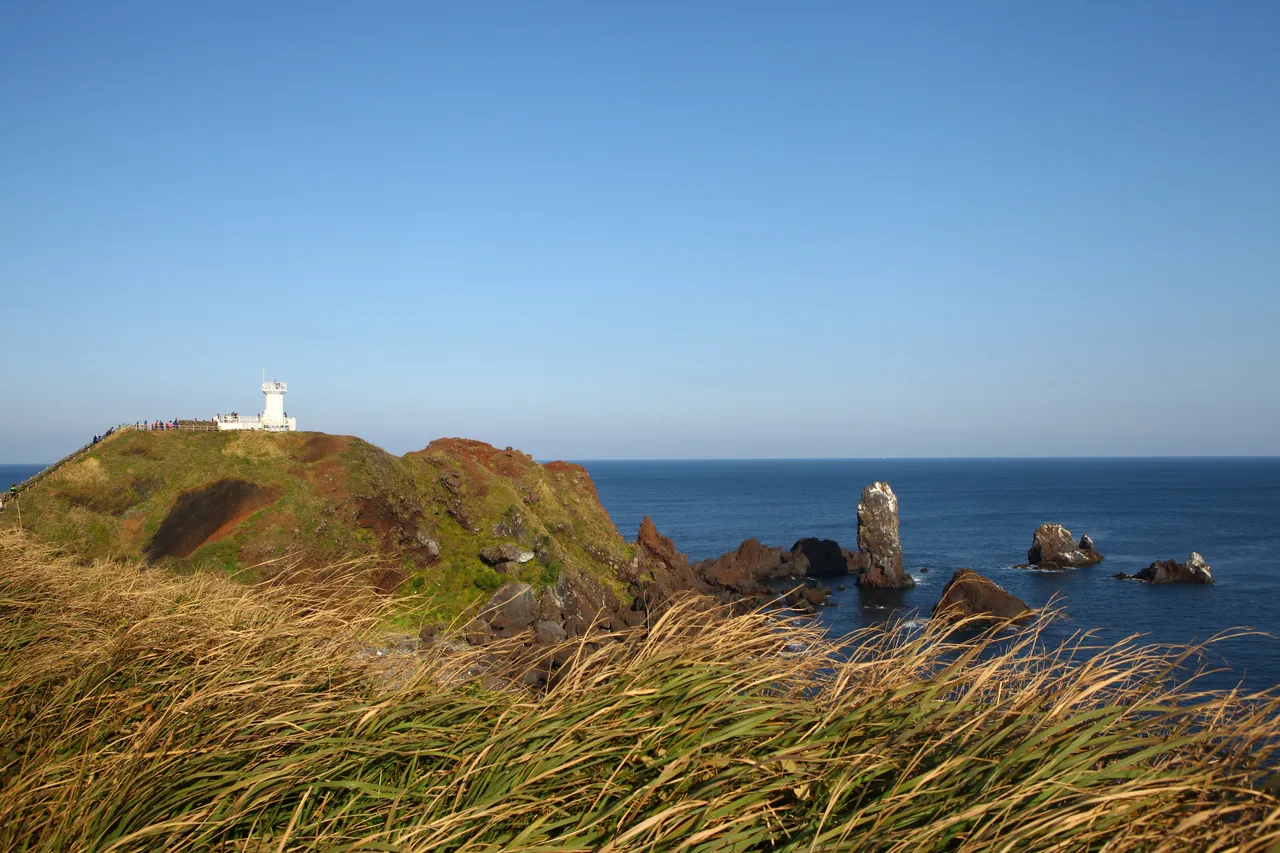
Seopjikoji is a coastal headland on Jeju's east coast with a walking path, grassland, sea cliffs and a lighthouse hill, and Seongsan Ilchulbong appears across the water. The official page lists it as open year-round with no admission fee, but parking is paid and the resort and commercial buildings nearby keep their own hours. Plan roughly 30 minutes for a quick look or 1.5 to 2 hours for a relaxed walk.
JejuSeongsan
Seongsan Ilchulbong Guide: Sunrise, Hike, Tickets & How to Get There
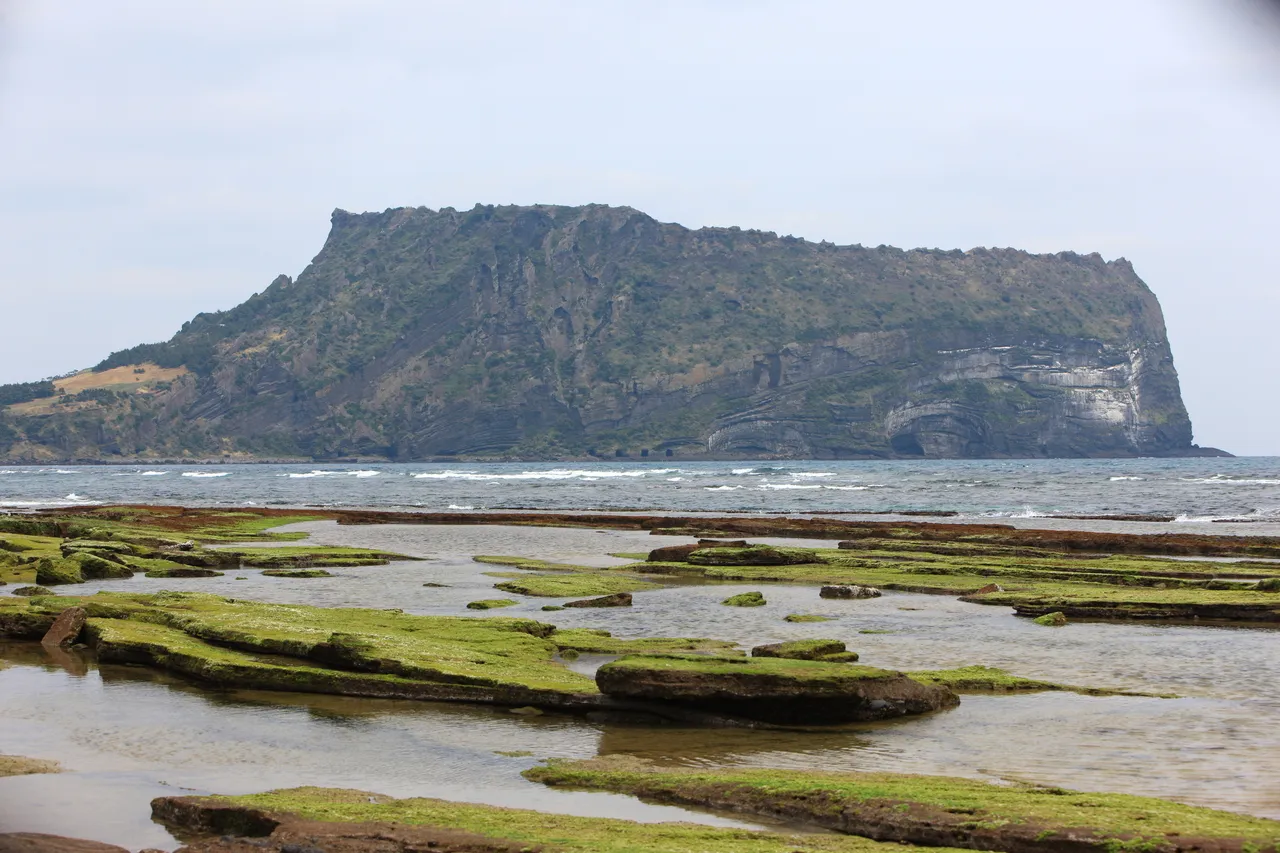
Seongsan Ilchulbong is a volcanic cone on Jeju's east coast, part of the island's UNESCO World Natural Heritage property. The summit trail is paid and steep, takes roughly 30 to 40 minutes up, and opens before sunrise on every date under the current official hours. Hours and fees change, so confirm them on the official page and look up the sunrise time for your own date.
JejuSeongsan
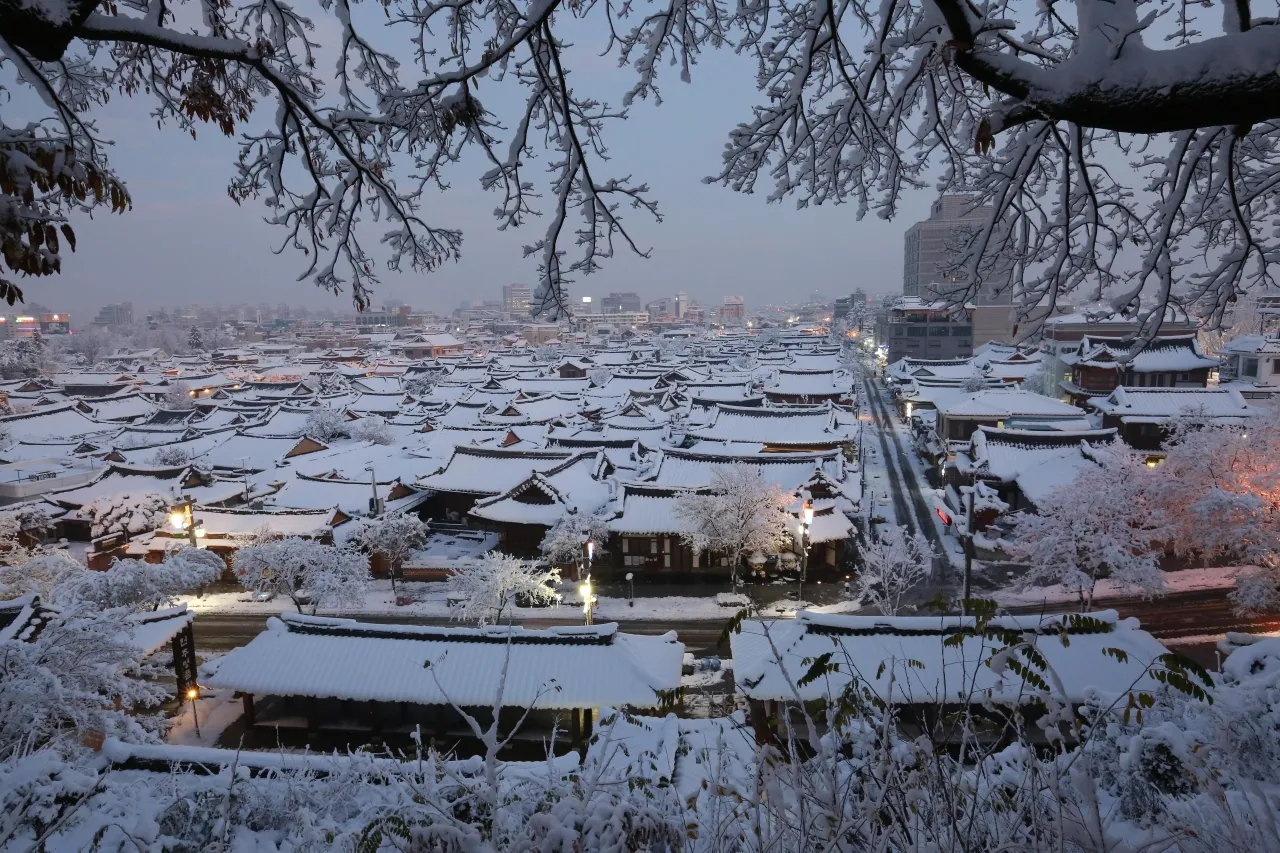
Jeonju Travel Guide: Hanok Village, Bibimbap, Hanbok, and What to Eat
Jeonju is Korea's food-and-hanok city beyond Seoul: a slow, walkable trip built around the country's largest traditional hanok village, signature bibimbap, hanbok photos, and traditional markets. It works as a relaxed day trip or an easy one-night stay from Seoul.
JeonjuJeollabuk-do
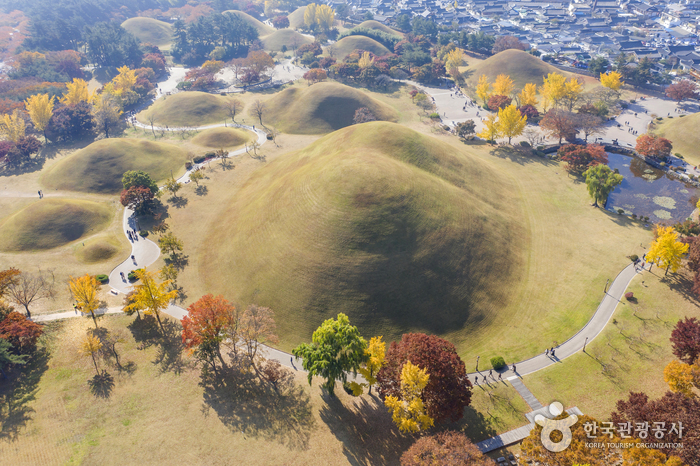
Gyeongju Travel Guide for First-Time Visitors
Gyeongju is Korea's open-air museum, the thousand-year capital of the Silla kingdom, where royal tomb mounds, a UNESCO temple, and an old observatory sit within easy reach. One full day covers the highlights; arrive by KTX to Gyeongju Station, which sits outside the historic center.
Gyeongju
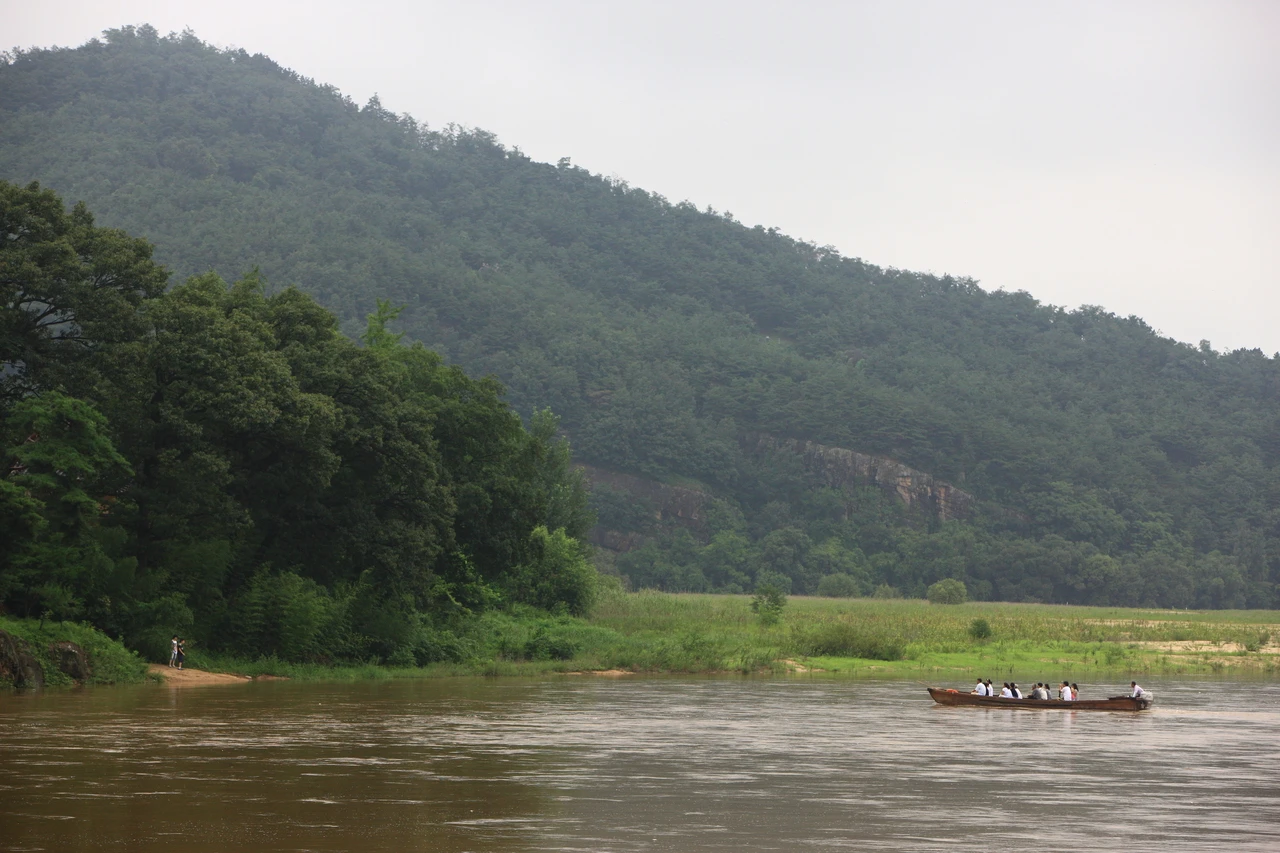
Andong Hahoe Folk Village: How to Visit from Seoul, What to See & a 1 to 2 Day Itinerary
Hahoe Folk Village is worth the trip if you want a lived-in Joseon-era clan village, and Andong is the city you reach first. KTX-Eum from Seoul takes roughly 2 to 2.5 hours, and Andong Station is a bus or taxi ride from Hahoe, not a walk. A day trip works if you start early and keep to Hahoe, but one night in Andong makes Buyongdae, Byeongsan Seowon and the city's food far less rushed.
AndongGyeongsangbuk-do
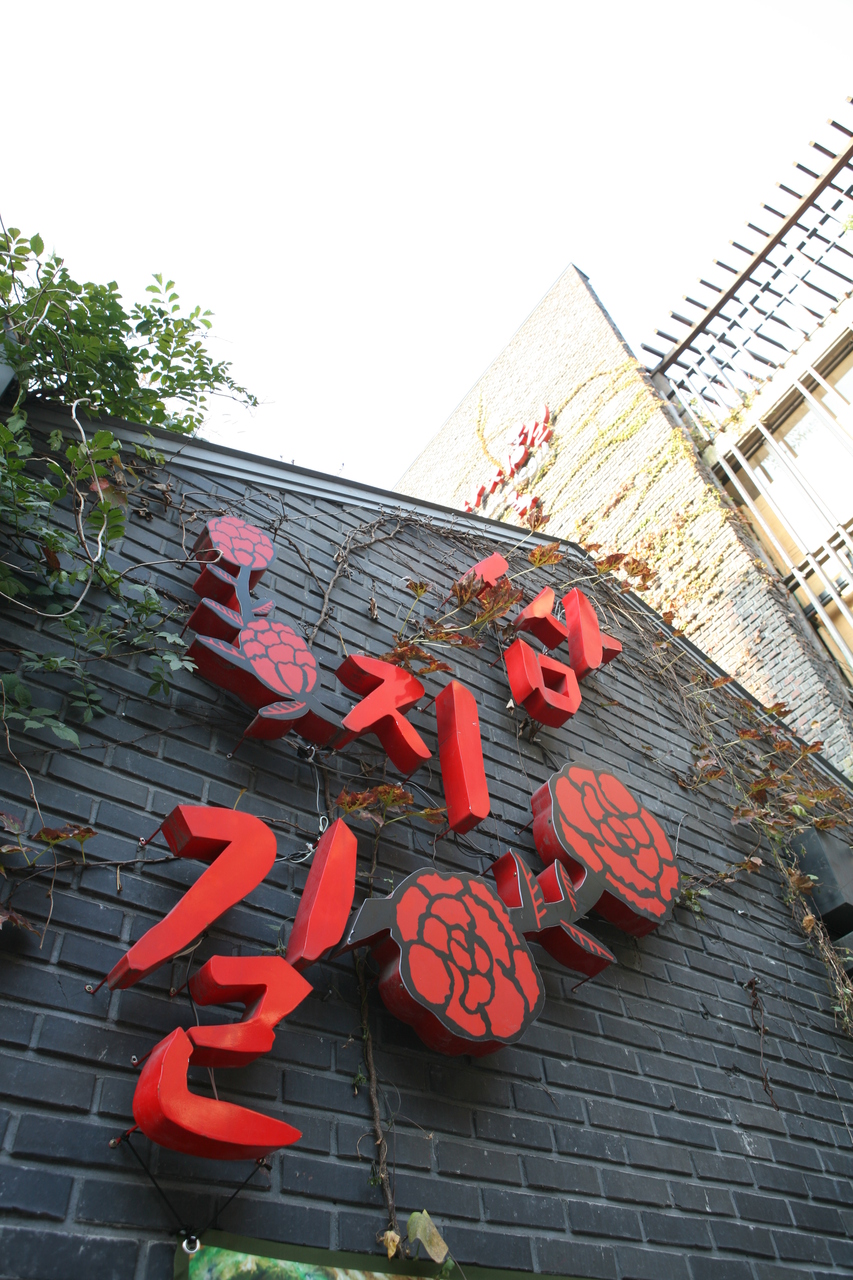
Insadong Guide: What to See, What to Buy, and a Walking Route
Insadong is a Jongno neighborhood around Insadong-gil, not a ticketed attraction. Start at Anguk Station (Line 3), Exit 6, walk the main street and side alleys, and stop at Ssamziegil, a free 2004 spiral craft mall. Shops and tea houses fill the lanes. It is a strong downhill finish after Bukchon, if you leave the Red Zone by 17:00.
Seoul
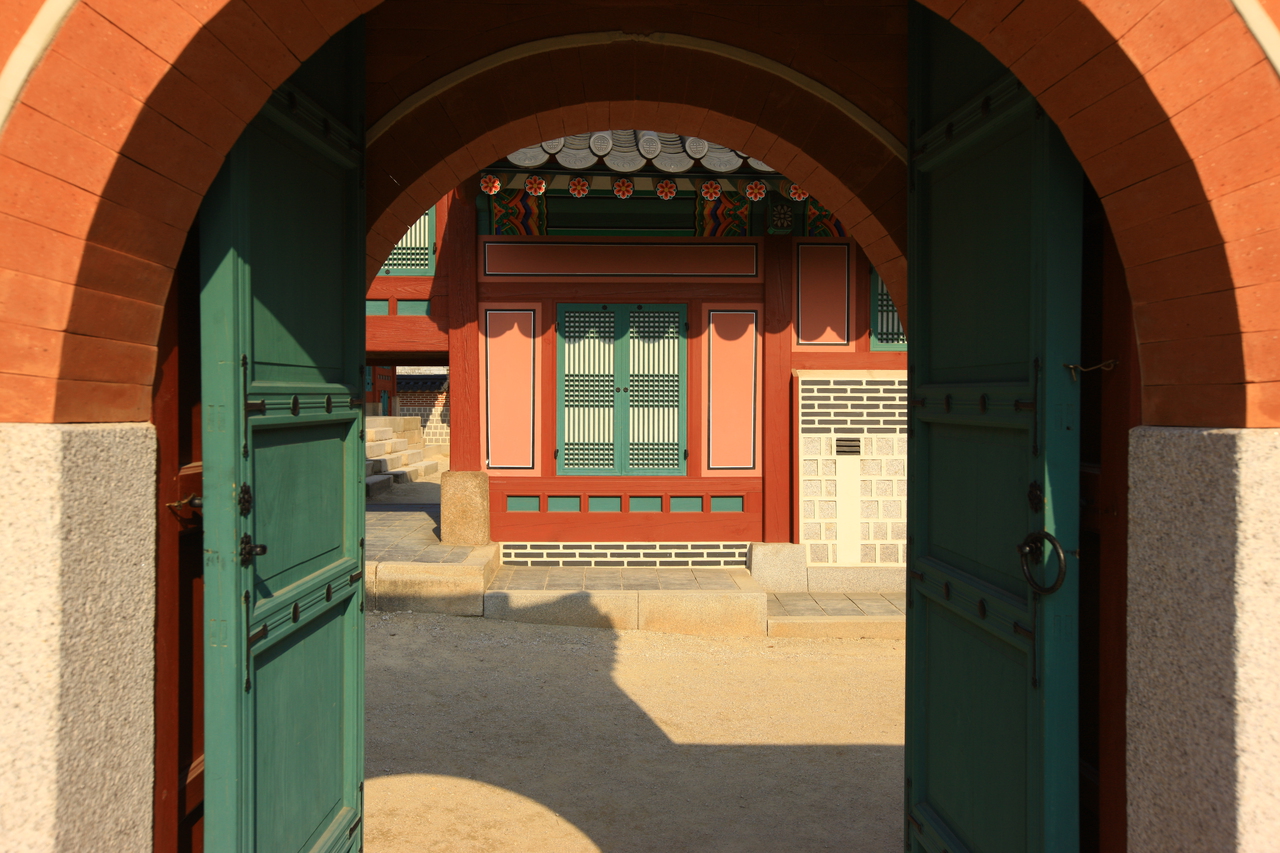
Gyeongbokgung Palace Guide: Hours, Tickets, Hanbok, and What to See
Gyeongbokgung is Seoul's main Joseon palace, entered from Gwanghwamun after a short walk from Gyeongbokgung Station (Line 3), Exit 5. It is closed Tuesdays, with a holiday exception. Adults 19 to 64 pay ₩3,000. Qualifying hanbok is free for Koreans and foreigners. The guard-changing ceremony is free at Heungnyemun at 10:00 and 14:00, except closed days, and can be cancelled in rain. Night opening is seasonal, not year-round.
Seoul
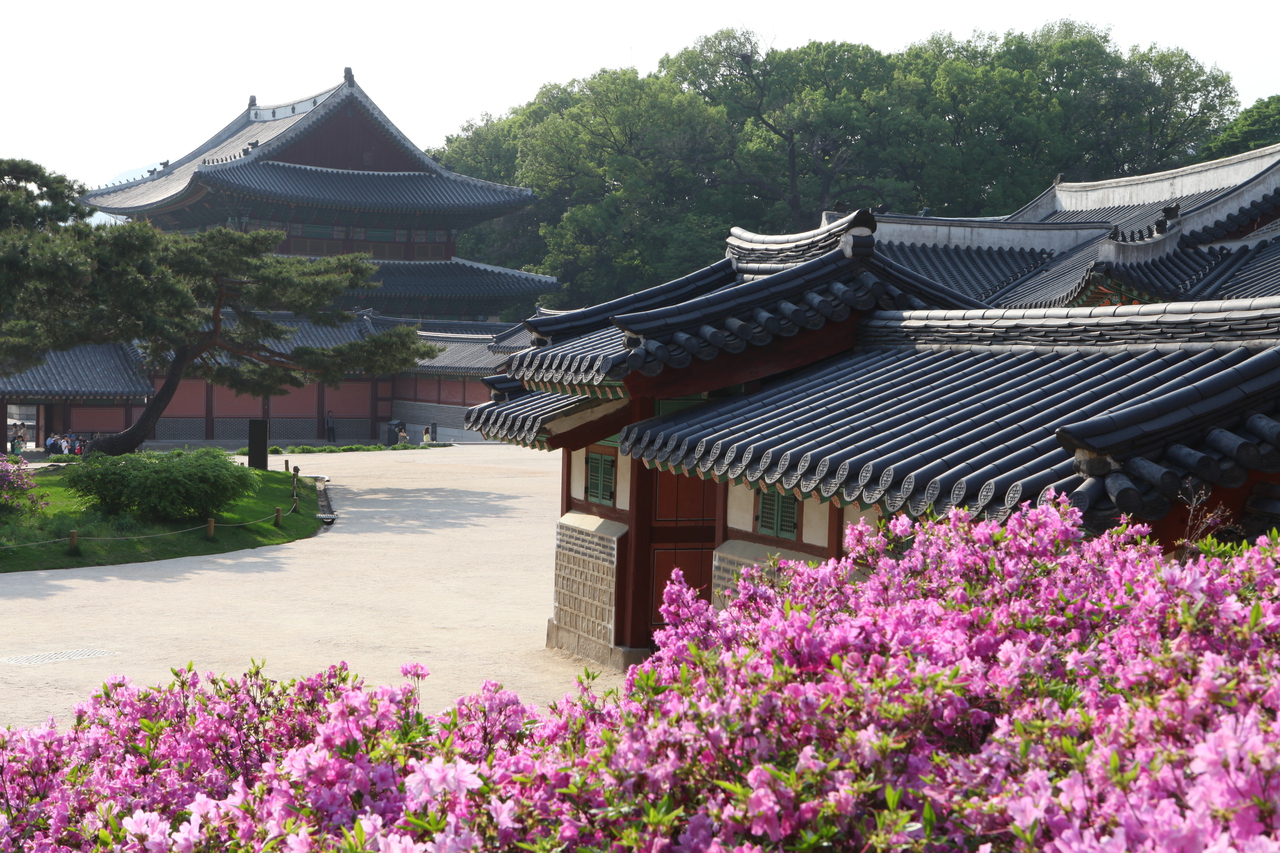
Changdeokgung Palace Guide: Secret Garden Tickets, Reservations, and What to See
Changdeokgung is Seoul's east-side Joseon palace, entered from Donhwamun after a short walk from Anguk Station (Line 3), Exit 3. It is closed Mondays, with a holiday exception. Adults 19 to 64 pay ₩3,000 for the palace buildings. The Secret Garden (Huwon) is a separate ₩5,000 timed visit, 100 people per slot, and hanbok does not make Huwon free.
Seoul
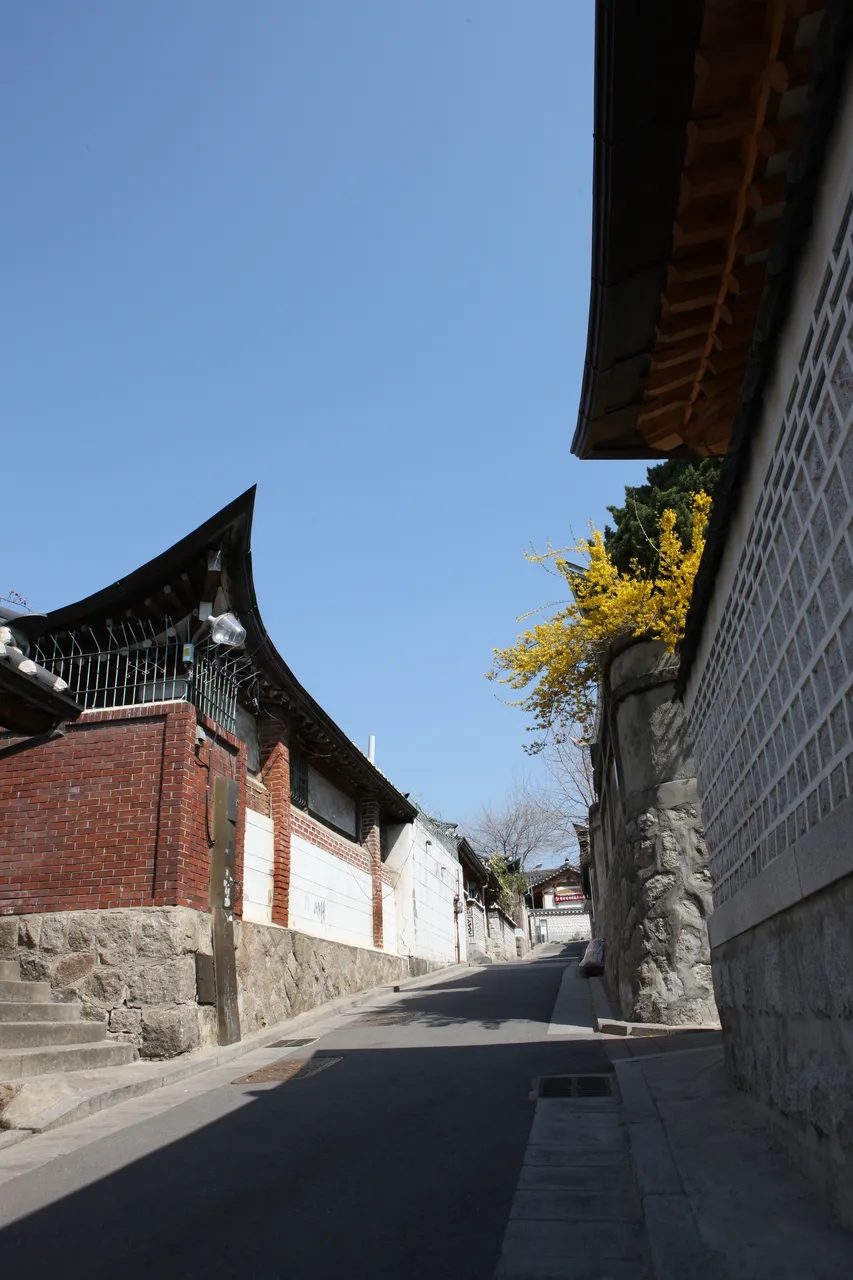
Bukchon Hanok Village Guide: How to Visit, What to See, and Current Visitor Rules
Bukchon is a lived-in hanok neighborhood between Gyeongbokgung and Changdeokgung, not a gated park. Start at Anguk Station (Line 3), Exit 2, and walk uphill. Tourist visits in the Red Zone on Bukchon-ro 11-gil are allowed only 10:00 to 17:00; sightseeing outside those hours can draw a ₩100,000 fine. Private homes are not attractions. Public cultural hanok and the craft museum nearby are the places you can actually enter.
Seoul

Seoul Olympic Park Guide: What to See, Subway Entrances & Walking Routes
Olympic Park in Songpa is a free, oversized 1988 Olympic campus: walking paths, outdoor sculpture, Baekje earthworks, and concert venues share one site. Station choice is the planning decision. World Peace Gate and SOMA sit toward Mongchontoseong and Hanseong Baekje stations; KSPO DOME sits toward Olympic Park Station. A short photo stop can take about 60 to 90 minutes. A half day is better if you want the fortress walk plus art. The Lone Tree is not at the subway door.
SeoulSongpa
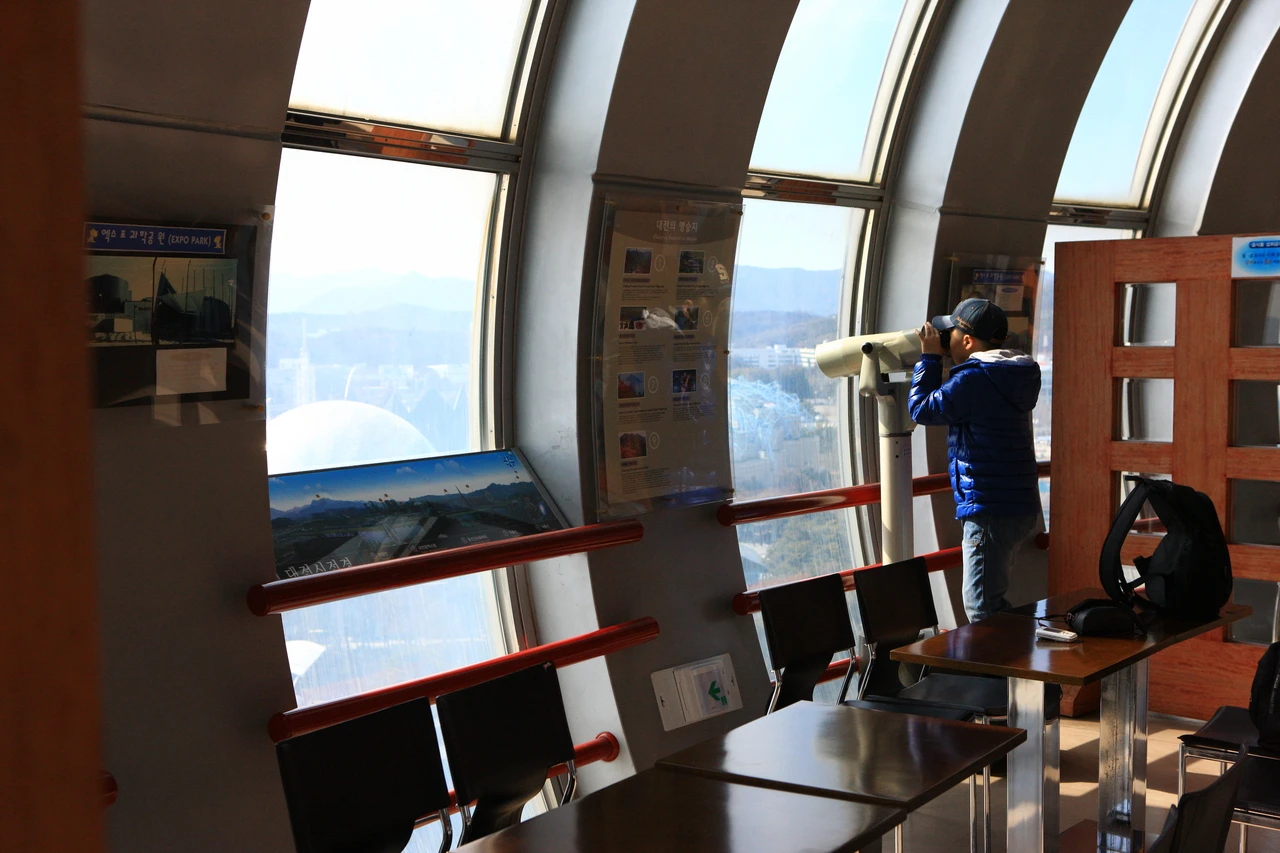
Daejeon Travel Guide from Seoul: KTX, Food & What to Do
Daejeon is one of the easiest Korean cities to reach from Seoul by high-speed rail: many trains take about 50 to 75 minutes to Daejeon Station. Use it for bakery culture around Seongsimdang, local kalguksu and dubu duruchigi, the old-downtown walk from the station, and a separate Expo / Hanbat Arboretum cluster. A day trip is realistic; one night is better if you want food plus parks without rushing. Book via Korail+ and double-check the arrival station name on your ticket.
Daejeon
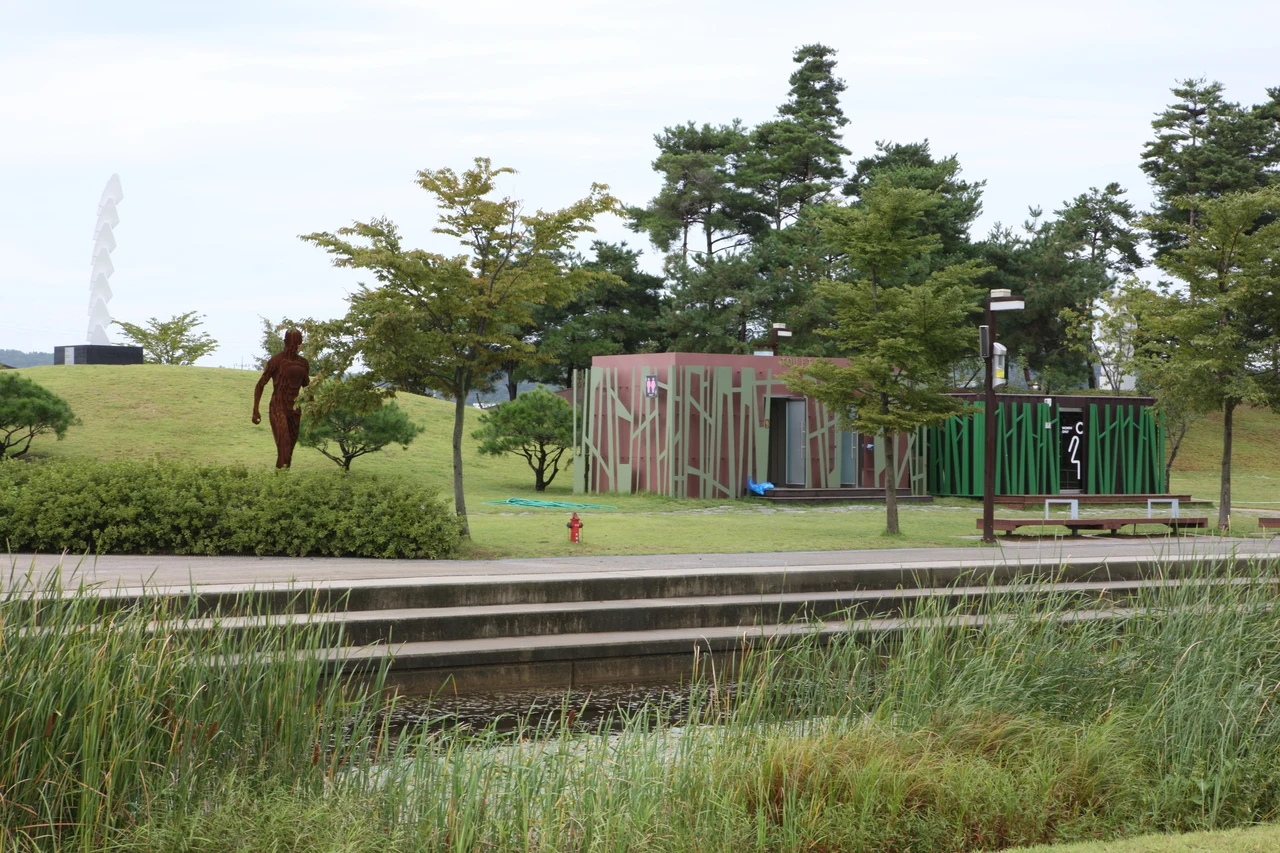
Paju Travel Guide: DMZ Access, Heyri, Book City and Getting There from Seoul
Paju is worth a day from Seoul if you pick one cluster and plan the last mile. Treat Imjingak's public Peace Park, the official controlled DMZ tour, Heyri Art Village, Paju Book City, and outer nature stops as separate trips, not one walkable district. GTX-A reaches Unjeong Jungang Station fast, but it does not drop you at the DMZ, Heyri, or a lake trailhead. Bookings, IDs, and seasonal City Tour details change, so confirm the operator pages for your date.
PajuGyeonggi-do
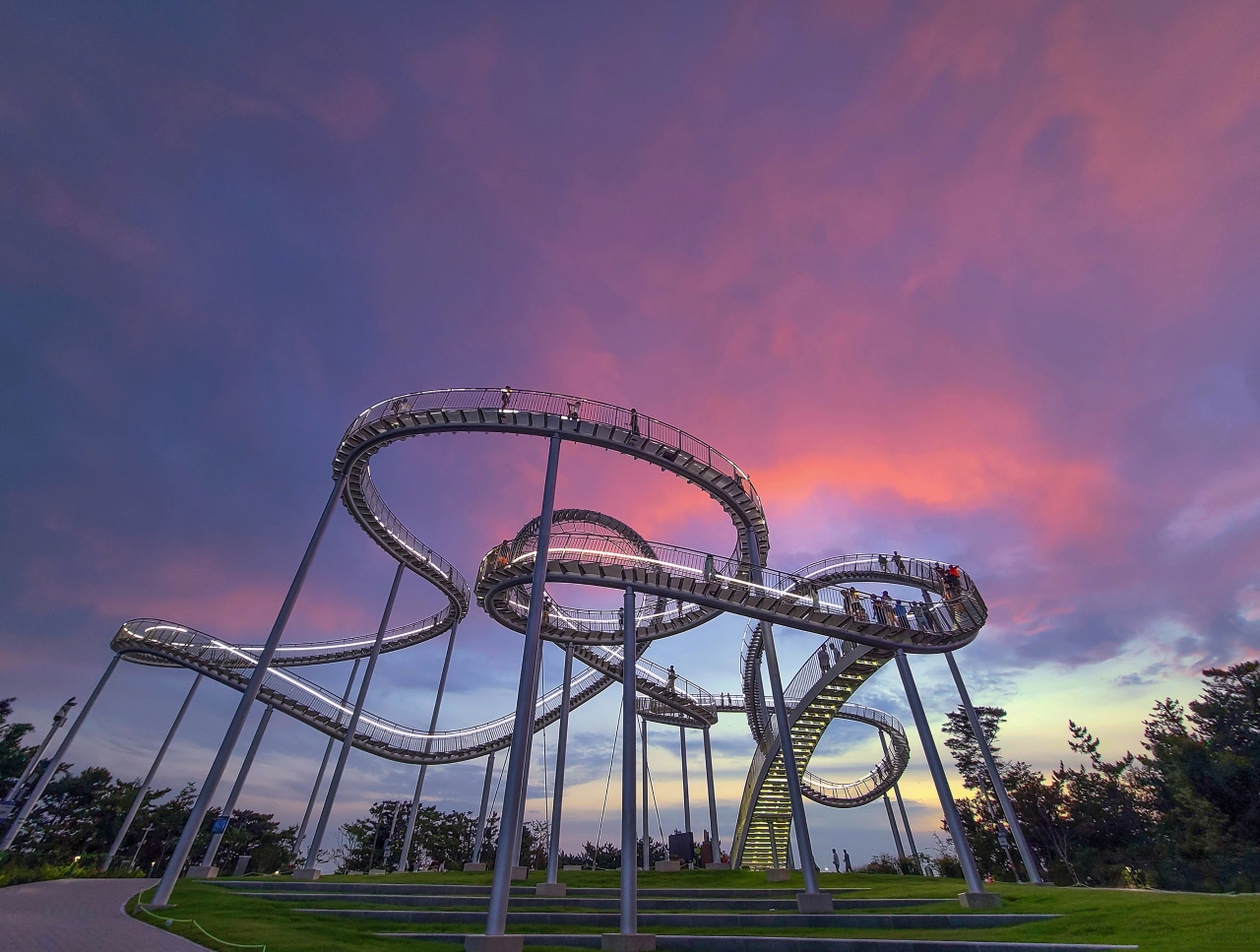
Pohang Travel Guide: KTX, SRT, Space Walk & Homigot
Pohang is an East Sea city you can reach from Seoul by high-speed rail in roughly two and a quarter hours, arriving at Pohang Station. The catch is that the station sits well north of the waterfront, and the coast splits into two clusters: Yeongildae and Space Walk close to the city, Guryongpo and Homigot much further southeast. A day trip covers the first cluster comfortably. Reaching the second one usually means an overnight, a taxi, or an organized tour.
PohangGyeongsangbuk-do
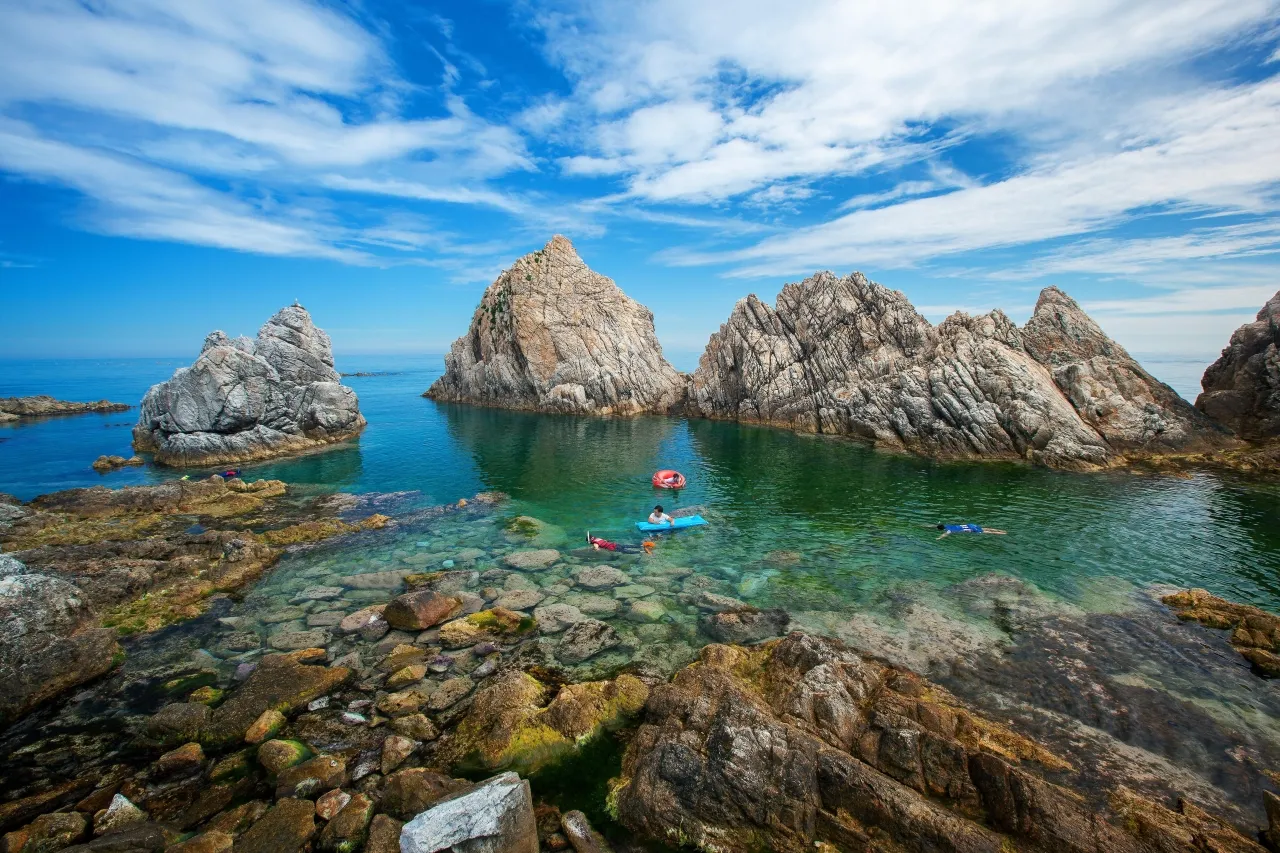
Donghae & Samcheok Travel Guide: KTX, Beaches, Cafes & Coastal Spots
Donghae and Samcheok are neighboring Gangwon coast cities reachable from the Seoul area by KTX (often KTX-Eum) to Mukho or Donghae Station. Use Donghae as the rail-friendly first base for Mukho Port, Nongoldam-gil, and the Eodal cafe coast; continue to Samcheok for clearer bays, the marine cable car, and southern coastal trails. One night is the realistic minimum; two nights cover both cities without criss-crossing.
DonghaeSamcheokGangwon-do
Yeosu Travel Guide: KTX, Night Sea, Food & What to Do
Yeosu is a southern port city known for its night sea, seafood, and island coastline. Most visitors arrive at Yeosu Expo Station by KTX from Yongsan or by SRT from Suseo, then use taxis and buses for Dolsan and Hyangiram. One night covers the waterfront and cable car. Two nights leave room for Hyangiram without rushing. Confirm current train times and attraction hours before you lock the plan.
YeosuJeollanam-do
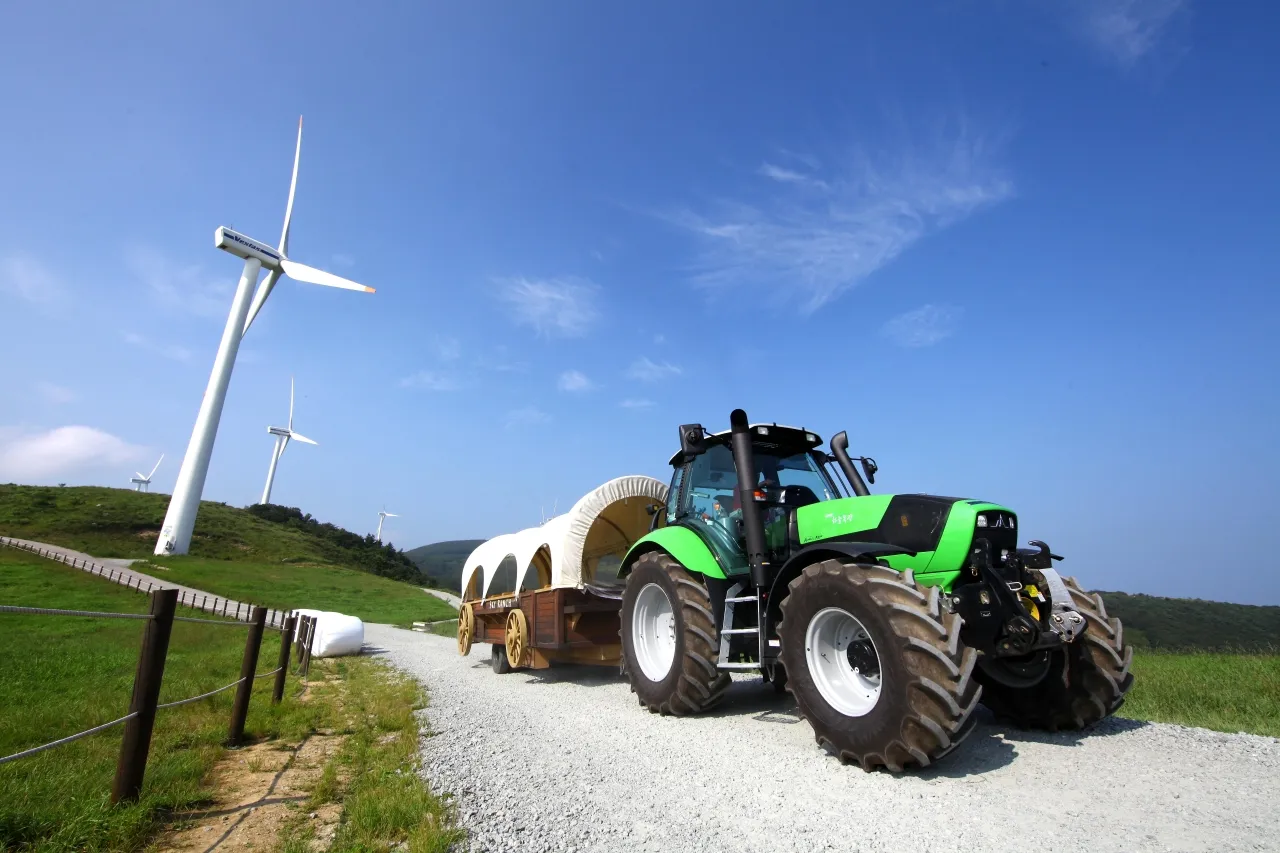
Daegwallyeong Sky Ranch Guide: Tickets, Tractor Ride & Getting There
Daegwallyeong Sky Ranch (대관령 하늘목장) is a large highland ranch in Pyeongchang, Gangwon-do. Its signature experience is a paid tractor carriage through open grassland, plus walking paths and animal feeding. Admission and the tractor are separate tickets. There is no direct public bus from the local terminal to the ranch gate, so plan a taxi or car for the final leg. Hours, prices, and tractor operation change with season and weather: confirm on the official ranch site before you go.
PyeongchangGangwon-do
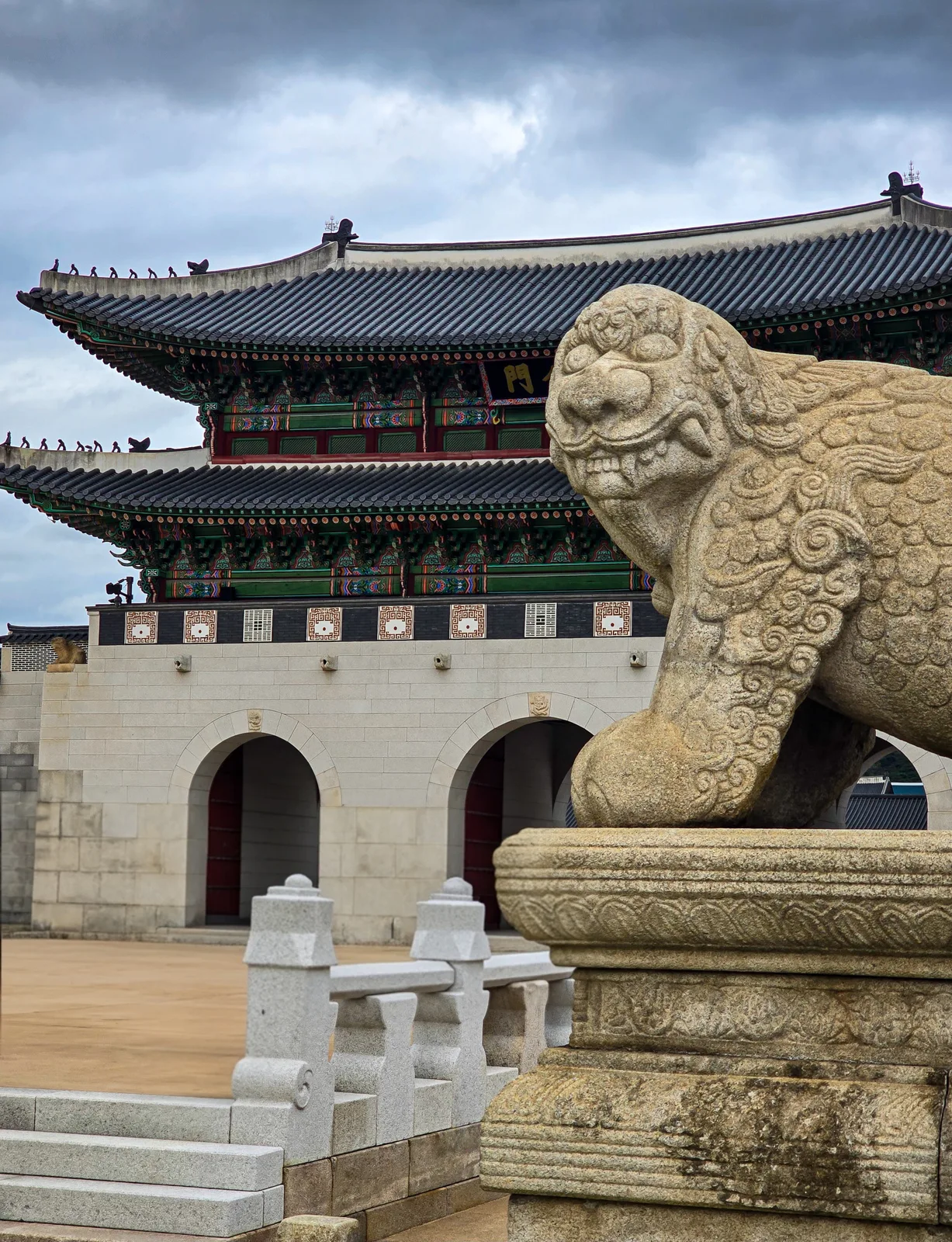
Seoul Travel Guide for First-Time Visitors
Seoul is Korea's capital and a fast, layered city where 600-year-old palaces sit beside high-tech districts. Most visitors give it three to four days, arrive via the airport railroad, and base themselves centrally to ride the excellent subway.
Seoul
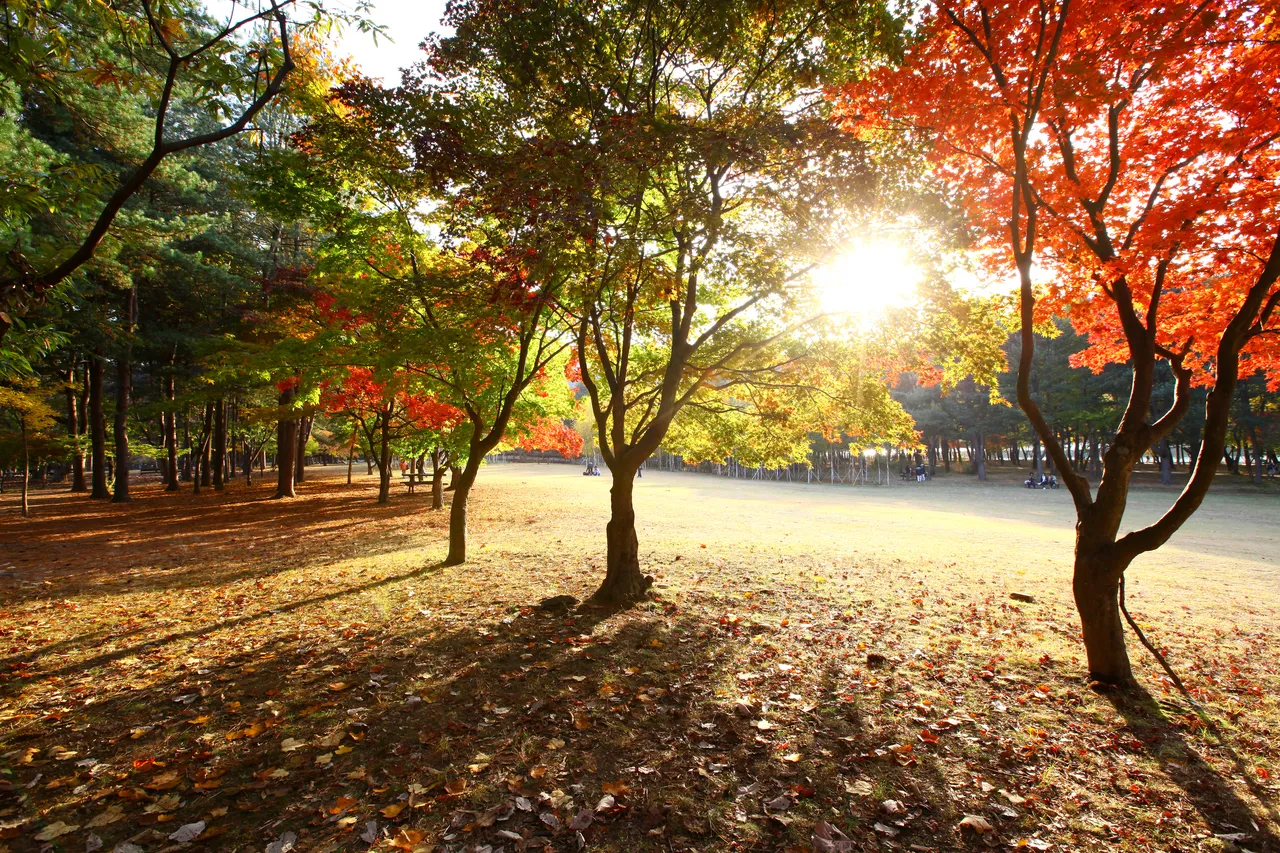
Nami Island Day Trip Guide: How to Get There from Seoul, Ferry, Tickets, and Best Route
Nami Island is Seoul's most famous day trip, and the only tricky part is the transport: it's a three-step journey, Seoul to Gapyeong Station, station to the wharf, then a short ferry to the island. This guide breaks down each leg (ITX-Cheongchun, the subway, taxis and the Gapyeong city-tour bus), explains the ticket-includes-ferry system, and lays out the best route by traveler type. Timetables and prices change, so confirm current details with the official Nami Island and KORAIL sources before you travel.
Gapyeong
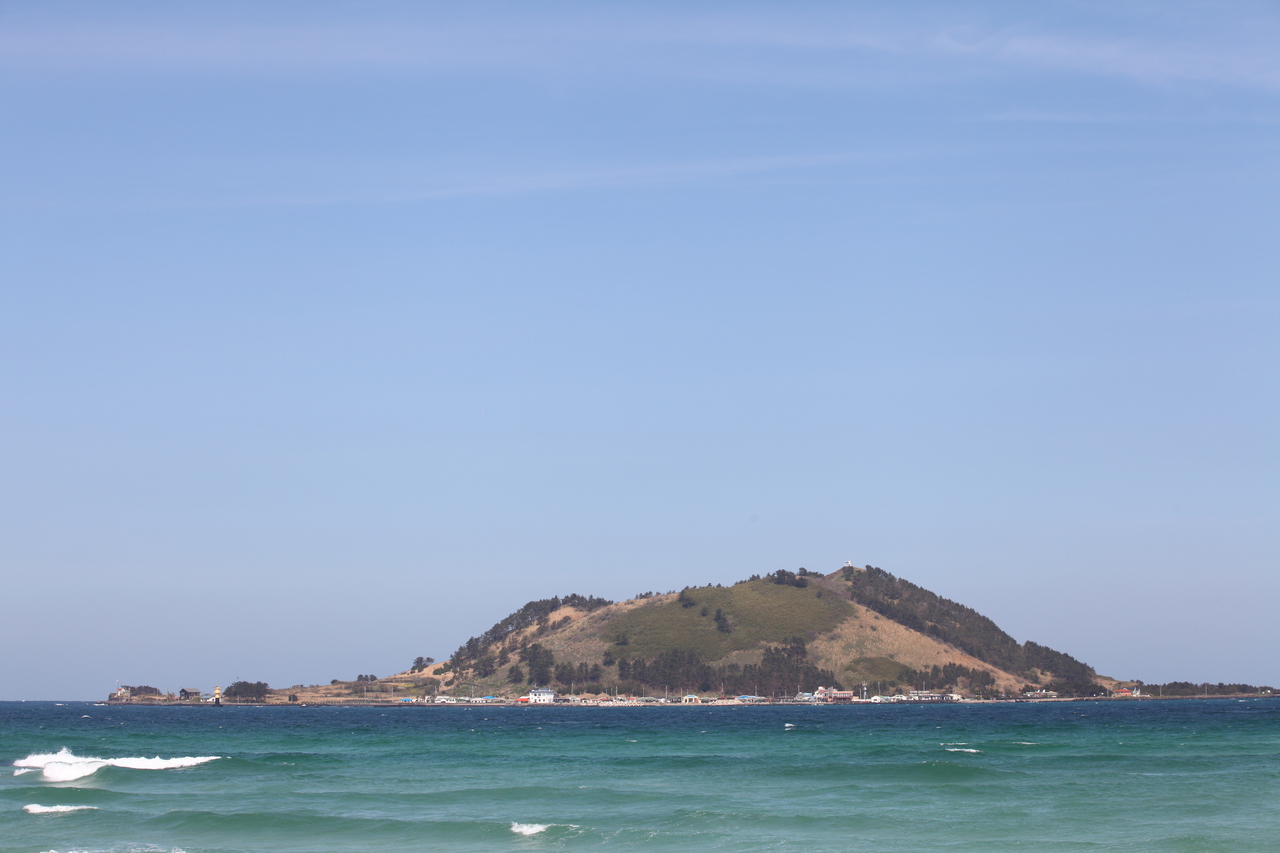
Top 5 Most Beautiful Beaches in Jeju Island: Photos, Map, and Travel Tips
Jeju's beaches really can look like the postcard photos (turquoise water, black volcanic rock, white sand) but not on every visit, since color and clarity shift with weather, tide, and light. This is TripKopia's own editorial ranking of five standout beaches, not an official government ranking: Hyeopjae for the classic black-rock-and-white-sand view, Hamdeok for the easiest access and liveliest scene, Woljeongri for wind-turbine views and café culture, Geumneung for a quieter low-tide sandbar right next to Hyeopjae, and Jungmun Saekdal for cliffs and surf. Which one is "best" really depends on what you're after (swimming, photos, a café afternoon, or a quiet walk) so treat the order as a starting point, not a verdict.
Jeju
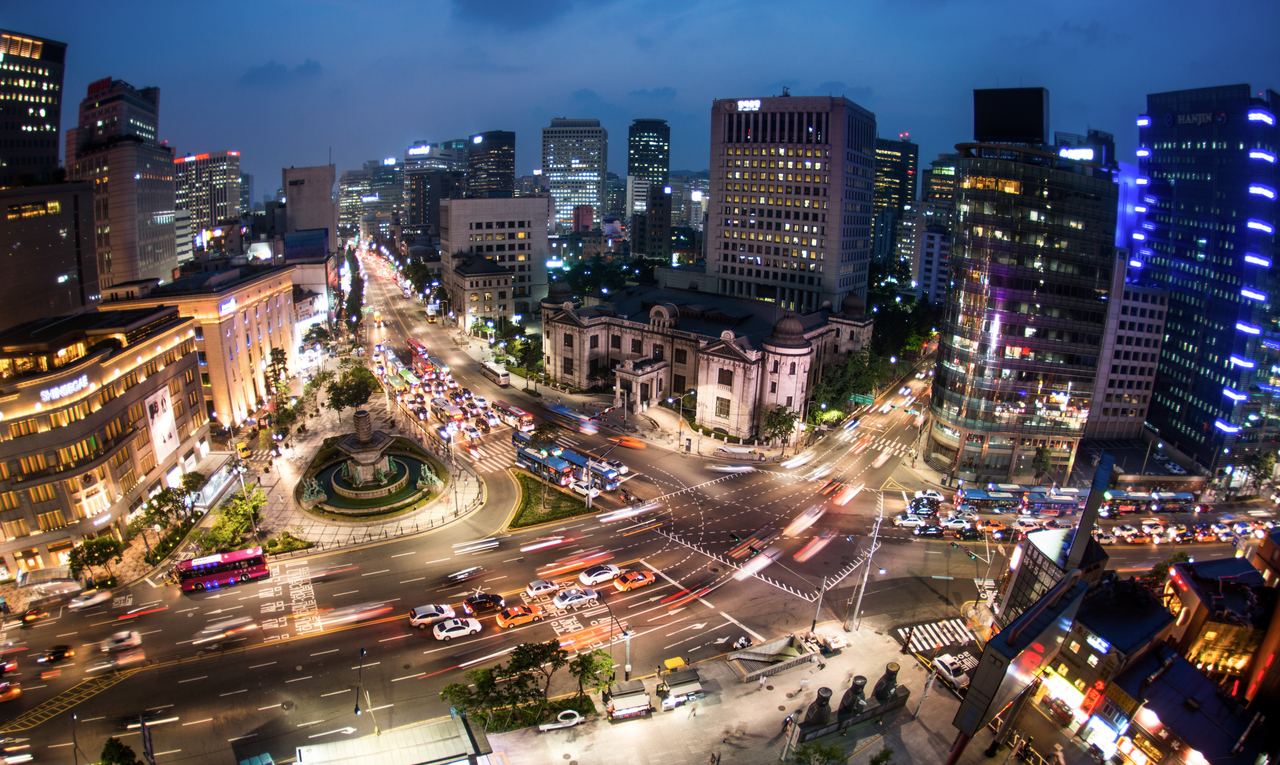
Myeongdong Seoul Guide for Foreigners: What to Do, Famous Restaurants, Shopping, and Souvenirs
Myeongdong is among the easier districts in Seoul for a first-time foreign visitor, but it's more than the K-beauty street it's known for. What to actually do there: the long-running restaurants worth a meal and what to order at each, Myeongdong Cathedral, the free Bank of Korea Money Museum, official Seoul souvenirs, character shops, street-food categories and what to check before ordering, and how to link the area with Namsan and Namdaemun Market. Shopping and tax-refund mechanics get a summary here and a full breakdown in our dedicated shopping guide.
SeoulMyeongdong
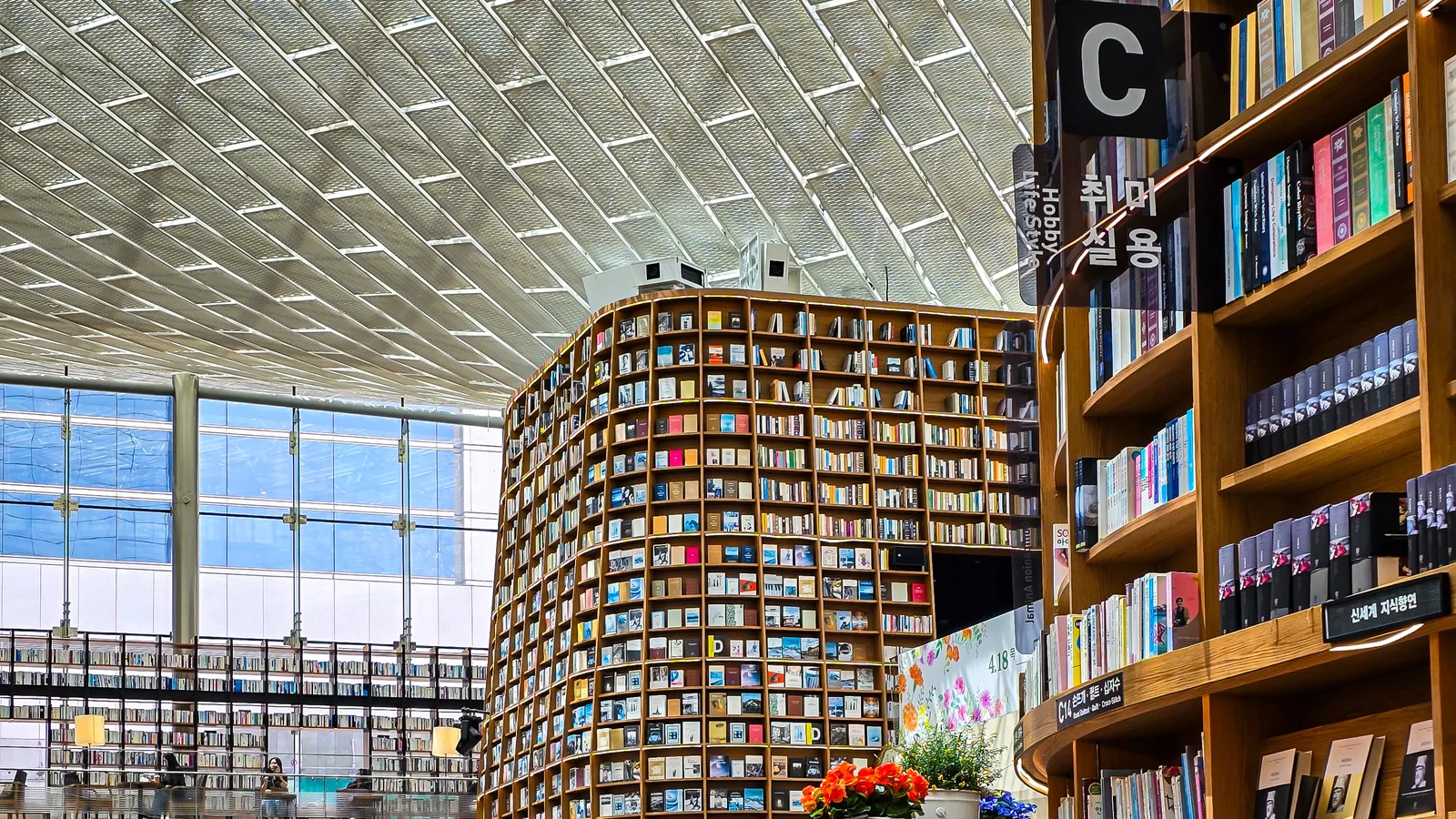
Best Things to Do in Gangnam, Seoul: Shopping, COEX, K-Pop, Cafés, and Modern Seoul
Gangnam is the modern, polished side of Seoul, and it's big, so it pays to pick a theme rather than try to see it all. This guide groups the best things to do by sub-area: COEX and Starfield Library, Gangnam Station's shopping, the K-pop and luxury streets of Apgujeong and Cheongdam, the cafés of Garosu-gil, and the calm of Bongeunsa and the royal tombs, with suggested routes.
Seoul
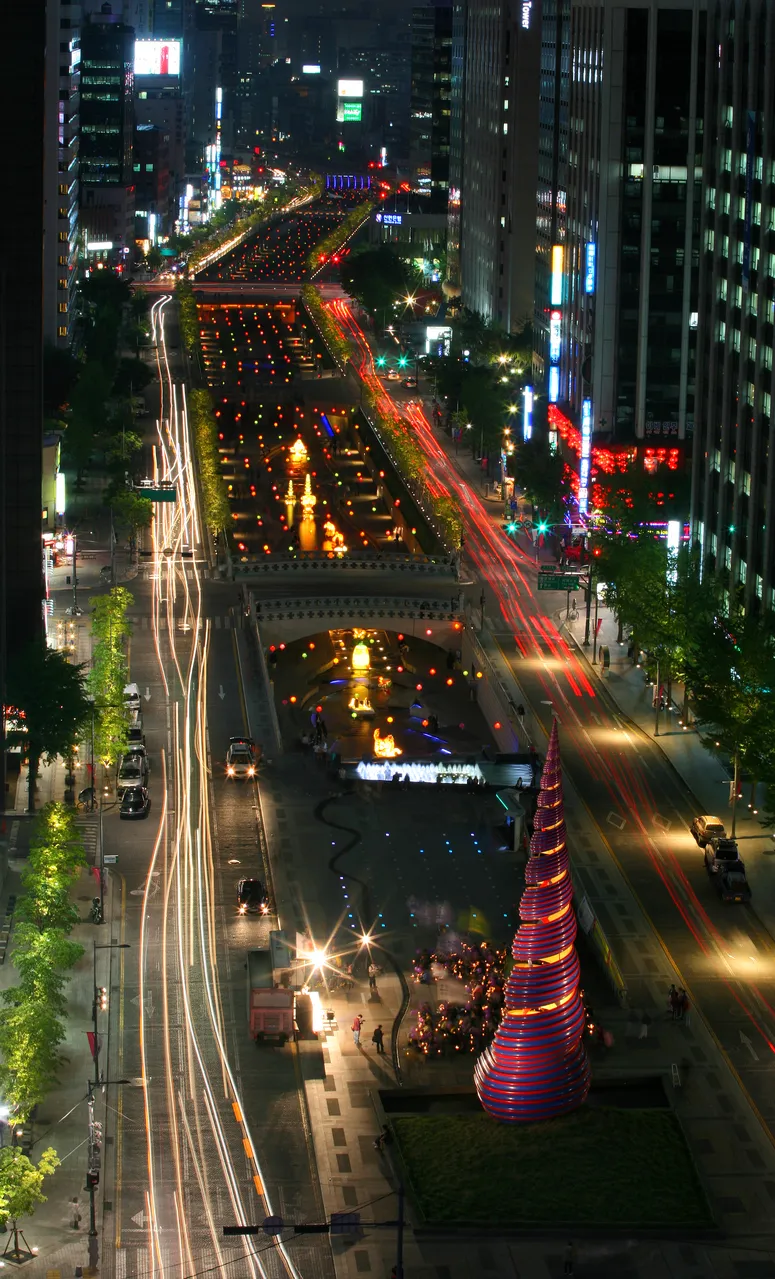
Cheonggyecheon Stream Guide: History, Walking Route, Things to Do, Food Nearby, and Visitor Tips
Cheonggyecheon is a restored stream running right through downtown Seoul, a free and central walking route that stays noticeably cooler than the streets above it. It spent decades buried under a highway before being uncovered in 2005. Most people walk the popular downtown stretch of about 2 km rather than the full 11, and the four routes below cover that section, the food areas nearby including Gwangjang Market, and what changes by season. It's open around the clock but can close in heavy rain, and festival dates change every year, so check current official information before you go.
Seoul
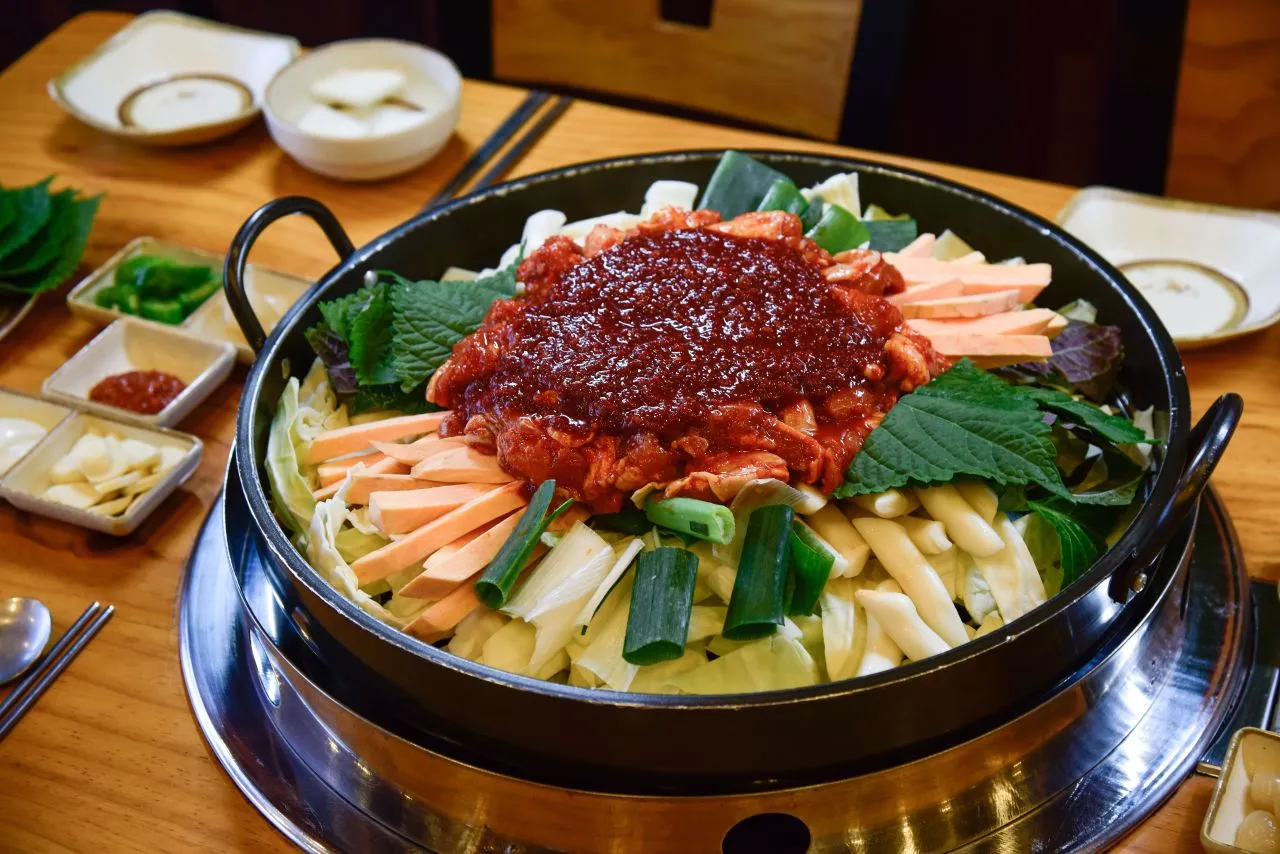
Chuncheon Day Trip from Seoul by Train: ITX-Cheongchun, Dakgalbi, Lakes, and Easy Route
Chuncheon is among the easier day trips from Seoul: a lake city about an hour and a half away by the ITX-Cheongchun train, famous for dakgalbi (stir-fried spicy chicken) and its skywalk, cable car, and lakes. This guide is a practical one-day plan, not a list of sights: how to get there, which station to use, what to eat, the main attractions, whether to combine it with Nami Island, and dietary notes. Timetables, fares, and opening hours change, so confirm the current details with KORAIL and VisitKorea before you travel.
Chuncheon
National Museum of Korea Guide: Why It's Trending, What to See, Museum Shop, and How to Visit
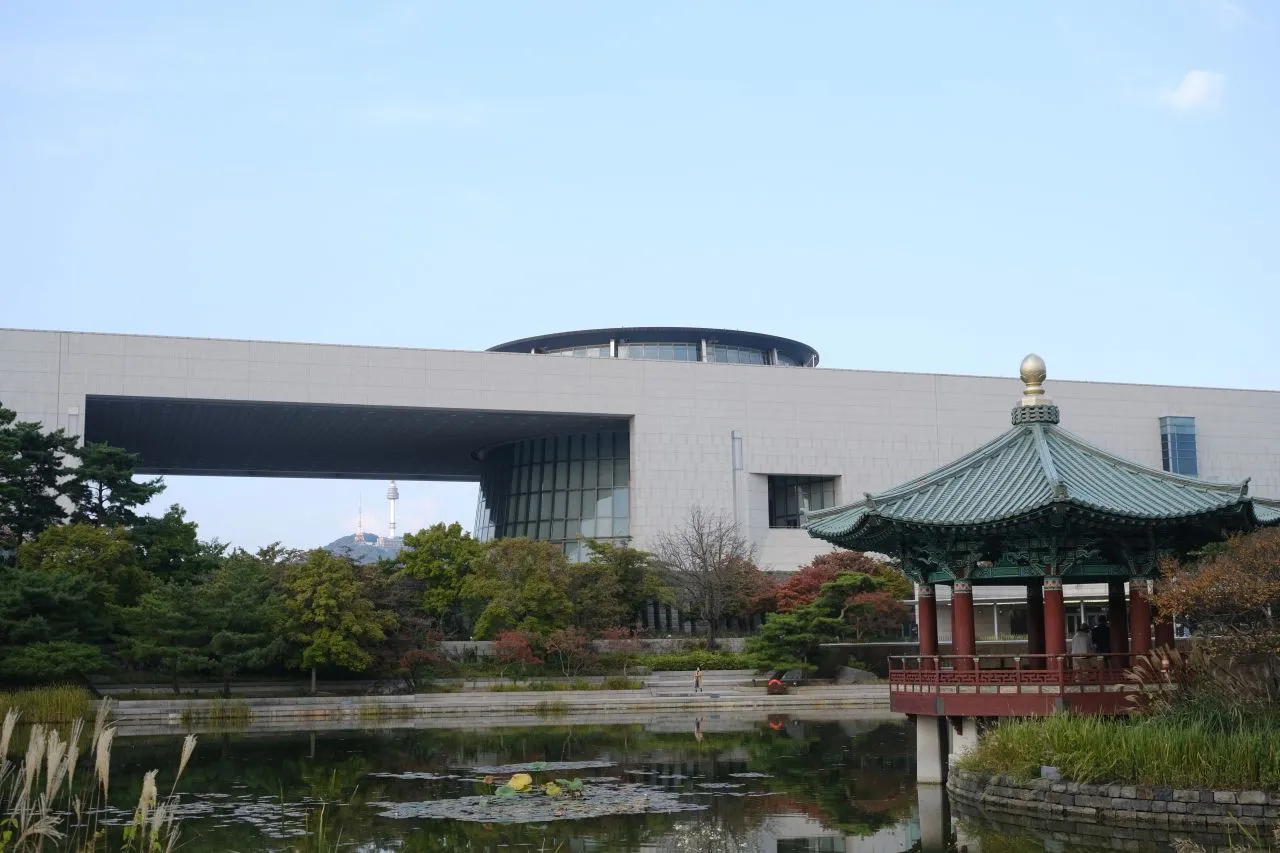
The National Museum of Korea in Yongsan is one of Seoul's most rewarding stops: a beautiful, calm, and (for now) free indoor attraction that has become genuinely trendy for its Room of Quiet Contemplation, its photogenic architecture, and its MU:DS museum-shop goods. This guide is a practical visitor briefing, not an academic tour: why it's popular, what to see first, the museum shop, and how to get there from Ichon Station. Hours, special- exhibition fees, and shop stock change, so check the official museum website before you visit.
Seoul
Busan Travel Guide for First-Time Visitors
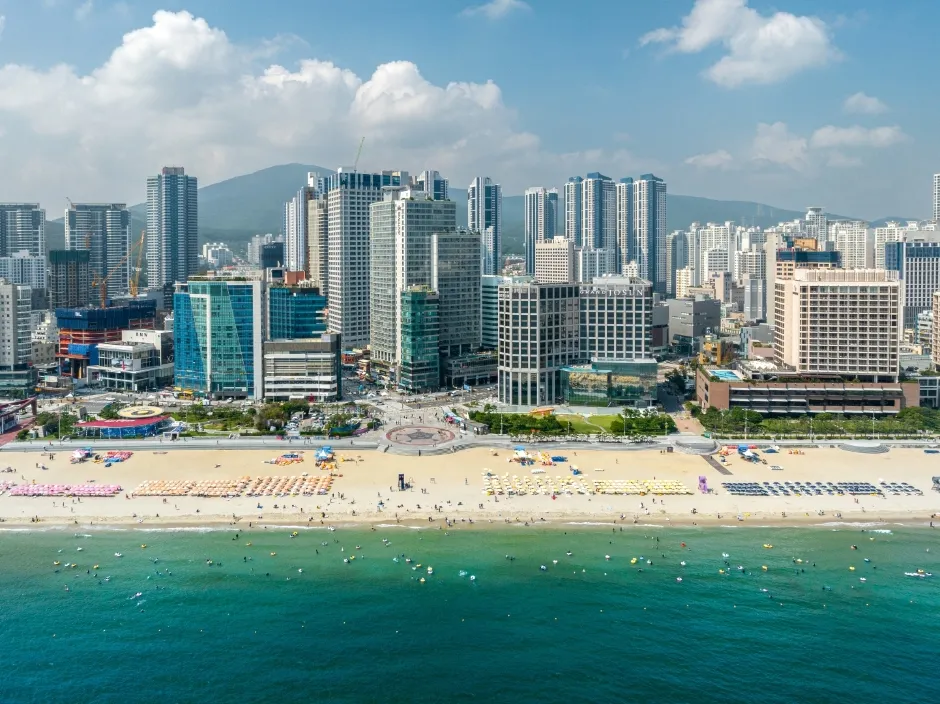
Busan is Korea's second city and its biggest beach destination, a relaxed coastal counterpoint to Seoul. Two to three days covers its beaches, fish markets, and cliffside temple. Most visitors arrive by KTX in about two and a half hours from Seoul.
Busan
Haeundae vs Gwangalli: Where to Stay and What to Do in Busan
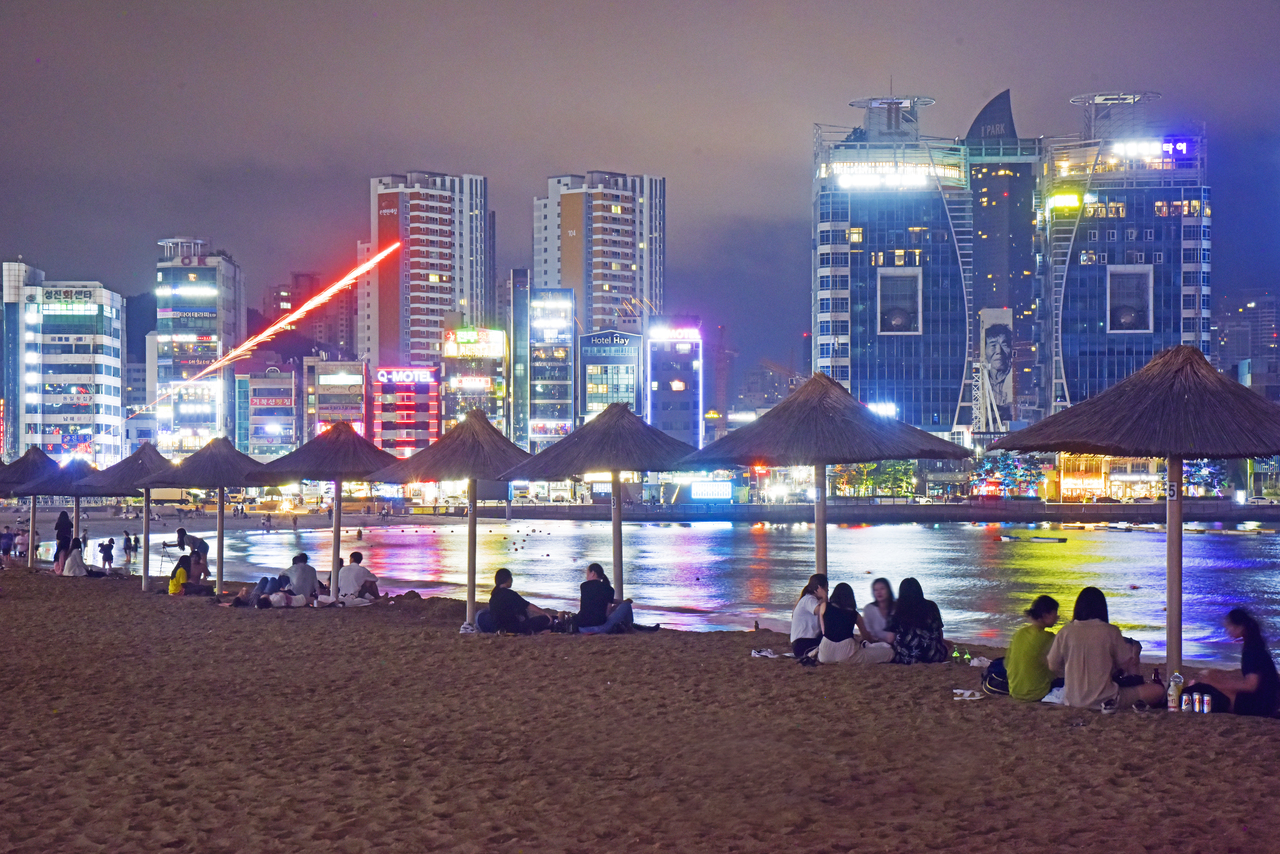
Both are Busan's headline beaches, a few minutes apart on Metro Line 2, so you can stay at one and still visit the other. Pick Haeundae for a classic resort-beach base with hotels, Blue Line Park, and an easy family pace; pick Gwangalli for the Gwangan Bridge night view, cafes and bars, and a livelier, social evening. This guide helps you choose and shows how to do both in a day.
BusanHaeundaeGwangalli
Gangneung Travel Guide: Beaches, Coffee Street, and East-Coast Sunrise
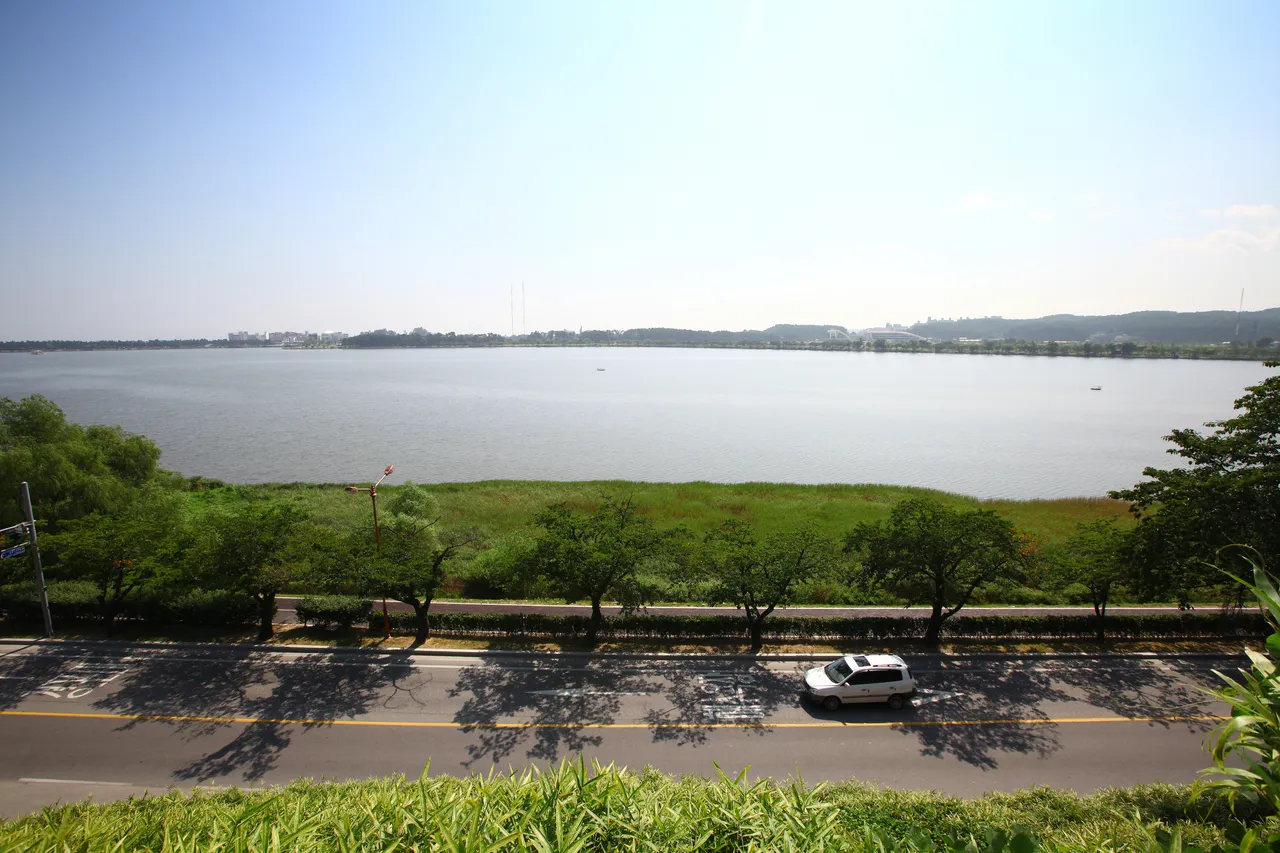
Gangneung is Korea's easy east-coast escape from Seoul: reachable by KTX and built around beaches, the Anmok coffee street, Gyeongpo, soft chodang tofu, Ojukheon's history, traditional markets, and the Jeongdongjin sunrise. It's doable as a day trip but more relaxed with one night.
GangneungGangwon-do
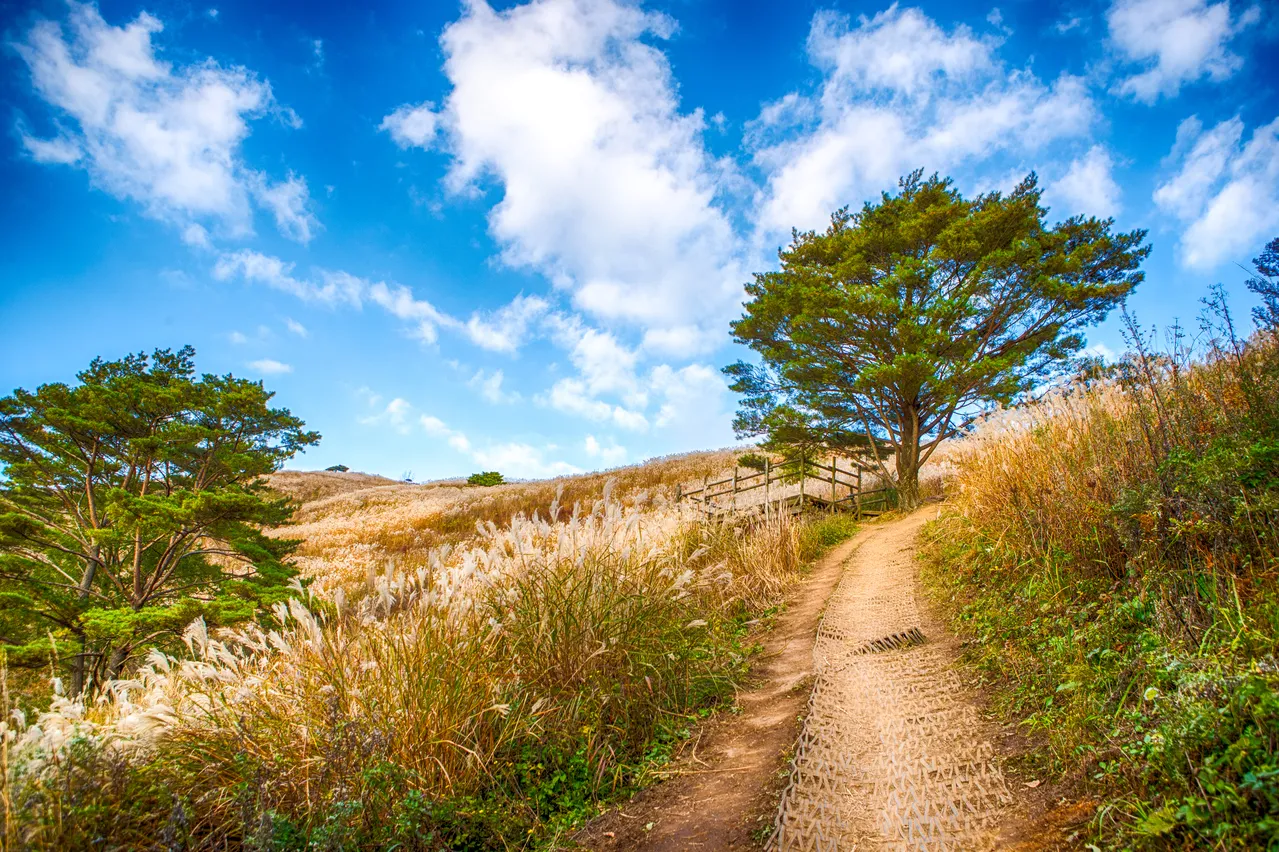
Taebaek & Jeongseon Travel Guide: Korea's Mountain Highlands
Taebaek and Jeongseon are Korea's mountain highlands in Gangwon: a slower, off-the-beaten-path trip built around Taebaeksan's winter snow, Mindungsan's autumn silver grass, coal-mining history, the High1 resort area, traditional markets, and hearty local food like mul-dakgalbi. Plan one or two nights and aim for one or two things a day.
TaebaekJeongseonGangwon-do
How to choose
Seoul is the usual first base for transport and day trips. Busan adds coast and seafood; Gyeongju is heritage-heavy; Jeju is a separate flight leg. Day-trip guides focus on near-Seoul escapes such as Nami Island and Chuncheon.