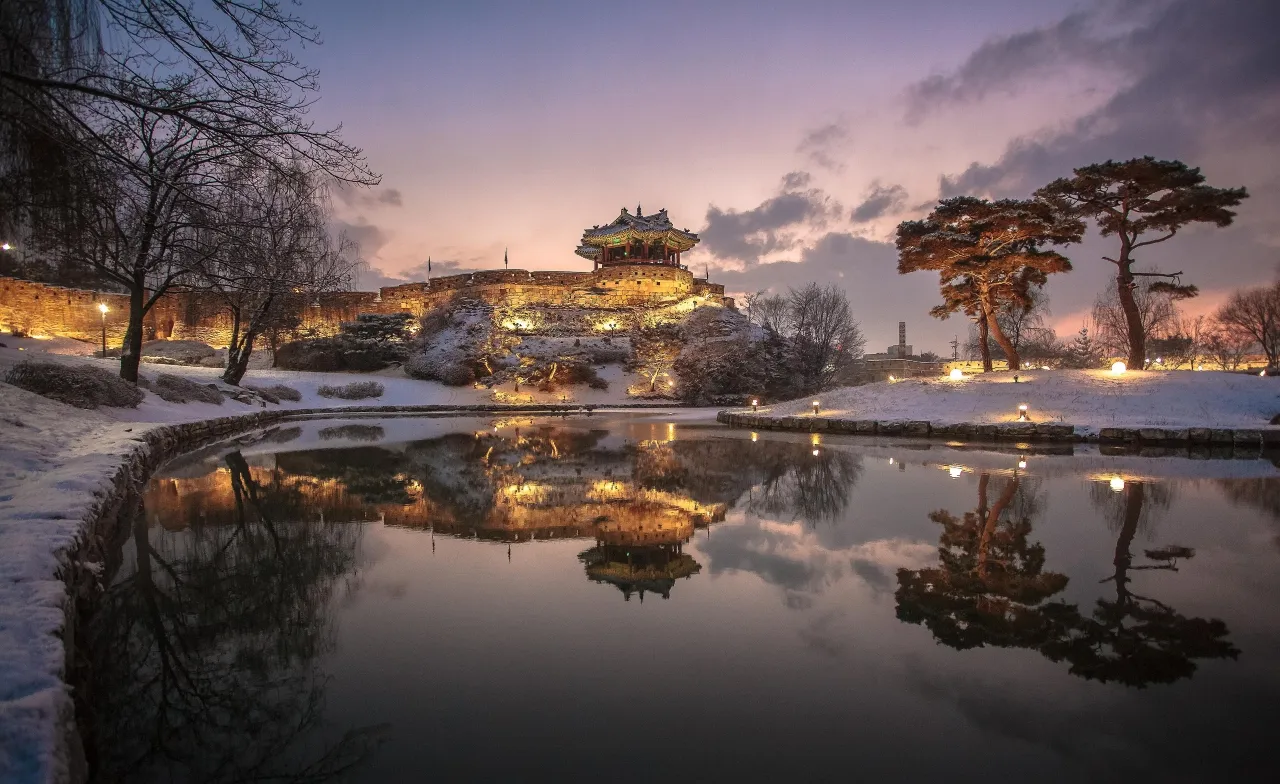
A Suwon Hwaseong day trip from Seoul takes one subway or train ride and one local transfer. The fortress itself is a long ring of walls and gates around the old city, so you choose a route instead of visiting a single building.
Decide two things before you leave: which fortress sections you want, and whether you will enter Hwaseong Haenggung. The rest of the day follows from those choices.
Quick answer
| Question | Short answer |
|---|---|
| From Seoul | Line 1, the Suin-Bundang Line, or a Korail train to Suwon Station |
| Station to fortress | Suwon Station is not at the fortress; take a local bus or taxi |
| Fortress walls | Free and open-type, according to the foundation |
| Hwaseong Haenggung | Separate ticket and separate hours |
| Full 5.7 km wall walk | Not required; a highlights route is the usual first-visit plan |
| Time | Half day for highlights, a full day with food and an evening walk |
| Food | Suwon galbi (grilled beef ribs) is the local meal to plan around |
Hours, prices, bus routes, and evening programs change. The official pages listed in Sources were checked on October 9, 2026.
Suwon Hwaseong, not Hwaseong City
Suwon Hwaseong (수원화성) is the UNESCO-listed fortress in the city of Suwon. Hwaseong City (화성시) is a different municipality in Gyeonggi-do.
A map search for "Hwaseong" alone can return the wrong place. Search 수원화성, 화성행궁, or "Suwon Hwaseong Fortress" instead.
Seoul to Suwon: subway or train
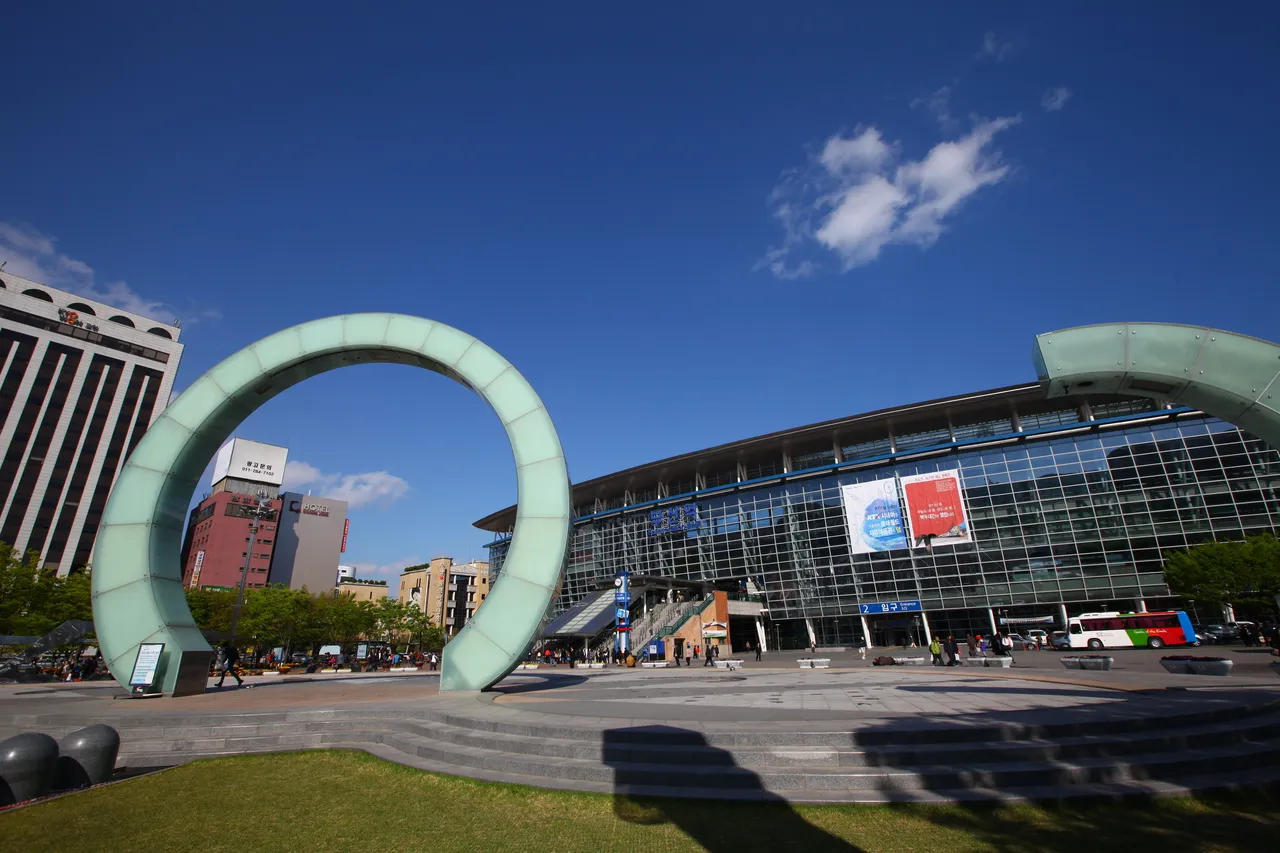
Suwon Station is served by Line 1, the Suin-Bundang Line, and Korail inter-city trains. Seoul Metro and Korail are the operators to check for current services.
| Option | Good for | Watch for |
|---|---|---|
| Line 1 | Simple, T-money friendly, no reservation | Slower than an inter-city train; a ride of roughly an hour from central Seoul, longer from the far side of the city |
| Suin-Bundang Line | Starting from Gangnam, Seolleung, or Wangsimni | A different line from Line 1, so check which platform the app shows |
| Korail inter-city train | A shorter ride and a reserved seat | Fewer departures than the subway and a ticket to buy; compare in Korail Talk |
For most visitors, Line 1 is the low-effort default. A Korail train saves ride time only if a departure suits your plan, and the saving can disappear if you wait for it.
Train schedules and fares are not listed here because they change. Check Korail Talk or a map app for your date, and read the T-money guide for the card. Reserved-seat steps are in the Korail booking guide.
A Seoul-only transit pass may not cover the ride to Suwon, so check your card's rules before you board.
Suwon Station is not the fortress
The station sits in the south of the city, and the fortress core is a further ride away. Plan a bus or taxi leg, then use the gates as your entry point.
The Suwon Cultural Foundation lists city buses that run from the station area to the Hwaseong core. Route numbers and stops change, so follow Naver Map or Kakao Map instead of a number copied from a blog.
A tourist information center near Exit 4 of Suwon Station is listed with English, Chinese, and Japanese service. Its hours may change, so treat it as a backup if the app confuses you.
Taxis make sense with luggage, in summer heat, or in rain. Set your destination to 화성행궁 or 팔달문 (Paldalmun), not "Hwaseong".
Suwon Hwaseong Fortress at a glance
The fortress was built from 1794 to 1796 under King Jeongjo and was inscribed as a UNESCO World Heritage Site in 1997. The Suwon Cultural Foundation gives the wall perimeter as 5,744 m.
It is not one castle. Expect wall sections, gates, command posts, pavilions, and a water gate spread across flat ground in the east and hills in the west.
According to the foundation, the fortress is free and open at all hours, and the walls can be seen at night. Entry to Hwaseong Haenggung and some other facilities is separate.
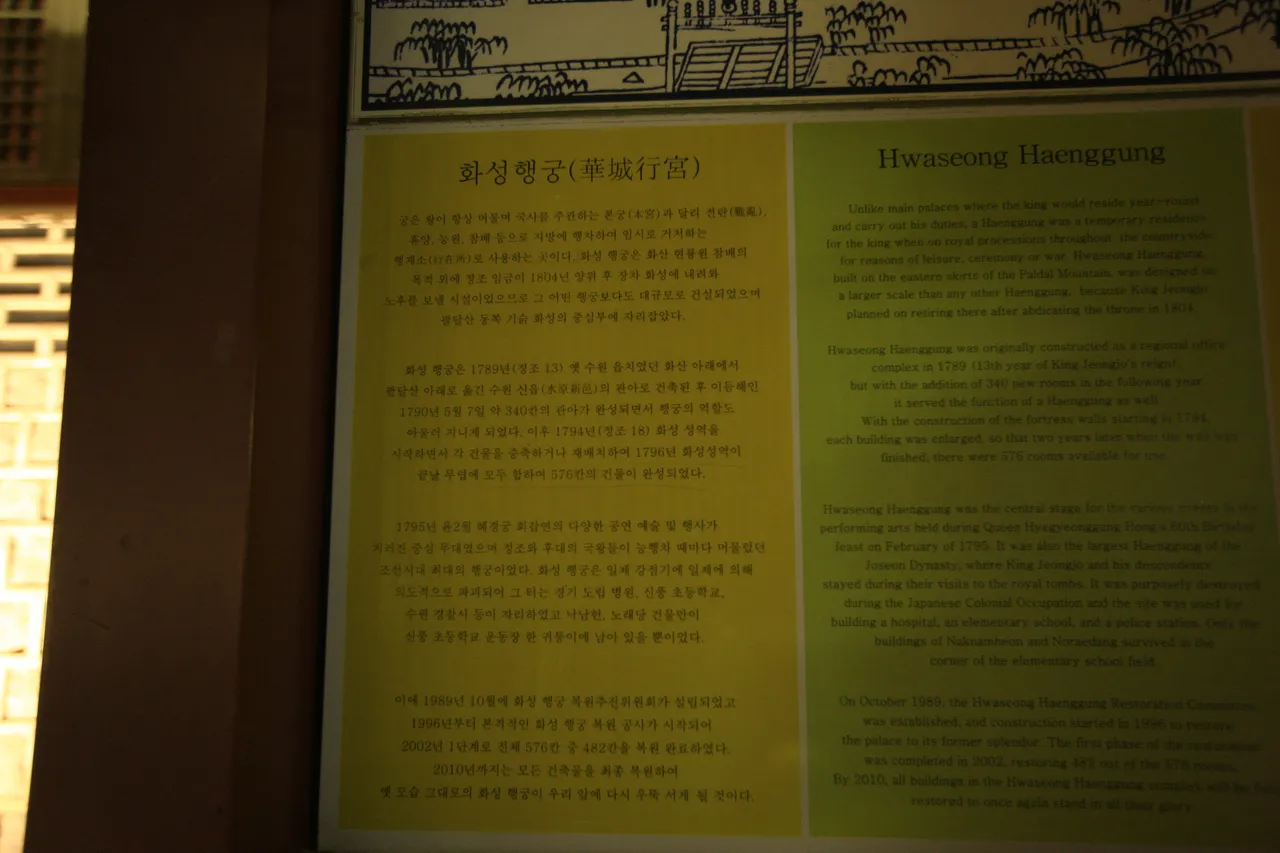
Hwaseong Haenggung
A haenggung is a temporary palace used when the king traveled from Seoul. Hwaseong Haenggung is the main ticketed stop in the old town and the clearest way to understand why the fortress exists.
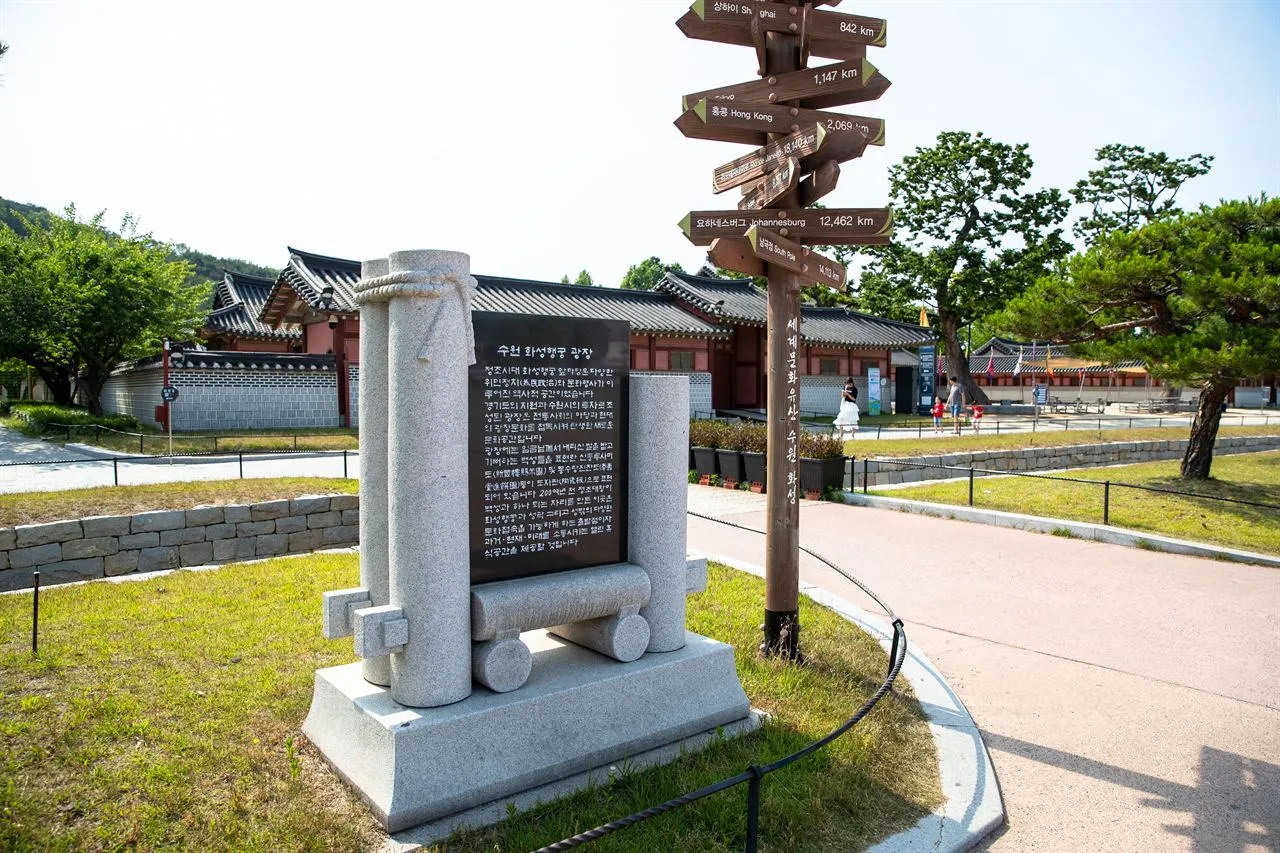
The foundation lists these terms as of October 9, 2026:
| Item | Listed |
|---|---|
| Hours | 09:00 to 18:00 all year, with no closing day |
| Last entry | One hour before closing |
| Adult ticket | ₩2,000 for Haenggung and Hwaryeongjeon |
| Integrated ticket | ₩4,000 for three sites |
| Free entry | Visitors in hanbok, age 65 and over, age 6 and under, disabled visitors, and the last Wednesday of the month ("Culture Day") |
| Wheelchairs and strollers | Free loan, listed by the foundation |
Confirm prices and free-entry rules on the foundation site before you go. They are the part of this page most likely to change.
Haenggung is a separate product from the free walls. Entering the fortress at a gate does not include it.
Which fortress sections to see
You can enter the fortress at any gate and leave at another. Most first-time routes use a few of these:
- Janganmun (장안문): the large north gate, a common place to start climbing onto the wall.
- Hwaseomun (화서문): the west gate, on the northern half of the wall.
- Seojangdae (서장대): the command post on the western hill, with the widest view over the city.
- Paldalmun (팔달문): the south gate, surrounded by roads and the traditional market district.
- Hwahongmun (화홍문) and Banghwasuryujeong (방화수류정): the water gate and the pavilion beside Yongyeon Pond, often a favorite photo stretch.
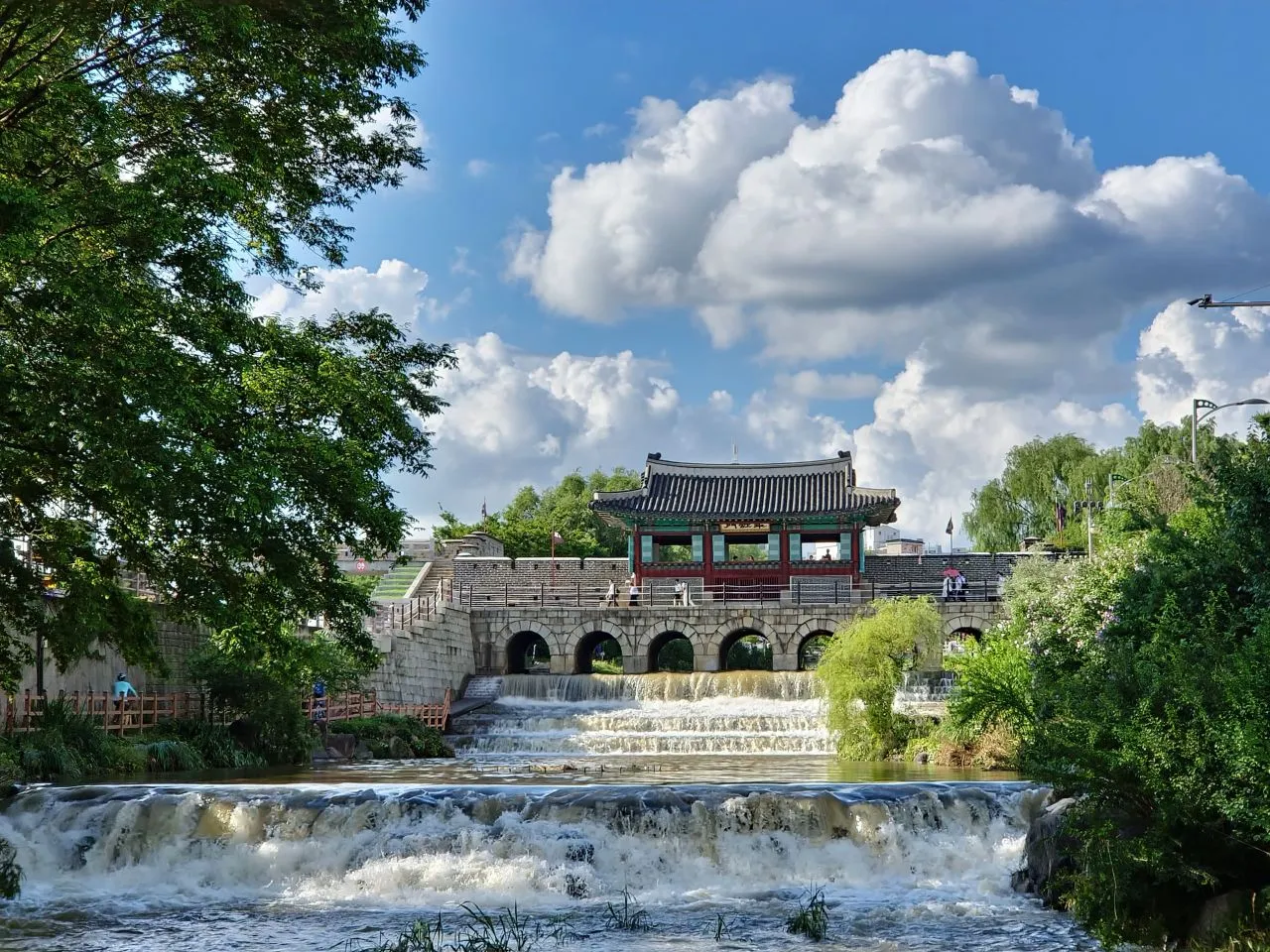
The foundation's own suggested courses range from about 1 hour to 3 hours and link these gates and pavilions in different combinations. Check its course map for the exact sections each one covers.
Do you have to walk the whole wall?
No. The full perimeter is 5,744 m, but nothing in a first visit requires finishing the loop.
| Route | Shape | Fits |
|---|---|---|
| Highlights | Haenggung, one or two gates, and the Hwahongmun and Banghwasuryujeong stretch | A half day |
| Wall section | Janganmun to Hwaseomun, then Seojangdae, using the official course map | A full day with a long lunch |
| Full circuit | Every section, with stops | Fit walkers in mild weather who want to see all of it |
If you are unsure, start with the highlights route and add a wall section only if you still have energy. Stopping early costs you nothing, because the walls are free.
Difficulty and mobility
The eastern side of the fortress sits on flat ground, while the western side climbs Paldalsan. Expect stairs at gates, slopes on the hill, and uneven stone underfoot.
Haenggung courtyards are mostly level, and the foundation lists free wheelchair and stroller loans there. Hill sections of the wall are harder for wheelchairs and strollers, so ask the information center which ground-level stretches are practical.
Bring water in summer and non-slip shoes in winter. Check the forecast the night before, because a route that is easy in spring can be tiring in July heat.
Haenggung-dong and the market area
Haenggung-dong is the neighborhood around the palace, with low-rise streets, cafes, and small shops. People often call it Haengnidan-gil, a nickname for the area rather than an official street name.
Search 행궁동 on Naver Map or Kakao Map and check that a cafe is open on the day. This guide does not rank cafes, because menus and hours change.
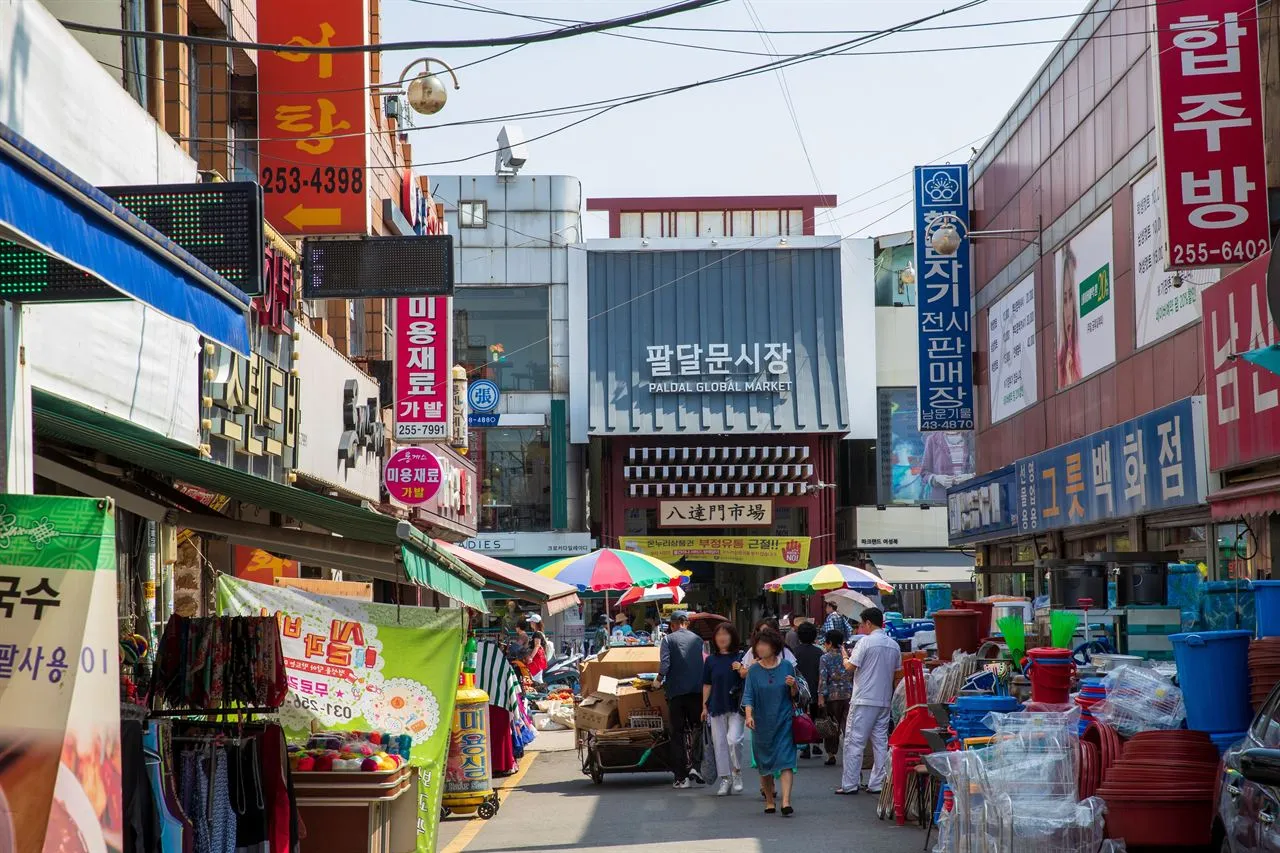
Near Paldalmun, several traditional markets sit close together, and their boundaries blur on the ground. It is a good place for snacks and a short walk, and it works best before or after the south gate.
Suwon galbi
Suwon is commonly associated with galbi (갈비), grilled beef ribs, and many visitors plan one meal around it. Restaurants differ in cut, marinade, portion size, and price, so check the menu and the day's price before ordering.
This guide does not name restaurants. Pick one that is open when you arrive, using a map app and recent reviews, and reserve if the place takes reservations.
For ordering, side dishes, and table etiquette, read the Korean BBQ guide.
Muslim, vegetarian, and allergy-sensitive travelers should assume shared grills, marinades, and sauces. Ask the staff about ingredients before you order, and do not rely on a menu photo.
Night views
The foundation says the fortress is open around the clock and that the walls can be viewed at night. It does not publish lighting hours on the pages checked, so this guide does not give any.
Hwaseong Haenggung has a separate seasonal evening opening. The foundation's night-opening page lists hours as 18:00 to 21:30, last entry at 21:00, and an adult ticket of ₩2,000.
The calendar, weekdays, and season change, and 2026 leaflets exist. Recheck the foundation night-opening page before you go. Festival periods can extend hours.
A practical night plan: stay near the gates and main roads, keep your return train in mind, and leave dark or empty wall stretches for daylight. Late in the evening, a taxi back to the station is often easier than a bus.
Half-day itinerary
This route assumes an arrival in Suwon by mid-morning.
- Bus or taxi from Suwon Station to the Haenggung area.
- Hwaseong Haenggung, allowing time before the last entry.
- A cafe stop in Haenggung-dong.
- Walk toward Hwahongmun and Banghwasuryujeong.
- Taxi or bus back to the station and the ride to Seoul.
Full-day itinerary
This version adds a wall section, a meal, and an evening.
- Reach Suwon Station and transfer to Paldalmun or Haenggung.
- Paldalmun and market snacks.
- Hwaseong Haenggung.
- Lunch or coffee in Haenggung-dong.
- A wall section: Janganmun to Hwaseomun, or the Seojangdae viewpoint.
- Hwahongmun and Banghwasuryujeong as the late-afternoon stop.
- A galbi dinner.
- A short evening look at a gate, then the train or subway back to Seoul.
Cut step 5 first if you are behind. Protect Haenggung and dinner.
Bad weather and what is indoors
The fortress is an outdoor attraction, so it is not an indoor alternative. In heavy rain, snow, or strong heat, shorten the wall walk and keep to gates and level ground.
The foundation lists a Hwaseong Museum open 09:00 to 18:00, with ticket sales until 17:00. It is closed on Mondays. Haenggung has covered halls, but the courtyards are open-air.
Cafes in Haenggung-dong and the market area are the easy rain-day fallback. For a full set of indoor options, use a Seoul plan instead of forcing Suwon.
Best seasons
Spring and autumn are the easiest for walking the walls. Summer works if you start early, carry water, and avoid midday on exposed stretches.
Winter is quiet and clear, but cold, wind, and ice make stairs and hill sections slower. Check the forecast and wear grippy shoes.
Common mistakes
- Assuming Suwon Station is next to the fortress.
- Searching "Hwaseong" and landing in Hwaseong City.
- Treating the free walls and the ticketed Haenggung as one admission.
- Trying to walk all 5.7 km without a plan for stairs, heat, and the return train.
- Planning a night program without rechecking the dates and hours.
- Using bus numbers from an old blog post.
- Packing in Gwanggyo, Starfield, or Everland on the same day.
FAQ
Is Suwon Hwaseong worth a day trip from Seoul?
Yes if you want a UNESCO fortress, a palace visit, and a regional food meal without leaving the Seoul area. It is less useful if you want only shopping or nightlife.
How do I get from Seoul to Suwon?
Take Line 1 or the Suin-Bundang Line to Suwon Station, or a Korail train if a departure fits. Compare the live options in Korail Talk or a map app.
Is Suwon Station near Hwaseong Fortress?
No. The fortress core is a further bus or taxi ride from the station.
Is Hwaseong Fortress free?
The foundation lists the fortress as free and open all hours. Hwaseong Haenggung and some other facilities have separate tickets.
Do I need a ticket for Hwaseong Haenggung?
Yes. As of October 9, 2026, the foundation lists the adult ticket as ₩2,000, with free entry for certain groups. Check the site before you go.
What are the Haenggung opening hours?
The foundation lists 09:00 to 18:00 all year with no closing day, and last entry one hour before closing. Check the page for changes.
Do I have to walk the whole fortress wall?
No. The perimeter is 5,744 m, and a highlights route is the usual first-visit plan.
How long should I stay?
A half day covers Haenggung and a short wall stretch. A full day adds a longer wall section, a galbi meal, and an evening look at a gate.
Is the walk hard?
The east side is flat, while the west side climbs a hill and has stairs. Plan a shorter route if stairs or slopes are a problem.
Can I see the fortress at night?
The foundation says the walls can be viewed at night. It does not list lighting hours, so check on-site conditions and stay on busy routes.
Is Suwon galbi different from Seoul BBQ?
It is the same Korean BBQ family, and Suwon is commonly associated with galbi. Cuts, marinades, and prices vary by restaurant.
What if it rains?
Shorten the wall walk, keep to Haenggung and cafes, and consider the Hwaseong Museum if its hours suit you. The fortress itself is outdoors.
Where should I search on a map?
Use 수원화성, 화성행궁, or 팔달문, not "Hwaseong".
Can I combine Suwon with Everland or the Korean Folk Village?
They are different trips. Give them separate days instead of rushing the fortress.
The bottom line
Choose a route, not the whole wall. Pair Haenggung with one or two gates, add a galbi meal if the day allows, and check hours before you go.
Sources
- Visit KoreaOfficial tourism site
- Suwon Hwaseong / Suwon Cultural Foundation (swcf.or.kr)Official tourism site
- Suwon City OfficialOfficial government site
- UNESCO World Heritage Centre: Hwaseong FortressOfficial government site
- KORAILOfficial transport site
- Seoul Metropolitan Government Open DataOfficial government site
Information is compiled from official sources. Details such as prices, hours, and schedules can change. Confirm time-sensitive facts before you travel.
Last verified on
Related guides
How to Book KTX Train Tickets in Korea: KORAIL, SRT, Korail Pass, and Foreigner Tips
Korea's high-speed trains have been one system since 1 September 2026, when KTX and SRT stopped being two companies with two apps. Every high-speed train, including the Suseo departures that used to be SRT, is now booked in the integrated Korail+ app, on the KORAIL site, or at a station. Below: how to book, which Seoul station fits your trip, paying with an overseas card, and what the fare cut does and does not cover.

Korean BBQ Guide: How to Order and Eat It
Korean barbecue is a grill-it-yourself meal of pork or beef cooked at your table and wrapped in lettuce with sides. The popular cuts, how to order, how the grilling works, what it costs, and the simple etiquette are all below.