
A T-money card is the single most useful thing to buy in your first hour in Korea. It is a rechargeable contactless card that pays for the subway, city buses, and most taxis across the country, and it gives you a small transfer discount that single-ride tickets do not.
You tap it on a reader when you board and again when you leave. This page covers where to get one, what it costs, how to top it up, and the few situations where it does not work.
Where to buy a T-money card
You can buy a T-money card at any convenience store with the T-money logo (GS25, CU, 7-Eleven, and Emart24 all sell them) and at vending machines inside subway stations. Staff at convenience stores are used to the request, but it helps to have the phrase ready.
Say this at a convenience store or subway counter when buying a card.
Polite티머니 카드 주세요
ti-meo-ni ka-deu ju-se-yo
A T-money card, please.
Korean audio isn't available on this device or browser. Use the romanization above to say it.
The card itself is empty when you buy it, so you pay the card fee and then load cash onto it separately. At the airport you can buy and charge one at convenience stores in the arrivals hall before you take the train or bus into the city.
What it costs
A plain card costs about ₩3,000 to 5,000 depending on the design, and that purchase price is not refundable.
Character and special-edition cards cost more. On top of the card you load however much travel credit you want.
A typical single subway ride in Seoul is a few thousand won, and the card applies a discounted transfer when you switch between subway and bus within the time window.
How to charge (top up) the card
Top up with cash at the recharge machines in every subway station or at any convenience store counter. Machines have an English option.
- Tap "Charge" / "Reload" and choose English.
- Place the card on the marked pad.
- Insert cash (machines take bills, usually not coins) and confirm the amount.
- Take your card once the new balance shows.
Convenience stores can only charge with cash, so keep some bills on hand. Hand the card to the cashier and say the amount.
Hand over your card and say the amount you want to add.
Polite만원 충전해 주세요
ma-nwon chung-jeon-hae ju-se-yo
Please load 10,000 won.
Korean audio isn't available on this device or browser. Use the romanization above to say it.
How to use it
Tap the card flat on the reader as you enter, at the subway gate or at the front of a bus, and tap again on the reader when you exit. Buses and the subway both require tapping out, because the fare can depend on distance and on whether you are transferring.
You can also use a T-money balance to pay at convenience stores, in some vending machines, and at many taxis. Look for the T-money sticker before you rely on it.
Where it does not work
T-money is not accepted everywhere, and it is not a credit card. Keep these limits in mind:
- Intercity KTX and long-distance trains use separate tickets, not T-money.
- Some independent taxis and small shops are cash- or card-only.
- A negative or zero balance will block the gate, so keep a small buffer loaded.
Should you get a T-money card or use a phone?
For most visitors a physical T-money card is the simplest choice: it works immediately, needs no Korean bank account, and anyone in your group can carry one. Contactless phone payment and other transit cards exist, but they can require local setup. If you want the full picture of getting around, see the Korea transportation guide and the essential travel apps to install first.
For how a transit card fits with cards, cash, and mobile pay, see how to pay in Korea.
T-money cards vs other transit options
T-money vs single-ride tickets
Single-ride tickets are available at every subway station but cost slightly more per trip than T-money, and you need to buy a new one for every journey. A T-money card applies an automatic transfer discount when you switch between subway and bus within the transfer window (30 minutes after you tap out, extended to 60 minutes between 21:00 and 07:00); single-ride tickets do not. For any stay longer than one day, T-money is simply better value and more convenient.
T-money vs Korea Pass and M-Pass
Some visitors consider a Korea Rail Pass (for multiple KTX trips) or tourism-specific prepaid cards. These serve different purposes: T-money is for urban transit (subway, bus, taxi); it does not cover intercity KTX trains or long-distance coaches, which need separate tickets. Korea Pass and similar products cover intercity rail; T-money covers city transport.
Most visitors need both: the T-money card for getting around cities, and a separate ticket for train journeys between cities. To compare every pass and tourist card by type, see the Korea travel passes guide.
Can I use a contactless phone or watch instead?
Some smartphones and smartwatches support T-money through Samsung Pay or compatible Apple Pay setups, but local bank account setup or Korean carrier SIM is often required. For most foreign visitors, a physical T-money card avoids all of this complexity and works from the first tap.
Using T-money for taxis
Most standard (silver or white) taxis in Korea accept T-money. Look for the T-money sticker on the taxi door or dashboard. Tap your card on the in-car reader at the end of the journey (the reader is usually a pad near the payment terminal).
Note:
- Luxury (black) taxis may not accept T-money.
- A zero or very low balance will be declined; keep at least ₩10,000 loaded as a buffer.
- The taxi driver should tell you the fare; you can also see it on the meter. Tap the card after the driver ends the trip.
See the transportation guide for the full picture on taxis, subway, and bus in Korea.
Common T-money mistakes
- Not charging enough before a long day: Seoul's card base fare is ₩1,550, rising with distance; a full day across the city can cost ₩8,000 to 15,000 or more. Load ₩20,000 to 30,000 for a multi-day stay.
- Forgetting to tap out: the system deducts a penalty fare on your next trip if you did not exit properly. Always tap on the way out.
- Using T-money to buy KTX tickets: T-money does not work for intercity train tickets. Book those separately (see the KTX booking guide).
- Losing the card before refunding: you cannot refund the balance without the physical card. Keep it safe; refund the remaining credit at a convenience store before you leave. For the full last-day order around the airport, see the leaving Korea departure guide.
Frequently asked questions
Where do I buy a T-money card in Korea?
At any convenience store displaying the T-money logo (GS25, CU, 7-Eleven, Emart24) and at vending machines inside subway stations. At Incheon Airport, convenience stores in the arrivals hall sell and charge them before you reach the city. A plain card costs about ₩3,000 to 5,000, and that purchase price is not refundable; charge it with cash at the same time.
How do I top up my T-money card?
At any subway station recharge machine (choose English, place card on pad, insert cash) or at any convenience store counter (hand the card to the cashier and say the amount). Machines and counters accept bills; some do not take coins. Keep cash available: a plain T-money card cannot be recharged with a foreign card. The 2026 machines on Lines 1 to 8 that do take an overseas Visa or Mastercard sell Climate Cards, short-term Climate Card passes and single-journey tickets, which is a different product from a T-money top-up. See how to pay in Korea.
Does T-money work in Busan and other cities?
Yes: T-money works on subways, city buses, and taxis throughout Korea, including Busan, Daegu, Gwangju, and smaller cities. You do not need a separate card for each city. The only limitation is intercity trains (KTX, SRT) and long-distance buses, which require separate tickets.
Can I get a refund on my T-money balance?
Yes, with a small fee. The limit depends on where you ask, not on how recently you topped up: convenience stores refund small balances, and a subway station information desk handles larger ones. The card purchase price is never refunded. Check the current limits and fee on the official T-money site before relying on a specific figure.
If you visit Korea again, keep the card. It does not expire.
What happens if my T-money balance runs out at the gate?
The gate will not open and you will see a zero-balance warning. Recharge at the machine in the station before trying again. If your balance is low but not zero, the fare is still deducted, which can leave you with a negative balance.
The negative balance is charged on your next top-up. Keep a small buffer (₩2,000 to 5,000) loaded to avoid this.
Sources
- T-money (Korea Smart Card)Official transport site
- Seoul Metropolitan Government Open DataOfficial government site
- KORAILOfficial transport site
- Airport Railroad (AREX)Official transport site
Information is compiled from official sources. Details such as prices, hours, and schedules can change. Confirm time-sensitive facts before you travel.
Last verified on
Related guides

How to Pay in Korea: Credit Cards, Cash, WOWPASS, ATMs, and Mobile Pay
Korea is card-friendly, but the smartest setup is not to rely on one method. Bring a foreign credit or debit card, keep a little cash, get a transit card, and consider a foreigner prepaid card like WOWPASS for the kiosks that reject foreign cards. The breakdown below is current for 2026. Check foreign-transaction rules with your bank before you leave.
Korea Travel Passes and Tourist Cards: Which One, If Any, Should You Buy?
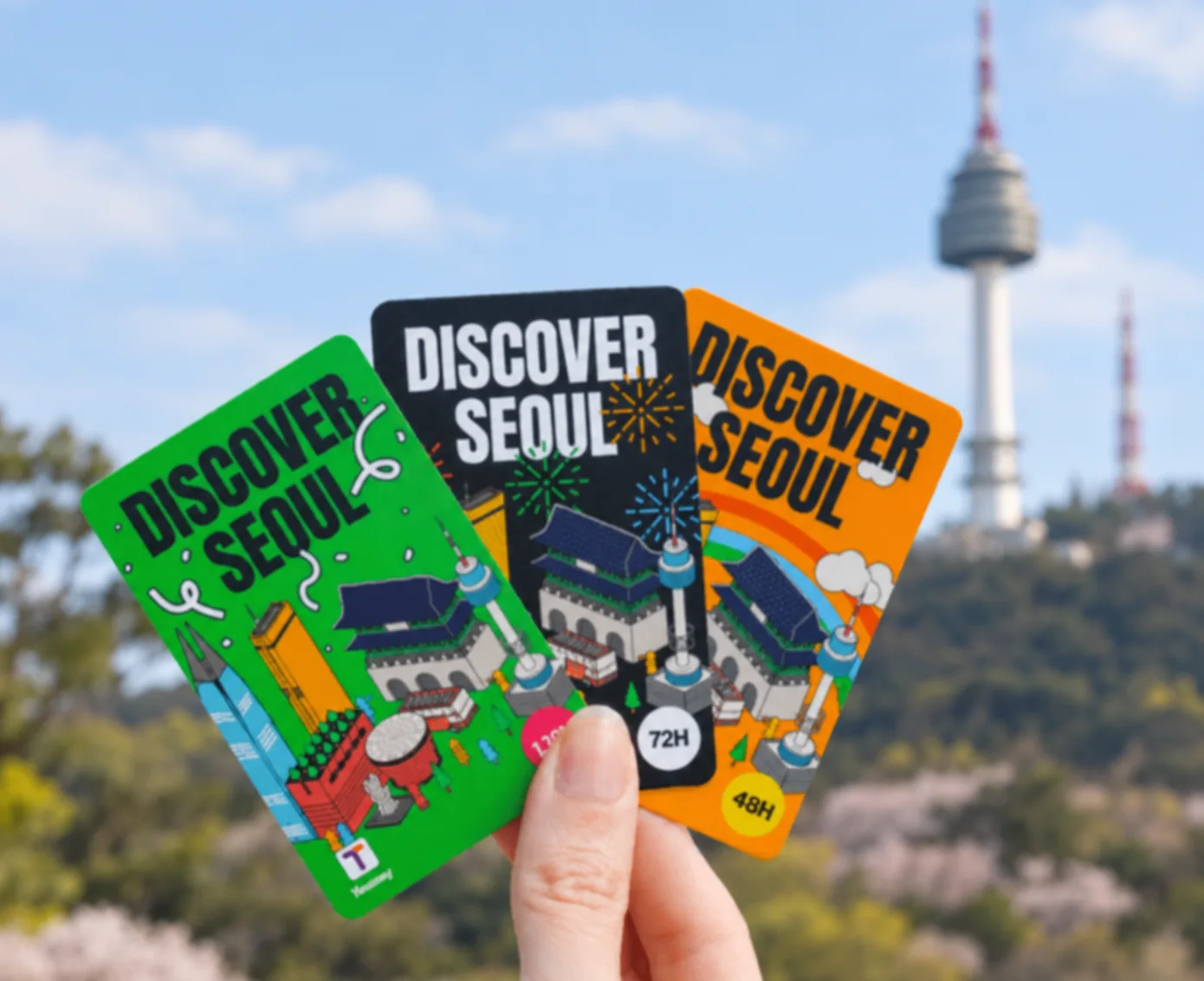
Most Korea passes are not the same kind of product, so compare them by type. The KORAIL Pass is for intercity trains, the Seoul Climate Card is for Seoul subways and city buses, and Discover Seoul Pass and Visit Busan Pass are attraction passes. WOWPASS is a prepaid payment card, and T-money is the baseline card most visitors need anyway. Many trips are best served by a T-money card and no pass at all.