
Korea's high-speed trains make day trips and multi-city routes genuinely easy, Seoul to Busan in about two and a half hours.
The rules for booking them change on 1 September 2026. KORAIL and SR, which ran KTX and SRT as two separate companies with two separate apps, have been approved to combine.
Which set of rules applies to you depends on the date your train runs, not the date you book.
That distinction decides your whole booking method, so it comes first, before stations, cards or passes.
Fares, timetables, and app menus change, so treat specifics here as orientation and confirm on the official channels when you book. Sort out payment first with how to pay in Korea, and see the Korea transportation guide for the bigger getting-around picture.
Quick answer
| Question | Short answer |
|---|---|
| Which date rule applies? | The date your train runs, not the date you book |
| Train runs through 31 August 2026? | Still split: KTX in Korail+ or KorailTalk, SRT in the SRT app |
| Train runs from 1 September 2026? | One system. Book in Korail+ or on the KORAIL site, already open since 5 August |
| Easiest with a foreign card? | Usually the KORAIL side ("issued overseas" option) |
| Does the Korail Pass cover ex-SRT trains? | Not published. Check official information before buying |
| Biggest mistake? | Going to the wrong station: pick the station first, then the train |
Fares, timetables, booking-open dates, and app screen names can all change. Check the official timetable and menus before you rely on them, and book early around holidays.
Which set of rules applies to you
| Your train runs | How you book | What it costs |
|---|---|---|
| Through 31 August 2026 | Still two systems. KTX in Korail+ or the older KorailTalk; SRT in the separate SRT app | Today's fares |
| From 1 September 2026 | One system. Korail+ or the KORAIL site books both. Reservations have been open since 5 August | KTX-line high-speed fares drop about 10% |
The app itself is already integrated: Korail+ launched on 3 August 2026, as an update to KorailTalk or a fresh install, and shows Seoul-departing and Suseo-departing trains together.
What it will not do is book you an SRT seat for an August train. For those, the SRT app is still the only route.
That is the single detail most likely to strand a traveler this month.
If you already hold a KORAIL account it converts automatically. If you hold an SR account, or both, you have to complete a conversion step on the website.
- ITX and Mugunghwa: KORAIL's slower, cheaper conventional trains. Useful for shorter or scenic trips; book them the same way as KTX.
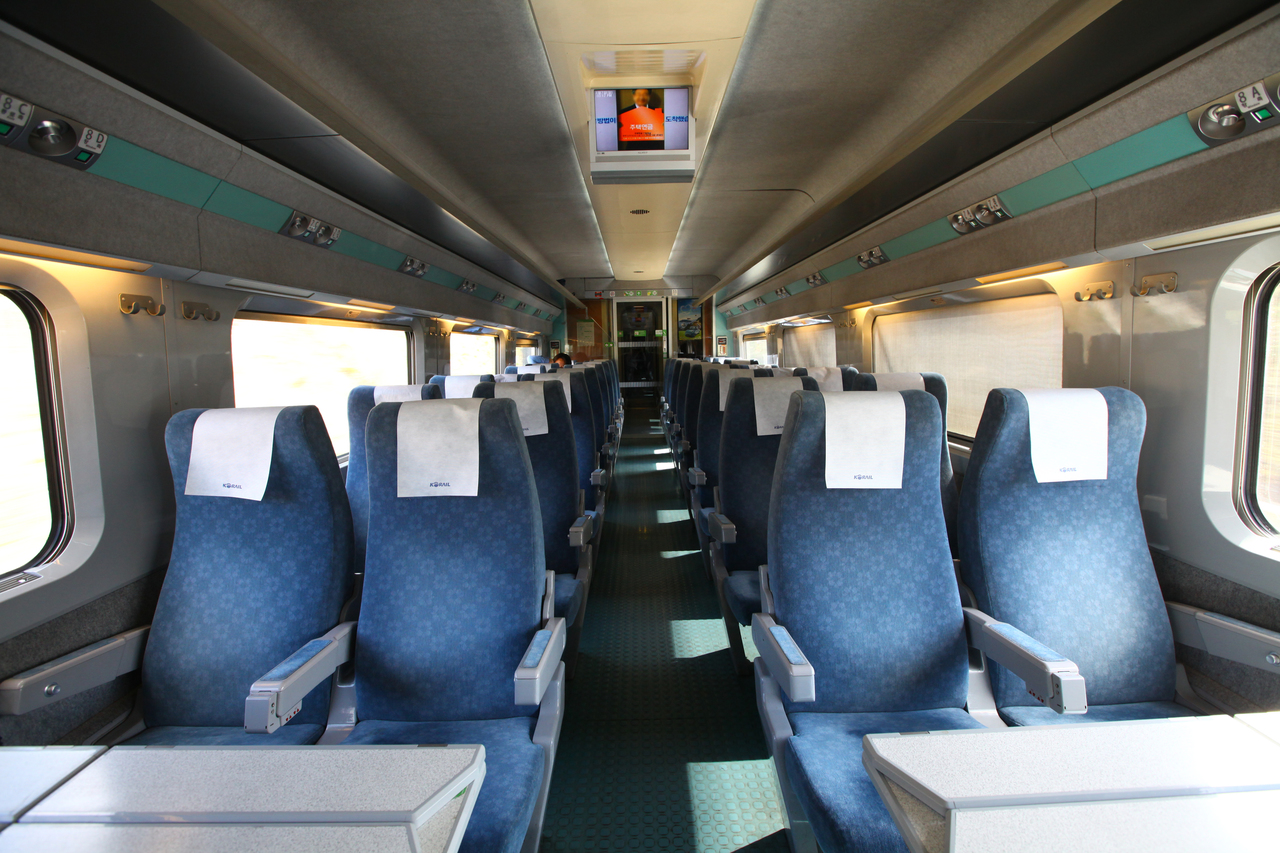
What the fare cut is, and is not
From the start of integrated operation, existing KTX-line high-speed fares are cut about 10% to match existing SRT fares, held for three years as a condition of the approval. The government briefing states the cut as an average to SRT parity; it does not publish a single Seoul to Busan price, so check the fare for your train rather than reverse-engineering a number.
Read that carefully before budgeting:
- It is a cut on the KTX side down to SRT's price, not an average across both. If you were already planning to ride SRT, your fare is the benchmark and does not fall.
- It applies from 1 September 2026, not now.
- The commitment is worded around SRT fare parity, so whether it reaches routes SRT never served, such as Gangneung or the Jungang line, is not something the announcement settles. Check the fare for your own route rather than assuming a 10% cut everywhere.
Capacity rises at the same time: roughly 17,000 more weekend seats and at least 25 more runs across the network, with mileage accruing at 5% on the former SRT routes as it already does on KTX.
Which Seoul station? (pick this first)
The single most useful habit is to choose the station before the train, based on where you're staying:
- Seoul Station: Subway Lines 1 and 4 and the AREX airport line; convenient for Myeongdong, Jongno, and the Hongdae side. KTX to Busan, Daegu, and many destinations.
- Yongsan Station: Line 1; many departures toward Jeonju, Yeosu, Mokpo, and Gwangju.
- Cheongnyangni Station: the eastern gateway; KTX toward Gangneung and Donghae.
- Suseo Station: Line 3 (Gangnam/Songpa/Jamsil side) and the Bundang line; this is the SRT station. If you're staying around Jamsil/Songpa or Gangnam, SRT from Suseo can be the closer option.
A train that leaves from the wrong side of the city can add an hour to your day, so match the station to your base, not just the destination.
How to book KTX online
KTX is generally the easiest high-speed option for foreign visitors to book:
- Use the Korail+ app, the KorailTalk update it replaced, or the English KORAIL site. (The app tends to handle overseas cards more smoothly than the website.)
- Search your route, date, and time, and pick a train and seat.
- At payment, choose the option for a card issued overseas when prompted, and pay.
Screen names and menu paths can change, so follow the current in-app labels rather than a fixed script, and double-check the departure station shown on your booking.
Foreign-card tips. If a card is declined, it's usually not you. Try these before giving up:
- Try the app instead of the website (or vice versa), or a different browser.
- Try a different card (a Visa/Mastercard credit card often works best).
- Register a foreign card to Apple Pay at a KORAIL station, where supported, see how to pay in Korea.
- Buy at a station ticket counter or machine if online payment won't go through.
- Stay flexible on times: if one train won't process, another departure may.
There's no card that "always works," so build in a little buffer rather than counting on a single method.
How to book SRT
For a train running through 31 August 2026, SRT is still booked through SR's own app or website, separate from KORAIL.
From 1 September those departures move into Korail+ with everything else. Either way it leaves from Suseo, so it suits anyone based on the Gangnam/Songpa side of Seoul.
The catch for visitors: SRT's booking can involve identity verification that assumes a Korean phone number, which makes it harder for foreigners without one. If you're not staying near Suseo and the verification gets in your way, KTX is usually the smoother choice. When SRT does work for you, the booking flow is otherwise similar, search, pick a seat, pay.
Is the Korail Pass worth it?
The Korail Pass gives unlimited rides over a set number of days on KORAIL trains: KTX, ITX, and Mugunghwa. Whether it pays off depends on how much you'll actually ride:
- Worth considering if you're doing several long KORAIL trips in a short window (for example a multi-city loop in a few days).
- Probably not worth it if you're only doing one round trip, individual tickets are often cheaper.
A few essentials:
- You still need a seat reservation for each trip; the pass isn't a walk-on ticket.
- It's aimed at foreign passport holders: check the current eligibility and pricing on the official Korail Pass page.
For the full break-even math and when it does (and doesn't) save money, see the Korail Pass guide for foreigners.
The Korail Pass and SRT: do not assume either way right now. The pass has historically covered KORAIL trains only, and riding SRT on it was treated as fare evasion with a heavy penalty. From 1 September 2026 SR stops being a separate operator, but the approval announcement says nothing about the Korail Pass, and KORAIL has not published updated pass terms. Confirm what your pass covers with KORAIL before you board a former SRT service. Until you have that in writing, ride the KTX cars.
Popular routes
Departure stations vary by route and by individual train, so always confirm on the official timetable.
| Route | Typical Seoul station | Note |
|---|---|---|
| Seoul → Busan | Seoul Station (KTX) / Suseo (SRT) | The flagship line; ~2.5 hours by KTX |
| Seoul → Gyeongju | Seoul Station / Suseo | Arrives Singyeongju, outside the center: transfer into town |
| Seoul → Daegu (Dongdaegu) | Seoul Station / Suseo | On the Busan line |
| Seoul → Gangneung | Cheongnyangni (KTX) | KTX Gangneung line; no SRT |
| Seoul → Jeonju | Yongsan | Often from Yongsan, not Seoul Station |
| Seoul → Yeosu (Expo) | Yongsan | Scenic southern route |
| Seoul → Daejeon | Seoul Station / Suseo | A short, frequent hop |
| Seoul → Mokpo | Yongsan | Southwest terminus |
For Busan trips, pair this with the Busan guide and where to stay in Busan; for a longer loop, the Korea 7-day itinerary strings several of these together. For the two most popular historic-town routes, see Seoul to Gyeongju and Seoul to Jeonju by train.
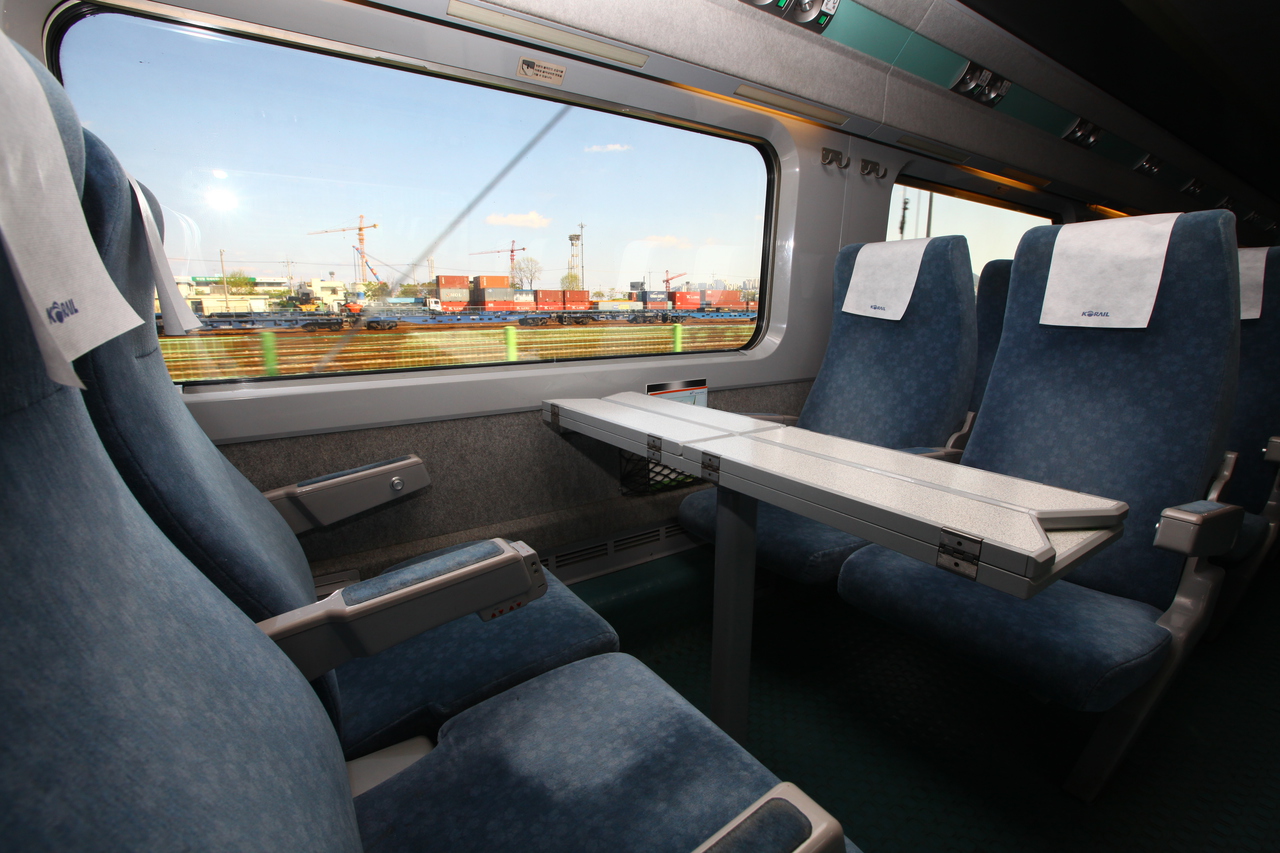
Seat types
High-speed trains generally offer a standard (economy) class and a roomier first class, plus reserved versus standing/non-reserved options when seats sell out. For most visitors, a reserved standard seat is all you need; reserve early on busy routes so you're not left standing.
When to book
- Everyday travel: you can often book a day or two ahead, or even same-day off-peak.
- Weekends and peak season: reserve earlier, because popular departures fill up.
- Major holidays (especially Seollal/Lunar New Year and Chuseok): trains can sell out very early, and booking opens on set dates. If your trip overlaps a holiday, plan well ahead and check when reservations open.
If your train is sold out
- Check nearby departure times, or the other system (if KTX is full, an SRT train, or vice versa, may have space).
- Consider a standing/non-reserved ticket for shorter hops.
- Look at ITX or Mugunghwa conventional trains, or intercity buses, as alternatives.
- Use only official channels (KORAIL, SR, and station counters). Avoid unofficial resellers or ticket touts: they're unnecessary and risky.
On travel day: a quick checklist
- Go to the right station: re-check whether it's Seoul, Yongsan, Cheongnyangni, or Suseo.
- Arrive with time to find your platform; high-speed trains leave promptly.
- Have your ticket in the official app (or printed); you generally don't need to tap through gates, but staff may check onboard.
- Board the correct cars on your ticket. If you hold a Korail Pass on a multi-company consist that still exists before full integration, follow current KORAIL rules for which cars count as covered.
- Keep your bag with you and mind the quiet, orderly carriage etiquette.
Common mistakes
- Going to the wrong station: the classic error; Suseo (SRT) and Seoul Station (KTX) are not interchangeable.
- Assuming you know what a Korail Pass covers after 1 September: the terms have not been published. Check before you ride a former SRT service.
- Forgetting Gyeongju arrives at Singyeongju, away from the center. Plan the onward transfer.
- Leaving holiday travel to the last minute: Seollal and Chuseok trains sell out early.
- Giving up when a foreign card is declined: try another method or the station counter.
- Booking SRT from a non-Gangnam base and fighting the verification, when KTX would be simpler.
Frequently asked questions
What's the difference between KTX and SRT?
Until 31 August 2026, two operators: KTX by KORAIL from Seoul Station and Yongsan, SRT by SR from Suseo, with separate apps and tickets.
From 1 September they are one operator booked in one app. The stations stay where they are, so the station question outlives the merger.
Which is easier for foreigners to book, KTX or SRT?
Usually the KORAIL side, via Korail+ (the app that replaced KorailTalk) or the KORAIL site with the "issued overseas" card option. SRT's own booking has required identity verification that is harder without a Korean phone number, which is one reason the integration matters for visitors.
Can I use a Korail Pass on SRT?
Historically no, and using it that way was treated as fare evasion with a heavy penalty.
What happens from 1 September 2026 is not published. The approval announcement does not mention the pass, so check with KORAIL rather than assuming the merger changed it.
How do I book a KTX ticket online?
Use the Korail+ app or the KORAIL site: search your route and time, pick a seat, and pay, choosing the overseas-card option at checkout. Or buy at a station counter or machine.
My foreign card was declined: what can I do?
Try the app instead of the website (or a different browser), a different card, Apple Pay registered at a KORAIL station, or simply buy at the station counter. Staying flexible on times helps too.
Which Seoul station do high-speed trains leave from?
KTX mainly from Seoul Station and Yongsan (some from Cheongnyangni); SRT from Suseo. Pick the station that's convenient to where you're staying.
Is the Korail Pass worth it?
It can be if you're taking several long KORAIL trips in a few days; for a single round trip, separate tickets are often cheaper. You still need a seat reservation for each ride.
Do I need to reserve a seat with a Korail Pass?
Yes, the pass gives you rides, but you still book a seat reservation for each journey.
How far in advance should I book?
For normal travel, a day or two is often fine; for weekends, peak season, and especially Seollal and Chuseok holidays, book as early as you can, those sell out fast.
How long is Seoul to Busan by train?
About two and a half hours by KTX, depending on the service and stops.
Are KTX and SRT prices the same?
They have been broadly similar, with SRT slightly cheaper on shared routes. From 1 September 2026 KTX-line fares are cut about 10% to match SRT's level, so on those corridors they converge.
Check the fare for your own route rather than assuming the cut applies everywhere.
Can I just buy a ticket at the station?
Yes. Station counters and machines are a reliable fallback, especially if online card payment won't go through, though busy departures may already be sold out.
Is there a train straight to central Gyeongju?
Not quite: high-speed trains serve Singyeongju, outside the city, so plan a short bus or taxi transfer into the center. See Seoul to Gyeongju by train for the station-name change and transfer details.
How do I get to Gangneung by train?
By KTX on the Gangneung line from Cheongnyangni Station. There's no SRT to Gangneung.
What happens with coupled or cross-running trains in 2026?
Some services now run coupled or cross-run between operators. Always check your booking's departure station and train, don't move between KTX and SRT cars en route, and Korail Pass holders should ride the KTX cars only.
Do I need to print my ticket?
Usually no: a ticket in the official app is fine, and there are typically no entry gates, but keep it handy for onboard checks.
Is the train better than flying or the bus?
For most Seoul-Busan-type trips, the high-speed train is fast, central, and frequent. Buses are cheaper and reach places trains don't; flying rarely saves time once you add airport transfers.
Are trains accessible with luggage and strollers?
Yes. There's overhead and end-of-car luggage space.
Travel light in peak times, and reserve seats so your group sits together.
Can I change or refund a ticket?
Generally yes, through the same app or site you booked with, subject to time limits and possible fees. Check the current rules when you book.
Final recommendation
Book Korea's high-speed trains with one principle in mind: the station matters as much as the train. Decide whether KTX (Seoul Station or Yongsan) or SRT (Suseo) fits where you're staying, book KTX through Korail+ or the KORAIL site with the overseas-card option, and keep a fallback (a different card, Apple Pay, or the station counter) ready. If you're riding a lot in a few days, price out a Korail Pass, and confirm with KORAIL what it covers from September.
Confirm fares, times, and departure stations on the official channels, plan around the holidays, and the rest is just enjoying a fast, comfortable ride. The biggest mistake travelers make isn't catching the wrong train. It's going to the wrong station.
Sources
- KORAILOfficial transport site
- Government of Korea policy briefing, Fair Trade Commission and MOLIT joint release on the KORAIL-SR business combination (2 August 2026)Official government site
- Government of Korea policy briefing, KORAIL-SR combination approved and the integrated Korail+ app launched (3 August 2026)Official government site
- Visit KoreaOfficial tourism site
- Seoul Metropolitan Government Open DataOfficial government site
Information is compiled from official sources. Details such as prices, hours, and schedules can change. Confirm time-sensitive facts before you travel.
Last verified on
Related guides

How to Pay in Korea: Credit Cards, Cash, WOWPASS, ATMs, and Mobile Pay
Korea is card-friendly, but the smartest setup is not to rely on one method. Bring a foreign credit or debit card, keep a little cash, get a transit card, and consider a foreigner prepaid card like WOWPASS for the kiosks that reject foreign cards. The breakdown below is current for 2026. Check foreign-transaction rules with your bank before you leave.

Korea 7-Day Itinerary for First-Time Visitors
A realistic one-week route for first-time visitors: three days in Seoul, a day of history in Gyeongju, two days in Busan, and a flexible buffer day, all connected by fast KTX trains so you spend time in places, not in transit.