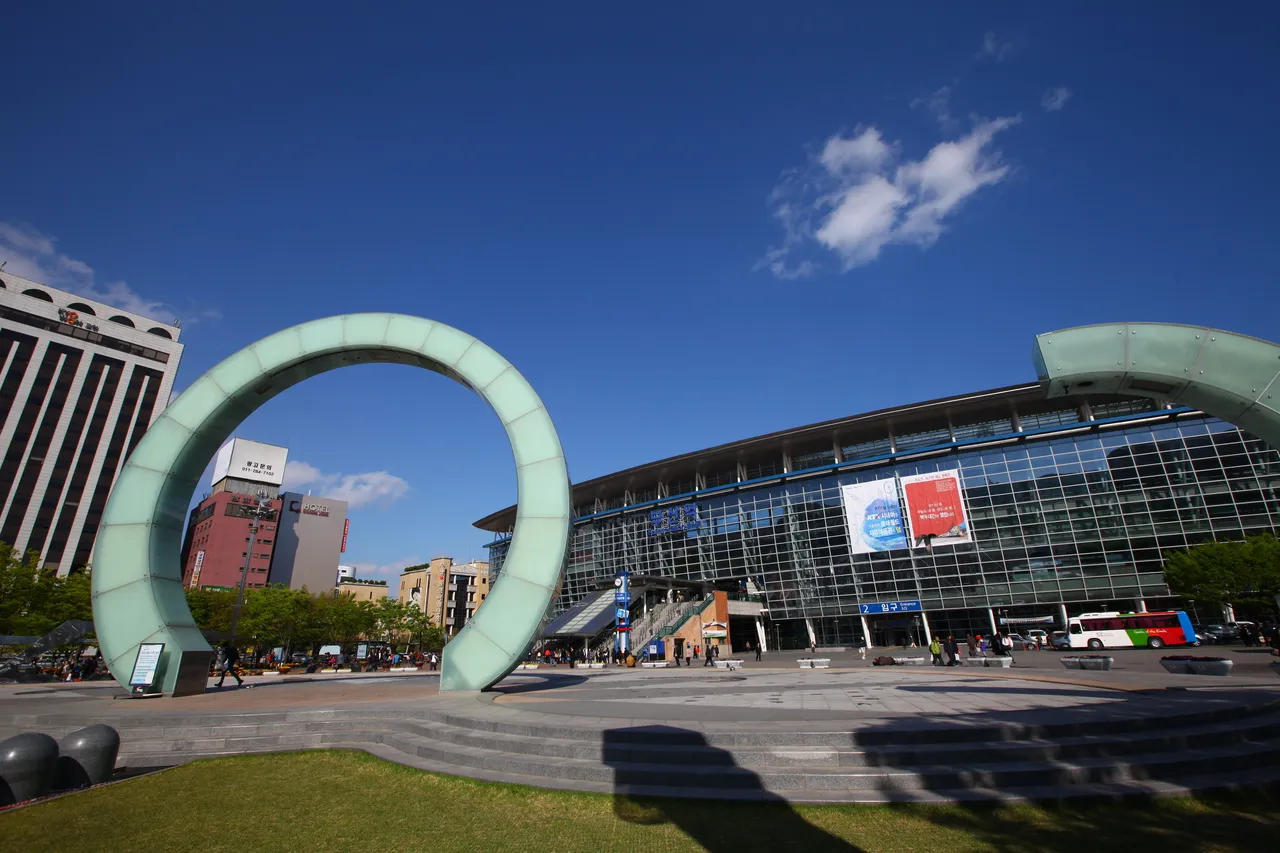
Taking the KTX from Seoul to Gyeongju is the easy part, a couple of hours on a fast train. The part that catches first-time visitors out is what happens when you arrive: the high-speed station is not in Gyeongju's historic center.
It sits out on the edge of the city, so getting to the royal tombs, Cheomseongdae, and the Hwangridan-gil cafe street means a second, separate trip from the station into town, and the famous Bulguksa temple is further still. Plan that transfer and the day falls into place; ignore it and you'll lose time.
This guide is the route-specific companion to the broader KTX booking guide. Read that for the booking and payment mechanics, and use this for the Gyeongju-specific details.
Times, fares, and bus numbers below are approximate and change, so confirm with KORAIL and a Korean map app (Naver Map or KakaoMap) before you travel.
Quick answer
| Question | Short answer |
|---|---|
| How long is the train? | Roughly 2 hours by KTX from Seoul (check the timetable) |
| Which station do I arrive at? | The KTX station outside the city: recently renamed (see below) |
| Is the station in the center? | No: it's about 11 km out; plan a bus or taxi into town |
| How do I get into town? | Bus (~20 to 30 min) or taxi (~12 to 20 min), approximate |
| Can I see Bulguksa the same day? | It's a separate, longer trip: possible but tight |
Fares, schedules, and bus routes change. Verify with official and map-app sources, and don't rely on a fixed time or number from any guide.
The train, and an important station note
The KTX runs south from Seoul to Gyeongju in around two hours (confirm the current timetable). Two things to get straight before you book:
- The station was renamed. The high-speed station once called Singyeongju Station has been renamed "Gyeongju Station" (the old downtown Gyeongju station closed). But it's the same out-of-town KTX station: the name change didn't move it into the center.
- Maps may still say "Singyeongju." Google and other maps can still label it Singyeongju Station, so in booking and navigation you may see both "Gyeongju" and "Singyeongju" pointing at the same KTX stop. Check the location/address so you're routing to the right place.
The key takeaway either way: arriving here does not put you at Daereungwon or Hwangridan-gil: those are a transfer away.
How to book the KTX
Book through KORAIL's official channels: the Korail+ app or the English KORAIL site: choosing the overseas-card option at payment. Screen names and menus can change, and fares and timetables vary, so follow the current in-app labels and confirm prices officially rather than trusting a fixed figure.
If a foreign card is declined, it's usually not you. Try the app instead of the website (or a different browser), a different card, or buy at a station counter or machine. For the full walk-through (including the Korail Pass and station-name traps), see the KTX booking guide.
Use only official channels: there's no need for unofficial resellers.
Which Seoul station?
KTX trains to Gyeongju generally leave from Seoul Station, though departures can vary by train, so check the departure station shown on your booking (Seoul's high-speed trains use more than one station). A T-money card covers the subway to whichever station you need.
Arriving at the KTX station: getting into town
The KTX station is roughly 11 km from the historic center: about a 20 to 30 minute bus ride or a 12 to 20 minute taxi, give or take. Your main options:
| Option | Notes |
|---|---|
| Bus | Routes such as 50, 70, and 700 run from the station toward the center and bus terminals; frequent, cheap. Confirm the number and stop on a map app. |
| Taxi | Quicker and simple with luggage; metered. Have your destination in Korean or on a map. |
| Rental car | Counters are near the station; useful for Bulguksa, Seokguram, and Bomun, less so for the walkable center. |
| Hotel pickup / tour | Some stays and tours arrange transfers: confirm in advance. |
City buses cost roughly ₩1,250 to 1,650 (a flat fare regardless of distance), and a T-money card works on Gyeongju buses. For routing, Naver Map or KakaoMap work far better than Google Maps in Korea (KakaoMap has English). Don't rely on Google Maps alone here.
Where to go after the station
Three different "zones," and they're not all close together:
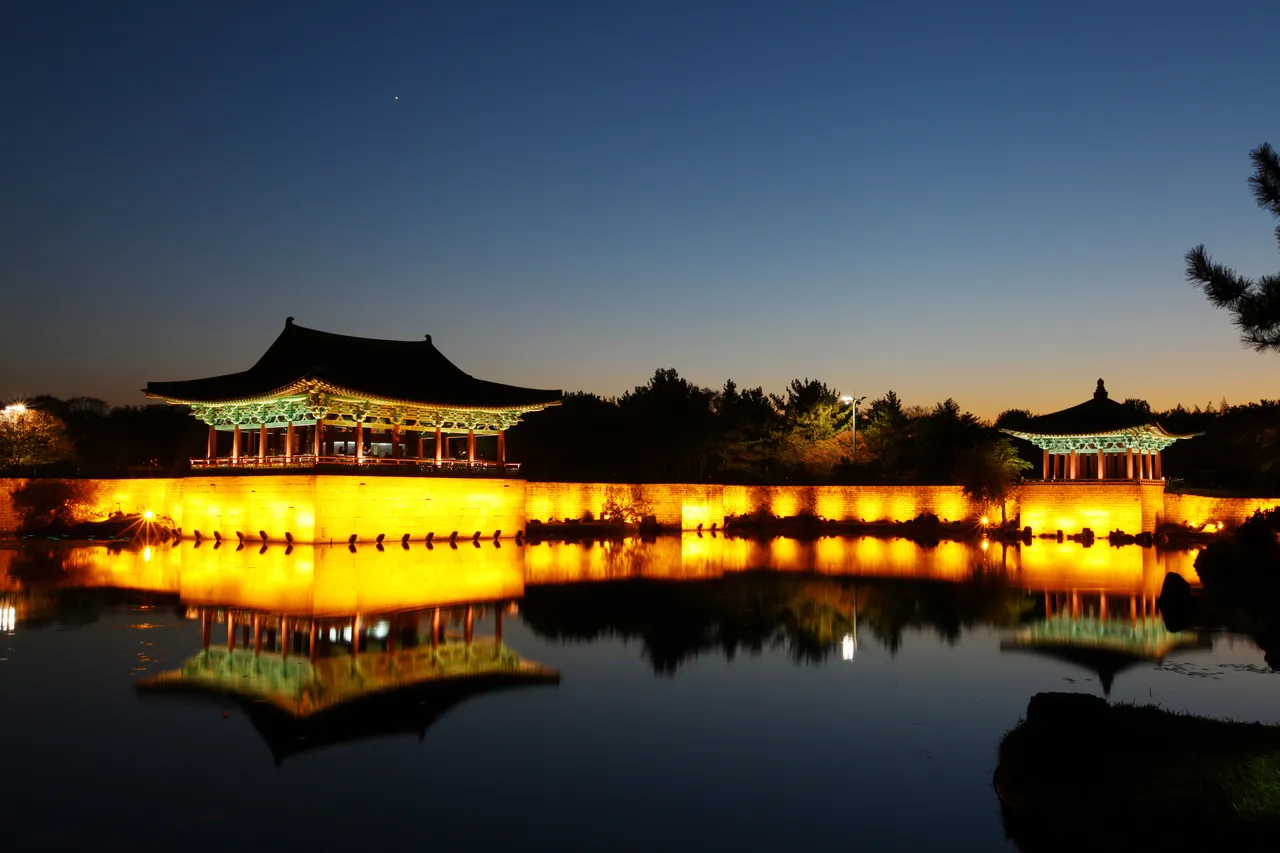
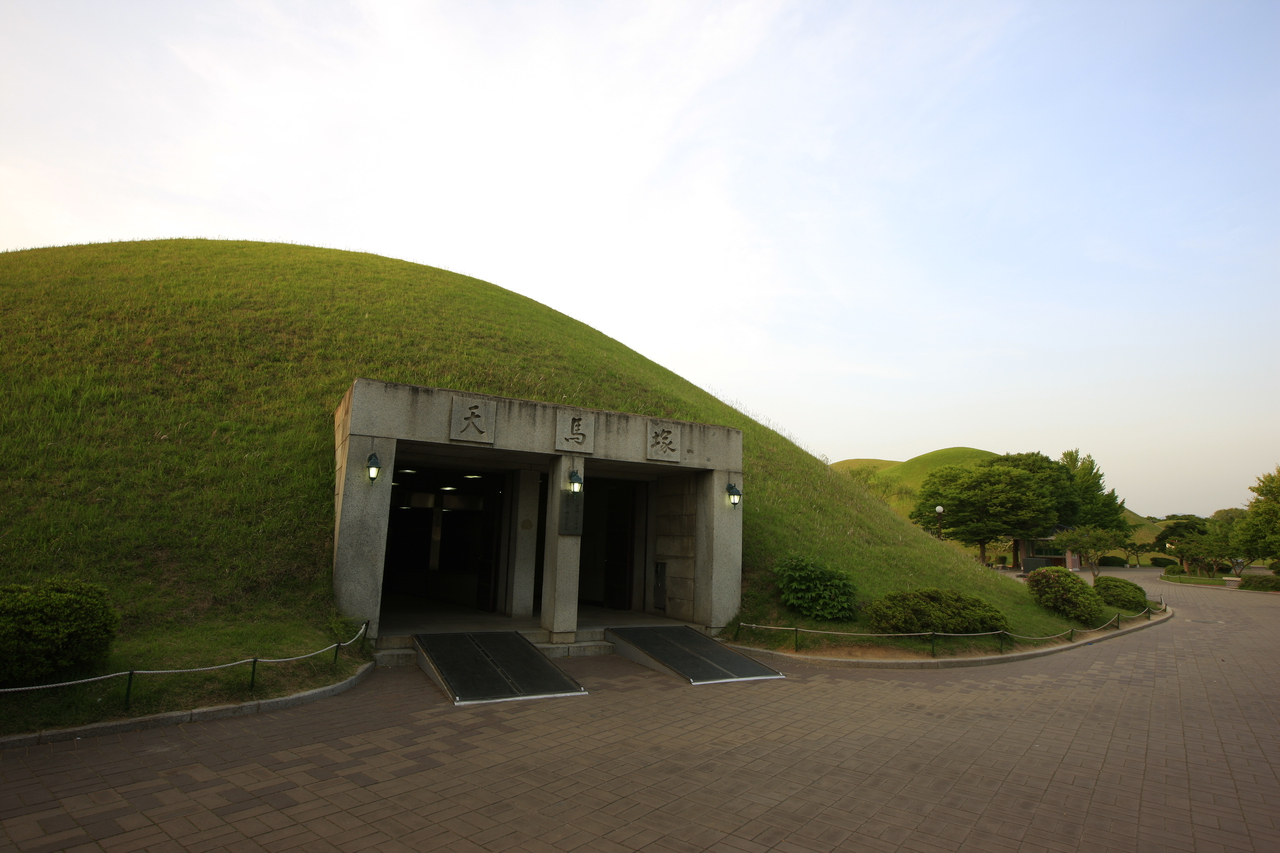
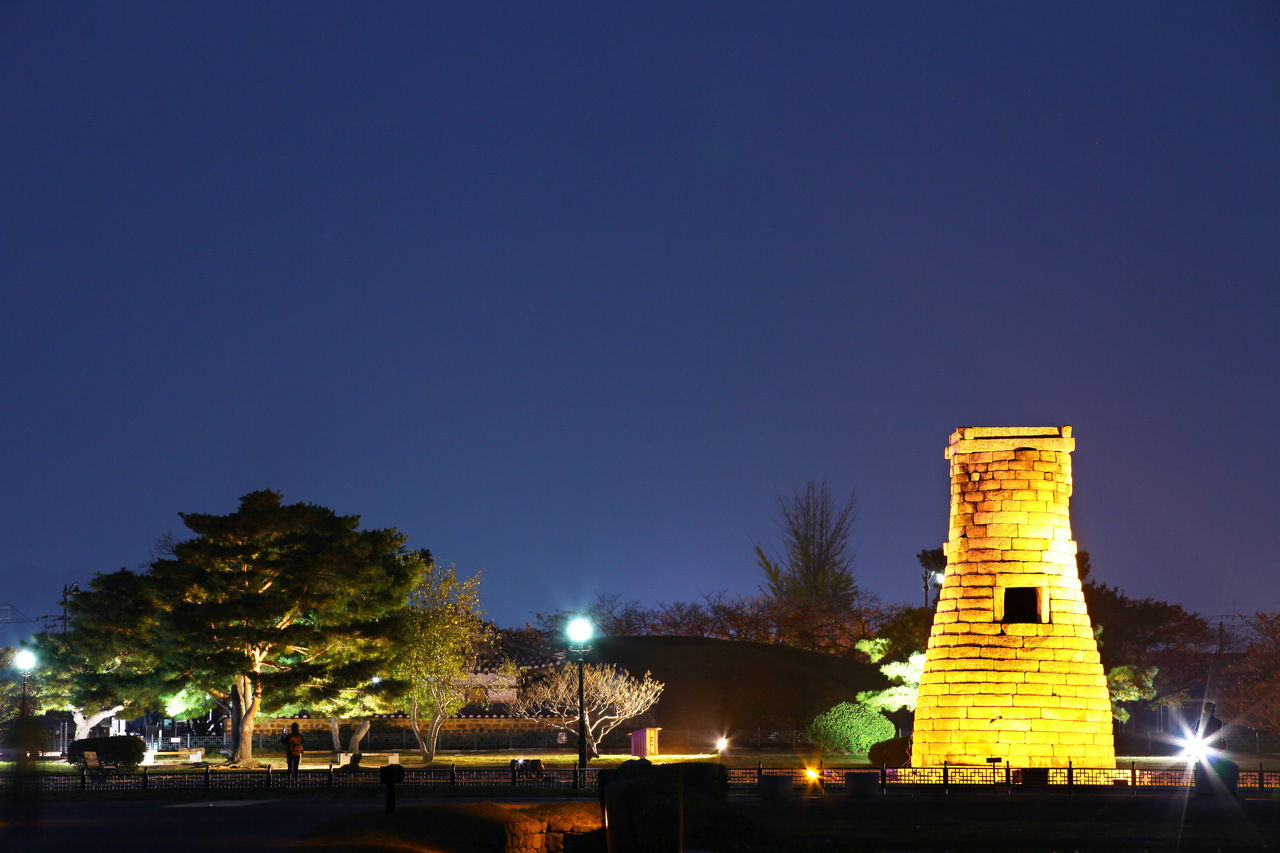
- The historic center (walkable). Once you're in town, Daereungwon (royal tombs), Cheomseongdae, Donggung & Wolji pond, and the Hwangridan-gil cafe street are clustered close. You can walk from one end to the other in roughly 30 minutes. This is the easy, on-foot part of Gyeongju.
- Bomun Tourist Complex. A resort-and-lake area (served by bus 700) that's separate from the historic center: a calmer base for families or resort stays, and a possible mid-point toward Bulguksa, but not where the walkable sightseeing is.
- Bulguksa and Seokguram (further east). Bulguksa is well outside town, roughly bus 700 for about an hour, or ~24 minutes by taxi from the station area (about 13 km). Seokguram Grotto is a further ~4 km uphill from Bulguksa, and the Bulguksa-Seokguram bus runs only about once an hour (miss it and it's a taxi). Treat these as a separate half-day from the center.
How long do you need?
- Day trip (tight). Doable, but you'll feel it: the train each way, the station-to-center transfer, and then a choice between the walkable historic center or the Bulguksa/Seokguram side, not both comfortably. Pick one.
- One night (realistic). The sweet spot for most: an afternoon in the historic center, the lit-up Wolji pond in the evening, and Bulguksa/Seokguram the next morning before heading on.
- Two nights (relaxed). Add Bomun, more of the tombs and museums, or a slower pace, without rushing the transfers.
Seoul → Gyeongju → Busan
Gyeongju sits neatly between Seoul and Busan, so many travelers continue south. A short KTX or bus hop links Gyeongju to Busan after your visit. Pair it with the Busan guide and where to stay in Busan, and see how the whole leg fits the 10-day Korea itinerary.
Luggage tips
If you're day-tripping or moving on the same day, traveling light makes the station transfer and the walkable center much easier. Lockers and luggage storage may be available at stations and some sites, but availability and sizes vary: don't count on a specific locker. Confirm on the day or ask your accommodation.
Common mistakes
- Expecting the KTX station to be in Gyeongju's center. It's about 11 km out. Plan the transfer.
- Being thrown by the name. "Gyeongju Station" (renamed) and "Singyeongju Station" (older maps) can mean the same out-of-town KTX stop: check the address.
- Assuming Bulguksa is in town. It's a separate, longer trip east, and Seokguram is further still.
- Trying to do the center and Bulguksa/Seokguram in one rushed day trip. Pick one, or stay a night.
- Relying on Google Maps for buses. Use Naver Map or KakaoMap for Korean transit.
- Treating bus numbers and fares here as fixed. Confirm them live before you ride.
Frequently asked questions
How do I get from Seoul to Gyeongju? By KTX from Seoul in about two hours to Gyeongju's high-speed station, then a bus or taxi into the historic center. Check the current timetable and fares with KORAIL.
Is there a direct train to Gyeongju city center? No: the KTX station is outside the center, so you transfer in by bus (about 20 to 30 minutes) or taxi (about 12 to 20 minutes).
Why do maps show "Singyeongju Station"? The KTX station formerly called Singyeongju has been renamed "Gyeongju Station," but some maps still use the old name. Both refer to the same out-of-town high-speed stop.
Check the location.
How far is the KTX station from Gyeongju's old town? Roughly 11 km: about a 20 to 30 minute bus ride or a 12 to 20 minute taxi, approximately.
How do I get to Bulguksa from the station? Bulguksa is further east, around an hour by bus (route 700) or about 24 minutes by taxi from the station area. Seokguram is a further ~4 km uphill, with an hourly bus.
Confirm routes on a map app.
Can I see Gyeongju as a day trip from Seoul? Yes, but it's tight. You'll likely choose between the walkable historic center and the Bulguksa/Seokguram side.
One night is more comfortable.
Are Gyeongju's main sights walkable? Once you're in the historic center, yes: Daereungwon, Cheomseongdae, Donggung & Wolji, and Hwangridan-gil are within about a 30-minute walk end to end.
How much is the city bus, and can I use T-money? City buses are roughly ₩1,250 to 1,650 (a flat fare), and a T-money card works on Gyeongju buses. Carry a little cash as a backup.
Which Seoul station does the train leave from? Usually Seoul Station, but it can vary by train. Check the departure station on your booking, since Seoul's high-speed trains use more than one station.
How do I book the KTX as a foreigner? Through the Korail+ app or the KORAIL site with the overseas-card option, or at a station counter. See the KTX booking guide for details and card-failure fixes.
Is the train or the bus better to Gyeongju? The KTX is faster; intercity buses can be cheaper and reach different points. Either way, plan the onward transfer into the center.
What's the best way to get around Gyeongju without a car? Walk the historic center, and use city buses (with T-money) and the occasional taxi for Bulguksa, Seokguram, and Bomun. Use Naver Map or KakaoMap.
Is Bomun the same as the historic center? No. Bomun is a resort-and-lake area separate from the old town, handy as a relaxed base but not where the walkable sights are.
Can I continue to Busan from Gyeongju? Yes: a short KTX or bus hop connects Gyeongju and Busan, which is why the Seoul-Gyeongju-Busan route is so popular.
Where can I store my luggage? Stations and some sites may have lockers or storage, but availability and sizes vary. Confirm on the day or leave bags at your accommodation.
Final recommendation
The train to Gyeongju is the simple part; the trip is won or lost on the station-to-city transfer. Book the KTX through KORAIL's official channels, remember that the high-speed station, now called Gyeongju Station but still labeled Singyeongju on some maps, sits about 11 km outside the historic center, and plan your bus or taxi in. Once you're in town the main sights are an easy walk, but Bulguksa and Seokguram are a separate trip east, so give Gyeongju a night if you can rather than cramming it into one rushed day.
Confirm fares, times, and bus routes live on KORAIL and a Korean map app, and pair this with the KTX booking guide for the booking details.
Sources
- KORAILOfficial transport site
- Visit KoreaOfficial tourism site
- Korea Tourism Organization English TourAPIOfficial API
Information is compiled from official sources. Details such as prices, hours, and schedules can change. Confirm time-sensitive facts before you travel.
Last verified on
Related guides
How to Book KTX Train Tickets in Korea: KORAIL, SRT, Korail Pass, and Foreigner Tips
Korea's high-speed trains have been one system since 1 September 2026, when KTX and SRT stopped being two companies with two apps. Every high-speed train, including the Suseo departures that used to be SRT, is now booked in the integrated Korail+ app, on the KORAIL site, or at a station. Below: how to book, which Seoul station fits your trip, paying with an overseas card, and what the fare cut does and does not cover.
South Korea 10-Day Itinerary: Seoul, Gyeongju, Busan, and Jeju
Ten days in Korea buys one thing a week does not: Jeju. It costs a domestic flight, a fourth hotel, and the buffer day the 7-day route keeps, and four of the ten days carry a long-distance move. This route covers Seoul, Gyeongju, Busan, and Jeju, and is built around the two things that actually go wrong: the Singyeongju station transfer and the Gimpo-versus-Incheon departure. Times, fares, and schedules change, so confirm official details before you book.