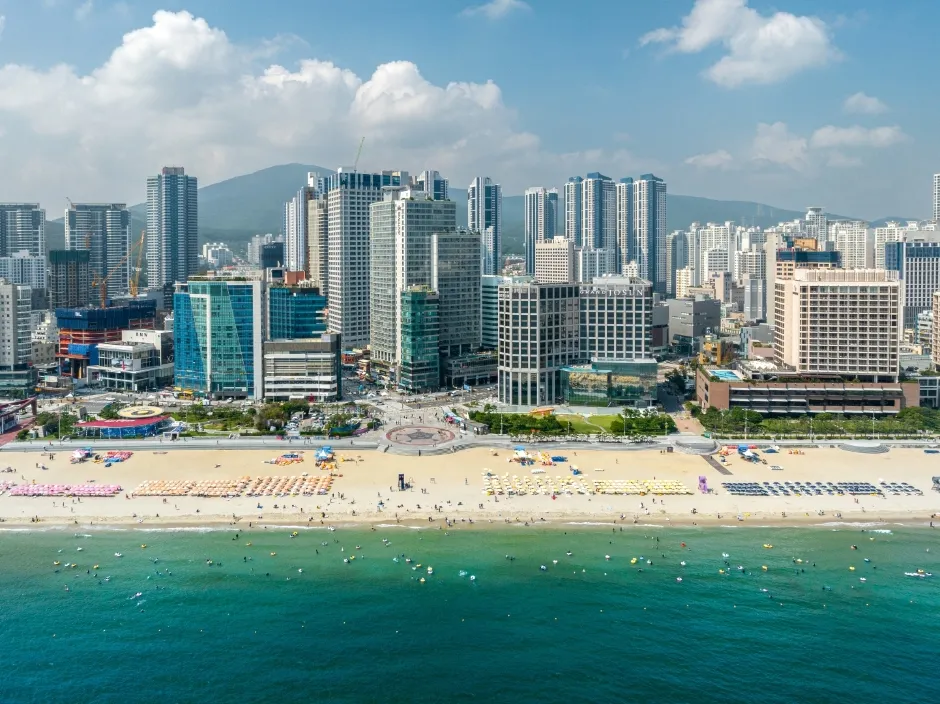
Busan is where Koreans go for the beach, and it makes an easy, relaxed second stop after Seoul. The city strings along the coast with sandy bays, a giant fish market, hillside art villages, and a temple perched over the sea.
Give it two to three days. The Busan 2-day itinerary turns this guide into a plan.
Quick facts
- Region
- Southeast coast
- Suggested stay
- 2 to 3 days
- Best time
- Late spring & autumn; beaches in summer
- From Seoul
- KTX ~2.5 hours
- Getting around
- Metro + short taxis
What Busan is known for
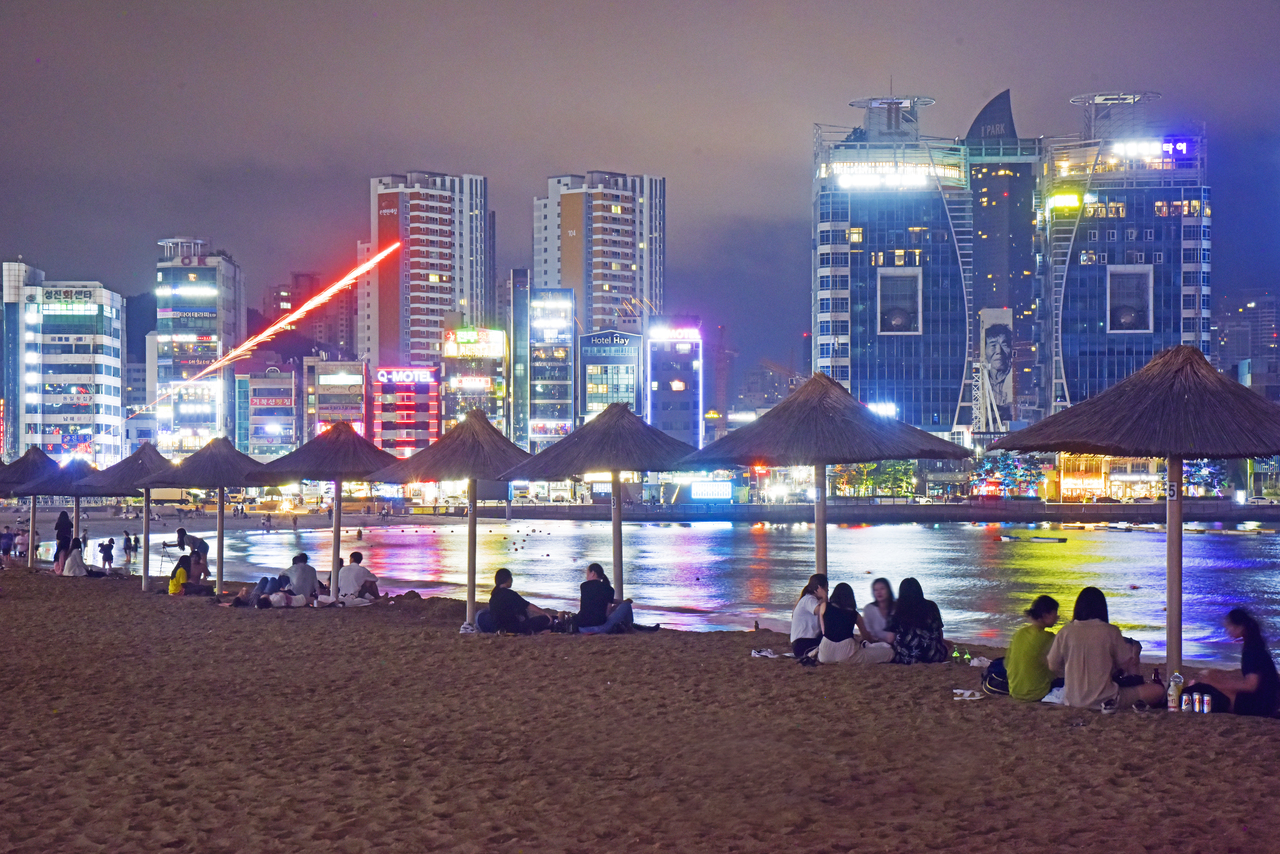
Busan is a coastal city, so its sights string along the sea rather than clustering in one core. Haeundae and Gwangalli are the headline beaches: Haeundae broader and resort-like, Gwangalli framed by the lit-up Gwangan Bridge; unsure which to base near, see Haeundae vs Gwangalli.
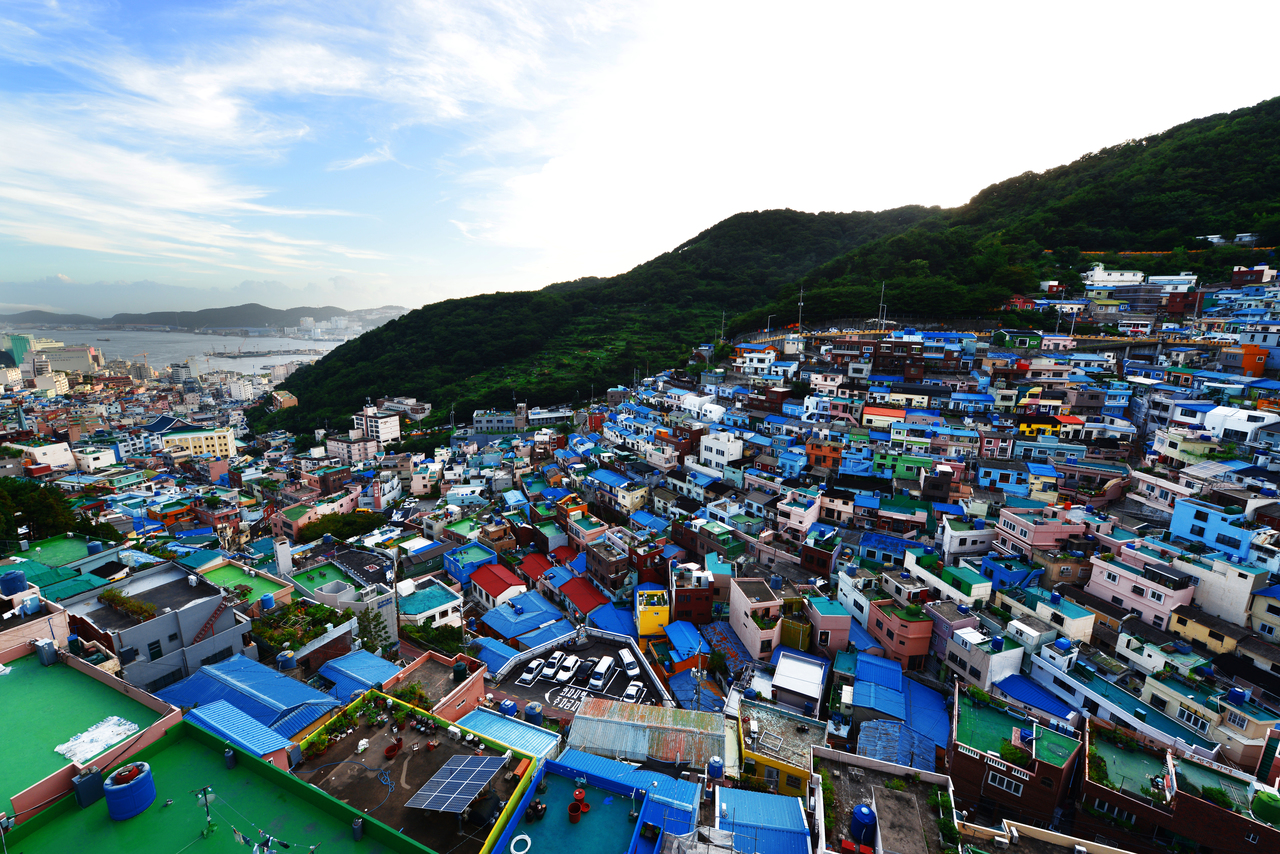
Jagalchi is Korea's largest seafood market, next to the buzzing Nampo/BIFF street-food streets. Gamcheon Culture Village stacks pastel houses up a hillside, Haedong Yonggungsa is one of the few Korean temples built right on the water, and Taejongdae offers cliff-and-sea walks.
Inland, Seomyeon is the downtown hub for shopping and nightlife.
Areas at a glance
Where you sleep shapes a Busan trip more than in Seoul, because the sights are spread out. A quick orientation (full detail in where to stay in Busan):
| Area | Known for | Good base for |
|---|---|---|
| Haeundae | Broad beach, resorts, aquarium | Beach-first stays, families |
| Gwangalli | Beach with bridge views, cafes, nightlife | Younger travelers, views |
| Nampo / Jagalchi | Seafood market, street food, old downtown | Food, first-timers |
| Seomyeon | Central shopping and nightlife hub | Transit convenience |
Compare bases in the guides for Haeundae, Gwangalli, Nampo & Jagalchi, and Seomyeon.
How to get there
The fastest route from Seoul is the KTX to Busan Station, roughly two and a half hours; the SRT runs from Suseo (southeast Seoul) to Busan too. Book via the KTX booking guide. Busan also has an airport (Gimhae, PUS) with domestic and regional flights.
From Busan Station the metro and short taxis reach most sights.
Open in a Korean map app (Google Maps transit is unreliable here):
Getting around
- Metro: covers the main sights (Haeundae, Seomyeon, Nampo/Jagalchi); pay with a T-money card, which also works on buses and taxis.
- Bus: reaches coast spots the metro misses, like Haedong Yonggungsa; check routes on Naver or KakaoMap.
- Taxi: cheap for short hops between nearby sights; use the Kakao T app.
- The full picture is in the transportation guide.
Best time to visit
Summer is beach season: warm water and festivals, but also the busiest, most humid, and priciest time, with a monsoon spell in July. Late spring (May-June) and autumn (September-October) are more comfortable for walking the coast and hills, with lighter crowds. Winter is mild by Korean standards and quiet, though not for swimming.
Food
Seafood is the local specialty: raw fish (hoe), grilled shellfish, dwaeji gukbap (pork-and-rice soup), and the city's own fish-cake (eomuk) snacks. See what to eat in Busan for the dishes and markets, or pair a seafood day with a Korean barbecue night.
Suggested stay duration
Two days hit the highlights, a beach-and-Haeundae day and a Gamcheon-Nampo-Jagalchi day. A third lets you add Taejongdae, the seaside temple, a spa, or a slower beach morning. Turn this into a plan with the Busan 2-day itinerary, and pick a base with where to stay in Busan.
Nearby trips
Busan pairs naturally with Gyeongju, the ancient Silla capital, about an hour away by bus or train, an easy add-on or the next stop on a southern loop. See the Gyeongju guide. It's also the southern end of the KTX line, so it slots onto a Seoul-to-Busan rail trip.
Common mistakes
- Treating Busan like Seoul and over-scheduling: the spread-out, coastal city rewards a slower pace.
- Visiting only in peak summer, when beaches and trains are most crowded.
- Skipping the fish market over the language barrier, pointing works fine.
- Basing far from the metro and relying on taxis for long coastal hops.
Getting around Busan
Busan's metro (7 lines) covers every main tourist area. A T-money card works on the metro, local buses, and taxis. For directions, use Naver Map or KakaoMap; Google Maps does not route Busan's bus network reliably.
Gamcheon Culture Village requires a short uphill bus ride from Toseong Station (Line 1); Haedong Yonggungsa is most easily reached by taxi from Haeundae.
What to eat in Busan
Busan has a distinct food culture from Seoul, centered on the coast and the market:
- Dwaeji gukbap: Busan's signature comfort food: a milky-white pork-bone broth simmered until opaque, served with sliced pork and rice, seasoned at the table. Traditional in Nampo-dong and Seomyeon. A full meal for one.
- Eomuk: fish cake simmered in broth on a stick, sold at street stalls near BIFF Square and Nampo. The broth (served free in a cup at good stalls) is warming and savory.
- Ganjang gejang: raw crab marinated in soy sauce. A regional specialty and an acquired taste; for those who eat raw seafood, it is a memorable Busan experience.
- Jagalchi fresh seafood: the market has tanks of live seafood downstairs; pick what you want, take it upstairs, and have it prepared. The most direct version of the Busan seafood experience.
- Ssiat hotteok: the Busan variation of hotteok (sweet fried pancakes), stuffed with seeds and nuts instead of the standard brown-sugar filling. Specific to BIFF Square vendors.
The what to eat in Busan guide covers each dish, where to find it, and what to order.
Where to stay in Busan
- Haeundae: broad resort beach, most hotel supply, families. Best base if the coast is the priority.
- Gwangalli: smaller beach, better for the bridge-view nightlife scene, slightly more local feel.
- Nampo / BIFF Square: central for the markets and Day 2 activities; further from the beaches but convenient for Jagalchi and Gamcheon.
- Seomyeon: the commercial center of the city; practical, connected by Lines 1 and 2, no beach.
See the where to stay in Busan guide for a detailed breakdown.
Frequently asked questions
How many days do I need in Busan?
Two days for the highlights: coast and cliffside temple on day one, fish market and Gamcheon on day two. Three days adds Taejongdae, a jjimjilbang, or a relaxed morning on the beach.
How do I get to Busan from Seoul?
The KTX (or SRT from Suseo) takes about 2.5 hours and is the most practical option. Domestic flights to Gimhae Airport exist but the KTX is usually more convenient city-center to city-center. Book trains via the KTX booking guide.
Which beach should I stay near: Haeundae or Gwangalli?
Haeundae for a broad resort beach, more hotel options, and a family pace. Gwangalli for bridge views, a livelier nightlife strip, and a slightly more local feel. Either is a couple of subway stops from the other.
See the Haeundae vs Gwangalli comparison.
Is Busan worth visiting after Seoul?
Yes. Busan is a relaxed coastal contrast: beaches, fresh seafood at Jagalchi, the colorful Gamcheon hillside village, and a city feel that is noticeably less intense than Seoul. The KTX makes it an easy next stop on a first Korea trip.
Can I do Busan and Gyeongju together?
Yes. Gyeongju is about an hour from Busan by local train or bus and makes a comfortable day trip or natural stop between Busan and Seoul when heading back north.
Sources
- Visit KoreaOfficial tourism site
- KORAILOfficial transport site
- Korea Tourism Organization English TourAPIOfficial API
Information is compiled from official sources. Details such as prices, hours, and schedules can change. Confirm time-sensitive facts before you travel.
Last verified on
Related guides
Haeundae vs Gwangalli: Where to Stay and What to Do in Busan
Both are Busan's headline beaches, a few minutes apart on Metro Line 2, so you can stay at one and still visit the other. Pick Haeundae for a classic resort-beach base with hotels, Blue Line Park, and an easy family pace; pick Gwangalli for the Gwangan Bridge night view, cafes and bars, and a livelier, social evening. This guide helps you choose and shows how to do both in a day.

Busan 2-Day Itinerary for First-Time Visitors
Two days in Busan split by theme: the coast, beaches, and a cliffside temple on day one, then seafood markets and the Gamcheon culture village on day two. Built around the metro and a couple of short taxi hops.