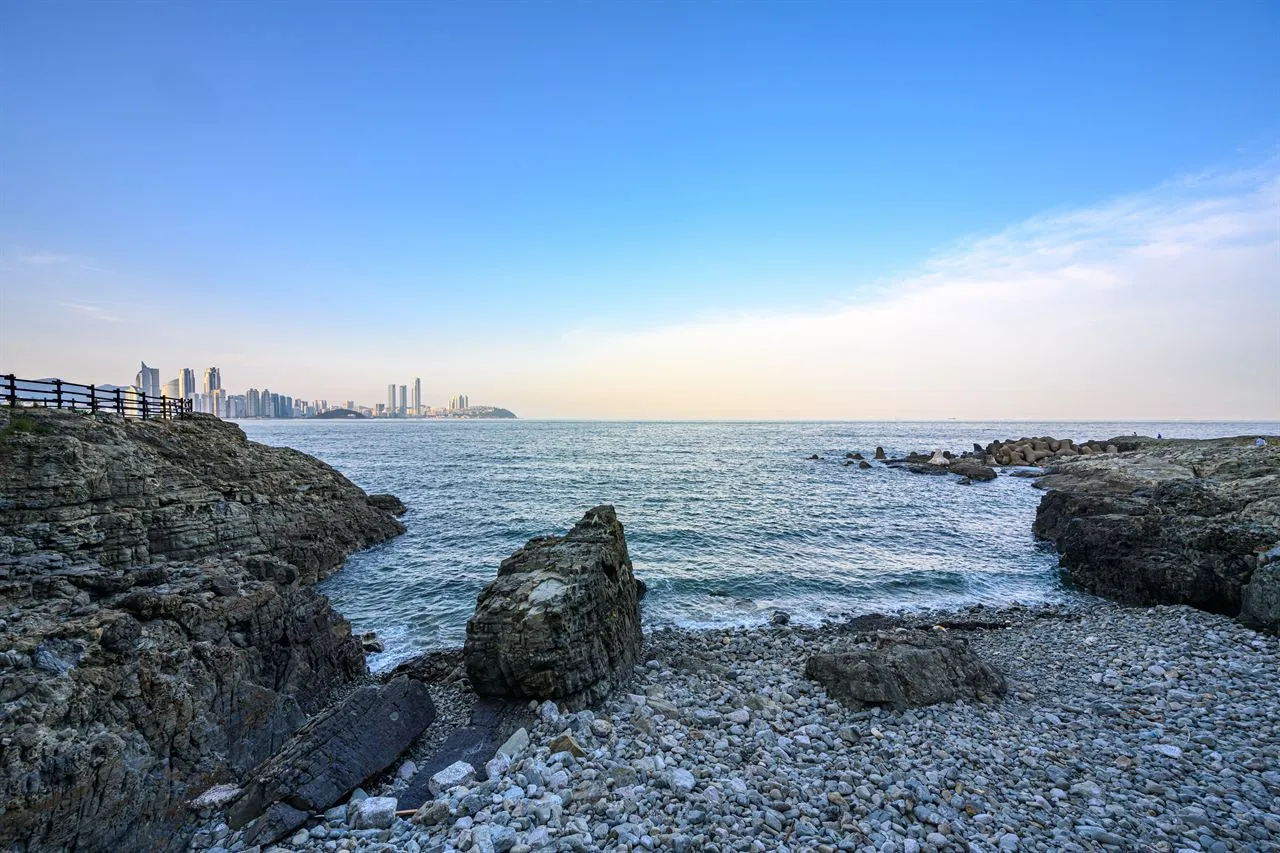
November in Busan is mild for a Korean late autumn but not warm. The average day is cool and dry, and the coast is where the weather bites.
Wind on an open shoreline changes how the same temperature feels. The sections below use official climate data for the numbers and keep guesses out of the parts that no dataset covers.
Quick answer
| Question | Answer |
|---|---|
| Overall feel | Cool, mostly dry late autumn; noticeably chillier on exposed coasts and after dark |
| Typical temperatures | About 8 to 17 °C (average daily low to high, KMA 1991 to 2020 normals) |
| Versus Seoul | Roughly 4 to 5 °C milder on average, with fewer wet days and rare snow |
| Rain | About 50 mm for the month, on about 6 days |
| Fall colors | Patchy and timing-dependent; no official Busan peak date found |
| What to wear | Layers plus a windproof jacket; a scarf for the beach and the evening |
| Swimming | Not a beach-swimming month for most visitors |
Busan in November at a glance
These numbers are the Korea Meteorological Administration's 30-year climate normals (1991 to 2020) for the Busan station, taken from the KMA Open Data Portal. They describe a typical November, not the forecast for your dates.
| Measure | Busan station, November |
|---|---|
| Average daily high | 16.6 °C |
| Average daily mean | 11.9 °C |
| Average daily low | 8.3 °C |
| Rainfall for the month | 50.4 mm |
| Days with recorded rain | 6.0 |
| Days with snow | 0.1 |
| Average wind speed | 3.1 m/s |
| Average relative humidity | 56.3 % |
| Sunshine for the month | 195.5 hours |
Averages hide the spread. A single day can run several degrees either side, so check the KMA forecast before you fly and again the evening before each outing.
Early versus late November
There is no sharp switch, and the exact dates change every year. The table describes a general tendency, not a calendar or a measured split of the month.
| Early November | Late November | |
|---|---|---|
| Days | Usually the mildest stretch; light layers plus a windproof jacket | Cooler; a warmer mid-layer becomes useful |
| Mornings and evenings | Cool | Colder, especially on the water |
| Fall colors | Better odds of color in the hills | Leaves are more often down |
| Daylight | Already short | Shorter still, so start outdoor plans earlier |
If comfort matters most, lean early. If you prefer quieter, cooler days and can live with less color, late November works with a warmer packing list.
Busan versus Seoul in November
Busan is clearly milder and drier than Seoul in the same KMA normals, and it is sunnier. The gap is large enough to change your packing list if you travel between the two cities.
| Measure | Busan | Seoul |
|---|---|---|
| Average daily high | 16.6 °C | 11.9 °C |
| Average daily mean | 11.9 °C | 7.5 °C |
| Average daily low | 8.3 °C | 3.5 °C |
| Rainfall for the month | 50.4 mm | 51.1 mm |
| Days with recorded rain | 6.0 | 8.8 |
| Days with snow | 0.1 | 2.3 |
| Average wind speed | 3.1 m/s | 2.2 m/s |
| Sunshine for the month | 195.5 hours | 157.3 hours |
Monthly rainfall is almost the same, but Seoul gets it on more days. Busan's average wind speed is higher, which is the number to keep in mind for the next section.
On a Seoul and Busan trip, pack for the colder city and bring layers you can remove. Seoul's average November low is 3.5 °C, while Busan's average afternoon high is 16.6 °C. See the Korea winter itinerary if you are weighing a longer Seoul and Busan trip in colder months.
Why Busan can feel colder by the sea
The station averages above are for one city location. They are not measurements at Haeundae, Gwangalli, or any headland, and this guide does not give wind figures for those places.
What the data does show is that Busan's average wind in November is higher than Seoul's, 3.1 m/s against 2.2 m/s. Wind pulls heat off exposed skin, so a breeze makes the same air temperature feel colder. That effect is strongest where nothing blocks the air.
| Place | Why it can feel colder |
|---|---|
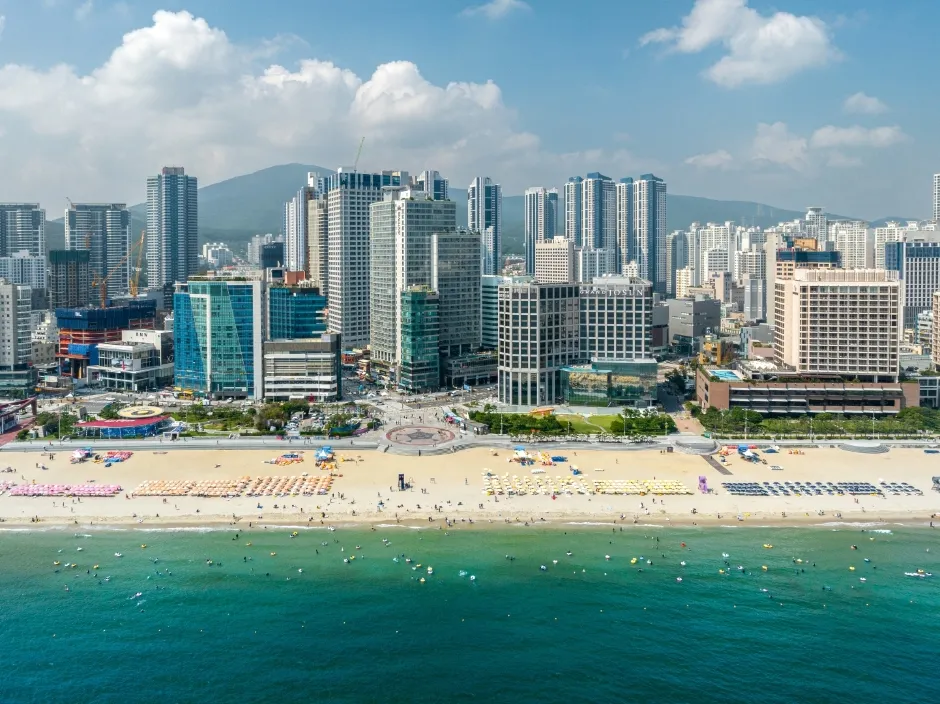
| Haeundae Beach | A long open beachfront with no cover from the sea side |
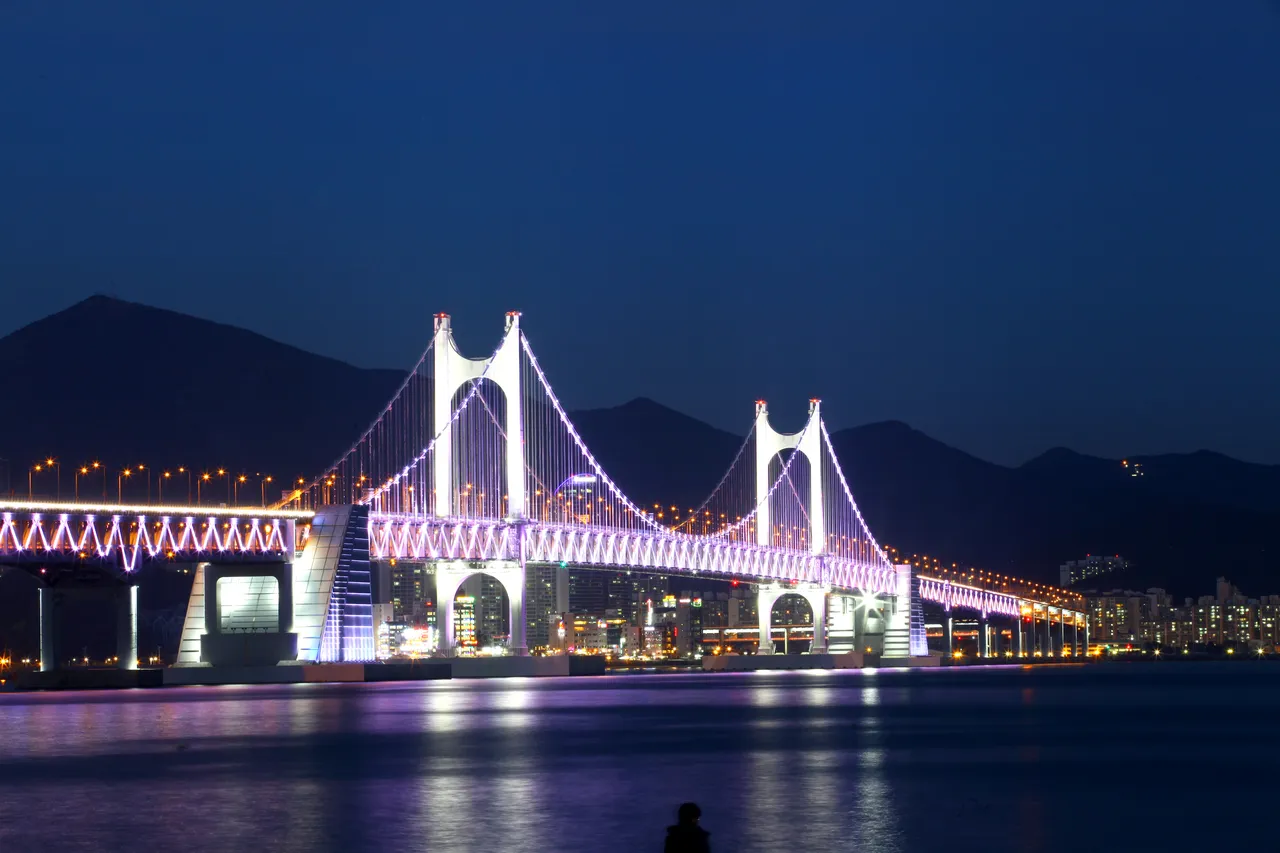
| Gwangalli Beach | An open beachfront facing the bay, best after dark and coldest then |
| Igidae | A coastal headland trail with open water on one side |
| Taejongdae | Cliff-top paths on an exposed southern tip |
| Cheongsapo | A small fishing coast that faces open sea |
| Songdo | Seafront walkways along open water |
This table is a general exposure guide based on geography, not a measurement. On a calm sunny afternoon these places can feel pleasant, and on a windy evening the same spots can be the coldest part of your day.
Day versus night
The average daily high in November is 16.6 °C and the average low is 8.3 °C, so the typical swing is about 8 °C between afternoon and early morning. Add sea air and a cold evening can feel much closer to winter than the afternoon did.
Plan indoor stops for later in the evening, or carry a warm layer you can add at sunset. The same outfit that works at lunch is often not enough for a night walk on the beach.
Rain in November
The normals show about 50 mm of rain over roughly 6 days in November, which is a modest total. It is an average, and a rainy day is still possible.
Rain usually comes with a change in wind and temperature, so a wet day often feels colder than the numbers alone suggest. A packable rain shell beats an umbrella on a windy shoreline, and shoes with grip help on wet boardwalks and rocks.
Snow in November
Snow is rare. The KMA normals record 0.1 days with snow in November at the Busan station, against 2.3 days for Seoul.
Rare does not mean impossible, and this guide does not promise or predict snow in any year. If your dates matter, check the forecast in the week before you travel.
Can you see fall colors in Busan in November?
Sometimes, in part, and mostly in the hills and parks rather than along the shore. Timing changes every year, and the color usually arrives in patches rather than in one wave.
I found no official Busan peak date to quote. The Korea Forest Service publishes a foliage forecast map each autumn, but it names only selected mountains, and Busan is not among them in the version reviewed for this guide.
Places worth checking if color is on your list:
- Geumjeongsan. Busan's highest peak at about 801 m, with hiking routes up from the Beomeosa side, according to the city's trekking information.
- Beomeosa. A temple on the mountain's lower slopes, reachable by Busan Metro Line 1 to Beomeosa Station and then a bus. Check current opening details on Visit Busan.
- Geumgang Park. A city park in the Dongnae area that suits a shorter stop.
If you need color more than coast, a different city may serve you better. The Korea autumn foliage guide compares regions.
Beaches in November
Haeundae and Gwangalli are still active in November, but for walking rather than swimming. Expect walkers, runners, and photographers rather than swimmers.
Water is cold, and this guide gives no sea-temperature figures. Treat the beach as a place to walk and to look at the skyline, and check local conditions before entering the water.
Haeundae in November
Haeundae is the easier base if you want hotels, restaurants, and the open beach in one place. The beachfront is open to the sea, so add a scarf and a windproof layer even on a mild afternoon.
Pair a beach walk with an indoor stop so a bad-weather hour does not end your day. The Haeundae stay guide covers the area in detail, and the Haeundae versus Gwangalli comparison helps you choose.
Gwangalli in November
Gwangalli is a night-view beach. The bridge and skyline are the point, and those views come after dark, when the day is coldest.
Bring more warmth than the afternoon calls for. This guide gives no lighting schedule or show times, so check current information from official Busan sources before you plan around one. The Gwangalli stay guide has the area layout.
What to wear in Busan in November
Think in layers you can add or remove: a base layer, a warm mid-layer, and a windproof shell. You rarely need a heavy down jacket in the daytime, but the evening on the coast can justify one for people who feel the cold.
Early November
A light sweater or fleece under a windproof jacket covers most days. Carry a thin scarf for the beach and the evening.
Late November
Add a heavier mid-layer, a scarf, and thin gloves. A medium-weight coat is usually enough, and only cold-sensitive travelers need a heavy winter coat.
Daytime in the city
A sweater with a light jacket works for streets, markets, and cafes. You will take layers off indoors, so choose pieces you can carry.
Coastal evenings
Wear the warmest outfit of your day. A windproof outer layer, a scarf, and closed shoes make a long beachfront walk comfortable.
Long walks and coastal trails
Wear walking shoes with real grip, since wet rock and boardwalks are slippery. Add a hat that stays on, and dress for a few degrees colder than the forecast when the trail is open to the sea.
Mountain and temple days
Geumjeongsan and Beomeosa are inland and higher up, so mornings feel cooler and the wind can differ from the beach. Wear layers you can adjust and shoes suited to stairs and paths.
Packing checklist
- Windproof, water-resistant jacket with a hood
- One or two warm mid-layers (fleece or light down)
- Scarf and thin gloves for late November evenings
- Comfortable walking shoes with grip
- Light layers for warm afternoons indoors
- Compact rain shell or small umbrella
- Sunglasses for bright, low sun off the water
- Power bank and an offline copy of your bookings
Common mistakes
- Packing for Seoul's cold or Busan's afternoon high instead of a layered mix
- Trusting the daytime average and skipping a scarf for the coast at night
- Wearing sandals or canvas shoes on wet rock and boardwalks
- Expecting a beach swim
- Planning the whole trip around one fall color date
- Leaving no indoor backup for a windy or rainy hour
- Relying on climate averages instead of the KMA forecast for your dates
Best things to do in Busan in November
November suits walking more than beach lounging. Pick a coastal stretch on the calmest part of the day and keep indoor stops nearby.
- Igidae coastal walk. Open water and skyline views, with rocks that can be slippery.
- Haeundae and Gwangalli. Beach walks at different times of day, with the bridge lit at night.
- Geumjeongsan and Beomeosa. A mountain and temple day for color hunting.
- Markets and food. Covered market visits and seafood meals work in any weather. See the Busan food guide.
For a two-day route that you can rearrange around the weather, use the Busan 2-day itinerary. For colder-month pacing, see the Busan winter itinerary.
Sea, skyline, night, and daylight
The KMA normals record about 195 hours of sunshine for November in Busan, sunnier than Seoul's 157 hours. Clear evenings suit the bridge and skyline views, and a warm layer lets you stay for them.
Daylight shortens through November. Look up sunrise and sunset for your exact dates from the Korea Astronomy and Space Science Institute rather than relying on a single time.
Is November a good time to visit Busan?
It is a good month for walking, food, and quieter coasts, if you accept cool weather and shorter days. It is a weaker month if your plan depends on swimming, beach lounging, or guaranteed peak foliage.
Compared with Seoul, Busan is the milder November base. Compared with summer, it trades beach life for cooler walking weather and more space.
Who November suits
A good fit if you:
- Like walking coasts and city streets more than swimming
- Want cool, mostly dry days without summer heat
- Are happy to carry a windproof layer and a scarf
- Can adjust plans around the forecast
Look at another month if you:
- Need warm water and beach time
- Are set on peak red foliage on a specific date
- Get cold easily and dislike wind
For a nearby comparison, see Jeju in November. For the country-level view, see Korea in November.
Frequently asked questions
Is Busan cold in November?
Cool rather than cold. The KMA normals show an average daily high of 16.6 °C and low of 8.3 °C, and wind can make the coast feel colder.
Is Busan warmer than Seoul in November?
Yes. Average highs are 16.6 °C in Busan and 11.9 °C in Seoul, and lows are 8.3 °C and 3.5 °C.
What should I wear in Busan in November?
Layers plus a windproof jacket, with a scarf for the beach and evenings. See the what to wear section above.
Do I need a winter coat in Busan in November?
Usually not a heavy one. A medium-weight coat covers most people in late November, and cold-sensitive travelers may want more for coastal evenings.
Is Haeundae cold in November?
It can feel cold on the open beach, especially in the evening or in wind. Add a scarf and a windproof layer.
Is Busan windy in November?
Busan's average wind speed in November is 3.1 m/s against 2.2 m/s in Seoul in the KMA normals. Exposed coastal spots can feel windier than sheltered streets.
Does it snow in Busan in November?
Rarely. The KMA normals record 0.1 days with snow in November, and it is not something to plan around.
Can I see fall colors in Busan in November?
Sometimes and partly, in hills and parks such as Geumjeongsan. I found no official Busan peak date, so check current reports.
Can I go to the beach in November?
You can walk the beach, but most visitors will find it too cold to swim. Check local conditions before entering the water.
Does it rain a lot in Busan in November?
It is relatively dry, about 50 mm over roughly 6 days in the normals. A backup indoor plan is still sensible.
Is Gwangalli worth visiting in November?
Yes, for the evening skyline and bridge views, if you bring a warm layer. Check current official information for any lighting or events.
Can I hike in Busan in November?
Yes, on open trails. Check conditions on the day, and note that mountain temperatures and wind can differ from the beach.
Is November a good time to visit Busan?
Yes for walking, food, and quiet coasts, with cool weather and shorter days. It is weaker for swimming or a guaranteed foliage display.
Check before you go
- KMA forecast and any wind or rain warnings near your dates
- The Korea Forest Service's current foliage map if color is your priority
- Opening details for Beomeosa and other stops on Visit Busan
- Sunrise and sunset times for each of your days
Sources
- Korea Meteorological AdministrationOfficial weather service
- Korea Meteorological Administration Open Data Portal: 1991 to 2020 climate normals (Busan and Seoul stations)Official weather service
- Korea Forest Service (산림청)Official government site
- Korea Forest Service 2026 foliage peak forecast map, as reported by MHNSnews_report
- Busan Metropolitan City: Geumjeongsan hiking informationOfficial government site
- Visit Busan (official Busan tourism)Official tourism site
- Korea Astronomy and Space Science Institute: sunrise and sunset timesOfficial government site
Information is compiled from official sources. Details such as prices, hours, and schedules can change. Confirm time-sensitive facts before you travel.
Last verified on
Related guides
Busan Travel Guide for First-Time Visitors
Busan is Korea's second city and its biggest beach destination, a relaxed coastal counterpoint to Seoul. Two to three days covers its beaches, fish markets, and cliffside temple. Most visitors arrive by KTX in about two and a half hours from Seoul.

Busan 2-Day Itinerary for First-Time Visitors
Two days in Busan split by theme: the coast, beaches, and a cliffside temple on day one, then seafood markets and the Gamcheon culture village on day two. Built around the metro and a couple of short taxi hops.