
Busan rewards a slower pace than Seoul, and two days is enough to see its coast, its seafood, and its photogenic hillside neighborhoods. This plan splits the city by theme so you are not zig-zagging the metro line.
It slots onto the end of the 7-day Korea route and works alongside the Busan destination guide.
Quick facts
- Length
- 2 days / 1 night
- Day 1
- Coast, beach, cliff temple
- Day 2
- Markets & culture village
- Getting around
- Metro + short taxis
- Arriving by
- KTX from Seoul (~2.5 h)
Getting to Busan
Most visitors arrive by KTX into Busan Station (about 2.5 hours from Seoul; the SRT runs from Suseo too). Book via the KTX booking guide.
Drop your bags, grab a transit card if you don't already have one, and start near the water. For where to base yourself (beachfront Haeundae, view-facing Gwangalli, or central Nampo) see where to stay in Busan.
Day 1: The coast
- Morning: Haeundae. Start at Haeundae Beach; walk the sand, then ride or stroll the seaside Blue Line Park beach train and sky capsules along the old rail line.
- Midday: cliff walk & lunch. Take the coastal cliff path or the Dongbaekseom loop, then lunch nearby.
- Afternoon, Haedong Yonggungsa. Taxi or bus to the ocean-facing temple: one of the few Korean temples built right on the water; allow time for the crowds.
- Evening, Gwangalli. Close the day with dinner near Gwangalli Beach for the lit-up Gwangan Bridge. Not sure which beach to base near? See Haeundae vs Gwangalli.

Day 2: Markets and Gamcheon
- Morning, Jagalchi & Nampo. Start at Jagalchi, Korea's largest fish market, where you can pick seafood and have it prepared upstairs; wander the nearby BIFF Square street-food streets.
- Afternoon, Gamcheon. Head to the terraced, brightly painted Gamcheon Culture Village: allow a couple of hours for the lanes, murals, and viewpoints (it's a residential area, so keep it quiet).
- Food. Try Busan staples, dwaeji gukbap (pork-and-rice soup) and eomuk (fish cake); the what to eat in Busan guide has the dishes and markets.
Ask the price at a market stall or fish market.
Polite얼마예요?
eol-ma-ye-yo?
How much is it?
Korean audio isn't available on this device or browser. Use the romanization above to say it.

Getting around Busan
Busan's metro is clean, easy, and covers most tourist destinations:
- Haeundae and the Blue Line Park: Line 2, Haeundae Station
- Jagalchi and Nampo: Line 1, Jagalchi Station or Nampo Station
- BIFF Square: Line 1, Nampo Station
- Seomyeon (central hub): Lines 1 and 2, Seomyeon Station
- Gwangalli: Line 2, Gwanganli Station (short walk to beach)
A T-money card covers the metro, local buses, and taxis throughout Busan. Use KakaoMap or Naver Map for transit directions, Google Maps does not reliably cover Busan's bus network.
For Gamcheon Village, take the metro to Toseong Station (Line 1) and a short local bus (#2 or #2-2) up the hill. For Haedong Yonggungsa, a taxi from Haeundae is the most practical option (about 20 minutes each way).
What to eat in Busan
Busan's food identity is distinct from Seoul's:
- Dwaeji gukbap: pork-and-rice soup. Busan's most iconic meal: a milky white pork bone broth with sliced pork, eaten for breakfast or lunch. Restaurants in Nampo-dong and Seomyeon are the traditional spots.
- Eomuk: fish cake on a stick, simmered in stock and sold at street stalls. Cheap, filling, and distinctly Busan. Try it near BIFF Square.
- Ganjang gejang: raw crab marinated in soy sauce. Not for the timid, but if you eat raw seafood, this is a regional specialty.
- Haeundae fresh seafood: sashimi restaurants along the Haeundae beachfront serve grilled and raw fish in a beach-town setting.
The what to eat in Busan guide goes into detail on each.
Practical tips
- Sea conditions at Haedong Yonggungsa: the temple walkways can close or have limited access during high tide or rough seas. Check before going out of your way.
- Gamcheon Village etiquette: this is a residential neighborhood with real residents, not a theme park. Stay on the designated visitor paths, keep your voice down, and do not enter marked residential areas.
- Beach crowds in summer: Haeundae Beach in July and August is among the busiest beaches in Asia. If peak-summer crowds are not your preference, visit early morning or consider Gwangalli as a slightly quieter alternative.
- Book accommodation early for summer: Busan is a major domestic vacation destination from late June through August; hotels fill up weeks in advance.
If you have extra time
A third day in Busan opens up:
- Taejongdae: dramatic coastal cliffs and a lighthouse on a promontory in the south. Take a bus from Nampo. Allow 2 to 3 hours.
- Jjimjilbang: a bathhouse/sauna for a rest day or late evening. See the jjimjilbang guide.
- Gyeongju day trip: about 40 minutes by KTX from Singyeongju Station. See the Gyeongju guide.
If a typhoon or heavy rain arrives (most likely July-September), swap the coast day for Jagalchi, the BIFF Square covered market area, the Busan Aquarium at Haeundae, and a department-store food hall.
Where to stay in Busan
Base selection depends on which day you prioritize:
- Haeundae: best for Day 1 (coast day). Walk to the beach and Blue Line Park in the morning; the metro connects you south for the evening. Busiest and most resort-like; book early in summer.
- Gwangalli: slightly quieter than Haeundae, closer to the Gwangan Bridge night view, good restaurant strip. A short metro hop to both Jagalchi and Haeundae.
- Nampo / Seomyeon: central, practical, close to Jagalchi and BIFF Square for Day 2. Fewer beach-adjacent options, but shorter trip to the markets and culture village.
The where to stay in Busan guide compares each area in detail.
Common mistakes
- Arriving without a T-money card: pick one up at the airport, any convenience store, or the subway ticket machine before you start. You will tap it constantly.
- Planning too much for Day 1: Haedong Yonggungsa is further than it looks, and the coastal path adds time; either the temple or the Blue Line Park works better than trying both.
- Underestimating Gamcheon: it is a real hillside, not a flat street. Wear walking shoes; the lanes are steep.
- Visiting Jagalchi at dinner time: the market is most active in the morning; if you arrive late, some vendors have closed.
Frequently asked questions
Is two days enough for Busan?
Yes: two days cover the coast, seafood markets, and Gamcheon Culture Village at a relaxed pace. A third day opens up Taejongdae, a jjimjilbang, or a Gyeongju day trip.
How do I get around Busan in two days?
Mostly the metro plus a few short taxis; a T-money card covers metro, bus, and taxi. Use Naver Map or KakaoMap for directions, Google Maps does not reliably cover Busan's bus network.
Should I do Busan before or after Seoul?
Either works, but most visitors do Seoul first since they arrive at Incheon (near Seoul) and it makes geographic sense to travel south by KTX. Busan is a comfortable coastal finish to the trip.
What is the best area to stay for this plan?
Haeundae for a beach base (best for Day 1), Gwangalli for the bridge views and nightlife, or Nampo for proximity to Jagalchi and BIFF Square (better for Day 2). See the where-to-stay in Busan guide.
What if it rains in Busan?
Swap the coast day for Jagalchi Market, the Busan Aquarium at Haeundae, covered market areas near BIFF Square, and Lotte or department-store food halls. Gamcheon can be visited between showers.
Sources
- Visit KoreaOfficial tourism site
- KORAILOfficial transport site
- Korea Tourism Organization English TourAPIOfficial API
Information is compiled from official sources. Details such as prices, hours, and schedules can change. Confirm time-sensitive facts before you travel.
Last verified on
Related guides
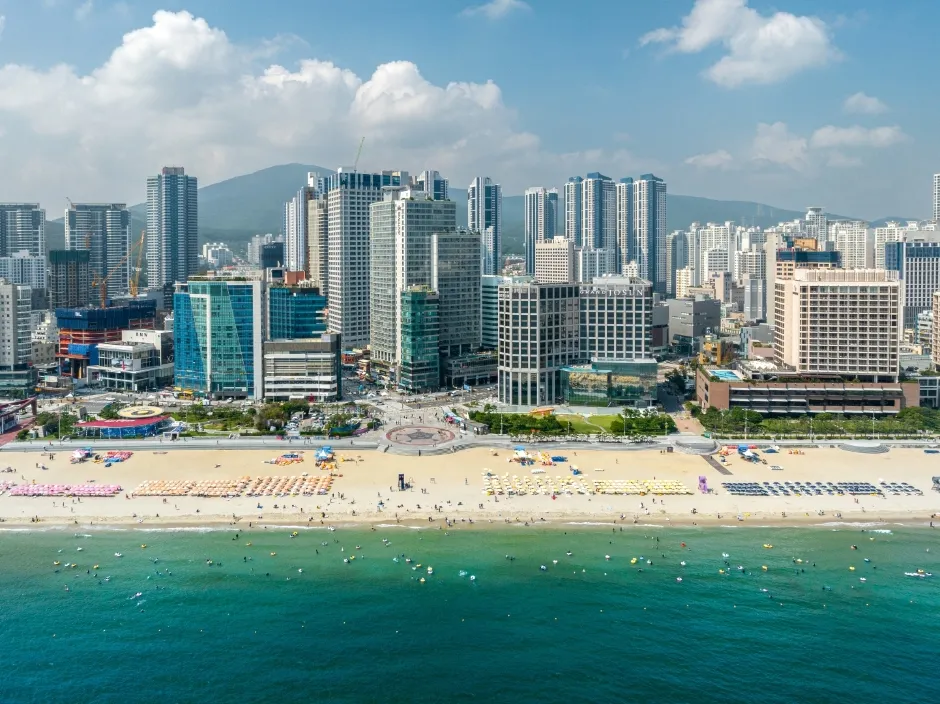
Busan Travel Guide for First-Time Visitors
Busan is Korea's second city and its biggest beach destination, a relaxed coastal counterpoint to Seoul. Two to three days covers its beaches, fish markets, and cliffside temple. Most visitors arrive by KTX in about two and a half hours from Seoul.
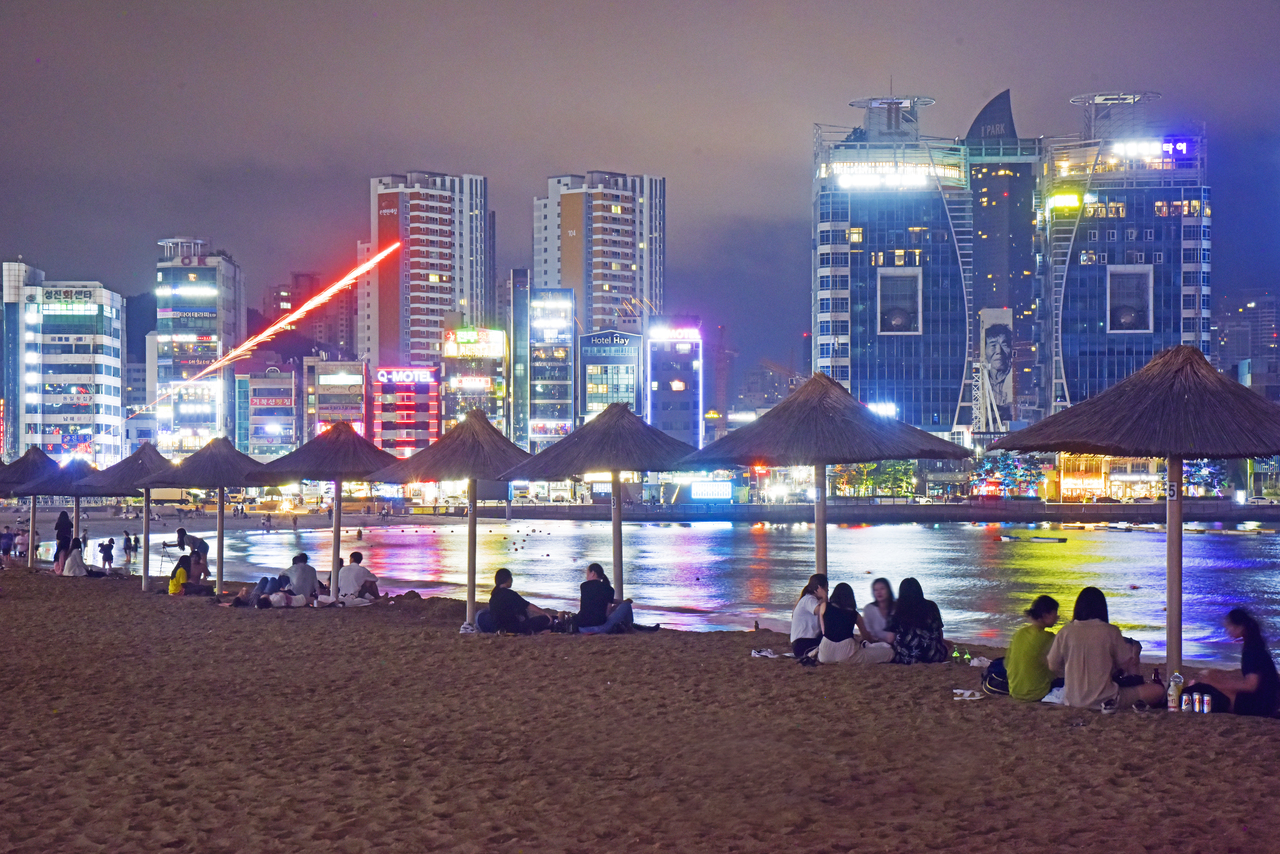
Haeundae vs Gwangalli: Where to Stay and What to Do in Busan
Both are Busan's headline beaches, a few minutes apart on Metro Line 2, so you can stay at one and still visit the other. Pick Haeundae for a classic resort-beach base with hotels, Blue Line Park, and an easy family pace; pick Gwangalli for the Gwangan Bridge night view, cafes and bars, and a livelier, social evening. This guide helps you choose and shows how to do both in a day.