
A jjimjilbang (찜질방) is a Korean bathhouse and sauna complex, and it is among the more relaxing, and most misunderstood, things a visitor can try. You pay an entry fee, bathe in gender-separated pools, and then change into the provided clothes to rest in a shared sauna area.
The single thing that surprises first-timers most is the bathing custom, so it is worth understanding before you go.
The bathing custom: no swimsuits
In the bathing area, you bathe without clothes, and the pools are strictly separated by gender. This is normal and unremarkable to Koreans, nobody is looking, but it catches many visitors off guard, so here is how it actually works:
- Shower thoroughly first. Before getting into any communal pool, you wash at the seated shower stations. This is non-negotiable etiquette, not optional.
- No swimwear in the pools. Swimsuits are not worn in the bathing area.
- The sauna clothes stay in the sauna. The loose shirt and shorts the venue gives you are for the shared, mixed-gender sauna and rest areas. You do not wear them into the bathing pools.
Once you have bathed, you change into the provided clothes and the rest of the complex (hot rooms, cold rooms, snack bars, lounging areas) is shared and fully clothed.
What's inside

Beyond the pools, a typical jjimjilbang has a range of themed sauna rooms at different temperatures, cold rooms to cool down, and a common area to relax, eat, or read. Larger complexes add more: massage chairs, snack counters, sometimes a screen room. Smaller neighborhood bathhouses keep it simple.
Good to know before you go
- Tattoos. Some bathhouses restrict entry for large or visible tattoos. If you have one, it is worth checking the venue's policy first.
- Sleeping over is not guaranteed. Some larger venues are open through the night and people do rest there, but not every jjimjilbang is set up for overnight stays: do not assume you can sleep in unless the venue clearly allows it. Confirm before relying on it for a night.
- Valuables. Use the locker for your belongings and bring as little as possible. Carry your phone and key wristband; leave anything you would hate to lose at your accommodation.
- Cash. Smaller bathhouses may prefer cash for the entry fee and snacks; bring some just in case.
How much does a jjimjilbang cost?
Entry fees vary significantly by venue. A basic neighborhood bathhouse costs less than a large multi-floor spa complex. Many venues charge separately for the bathing area and the sauna/rest area, and add-ons like scrub services or massage chairs are extra.
Confirm the total cost at the desk before entering.
Larger venues in tourist areas accept cards; smaller neighborhood bathhouses often prefer cash. Bringing a little cash covers any entry fee discrepancy or snack purchase.
How long should you spend?
A quick visit (shower, soak in one or two pools, cool down) takes about 45 minutes. Most visitors who enjoy it stay one to two hours, cycling between different temperature pools and resting between sessions. If you use a sauna room too, add another 30 to 45 minutes.
Go at a relaxed pace and listen to your body in the hot rooms: step out to cool down when you need to, and drink water.
What to expect step by step
- Pay at the desk and receive a locker key (usually a wristband) and the sauna clothes.
- Head to the locker room for your gender, store your clothes, and change into nothing for the bathing area.
- Shower thoroughly at the seated shower stations before entering any pool, this step is not optional and other bathers will notice.
- Use the pools in whatever order appeals, hot, warm, cool, cold. Take your time.
- Return to the locker room, dry off, and change into the provided shirt and shorts.
- Move to the shared sauna area: hot rooms, cold rooms, rest area, food counter. This part is mixed gender and fully clothed.
- Leave via the locker room, return your key, and collect your belongings.
Who should skip it?
A jjimjilbang is generally accessible, but it is not for everyone:
- Anyone uncomfortable with communal nudity in the bathing area. There is no alternative in that section.
- Anyone with skin conditions that make pool bathing inadvisable. Confirm with your doctor first.
- Anyone with large or visible tattoos should check the specific venue's policy before paying, some restrict entry, some do not.
- Anyone counting on an overnight stay should confirm explicitly that the venue allows this before planning around it.
What can you eat inside?
Many jjimjilbangs have a snack counter or small kitchen in the communal area serving Korean comfort food: sikhye (sweet rice punch), baked eggs (eggs cooked in the sauna heat, a classic), ramen, and light snacks. These are not full meals, but the eggs are an experience worth trying. Prices vary by venue; settle up with your wristband key and pay on exit.
First-timer tips
- Go on a cold or rainy day. It is one of Korea's best bad-weather activities. See the first-time visitor guide for more rainy-day ideas.
- Hydrate. The hot rooms are genuinely hot: step out, drink water, and cool down between sessions.
- Getting there is simple by subway; the transportation guide covers fares and cards.
- Go with the flow. Watch what regulars do (shower, soak, rest) and you will fit right in quickly.
- The sauna rooms have different temperatures: start mild and work up rather than going straight into the hottest room.
Common mistakes to avoid
- Skipping the pre-bath shower. Always wash at the seated stations before entering a pool.
- Wearing the sauna clothes into the pools, or a swimsuit into the bathing area. Neither is correct.
- Assuming every jjimjilbang allows overnight stays. Confirm before relying on it for a night.
- Forgetting cash. Smaller venues prefer it; bring some for the entry fee or snacks.
- Spending too long in the hottest room on your first visit. Build up gradually and step out before you feel faint.
Frequently asked questions
Do I have to be naked at a jjimjilbang? In the gender-separated bathing area, yes. This is the Korean bathhouse custom, and swimsuits are not permitted in the pools.
The shared sauna and rest area (the part open to all genders) is fully clothed in the provided shirt and shorts.
Can I go if I have a tattoo? Some venues restrict entry for visible or large tattoos; others do not. Check the specific venue's policy before paying the entry fee, since there is no standard rule across all jjimjilbangs.
Can I sleep overnight at a jjimjilbang? Some larger complexes allow overnight resting in the common area, and it is a well-known option for budget travelers. However, not every venue offers this.
Confirm explicitly before planning to stay.
What should I bring? Almost nothing: the venue provides towels, sauna clothes, and lockers. Bring a small amount of cash for entry or snacks, your key/wristband, and your phone if you want it.
Leave valuables at your accommodation.
Is a jjimjilbang suitable for children? Yes, in most cases, families often use jjimjilbangs together. The bathing area is gender-separated from a young age; the shared sauna area is open to all.
Check the venue's age rules if you are bringing very young children.
Say it in Korean
A couple of phrases help at the front desk and inside.
At the jjimjilbang
Two phrases for paying in and finding the basics.
At the front desk when you pay the entry fee.
Polite한 명이요.
han myeong-i-yo.
One person, please.
Korean audio isn't available on this device or browser. Use the romanization above to say it.
Towels are often by the entrance to the bathing area.
Polite수건 어디 있어요?
su-geon eo-di i-sseo-yo?
Where are the towels?
Korean audio isn't available on this device or browser. Use the romanization above to say it.
Sources
- Visit KoreaOfficial tourism site
- Korea Tourism Organization (VisitKorea Practical Info)Official tourism site
Information is compiled from official sources. Details such as prices, hours, and schedules can change. Confirm time-sensitive facts before you travel.
Last verified on
Related guides

Noraebang Guide: How to Sing at a Korean Karaoke Room
A noraebang (노래방) is a private Korean karaoke room you rent by the hour, or, at a coin noraebang, pay per song. You get your own room, a song book, and a remote; English and other foreign songs are often included, though selection varies. It is a low-stress night out whether or not you drink.
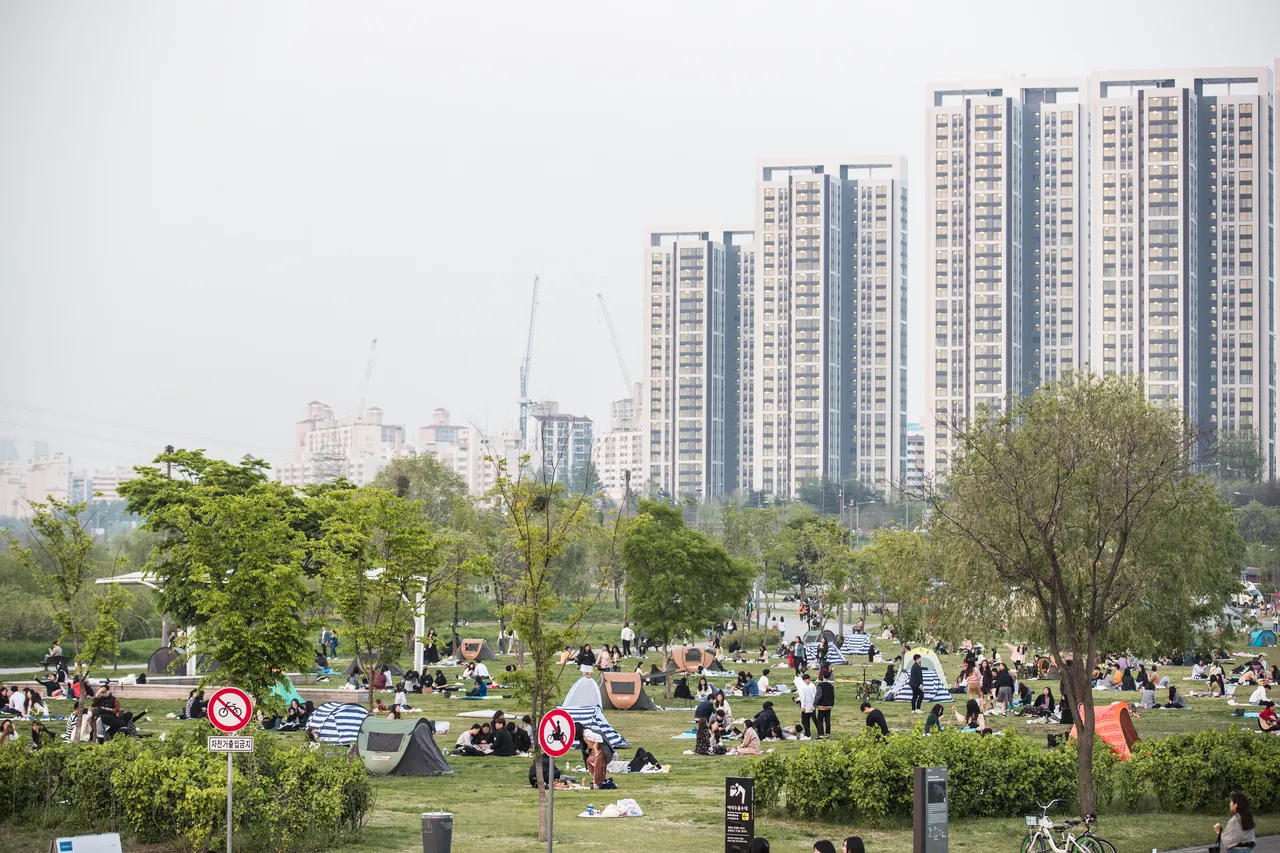
Han River Picnic Guide: Parks, Food, and Etiquette
A Han River (한강) picnic is one of Seoul's easiest, cheapest evenings out: pick a riverside park like Yeouido, Ttukseom, or Banpo, bring a mat and food, and relax by the water. Convenience stores and takeout are the simplest way to eat, and a few drinking and litter rules keep it pleasant for everyone.