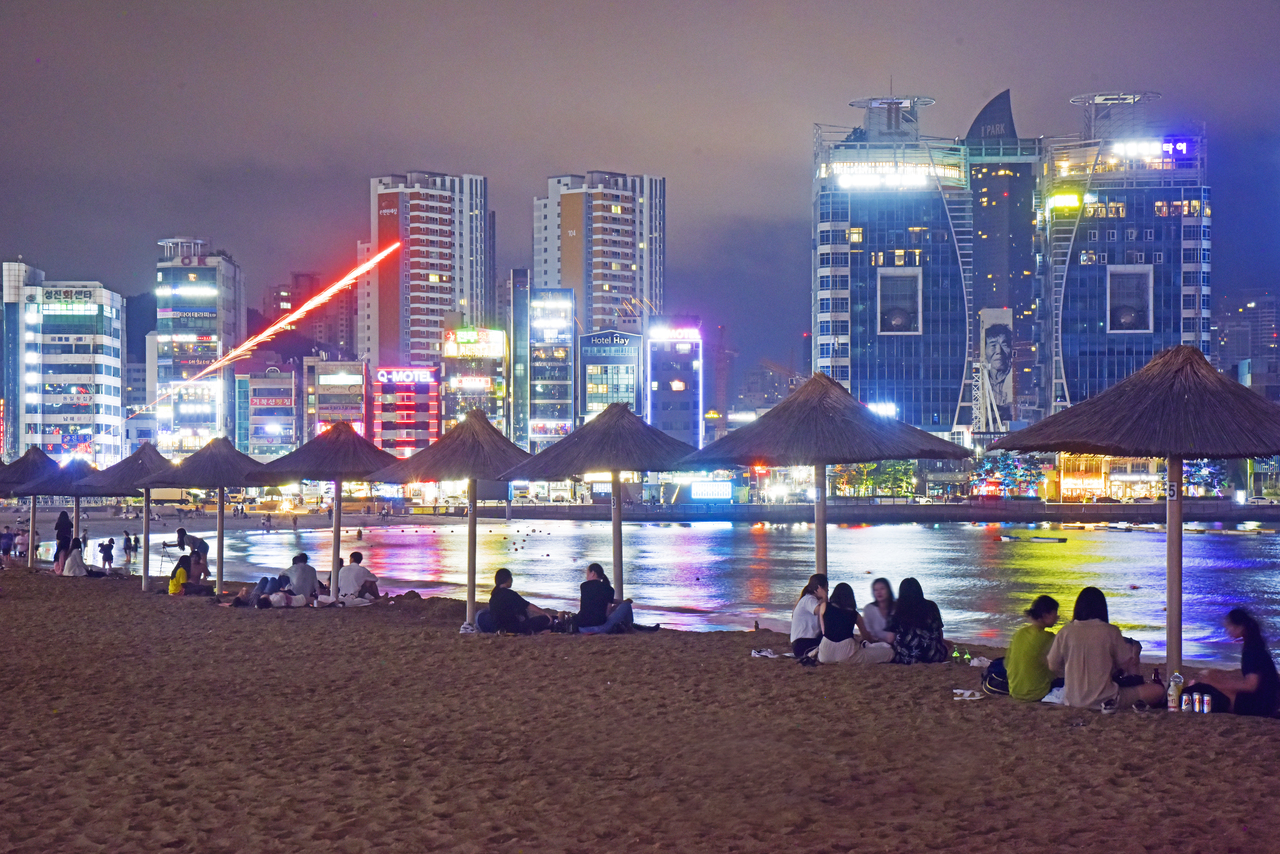
Haeundae or Gwangalli? It is the question most first-time visitors ask when planning Busan, and the good news is the stakes are low: the two beaches sit a few minutes apart on the same subway line, so wherever you base yourself, the other is an easy hop.
They have different personalities, though, and that is what should decide where you sleep and how you spend your evenings. This is a decision guide: for the full city, see the Busan travel guide, and for a route, the 2-day Busan itinerary.
Quick answer
- Choose Haeundae if you want a classic, broad resort beach, more hotels to pick from, a calmer family-friendly pace, and attractions like Blue Line Park and the Dongbaek coastal walk on your doorstep.
- Choose Gwangalli if you want the Gwangan Bridge lit up over the water at night, a wall of cafes and bars facing the beach, and a livelier, more social evening scene.
Either works as a first-time base. If your trip is really about markets and old Busan, neither beach is your center of gravity.
Stay nearer Nampo instead.
Haeundae: the classic resort beach
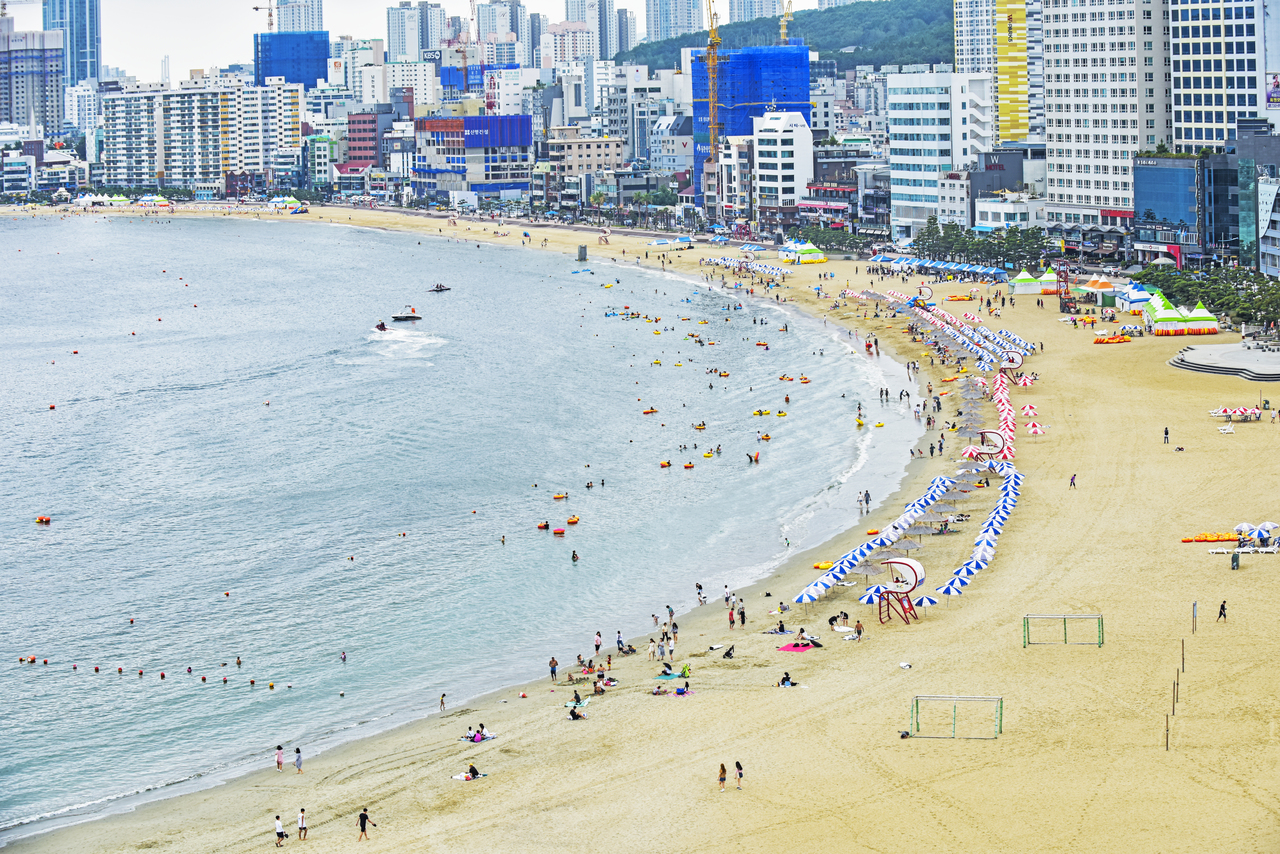
Haeundae is Busan's best-known beach: a wide, gently curving stretch backed by big hotels, restaurants, and department-store-scale shopping. It leans comfortable and family-friendly, with plenty of accommodation and an easy, unhurried feel.
Its signature attraction is Blue Line Park, which runs along the old coastal railway between Mipo, Cheongsapo, and Songjeong (about 4.8 km). You can ride the Beach Train along the route, or the four-seat Sky Capsule on the shorter Mipo-Cheongsapo leg (about 2 km) for elevated sea views. Operating hours shift by season and the Sky Capsule in particular gets booked up, so check the official schedule, prices, and reservations before you go.
Nearby, the Dongbaekseom headland walk, The Bay 101 area, and the Marine City towers give Haeundae a polished, modern-coast feel after dark.

Gwangalli: the night-view beach
Gwangalli sits just west of Haeundae, wrapped around a cove that the Gwangan Bridge crosses. The bridge. Korea's largest two-tier suspension bridge over water, around 7.4 km long: is lit every night, and that glittering span over the water is the whole reason Gwangalli is famous.
The beach faces a long row of cafes, bars, and restaurants, so the after-dark mood is more social and date-night than resort.
Gwangalli is also the home stretch for the Busan Fireworks Festival, usually held here in autumn, a major draw, though the dates change every year, so confirm the current schedule officially rather than assuming. Some nights feature drone or light shows over the bay, but those are scheduled events, not a nightly guarantee. Check before you plan an evening around one.
Side by side
| Haeundae | Gwangalli | |
|---|---|---|
| Best for | Resort beach, families, hotels | Night view, couples, nightlife |
| Signature | Wide beach, Blue Line Park | Gwangan Bridge lit at night |
| Evening mood | Polished, relaxed | Lively, social, cafe-and-bar |
| Stay if you want | Space and comfort | Atmosphere and a view |
| Metro (Line 2) | Haeundae Station | Gwangan / Geumnyeonsan |
Where first-timers should stay
- Families and first beach trip: Haeundae: the space, the hotels, and Blue Line Park make it the smoother choice.
- Couples and a view: Gwangalli, fall asleep to the bridge lights and walk to dinner and a rooftop bar.
- Nightlife and a social trip: Gwangalli, with its beachfront strip.
- Markets and old Busan first: neither, base nearer Nampo and visit the beaches by subway.
How to visit both in one day
Because both beaches are on Metro Line 2, pairing them is simple. A common rhythm: spend the day at Haeundae: the beach in the morning, then the Sky Capsule or Beach Train and the Dongbaek walk: then ride two stops over to Gwangalli for sunset, dinner along the strip, and the bridge lit up after dark. Keep it to these two areas; trying to add Gamcheon, Jagalchi, and Nampo to the same day turns a relaxed coast day into a march.
Say this to a taxi driver heading to the beach.
Polite광안리 해수욕장까지 가 주세요
Gwangalli hae-su-yok-jang-kka-ji ga ju-se-yo
Please take me to Gwangalli Beach.
Korean audio isn't available on this device or browser. Use the romanization above to say it.
Haeundae: pros and cons
- Pros: wide beach with room to spread out; the most hotels and dining; Blue Line Park and Dongbaek nearby; comfortable for families.
- Cons: very busy in peak summer; more resort-commercial and less intimate; the nightlife is tamer than Gwangalli's.
Gwangalli: pros and cons
- Pros: the Gwangan Bridge night view; the best beachfront cafe-and-bar strip; a livelier, social evening; the fireworks festival in autumn.
- Cons: the beach is smaller than Haeundae's; it can get loud at night; fewer big resort hotels.
Best choice by traveler type
| Traveler | Better base |
|---|---|
| Families with kids | Haeundae |
| Couples | Gwangalli |
| Friends / nightlife | Gwangalli |
| First beach trip, want comfort | Haeundae |
| Photographers (night) | Gwangalli |
| Markets & old town focus | Nampo (neither beach) |
Common mistakes
- Agonizing over the choice. They're minutes apart on Line 2. You'll see both regardless.
- Expecting nightly fireworks or drone shows at Gwangalli. Those are scheduled events; the bridge lighting is the reliable nightly sight.
- Assuming the Sky Capsule is walk-up. It books out; check times and reserve ahead.
- Cramming the whole city into a beach day. Save Gamcheon, Jagalchi, and Nampo for another day.
- Visiting only in peak August, when both beaches are at their most crowded.
Getting between the beaches
Haeundae and Gwangalli are two stops apart on Metro Line 2, making it easy to move between them. The walk from Gwangalli Station to the beach is about 10 minutes on foot; Haeundae Station to the beach is a similar distance. A T-money card covers the metro, and the journey takes under 10 minutes.
Taxis between the two areas are also fast and inexpensive. Most visitors do a day at one and an evening at the other rather than choosing only one.
Frequently asked questions
Haeundae or Gwangalli: which is better for a first-timer?
Neither is objectively better; they suit different trips. Haeundae is the broader resort beach, more space, more hotels, families. Gwangalli is the night-view beach, with the lit Gwangan Bridge behind a livelier cafe and bar strip.
Day at Haeundae, evening at Gwangalli is a natural split since they are a couple of stops apart on Line 2.
Which beach should I base near for the 2-day Busan itinerary?
Haeundae if you want a beach-focused Day 1 (Blue Line Park, coastal cliff path). Gwangalli if you want the bridge view in the evening and a more social base. For markets and old Busan, Nampo/Seomyeon are closer than either beach.
Can I see both Haeundae and Gwangalli in one day?
Yes, Metro Line 2 connects them in a couple of stops. The natural flow is to spend the morning and afternoon at Haeundae (beach, Blue Line Park), then move to Gwangalli for the evening and dinner as the bridge lights come on.
Is Gwangalli better than Haeundae at night?
That is its main strength: the Gwangan Bridge is lit nightly and the beachfront fills with cafes, bars, and street food after dark. Haeundae is also pleasant in the evening but feels more resort-quiet compared to Gwangalli's active nightlife strip.
What is the Blue Line Park at Haeundae?
A coastal attraction built on an old narrow-gauge railway with two elements: the Beach Train (old rail line along the coast) and the Sky Capsule (glass gondola above the sea on the Mipo-Cheongsapo stretch). Hours vary by season; reserve the Sky Capsule ahead of time.
Sources
- Visit Busan (official Busan tourism)Official tourism site
- Visit KoreaOfficial tourism site
- Korea Tourism Organization English TourAPIOfficial API
Information is compiled from official sources. Details such as prices, hours, and schedules can change. Confirm time-sensitive facts before you travel.
Last verified on
Related guides
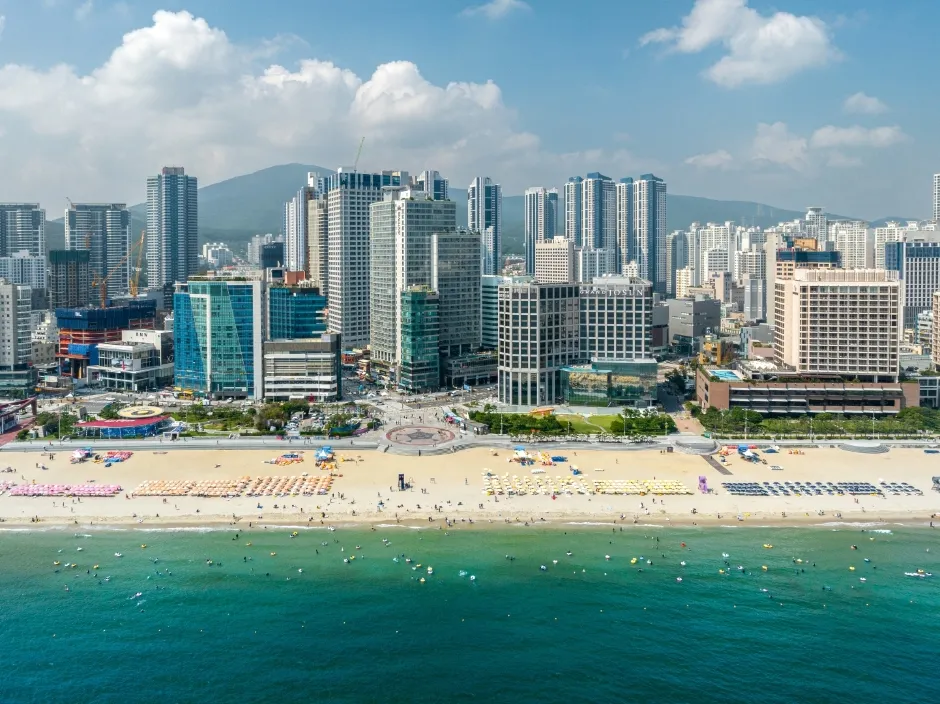
Busan Travel Guide for First-Time Visitors
Busan is Korea's second city and its biggest beach destination, a relaxed coastal counterpoint to Seoul. Two to three days covers its beaches, fish markets, and cliffside temple. Most visitors arrive by KTX in about two and a half hours from Seoul.

Busan 2-Day Itinerary for First-Time Visitors
Two days in Busan split by theme: the coast, beaches, and a cliffside temple on day one, then seafood markets and the Gamcheon culture village on day two. Built around the metro and a couple of short taxi hops.