The train makes Seoul to Jeonju an easy ride of well under two hours, but there are two small things first-timers miss. First, most Jeonju trains leave from Seoul's Yongsan Station, not Seoul Station.
Second, Jeonju Station is not right next to the Hanok Village: it's a short ride away, so you'll do a quick transfer on arrival. Neither is a problem once you know.
Both are covered below, along with whether to day-trip or stay over.
It's the sister route to Seoul to Gyeongju by train, and a route-specific companion to the broader KTX booking guide. Read that for the booking and payment mechanics.
Times, fares, and bus numbers below are approximate and change, so confirm with KORAIL and a Korean map app (Naver Map or KakaoMap) before you travel.
Quick answer
| Question | Short answer |
|---|---|
| How long is the train? | Roughly 1.5 to 2 hours by KTX (check the timetable) |
| Which Seoul station? | Usually Yongsan: Seoul Station has fewer Jeonju trains |
| Is Jeonju Station at the Hanok Village? | No: it is several kilometers away, so plan a taxi or city bus |
| How do I get to the village? | Taxi or city bus. Check the current route in a map app |
| Day trip or overnight? | Day trips work but are tight; a night is more relaxed |
Fares, schedules, and bus routes change. Verify with official and map-app sources, and don't rely on a fixed time or number from any guide.
The train, and which Seoul station
Jeonju is served by direct trains, but the departure station catches people out:
- Yongsan is the main hub for Jeonju. Most trains to Jeonju, and the widest range of times, leave from Yongsan Station, not Seoul Station. Seoul Station has only limited Jeonju departures.
- Check the departure station on your booking. Don't assume everything leaves Seoul Station; the booking screen shows the actual origin (Yongsan, Seoul, Seodaejeon, and others appear on this line).
- KTX takes roughly 1.5 to 2 hours, depending on the train. Frequency varies by day and time, so check the timetable. There's also the slower, cheaper Mugunghwa if you're not in a rush.
- Friday evenings sell out often. Book a few days ahead if you can, and confirm fares and times officially rather than trusting a fixed figure.
How to book
Book through KORAIL's official channels: the Korail+ app or the English KORAIL site: choosing the overseas-card option at payment. Screen names and menus can change, so follow the current in-app labels. If a foreign card is declined, try the app instead of the website (or a different browser), a different card, or buy at a station counter or machine.
For the full walk-through, see the KTX booking guide, and use only official channels; there's no need for unofficial resellers.
Arriving at Jeonju Station
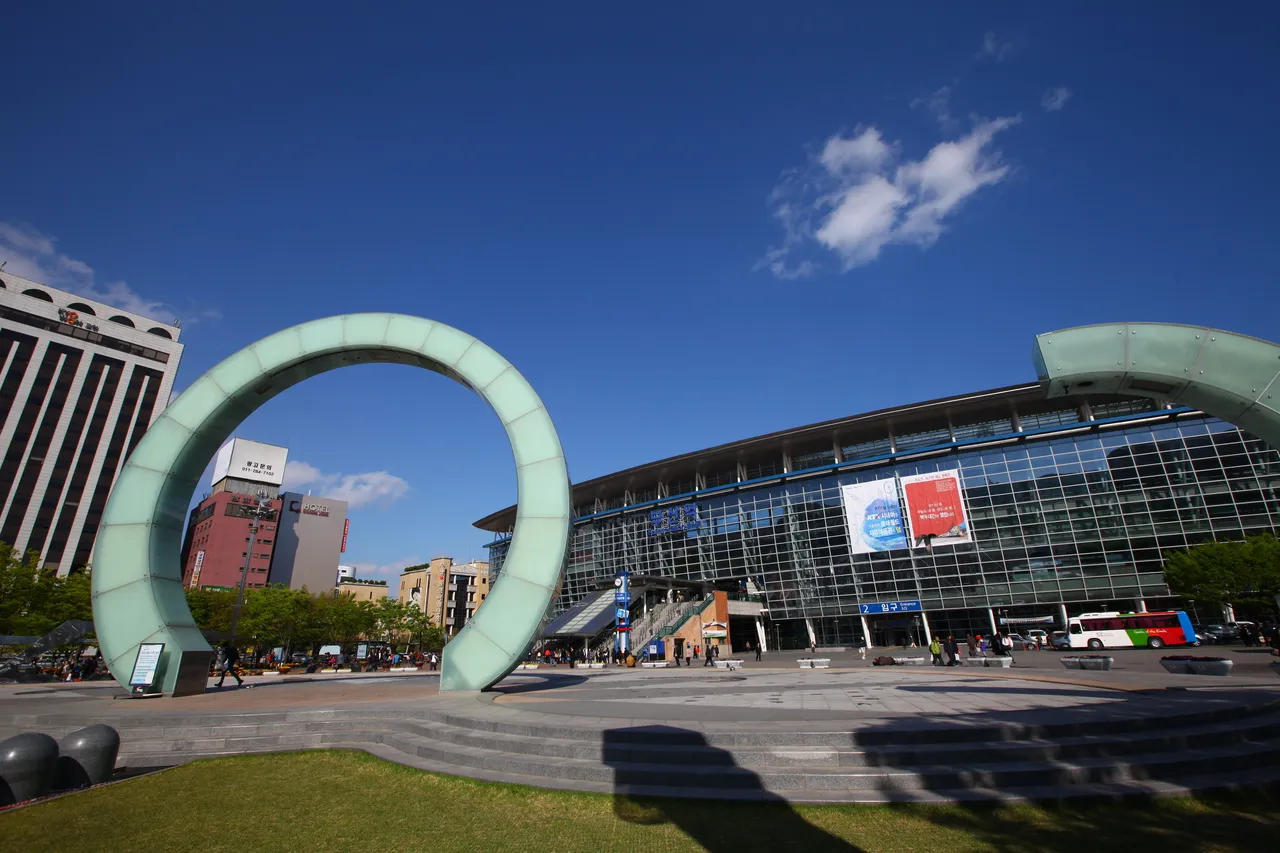
Jeonju Station is a nice arrival: its exterior is built in a hanok (traditional) style, so the mood starts the moment you step out. It's a small photo spot in itself. But the Hanok Village is across town, not at the station.
The good news: it's closer than Gyeongju's out-of-town stop, so the transfer is shorter.
| Option | Notes |
|---|---|
| Taxi | Easiest with luggage. Metered, so the fare depends on traffic and where you are dropped off. Have your destination on a map. |
| City bus | Local buses connect the station area with the Hanok Village. Routes and stops change, so confirm the number and stop on Naver Map or KakaoMap. |
| Accommodation help | Some hanok stays advise on the best bus or meeting point: ask when you book. |
| Walking | Too far to walk from the station to the village: take a taxi or bus. |
City buses charge a flat fare (check the current amount), and a T-money card works on Jeonju buses. With a suitcase, a taxi is the simpler choice: the village lanes are narrow and awkward for wheeled bags. Use Naver Map or KakaoMap for routing rather than relying on Google Maps.
Getting into the village, and your first stop
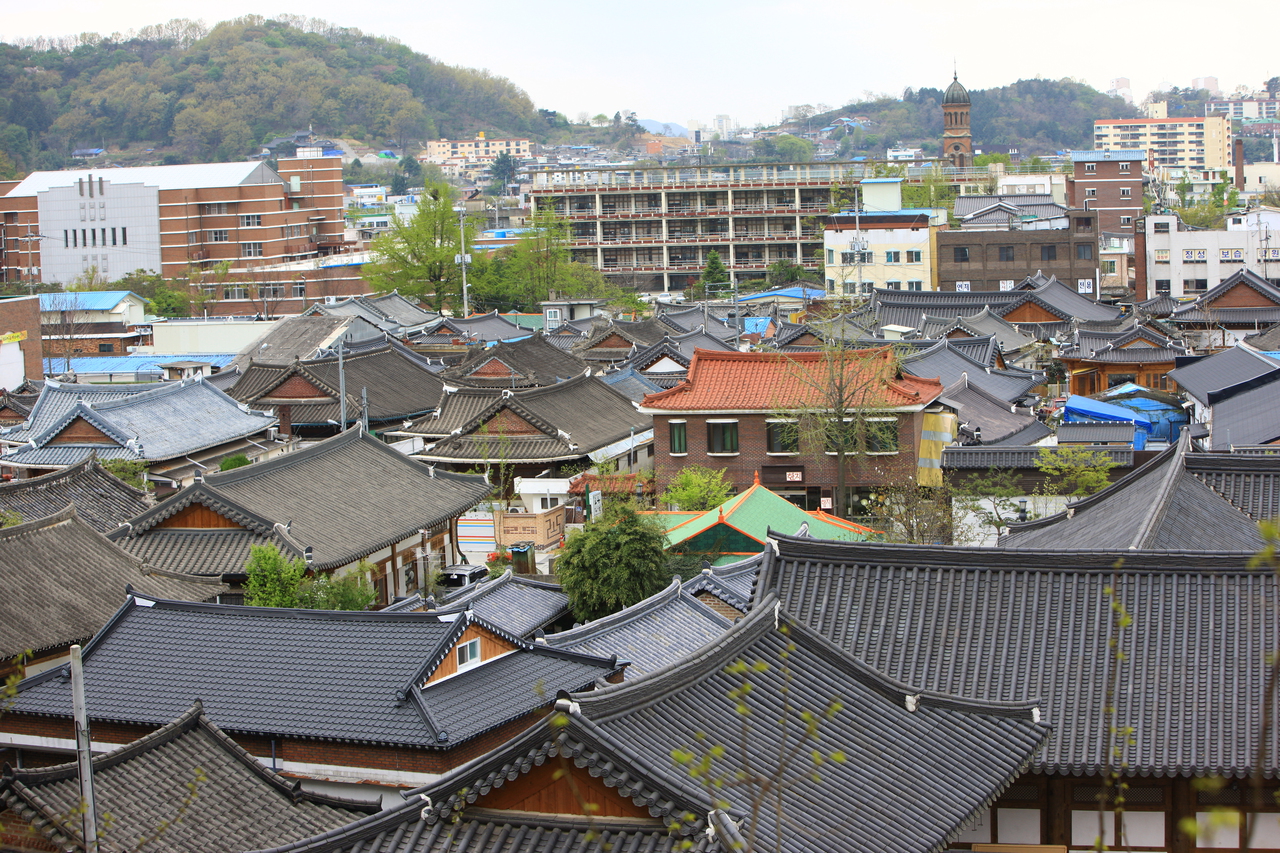
Once you're dropped near the Hanok Village, most of Jeonju's headline sights are walkable:
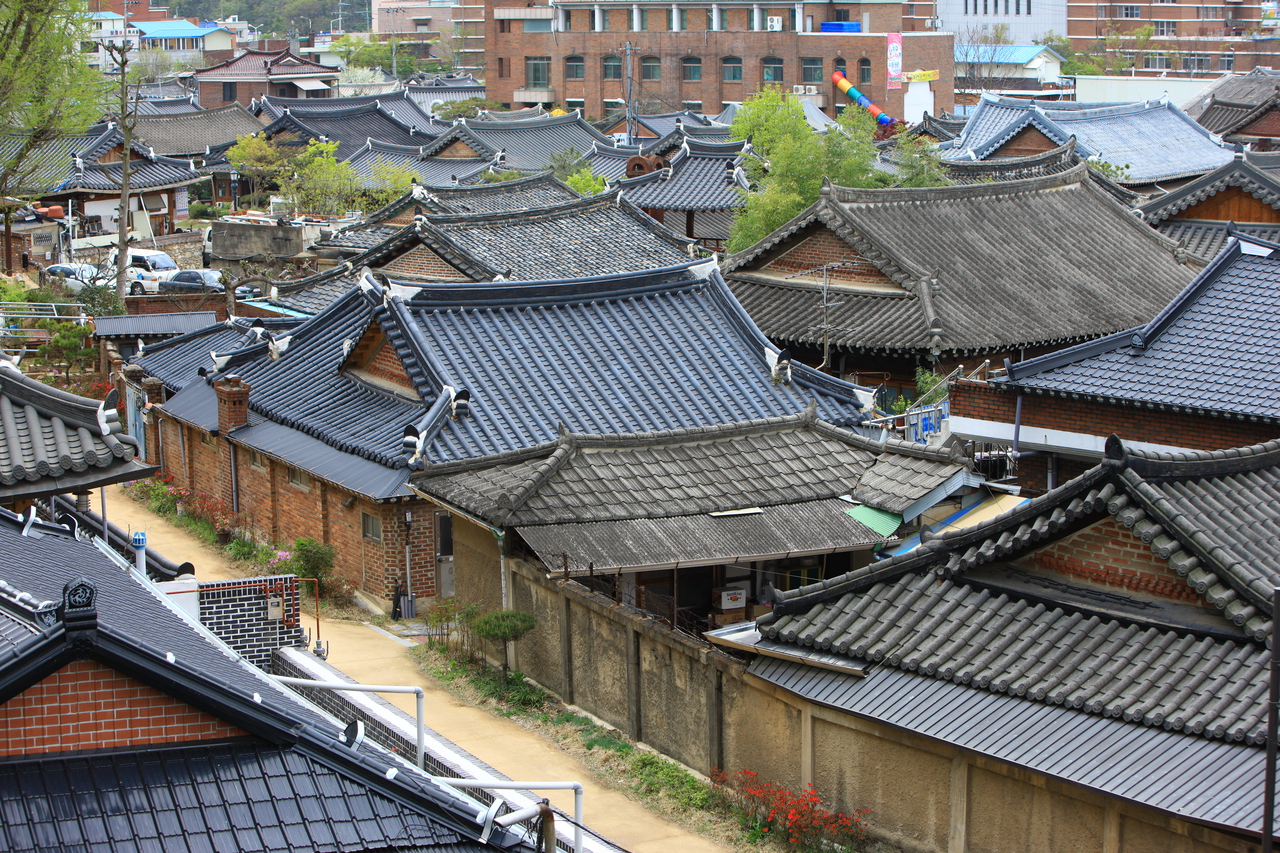
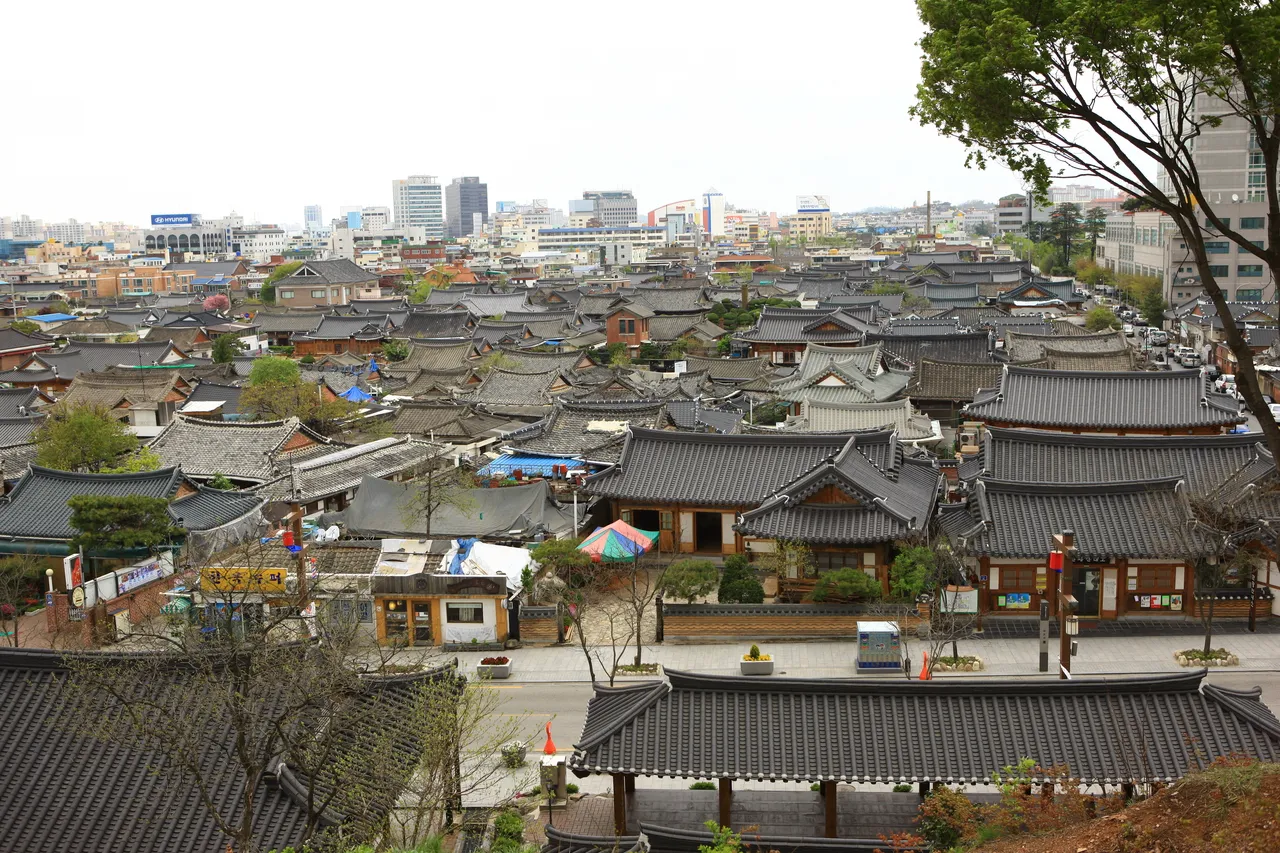
- Gyeonggijeon Shrine and the lanes of traditional houses, the heart of the village.
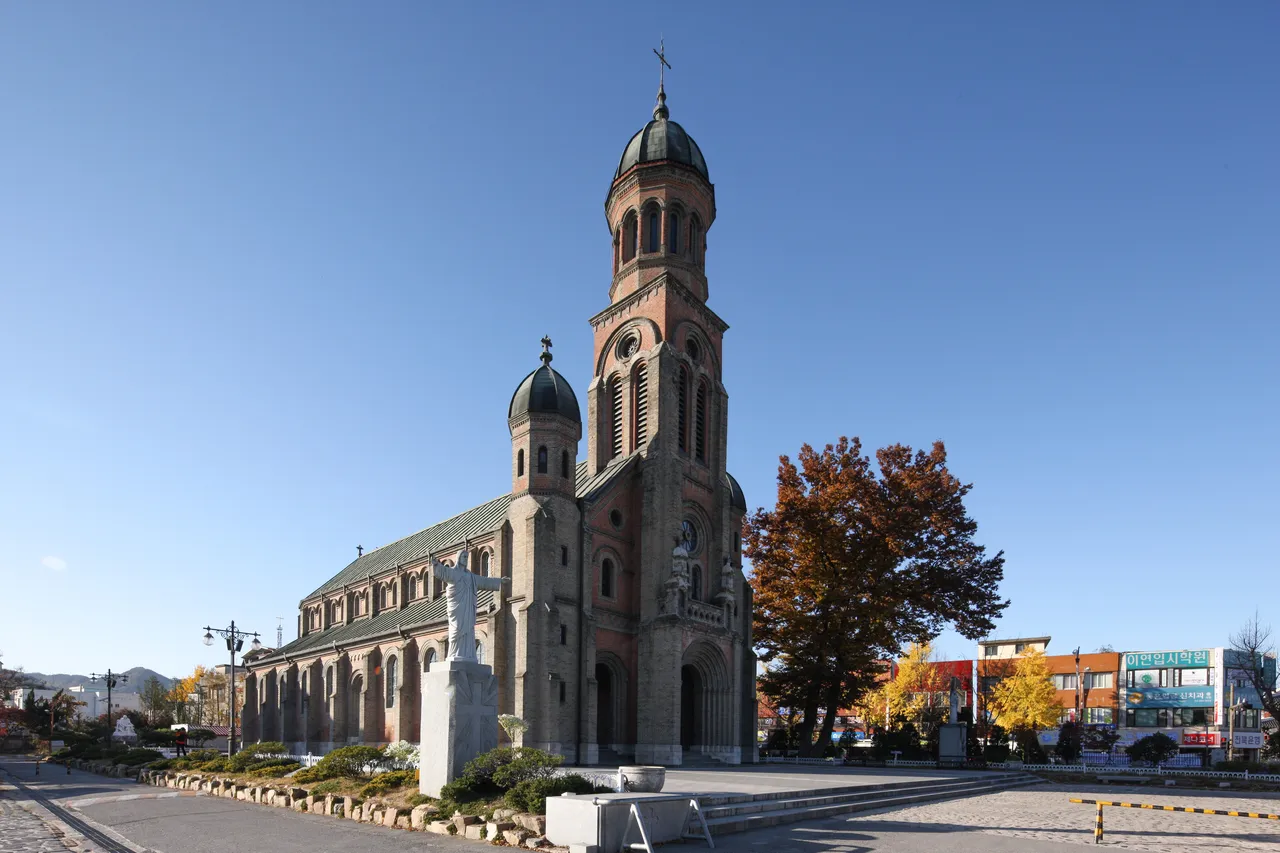
- Jeondong Catholic Church, just across from Gyeonggijeon, one of Korea's most beautiful churches.
- Pungnammun Gate and, a few minutes on, Nambu Market with its Youth Mall and night market.
- Jaman Mural Village and Omokdae, uphill from the village (steeper, mind heavy bags).
Only the further-flung spots need a bus or taxi; within the village, you're on foot.
Day trip or overnight?
- Day trip (tight but doable). Leave Seoul early, arrive late morning, and you can fit the village, Gyeonggijeon, a bibimbap lunch, and a walk before an evening train back, roughly a ten-hour visit. Check the last train time carefully so you don't get stranded.
- One night (more relaxed). An overnight lets you enjoy the quiet early-morning and late-evening lanes, the Nambu night market, and a slower food crawl. See where to stay in Jeonju for choosing a base.
- Two nights adds the markets, cafe streets, and a calmer pace without rushing.
| Day trip | Overnight | |
|---|---|---|
| Best for | A quick taste, tight schedule | Atmosphere, food, night market |
| You'll see | Village, Gyeonggijeon, lunch | All that, plus mornings/evenings |
| Watch out for | The last train back | Booking a hanok stay's details |
Where to stay (if you stay over)
Base in or beside the Hanok Village for atmosphere and the quiet hours, near Jeonju Station for an early train, or by the markets/downtown for food and nightlife. The where to stay in Jeonju guide compares the areas and the realities of a hanok stay (some have shared bathrooms. Confirm before booking).
What to do near the Hanok Village
Beyond the sights above, Jeonju is a food city: it's a UNESCO City of Gastronomy and the home of bibimbap. Visitors typically come for Jeonju bibimbap, kongnamul-gukbap (bean-sprout soup rice), street snacks at Nambu Market, and the local makgeolli (rice wine) drinking culture as part of the food scene. Specific restaurants, hours, and prices change, so check current information rather than fixing a plan around any one place.
From the airport
There's no direct train from Incheon Airport to Jeonju. Your options:
- AREX to Seoul Station, then transfer to a Jeonju train (note many leave from Yongsan).
- Airport bus directly toward Jeonju (roughly 3 to 4 hours. Check current routes and times).
- Via Gwangmyeong Station: an airport bus to Gwangmyeong, then a KTX onward.
If you land and want to head straight down, the bus or the Gwangmyeong route can save a city transfer. Confirm schedules officially.
Luggage tips
Travel light if you're day-tripping or moving on the same day, it makes the station transfer and the village lanes much easier. Lockers or luggage storage may be available at the station or some sites, but availability and sizes vary: don't count on a specific locker. Confirm on the day or ask your accommodation.
Where this fits in a longer trip
Jeonju pairs naturally with a wider route. In a national plan, many travelers choose between Jeonju and Gyeongju as their historic-town stop rather than doing both. See how the train legs fit the 10-day Korea itinerary, and the Seoul to Gyeongju guide for the alternative.
Common mistakes
- Going to Seoul Station by default. Most Jeonju trains leave from Yongsan: check your booking.
- Expecting Jeonju Station to be at the Hanok Village. It's a short ride away. Take a taxi or bus.
- Day-tripping without checking the last train. Confirm the return time before you commit.
- Dragging a suitcase through the village lanes. Use a taxi, or leave bags at your stay.
- Relying on Google Maps for buses. Use Naver Map or KakaoMap for Korean transit.
- Treating bus numbers and fares here as fixed. Confirm them live before you ride.
Frequently asked questions
How do I get from Seoul to Jeonju? By train in about 1.5 to 2 hours, usually from Yongsan Station, to Jeonju Station, then a short taxi or bus to the Hanok Village. Check the timetable and fares with KORAIL.
Which Seoul station do Jeonju trains leave from? Mostly Yongsan. Seoul Station has only limited Jeonju departures, so check the departure station shown on your booking.
How long does the train take? Roughly 1.5 to 2 hours by KTX; the slower Mugunghwa takes longer but costs less. Confirm current times.
Is Jeonju Station near the Hanok Village? No. It is several kilometers away, so take a taxi or a city bus. It's closer than Gyeongju's out-of-town station.
How do I get from Jeonju Station to the Hanok Village? A taxi is easiest with luggage; city buses also run to the village area. Confirm the bus number and stop on Naver Map or KakaoMap.
Can I visit Jeonju as a day trip from Seoul? Yes, but it's tight: an early start gives you the village, Gyeonggijeon, a bibimbap lunch, and a walk before an evening train. Check the last train time.
An overnight is more relaxed.
Are the Hanok Village sights walkable? Yes: Gyeonggijeon, Jeondong Catholic Church, Pungnammun, and Nambu Market are within walking distance; only further spots need a bus or taxi.
Can I use a T-money card on Jeonju buses? Yes, T-money works on Jeonju city buses, which charge a flat fare. Carry a little cash as backup.
Is there a train from Incheon Airport to Jeonju? No direct train. Take AREX to Seoul Station and transfer, an airport bus toward Jeonju (about 3 to 4 hours), or go via Gwangmyeong Station.
Confirm current schedules.
How much is the KTX to Jeonju? Fares vary and change, so check the current price on KORAIL; the Mugunghwa is cheaper than the KTX.
Do I need to book in advance? For weekends and Friday evenings, yes, those sell out. Midweek you can often book closer to the day, but reserving ahead is safer.
Is the train better than the bus to Jeonju? The train is comfortable and central; express buses also connect Seoul and Jeonju and can be cheaper. Either way, plan the short transfer to the village.
Where should I stay in Jeonju? In or beside the Hanok Village for atmosphere, near the station for an early train, or downtown for food and nightlife. See the where-to-stay guide.
Should I visit Jeonju or Gyeongju? Both are historic towns reachable by train; many travelers pick one per trip. Jeonju leans food and hanok atmosphere, Gyeongju leans ancient history and temples.
Where can I store my luggage? The station or some sites may have lockers, but availability and sizes vary. Confirm on the day or leave bags at your accommodation.
Final recommendation
The train to Jeonju is simple: just remember the two quirks: most trains leave from Yongsan, not Seoul Station, and Jeonju Station is a short ride from the Hanok Village, not at it (though closer than Gyeongju's). Book through KORAIL's official channels, check your departure station, and plan a quick taxi or bus into the village, with a suitcase, take the taxi. Day trips work if you watch the last train, but a night lets you enjoy Jeonju's food and its quiet hanok lanes properly.
Confirm fares, times, and bus routes live, and pair this with the where to stay in Jeonju guide once you've decided to linger.
Sources
- KORAILOfficial transport site
- Visit KoreaOfficial tourism site
- Korea Tourism Organization English TourAPIOfficial API
Information is compiled from official sources. Details such as prices, hours, and schedules can change. Confirm time-sensitive facts before you travel.
Last verified on
Related guides
How to Book KTX Train Tickets in Korea: KORAIL, SRT, Korail Pass, and Foreigner Tips
Korea's high-speed trains have been one system since 1 September 2026, when KTX and SRT stopped being two companies with two apps. Every high-speed train, including the Suseo departures that used to be SRT, is now booked in the integrated Korail+ app, on the KORAIL site, or at a station. Below: how to book, which Seoul station fits your trip, paying with an overseas card, and what the fare cut does and does not cover.
Where to Stay in Jeonju: Best Areas for Hanok Village, Food, Markets, and First-Time Visitors
For most first-time visitors, the best base in Jeonju is in or beside the Hanok Village (Korea's largest, a slow-city of hundreds of traditional houses) where the real reward is the quiet early-morning and late-evening lanes after the day-trip crowds leave. This guide compares the Hanok Village, Nambu Market, the Gaeksa/Gaekridan-gil cafe streets, Jeonju Station, and quieter areas like Deokjin, with an honest look at hanok stays. Prices, market hours, and night-market days change, so check current info before you book.