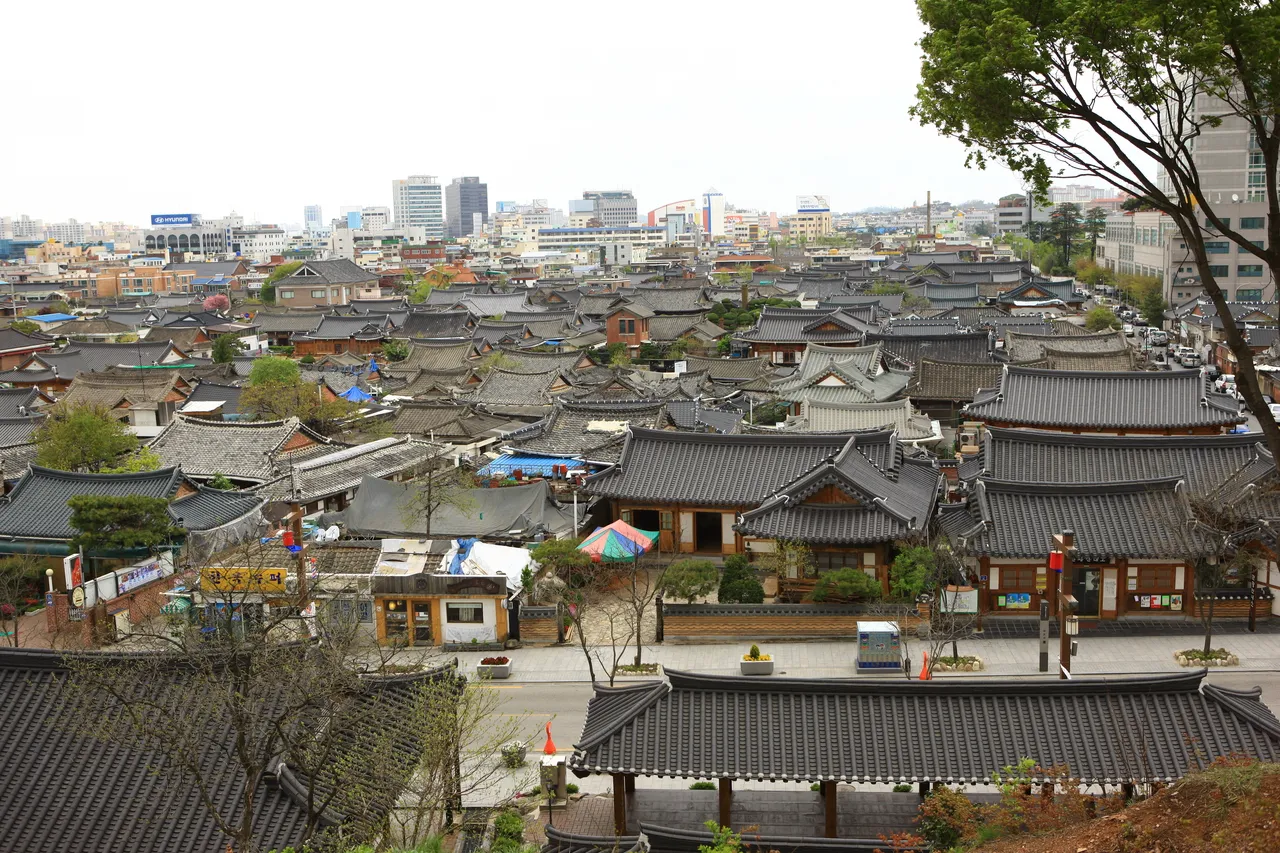
Jeonju is built around Korea's largest hanok village: hundreds of traditional tiled-roof houses, a designated international Slow City, in a town UNESCO named a City of Gastronomy (this is the home of bibimbap, and a good meal here comes with fifteen to twenty side dishes). For a first visit, the question isn't really which neighborhood.
It's how close to the Hanok Village you want to be, and what kind of stay you want once you're there.
Here's the honest part: the Hanok Village gets very busy on weekends from spring through autumn, thick with day-trippers. But the crowds are a daytime phenomenon.
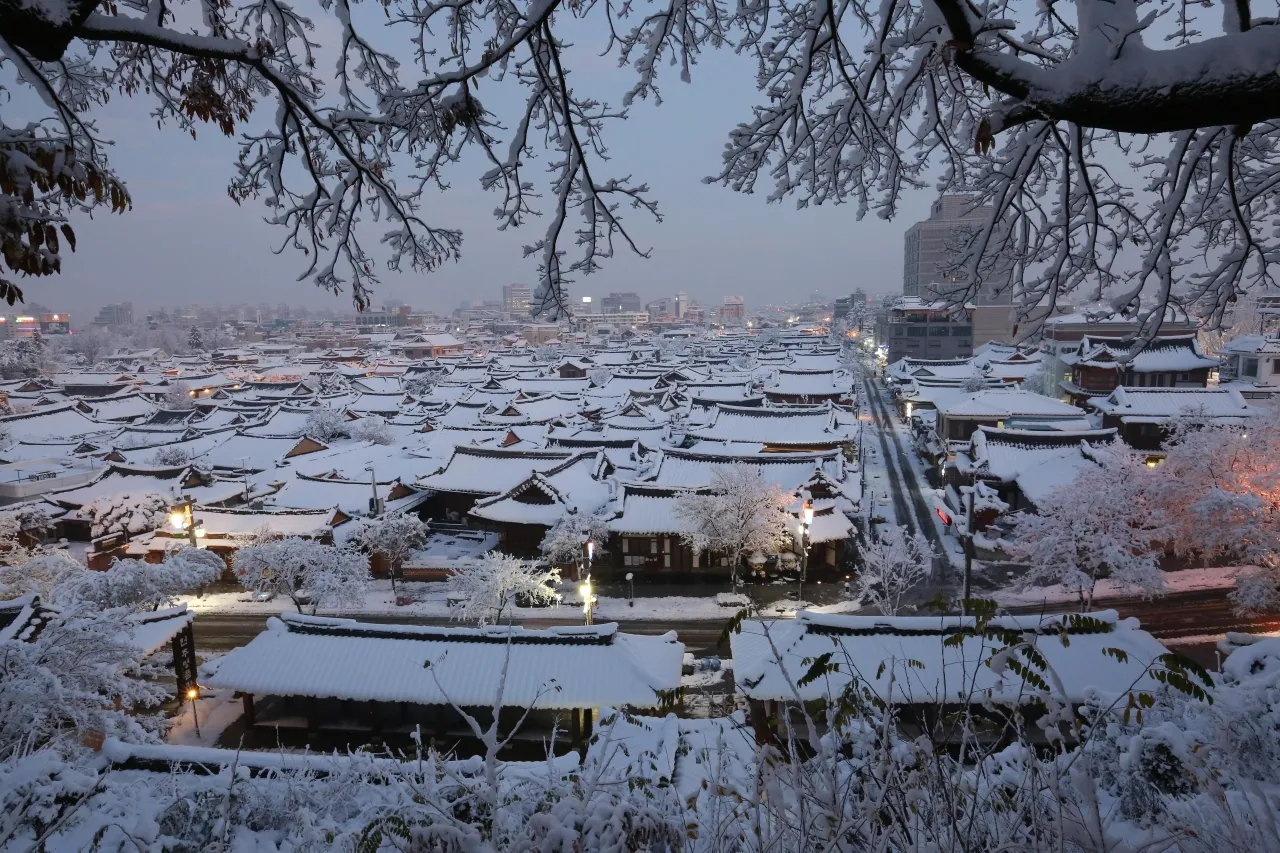
Stay overnight in or beside the village and you get the best of it, the quiet lanes before about 9 a.m. and after about 8 p.m., once the buses have gone, lit and almost empty. That's the single best reason to sleep here rather than day- trip in.
This guide compares the areas and the types of stay so you can pick the right base. For what to see and do, pair it with the Jeonju guide.
Quick answer
| If you want… | Stay around |
|---|---|
| The classic first-timer base | The Hanok Village (or its edge) |
| Food, markets, early mornings | Near Nambu Market / Pungnammun |
| Cafes, bars, a local downtown | Gaeksa / Gaekridan-gil |
| A quick in-and-out by train | Jeonju Station (less atmospheric) |
| Quiet, green, and local | Deokjin Park / Jeonbuk University |
Prices, market hours, the night-market days, and seasonal events all change. Check current information before you rely on them.
Sort out payment with how to pay in Korea.
1. Jeonju Hanok Village: the first-timer's base
The Hanok Village (around Gyeonggijeon Shrine and Jeondong Catholic Church) is where most visitors should stay, especially for a first trip. You're inside the postcard, steps from the main sights, and, best of all, you wake up to the lanes before the crowds arrive.
- Stay here if: it's your first visit, you want atmosphere, or you're traveling for the food and the traditional setting.
- Keep in mind: daytime weekend crowds, narrow lanes (luggage can be awkward), and limited parking. A hanok stay is special but not a hotel. See the stay-types section below.
2. Nambu Market & Pungnammun: food and early mornings
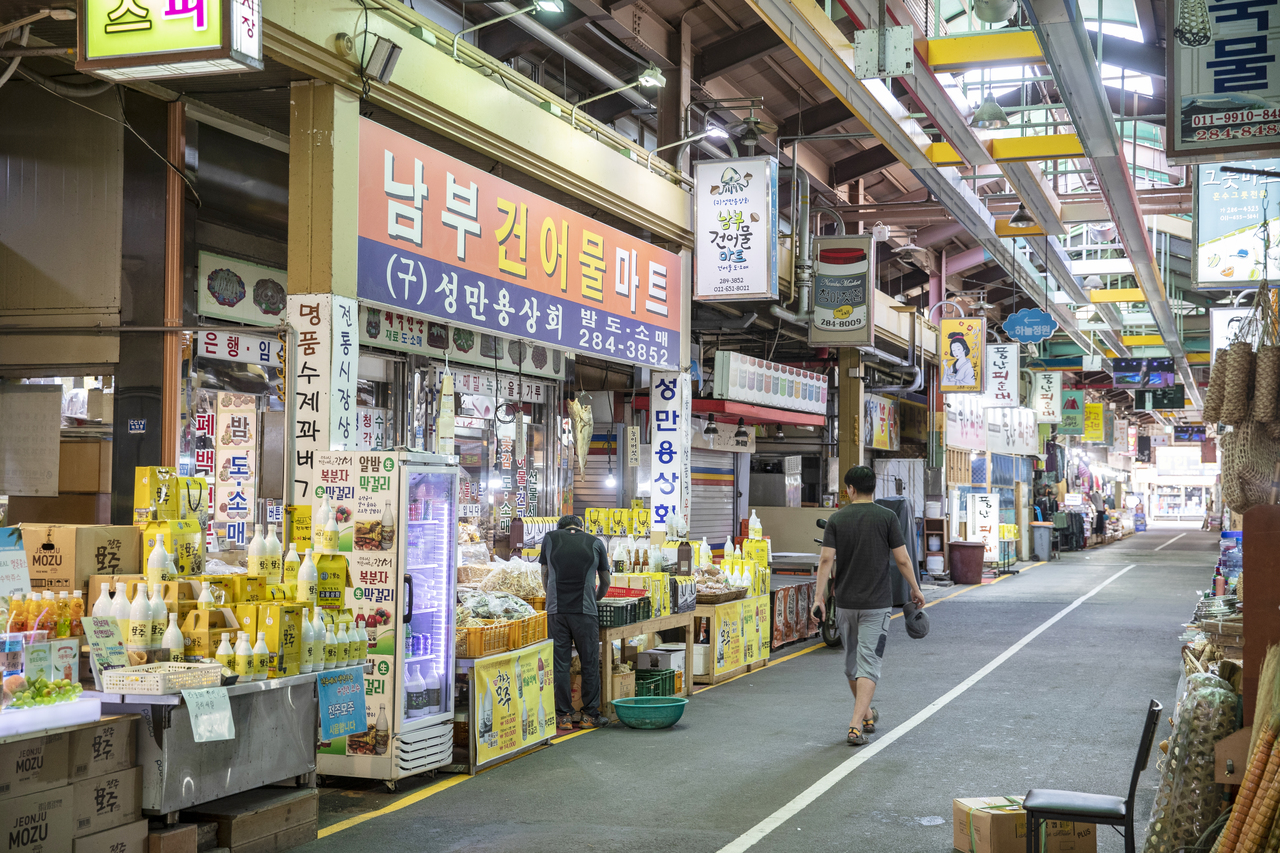
Right beside the village (about a 3-minute walk from Pungnammun, the old south gate) is Nambu Market, one of Korea's largest traditional markets, with a modern Youth Mall of small eateries upstairs. A night market typically runs on Friday and Saturday evenings (around 6 p.m.), though days and hours can change. Confirm current information.
- Stay here if: you're a food-first traveler who wants markets, breakfast stalls, and the night market on your doorstep.
- Keep in mind: it's a working market: lively and a little gritty, not polished.
3. Gaeksa & Gaekridan-gil: downtown cafes and nightlife
A little northwest of the village, the Gaeksa area and the Gaekridan-gil street are Jeonju's modern downtown: cafe streets, independent shops, restaurants, and the city's main nightlife. It's walkable from the village (or a short ride).
- Stay here if: you want cafes and evenings out, or a more "everyday city" feel alongside the tradition.
- Keep in mind: less of the hanok atmosphere; it's a regular downtown.
4. Jeonju Station: convenient, not atmospheric
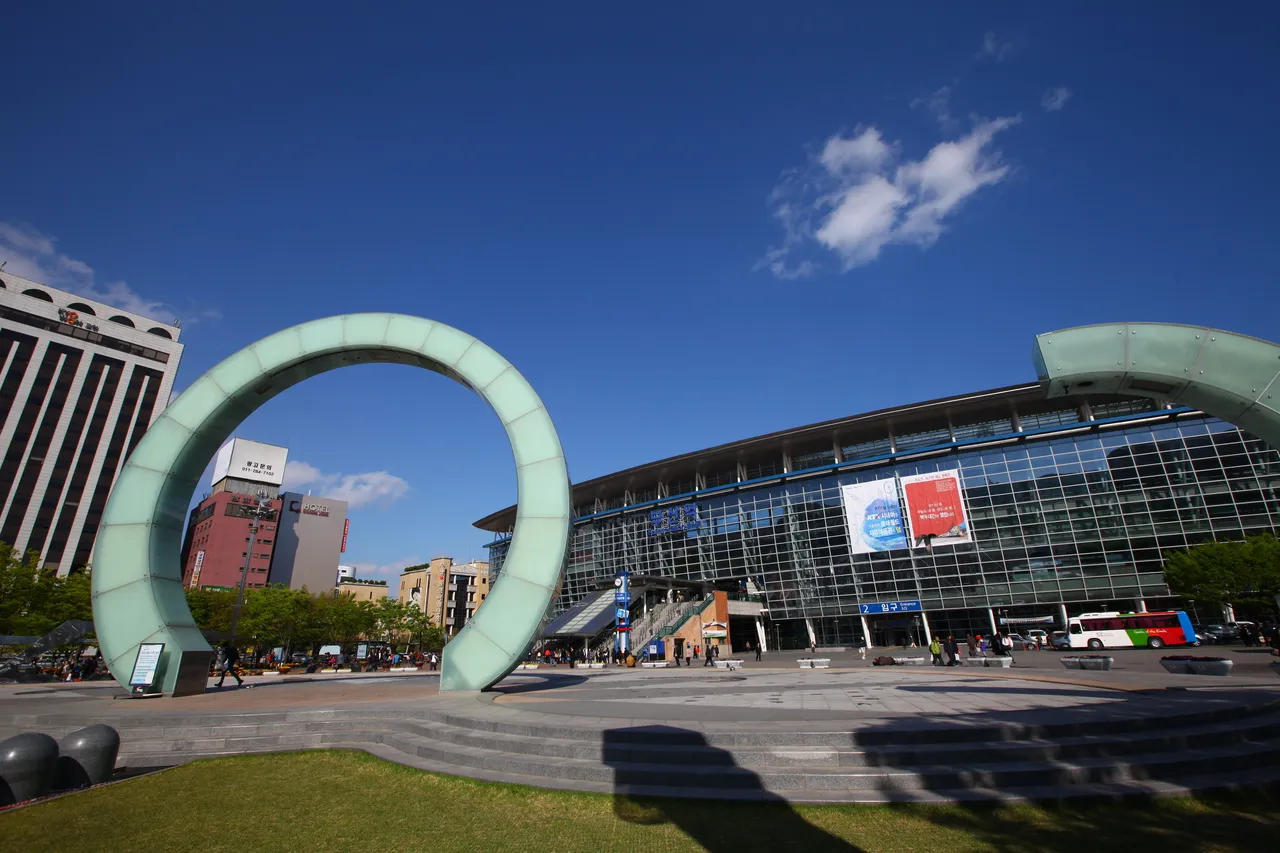
Jeonju Station sits northeast of the center, roughly 15 minutes by bus or taxi from the Hanok Village. KTX trains reach Jeonju mainly from Seoul's Yongsan Station (some from Seoul Station), in around two hours. From Busan and the southeast, connections usually involve a transfer rather than a direct train.
See Seoul to Jeonju by train for the station-to-village transfer, and how to book KTX tickets for the booking details.
- Stay here if: you arrive late or leave early and value being next to the train.
- Keep in mind: the area around the station is not where the charm is: you'll commute into the village.
5. Deokjin Park & Jeonbuk University: quiet and local
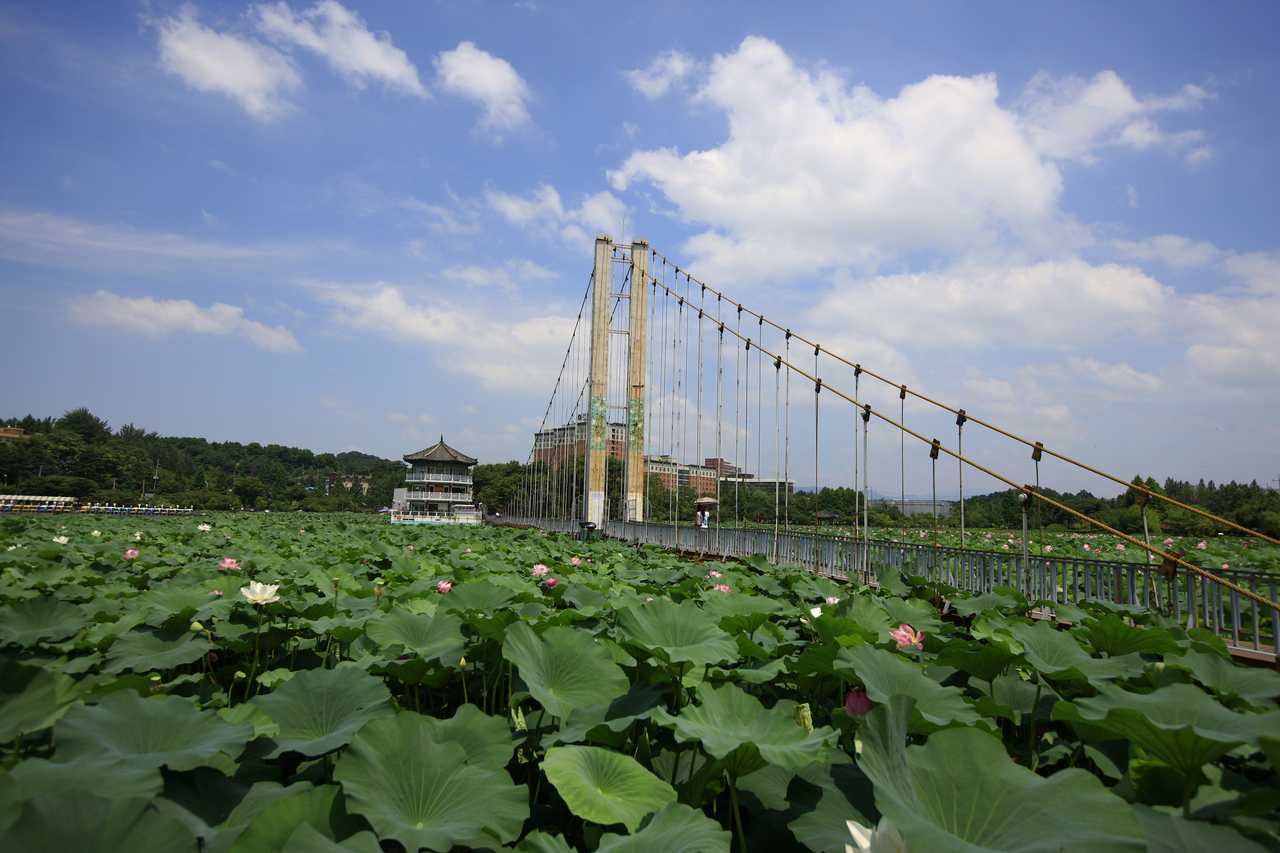
North of the center, Deokjin Park (known for its lotus pond and a pavilion) and the Jeonbuk National University area are leafier, more residential, and more local, with student-area dining and generally lower prices.
- Stay here if: you want quiet, green surroundings, a longer stay, or a more local base.
- Keep in mind: you're away from the main sights and will travel in to the village.
6. Ajung Lake: calm on the outskirts
Ajung Lake, on the eastern edge of the city, is a calm, scenic spot with walking paths. It's a peaceful option but removed from the action, so it suits travelers with a car or those prioritizing rest over sightseeing.
- Stay here if: you have your own transport and want a restful, scenic base.
- Keep in mind: you'll need to drive or taxi for almost everything.
7. The Innovation City / outskirts: usually skip
Newer outlying districts and the Innovation City area have modern hotels, but they're far from the Hanok Village and the things visitors come to Jeonju for. Only worth it for a specific reason (business, a particular booking), not as a first-time base.
Types of stays in Jeonju
- Hanok stay (hanok-guesthouse). Sleeping in a traditional house, often on floor bedding (ondol), around a courtyard, is the signature Jeonju experience, clustered in the village. The honest trade-offs: some smaller hanok guesthouses have shared bathrooms, thinner sound insulation, floor mattresses rather than beds, and variable heating/cooling. If a private bathroom or a real bed matters to you, confirm it before booking.
- Guesthouses. Budget-friendly, social, common around the village and the university area.
- Boutique stays. A growing number of design-minded small hotels and upgraded hanok in and around the village.
- Business hotels. Standard rooms with private bathrooms and predictable comfort, more common near the station and downtown than inside the village.
Best area by traveler type
| Traveler | Best base |
|---|---|
| First-time visitor | Hanok Village or its edge |
| Foodie | Nambu Market / Pungnammun |
| Couple / atmosphere | Inside the Hanok Village |
| Cafe & nightlife | Gaeksa / Gaekridan-gil |
| Family | Village edge or a business hotel nearby |
| Budget / longer stay | Jeonbuk University / Deokjin |
| Train-tight schedule | Jeonju Station |
One night or two? How to choose
- One night: stay in or right beside the Hanok Village so you capture the quiet early morning and late evening, the whole point of overnighting. Don't trade that away for station convenience on a short trip.
- Two nights or more: you have room to split the experience, a night of hanok atmosphere in the village, plus a night somewhere with a private bathroom and a proper bed (boutique or business hotel) if comfort matters. Or base in a quieter area like Deokjin and day-trip into the village.
Where not to stay for a first trip
Not "bad" areas, just mismatched for a first visit centered on the Hanok Village:
- Jeonju Station surroundings: convenient for trains, short on charm.
- Innovation City / far outskirts: modern but disconnected from the sights.
- Ajung Lake without a car: lovely but isolated if you're relying on public transport.
What to check before booking
- Private vs shared bathroom: especially in smaller hanok guesthouses.
- Bed vs floor bedding: hanok stays are often ondol floor mattresses.
- Sound insulation: traditional houses can be thin-walled.
- Heating/cooling: confirm for the season you're visiting.
- Luggage and access: village lanes are narrow; Omokdae and the Jaman Mural Village sit on steep hills. Travel light or check how close you can get.
- Parking: limited in the village if you're driving.
Common mistakes
- Confusing Jeonju with Jeju. Jeonju is an inland city on the mainland; Jeju is the southern island: easy to mix up in searches and maps, so double-check.
- Day-tripping when an overnight is better. The quiet morning and evening lanes are the reward for staying.
- Booking a hanok stay expecting a hotel. Confirm the bathroom, bed, and insulation first.
- Choosing the station for "convenience" on a short trip and missing the village atmosphere.
- Underestimating the hills to Jaman Mural Village and Omokdae with heavy luggage.
Frequently asked questions
Where should I stay in Jeonju for the first time?
In or right beside the Hanok Village. You'll be steps from the main sights and get the quiet early-morning and late-evening lanes after the day crowds leave.
Is it worth staying overnight in the Hanok Village?
Yes. That's the main reason to sleep here rather than day-trip. The village is crowded by day but calm and atmospheric before about 9 a.m. and after about 8 p.m.
What is a hanok stay like?
Sleeping in a traditional house, often on floor bedding around a courtyard. It's memorable but not a hotel: some have shared bathrooms and thin walls, so confirm the details before booking.
Do hanok guesthouses have private bathrooms?
Some do, some don't, smaller ones may share. If a private bathroom matters, check before you book.
How do I get to Jeonju from Seoul?
By KTX, mostly from Yongsan Station (some from Seoul Station), in around two hours. See the KTX booking guide.
Should I stay near Jeonju Station?
Only if you arrive late or leave early and value being next to the train. The station area lacks the village's charm, so you'll commute in.
Is the Hanok Village too crowded to enjoy?
By day on weekends, it's busy. Staying overnight lets you enjoy the calm mornings and evenings, which many visitors find is the best part.
Where's the best area for food?
Near Nambu Market and Pungnammun: a huge traditional market a few minutes from the village, with a Youth Mall of eateries and a Friday-Saturday night market (confirm current days and hours).
Where are the cafes and nightlife?
Around Gaeksa and Gaekridan-gil, Jeonju's downtown cafe-and-bar streets, walkable from the village.
Is Jeonju good for families?
Yes. It's compact and walkable, with hanok stays and nearby business hotels. Mind the narrow lanes and hilly spots with strollers or heavy bags.
How many nights do I need in Jeonju?
One night captures the village; two lets you add the markets, cafe streets, and a quieter area, or mix a hanok night with a comfort-hotel night.
Is Jeonju expensive?
It's generally more affordable than Seoul or Busan, with budget guesthouses around the village and the university, though prices rise on peak weekends.
Is English widely spoken in Jeonju?
Less than in Seoul or Busan. A translation app helps, and the village's tourist areas are used to visitors.
Is Jeonju the same as Jeju?
No, Jeonju is an inland city on the mainland; Jeju is the southern island. They're often confused in searches, so make sure you're booking the right place.
Final recommendation
For a first trip to Jeonju, base yourself in or beside the Hanok Village: the atmosphere, the food, and the quiet early-morning and late-evening lanes are exactly what you came for, and they're hard to get on a day trip. Choose Nambu Market for food, Gaeksa and Gaekridan-gil for cafes and nightlife, and the station or a business hotel only if comfort or a tight train schedule outweighs charm. Sleep in a hanok at least once for the experience, but confirm the bathroom, bed, and insulation first so it matches your expectations.
Check current prices and market days before you book, and pair this with the Jeonju guide for what to do once you're there.
Sources
- Visit KoreaOfficial tourism site
- Jeonju City Official TourismOfficial tourism site
- Korea Tourism Organization English TourAPIOfficial API
Information is compiled from official sources. Details such as prices, hours, and schedules can change. Confirm time-sensitive facts before you travel.
Last verified on
Related guides
Jeonju Travel Guide: Hanok Village, Bibimbap, Hanbok, and What to Eat
Jeonju is Korea's food-and-hanok city beyond Seoul: a slow, walkable trip built around the country's largest traditional hanok village, signature bibimbap, hanbok photos, and traditional markets. It works as a relaxed day trip or an easy one-night stay from Seoul.
How to Book KTX Train Tickets in Korea: KORAIL, SRT, Korail Pass, and Foreigner Tips
Korea's high-speed booking rules change on 1 September 2026, when KTX and SRT stop being two companies with two apps. Which rules apply depends on the date your train runs: through 31 August the two are still booked separately, and from 1 September the integrated Korail+ app books both. Below: how to book on either side of that date, which Seoul station fits your trip, paying with an overseas card, and what the fare cut does and does not cover.