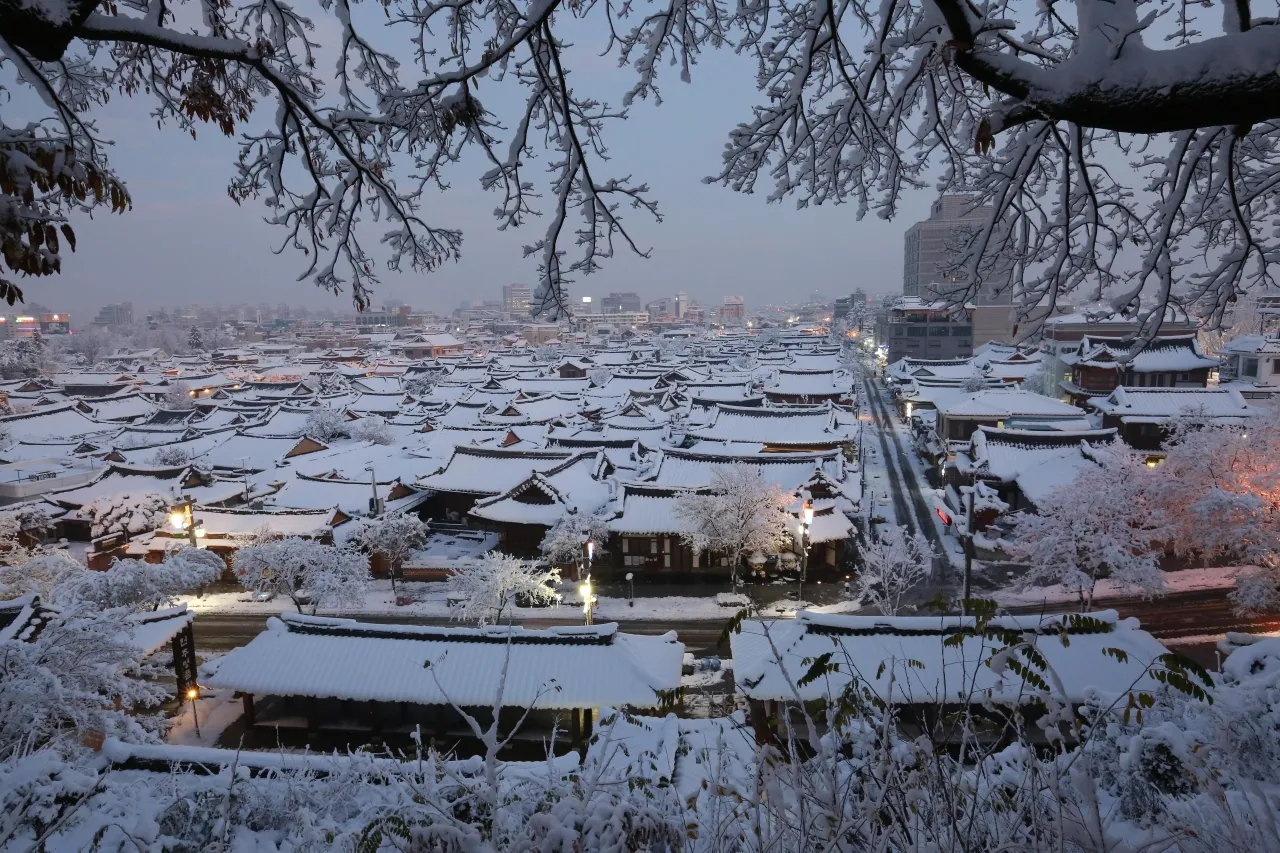
Jeonju is Korea's food-and-hanok city, and it rewards a slower pace than a big-city stop. Instead of ticking off sights, you wander lanes of traditional houses, eat the dish the city is famous for, maybe put on a hanbok, and graze through a market.
It works as a day trip or an easy one-night stay from Seoul, and it pairs naturally with the 7-day Korea route.
Why visit Jeonju?
Jeonju is where you go for tradition and food rather than skylines. It is home to Korea's largest traditional hanok village, it is the country's first UNESCO Creative City of Gastronomy, and it is an international Slow City: three reasons that all point the same way: come to walk, eat, and take your time.
If Seoul is fast and Busan is coastal, Jeonju is the unhurried, food-first counterpoint.
How to get there from Seoul
Jeonju is an easy trip from Seoul, usually about two hours or so by train, but exact times, fares, and routes change, so check current schedules before you go.
- By train. Trains run from Seoul toward Jeonju; confirm departures and book ahead through the official rail service, especially on weekends.
- By express or intercity bus. Buses also connect Seoul and Jeonju; check current timetables and fares with the official express-bus service.
- From the station or terminal to the Hanok Village. It is a short taxi ride, or a local bus if you are traveling light. With luggage, a taxi is the simpler choice. A Korean map app helps with local buses.
Start at Jeonju Hanok Village
The Hanok Village is the heart of the city: over 700 traditional hanok houses clustered together, the largest such village in Korea. The village is open year-round and free to wander: you only pay for individual sites, experiences, or food. Give yourself time to walk slowly; the pleasure is in the lanes, rooflines, and small courtyards rather than any single landmark.
A little lane etiquette keeps it pleasant for everyone:
- Many hanok are homes, shops, or guesthouses, so keep noise down and don't enter private yards.
- Ask before photographing people, and stay out of roped-off or staff-only areas.
- Early morning and late afternoon are quieter and better for photos than the midday crowd.
Staying overnight is the best way to enjoy those quiet hours. See where to stay in Jeonju for choosing a base in or beside the village.
Rent hanbok in Jeonju
Like Seoul's palace district, Jeonju is a popular place to rent hanbok and walk the lanes in traditional dress. See the hanbok rental guide for how renting works in general. Shops near the village offer traditional, modernized, and themed outfits.
A few practical notes:
- Confirm the details at the shop: the rental time block, return time, accessories, hair styling, and lockers all vary, and so do prices. Ask for the total before you commit.
- Dress for walking. The lanes have slopes and steps up to viewpoints like Omokdae, so wear shoes you can move in and mind a long skirt on stairs.
- Mind the weather. Hanbok is layered; summer is warm and winter calls for a coat you can carry.
What to see around the village
You can string these together on foot from the village. Pick what appeals rather than forcing all of them into one day:
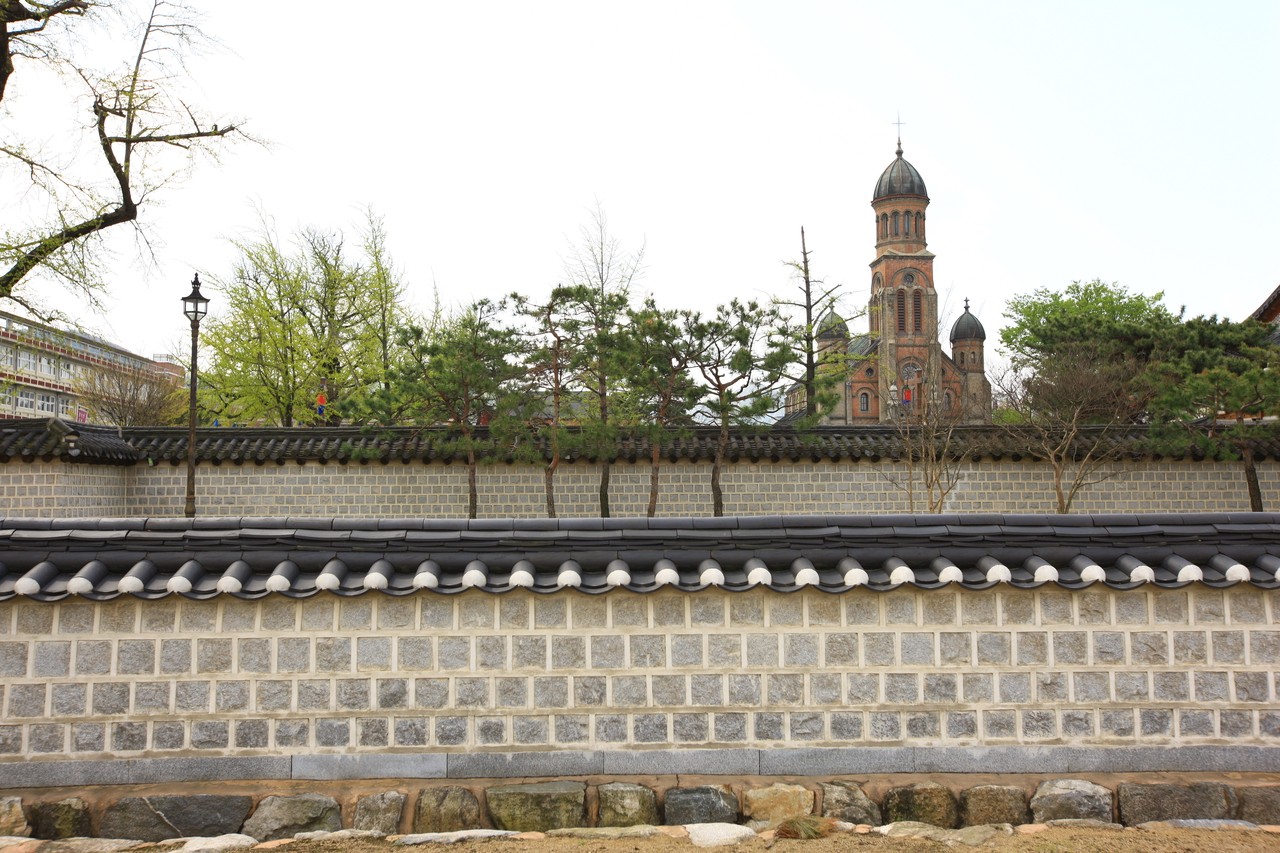
- Gyeonggijeon Shrine: a historic walled shrine compound, calm and photogenic.
- Jeondong Catholic Cathedral: a landmark brick church across from Gyeonggijeon.
- Omokdae: a short uphill walk to a pavilion with a view over the hanok rooftops.
- Jaman Mural Village: a small hillside neighborhood of around 40 houses painted with murals.
- Jeonju Hyanggyo: a historic Confucian school with old trees, especially pretty in autumn.
- Nambu Market: a traditional market on the edge of the village (more on it below).
What to eat in Jeonju
Food is the main reason many people come, and Jeonju's specialties are worth planning a day around. Tastes differ, so treat these as a starting menu rather than must-eats, and don't assume any one dish suits everyone.
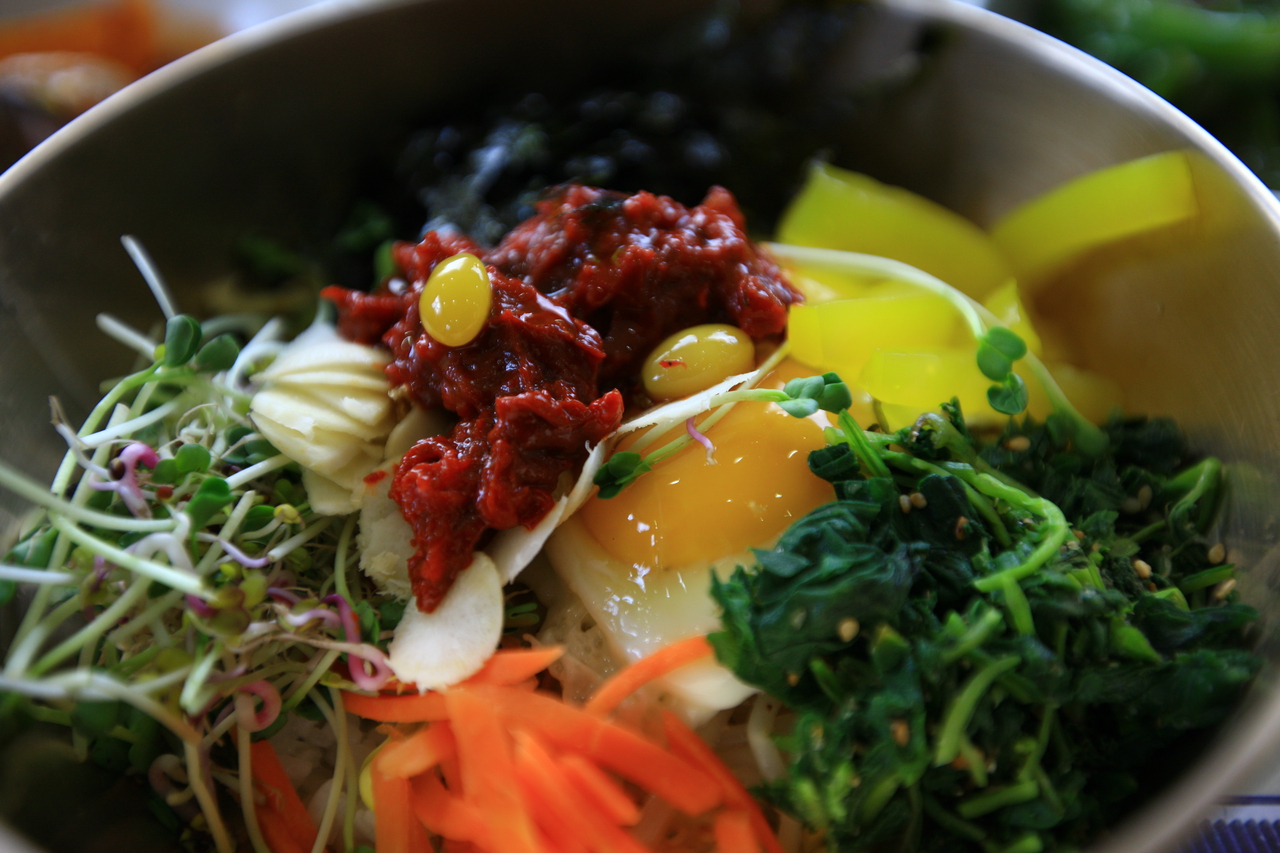
- Jeonju bibimbap: the city's signature dish and the obvious first order: rice topped with seasoned vegetables, often with a local twist. A great introduction to the city's food.
- Kongnamul-gukbap (bean-sprout rice soup): warm, light, and clean-tasting; a classic breakfast.
- Hanjeongsik (Korean set meal): a table covered with many side dishes, best when you have time to linger over a long, relaxed meal.
- Makgeolli alley: an evening of local rice wine served with rounds of shared snacks (anju). Drinking is optional: the legal age is 19, so carry ID, and there's no need to overdo it.
- Pi-sundae (blood sausage): an adventurous market dish; try a little if you're curious.
- Moju: a sweet, lightly spiced traditional drink, often sipped alongside spicy food.
For the wider picture of Korean dishes, see the what-to-eat guide; some dishes are grilled like Korean barbecue. Vegetarian, halal, or allergy-sensitive travelers should check ingredients in advance, since many dishes use meat, egg, soy, or seafood.
Casual eats, night market, and modern cafe streets
Beyond the sit-down specialties, Jeonju is good for grazing. Tourist snack shops and casual street foods cluster around the village. Think popular local-style sweet snacks and fried bites rather than any one brand.
Nambu Market runs a lively night market on selected evenings, and its Youth Mall (Cheongnyeon Mall) is a cluster of small, young-run eateries and shops upstairs.
Jeonju also has a modern side: cafe-and-boutique streets like Gaekridan-gil pair a contemporary afternoon with the traditional morning in the village. A good rhythm is tradition in the morning, modern cafes in the afternoon.
A suggested one-day route
This is one flexible example, not the only route, adjust to the weather and your pace.
- Morning: arrive, drop bags, and walk into the Hanok Village; optionally rent hanbok.
- Midday: Gyeonggijeon and Jeondong Cathedral, then bibimbap for lunch.
- Afternoon: walk up to Omokdae for the rooftop view, wander toward Jaman Mural Village, and finish with coffee on a modern cafe street.
A suggested one-night route
Again, flexible, a night just lets you slow down further.
- Day 1: Hanok Village, hanbok, and the main sights at an easy pace; makgeolli alley or a market dinner in the evening.
- Day 2: a relaxed breakfast of kongnamul-gukbap, Nambu Market and the Youth Mall, and anything you missed before heading back.
If you are going between December and February, see the Jeonju winter guide for cold-weather planning, the Yongsan departure, and the transfer from Jeonju Station.
First-timer tips
- Go slow. Jeonju is about walking and eating, not stacking sights.
- Carry some cash. Markets and small stalls may prefer it; a T-money card covers local buses.
- Time your meals. The famous places get busy; eat a little early or late to avoid the longest waits.
- Check the season. Spring and autumn are most comfortable, but Jeonju is visitable year-round.
Useful Korean phrases
Two short phrases cover a taxi to the village and ordering at a stall.
Getting around and ordering in Jeonju
One phrase for a taxi, one for a market stall.
For a taxi from the station or bus terminal.
Polite한옥마을까지 가 주세요.
han-ok-ma-eul-kka-ji ga ju-se-yo.
To the Hanok Village, please.
Korean audio isn't available on this device or browser. Use the romanization above to say it.
Point at the dish or stall as you say it.
Polite이거 하나 주세요.
i-geo ha-na ju-se-yo.
One of these, please.
Korean audio isn't available on this device or browser. Use the romanization above to say it.
Frequently asked questions
How do I get to Jeonju from Seoul?
The fastest option is the KTX to Jeonju Station, roughly 1.5 to 2 hours depending on the train. Most Jeonju trains leave from Yongsan Station, and Seoul Station has limited departures, so check the departure station on your booking. Express buses from Seoul Express Bus Terminal also serve Jeonju and take longer than the train. Check current schedules on Korail+ or the bus terminal website, and see the Seoul to Jeonju by train guide.
Is one day enough for Jeonju?
One full day covers the Hanok Village, hanbok rental, a bibimbap lunch, and an evening at the night market. An overnight stay allows a slower morning at the village when it's quietest and a day trip to the surrounding area. Two nights is more relaxed, especially in festival season.
What is Jeonju Hanok Village?
One of Korea's best-preserved traditional neighborhoods, with around 700 hanok (traditional tile-roofed houses) on a hillside in the city center. You can walk through the alleys, rent hanbok for photos, eat local snacks, and visit craft studios and small cafes fitted into the old buildings. It is a real neighborhood, not a theme park, some houses are still private residences.
What should I eat in Jeonju?
Jeonju bibimbap (the original version) served in a stone bowl (dolsot) with a full array of local toppings. makgeolli (rice wine) with a plate of pajeon (green-onion pancake): the classic pairing in Jeonju; and snack stalls in the night market for hotteok, dak-ganjeong, and other street food. Jeonju-style food uses more oil and richer sauces than Seoul versions, a deliberate regional style.
Is Jeonju suitable for a day trip from Seoul?
Yes, the KTX makes it a reasonable 1-day trip, though the round trip is about 3.5 to 4 hours of travel. A day gives you time for the hanok village, lunch, and a walk, but not much more. Overnight is more comfortable and lets you see the village in the quiet morning before the crowds arrive.
Sources
- Visit KoreaOfficial tourism site
- Korea Tourism Organization (VisitKorea Practical Info)Official tourism site
- Jeonju City Official TourismOfficial tourism site
- KORAILOfficial transport site
- KOBUS (Express Bus Integrated Reservation)Official transport site
Information is compiled from official sources. Details such as prices, hours, and schedules can change. Confirm time-sensitive facts before you travel.
Last verified on
Related guides

What to Eat in Korea: A First-Timer's Food Guide
A starter list of Korean dishes worth seeking out (barbecue, stews, bibimbap, street food, and fried chicken) with how to order, rough prices, and notes for vegetarian and halal travelers.

Korea 7-Day Itinerary for First-Time Visitors
A realistic one-week route for first-time visitors: three days in Seoul, a day of history in Gyeongju, two days in Busan, and a flexible buffer day, all connected by fast KTX trains so you spend time in places, not in transit.