
Korean food is built around sharing, side dishes, and a lot of variety, and you do not need to speak Korean to eat well. This guide lists the dishes most worth trying on a first trip, how to order them, and roughly what they cost, plus where vegetarian and halal travelers can find options.
For a deeper dive, see the Korean barbecue guide and Gwangjang Market. Heading to a traditional market?
The Gwangjang price guide and market alternatives covers what to check before ordering and which market fits your style.
The dishes to try first
- Korean barbecue (gogi-gui): grill-your-own pork or beef with sides. The classic group meal.
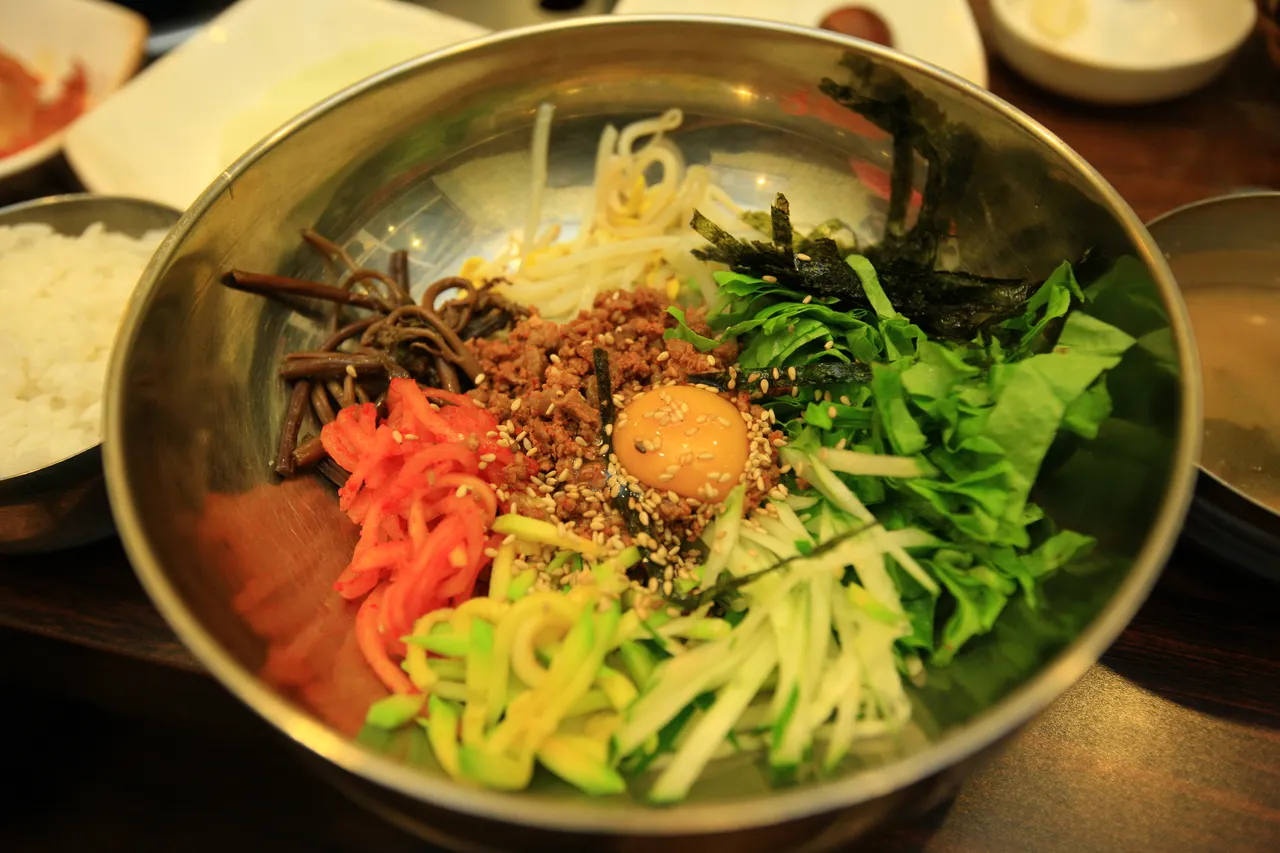
- Bibimbap: rice with vegetables, egg, and chili paste; easy to make vegetarian.
- Kimchi jjigae / doenjang jjigae: bubbling kimchi or soybean-paste stews.
- Bulgogi: sweet marinated grilled beef, mild and beginner-friendly.
- Tteokbokki: chewy rice cakes in a sweet-spicy sauce; a street-food staple.
- Korean fried chicken: double-fried and crispy, often with beer (chimaek); see the Korean fried chicken brands guide to pick a style.
- Samgyetang: a whole young chicken in ginseng broth, mild and nourishing; try it at Tosokchon near Gyeongbokgung.
- Kalguksu: hand-cut noodles in a hearty broth; a Myeongdong classic at Myeongdong Kyoja.

How ordering works
Many restaurants specialize in one thing, so the menu is short. Side dishes (banchan) come free and are refilled.
Water and sometimes utensils are self-serve. Point at a dish or a neighbor's table if you are unsure.
Useful phrases for ordering at a restaurant
Short, polite phrases you can use at most casual restaurants.
Point at the dish or a photo on the menu as you say it.
Polite이거 두 개 주세요
i-geo du gae ju-se-yo
Two of these, please.
Korean audio isn't available on this device or browser. Use the romanization above to say it.
Useful if you are sensitive to spice, not always possible, but worth asking.
Polite덜 맵게 해 주세요
deol maep-ge hae ju-se-yo
Please make it less spicy.
Korean audio isn't available on this device or browser. Use the romanization above to say it.
What it costs
Street snacks run a few thousand won; a casual stew or bibimbap is moderate; barbecue for a group is the bigger spend. Many places are cash-friendly, but cards are widely accepted.

More dishes worth knowing about
The list above is a starting point. As you move further into a trip, these dishes are worth adding:
- Samgyeopsal: thick-cut pork belly grilled at the table, often considered the everyday version of Korean barbecue. Wrap each bite in a lettuce leaf with garlic and fermented soybean paste.
- Haemul pajeon: savory seafood and green-onion pancake, best during rainy weather, which is when Koreans traditionally eat them.
- Sundubu jjigae: soft tofu stew with egg and broth; often comes in a stone pot still bubbling at the table.
- Dakgalbi: spicy stir-fried chicken with rice cake and cabbage, a Chuncheon specialty worth trying if you visit that city.
- Bingsu: shaved ice dessert with toppings such as red bean, strawberry, or matcha. A summer staple and deeply satisfying after a warm day of sightseeing.
- Hotteok: sweet, chewy pan-fried dough filled with brown sugar, cinnamon, and chopped nuts; a street snack available at markets and pojangmacha stalls, best in winter.
- Gimbap: rice and vegetables (sometimes meat or egg) wrapped in seaweed, similar in appearance to sushi but different in taste. A practical, portable snack available at convenience stores and kimbap shops.
Where to eat: a quick guide to restaurant types
- Dedicated BBQ restaurant (고깃집): table grill, order by cut, staff sometimes help you cook. Busy with groups; book ahead on weekends.
- Local neighborhood restaurant (식당): serves one or two things, priced low, no English menu needed, point at what others are eating or at photos.
- Market stall: Gwangjang for bindae-tteok and gimbap; Jagalchi in Busan for seafood. Sit at a counter, pay per dish in cash.
- Convenience store (편의점): GS25, CU, 7-Eleven, all have gimbap, triangle rice balls, ramen (cooked on site with hot water), and snacks. Reliable option at any hour.
- Fast food and chain restaurants: Lotteria, McDonald's, and many local chains have Korean-language menus; some have English or photo menus.
Dietary notes in detail
Vegetarian and vegan travelers: Bibimbap can be made without egg or meat at many restaurants (ask), and temple food (사찰 음식, sachal eumsik) is specifically Buddhist and plant-based, Insadong in Seoul has a few options. Bean paste stews (doenjang jjigae) are sometimes vegetarian, but many use fish-based stock (멸치 국물, myeolchi gukmul) that is not visible in the dish. Always ask if in doubt.
Halal travelers: Itaewon in Seoul has the highest concentration of halal-certified and Muslim-friendly restaurants, and the number across the country is growing. Certified halal Korean BBQ exists, as do halal fried chicken and Korean fusion options. The Muslim-friendly Seoul guide and the Korean food guide for Muslim travelers have current recommendations.
Allergies: Common allergens in Korean cooking include sesame (seed and oil, used pervasively), soy (doenjang, ganjang, ssamjang sauces), shellfish and fish (in stocks, sauces, and kimchi), gluten (wheat appears in marinades, dumplings, and noodles), and egg. Ask at the restaurant; a translation card in Korean covering your specific allergen is useful.
A few table manners
Pour for others rather than yourself, and receive a pour with two hands when someone older pours for you. Do not stick chopsticks upright in rice (a funeral custom). Do not start eating before the eldest person at the table does.
Slurping noodles is normal. Passing food directly between chopsticks is also a funeral custom and unusual in everyday dining. Splitting the bill is common among friends; one person paying for the group is equally common among colleagues.
Frequently asked questions
Is Korean food very spicy?
Some dishes are quite spicy (tteokbokki, sundubu jjigae, dakgalbi), but many others are mild: bulgogi, samgyetang, kalguksu, and samgyeopsal are all low in spice. At most sit-down restaurants you can ask for a milder version ('덜 맵게 해주세요', deol maepge haejuseyo); street-food stalls are less flexible.
What is banchan?
Banchan (반찬) are the small side dishes that arrive free with every Korean meal: kimchi, seasoned spinach, pickled radish, bean sprouts, and others. They are shared across the table and can be refilled at most casual restaurants without extra charge.
Do Korean restaurants have English menus?
Some do, particularly in tourist-heavy areas like Myeongdong, Insadong, and Itaewon. Many don't. Photo menus, Google Translate with your phone camera on the board, and pointing at what neighboring tables are eating are all effective strategies.
How do I pay at a Korean restaurant?
Usually at the counter when you leave (in casual restaurants) or at the table. Cards are widely accepted, though some small restaurants and market stalls are cash-first. See the how to pay in Korea guide for which card types work and when to carry cash.
What is the best Korean dish for first-timers?
It depends on spice tolerance and diet. Bulgogi (sweet marinated beef) and bibimbap (mixed rice bowl) are mild and approachable. Samgyeopsal (pork belly BBQ) is social and fun for a group.
Tteokbokki is popular but can be spicy. Start with what sounds good and keep trying.
Sources
- Visit KoreaOfficial tourism site
- Korea Tourism Organization English TourAPIOfficial API
Information is compiled from official sources. Details such as prices, hours, and schedules can change. Confirm time-sensitive facts before you travel.
Last verified on
Related guides

Chimaek Guide: Korean Fried Chicken and Beer
Chimaek (치맥) is Korean fried chicken (chikin) paired with beer (maekju), a casual, shareable night out. Order a whole chicken for two to three people, choose plain fried or a sauce, and eat it while it is hot and crisp.
Korean Cooking Class Guide: What to Expect and How to Book
A Korean cooking class lets you make dishes like kimchi, bibimbap, bulgogi, or tteokbokki with hands-on guidance, then eat what you cooked. Classes vary widely in language, menu, and dietary flexibility, so confirm the details (especially allergies and halal, vegetarian, or gluten-free needs) before you book.