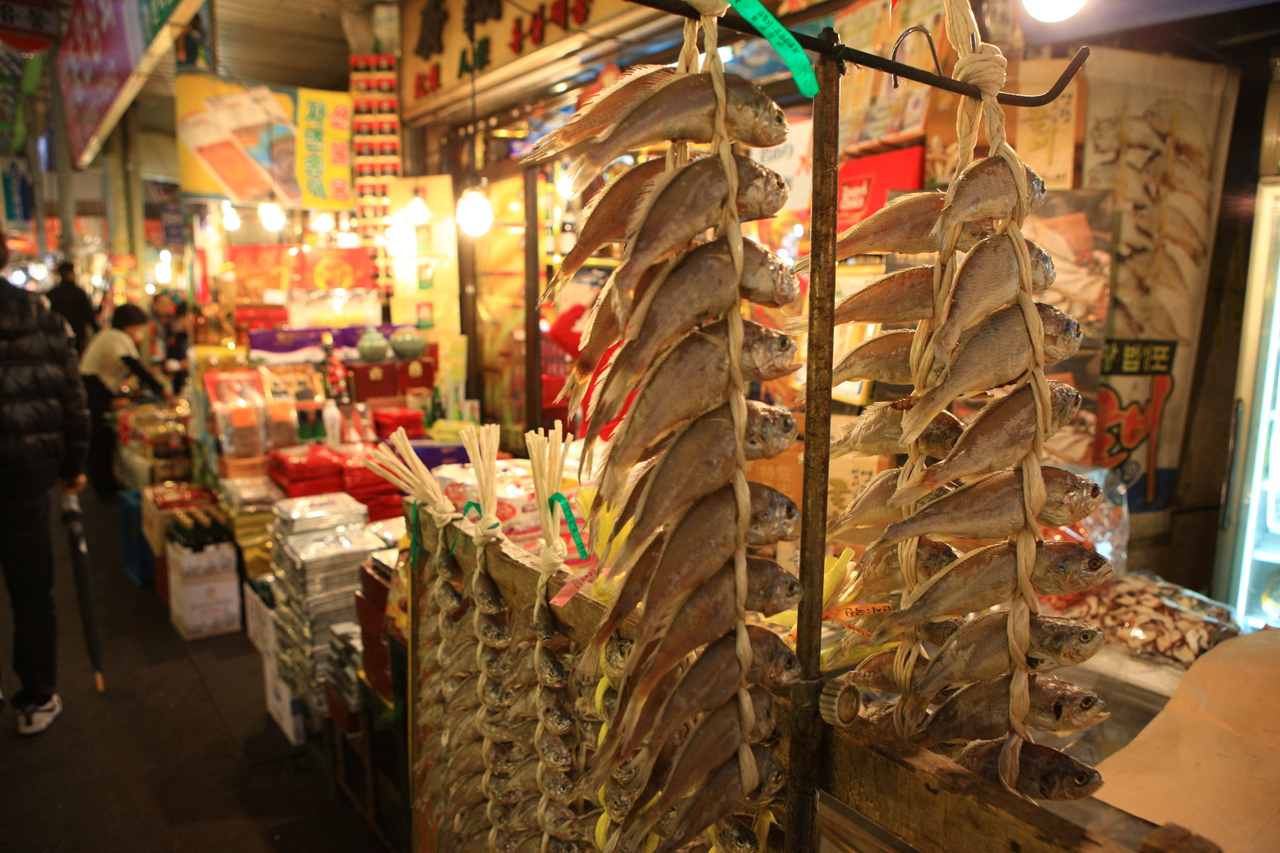
Gwangjang is the Seoul market most visitors are sent to, and for good reason: it is a dense, lively hall of food stalls where you eat shoulder-to-shoulder at the counter. It is best for a hungry lunch or an early dinner.
Below: the dishes it is known for, how to order at a packed stall, and how to get there. It pairs with the what-to-eat guide and the Seoul 3-day itinerary.
One thing to settle before you go: Gwangjang has had reported price disputes with tourists in recent years. The Gwangjang price guide covers what was actually reported, how to check a price before you order, and which Seoul market to choose instead if that puts you off.
What to eat here
- Bindae-tteok: mung-bean pancakes ground and fried to order; the market's signature.
- Mayak gimbap: small, addictive seaweed rice rolls with a mustard-soy dip.
- Yukhoe: seasoned raw beef, for the adventurous.
- Sannakji: fresh-cut octopus; order only if you know what you are getting.
How to order at a stall
Grab any open seat at a counter and point at what others are eating or at the photos. Pay the stall directly, often in cash.
Stalls are small, so order, eat, and free up the seat.
Useful phrases for ordering at a stall
Point as you say these: vendors are used to visitors, and a little Korean goes a long way.
Point at the dish you want as you say it.
Polite이거 하나 주세요
i-geo ha-na ju-se-yo
One of these, please.
Korean audio isn't available on this device or browser. Use the romanization above to say it.
Ask the price before you order.
Polite얼마예요?
eol-ma-ye-yo?
How much is it?
Korean audio isn't available on this device or browser. Use the romanization above to say it.
What it costs
Most plates are inexpensive and meant for sharing across a few stalls. Bring small bills; some stalls take cards, but cash is faster at a busy counter.
How to get there
The market sits between Jongno 5-ga and Euljiro 4-ga stations in central Seoul. Use a T-money card on the subway, and a Korean map app for the exact exit.
Open in a Korean map app (Google Maps transit is unreliable here):
Good to know
- Timing: busiest at lunch and on weekends; go a little before or after the rush for a seat, or in the late afternoon between meal peaks.
- Cash: many stalls are cash-first, though more take cards now; carry some cash to be safe (see how to pay in Korea).
- Hygiene: generally good; pick stalls with high turnover and freshly cooked food.
- Prices: set per dish and change over time; check the posted price or ask before ordering.
What else is in the market?
Gwangjang is not only food. The original market was a textile and clothing market, and that side of it still operates: bolts of fabric, bedding, traditional hanbok fabric, and vintage clothing fill the outer aisles and upper floors. If you arrive early, you can browse the fabric section before the food hall reaches full capacity.
The combination of food stalls and textile stalls is what makes Gwangjang feel different from a dedicated food market: it is a working, multi-purpose market that happens to have world-class food at its center.
Dietary notes
Gwangjang Market is not easy terrain for vegetarians or those with dietary restrictions:
- Vegetarian and vegan travelers: most of the signature dishes contain meat, fish, egg, or seafood. Mayak gimbap is vegetarian as typically made (rice, vegetables, sesame), though cross-contact is likely. Proceed carefully.
- Halal travelers: the market does not have halal-certified stalls in any standardized way. Most meat products are not halal. Vegetable-only dishes (mayak gimbap) may be the most practical option.
- Raw-food caution: yukhoe (raw beef) and sannakji (live octopus) are served raw. These are traditional Korean dishes that carry the same considerations as raw meat and live seafood anywhere. Skip them if you have immunocompromising conditions or are pregnant.
- Gluten: bindae-tteok (mung-bean pancake) is traditionally gluten-free, as mung beans are the base, but cross-contact in shared fryers is possible. Confirm with the stall if this is a concern.
- Shellfish: sannakji and other seafood stalls handle shellfish in the same area. Cross-contact with neighboring stalls cannot be ruled out.
Is it suitable for children?
Yes, with some guidance. The market is crowded, noisy, and busy at peak hours, but children do well at the food stalls, gimbap and bindae-tteok are mild and approachable. Go slightly off-peak (before noon or mid-afternoon) for easier navigation with strollers or young children.
The main food hall aisles are narrow and get very packed at lunch.
Adjacent attractions
Gwangjang fits naturally into a palace-and-old-town day. It sits near:
- Insadong (craft shops, galleries, street snacks), a short walk south.
- Changdeokgung Palace and Bukchon Hanok Village: easily reachable by subway or on foot.
- Cheonggyecheon Stream: about 10 minutes' walk, a good post-meal stroll. See the Cheonggyecheon guide for what to expect along the stream.
It's an easy add-on to a palace-and-old-town day, it fits the Seoul 3-day itinerary naturally. For the wider city, see the Seoul guide.
Best times to visit Gwangjang
Gwangjang is a working market, open daily, and at its best during the lunch rush (11 a.m.: 2 p.m.) when the stalls are staffed, the food is fresh, and the atmosphere is at its peak. Early morning is quiet: good for the raw-cloth and fabric sections of the market, less so for the food stalls. Weekday afternoons are the most relaxed; weekend lunchtimes are the most crowded.
Evening visits are possible but some stalls wind down by 6 to 7 p.m. The fabric and fabric wholesale sections (which predate the food fame) run different hours. They are more of an early-morning business.
If you're coming specifically for the bindaetteok or yukhoe, go between 11 a.m. and 2 p.m. on a weekday.
What to drink at Gwangjang
Makgeolli (unfiltered rice wine, sold by the bowl at the stall tables) is the traditional pairing with bindaetteok in this market: milky, lightly fizzy, and low in alcohol. Soju and beer are also available at most stalls. Non-alcoholic options include iced barley tea and Korean soft drinks.
Prices for drinks are set per cup or bowl; check with the stall.
Frequently asked questions
Is Gwangjang Market vegetarian-friendly?
Mostly not. The signature dishes (mung-bean pancakes, raw beef, live octopus) all contain meat or seafood. Mayak gimbap is vegetarian as typically made.
Proceed with caution and confirm with stalls for cross-contact.
Is Gwangjang Market tourist-friendly?
Yes. Stall vendors are used to visitors and will point at dishes, gesture at prices, and wait patiently while you decide. Pointing and short Korean phrases get you a long way.
Signs and photos are common. The noise and crowding take a stall or two to get used to; the rhythm of sitting down, pointing, and paying directly makes sense after the first one.
What is Gwangjang Market known for?
Mung-bean pancakes (bindae-tteok), mayak gimbap, yukhoe (raw beef), and a lively hall of counter stalls where you eat shoulder-to-shoulder.
When is the best time to go?
Lunch is liveliest; go just before or after the midday rush, or mid-afternoon, for a seat. Weekends are busiest.
Do the stalls take cards?
Some do, but many are cash-first. Bring cash to be safe.
How much does eating here cost?
Individual dishes are inexpensive and meant for grazing across several stalls; prices are set per dish and change, so check before ordering.
How do I get to Gwangjang Market?
It's between Jongno 5-ga and Euljiro 4-ga stations in central Seoul. Take the subway with a T-money card and use a Korean map app for the exit.
Sources
- Visit KoreaOfficial tourism site
- Seoul Metropolitan Government Open DataOfficial government site
- Korea Tourism Organization English TourAPIOfficial API
Information is compiled from official sources. Details such as prices, hours, and schedules can change. Confirm time-sensitive facts before you travel.
Last verified on
Related guides

What to Eat in Korea: A First-Timer's Food Guide
A starter list of Korean dishes worth seeking out (barbecue, stews, bibimbap, street food, and fried chicken) with how to order, rough prices, and notes for vegetarian and halal travelers.
Top 5 Jongno Restaurants Foreigners Love: What to Eat Near Palaces, Insadong, Bukchon, and Gwangjang Market
Jongno is where old Seoul eats: century-old soup houses, a chicken-hot-pot alley, and market raw-beef stalls, all a short walk from the palaces, Insadong, and Bukchon. This is an editorial pick of five restaurants first-time visitors tend to love, not an official ranking, chosen so you can match your route, the kind of dish, and your comfort level. It covers what to order, who each place suits, and what to check before you go, plus honest notes on raw dishes, halal, vegetarian, and allergies. Hours, prices, and Michelin listings change, so confirm the current details before visiting.