
Three days is enough to see the Seoul most first-time visitors come for, if you group sights by neighborhood instead of crossing the city twice a day. This plan keeps each day in one or two connected areas, leans on the subway, and leaves your evenings open.
It pairs naturally with the Seoul destination guide and the wider 7-day Korea route. Only passing through on a layover?
The compact 2-night stopover plan covers the same city in less time.
Quick facts
- Length
- 3 days / 2 nights
- Style
- Walkable, grouped by area
- Getting around
- Subway + walking
- Where to stay
- Myeongdong, Hongdae, or Jongno
- Best seasons
- Spring & autumn
Before you start
Set up on arrival: get a T-money card, install the core apps, and pick one central base so you are not changing hotels. See where to stay in Seoul to choose your area.
Day 1: Palaces and the old town
Start at Gyeongbokgung Palace for the changing-of-the-guard ceremony (10 a.m. and 2 p.m.; confirm times and any closure dates on the official palace website before you go). Walk north to Bukchon Hanok Village for the tile-roofed lanes of a preserved residential neighborhood, then south through Insadong for tea houses, craft shops, and a stroll through the Ssamziegil courtyard mall.
End around Gwangjang Market or a Jongno side street for dinner.
Subway logistics: Gyeongbokgung Station, Line 3, Exit 5. The walk from the palace to Bukchon and down to Insadong is mostly flat and takes about 30 minutes on foot.
Point at a dish or item and say this to order.
Polite이거 주세요
i-geo ju-se-yo
I'll have this one, please.
Korean audio isn't available on this device or browser. Use the romanization above to say it.

Day 2: Modern Seoul and the river
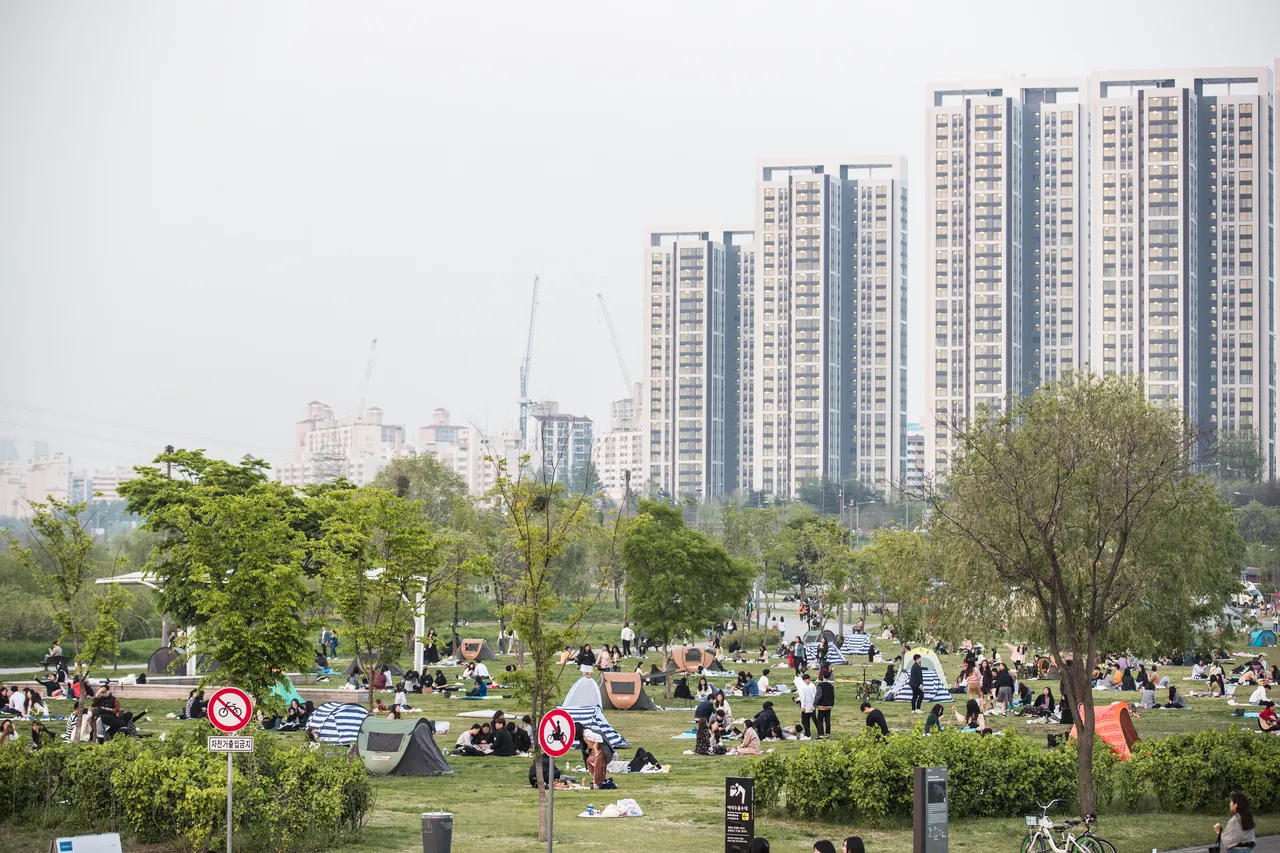
Spend the morning in Seongsu: a former industrial neighborhood now known for independent coffee shops, vintage stores, and converted warehouses that attract a younger local crowd. Move to Itaewon in the afternoon for multi-cuisine food and international shopping, or to COEX in Gangnam for the Starfield Library and the aquarium. In the evening, take the subway to a Han River park, Yeouido or Banpo, for a riverside walk or picnic as the city lights come on.
The Han River picnic guide covers what to bring and which park to pick.
Subway logistics: Seongsu on Line 2; Itaewon on Line 6; COEX at Samseong Station on Line 2; Han River parks on Lines 5 and 9.

Day 3: Markets, a view, and your picks
Spend the morning at a market. Namdaemun (near City Hall) is one of Seoul's oldest general markets for everyday goods, dried seafood, clothing, and street food. Gwangjang Market (between Jongno 5-ga and Euljiro 4-ga) is Seoul's most famous food market, known for mung-bean pancakes and raw beef.
See the Gwangjang guide. Before or after, ride the Namsan cable car to the N Seoul Tower for a city panorama; clear days in spring and autumn offer the best visibility. Keep the afternoon for anything you want to revisit or a last coffee stop.
How to pace each day
Three days works if you keep each day in one or two connected neighborhoods:
- Morning: outdoor sights (palaces, hanok lanes, parks) are best early when they are less crowded and cooler.
- Afternoon: indoor options, shopping, or a riverside walk.
- Evening: food: markets, BBQ, chimaek, or the Han River.
Aim for 6 to 8 hours of active sightseeing per day. Leave at least one half-day unplanned; the city rewards getting slightly lost.
Where to stay for this plan
Stay within a 5-minute walk of a subway line in a central area: Myeongdong for walkability to the palaces and Namdaemun, Jongno-Insadong for the old town, or Hongdae for more social options and good restaurants. See where to stay in Seoul for a neighborhood-by-neighborhood breakdown.
Adjusting the plan
With young children, replace the Gangnam stop with Children's Grand Park (Line 5, Neung Station) and add Han River park breaks. With only two days, combine Day 2 and Day 3 and skip the Gangnam leg. With a fourth day, add a day trip: the DMZ tour (book ahead), Suwon Hwaseong Fortress, or Bukhansan for hiking.
Rainy day? Swap outdoor stops for the COEX aquarium, Dongdaemun Design Plaza (DDP), a museum, or a department-store food hall.
What to budget for three days
Seoul is affordable by international standards for food and transit; accommodation and discretionary spend vary widely.
- Transit: A T-money card loaded with 30,000 to 40,000 KRW covers most subway and bus trips across three days.
- Food: A market lunch (two or three items across stalls) runs 8,000 to 15,000 KRW; a casual sit-down meal 10,000 to 18,000 KRW; barbecue dinners 20,000 to 35,000 KRW per person with drinks.
- Admission: Gyeongbokgung Palace and most parks are low-cost or free. The N Seoul Tower cable car and observation deck have separate entry fees. Check the current price before you go.
- Shopping: Myeongdong and Hongdae are walkable shopping areas with no obligation to buy.
Prices change; use the above as orientation only and verify current rates at each site.
What to eat on each day
- Day 1 (Jongno area): Lunch at the Gwangjang Market stalls (mung-bean pancakes, raw beef, gimbap). Dinner at a Jongno side-street samgyeopsal restaurant.
- Day 2 (Modern Seoul): Coffee in Seongsu at an independent roastery. Han River convenience-store picnic in the evening, eomuk and canned drinks are the classic combination.
- Day 3 (Markets): Full breakfast at a Namdaemun gukbap stall before it fills up. Evening at a Myeongdong sit-down kalguksu spot if the street stalls are too crowded.
Common first-timer mistakes
- Using Google Maps for transit: it does not cover the Seoul subway and bus network reliably. Naver Map and KakaoMap both do. Set one of those as your default on arrival.
- Scheduling palaces on Monday: Gyeongbokgung is closed on Tuesdays, Changdeokgung on Mondays. Check the closure day for your chosen palace before you commit a day to it.
- Trying to walk between neighborhoods: Seoul neighborhoods look close on a map but are often a long walk apart. The subway is fast, cheap, and the right way to move between day sections.
- Booking the full three days solid: Seoul rewards getting slightly lost. Leave at least one afternoon unscheduled for wherever the day takes you: a market alley you spot, a cafe that looks good, an extra stop you heard about.
- Missing the timing on street food: Myeongdong's street stalls open in the afternoon, not at breakfast. Plan your food accordingly and don't expect a lively market street before noon.
Frequently asked questions
Is three days enough for Seoul?
Yes: three days cover the palaces and old town, modern Seoul and the Han River, and markets with a city view. A fourth day lets you add a day trip (DMZ, Suwon Hwaseong Fortress, or Bukhansan). If your whole Korea trip is about five days, use the 5-day Korea itinerary choices guide to decide whether to stay Seoul-only or add one city by train.
Where should I stay for this itinerary?
Somewhere central and within a 5-minute walk of a subway line. Myeongdong for walkability to the palaces and Namdaemun; Jongno-Insadong for the old town; Hongdae for atmosphere and food. See the where to stay in Seoul guide.
How do I get around during the three days?
Subway plus walking, paid with a T-money card. Use Naver Map or KakaoMap for directions, Google Maps cannot do Korean transit routing reliably.
Can I do this itinerary with kids?
Yes: shorten indoor museum time, add Han River park breaks, and swap a Gangnam or Itaewon stop for a family attraction like Children's Grand Park or the COEX Aquarium.
What if it rains during my three days?
Swap outdoor stops for COEX and the Starfield Library, the National Museum of Korea, or a department-store food hall. The subway keeps you dry between stops, and Seoul's covered markets (Namdaemun, Gwangjang) are fine in rain.
Sources
- Visit KoreaOfficial tourism site
- Seoul Metropolitan Government Open DataOfficial government site
- Korea Tourism Organization English TourAPIOfficial API
Information is compiled from official sources. Details such as prices, hours, and schedules can change. Confirm time-sensitive facts before you travel.
Last verified on
Related guides

Seoul 2 Nights 3 Days Itinerary: A Compact Stopover Guide Before Japan or Asia
Two nights in Seoul is not three days. You get an arrival evening, two full days, and a departure morning that belongs to the airport, so a stopover plan has to solve entry paperwork, luggage, and the airport transfer before any sightseeing is worth planning. This page covers those first, keeps each half-day in one connected area, and is specific about what a short stay has to give up.
Han River Picnic Guide: Parks, Food, and Etiquette
A Han River (한강) picnic is one of Seoul's easiest, cheapest evenings out: pick a riverside park like Yeouido, Ttukseom, or Banpo, bring a mat and food, and relax by the water. Convenience stores and takeout are the simplest way to eat, and a few drinking and litter rules keep it pleasant for everyone.