The Korea Tourism Organization labels Muslim-friendly restaurants in four levels, and only the top one means an accredited certifier inspected the food.
Most of the difficulty in eating here comes from not knowing that, and from Korean cooking putting meat stock and cooking wine into dishes that look plain.
This is practical travel information rather than religious guidance. Standards differ between people, so the useful output is not a list of safe dishes but a way to tell what you actually know about a plate in front of you.
For where to go, the Muslim-friendly Seoul guide covers areas and prayer spaces.
The four labels, and what each one leaves open
A KTO listing is not a yes or no. It tells you who did the checking, and the gap between the first and second level is larger than the wording suggests.
| Label | Who checked | What it leaves open |
|---|---|---|
| Halal Certified | An accredited agency, for example the Korea Muslim Federation | The strongest signal available. Confirm the certificate is current at the venue |
| Self-certified | The Muslim owner, who states all food is halal | No outside inspection. You are trusting one person's account |
| Muslim Friendly | Nobody, in the certification sense: some halal dishes exist | Alcohol may be sold. Most of the menu is unaddressed |
| Pork free | Nobody. There is no halal menu at all | Alcohol may be sold. Non-pork meat is not halal-slaughtered, and cooking wine is untouched by the label |
Two things follow from the table. "Muslim Friendly" on an official listing is the third level, not a general compliment, so seeing it does not mean the kitchen is set up for you.
And "Pork free" answers exactly one question. It says nothing about how the beef was slaughtered, what is in the marinade, or whether the grill has cooked pork all evening.
The listing also does not state an alcohol policy for the top two levels, so treat that as unanswered rather than as a yes or a no.
Three words that are not synonyms
Outside the official listings you will also meet these, and travelers most often lose the thread here.
Halal-certified is a claim about a specific product or venue that a body has inspected. It does not transfer to a brand. The same snack can be certified for one export market and uncertified on a Korean shelf, because certification attaches to the plant and the market, not to the name on the wrapper.
Vegetarian removes meat and nothing else. Korean vegetarian dishes routinely contain fish sauce, salted shrimp, or an anchovy stock, and cooking wine is unaffected either way.
An Arabic-script sticker in a window is not certification. Certification comes with an issuing body and a certificate number you can look at.
What the cooking hides
The problems are rarely visible on the plate. These five account for nearly all of it.
| What | Where it turns up |
|---|---|
| Cooking wine | Marinades for bulgogi and galbi, batters for jeon, stews, some sauces and desserts |
| Meat stock | Beef, chicken, or pork-bone base in soups, noodles, and tteokbokki |
| Anchovy stock | The base under many soups that look entirely vegetable |
| Jeotgal | Fermented fish sauce or salted shrimp in most kimchi and much banchan |
| Shared equipment | One grill or one fryer used for pork and everything else |
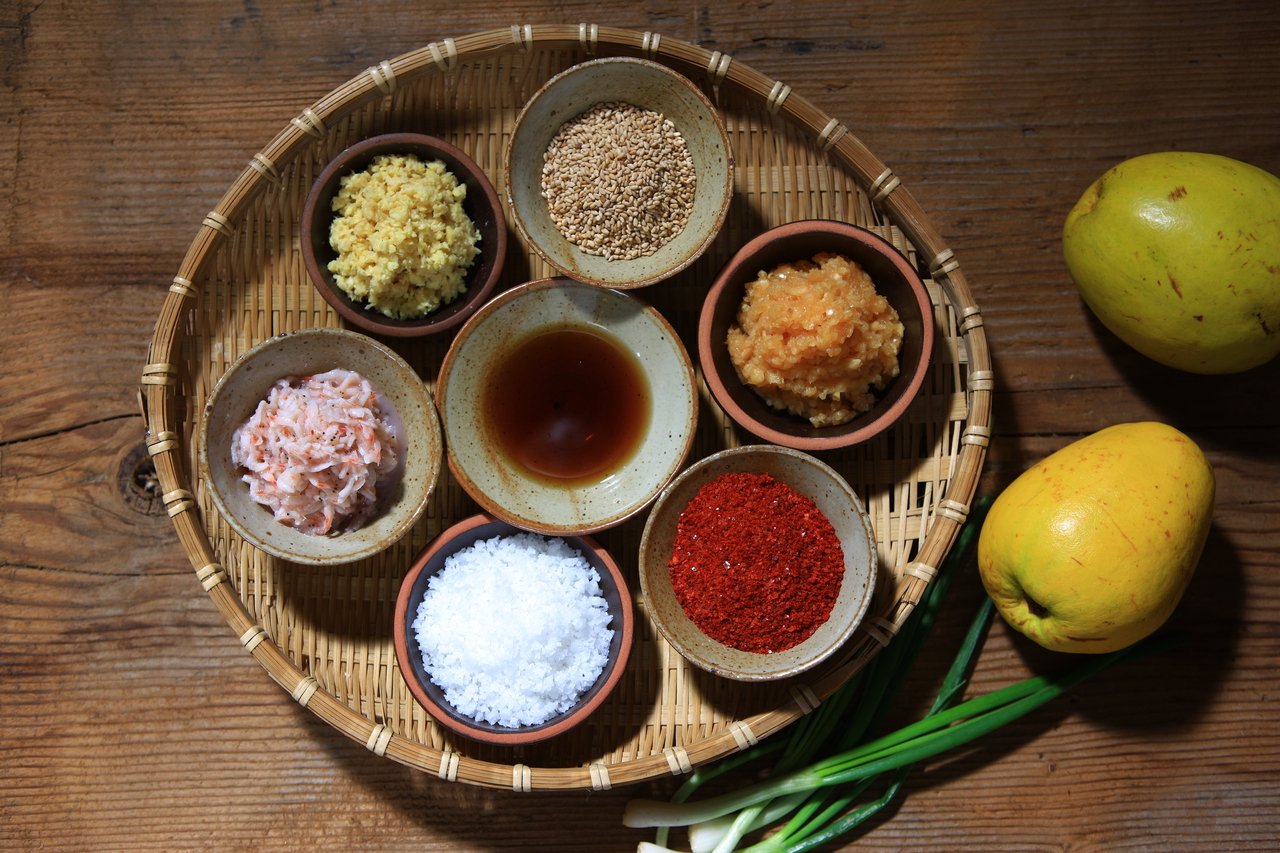
Cooking wine deserves separate attention because it survives no visual check at all. Soju, cheongju, or mirim goes into a marinade before the meat reaches the table, so a dish with no pork in it can still be out for you on the alcohol question alone.
Dishes worth a question before you order
Pork is obvious in samgyeopsal, bossam, sundae, and gamjatang. The ones that catch people are the dishes that do not look like pork dishes: kimchi jjigae is usually simmered with it, budae jjigae is built on processed pork, and mandu filling is often pork.
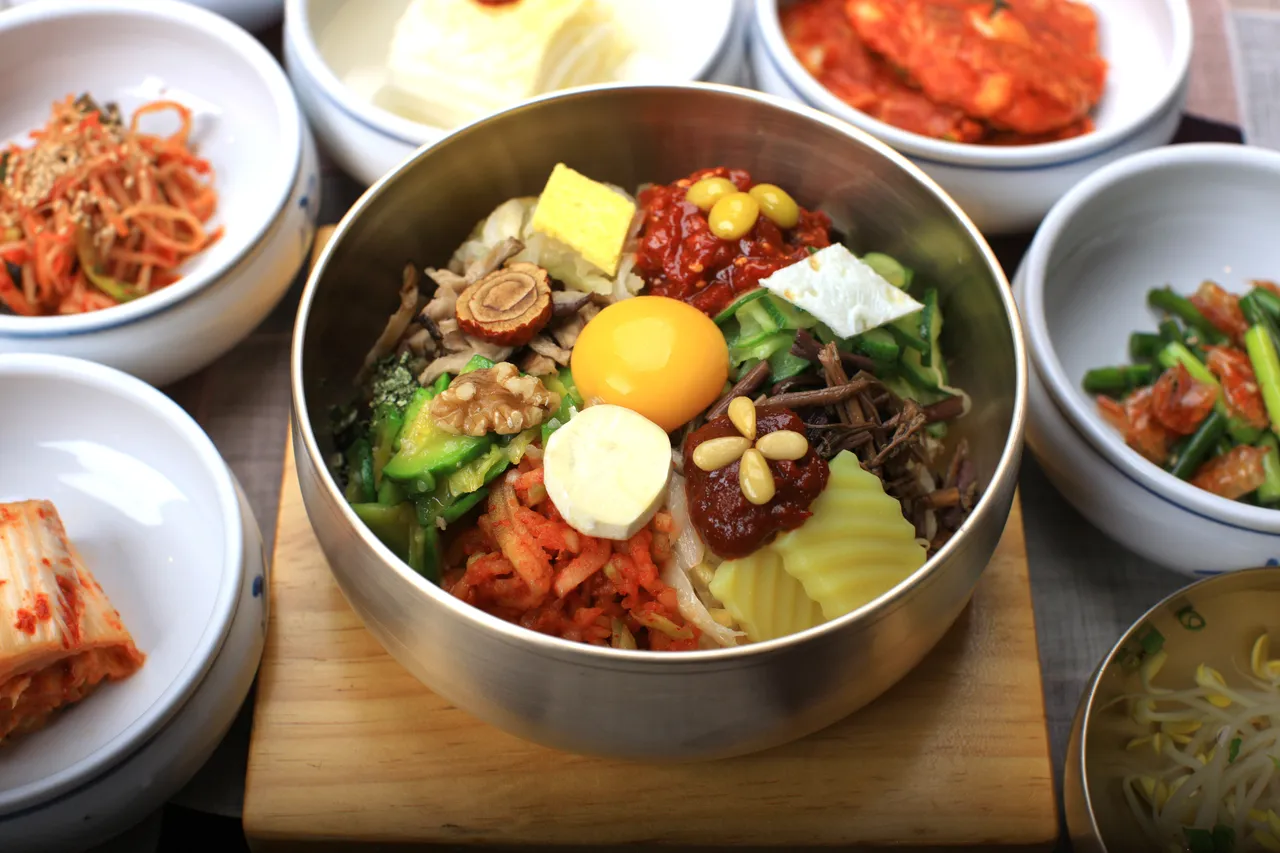
Bibimbap looks vegetable-forward and frequently is not. It can come with beef, and both the gochujang and any accompanying soup can carry animal or alcohol ingredients.
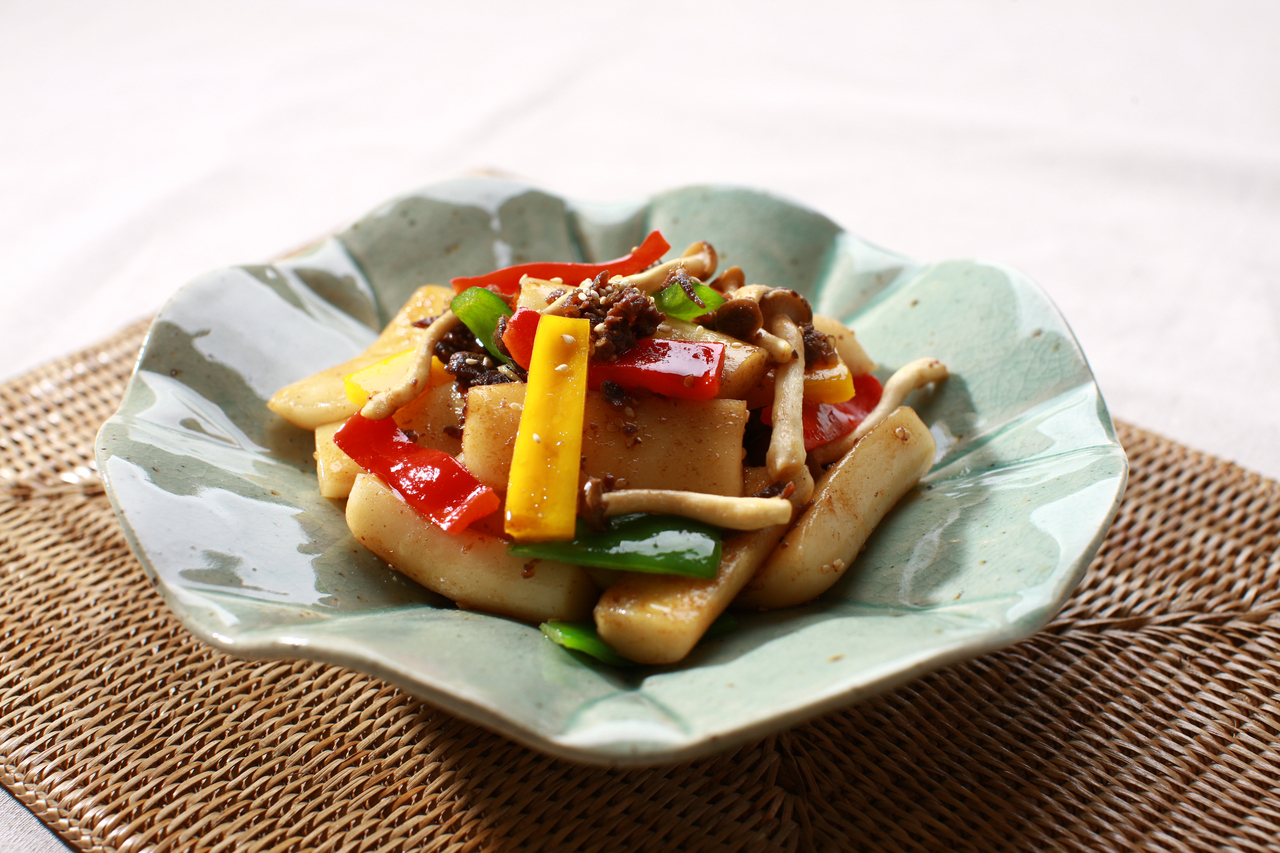
Tteokbokki and most noodle bowls sit on an anchovy or meat base, and the fish cakes in them are not a vegetarian ingredient.
Korean BBQ has three separate issues at once, which is why "is there pork" is the wrong single question there: the beef or chicken is unlikely to be halal-slaughtered, the marinade may contain cooking wine, and the grill is usually shared.
Fried chicken has the same sourcing and shared-fryer problem, and the standard pairing puts beer on the table. Asking for a non-alcoholic drink is normal and nobody will find it strange.
Ask so that the answer is usable
A yes or no question gets you a yes or no that may not mean what you think. Ask what something is made of, then read the answer for what it actually settles.
| Ask | What a clear answer settles | What it still leaves open |
|---|---|---|
| "What is the broth made from?" | The single most common hidden ingredient | Nothing about the marinade or the grill |
| "Is there cooking wine in the sauce?" | The alcohol question for that dish | Whether the meat is halal |
| "Is the grill shared with pork?" | Cross-contact at BBQ and fried chicken | The sourcing of the meat itself |
| "Does the kimchi have fish sauce?" | Jeotgal in the banchan | Nothing about the main dish |
| "Is this halal-certified, and by whom?" | Whether an outside body was involved | Whether the certificate is current |
Hesitation is information. Staff who know their kitchen answer a broth question immediately, and a vague or guessed answer is a reason to treat the dish as unverified rather than to press harder.
Packaged food is the one place you are not asking anyone
A convenience store is easier than a restaurant, because the ingredients are printed and the answer does not depend on who is working that shift.
Photograph the ingredient panel and translate it, then read the allergy line underneath, which is where meat by-products such as gelatin are usually declared. Three words are worth recognizing by shape rather than translating each time: 돼지고기 (pork), 쇠고기 (beef), 닭고기 (chicken).
Check the package in your hand rather than the brand. A product certified for export may sit beside an uncertified domestic version of the same thing, and the wrapper is the only thing that tells you which one you are holding.
Eating at a table with people who are not checking
Shared dishes are the norm here, and the practical risk is not what you order but what arrives in the middle of the table.
At a grill, ask for your portion to be cooked first, before anything else touches the surface, or ask for a separate pan if the restaurant has one. Both are ordinary requests.
Banchan is refilled from a common supply and arrives without being ordered, so decide what you are doing about it before the food comes rather than mid-meal. Serving spoons move between dishes; if that matters to you, taking your portion out first is easier than correcting it later.
When you cannot verify
Some meals will not resolve. Nobody knows what is in the stock, the answer changes twice, or there is nobody to ask.
The rule that keeps this manageable is to treat unverified as unverified rather than as probably fine. An unanswered broth question is not evidence of a safe broth.
Carrying something you have already checked turns that from a problem into a decision, and it is worth doing on travel days and around prayer times when the alternative is whatever is open.
Two questions worth memorizing
Checking before you order
The rest of the questions above work through a translation app; these two come up often enough to say directly.
A first check only. A no here does not answer the alcohol or sourcing question.
Polite돼지고기 들어가나요?
dwae-ji-go-gi deu-reo-ga-na-yo?
Does this contain pork?
Korean audio isn't available on this device or browser. Use the romanization above to say it.
The one most people forget, and the one that decides marinades and stews.
Polite술이나 맛술 들어가나요?
su-ri-na mat-sul deu-reo-ga-na-yo?
Does this contain alcohol or cooking wine?
Korean audio isn't available on this device or browser. Use the romanization above to say it.
Sources
- Korea Tourism Organization — Muslim-friendly travel (restaurant classification)Official tourism site
- Visit KoreaOfficial tourism site
Information is compiled from official sources. Details such as prices, hours, and schedules can change. Confirm time-sensitive facts before you travel.
Last verified on
Related guides
Muslim-Friendly Seoul Guide: Halal Food, Prayer Rooms, and Travel Tips
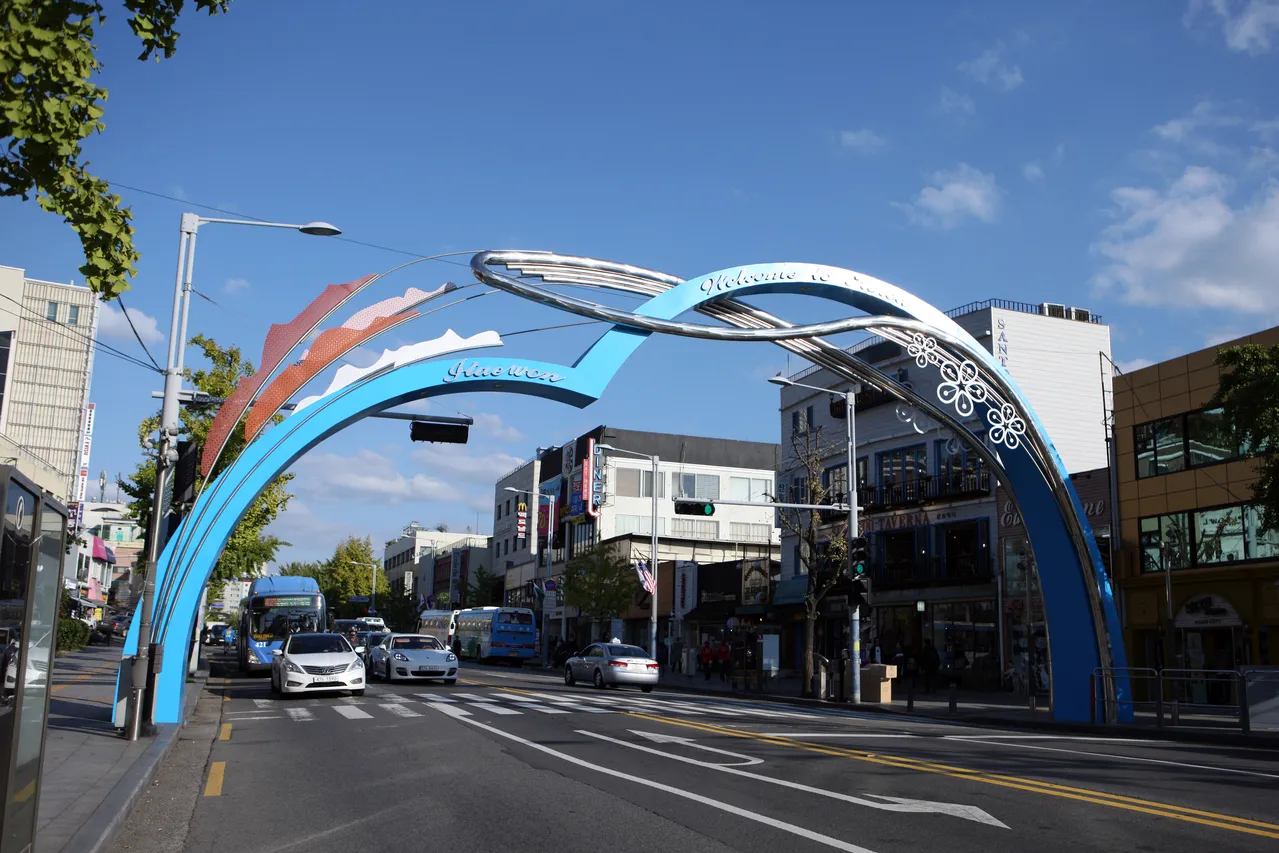
Seoul is increasingly workable for Muslim travelers, but it helps to know how things actually work: Korea's tourism board sorts restaurants into four tiers from fully halal-certified to simply pork-free, certified places are still relatively few, and "no pork" does not mean halal. The four classifications, the Seoul Central Mosque and Itaewon, prayer rooms, and how to check ingredients are all set out below. Verify each place directly, since menus, certifications, and hours change.
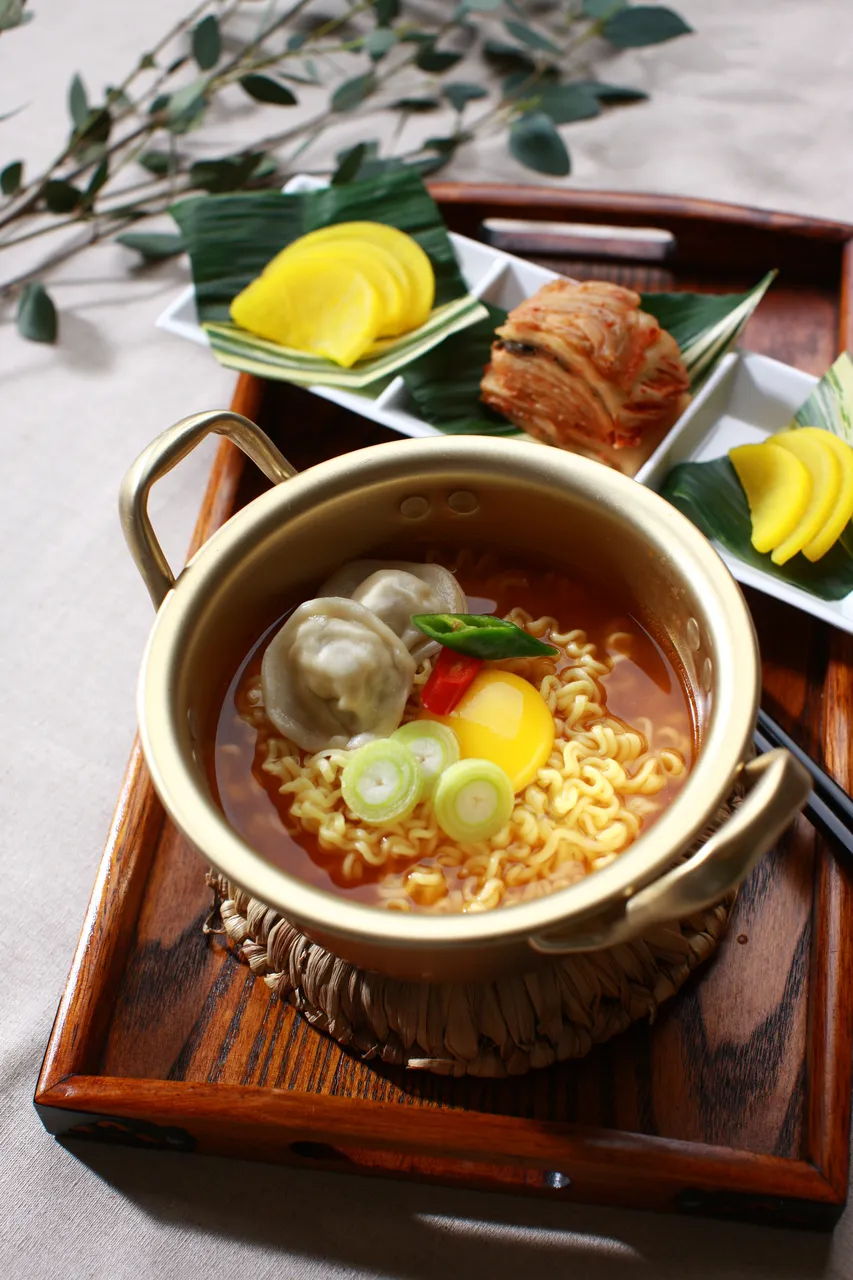
Korean Convenience Store Ramen Combos: Buldak, Shin Ramyun, Jjapaguri, Cheese, and Rice
Korean convenience stores are a cheap, fun way to eat instant ramen exactly how you like it: soup or stir-fried, mild or fiery, plain or loaded with cheese, egg, kimbap, and more. Ten beginner-friendly combos follow, with how to put them together and the things that actually matter: how spicy is too spicy, what to check if you avoid pork or eat halal or vegetarian, and common allergens. Brands are named only as examples; what's on the shelf changes by store and day, so read the package.