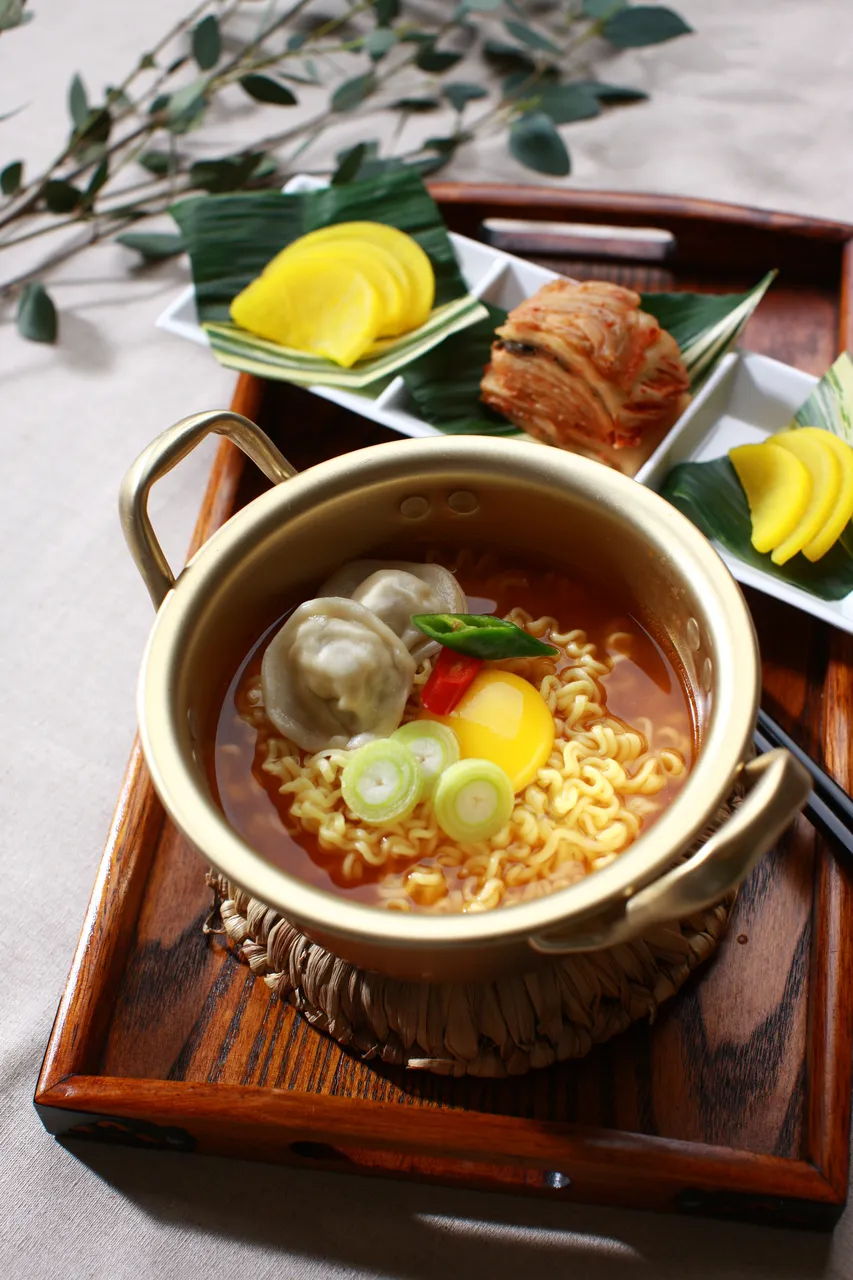
Among the easier, cheapest, and most fun meals for a first-time visitor in Korea is instant ramen built your way at a convenience store. Most stores have hot-water dispensers and microwaves, so you can cook a cup or a bowl on the spot and load it up with cheese, an egg, kimbap, or a sausage.
This guide walks through ten beginner-friendly combos and how to put them together, and, just as importantly, how to judge the spice level and check ingredients if you avoid pork, eat halal or vegetarian, or have allergies.
A note on brands: product names here are examples to help you recognize things on the shelf, not recommendations or sponsorships. What's actually stocked changes by store, location, and date, and prices and promotions vary, so treat names as a guide and read the package for the current product and its ingredients.
Sort out paying with how to pay in Korea.
Quick answer
| If you want… | Try a combo around… |
|---|---|
| Very spicy and trendy | Buldak (stir-fried) + cheese or egg to tame it |
| Classic spicy soup | A soup ramyun (e.g. Shin Ramyun) + an egg |
| Savory, not spicy | A black-bean / jjapaguri-style mix (if available) |
| Filling and cheap | Any ramen + a rice triangle (samgak-gimbap) |
| Mild for kids | A milder ramen + a kimbap roll, no extra chili |
Availability, prices, and promotions vary by store and day. Check the shelf and the package, and don't assume a specific product is always in stock.
How convenience-store ramen works
- Cup vs. bag (bowl). Cup ramen just needs hot water and a few minutes, easiest. Bag (pouch) ramen is cheaper but usually needs a pot or a microwave-safe bowl; many stores sell a cook- it-yourself bowl or have a microwave.
- Hot water and microwaves are common but not guaranteed at every store, and seating varies, some have a counter, some don't. Don't assume; look around or ask.
- Pay first. Take the item to the counter and pay before you cook and eat it.
The fun part is the add-ins, here are ten combos to start with.
1. Buldak + tuna-mayo rice triangle
Buldak ("fire chicken") is a stir-fried noodle: you cook it, drain most of the water, and mix in a very spicy sauce (it's not a soup). Pairing it with a tuna-mayo samgak-gimbap (rice triangle) gives you cool, creamy bites between the heat.
- How to eat: Cook the buldak, drain, mix the sauce; eat the rice triangle alongside.
- Good for: Spice fans who want a snack-meal.
- Watch out for: It's genuinely very spicy: see the spice section before you commit.
2. Buldak + cheese + egg
The classic way to tame buldak: melt a slice of cheese into the hot noodles and add a cooked egg. The dairy and egg soften the heat and add richness.
- How to eat: Add cheese while the noodles are hot; top with a boiled or microwaved egg.
- Good for: People who want the flavor without the full burn.
- Watch out for: Dairy (cheese) and egg allergens; it's still spicy.
3. Buldak + rice or rice triangle
Plain rice is a great heat-buffer. Mix leftover buldak sauce with rice (or eat a rice triangle alongside) for a filling finish.
- How to eat: Stir rice into the saucy noodles at the end.
- Good for: Stretching a spicy pack into a fuller meal.
- Watch out for: Still spicy; check the rice-triangle filling.
4. Shin Ramyun (or any soup ramyun) + rice triangle
A soup-style spicy ramyun, Shin Ramyun is the familiar example, with a rice triangle on the side is the everyday Korean combo. Soupy, warming, and simple.
- How to eat: Cook the soup ramen; dip or add rice toward the end.
- Good for: A classic, comforting first try.
- Watch out for: Moderately spicy; broth may contain meat/seafood (check).
5. Soup ramyun + egg (+ kimchi, if available)
Adding an egg makes any soup ramyun richer; a little kimchi, if the store has it, adds tang.
- How to eat: Crack/stir an egg into the hot soup, or add a microwaved egg.
- Good for: A heartier, homier bowl.
- Watch out for: Egg allergen; kimchi often contains fish sauce (not vegetarian).
6. Jjapaguri (Jjapaghetti + Neoguri)
Jjapaguri mixes two noodles: Jjapaghetti (a black-bean jjajang noodle) and Neoguri (a seafood-ish udon-style noodle), both made by the same company, into one savory, non-soup bowl. It became globally known from a film (also called "ram-don").
- How to eat: Cook both, drain most of the water, and combine; easiest if you have a kitchen or microwave-safe bowl, or use cup versions. Mixing two packs is fiddly in-store: do it where you have space.
- Good for: People who want savory over spicy.
- Watch out for: Seafood in the Neoguri-style pack; it's a bit of a project.
7. A milder ramen + a kimbap roll
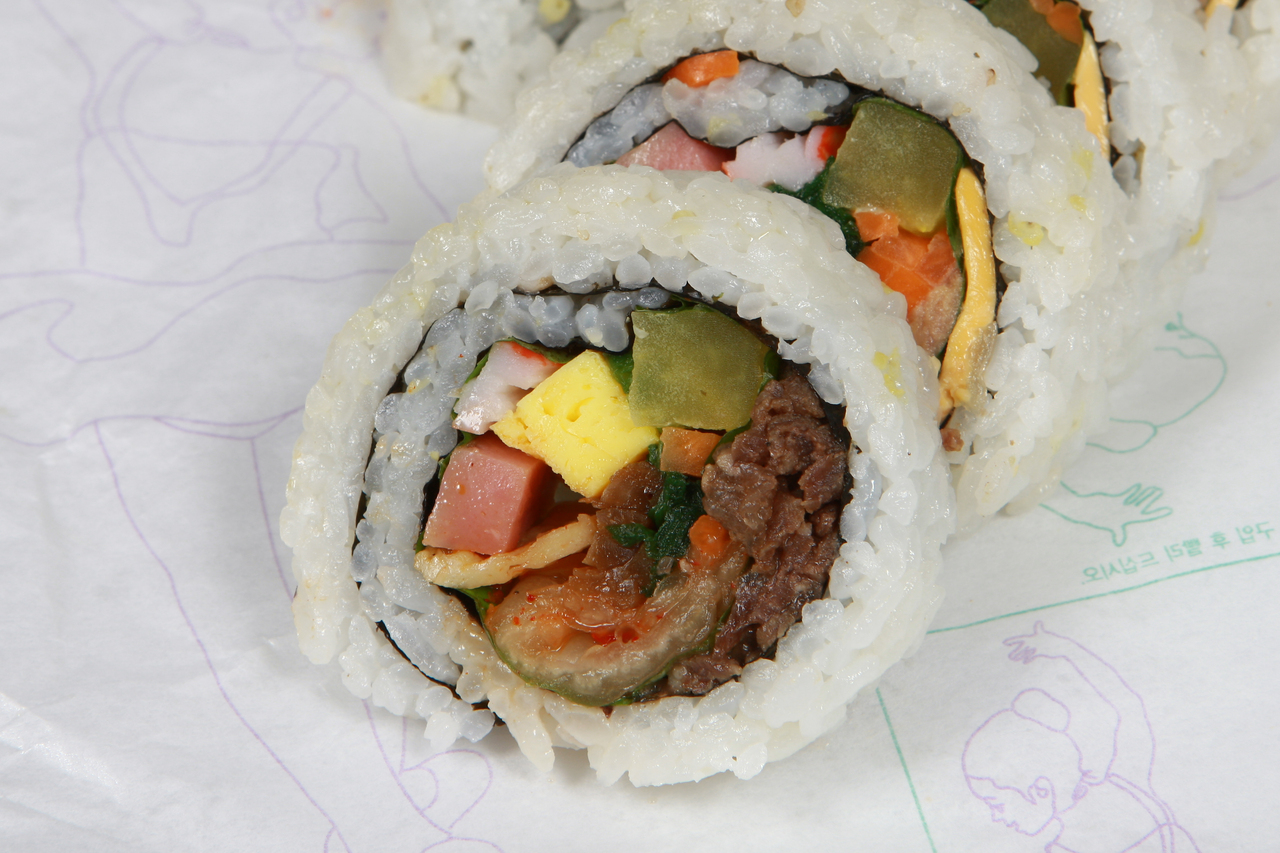
Not everything has to burn. A milder ramen with a kimbap roll (rice-and-seaweed rolls) is a balanced, kid-friendly combo.
- How to eat: Cook the ramen; eat the kimbap slices alongside.
- Good for: Families and spice-averse travelers.
- Watch out for: Kimbap fillings often include ham, egg, or imitation crab.
8. Cup tteokbokki + ramen + cheese
Cup tteokbokki (spicy rice cakes) plus ramen noodles and a slice of cheese is a hearty, indulgent mix: chewy rice cakes, noodles, and melty cheese.
- How to eat: Heat the tteokbokki, add cooked noodles and cheese.
- Good for: Big appetites and spice-and-cheese lovers.
- Watch out for: Spicy, plus dairy; quite filling.

9. Ramen + a hot-bar (sausage)
A grab-and-go hot-bar (a fish-cake or sausage skewer, often warmed at the counter) on the side turns a cup of ramen into a fuller meal.
- How to eat: Add the hot-bar alongside or sliced into the soup.
- Good for: A protein-ish boost on a budget.
- Watch out for: Processed meat/fish; check ingredients if you avoid pork or seafood.
10. Ramen + a drink pairing
| Ramen mood | A drink many people reach for |
|---|---|
| Very spicy | Milk or a yogurt drink (dairy soothes heat) |
| Savory / jjapaguri | A cold soda or barley tea |
| Classic soup | Water or barley tea |
| Late-night | A sports/electrolyte drink |
Dairy genuinely helps with chili heat, handy after a buldak attempt.
What combo should you choose?
| Traveler | Start with |
|---|---|
| First-timer, cautious with spice | Milder ramen + kimbap (#7) |
| Likes spice, wants the trend | Buldak + cheese + egg (#2) |
| Prefers savory over spicy | Jjapaguri (#6) |
| Hungry and on a budget | Soup ramyun + rice triangle (#4) |
| Family with kids | Mild ramen + kimbap, no extra chili |
Using the hot water and microwave safely
- Pay first, then cook.
- Fill to the line marked inside the cup, not over.
- It's very hot. Carry it carefully, let it sit the stated few minutes, and open away from your face.
- Don't walk and eat a brimming hot cup, eat at the counter or a safe spot.
- Follow the store's rules on eating in; not every store has seating, and tidy up after.
Microwave and mixing etiquette
- Use microwave-safe bowls (not the foil lid or a thin cup not meant for it).
- For two-pack mixes like jjapaguri, do the messy mixing where you have space: a brimming in-store combine can spill.
- Bin your trash and wipe the counter; convenience stores are shared spaces.
Spice, allergies, and dietary restrictions
This is the part worth reading slowly.
- Spice. Start small. Korean spicy noodles range from mild to extremely hot, and tolerance is very personal. Don't make a super-spicy buldak your first-ever Korean spicy dish. The extra-hot (2x/3x-style) versions can be genuinely uncomfortable if you overdo them.
There's no prize for finishing, so pace yourself, keep dairy handy, and don't down a fiery bowl right before a long bus or train.
- Halal / no pork. Ramen seasoning can contain pork, other meat, seafood, or alcohol-derived ingredients, and "no pork" is not the same as halal-certified. Some look-alike or export products carry confusing "halal" or "Korean-style" logos, so check for genuine certification and read the ingredients rather than trusting a label. See the Muslim-friendly Seoul guide.
- Vegetarian / vegan. Many soup bases and seasoning powders contain meat or seafood, and rice-triangle and kimbap fillings often include tuna, ham, or egg: check each item.
- Allergens. Watch for wheat, soy, egg, milk (cheese), shellfish/seafood, sesame, and nuts. Use a translation app on the ingredient panel if you're unsure.
- Caffeine / dairy. Some drinks pair caffeine; cheese and yogurt drinks add dairy, mind your own needs.
This guide doesn't make any health claims, instant noodles are a treat, not a remedy.
Common mistakes
- Choosing the spiciest thing to prove a point. The best combo is the one that fits your spice tolerance, not the hottest on the shelf.
- Assuming a product is always in stock. Availability varies, have a backup in mind.
- Thinking "no pork" means halal. Check certification and ingredients.
- Overfilling the cup past the water line.
- Walking around with a brimming hot cup. Eat it somewhere safe.
- Forgetting to pay before you cook.
Frequently asked questions
What is the most popular convenience-store ramen? Soup-style spicy ramyun (Shin Ramyun is the familiar example) and the stir-fried buldak line are both widely recognized, but stock varies by store, so see what's on the shelf.
Is buldak a soup ramen? No, buldak is a stir-fried noodle: you drain most of the water and mix in a very spicy sauce. Shin Ramyun, by contrast, is a soup.
How spicy is buldak? Very, and there are extra-hot versions. Spice tolerance is personal, so start with a regular version (or tame it with cheese and egg) rather than the most extreme one.
What is jjapaguri? A mix of two noodles, a black-bean jjajang noodle and a seafood-style udon noodle (both from the same maker), combined into one savory bowl, made famous by a film ("ram-don").
Can I make these without a kitchen? Cup versions and single packs are easy with a convenience-store hot-water dispenser or microwave. Two-pack mixes like jjapaguri are easier where you have a bowl and space.
How do I add an egg? Use a microwaved or pre-boiled egg, or stir a raw egg into very hot soup; many stores sell eggs.
Is convenience-store ramen halal? Not necessarily: seasoning may contain pork, other meat, seafood, or alcohol-derived ingredients, and "no pork" isn't the same as halal-certified. Check for genuine certification and read the ingredients.
Is there a vegetarian option? Some, but many broths and seasonings contain meat or seafood, and rice-triangle/kimbap fillings often include tuna, ham, or egg. Read each label carefully.
What are common allergens? Wheat, soy, egg, milk, shellfish/seafood, sesame, and nuts are all common. Use a translation app on the ingredient panel.
How much does a combo cost? Usually just a few dollars, but prices and promotions vary by store and date. Check the shelf.
Do convenience stores have hot water and a microwave? Most do, but not all, and seating varies. Look for the dispenser and microwave, or ask the staff.
What can tame the spice? Cheese, an egg, rice, and dairy drinks (milk or yogurt drinks) all help soften chili heat.
Can I eat inside the store? Sometimes: many have a counter or small seating area, but not all. Follow the store's rules and tidy up.
Which combo is best for kids? A milder ramen with a kimbap roll and no extra chili is a safe, balanced choice.
Are these meals filling? Adding rice, cheese, an egg, kimbap, or a hot-bar makes a cup of ramen a proper, cheap meal.
Where do I find convenience stores? Everywhere, especially in cities, central areas like Myeongdong have them on nearly every block.
Final recommendation
Convenience-store ramen is one of the great cheap pleasures of a Korea trip, endlessly customizable and a fun way to taste the snacks everyone talks about. Build a combo that matches your taste: soup or stir-fried, mild or spicy, tamed with cheese and egg or stretched with rice and kimbap. Remember the spiciest option isn't the "best": the best one is the combo that fits your spice tolerance, diet, and the ingredients you can safely eat.
Read the package, start mild if you're unsure, pay before you cook, and keep a dairy drink handy for the fiery ones. For where it all fits in the bigger picture, see what to eat in Korea.
Useful Korean phrases
At the convenience store
Two handy questions for cooking a cup of ramen. Staff may point you to the spot.
For filling a cup ramen.
Polite뜨거운 물 어디 있어요?
tteu-geo-un mul eo-di i-sseo-yo?
Where is the hot water?
Korean audio isn't available on this device or browser. Use the romanization above to say it.
For heating a bowl or an egg.
Polite전자레인지 써도 돼요?
jeon-ja-re-in-ji sseo-do dwae-yo?
Can I use the microwave?
Korean audio isn't available on this device or browser. Use the romanization above to say it.
Sources
- Visit KoreaOfficial tourism site
- Korea Tourism Organization English TourAPIOfficial API
Information is compiled from official sources. Details such as prices, hours, and schedules can change. Confirm time-sensitive facts before you travel.
Last verified on
Related guides

What to Eat in Korea: A First-Timer's Food Guide
A starter list of Korean dishes worth seeking out (barbecue, stews, bibimbap, street food, and fried chicken) with how to order, rough prices, and notes for vegetarian and halal travelers.

Myeongdong Shopping Guide: Beauty, Street Food, Tax Refund, and What to Buy
Myeongdong is Seoul's most concentrated shopping district: wall-to-wall cosmetics, fashion, and street food, with the city's highest density of tax-free stores. Below: the main areas, what to buy (especially K-beauty), the evening street-food scene, and how the tax refund actually works in 2026, including why you get back about 5, 8% rather than the full 10%, and why you must carry your physical passport. Prices, hours, and refund rules change, so confirm current details before you shop.