
Myeongdong Kyoja runs a four-item menu, and that is the whole point of eating here.
A short menu means fast ordering and fast turnover. That is what makes this a workable lunch inside a shopping afternoon rather than a detour that costs you the day.
The restaurant has been in Myeongdong since 1966 and carries a Michelin Bib Gourmand listing. It also has an annex and nearby branches, so walking into the wrong one is a common way to start.
For the wider picture of Korean dishes, see the what-to-eat guide.
Which building you are standing in front of
There is a main branch (bon-jeom, 본점) and an annex (byeol-gwan) a short walk apart on the same street, plus other nearby branches.
Most guides, including this one, describe the main branch. Search 명동교자 본점 on Naver Map or Kakao Map and confirm the address before you queue.
| Korean name | 명동교자 (본점 = main branch) |
| Main branch (EN) | 29 Myeongdong 10-gil, Jung-gu, Seoul |
| Main branch (KR) | 서울특별시 중구 명동10길 29 |
| Nearest station | Myeongdong Station (Line 4), Exit 8 |
From Exit 8 it is roughly 180 m on foot, near Myeongdong Cathedral. Google Maps is less dependable than the Korean map apps for confirming which of several similar frontages you are actually looking at.
The four dishes
The menu shifts, but it stays short by design.
- Kalguksu (칼국수): start here. Hand-cut wheat noodles in a rich meat-based broth (often described as chicken broth), sometimes finished with a few mini dumplings on top. Mild, hearty, and the easy first choice.
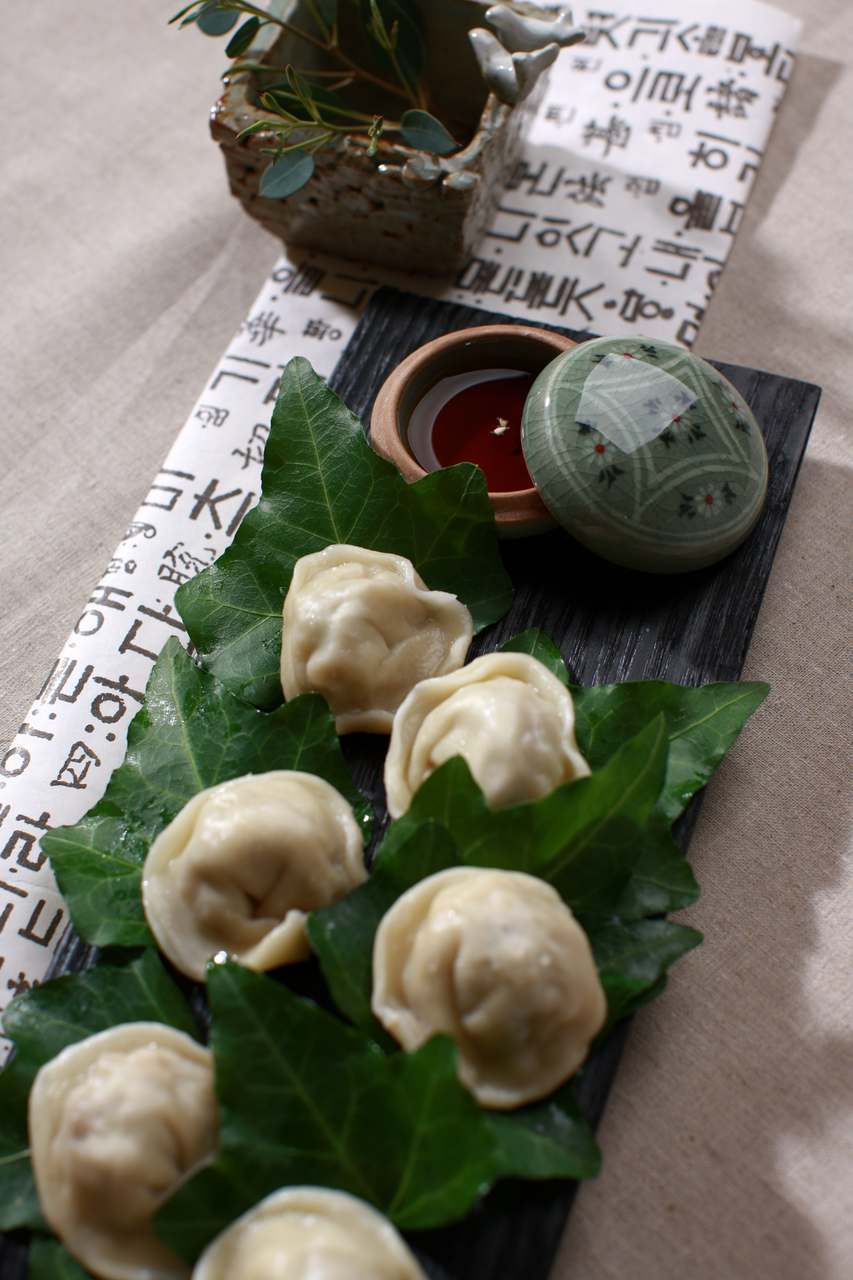
- Mandu (만두): thin-skinned dumplings filled with pork, garlic chives, and vegetables; good to share alongside the noodles.
- Bibim-guksu (비빔국수): spicy mixed cold noodles, for those who like heat.
- Kongguksu (콩국수): chilled soybean-broth noodles, a summer-only seasonal dish (you won't find it in spring or autumn).
The garlic kimchi warning
The aged garlic kimchi served alongside is a signature of the place, and it is far stronger than the kimchi most visitors have met before.
It lingers on the breath for hours. If you have a fitting, a tour, or anything close-quarters scheduled for the afternoon, take a little rather than a lot.
Ordering, solo dining, and pace
With four dishes on offer you can order by pointing or naming, and staff are used to visitors doing exactly that.
Solo diners are welcome and often seated at shared counter seating, which is unusual enough among famous Seoul restaurants to be worth planning around if you are eating alone.
Expect a brisk room. People eat and leave rather than linger, so a visible queue tends to clear faster than its length suggests.
The easiest first order, the house noodle soup.
Polite칼국수 하나 주세요
kal-guk-su ha-na ju-se-yo
One kalguksu, please.
Korean audio isn't available on this device or browser. Use the romanization above to say it.
Add a plate of mandu to share.
Polite만두도 하나 주세요
man-du-do ha-na ju-se-yo
One order of dumplings too, please.
Korean audio isn't available on this device or browser. Use the romanization above to say it.
Gluten and vegetarian reality
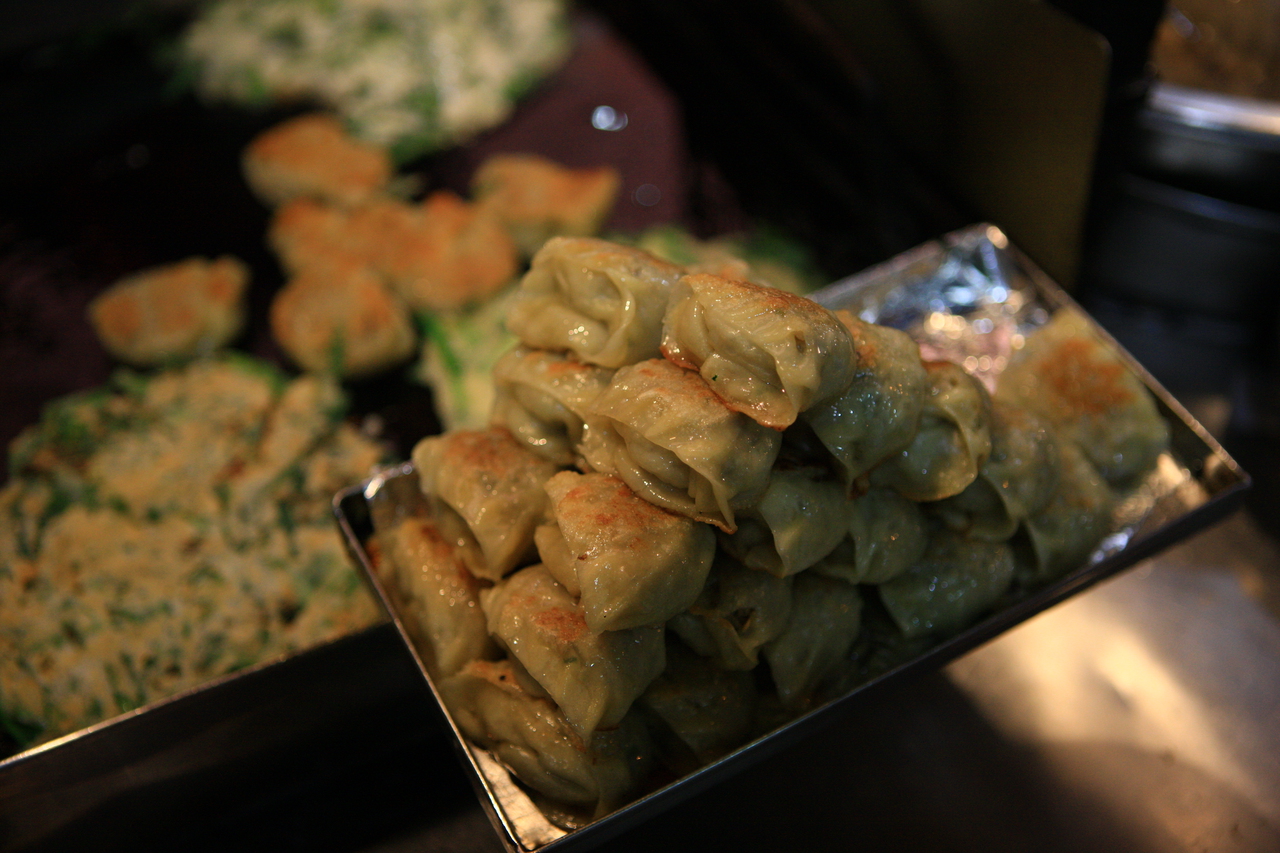
The core dishes are wheat noodles and wheat-skin dumplings, so gluten is unavoidable here. The broth is meat-based.
There is no dedicated vegetarian or gluten-free menu. Banchan may include egg and vegetable sides, but kalguksu and mandu are not vegetarian, and allergen information is not prominently displayed.
Ask staff about specific ingredients if that matters to you, and treat an unconfirmed answer as unverified rather than safe.
Timing it inside a Myeongdong day
Treat it as a break in the shopping rather than a destination meal. The room turns over quickly, so a visible queue is less of a disaster than it looks, but that is not a promise of a fixed wait.
Peak lunch and dinner fill the room. An early lunch or a mid-afternoon gap trades a shorter queue for a less convenient hour, which is usually the better deal when the rest of your day is on foot nearby.
Walk-in is still the usual path. Some years expose a booking link on tourism or platform pages, so check the current reservation option rather than assuming you can only queue.
Sort out how you are paying beforehand, and see Day 1 of the 2-night Seoul stopover itinerary for where this fits against Namsan and the cathedral.
Who should skip it
Skip it if you dislike strong garlic, because the kimchi is not a side you can easily ignore here.
Skip it if you want a slow, quiet meal. The room is built for turnover, and lingering works against the reason to come.
Skip it if you need a gluten-free option. There is no version of this menu that avoids wheat.
Frequently asked questions
Does it have a Michelin star?
No. It carries a Bib Gourmand listing, which recognizes quality at accessible prices. Worth knowing if you are choosing between this and a starred restaurant.
Why does a noodle house have "dumpling" in its name?
It opened as Myeongdong Kalguksu in 1966 and renamed itself Myeongdong Kyoja in 1978 after copycats with similar names appeared. Kyoja is the Sino-Korean word for dumpling.
When can I get kongguksu?
Summer only. The chilled soybean-broth noodles are seasonal, so do not plan a spring or autumn visit around them.
Is it workable for a solo traveler?
Yes, and more so than most famous Seoul restaurants. Solo diners are welcome and often seated at shared counter seating.
Sources
- Myeongdong Kyoja (official)official_service_site
- MICHELIN Guideofficial_service_site
- Visit KoreaOfficial tourism site
Information is compiled from official sources. Details such as prices, hours, and schedules can change. Confirm time-sensitive facts before you travel.
Last verified on
Related guides

Seoul 2 Nights 3 Days Itinerary: A Compact Stopover Guide Before Japan or Asia
Two nights in Seoul is not three days. You get an arrival evening, two full days, and a departure morning that belongs to the airport, so a stopover plan has to solve entry paperwork, luggage, and the airport transfer before any sightseeing is worth planning. This page covers those first, keeps each half-day in one connected area, and is specific about what a short stay has to give up.

Geumdwaeji Sikdang Guide: Seoul's Famous Pork Korean BBQ Restaurant
Geumdwaeji Sikdang ("Gold Pig") in Sindang is a Michelin Bib Gourmand pork BBQ restaurant known for thickly marbled nunkkot moksal grilled over charcoal and cast iron. Limited advance booking slots appear on platforms such as CatchTable, and a long walk-in queue is still the norm. What to order, how to find the right place, and what to check before you go are all below.