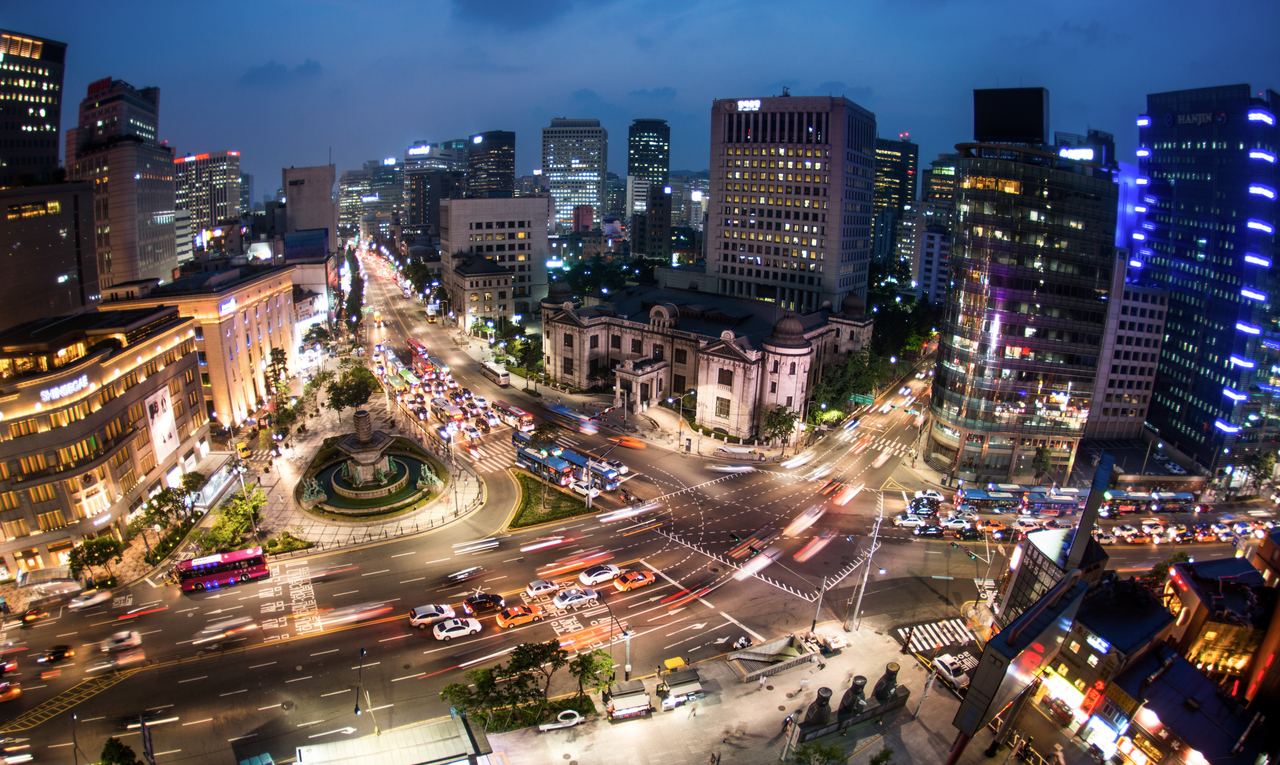
Myeongdong packs food, shopping, and a few landmarks into a few walkable central blocks, which is why first-time visitors land here often. It is also crowded and commercial, so a simple plan helps.
Food and nearby landmarks are the priority here. Tax refunds and K-beauty detail sit in the Myeongdong shopping guide.
Store hours, menus, prices, stock, and event schedules change: confirm current official information before you rely on them.
Quick answer
| Question | Quick answer |
|---|---|
| Is Myeongdong worth visiting? | Yes, especially on a first Seoul trip: food, cosmetics, souvenirs, and landmarks in one walkable area |
| Best station | Myeongdong Station (Line 4) for the southern shopping streets; Euljiro 1-ga (Line 2) for Lotte and the northern side |
| Best time | Late morning for shopping, afternoon for cafés and attractions, evening for street food and lights |
| Best famous meal | Myeongdong Kyoja (noodles and dumplings) or Hadongkwan (beef soup), depending on your taste |
| Best K-beauty stop | A large Olive Young branch: confirm the specific store before you go |
| Best official souvenir stop | Seoul My Soul Shop at the Myeongdong Tourist Information Center |
| Best character goods | LINE FRIENDS SQUARE Myeongdong |
| Best nearby add-on | Namsan and N Seoul Tower, Namdaemun Market, or the Bank of Korea Money Museum |
| Time needed | 3 to 5 hours for food and shopping; most of a day with nearby attractions |
| Biggest mistake | Buying without comparing, or assuming every shop handles tax refunds |
Understanding the Myeongdong area
Myeongdong isn't one street. It's a grid of pedestrian lanes between two different subway stations, with department stores on the western edge and a hill up to Namsan on the south.
Knowing which entrance you're coming from saves a lot of backtracking.
| Entrance area | Best for |
|---|---|
| Myeongdong Station (Line 4) | Main shopping streets, food alleys, the Namsan connection |
| Euljiro 1-ga Station (Line 2) | Lotte Department Store, northern Myeongdong, easier from Line 2 |
| Hoehyeon / Shinsegae side | Namdaemun Market, Shinsegae, Bank of Korea Money Museum |
| Myeongdong Cathedral side | The cathedral, restaurants, character shops, a quieter cultural stop |
A point worth repeating because it catches people out: Myeongdong Station and Euljiro 1-ga Station are two different stations, and the walk between the far ends of the district is longer than the map suggests once you're weaving through crowds. Check exit numbers on Naver Map or Kakao Map on the day: exits get renumbered and closed for construction, so we're not printing specific exit numbers here.
Best things to do in Myeongdong
Walk the main shopping street
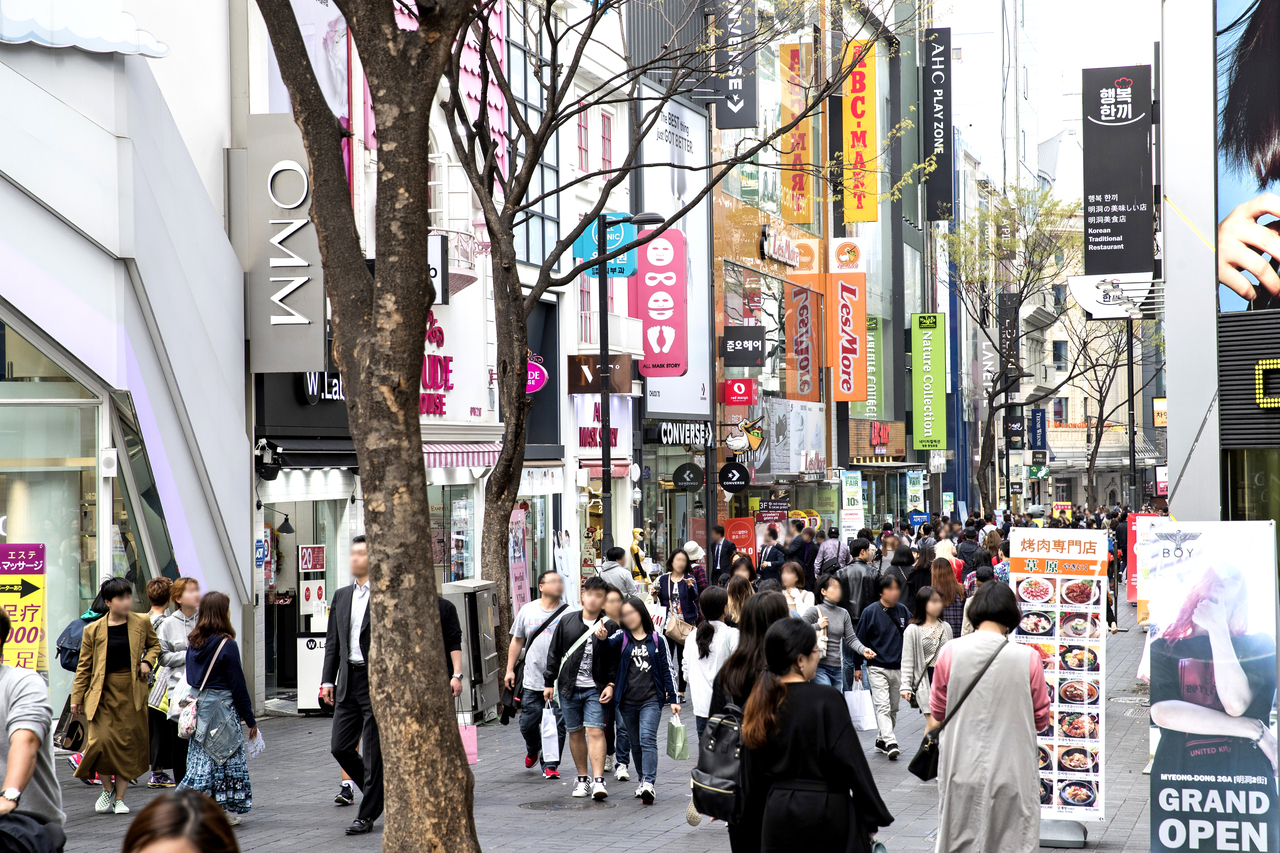
The pedestrian spine through the middle is the district's centre of gravity: cosmetics, fashion, shoes, accessories, character shops, and restaurants, with food carts filling in during the evening. The atmosphere genuinely changes through the day: daytime is shop-focused, evening brings the carts and the lights.
Good for: first-time visitors, K-beauty shopping, evening atmosphere, casual snacking.
Watch out for: weekend and evening crowds, tourist-oriented pricing, and pushy sampling at some stores. Not every cart opens every day: weather, day of the week, and local enforcement all affect what's actually out. Compare a couple of shops before you commit to a purchase.
Visit Myeongdong Cathedral
Seoul's Catholic landmark and a genuinely quiet pocket in a loud district, worth going in for the architecture even if you're not religious. It sits on the eastern edge of the shopping streets.
This is an active place of worship, not an attraction set up for tourists. Don't block worshippers or ceremonies to take photos, keep noise down, dress reasonably, and check current service times and which areas are open to visitors before you go, since access is restricted during Mass and religious events.
Good for: architecture, history, a peaceful break, cultural travelers.
Bank of Korea Money Museum
An underrated free stop on the Shinsegae/Hoehyeon side, in the former Bank of Korea building. It covers Korean currency, how money is made, and the country's economic history: a solid indoor option when it's raining or too hot, and a good one for families and budget travelers.
As of this writing it's free, open Tuesday to Sunday, roughly 10:00 to 17:00 with last entry in the late afternoon, and closed Mondays plus major holiday periods. Group visits need advance booking. Confirm current hours, closed days, and any entry rules officially before you go: museum schedules change, and this one closes for several holiday windows through the year.
Myeongdong Tourist Information Center and Seoul My Soul Shop
Worth hitting early in your visit rather than at the end. The center offers travel information and maps with multilingual support, and the Seoul My Soul Shop (the city's official souvenir brand, launched in 2024) operates a branch on its ground floor.
This is the most reliable place in the area to buy something that's actually Seoul-specific rather than a generic import: city-brand goods, Haechi character items, magnets, postcards, keychains, stickers, pouches, and city-themed stationery. Specific designs and stock rotate, so don't count on a particular item being available. Confirm current opening hours and any experience programs (stamp-making and similar) on arrival.
LINE FRIENDS SQUARE Myeongdong
A large character store that opened in the area in 2024 and is currently operating, carrying LINE FRIENDS and BT21 goods along with photo zones and rotating seasonal or collaboration collections.
Good for: K-pop fans, character-goods shoppers, families, lightweight souvenirs.
Watch out for: popular items selling out, and the assumption that everything here is Korea-exclusive, plenty of LINE FRIENDS merchandise is sold internationally too. Check the size of any plush toy against your luggage before you buy it.
Department stores: Lotte and Shinsegae
The Lotte Department Store main branch anchors the northern end near Euljiro 1-ga, and the Shinsegae Department Store main branch sits on the western side toward Hoehyeon and Namdaemun. Both run beauty halls, fashion floors, and food halls, and both have associated duty-free operations.
The key thing to understand is that a department store purchase and a duty-free purchase are different transactions: see tax refund vs duty-free below. Neither is automatically cheaper than the street shops, so compare if price is your main concern. Department stores also have regular closing days, so check before planning a visit around one.
Shinsegae's exterior media display has been a seasonal draw in recent years, particularly around the year-end. It's a seasonal installation, not a permanent fixture: check the current official schedule before building an evening around it.
Nearby add-ons
All of these are within walking distance or a short ride, and all of them are genuinely outside Myeongdong proper: Namsan Park and N Seoul Tower, Namdaemun Market, Namsangol Hanok Village, Cheonggyecheon, Seoul City Hall, and Deoksugung Palace.
Don't try to do all of these in one afternoon. Pick one, and check travel time on a map rather than assuming everything nearby is a five-minute walk, the Namsan approach in particular involves a real uphill or a cable car.
Famous restaurants in Myeongdong
This is the part most shopping-focused guides skip. Myeongdong has several restaurants that have been running for decades, and they're a large part of why the area is worth a meal rather than just a browse.
Myeongdong Kyoja (명동교자)
Handmade kalguksu (knife-cut noodle soup) and mandu since 1966. Listed in the current MICHELIN Guide Korea selection (Bib Gourmand: good value rather than starred), and the most-searched restaurant name in the district.
| Field | Detail |
|---|---|
| Signature menu | Kalguksu, bibim-guksu (spicy mixed cold noodles), mandu. Seasonal kongguksu may appear in warmer months: confirm on the day. |
| First-timer pick | Warm kalguksu. Bibim-guksu is spicy. Side kimchi is notably garlic-forward. |
| Good for | First Korean meal, solo travelers, a quick sit-down lunch |
| Watch out | Queues at meal times; wheat and meat-broth content. Do not assume vegetarian or halal. Payment and ordering flow change over time: check on arrival. |
Multiple branches use similar names. Branch-finding, ordering, and timing live in the Myeongdong Kyoja guide.
Hadongkwan (하동관)
Gomtang (a clear beef soup) from a restaurant that traces back to 1939 across three generations. Also in the MICHELIN Guide Korea selection. If Kyoja is the famous noodle stop, this is the famous old Seoul soup stop.
| Field | Detail |
|---|---|
| Signature menu | Gomtang, a larger/special gomtang, and suyuk (sliced boiled beef) when offered. Served with rice, chopped green onion, and kkakdugi (cubed radish kimchi). |
| First-timer pick | Mild comfort broth, not a spicy dish. Some bowls include brisket, tripe, or other offal: ask. Season at the table with salt and onion. |
| Hours (confirm) | Morning into afternoon only (about 7:00 to 16:00 at last check); reported closed first and third Sundays. Closes when the day's batch sells out, often early. Walk-in only. |
| Good for | Traditional breakfast or early lunch; beef-soup fans |
| Watch out | Beef and offal: not vegetarian, not halal. Menu labels can be hard on a first visit. |
Treat Hadongkwan as a breakfast or early-lunch plan, not dinner, and confirm current hours before you go.
Other long-running options
These are worth knowing about, though we'd point you at current maps or official listings to confirm they're operating and what they're serving on your dates:
- Baekje Samgyetang (백제삼계탕): samgyetang, a whole young chicken soup with rice, garlic, jujube, and ginseng-family ingredients. A full, warming meal rather than a light one. Watch for bones, a whole chicken, herbal flavors, and a boiling-hot bowl; not halal by default.
- Myeongdong Tonkatsu (명동돈가스): a long-running Japanese-style pork cutlet restaurant, reportedly operating since the 1980s, usually with a mid-afternoon break. Good if you want something familiar. Contains pork, wheat, and egg, and uses shared frying oil, not suitable for Muslim travelers.
- Myeonghwadang (명화당): Korean snack-style food: gimbap, tteokbokki, and mixed cold noodles. Useful for a cheap, casual lunch or several small dishes. Tteokbokki is spicy, stock is often fish-cake-or-seafood-based, and gimbap can contain ham, egg, fish cake, or meat.
- Jinju Hoegwan (진주회관): technically just outside Myeongdong toward City Hall, known for kongguksu (cold soybean-broth noodles), which is strongly seasonal and busiest in summer. Contains soy, and often wheat and nuts.
A halal-certified option
Myeongdong Busanjib (명동부산집) is listed on Visit Seoul's official restaurant pages as a halal Korean restaurant in Myeongdong, certified by the Korea Muslim Federation (KMF), serving Korean dishes including stews, bibimbap, and Korean BBQ, with a prayer room in the building.
Even with that: certification scope and validity can change, and a certified restaurant may not have every item on its menu certified. Confirm the current certificate, which menu items it covers, and whether alcohol is served or cooking spaces are shared, directly with the restaurant before you rely on it. If you can't verify it on your dates, Itaewon has a larger cluster of certified restaurants near the central mosque.
See the food guide for Muslim travelers for how to check.
Restaurant comparison
| Restaurant | Signature menu | Good for | Main caution |
|---|---|---|---|
| Myeongdong Kyoja | Kalguksu, mandu, bibim-guksu | First-timers, solo travelers | Wheat, meat broth, strong garlic, queues |
| Hadongkwan | Gomtang | Traditional beef soup, early meals | Beef and offal, closes when sold out |
| Baekje Samgyetang | Samgyetang | A full traditional meal | Whole chicken, bones, herbal flavor |
| Myeongdong Tonkatsu | Pork cutlet | Families, familiar food | Pork, wheat, shared fryer |
| Myeonghwadang | Gimbap, tteokbokki | Casual Korean snack food | Spice, fish-cake stock, small space |
| Jinju Hoegwan | Kongguksu | Summer visitors | Soy, nuts, wheat, seasonal menu |
| Myeongdong Busanjib | KMF-certified Korean dishes | Muslim travelers | Verify current certification scope |
Myeongdong street food
Street food here is best approached by category rather than by chasing a specific cart, since which carts are out varies day to day. Common items include tteokbokki (spicy rice cakes), hotteok (filled griddle pancakes), gyeran-ppang (egg bread), Korean corn dogs, grilled skewers, tornado potato, fish cake, bungeoppang in cooler months, fruit cups, and grilled seafood.
Practical points that matter more than any specific recommendation:
- Check the displayed price before you order. If there's no clear price label, ask first.
- Payment varies by cart: some take cards, some prefer cash. Carry a little cash as backup.
- Street food isn't automatically cheaper than a restaurant meal in this area; a few snacks can add up to more than a bowl of noodles.
- Ingredients are hard to verify at a cart. Seafood, fish-cake stock, dairy, egg, and wheat are all common. If you have a religious restriction or a serious allergy, a restaurant with a written menu is much easier to check than a cart.
- Bin space is limited: hold onto your waste until you find one, and try not to eat standing in the middle of the walkway.
Shopping in Myeongdong: the short version
Myeongdong has a high concentration of tax-free-registered shops, which makes it easy for foreign visitors to shop, and easy to overbuy. This area guide orients the street; till mechanics and full tax-refund depth live on the shopping spoke.
| If you want | Start with | Full guide |
|---|---|---|
| K-beauty and cosmetics | A large Olive Young (confirm which branch) | Myeongdong shopping guide |
| Official Seoul souvenirs | Seoul My Soul Shop / tourist information | Same shopping guide |
| Character goods | LINE FRIENDS SQUARE and nearby lifestyle shops (for example Butter or ARTBOX where open) | Same shopping guide |
| Tax refund steps and net return | Passport + Tax Free logo at till | Shopping guide tax section |
| Cards, cash, ATMs | Any major ATM or card till | How to pay in Korea |
Olive Young is the default K-beauty stop: sunscreen, sheet masks, lip tints, toner pads, cleansers, pimple patches, hand cream, and travel sizes are the usual buys. Several branches use confusingly similar names, so confirm the specific store. Check ingredients against your skin type, and watch liquid limits for carry-on.
Food gifts often come from department-store food halls or flavored-almond and snack specialty shops. Check nut allergens and your destination country's food import rules before buying much.
Practical items from Daiso-type stores (when a branch is operating nearby) help with packing, but distinguish a cheap practical item from a Korean souvenir: not everything sold is made in Korea.
Souvenirs worth considering
Not "must-buys", just items that tend to travel well:
| Souvenir | Where to check | What to verify |
|---|---|---|
| Korean sunscreen | Olive Young | Skin type, SPF/PA, carry-on liquid limits |
| Sheet masks | Olive Young | Ingredients, expiry, luggage weight |
| Lip tint | Olive Young or a brand store | Shade, tester hygiene |
| Official Seoul goods | Seoul My Soul Shop | Current designs and stock |
| LINE FRIENDS / BT21 goods | LINE FRIENDS SQUARE | Whether it is actually Korea-exclusive |
| Flavored almonds | Snack specialty shops, department stores | Nut allergens, import rules |
| Korean stationery | ARTBOX, Butter, official gift shop | Country of manufacture |
| Premium packaged snacks | Lotte or Shinsegae food halls | Expiry dates and import rules |
| Cathedral / cultural goods | Cathedral bookstore area | Store hours and product type |
What not to buy without checking
Viral skincare whose ingredients you have not checked. Sheet masks in bulk without weighing luggage. Supplements or diet products with labels you cannot read. Food without checking destination import rules. Luxury goods without comparing department-store and duty-free terms. Character goods you assume are Korea-exclusive. Cosmetics from unclear sellers. Anything without a visible price label. Fragile mugs or glassware with no packing plan. Any "branded" item whose authenticity you cannot verify.
Myeongdong is built for impulse buying, so a moment of comparison goes a long way. Full tax-refund return in practice, passport requirement, refund kiosks, and money exchange: Myeongdong shopping guide. Cards and cash: how to pay in Korea.
Tax refund vs duty-free (summary only)
These get mixed up constantly. They are three different systems. This page does not own till floors or refund percentages.
| System | What it is | Where it shows up |
|---|---|---|
| Tourist tax refund (VAT refund) | You paid a tax-inclusive price in a normal store and reclaim part of the VAT | Tax Free shops, downtown kiosks, airport refund desks |
| Duty-free shop purchase | Tax is not charged at a duty-free counter (passport / flight details often required) | Downtown duty-free (for example Lotte or Shinsegae) or airport duty-free |
| Entry duty-free allowance | Korea Customs limit on goods you bring into Korea from abroad | Arrival customs; not a Myeongdong shopping discount |
Tax refund is about Korean retail purchases. Duty-free shops sell without charging the tax up front, often with export conditions. Entry allowance is about personal effects and gifts you carry into Korea: Customs currently frames a general goods exemption around US$800 of taxable value, with separate alcohol, tobacco, and perfume lines, and other restricted goods outside that frame. Cash and other means of payment above US$10,000 are a declaration topic, not a shopping refund. Details live on the Korea Customs passenger guide and in the how to pay in Korea customs section. Confirm current official thresholds before you rely on a number.
Not every shop offers refunds, and not every product or traveler qualifies. For till mechanics and current KRW floors or caps, use the Myeongdong shopping guide.
Recommended routes
| Route | Time | Path | Best for |
|---|---|---|---|
| A. Essentials | About 2 hours | Myeongdong Station → main shopping street → large Olive Young → cathedral → one souvenir stop → meal at Kyoja or another verified restaurant | Short Seoul trips; stays nearby |
| B. Food and shopping | Half day | Euljiro 1-ga → Lotte Department Store or Duty Free → main street → early lunch at Hadongkwan (sells out) or Kyoja → cathedral → Olive Young, LINE FRIENDS, official souvenir shop → evening street food if carts are out | Shoppers who also want a classic meal |
| C. Namdaemun and Namsan | Full day | Morning: Bank of Korea Money Museum, Shinsegae area, Namdaemun Market. Lunch in Myeongdong. Afternoon: shopping, cathedral, souvenirs. Evening: street food, then Namsan Park or N Seoul Tower if energy holds | First-timers with a full day |
| D. Rainy day | Flexible | Lotte Department Store → Olive Young → indoor lunch → Money Museum (if open) → underground arcade → Shinsegae → café or indoor performance | Wet weather |
For route C, do not carry a day's shopping up Namsan. Drop bags at your accommodation or a locker first, and check cable car and tower hours before you commit.
Best plan by traveler type
| Traveler type | Recommended focus |
|---|---|
| First-time Seoul visitor | Main street, cathedral, one famous Korean meal, Olive Young |
| K-beauty shopper | Olive Young, brand stores, tax-refund check before paying |
| Food lover | Myeongdong Kyoja, Hadongkwan, a snack restaurant, street food |
| Family | Character shop, Money Museum, department store, early dinner |
| Couple | Cathedral, shopping, a sit-down meal, Namsan in the evening |
| Solo traveler | Myeongdong Kyoja, the museum, Olive Young, a café |
| K-pop fan | LINE FRIENDS, current pop-ups (check official announcements) |
| Muslim traveler | Verified halal restaurant, ingredient checks, shopping |
| Budget traveler | Free museum, price comparison, practical stores |
| Luxury shopper | Lotte and Shinsegae department and duty-free stores |
Seasonal events and pop-ups
Myeongdong gets a steady rotation of seasonal programming: department-store year-end displays and the Shinsegae media façade, cathedral religious and seasonal events, theater and performance schedules nearby, and K-beauty or K-pop pop-up stores that come and go within weeks.
Events change frequently, and we deliberately aren't naming specific dated events here: anything we listed would likely be over by the time you read it. Check Visit Seoul's event calendar, the relevant department store or venue's official page, and the brand's own announcement for pop-ups. Treat the permanent attractions listed here as reliable and anything seasonal as needing same-week confirmation.
Food restrictions and allergies
Myeongdong's food, including its street food, is not automatically halal, vegetarian, vegan, or allergy-safe, and "no pork" is not the same as halal.
- Tteokbokki sauce may include fish cake, seafood stock, or fermented ingredients.
- Gimbap commonly contains ham, egg, fish cake, beef, or mayonnaise.
- Gomtang contains beef and may contain offal.
- Kalguksu may involve wheat plus chicken, pork, or seafood in the broth, depending on the kitchen.
- Samgyetang is a whole chicken with herbal ingredients.
- Tonkatsu contains pork, wheat, and egg.
- Shared frying oil and shared cooking surfaces are common across the area.
If you have a severe allergy, favour restaurants with clear written ingredient information over carts, and use a translation app for labels. We don't describe any restaurant here as safe for a specific restriction. Verify it yourself for your own dates.
Practical tips
Comfortable shoes matter more than you'd think for a district this small. You'll walk in loops. Visit large beauty stores earlier if you dislike crowds.
Keep receipts, and check tax-refund conditions before you pay rather than after. Use Naver Map or Kakao Map for current entrances and store locations rather than trusting an old blog map. Protect your passport and wallet in crowded stretches.
Don't assume every store has English-speaking staff, though many do. Department stores have regular closing days. Airport bus stops vary by hotel.
Check yours specifically rather than assuming there's one shared Myeongdong stop.
Useful Korean phrases
| English | Korean |
|---|---|
| How much is this? | 이거 얼마예요? |
| Is the price shown here? | 가격이 여기 표시되어 있나요? |
| Can I get a tax refund? | 택스리펀 되나요? |
| Does this contain pork? | 돼지고기가 들어가나요? |
| Is this spicy? | 이거 매워요? |
| Can I pay by card? | 카드 결제 되나요? |
| Is this made in Korea? | 이거 한국에서 만든 제품인가요? |
| Is this item Korea-exclusive? | 이 제품은 한국 한정인가요? |
| Can I get a receipt? | 영수증 받을 수 있나요? |
In Myeongdong
Two phrases that come up constantly here.
Asking the price at a street-food cart or a shop without clear labels.
Polite이거 얼마예요?
i-geo eol-ma-ye-yo?
How much is this?
Korean audio isn't available on this device or browser. Use the romanization above to say it.
Ask before paying, not after, it affects how the sale is processed.
Polite택스리펀 되나요?
taek-seu-ri-peon dwae-na-yo?
Can I get a tax refund?
Korean audio isn't available on this device or browser. Use the romanization above to say it.
Common mistakes
- Treating Myeongdong as only a nighttime street-food market.
- Assuming street carts run at fixed hours every day: they don't.
- Buying cosmetics purely because they're viral, without checking ingredients.
- Assuming every beauty store offers tax refund.
- Confusing duty-free shopping with tax refund.
- Not comparing prices between shops.
- Assuming every character product is Korea-exclusive.
- Buying a lot of liquids before checking carry-on rules.
- Not checking food ingredients when you have a restriction.
- Assuming all street food is cheap.
- Visiting Myeongdong Cathedral during a service without respecting it.
- Carrying heavy shopping bags up to Namsan.
- Trying to fit Myeongdong, Namdaemun, Namsan, Gyeongbokgung, and Dongdaemun into one short afternoon.
- Relying on outdated restaurant hours: Hadongkwan in particular closes early when sold out.
- Picking a restaurant from social media without checking it's currently operating.
FAQ
Is Myeongdong worth visiting?
Yes, particularly on a first Seoul trip: it packs food, cosmetics, souvenirs, department stores, and a cultural landmark into a walkable area with strong transit access.
What is Myeongdong famous for?
K-beauty and cosmetics shopping, evening street food, long-running Korean restaurants, department stores and duty-free, and Myeongdong Cathedral.
Which subway station is best for Myeongdong?
Myeongdong Station (Line 4) for the main shopping streets and the Namsan side; Euljiro 1-ga Station (Line 2) for Lotte Department Store and the northern edge. They're different stations.
What are the best things to do in Myeongdong?
Walk the main shopping street, eat at one of the long-running restaurants, visit Myeongdong Cathedral, stop at the free Bank of Korea Money Museum, and pick up souvenirs at the official Seoul shop.
How many hours should I spend in Myeongdong?
Three to five hours covers food and shopping comfortably. Add nearby attractions like Namsan or Namdaemun and it becomes most of a day.
What famous restaurants are in Myeongdong?
Myeongdong Kyoja (kalguksu and mandu, since 1966) and Hadongkwan (gomtang, tracing back to 1939) are the two best-known, both carried in the MICHELIN Guide's Korea selection. Baekje Samgyetang, Myeongdong Tonkatsu, and Myeonghwadang are other long-running options.
What should I order at Myeongdong Kyoja?
Kalguksu if you want something mild and warming, bibim-guksu if you want it spicy, and mandu to share. The kimchi is strongly garlic-flavored. Expect that.
What is Hadongkwan known for?
Gomtang, a clear beef soup served with rice. It's a morning-to-afternoon restaurant that closes once the day's batch sells out, so go early and check current hours.
Is Myeongdong street food expensive?
Not necessarily, but it isn't automatically cheap either, a few snacks can cost more than a full bowl of noodles at a restaurant. Check displayed prices before ordering.
What should I buy at Olive Young in Myeongdong?
Sunscreen, sheet masks, lip tints, toner pads, cleansers, pimple patches, hand cream, and travel sizes are the usual picks. Check ingredients against your skin type, and note that several similarly named branches exist in the area.
Where can I buy official Seoul souvenirs?
The Seoul My Soul Shop at the Myeongdong Tourist Information Center is the most reliable spot for city-official goods rather than generic imports.
Where can I buy LINE FRIENDS or BT21 goods?
LINE FRIENDS SQUARE Myeongdong, which opened in the area in 2024 and is currently operating. Not everything there is Korea-exclusive.
Can tourists get a tax refund in Myeongdong?
Yes at many Tax Free shops if you meet the store's rules and bring your physical passport. For steps, net refund after fees, and kiosk vs airport paths, use the Myeongdong shopping guide.
What is the difference between duty-free and tax refund?
Duty-free means tax was not charged at a duty-free counter. Tax refund means you paid a tax-inclusive price and reclaim part of it. Full mechanics: shopping guide.
Is Myeongdong good at night?
Yes: the street-food carts and lights make the evening the liveliest time, though which carts are out varies by day and weather.
Is Myeongdong good for families?
Yes: character shops, the free Money Museum, department stores, and easy food options all work well. An earlier dinner avoids the worst of the evening crowds.
Is Myeongdong suitable for Muslim travelers?
There is a KMF-certified halal Korean restaurant in the area listed on Visit Seoul's official pages, but verify its current certification and menu scope yourself. Street food is generally hard to verify. Itaewon has a larger certified cluster if that's a priority.
Can I combine Myeongdong with N Seoul Tower?
Yes, that's among the more common pairings, Namsan sits directly south. Factor in the uphill or cable car, check current operating information, and don't do it carrying all your shopping.
Is Namdaemun Market close to Myeongdong?
Yes, it's a short walk from the Shinsegae/Hoehyeon side, a natural extension, though it's a separate market with its own character.
What is the biggest mistake when visiting Myeongdong?
Shopping on impulse without comparing prices or checking tax-refund conditions, and, for food, turning up at a sold-out-early restaurant like Hadongkwan in the afternoon.
Final recommendation
Myeongdong works for first-timers because food, services, and Namsan or Namdaemun links sit close together. Pick one meal, one beauty or souvenir stop, and one nearby cultural stop, then compare before you buy. Full shopping and tax refund depth: Myeongdong shopping guide.
Sources
- Visit Seoul, Seoul Tourism Organization (official)Official tourism site
- Visit KoreaOfficial tourism site
- MICHELIN Guideofficial_service_site
- Bank of Korea Money Museum (official)Official government site
- Seoul Metropolitan Government (english.seoul.go.kr)Official government site
- Korea Customs Service — Customs Clearance Guide for PassengersOfficial government site
Information is compiled from official sources. Details such as prices, hours, and schedules can change. Confirm time-sensitive facts before you travel.
Last verified on
Related guides
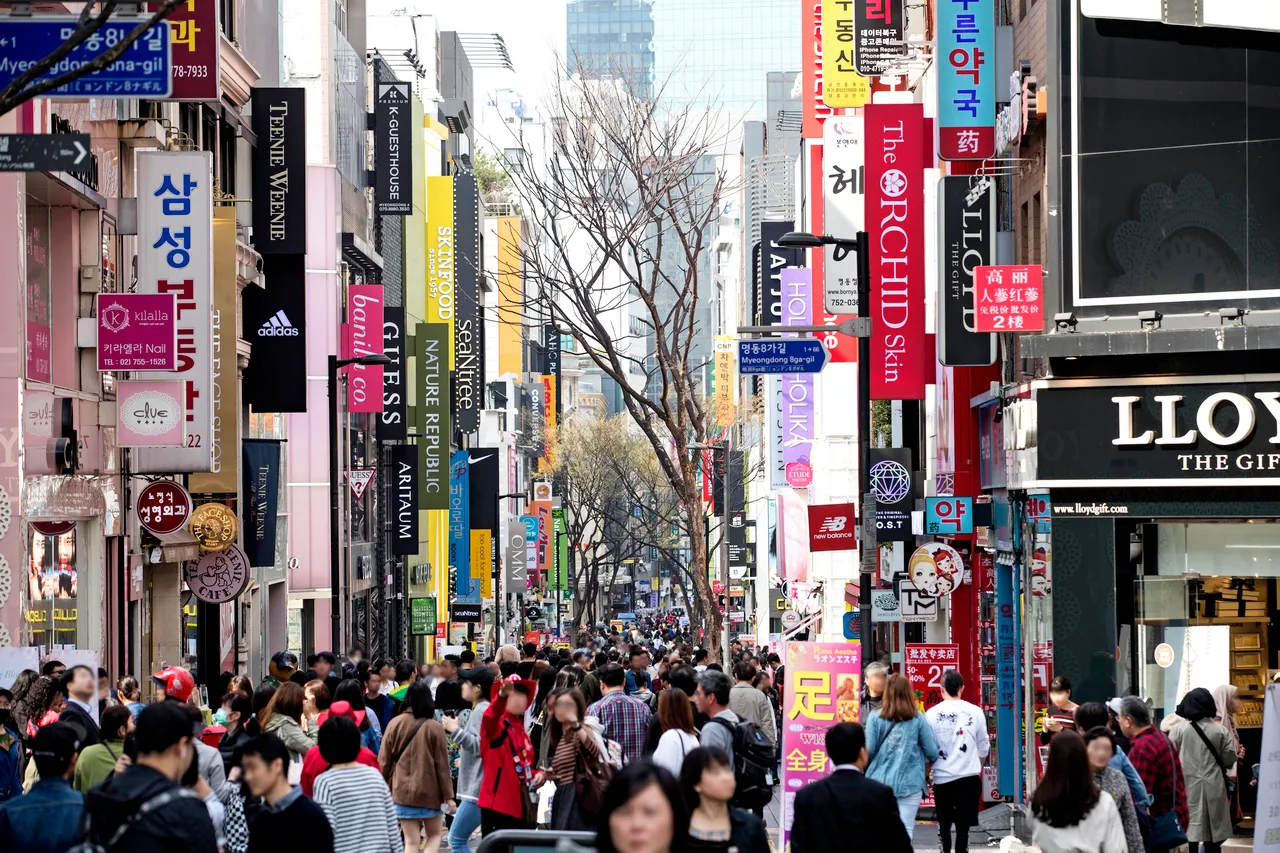
Myeongdong Shopping Guide: Beauty, Street Food, Tax Refund, and What to Buy
Myeongdong is Seoul's most concentrated shopping district: wall-to-wall cosmetics, fashion, and street food, with the city's highest density of tax-free stores. Below: the main areas, what to buy (especially K-beauty), the evening street-food scene, and how the tax refund actually works in 2026, including why you get back about 5, 8% rather than the full 10%, and why you must carry your physical passport. Prices, hours, and refund rules change, so confirm current details before you shop.

Myeongdong Kyoja Guide: Seoul's Famous Kalguksu and Mandu Restaurant
Myeongdong Kyoja is one of Seoul's most famous noodle restaurants: a Michelin Bib Gourmand spot in the heart of Myeongdong, open since 1966, with a tiny four-item menu built around hand-cut kalguksu and mandu. It's fast, easy to order, and great between bouts of Myeongdong shopping. What to order, the famous garlic kimchi, and how to find the main branch are all below.