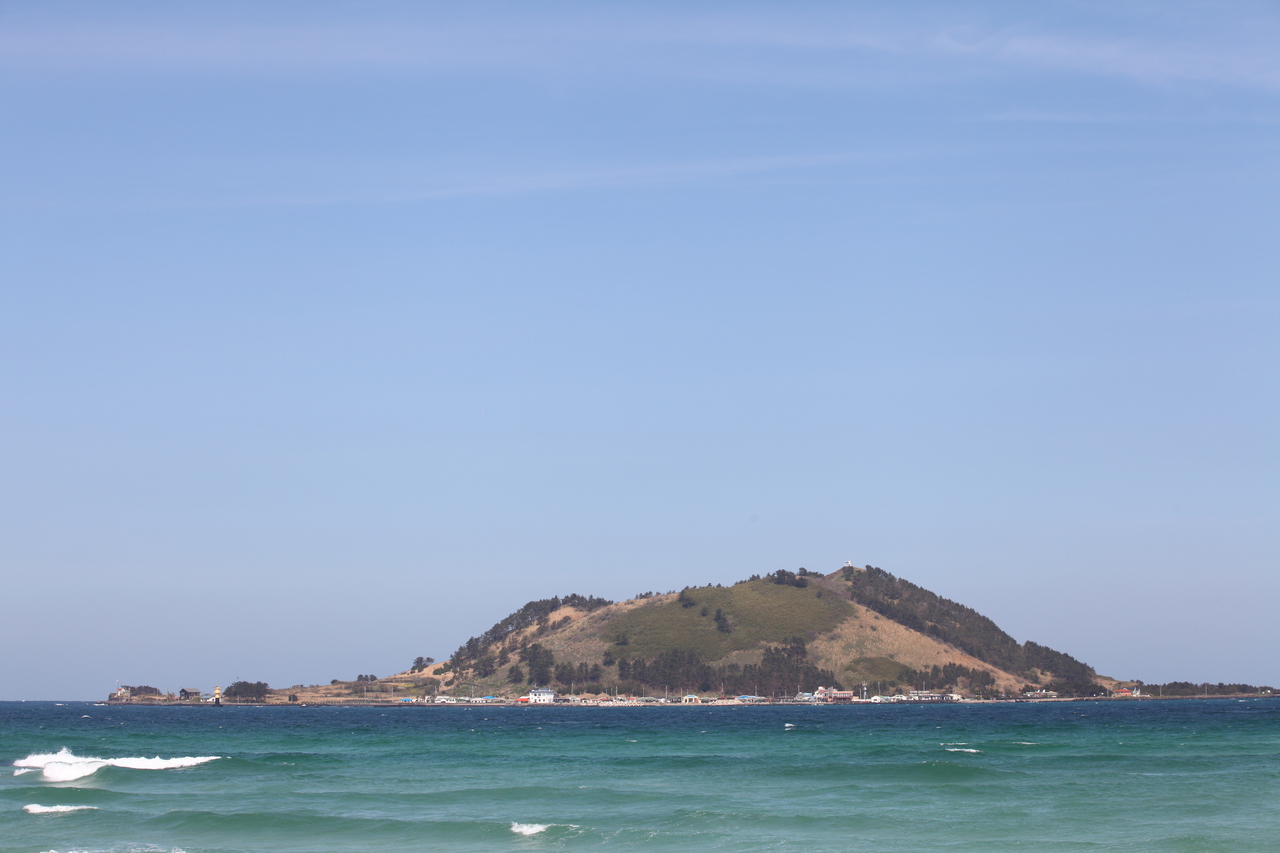
Jeju's beaches can look like the turquoise postcard photos, but not on every visit. Color and clarity shift with weather, tide, and light.
This page ranks five beaches by what each does well for a first-time visitor. It is TripKopia's editorial ranking, not an official government list.
Match the beach to your day, not only to the number order.
Quick ranking
| Rank | Beach | Best for | Watch out for |
|---|---|---|---|
| 1 | Hyeopjae | Classic views, sunset, photos | Summer crowds, limited shade |
| 2 | Hamdeok | Easy access, families, liveliest scene | Jeju's most crowded beach |
| 3 | Woljeongri | Café culture, photos, wind-turbine views | Strong wind, less about swimming |
| 4 | Geumneung | Quieter low-tide sandbar near Hyeopjae | Still busy in peak season |
| 5 | Jungmun Saekdal | Cliffs, surfing, dramatic scenery | Rough surf, not calm toddler play |
A lower rank is not "worse." Geumneung may beat Hyeopjae if you want fewer crowds.
Jungmun Saekdal is the right start for surf or cliff photos.
Which beach fits your trip?
| You want | Go to |
|---|---|
| The single most iconic view | Hyeopjae |
| No rental car, easiest access | Hamdeok |
| Café hopping and photos | Woljeongri |
| Hyeopjae's look, fewer people | Geumneung |
| Surfing or dramatic cliffs | Jungmun Saekdal |
| A family day with shallow water | Hamdeok or Geumneung |
| Sunset photography | Hyeopjae, Geumneung, or Woljeongri |
Don't try to see all five in one day
Hyeopjae and Geumneung sit together on the west coast. Hamdeok and Woljeongri pair on the north and northeast. Jungmun Saekdal on the south is a separate trip. Udo's beaches, reached by ferry, are covered in the Udo Island guide.
Pick one coastal cluster per day. West-to-north-to-south in one day means more driving than beach time.
| Day cluster | Route shape |
|---|---|
| West coast | Hyeopjae → Geumneung → Hallim Park |
| North / northeast | Hamdeok → Seowubong walk → Woljeongri → Gimnyeong |
| South coast | Jungmun Saekdal with Jungmun resorts, falls, or cliffs |
1. Hyeopjae Beach
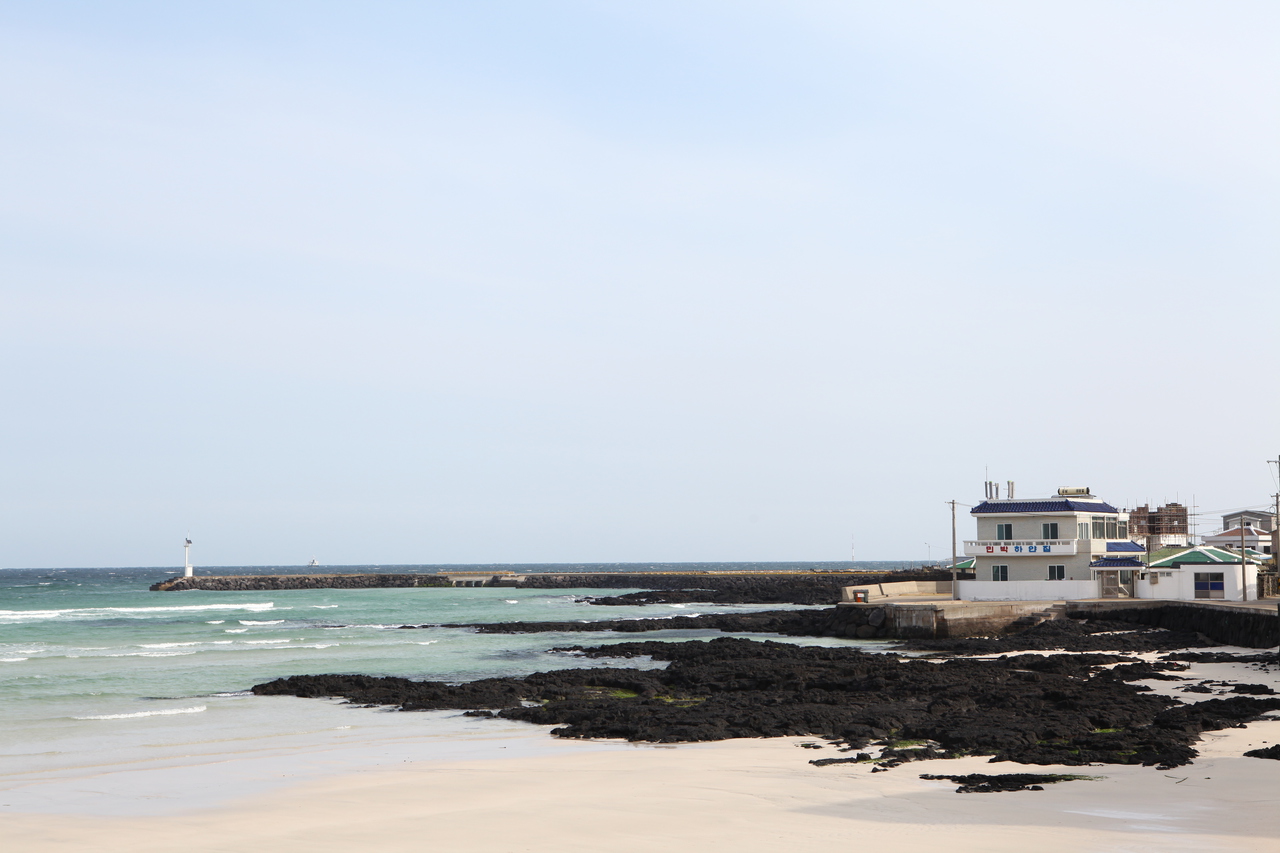
One line: White sand, black lava rock, and Biyangdo Island offshore: the west coast's signature view.
| Best for | First-timers, sunset, photography, a west-coast day |
| Swim style | Generally calm and shallow near shore in season |
| When | Weekday mornings for fewer crowds; strong sunset coast |
| Access | Northwest near Hallim; easiest with a rental car |
| Nearby | Hallim Park, Geumneung (short hop south), west-coast cafés |
| Watch out | Summer and weekend parking fills fast; limited shade |
Hyeopjae pairs Jeju's most photographed coastal contrast with a clear Biyangdo silhouette. Midday sun often brings out the turquoise tone best; low tide exposes more black rock for foreground shots.
Swimming conditions and lifeguard coverage depend on the official season. Calm looks are not a guarantee. Follow posted flags when present.
2. Hamdeok Beach
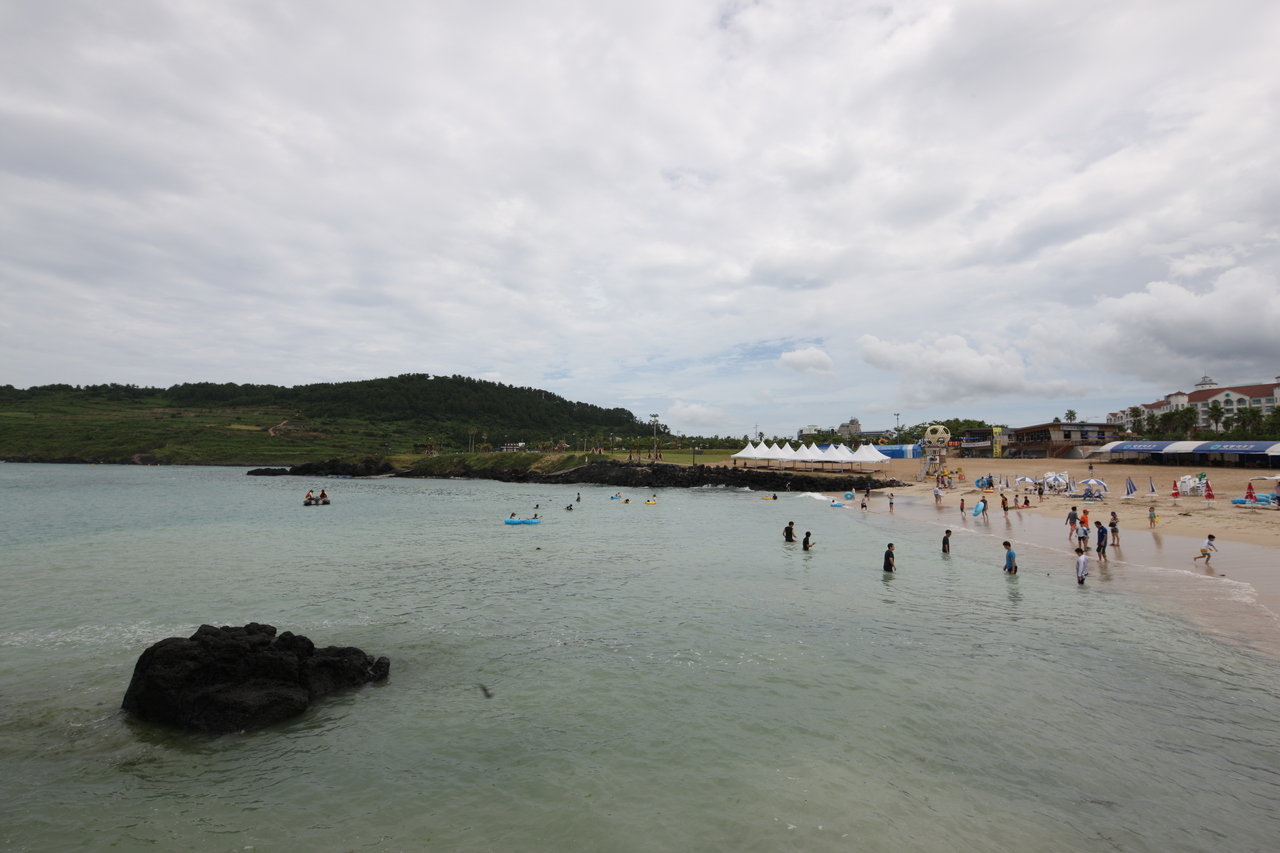
One line: Jeju's most popular beach, backed by Seowubong hill, and the easiest to reach without a car.
| Best for | No-car travelers, families, full beach-town energy |
| Swim style | Shallow near shore; still needs normal caution |
| When | Early morning or shoulder season for fewer crowds |
| Access | Jocheon-eup, Jeju City side; bus 201 is often about 30 minutes from Jeju Intercity Bus Terminal (confirm current route) |
| Nearby | Seowubong trail, Olle Trail Route 19, cafés and restaurants |
| Watch out | Peak-summer crowds, noise, competition for space |
Hamdeok (officially Hamdeok Seowubong Beach) drew a reported 703,064 visitors in the 2025 season, more than half of roughly 1.2 million beach visits across Jeju that year. We rank it for access and reliability, not solitude. The Hamdeok Beach guide covers its swimming season, parking and the Seoubong walk.
Low tide exposes black rock pools near shore that kids often explore. Shallow water can still hide channels and depth changes. Follow lifeguard guidance in season.
3. Woljeongri Beach

One line: East-coast café strip where offshore wind turbines are part of the view.
| Best for | Café hopping, photos, a scenic drive stop |
| Swim style | Doable, but secondary to photos and cafés |
| When | Late afternoon into sunset; expect wind |
| Access | Northeast near Gimnyeong; pair with east-coast stops, not a same-day west-coast loop |
| Nearby | Gimnyeong Maze Park, Gimnyeong Beach, coastal café road |
| Watch out | Strong wind; crowded cafés; limited peak parking |
Woljeongri is a different kind of "beautiful" from Hyeopjae or Hamdeok. Include the turbines in the frame for the shot that sets it apart. Not every café has a true ocean view, so check before you sit.
For swimming season, parking and how long to stay, see the Woljeongri Beach guide. For the neighboring beach to the west, see the Gimnyeong Beach guide.
4. Geumneung Beach
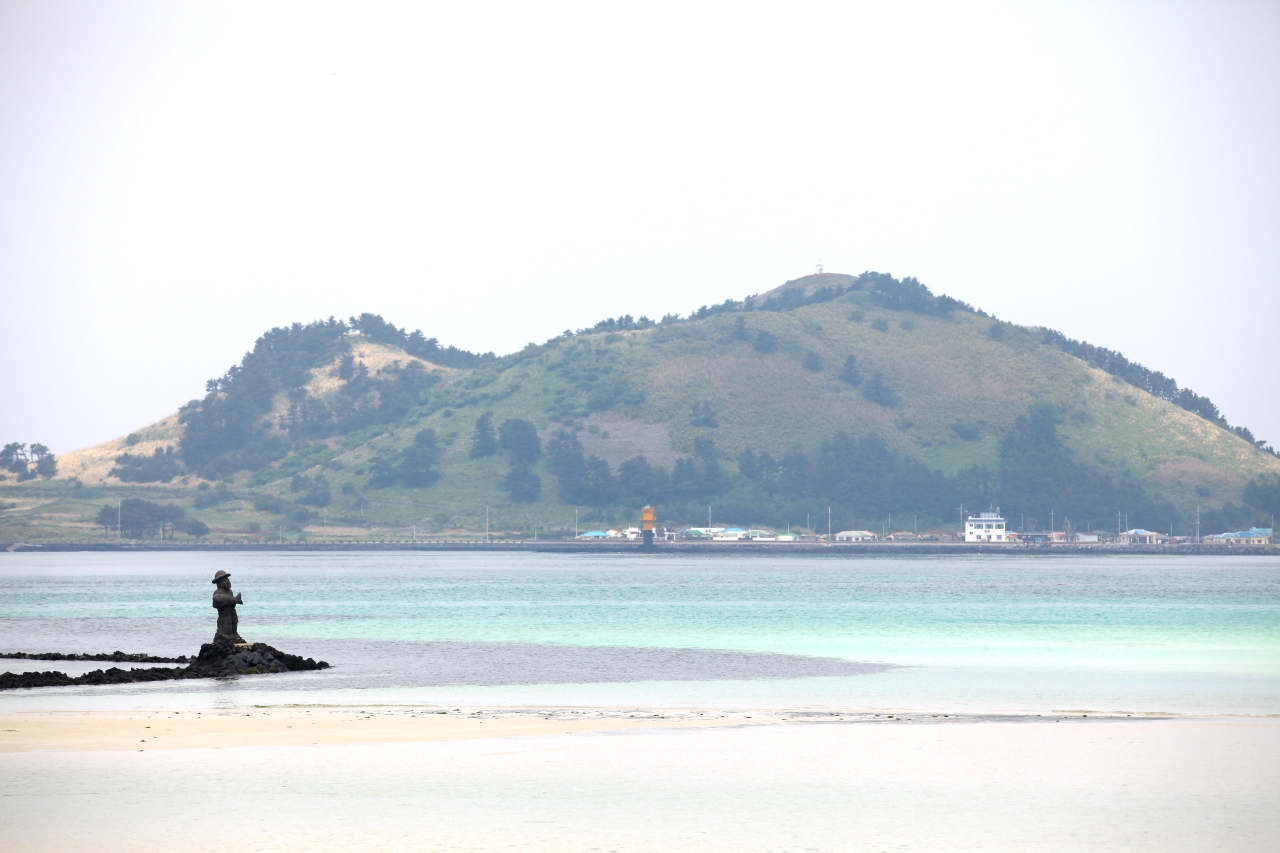
One line: Next to Hyeopjae, same white sand and Biyangdo backdrop, different low-tide sandbar.
| Best for | Quieter Hyeopjae-look, low-tide wading, families |
| Swim style | Shallow and wade-friendly at low tide; changes fast |
| When | Check the tide table; low tide reveals the sandbar and channel |
| Access | Hallim-eup, immediately south of Hyeopjae (walk or short drive) |
| Nearby | Hyeopjae Beach, Hallim Park |
| Watch out | Peak season still fills up; high-tide photos look much like Hyeopjae |
At low tide a wide sandbar and shallow turquoise channel appear: a look Hyeopjae does not really offer. At high tide the two neighbors can look almost the same.
5. Jungmun Saekdal Beach
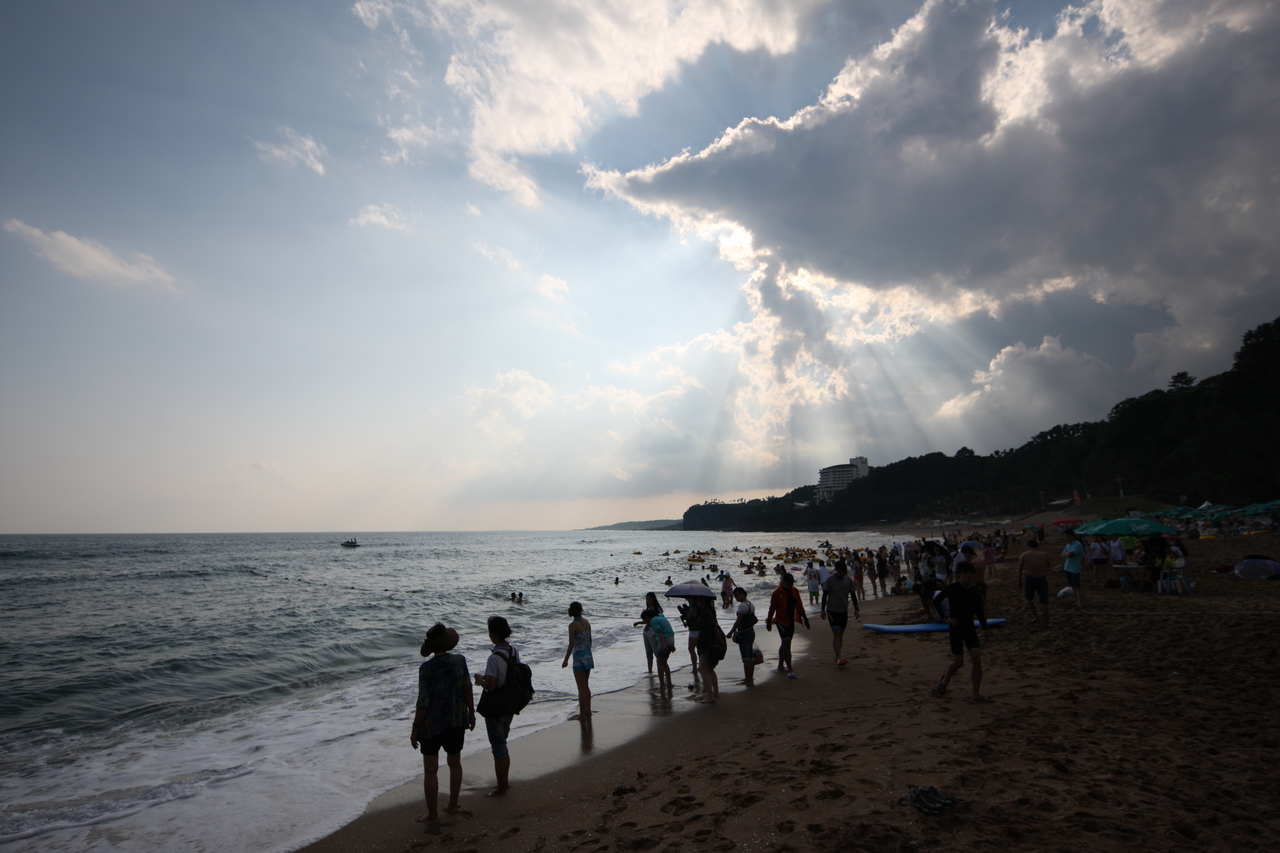
One line: A compact beach under high cliffs near Jungmun resorts, known for stronger surf.
| Best for | Surfers, cliff scenery, Jungmun stays |
| Swim style | Stronger waves; poor pick for calm toddler play |
| When | Check surf or marine forecast if waves are the goal |
| Access | Jungmun Tourism Complex near Seogwipo; slope and stairs down from the resort area |
| Nearby | Jungmun resorts and attractions, Cheonjeyeon Falls, Jusangjeolli cliffs |
| Watch out | Surf and elevation change from the resort area |
Jungmun Saekdal feels enclosed by cliffs in a way the open west and east coasts do not. Respect flags, lifeguard instructions, and any posted surf warnings.
Comparing the five
| Beach | Coast | Swim style | Sunset? | Family-friendly | Nearby stop |
|---|---|---|---|---|---|
| Hyeopjae | West | Calm, shallow | Yes (west-facing) | Yes | Hallim Park |
| Hamdeok | North | Calm, shallow | Partial | Yes (most so) | Seowubong, Olle 19 |
| Woljeongri | East | Doable, secondary focus | Yes | Moderate | Gimnyeong |
| Geumneung | West | Calm, wade-friendly (tide-dependent) | Yes (west-facing) | Yes | Hyeopjae |
| Jungmun Saekdal | South | Stronger surf | Partial | Lower (surf) | Jungmun resorts |
Getting around the 5 beaches
These beaches sit on three coastlines. Bus stops exist near most of them, but frequency and travel time make a rental car the practical choice for more than one or two beaches. Hamdeok is the exception that is genuinely easy by bus from Jeju City.
For documents, insurance, and Jeju driving detail, use the Jeju car rental guide. Never drink and drive between beach stops.
Seasons and official swimming season
Jeju beaches usually open an official swimming season in summer with lifeguard coverage in that window. Exact opening dates, closing dates, and lifeguard hours change year to year. Confirm the current official schedule before you go.
Swimming outside the official season is not recommended: lifeguards are often absent and conditions can be unpredictable. Spring and autumn still work well for photos and walking when it is too cool (or unofficial) to swim.
Swimming safety
A few rules apply across all five:
- "Shallow" does not mean "safe." Sandbanks, channels, and tides can create currents and sudden depth changes.
- We do not label any beach as always safe or always dangerous. Conditions change with weather, tide, and season.
- Follow lifeguard flags and instructions when lifeguards are present.
- Check typhoon, high-wind, high-wave, or jellyfish advisories before swimming.
- Watch kids near tidal pools and channels, especially at Hamdeok and Geumneung.
What to bring
| Item | Why |
|---|---|
| Reef-safe sunscreen | Strong sun, especially midday |
| Water shoes | Volcanic rock is sharp in places |
| Cash | Some parking and rentals may not take cards |
| Beach towel/mat | Shade is limited at several beaches |
| Reusable water bottle | Refill options can be limited beachside |
Etiquette and the environment
- Do not take shells, rocks, or sand home. Removing natural material is discouraged and can be restricted.
- Pack out trash, including cigarette butts.
- Check current drone rules before flying. Restrictions apply in parts of Jeju and change.
- These are working coastal communities. Respect roped-off fishing or haenyeo areas.
Common mistakes
- Treating Hyeopjae and Geumneung as the same beach.
- Trying to visit all five in one day.
- Expecting turquoise water on any random day.
- Treating this list as an official ranking.
- Assuming shallow water means safe water.
- Swimming outside the official season without checking.
- Ignoring flags or lifeguard instructions.
- Bringing small kids to Jungmun Saekdal for calm water.
- Expecting every Woljeongri café to have an ocean view.
- Skipping the tide table before Geumneung.
- Skipping water shoes on sharp volcanic rock.
- Assuming a car is optional for a multi-beach day (Hamdeok excepted).
- Taking shells or rocks as souvenirs.
- Flying a drone without checking rules.
- Trusting only heavily edited photos.
FAQ
What's the most beautiful beach in Jeju?
There is no universal answer. This guide ranks Hyeopjae first for the classic black-rock, white-sand, Biyangdo view, but the best beach depends on what you want from the day.
What's the difference between Hyeopjae and Geumneung?
Same coast and island view. Geumneung's low-tide sandbar and shallow channel are the difference. At high tide they look similar; at low tide Geumneung opens a wide sandbar Hyeopjae does not really offer.
Is this an official ranking of Jeju's best beaches?
No. It is TripKopia's editorial ranking for first-time visitors, not a government or visitor-count ranking.
Which Jeju beach is easiest to reach without a car?
Hamdeok. It is often about half an hour by bus from Jeju Intercity Bus Terminal, but confirm the current route and schedule. The other four are more realistic with a rental car.
Is Jeju's seawater really turquoise?
It can be on a clear day with the right light and tide. Overcast weather, high tide, or wind-churned water can make the same beach look far less vivid.
Which beach is best for families with young kids?
Hamdeok and Geumneung offer calmer, shallower water that suits many families. Shallow still needs normal supervision.
Which beach is best for surfing?
Jungmun Saekdal, for more consistent waves than the calmer west-coast beaches. It is a poor pick for calm toddler water play.
When do Jeju's beaches officially open for swimming?
Typically in summer, but exact dates and lifeguard hours change year to year. Check the current official schedule.
Can I swim outside the official beach season?
We do not recommend it. Lifeguard coverage is usually absent, and conditions can be unpredictable.
How crowded is Hamdeok Beach?
Very, especially in peak summer. A reported 703,064 visitors in the 2025 season made it more than half of all Jeju beach visits that year.
What should I bring to a Jeju beach?
Reef-safe sunscreen, water shoes, a beach towel or mat, some cash, and a reusable water bottle.
The bottom line
Pick a beach by what you want to do, then pick a coastal cluster so you are not spending the day on the road. Confirm swimming-season status, tide where it matters (especially Geumneung), and current bus or car logistics before you go.
Sources
- Visit Jeju (official Jeju tourism)Official tourism site
- Visit KoreaOfficial tourism site
- Korea Tourism Organization English TourAPIOfficial API
- Jeju Sori, 2025 Jeju beach season visitor figures (Hamdeok Beach most visited)news_report
Information is compiled from official sources. Details such as prices, hours, and schedules can change. Confirm time-sensitive facts before you travel.
Last verified on
Related guides
Jeju Car Rental Guide for Foreigners: IDP, Insurance, Driving Rules, Parking, and Road Trip Tips
A rental car is the practical way to see Jeju, where buses are slow and much of the coast is spread out, but a license alone won't get you the keys. This is a preparation guide, not legal advice, focused on what's different about Jeju: you pick the car up by shuttle from outside the terminal, over half the fleet is now electric, there are no tolls, and Udo may restrict rental cars. The documents, insurance exclusions, driving and parking realities, and a route that doesn't cram the whole island into one day. Prices, fees, insurance, and rules vary by company and change, so always confirm current official info and your rental contract before you drive.
South Korea 10-Day Itinerary: Seoul, Gyeongju, Busan, and Jeju
Ten days in Korea buys one thing a week does not: Jeju. It costs a domestic flight, a fourth hotel, and the buffer day the 7-day route keeps, and four of the ten days carry a long-distance move. This route covers Seoul, Gyeongju, Busan, and Jeju, and is built around the two things that actually go wrong: the Singyeongju station transfer and the Gimpo-versus-Incheon departure. Times, fares, and schedules change, so confirm official details before you book.