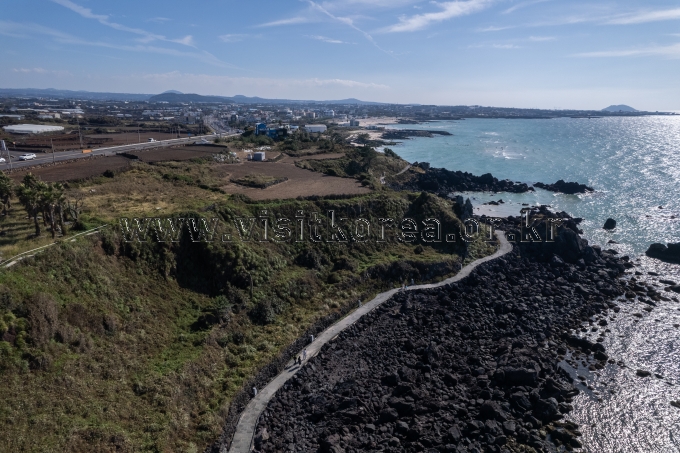
A rental car is the most practical way to see Jeju. Buses reach the main sights but are slow and infrequent, and the beaches, cafés, and viewpoints you came for are scattered around a coastline that takes hours to loop.
But a driver's license by itself won't get you the keys: Jeju rentals hinge on an International Driving Permit, and there are a few island-specific twists that surprise first-timers: you don't pick the car up inside the terminal, more than half the fleet is now electric, and one of the most-photographed spots, Udo, may not let your rental car on at all.
This is a preparation guide, not legal advice. Prices, insurance, fees, and rules vary by company and change, so treat everything here as a starting point and confirm the current official information and your own rental contract before you drive.
For the paperwork basics that apply everywhere in Korea (which IDP convention counts, how insurance is structured, the strict drink-driving law) see the nationwide renting a car in Korea guide. This page stays focused on what's different about Jeju.
Quick answer
| Question | Short answer |
|---|---|
| Is a car worth it in Jeju? | Usually yes: the island is spread out and transit is slow |
| Can I collect it at the terminal? | No: you take a shuttle to the rental office from outside the terminal |
| What documents? | Passport, physical IDP, your original license, a credit card in your name |
| Will I get an EV? | Quite possibly: over half of Jeju's rental fleet is electric now |
| Are there tolls? | No: Jeju has no toll roads, so no Hi-Pass needed |
| Can I drive to Udo? | Maybe not: check current rules; many park at Seongsan and use island transport; see the Udo Island guide |
| Biggest cost surprise? | Insurance exclusions and loss-of-use (NOC) fees after any damage |
Is renting a car in Jeju worth it?
For most itineraries beyond Jeju City, yes, but not for everyone. The honest split:
| A car helps if you | A car may be a burden if you |
|---|---|
| Want the west and east coasts, not just Jeju City | Are staying only in Jeju City near the bus lines |
| Are traveling as a family with luggage and kids | Are visiting for a short stopover of a day or two |
| Value flexible timing and spontaneous stops | Feel nervous driving in an unfamiliar country |
| Are comfortable driving on the right | Plan alcohol-focused evenings (soju, makgeolli, craft beer) |
| Have 2+ days to loop the island | Don't meet a company's age/experience minimums |
If you land on the right-hand column, skip to when NOT to rent for alternatives. Jeju is very doable without a car if you plan around it.
Documents you need
You bring the same core paperwork as anywhere in Korea, so this is the short version, the nationwide guide explains the IDP convention trap (1949 Geneva vs 1968 Vienna) and which countries' permits are refused. In brief:
| Document | Notes |
|---|---|
| Passport | Standard ID, and the name must match your other documents |
| Physical IDP | The paper permit, issued in your home country before you fly: you can't get one in Korea |
| Your original home license | Required alongside the IDP; the IDP does not replace it |
| Credit card in the driver's name | For the deposit; a card in someone else's name is commonly refused |
| Reservation confirmation | Booking details, ideally on your phone and printed |
A few Jeju-relevant cautions on top of the nationwide basics:
- A digital IDP, a translation, or an online "international driving license" product may not be accepted. Bring the real physical permit from an authorized issuer in your country.
- IDPs issued in China and Indonesia are commonly not recognized by Korean rental companies, verify your situation with your automobile association or the company before booking.
- Even with a valid IDP, a rental company can still refuse you under its own internal policy. "I have an IDP, so I'm guaranteed a car" is not how it works. Confirm with your specific company.
- Long-term residents may need to convert to a Korean license instead; that's a separate process.
- A second driver has to clear the same bar and be named on the contract. Someone driving who is not on it will usually void the cover, which is the expensive version of a small convenience.
Booking window. For July and August and for holiday weekends, a month ahead is not cautious, it is normal: cars sell out and the remaining ones get expensive. Compare the all-in total rather than the headline daily rate, because the extras are where the price moves.
Age and driving-experience rules
Being legally allowed to drive is not the same as meeting a rental company's conditions, company policy is often stricter than the law.
| Requirement | Reality |
|---|---|
| Minimum age | Often 21 or older, but commonly required, not universal: verify |
| Driving experience | Frequently 1+ year since license issue: verify |
| Vans, premium cars, EVs | May carry higher age/experience minimums |
| Additional drivers | Must meet the same conditions and be registered on the contract |
That last point matters: an accident while an unregistered driver is behind the wheel typically means no insurance coverage. Register everyone who might drive.
Picking up your car at Jeju Airport
This is the first Jeju-specific surprise: you do not collect the car inside or right in front of the terminal. After you land:
| Step | What happens |
|---|---|
| 1. Arrivals | Exit the arrivals area and follow signs to the rental-car shuttle stop |
| 2. Shuttle stop | Cross to the rental-car shuttle boarding area near Gate 5 (across from the terminal) |
| 3. Company shuttle | Take your rental company's shuttle to its nearby office |
| 4. Office | Complete the paperwork, buy/confirm insurance, and inspect and collect the car |
Because of that shuttle hop, leave time buffers on both ends: after landing before you can drive away, and before your departure flight after you return the car and shuttle back. If you arrive late at night, confirm your rental office's operating hours in advance. Not every desk runs 24 hours, and a late flight can land after the shuttle stops.
Don't assume you'll "just grab the car at the airport" the moment you walk out.
Insurance: read the contract, not the product name
Insurance is where the real money and risk sit. The nationwide guide covers how collision waivers, deductibles, and liability fit together; here are the points that most often catch visitors in Jeju:
| Trap | What to check |
|---|---|
| Basic cover isn't total | A base policy may not cover all self-damage: read what's included |
| CDW is not zero | A collision damage waiver reduces your exposure; a deductible/excess and limits remain |
| "Full/super" still excludes | Tires, wheels, glass, undercarriage, interior, lost keys, towing, single-vehicle and at-fault accidents are commonly not covered |
| NOC / loss-of-use fee | A separate loss-of-use charge for the days the car is being repaired may be billed on top of repair costs: confirm whether it's covered |
| Home card insurance | Don't assume a foreign credit card's rental coverage applies in Korea: Korean insurers may not accept it; check with your card issuer first |
The rule of thumb: "full coverage" does not mean everything is covered. Ask staff to walk you through the exclusions and the deductible, and read the contract rather than trusting a reassuring product name.
Inspect the car before you drive off
Do this every time, before leaving the office lot. Take photos and a short video and flag any existing damage in writing.
| Photograph / check | Why |
|---|---|
| Front, rear, both sides | Documents pre-existing dents and scratches |
| Bumpers, wheels, tires | Common damage-claim areas |
| Glass, mirrors, roof | Often excluded from cover: prove prior condition |
| Interior and dashboard | Existing marks and warning lights |
| Fuel or battery level | You return it as agreed |
| Odometer reading | Confirms the starting point |
| Lights, wipers, A/C, navigation | Basic function check |
| (EV) charging cable | Confirm it's present and working |
Save the rental company's phone number and the return location in your phone before you leave.
Driving in Jeju: easier than Seoul, but not automatic
Jeju driving is often calmer than central Seoul, but "Jeju is easy to drive" is a myth worth resisting. What actually catches visitors:
- Speed and signal cameras are everywhere. Follow the posted signs, not the flow of local traffic, and don't rely on your navigation to warn you in time.
- School zones are enforced hard, slow right down.
- Coastal roads bring strong wind, fog, and sudden rain. Conditions change fast along the shore.
- Narrow village lanes, roundabouts, and steep oreum (volcanic-hill) and mountain roads demand care.
- Parking is congested at popular sights, especially on weekends.
- Scooters, cyclists, and pedestrians share the road; never brake suddenly for a photo.
We don't quote speed limits or fine amounts here, they change and vary by zone. Treat the signs as authority and drive defensively.

Navigation apps
Use Naver Map or Kakao Map (or the car's built-in system). Google Maps driving directions may be less useful in Korea, so don't rely on it as your only navigation.
| Tip | Detail |
|---|---|
| Search in Korean | Place names and phone numbers resolve more reliably |
| Save spots ahead | Accommodation, return office, and charging stations before you drive |
| Screenshot backups | In case of weak signal on rural stretches |
Parking in Jeju
Parking is generally easier than in Seoul, but it's not automatically free or simple.
- Popular attractions get congested on weekends: arrive early.
- Confirm parking at your accommodation before booking.
- Don't stop or park on coastal roads, narrow village lanes, crosswalks, bus stops, or private land: these are enforced, and fines can be billed later through the rental company.
- Use paid lots where provided.
- Signs are usually in Korean: a translation app helps.
- Photograph where you parked, especially in large lots.
Renting an EV in Jeju
Here's the big one: more than half of Jeju's rental fleet is now electric (models like the Ioniq and EV6), so there's a real chance you'll be offered, or assigned, an EV. That can be great or stressful depending on who you are.
| An EV suits you if you | An EV may frustrate you if you |
|---|---|
| Understand charging and plan around it | Have never driven an EV before |
| Have a charger at your accommodation | Have a tight, back-to-back schedule |
| Keep a flexible daily schedule | Are staying somewhere remote with few chargers |
| Are visiting in a milder season | Are visiting in winter, when range drops |
If you go electric, confirm: the charging cable, the card or app you'll need to pay, how charging is billed, the battery level required at return, and where chargers are along your route and near your accommodation. An EV is not automatically better: if you'd rather not deal with charging, ask specifically for a gasoline or hybrid car when you book.
There are no toll roads on Jeju, so you won't need a Hi-Pass device: one less thing to set up than on the mainland.
A road trip that doesn't cram the island into one day
Don't try to see north, south, east, and west in a single day. Jeju is bigger than it looks on a map. Two sensible loops, to adapt around your flight times and the weather:
2 nights / 3 days
- Day 1: Airport → west coast (Aewol cafés, Hyeopjae Beach)
- Day 2: South: Seogwipo waterfalls, Jungmun, coastal cliffs
- Day 3: East: Seongsan, Woljeongri, Hamdeok, simplified to match your departure time, then return
3 nights / 4 days
- Day 1: Airport + Jeju City / Aewol
- Day 2: West: Hyeopjae, Hallim, Osulloc
- Day 3: South: Seogwipo, waterfalls, Jungmun
- Day 4: East: Seongsan, Seopjikoji, Woljeongri, then return
Rainy-day plan: lean on museums, cafés, and markets, and avoid long coastal drives in strong wind or heavy rain. Save Hallasan for a dedicated day. It has parking limits, reservations for some trails, and its own weather, so don't tuck it casually into a driving day.
For a full day-by-day plan, a dedicated Jeju itinerary guide is on our roadmap.
When NOT to rent: and what to do instead
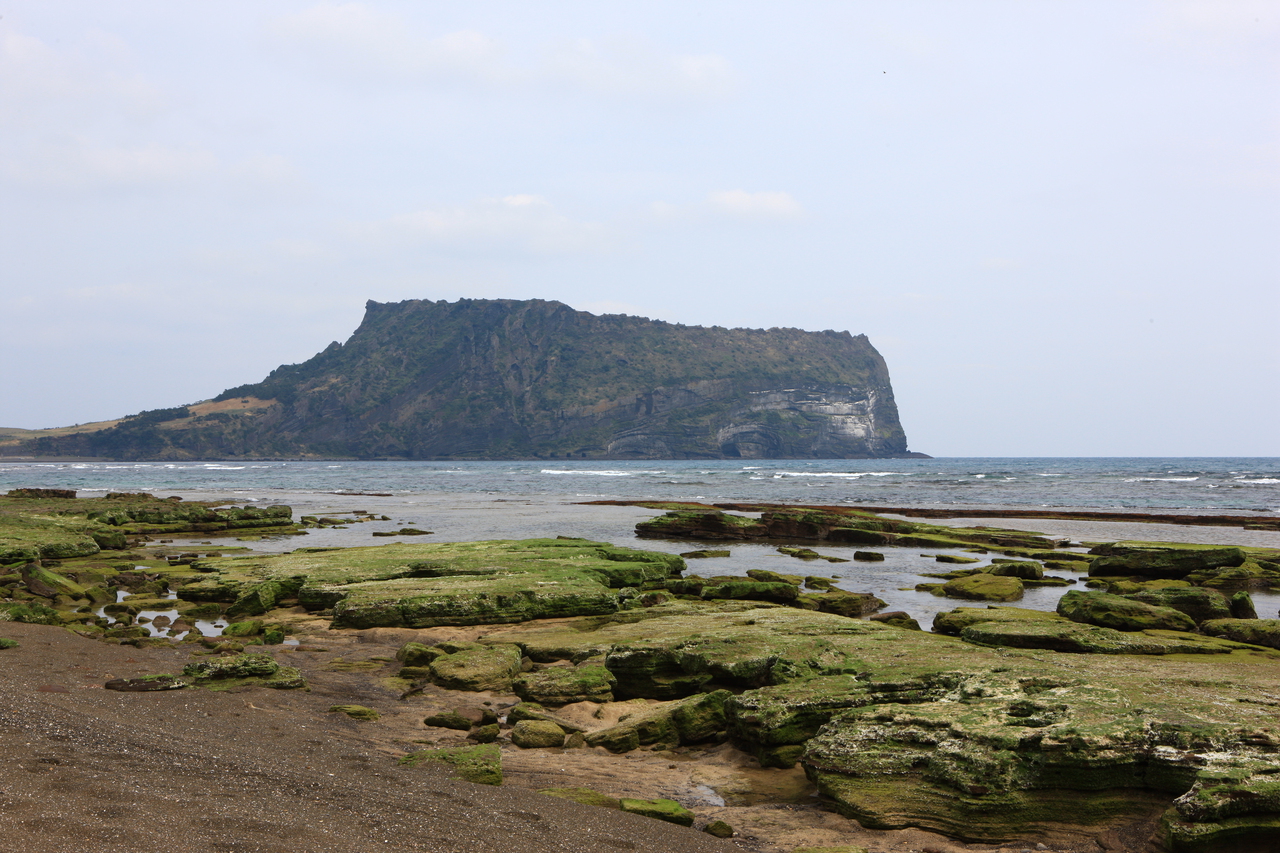
Renting isn't the right call for every visitor. Consider not renting if you have no IDP, feel uneasy driving abroad, are staying only in Jeju City, are on a short stopover, plan alcohol-focused meals, don't meet age/experience minimums, can't follow the contract, or face a bad-weather forecast. The good news: Jeju has real alternatives.
| Alternative | Best for | Trade-off |
|---|---|---|
| Local buses | Budget travelers, Jeju City base | Cheap but slow and infrequent |
| Taxis | Short, flexible hops | Convenient, but costs add up over a day |
| Private driver / charter | Families wanting comfort | Relaxed, but the priciest option |
| Day tours | First-timers who want it simple | Easy, but less freedom over timing |
| Hotel shuttles | Resort-based stays | Handy, but limited to set routes |
If you have an accident or breakdown
Stay calm and work through it in order. This is general guidance, not legal advice.
- Get to safety: pull over, turn on hazard lights, and set out the warning triangle.
- If anyone is hurt, call 119 (ambulance / fire).
- Call your rental company immediately: they guide the next steps.
- Don't leave the scene.
- Document everything: photos and video of the damage, the other vehicle, license plates, the road, signs, and the location.
- Ask whether a police report is needed: for traffic incidents you can reach the police on 112.
- Don't sign documents you don't understand, and don't agree to a private cash settlement on the spot.
- Keep every receipt and document, and check your contract and insurance.
- If language is a barrier, the 1330 Korea Travel Hotline can help with interpretation (confirm current service).
Don't assume "the insurance will handle everything". That's exactly why the exclusions above matter.
Food, alcohol, and driving
Never drink and drive. This is absolute. Jeju's evenings tempt you with local soju, makgeolli, and craft beer; if there's alcohol at dinner, return the car first or take a taxi.
Drink-driving means no insurance coverage and is treated as a serious crime (the exact limit and penalties are covered in the nationwide guide). Fatigue counts too. Don't drive worn out after a long hike or a full day at the wheel.
Food and dietary needs on the road
A car helps you reach restaurants that buses don't, but "having a car makes halal travel easy" is not true. Halal, vegetarian, and allergy needs still require direct checking: broths, pork, cooking wine, and cross-contamination are common issues, and options thin out in rural areas. Plan meals ahead on the coast, carry snacks, and bring a translation card; the Muslim-friendly Jeju guide explains how to ask.
Sources
- Visit Jeju (official Jeju tourism)Official tourism site
- Korea Road Traffic Authority (KoROAD)Official government site
- Visit KoreaOfficial tourism site
- Korea Tourism Organization (VisitKorea Practical Info)Official tourism site
Information is compiled from official sources. Details such as prices, hours, and schedules can change. Confirm time-sensitive facts before you travel.
Last verified on
Related guides
Renting a Car in Korea Guide for Foreigners: IDP, Insurance, Traffic Rules, and Driving Tips
Renting a car in Korea can be the best way to see Jeju, Gangwon, and the countryside, but it's not the move for a first trip to Seoul, where transit is easier. This is a preparation guide, not legal advice: the documents you need (and the International Driving Permit trap that gets German, French, and Thai visitors turned away at the counter), how car insurance really works, Korea's very strict 0.03% drink-driving limit, the traffic rules that matter most, and what to do after an accident. Prices, fees, fines, and coverage vary by company and change, so always confirm current official info and your rental contract.
Muslim-Friendly Jeju Guide: Food Planning, Prayer Tips, and Family Route
Jeju is a beautiful nature-and-family island, but it has fewer Muslim-friendly options than Seoul, so the trick is to plan each day rather than hope to find halal food anywhere. Black pork is on almost every menu, seafood is usually easier but still needs checking, prayer spaces are few enough to map in advance, and a rental car makes a family day far more workable. Restaurants, prayer facilities, and hours change, so verify current details with official sources (VisitJeju, KTO) before you go, and never assume a place is halal without checking.