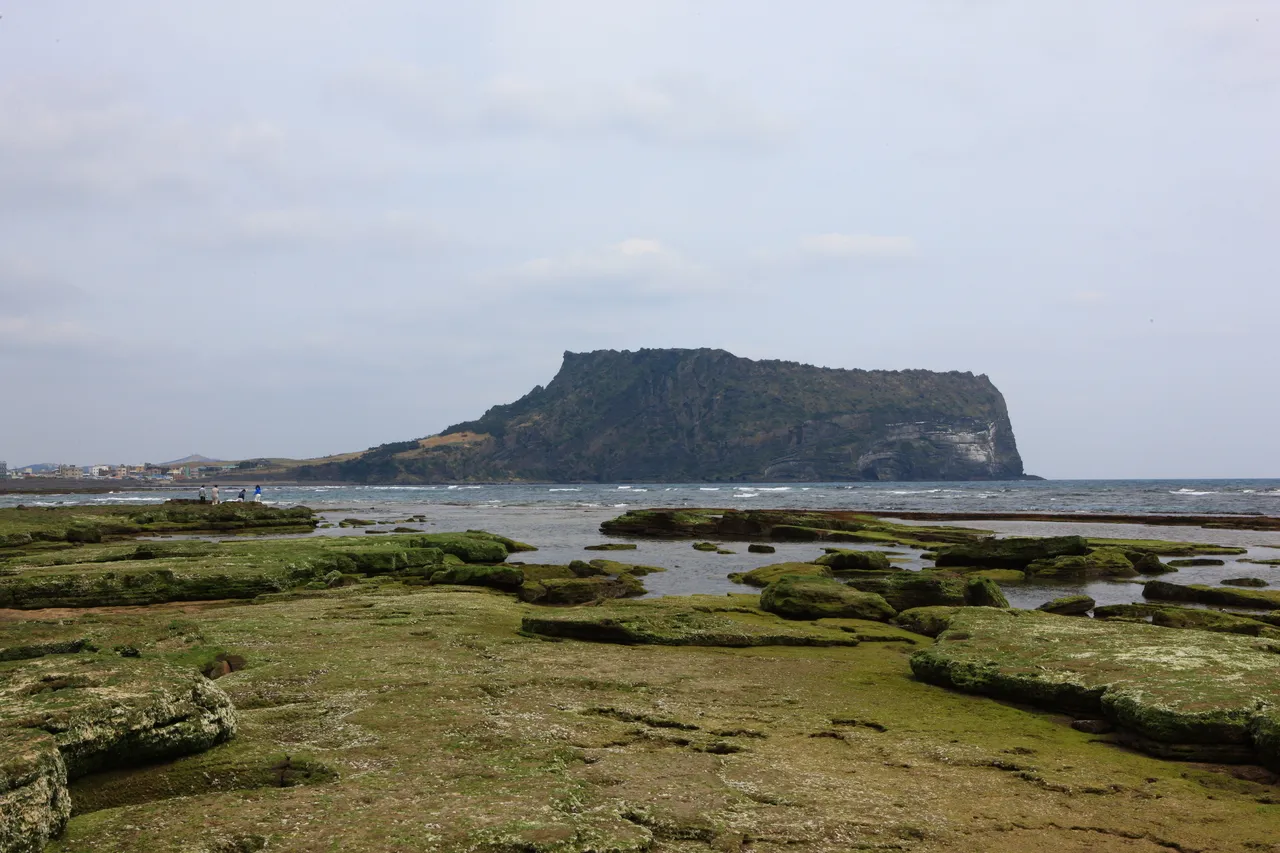
Jeju is Korea's volcanic island off the south coast, and it asks for a different pace than the mainland. Where Seoul is dense and fast, Jeju is coastal roads, seafood shacks, a big dormant volcano, and long walking trails, a place to slow down for a few days.
Plan two to four days, fly in, and expect to drive. It pairs naturally with the 7-day Korea route as an add-on.
At a glance
| Decision | Practical default for most visitors |
|---|---|
| How long | 2 to 4 days |
| How you arrive | Domestic flight (usually Gimpo to Jeju) |
| How you get around | Rental car with an International Driving Permit (IDP) |
| Where to base | Jeju City for airport ease; Seogwipo for south-coast pace |
| Signature sights | Seongsan Ilchulbong, Hallasan or Olle, one coast loop |
| Food to prioritize | Black pork, local seafood, hallabong in season |
Which Jeju guide do you need?
| Your question | Open this guide |
|---|---|
| Island overview (this page) | Stay here for bases, highlights, and first-time order |
| Car rental and IDP | Jeju car rental |
| Beach ranking and swimming notes | Jeju beaches |
| Where to sleep | Where to stay in Jeju |
| Muslim-friendly planning | Muslim-friendly Jeju |
| Late autumn weather, Hallasan color, and what to wear | Jeju in November |
| Winter weather, Hallasan snow, and what to wear | Jeju in December |
| Full Korea itinerary that can add Jeju | 7-day Korea itinerary |
Why visit Jeju
Jeju is the country's nature-and-food escape: a UNESCO-listed volcanic landscape, black-sand and white-sand beaches, lava tubes, and the slow rhythm of an island. People come to drive the coast, eat extremely fresh seafood and Jeju black pork, hike or walk, and do less than they would in a city.
If you want beaches and calm over museums and nightlife, Jeju is the trip.
Getting there and around
- Getting there is almost always by air. Domestic flights connect Jeju with Seoul (Gimpo) and other mainland cities; it is one of the busiest air routes in the world, so flights are frequent. Schedules and fares change, so book ahead and check current times.
- Renting a car is, in practice, the easiest way to get around. Jeju's public transport is improving but still limited for sightseeing, and the best of the island is spread along the coast and interior. To drive, foreign visitors need an International Driving Permit (IDP) obtained in your home country before you travel, carried with your home license and passport.
- Buses do cover the island and are a budget option, but they take more planning and time than a car. Use a Korean map app for routes, and a T-money card works on Jeju buses too.
Where you base yourself depends heavily on this car-or-no-car choice. See where to stay in Jeju for choosing between Jeju City, Seogwipo, and the coastal towns.

What to eat in Jeju
Jeju's food is its own thing, built on what the island and the sea around it produce.
- Heuk-dwaeji (black pork): Jeju's prized native pig, usually grilled like Korean barbecue; richer and more flavorful than standard pork. The Donsadon guide and the Sukseongdo guide each cover one Jeju City restaurant for it.
- Galchi (cutlassfish): a long silver fish served grilled or in a spicy stew; a local staple.
- Gogi-guksu: pork-broth noodles, a simple, filling Jeju comfort dish. The Jamae Guksu guide covers one Jeju City restaurant for it.
- Gosari yukgaejang: a bracken and pork soup from Jeju City. The Ujin Haejangguk guide covers one restaurant for it.
- Hallabong: a sweet, easy-peel citrus grown on Jeju, named for the mountain; in season it is everywhere.
For the wider picture of Korean dishes, see the what-to-eat guide. Pointing at what you want works fine at most counters.
Useful phrases for a Jeju food counter
Short, polite phrases for a seafood shack or market stall.
Point at the dish or the tank as you say it.
Polite이거 하나 주세요
i-geo ha-na ju-se-yo
One of these, please.
Korean audio isn't available on this device or browser. Use the romanization above to say it.
Ask the price before you order, especially for seafood.
Polite얼마예요?
eol-ma-ye-yo?
How much is it?
Korean audio isn't available on this device or browser. Use the romanization above to say it.
Seongsan Ilchulbong (Sunrise Peak)
Seongsan Ilchulbong is a tuff cone on Jeju's east coast. It formed when an eruption met shallow sea water, and it is one of the components of the UNESCO-listed Jeju Volcanic Island and Lava Tubes property, which also includes the Hallasan Natural Reserve and the Geomunoreum lava tube system.
The summit trail is paid and steep, and the official page gives about 30 to 40 minutes up. A free coastal area below the cone is a lighter option if you only want the shape of the cone and the sea.
Hours and fees change by season, so confirm them before you go. Tickets, hours, the sunrise question and how to pair the cone with Udo are in the Seongsan Ilchulbong guide.
Manjanggul Lava Tube
Manjanggul is a lava tube in the northeast of the island and part of the Geomunoreum lava tube system in Jeju's UNESCO-listed property. Visit Jeju gives the full tube as about 7.4 kilometers, but only about 1 kilometer of it is open to visitors.
The cave was closed after a rockfall in December 2023 and reopened to visitors on May 30, 2026, according to the provincial World Heritage Headquarters announcement as reported by Newsis. Visit Jeju lists a monthly closed day and ticket cut-off, but those details can change, so confirm hours, closed days and fees there before you go.
It sits on the northeast side, so it can be added to an east-coast day. This hub does not cover the visit in detail.
Jeju's east coast versus west coast
| Coast | Character | Best if you want |
|---|---|---|
| East | Seongsan, lava tube, haenyeo culture, dramatic cone views | Sunrise Peak and a full east-day loop |
| West | Gentler beaches, sunset spots, wider coastal drive options | Beach time and a slower coastal day |
One full day per coast is realistic. Trying both coasts plus Hallasan in a single day usually fails.
The two coasts have different characters, and most visitors gravitate toward one or the other depending on what they want.
East coast (Seongsan, Seopjikoji, Udo Island, Hamdeok Beach): the UNESCO-listed Seongsan cone, some of the most photographed viewpoints, and a slightly more touristic feel. Hamdeok Beach on the northeast has clear water and is popular for snorkeling. The road from Jeju City east through Seongsan is one of the most scenic drives on the island.
Seopjikoji is a coastal headland south of the cone that pairs with it on a main-island day. See the Seopjikoji guide for the walk and access. To choose between Seongsan with Seopjikoji and a day that includes Udo, see the East Jeju one-day itinerary.
Further up the northeast coast, Woljeongri is a beach and cafe village with its own swimming-season and parking caveats. See the Woljeongri Beach guide. Gimnyeong Beach, a few kilometers west, has its own Gimnyeong Beach guide.
West coast (Hallim, Hyeopjae Beach, Aewol): quieter, more open coastline, Hyeopjae Beach with its turquoise-toned water and white sand, and the Hallim Park lava tube caves. The west coast feels less crowded and is where a lot of the slow-travel cafes are concentrated.
Most visitors with 3 to 4 days split the time: one day east, one day west, one day for Hallasan or an Olle trail. A car makes switching between coasts straightforward.
Jeju City versus Seogwipo as a base
| Base | Best for | Trade-off |
|---|---|---|
| Jeju City | Airport, wider food options, east-coast day trips | Less south-coast resort feel |
| Seogwipo | Hallasan Seongpanak side, Jungmun, quieter south | ~50 minutes from the airport; fewer food options |
Jeju City (the island's main city and airport) is the more practical base for most visitors: more accommodation options, more restaurants including non-Korean food, and the airport is a 10-minute drive. It is better placed for the east coast.
Seogwipo on the south coast is quieter, is closer to the Hallasan Seongpanak trailhead, and is the better base for the Jungmun resort area and the south coast. Accommodation is more limited and skewed toward resort-style stays.
For a first visit, Jeju City is the easier base. Seogwipo suits travelers specifically focused on Hallasan hiking or the south coast. Full neighborhood trade-offs: where to stay in Jeju.
Jeju by bus (without a car)
Jeju's intercity bus network covers the major tourist sites but with limited frequency between routes. The 101 and 102 express buses run coastal circuits (east and west). The 780 and 790 buses reach Seogwipo from Jeju City.
The key limits: buses do not run frequently enough for spontaneous sightseeing, and some rural roads have only a few departures per day. Use the Kakao Map or Naver Map app to plan bus routes before committing to a day plan. The bus system is functional and cheap; it just requires more scheduling than a car.
Hiring a scooter or e-bike
For one or two people, a scooter is a practical compromise between bus and car. The coastal roads between Jeju City and Hamdeok Beach and along the west coast are manageable on a scooter in good weather. The mountain roads to Hallasan trailheads are steeper and not ideal. A foreign driving license is required; confirm with the rental operator which licenses are accepted.
Hiking Hallasan
Hallasan is the shield volcano at the island's center and South Korea's highest peak. How you hike it depends on whether you want the summit.
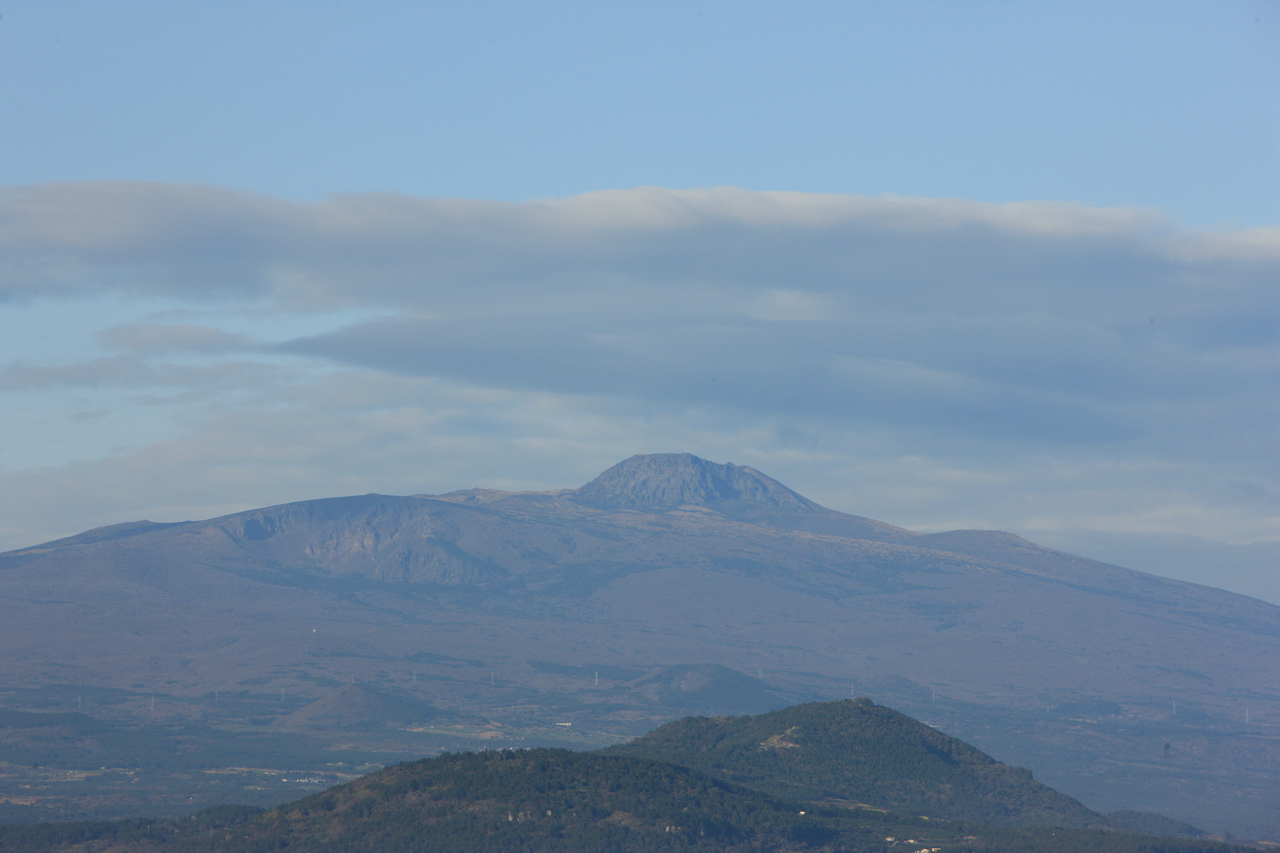
- The summit (Baengnokdam crater) is reached only by the Seongpanak or Gwaneumsa trails, and both require an advance reservation through the official Hallasan National Park reservation system (listed under sources below). Daily numbers are capped, weekend slots go early, and there are seasonal cut-off times for starting and turning back, so reserve and read the current rules before you go. Going without a reservation means being turned away at the gate.
- Scenic, beginner-friendlier routes like Yeongsil and Eorimok do not need a summit reservation, because they do not go all the way to the crater. They are shorter and still spectacular, and a good choice if the summit slots are full or you want an easier day.
Conditions on Hallasan change fast with weather and season; check the official site for trail status, times, and what to carry before you start.
Jeju Olle Trails
The Jeju Olle is a network of numbered walking routes that together circle the island, stitching together coast, villages, farmland, and oreum (small volcanic cones). You do not walk the whole thing: most visitors pick one route, or part of one, for a half-day. For a first visit, choose a shorter coastal section and check the official Jeju Olle information for the current routes and conditions; trail lengths and access can change.
Beaches and coastal scenery
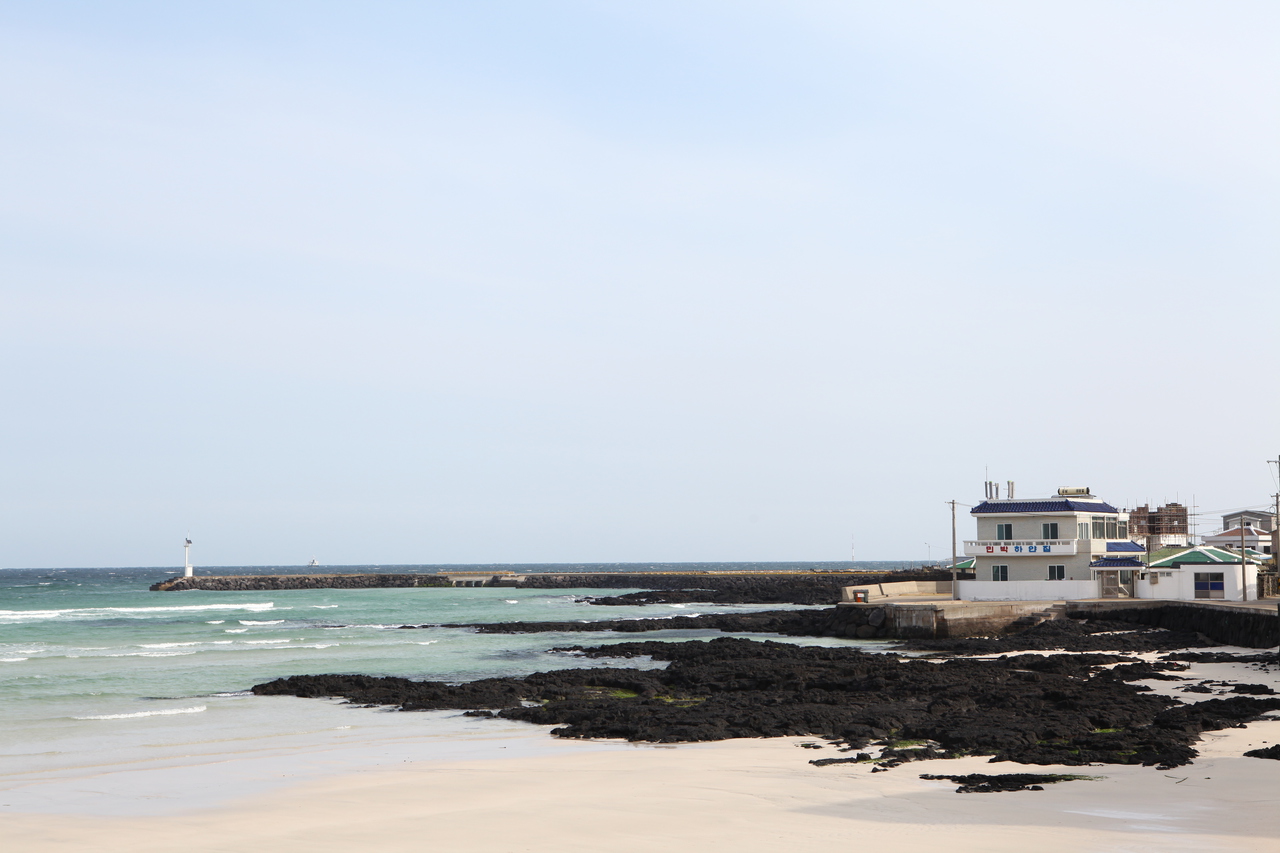
Jeju's coast is the main event: volcanic-rock shorelines, sea-view cafes, and beaches ranging from black sand to bright white. It suits a slow, unstructured day: drive a stretch of coast, stop where it looks good, and linger over coffee with a view. The water is cool outside high summer.
For a ranked beach shortlist and swimming-season notes, use the Jeju beaches guide.
Surfing around Jungmun
Jungmun, on the south coast, is known as Jeju's surfing area, with beach breaks that draw surfers when the swell is up. Conditions, seasons, and lessons vary, so check locally; this guide does not recommend specific operators. Even if you do not surf, the Jungmun coast is a scenic stop.
A suggested first-time route
This is one example, not a fixed plan, adjust to the weather and what you like.
- Day 1: Fly in, pick up the car, drive a stretch of coast, and have a black-pork or seafood dinner near where you are staying.
- Day 2: Hallasan (reserve a summit trail ahead, or do Yeongsil/Eorimok), or a section of the Olle if you would rather walk the coast.
- Day 3: Beaches, sea-view cafes, and a relaxed last day; fit in any food you missed.
Travel tips
- Keep the pace slow. Jeju rewards doing less; do not stack the days like a city trip.
- Check the weather before hikes and coastal plans, the island's weather turns quickly.
- Plan transport in advance. Getting around takes more thought than Seoul's subway; a car removes most of the friction, and a map app handles the rest. See the transportation guide.
Budget overview
Jeju is more expensive than mainland Korea for most things. Rental cars (including IDP and fuel), accommodation, and seafood restaurants all cost more than comparable options in Seoul. Plan for a higher per-day spend than on the mainland.
Rough guidance, based on conditions at the time of last verification: a mid-range rental car costs significantly more per day than in most cities. Jeju black pork restaurants in tourist areas charge a premium over equivalent barbecue on the mainland. Convenience stores, supermarkets, and local guksu (noodle) restaurants are the budget eating options.
The Jeju Free International City passes and various local discount cards are worth checking for admission bundles at major sites. Confirm current offers at visitjeju.com.
When to go
Spring (April to May): yellow canola flowers, mild temperatures, and cherry blossoms in April. The most photogenic season and the most popular with domestic visitors.
Autumn (September to October): clear skies, cooler weather, and the best Hallasan summit views. October is the single best month for visibility on Hallasan.
Summer (July to August): warm coastal weather for beaches, but humid, sometimes typhoon-affected, and at peak domestic demand. Water temperatures are warmest for swimming.
Winter (December to February): Jeju is mild by Korean standards but Hallasan sees snow and some trails close. Off-peak accommodation prices and fewer crowds.
Udo Island: a half-day side trip
Udo (Cow Island) is a small island off the northeastern tip of Jeju, reached by a short ferry ride from the main island. Vehicle entry is restricted, and the rules and exceptions change, so do not plan around taking a rental car across. Most visitors walk or cycle once they land. The island has its own beaches, peanut ice cream, and a quieter pace than mainland Jeju.
Udo works as a half-day addition to a Seongsan Ilchulbong visit: see Ilchulbong in the morning, take the ferry to Udo for lunch and a circuit by bicycle, return to Seongsan for the afternoon. Check the ferry schedule at the Seongsan Port counter or at the official Jeju ferry website; departure times and last-boat times change seasonally. For the ferry, ID check, vehicle rules and a full plan, see the Udo Island guide.
Jeju in spring: what to expect
April to early May is when Jeju's visual peak arrives. Yellow canola (rapeseed) flowers cover the fields and the inland plains in early April, particularly around Gimnyeong and Seongsan. Cherry blossoms arrive slightly earlier than Seoul in most years (late March to early April) because of Jeju's warmer climate.
The spring visual is best from late March to mid-April. By late April, the canola has finished and the cherry blossoms are gone; the countryside turns deep green for May and June. Spring is also Jeju's busiest season for domestic tourism, and accommodation around Seongsan and Seogwipo fills weeks ahead.
Jeju in summer: beaches and typhoons
July and August are the peak beach months and the period when Jeju is most visited. Water temperatures are warmest, and Hamdeok, Hyeopjae, and Jungmun beaches are at their most active. The trade-offs: domestic visitor numbers are at their highest, accommodation prices rise sharply, and typhoons are a possibility from July through September. Typhoon seasons vary year to year; check the KMA (Korea Meteorological Administration) forecast if your travel dates fall in August or September.
Practical notes on driving in Jeju
Foreign visitors need an International Driving Permit (IDP) to rent and drive a car on Jeju. The IDP must be obtained in your home country before departure; it cannot be issued in Korea. Carry both the IDP and your original home driving license; rental counters check both.
Driving in Jeju is straightforward: roads are well-marked, traffic moves at a moderate pace, and the island is compact enough that GPS navigation eliminates most route uncertainty. Right-hand traffic (same side as the US, UK, and Australia; opposite of Japan and much of Europe).
Gas stations are plentiful on the main coastal road (Ilju-ro). Electric vehicles are widely available for rental and the charging infrastructure on Jeju is good relative to the mainland.
Haenyeo: Jeju's female divers
The haenyeo (해녀), Jeju's traditional female free-divers, are a UNESCO Intangible Cultural Heritage and one of the island's most distinctive cultural identities. They dive for abalone, sea urchin, and conch without oxygen tanks, often into their sixties and seventies.
The coast around Seongsan is a working haenyeo area. Treat it as a local livelihood, not a show, and confirm any demonstration schedule on site, because I found no current official one. Much of their work happens in the water at the same coastal spots where you might be walking. The seafood sold from roadside shacks near the east coast is often sourced directly from haenyeo that morning.
Practical tips for first-time Jeju visitors
A few things that catch first-time visitors off guard:
The IDP is not optional. Foreign visitors cannot rent a car with a domestic driving license and a credit card the way you might in Europe or North America. You need the International Driving Permit from your home country's automobile association, carried alongside your home license and passport. Rental counters in Korea check all three. There is no workaround. Full process notes are in the Jeju car rental guide.
Book ferry and flight seats early. Gimpo to Jeju and Incheon to Jeju flights are on the busiest domestic route in the world by passenger volume. Jeju Air, Air Busan, Jin Air, and T'way compete on price; buy at least a week ahead for lower fares, and further ahead for peak spring and autumn weekends.
Typhoon contingency. If visiting in August or September, check weather 3 to 5 days before your trip. Typhoons can cancel flights and close Hallasan trails. Travel insurance that covers cancellation due to weather events is worth the cost for a Jeju trip in this window.
Mobile data is essential more than on the mainland. Jeju's roads are not dense enough for casual navigation; you need a map app on live data to find the turn to a coastal cafe or a trailhead parking lot. Confirm your eSIM or SIM plan covers Korea before landing.
Water at Hallasan trailheads is available from trail entry water fountains. On hot days, carry at least a liter because the fountains are only at the trailhead, not halfway up.
Frequently asked questions
Is Jeju Island worth visiting?
Yes. It is a genuine contrast to mainland Korea: a volcanic island with a UNESCO-listed landscape, black-sand and white-sand beaches, lava tubes, and the big dormant volcano Hallasan. Best for travelers who want nature, coastal drives, and fresh seafood over museums and city pace.
Do I need a car in Jeju?
Strongly recommended for most visitors. Public buses cover the main routes but with limited frequency and long waits. A rental car gives you flexibility for the coast road, mountain trailheads, and scattered seafood shacks that do not appear on bus routes.
Scooters are an alternative for one or two people; taxis work if you plan ahead.
How do I get to Jeju Island?
Fly from Seoul Gimpo Airport (about 1 hour) or Incheon Airport (about 1 hour 10 minutes). Flights are frequent and domestic fares are reasonable when booked in advance. A passenger ferry from Mokpo or Yeosu also runs, but takes several hours and is less commonly used by international visitors.
How many days do I need for Jeju?
Two to four days is the typical visit. Two covers the main highlights at a rushed pace. Three allows the east coast, the west coast, and Hallasan or an Olle trail at a relaxed pace; four adds depth to any of those.
More than four days is for repeat visitors or hikers doing multiple trails.
What is the best time of year to visit Jeju?
Spring (April-May) for cherry blossoms and yellow canola flowers; autumn (September-October) for clear skies and fall foliage on Hallasan. Summer is warm with more domestic tourism and occasional typhoon weather. Winter is mild by Korean standards but Hallasan can be snowy and trails may close.
Sources
- Visit KoreaOfficial tourism site
- Visit Jeju (official Jeju tourism)Official tourism site
- Korea Tourism Organization English TourAPIOfficial API
- Hallasan National Park reservation system: official notices (entry restrictions, winter hours, reservation rules)Official government site
- Visit Jeju: Seongsan IlchulbongOfficial tourism site
- UNESCO World Heritage Centre: Jeju Volcanic Island and Lava TubesOfficial government site
- Visit Jeju: Manjanggul Lava TubeOfficial tourism site
- Newsis: Manjanggul reopens on May 30, 2026 (Jeju World Heritage Headquarters announcement)news_report
Information is compiled from official sources. Details such as prices, hours, and schedules can change. Confirm time-sensitive facts before you travel.
Last verified on
Related guides

Korea 7-Day Itinerary for First-Time Visitors
A realistic one-week route for first-time visitors: three days in Seoul, a day of history in Gyeongju, two days in Busan, and a flexible buffer day, all connected by fast KTX trains so you spend time in places, not in transit.

What to Eat in Korea: A First-Timer's Food Guide
A starter list of Korean dishes worth seeking out (barbecue, stews, bibimbap, street food, and fried chicken) with how to order, rough prices, and notes for vegetarian and halal travelers.