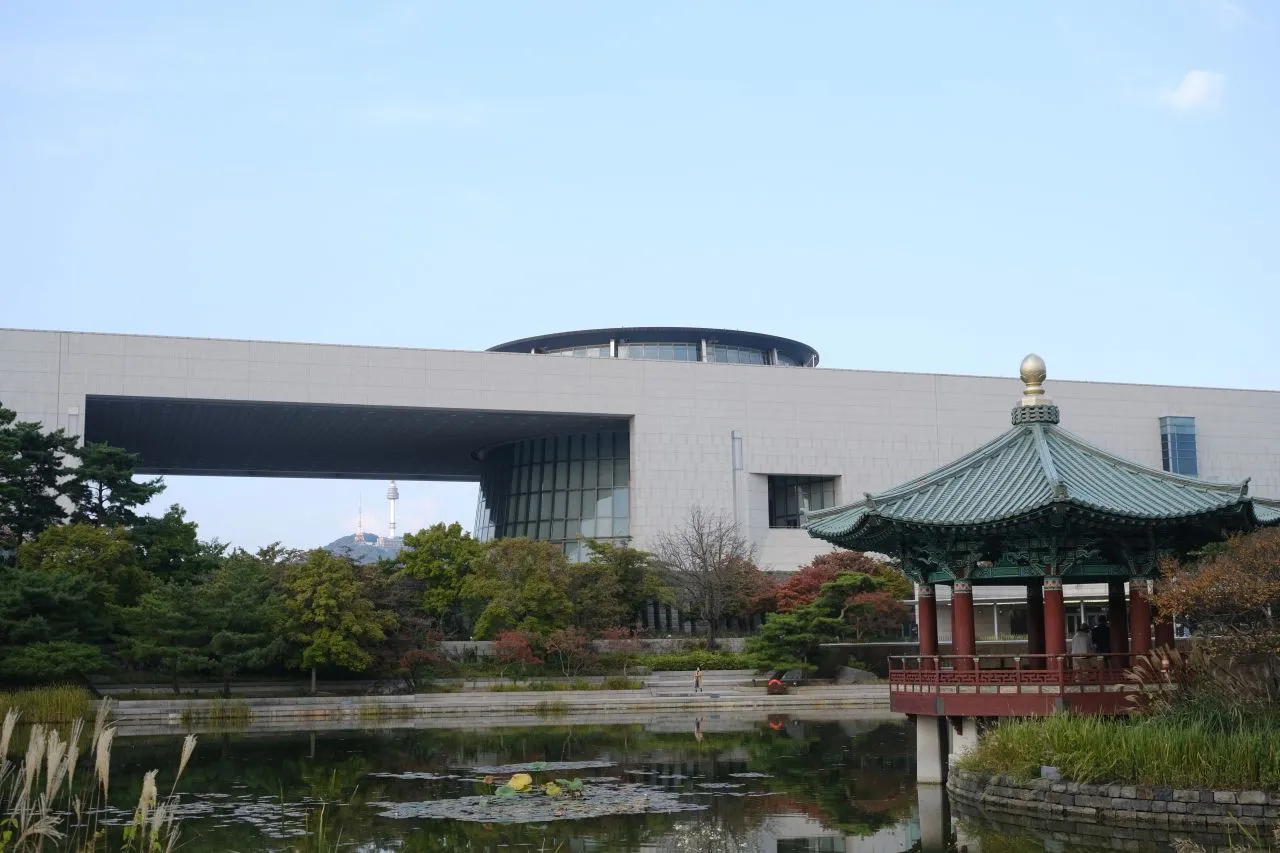
The National Museum of Korea, in Yongsan, is one of Seoul's most rewarding stops, and lately one of its trendiest. Skip the "it's a history museum" framing: what makes it special for a first-time visitor is that it's beautiful, calm, easy to reach, and (for now) free: a photogenic indoor escape with a world-class collection and a museum shop people plan trips around.
It's huge, so the smart move is not to try to see everything: pick the highlights and enjoy the space.
Everything time-sensitive here (opening hours, special-exhibition fees, English tour times, and shop stock) changes, so confirm current details on the official museum website before you visit. Get there easily from Ichon Station (below), and sort out paying for the shop or café with how to pay in Korea.
Quick answer
| Question | Short answer |
|---|---|
| Where is it? | Yongsan, by Ichon Station (Line 4 / Gyeongui-Jungang) |
| Is it free? | The permanent galleries are generally free now; special shows may charge |
| Top highlight? | The Room of Quiet Contemplation (two pensive Bodhisattvas) |
| Why is it trending? | A global top-3 visitor count, a viral BTS moment, and the MU:DS shop |
| How long? | 1 hour for highlights, 2 to 4 for more |
Hours, fees, and stock change. Check the official museum website before visiting, and treat any times or prices here as approximate.
Why it's trending now
It isn't just a museum-lover's museum anymore:
- One of the world's most-visited. According to The Art Newspaper's annual survey, it drew around 6.51 million visitors in 2025, third in the world (after the Louvre and the Vatican).
- A viral culture moment. BTS's RM shared a miniature of the pensive Bodhisattva on social media, and it went viral, helping spark the museum-goods craze.
- The MU:DS shop. Its museum merchandise (the Bodhisattva miniatures especially) is popular enough that items frequently sell out.
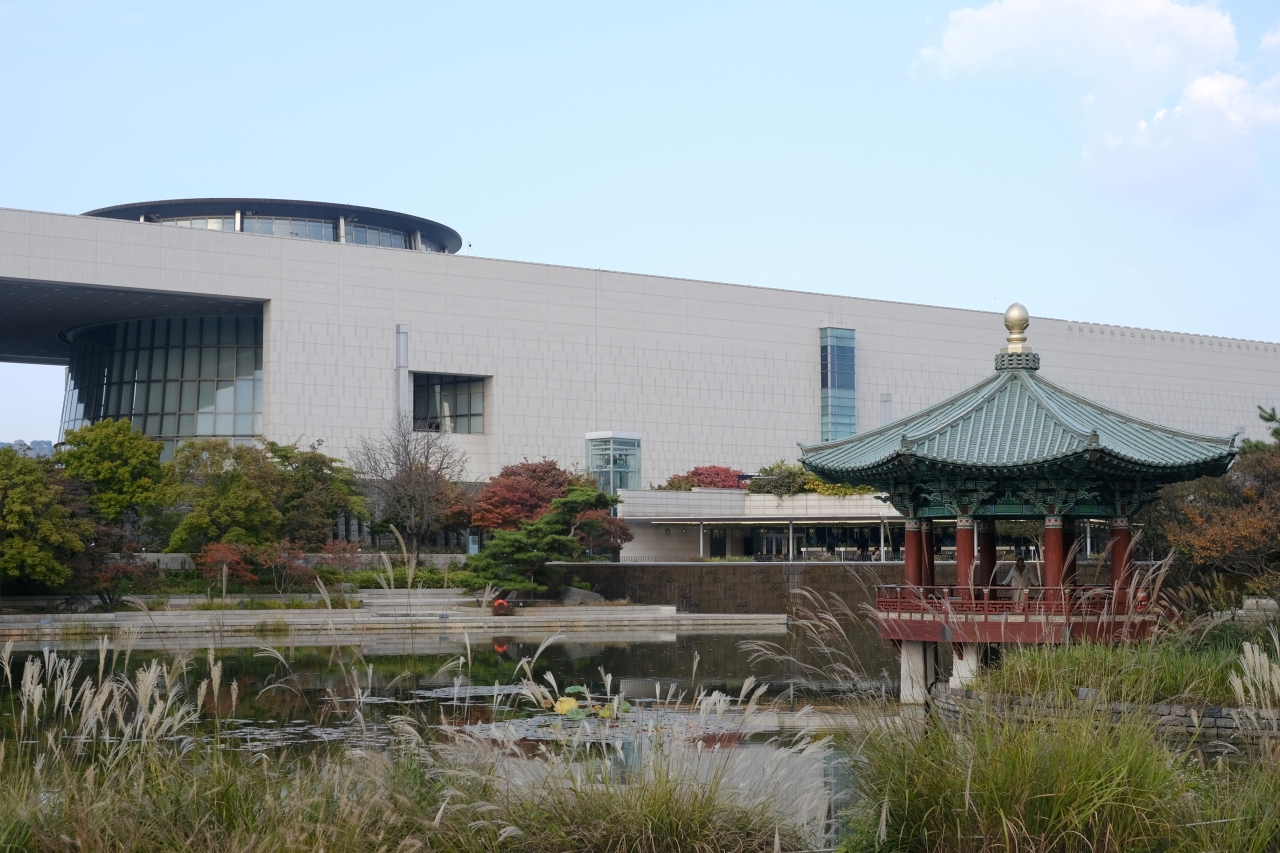
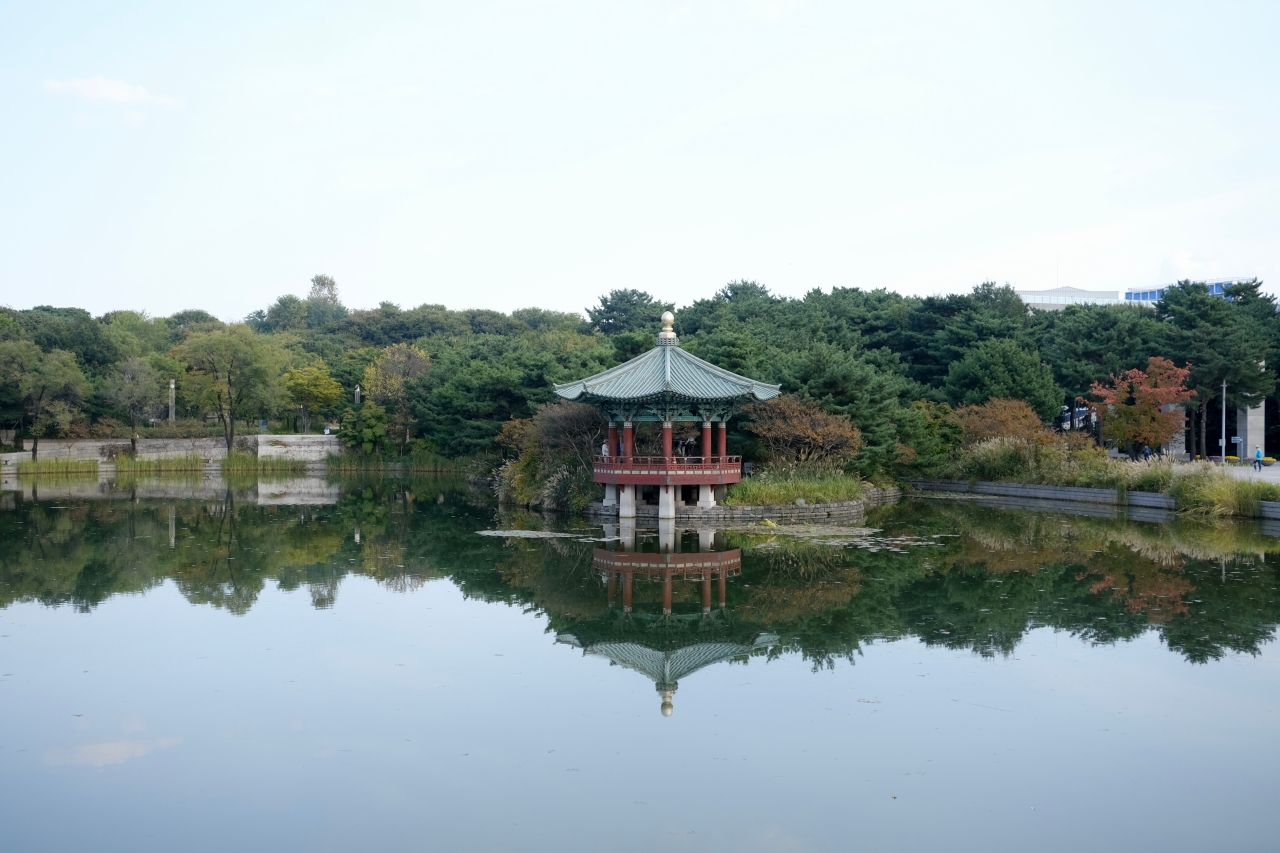
- Photogenic and calm. The architecture, the reflecting pond, and the airy halls make it a genuinely relaxing, camera-friendly indoor day.
- Free, for now. The permanent exhibitions are generally free today, but a paid-admission policy has been floated for 2027 (not confirmed), so this is a good window to enjoy it free. Confirm the current policy officially.
Basic info
Confirm all of this on the official site, it changes:
| Item | Detail (verify officially) |
|---|---|
| Admission | Permanent galleries generally free; special exhibitions may charge |
| Hours (approx.) | Sun/Mon/Tue/Thu/Fri 10:00 to 18:00; Wed & Sat 10:00 to 21:00 (evening) |
| Outdoor grounds | Roughly 7:00 to 22:00 |
| English guided tours | Usually twice a day (around 10:30 and 13:00), free |
| Children's Museum | Free, but advance online reservation required |
| Security | Bag checks / security screening since June 2024: use the free lockers |
How to get there
The easy way is by subway to Ichon Station:
| From | Route |
|---|---|
| Ichon Station | Exit 2, then the underground "Museum Pass" passage straight to the museum (~300 m) |
| Central Seoul | Line 4 or the Gyeongui-Jungang Line to Ichon |
| By taxi | Give the Korean name 국립중앙박물관 or the address |
The underground passage from Exit 2 connects directly to the museum: a big plus in rain, heat, or cold. Parking offers about 20 minutes free then charges, and can mean an hour's wait on weekends, so public transport is best. Use Naver Map or KakaoMap for directions, and tap in with a T-money card.
Address: 137 Seobinggo-ro, Yongsan-gu, Seoul.
What to see first
It's too big to see fully. These are recommended highlights, roughly in priority order (gallery floors and layouts change, so confirm on-site):
| Priority | Highlight |
|---|---|
| 1 | Room of Quiet Contemplation (two pensive Bodhisattvas): go first |
| 2 | Ten-story Stone Pagoda (the giant indoor pagoda) |
| 3 | Goryeo celadon (jade-green ceramics) |
| 4 | Buddhist sculpture |
| 5 | Silla gold crown ("Land of Gold" treasures) |
| 6 | Calligraphy & painting |
| 7 | Immersive digital gallery (large LED shows: if running) |
| 8 | Outdoor gardens, pagodas, and pond |
| 9 | The museum shop (MU:DS) |
The Room of Quiet Contemplation
The single most-loved space in the museum, on the 2nd floor. It holds two Pensive Bodhisattva statues (Bangasayusang), each a National Treasure, made in the late 6th and early 7th centuries. The room is dark, hushed, and gently curved, and the statues stand without glass cases, viewable 360 degrees: often called among the more beautiful museum displays in the world.
QR codes at the entrance and exit explain them.
Tip: go straight up to the 2nd floor when you arrive, before it fills up. Keep quiet, and check the photo rules for the room.
The Ten-story Stone Pagoda
Rising through the main hall is a large indoor stone pagoda whose scale and carved detail make an immediate impression, a favorite photo spot (follow the posted photo rules). You don't need the full history to appreciate it: it's simply a striking thing to stand beneath, and a natural landmark in the building.
MU:DS and the museum shop
The MU:DS shop is part of the visit for many people. Things travelers look for include the pensive Bodhisattva miniatures (the pastel edition is popular), Silla-smile bowls, a Hunminjeongeum mini book, celadon-inspired items, pins, and stationery.
| Note | Detail |
|---|---|
| Stock | Popular items (the miniatures) frequently sell out: check current stock |
| Where | The offline shop and the official global online shop |
| Reality | Don't count on a specific item being available: it varies |
Treat it as "look for what's in stock," not a shopping checklist, availability and prices change.
How much time to spend
- 1 hour: the Room of Quiet Contemplation, the stone pagoda, and the shop.
- 2 hours: add celadon, Buddhist sculpture, and the Silla gold.
- 3 to 4 hours: a relaxed pass through more galleries, the immersive gallery, and the outdoor grounds.
Who it's best for
| Great for | Notes |
|---|---|
| First-time visitors | A calm, free, high-quality introduction to Korean culture |
| Families | Children's Museum (reserve) and open spaces |
| Couples | Photogenic, quiet, and free |
| Rainy days | A large indoor day, connected by underground passage |
| Culture and design fans | The Bodhisattva room and MU:DS goods |
Nearby
- Yongsan Family Park: green space right beside the museum.
- The Han River / Banpo: riverside parks a short hop away.
- Itaewon: the international district; for halal food, check each restaurant and see the Muslim-friendly Seoul guide.
- Yongsan shopping and Yongsan Station: electronics and malls nearby.
- National Hangeul Museum: a neighboring museum (check its current status before relying on it).
Practical tips
- Confirm hours officially, and use Wed & Sat evenings for a quieter, later visit.
- Permanent galleries are generally free; special exhibitions may charge: check before you queue.
- Security screening and bag checks apply (since June 2024), stash big bags in the free lockers.
- Wear comfortable shoes: it's a lot of walking.
- Follow the photo rules, especially in the Room of Quiet Contemplation.
- Shop early if you want MU:DS goods, popular items sell out.
- Reserve the Children's Museum online in advance.
Food and café
There are cafés and dining options on site; hours, menus, and prices change, so check on arrival. Muslim, vegetarian, and allergy-sensitive visitors should confirm ingredients directly, nothing is halal unless stated and verified. It's also easy to eat in nearby Ichon or Itaewon.
A rainy-day plan
The museum is one of Seoul's best wet-weather options: take the underground passage from Ichon Exit 2, spend a couple of hours on the highlights and the immersive gallery, browse MU:DS, and have a café break, all indoors and mostly free.
Families and accessibility
The building is spacious and largely step-free with lifts, the grounds are stroller-friendly, and the Children's Museum (reserve ahead) is aimed at younger visitors. Confirm current accessibility services on the official site.
Common mistakes
- Trying to see everything: pick highlights; it's enormous.
- Skipping the Room of Quiet Contemplation: it's the reason many people come.
- Assuming everything is free: special exhibitions can charge.
- Cutting it late: mind last admission and closing (and the earlier close on non-evening days).
- Thinking it's near Gyeongbokgung: it's in Yongsan, not the palace district.
- Confusing it with the Folk Museum or the Palace Museum. This is the National Museum of Korea in Yongsan.
Frequently asked questions
Is the National Museum of Korea free?
The permanent galleries are generally free right now; special exhibitions may charge. A paid- admission policy has been discussed for 2027 (not confirmed). Check the official site.
Why is it so popular lately?
It ranked among the world's most-visited museums (about 6.51 million in 2025, third globally, per The Art Newspaper), got a viral boost when BTS's RM shared a Bodhisattva miniature, and its MU:DS shop goods are in high demand.
What to prioritize?
The Room of Quiet Contemplation on the 2nd floor, two National-Treasure pensive Bodhisattvas displayed without glass. Go there first.
How do I get there?
Take the subway to Ichon Station and use the Exit 2 underground passage straight to the museum (~300 m). Parking is limited, so public transport is best.
How long should I spend?
About an hour for the highlights, two to four for more galleries and the grounds.
Are there English tours?
Usually twice a day (around 10:30 and 13:00), free. Confirm current times officially.
Can I take photos?
Generally yes in many areas, but follow the posted rules, especially in the Room of Quiet Contemplation.
Is there a bag check?
Yes, security screening and bag checks since June 2024. Use the free lockers for large bags.
What are the opening hours?
Roughly 10:00 to 18:00, with evening hours to 21:00 on Wednesdays and Saturdays: verify officially, as they change.
Is it good for kids?
Yes, the Children's Museum (reserve online ahead) and open spaces make it family-friendly.
What should I buy at the shop?
People look for the Bodhisattva miniatures, celadon-inspired goods, and stationery, but stock varies and popular items sell out, so check what's available rather than expecting a specific item.
Is it worth visiting on a rainy day?
Very. It's a large indoor space connected to the subway by an underground passage, and mostly free.
Where is it exactly?
137 Seobinggo-ro, Yongsan-gu, Seoul, by Ichon Station, not near Gyeongbokgung.
Is it wheelchair/stroller accessible?
Largely, with lifts and step-free routes; confirm current accessibility services officially.
Can I combine it with other sights?
Yes: Yongsan Family Park, the Han River, Itaewon, and Yongsan shopping are all nearby.
Do I need to book anything?
Not for the free permanent galleries, but the Children's Museum needs a reservation, and special exhibitions may need tickets. Check the official site.
Final recommendation
The National Museum of Korea is an easy "yes" for a first Seoul trip: beautiful, calm, well-connected, and, for now, free. Take the underground passage from Ichon Station Exit 2, head straight to the 2nd-floor Room of Quiet Contemplation before the crowds, then enjoy the stone pagoda, the celadon, and the MU:DS shop at your own pace. Don't try to see it all, keep big bags in a locker after the security check, and confirm hours, special-exhibition fees, and shop stock on the official website before you go.
With a global top-three visitor count and a genuinely lovely space, it's among the better free things to do in Seoul.
Sources
- Visit KoreaOfficial tourism site
- Seoul Metropolitan Government Open DataOfficial government site
- Korea Tourism Organization English TourAPIOfficial API
Information is compiled from official sources. Details such as prices, hours, and schedules can change. Confirm time-sensitive facts before you travel.
Last verified on
Related guides

Seoul 2 Nights 3 Days Itinerary: A Compact Stopover Guide Before Japan or Asia
Two nights in Seoul is not three days. You get an arrival evening, two full days, and a departure morning that belongs to the airport, so a stopover plan has to solve entry paperwork, luggage, and the airport transfer before any sightseeing is worth planning. This page covers those first, keeps each half-day in one connected area, and is specific about what a short stay has to give up.

How to Pay in Korea: Credit Cards, Cash, WOWPASS, ATMs, and Mobile Pay
Korea is card-friendly, but the smartest setup is not to rely on one method. Bring a foreign credit or debit card, keep a little cash, get a transit card, and consider a foreigner prepaid card like WOWPASS for the kiosks that reject foreign cards. The breakdown below is current for 2026. Check foreign-transaction rules with your bank before you leave.