Jeonju is a good winter trip when you want a heritage walk and warm meals more than a snow scene. The Hanok Village is an open neighborhood, so cold outdoor walking is part of the plan.
Two things catch first-timers. Most Jeonju trains leave from Yongsan Station, not Seoul Station, and Jeonju Station is not at the Hanok Village.
The rest is easy to plan once you settle five winter decisions: weather, the Seoul transfer, day trip or overnight, what is outdoors, and what to eat.
Quick answer
| Question | Short answer |
|---|---|
| Worth it in winter? | Yes, for heritage, food, and a hanok stay. Not for a reliable snow scene |
| Does it snow? | Sometimes. Snow cover in the Hanok Village on your dates is not promised |
| From Seoul | KTX in roughly 1.5 to 2 hours, mostly from Yongsan Station |
| Station to Hanok Village | Not walkable. Taxi or city bus, check in a map app |
| Day trip or overnight? | A day trip works. One night is more comfortable |
| Is the Hanok Village indoors? | No. It is an open neighborhood, so dress for the cold |
| Bad-weather backup | A free museum in the village, meals, and the partly covered market |
Hours and fees below are as currently listed by Jeonju City and can change. Confirm them before you go.
Is Jeonju worth visiting in winter?
Yes, if you like slow walking and food. The tiled rooftops, stone walls, and shrine grounds look clear against bare trees, and a hot bowl at lunch fits the weather.
Winter has real tradeoffs. Most of the core sights are outdoors, the days are short, and some mornings are icy on the uphill paths. I would not call it a crowd-free or a cheap season, because those depend on the weekend and the property.
If you want indoor sightseeing, Seoul is easier. If you want a traditional streetscape and a food-first overnight, Jeonju fits well. For the wider season, see the Korea winter travel guide.
Winter weather and snow reality
Jeonju is cold and fairly dry in winter. Jeonju City reports 1991 to 2020 climate normals, and January is the coldest month.
| Measure | Figure |
|---|---|
| Average daily low in January | about -4.3°C |
| Average yearly temperature | about 13.7°C |
| Yearly precipitation | about 1,299 mm, with roughly 58% falling from June to August |
Source: Jeonju City, normals for 1991 to 2020. I did not read the monthly December to February tables from the Korea Meteorological Administration directly, so they are not tabulated here.
Does it snow in Jeonju?
It can. Snow cover that lasts, and a snow-covered Hanok Village on the exact days you visit, is not something you can count on.
A snowfall and a persistent snow layer are different things. A light fall often melts within a day, so treat a white village as a bonus. Check the Korea Meteorological Administration forecast a few days ahead.
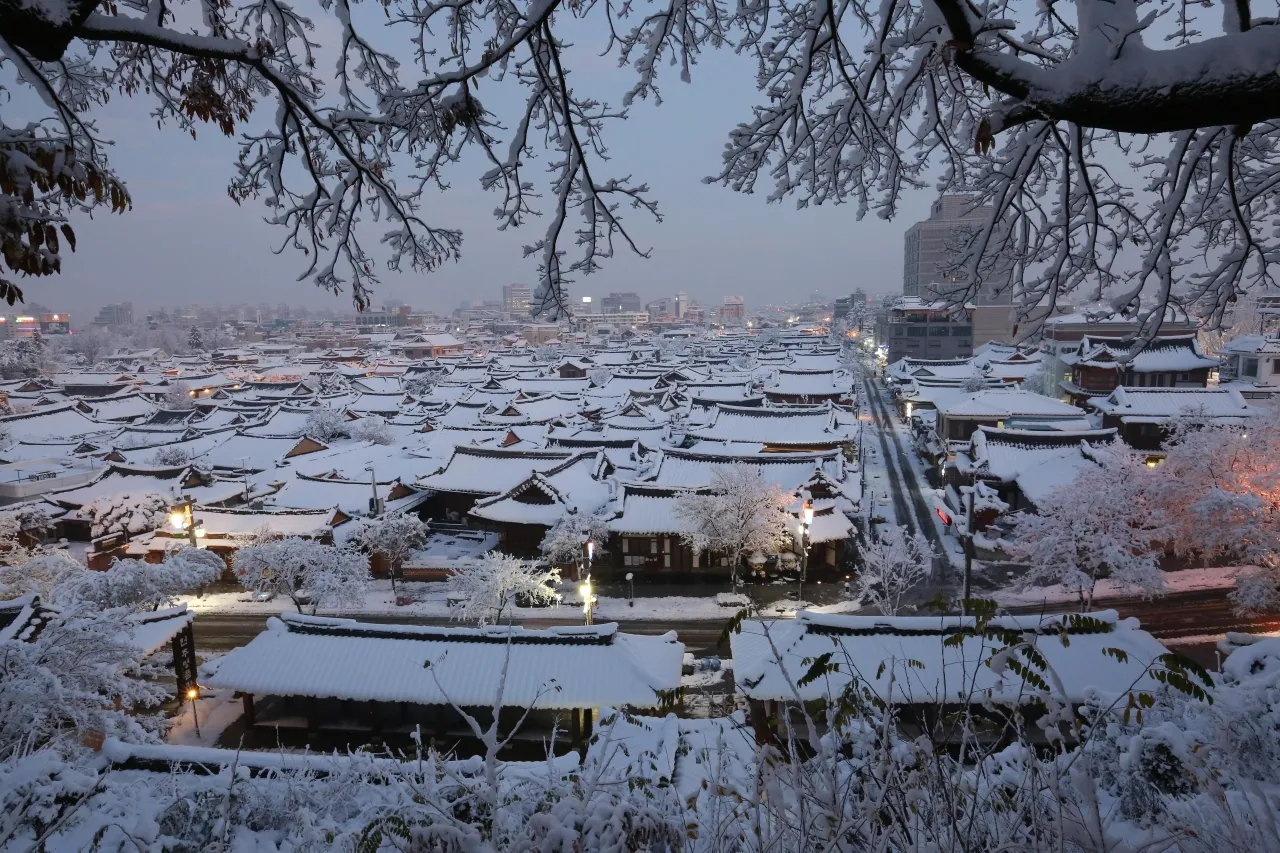
The hero photo shows the village after a snowfall in a past winter. It is not a typical day.
How to get from Seoul to Jeonju
Take the KTX from Seoul to Jeonju Station. The ride is roughly 1.5 to 2 hours, depending on the train. Slower trains take longer.
Most Jeonju trains leave from Yongsan Station in Seoul. Seoul Station has limited Jeonju departures, so read the departure station on your booking screen before you pay.
I could not read KORAIL's own timetable pages, so I am not giving a frequency or a fare. Check Korail+ and confirm the last train back before you commit to a day trip. The Seoul to Jeonju by train guide covers the route in detail, and the KTX booking guide covers payment with a foreign card.
Train or bus
An express bus also runs from Seoul to Jeonju. It usually departs from Seoul Express Bus Terminal at Express Bus Terminal Station (Lines 3, 7, and 9) and takes roughly 2.5 to 3 hours, depending on traffic. I am not giving a timetable or fare.
| KTX from Yongsan | Express bus | |
|---|---|---|
| Seoul side | Yongsan Station | Seoul Express Bus Terminal |
| Typical time | roughly 1.5 to 2 hours | roughly 2.5 to 3 hours |
| Booking | Korail+ app or KORAIL site | Kobus |
| Best for | Most travelers, one-day trips | Travelers near the terminal, or a cheaper option |
Winter roads can slow a bus. Roads are one reason the train is the safer pick for a day trip.
Jeonju Station is not at the Hanok Village
Jeonju Station is in the northeast of the city. The Hanok Village and Gyeonggijeon are roughly 4 km away in a straight line, so you cannot walk between them with a bag.
Two ways to cross town:
- Taxi. The simplest choice with luggage or in cold weather. Show the destination on a map app, and ask for the Hanok Village or Gyeonggijeon.
- City bus. Cheaper, and a T-money card works. I am not giving a route number, because the station page I found was unclear. Use Naver Map or KakaoMap to find the current bus and stop.
Do not plan on a fixed ride time. Traffic and your exact drop-off point change it. The Korea travel apps guide and the T-money card guide help here.
One day or one night
Both work. The question is how much you want to rush the cold-weather walking.
| Day trip | One night | |
|---|---|---|
| Pace | Focused. One main loop | Slower. Two shorter loops |
| Likely stops | Hanok Village, Gyeonggijeon, lunch, one more stop | Add a second morning, the evening lanes, a second meal |
| Main risk | The last train back | Choosing a hanok that suits you |
| Winter note | Short daylight leaves less time outside | Warm evening meal, then rest |
A day trip is fine for a first look. One night suits a hanok stay, more than one meal, and a quiet evening walk. Overnight is not mandatory.
Jeonju Hanok Village in winter
The Hanok Village is a neighborhood of traditional houses in the city, not one ticketed site. It is open to walk through, and individual sights, museums, and shops have their own hours.
That means it is not indoors and not climate controlled. Expect cold wind in the lanes, and plan warm-up stops in cafes, shops, and restaurants.
Jeonju City lists the village as having over 600 hanok. Many are homes or guesthouses, so keep noise down and stay out of private yards.
Walkable cluster
Most of the core sights sit close together on the map:
| Pair | Straight-line distance |
|---|---|
| Gyeonggijeon to Jeondong Cathedral | about 0.3 km |
| Gyeonggijeon to Omokdae | about 0.3 km |
| Gyeonggijeon to Nambu Market | about 0.5 km |
| Jeondong Cathedral to Nambu Market | about 0.2 km |
These are straight-line figures from map coordinates, not walking times. Slopes, steps, and ice add time, so walk slowly.
Gyeonggijeon and Jeondong Cathedral
Gyeonggijeon is a shrine compound that holds the portrait of Joseon founder King Taejo. It is the strongest anchor for a short visit.
Jeonju City lists winter hours (November to February) as 09:00 to 18:00 with last entry at 17:00, and adult admission at ₩3,000. The compound includes the Eojin Museum, but I did not confirm its separate hours. Confirm before you plan around it.
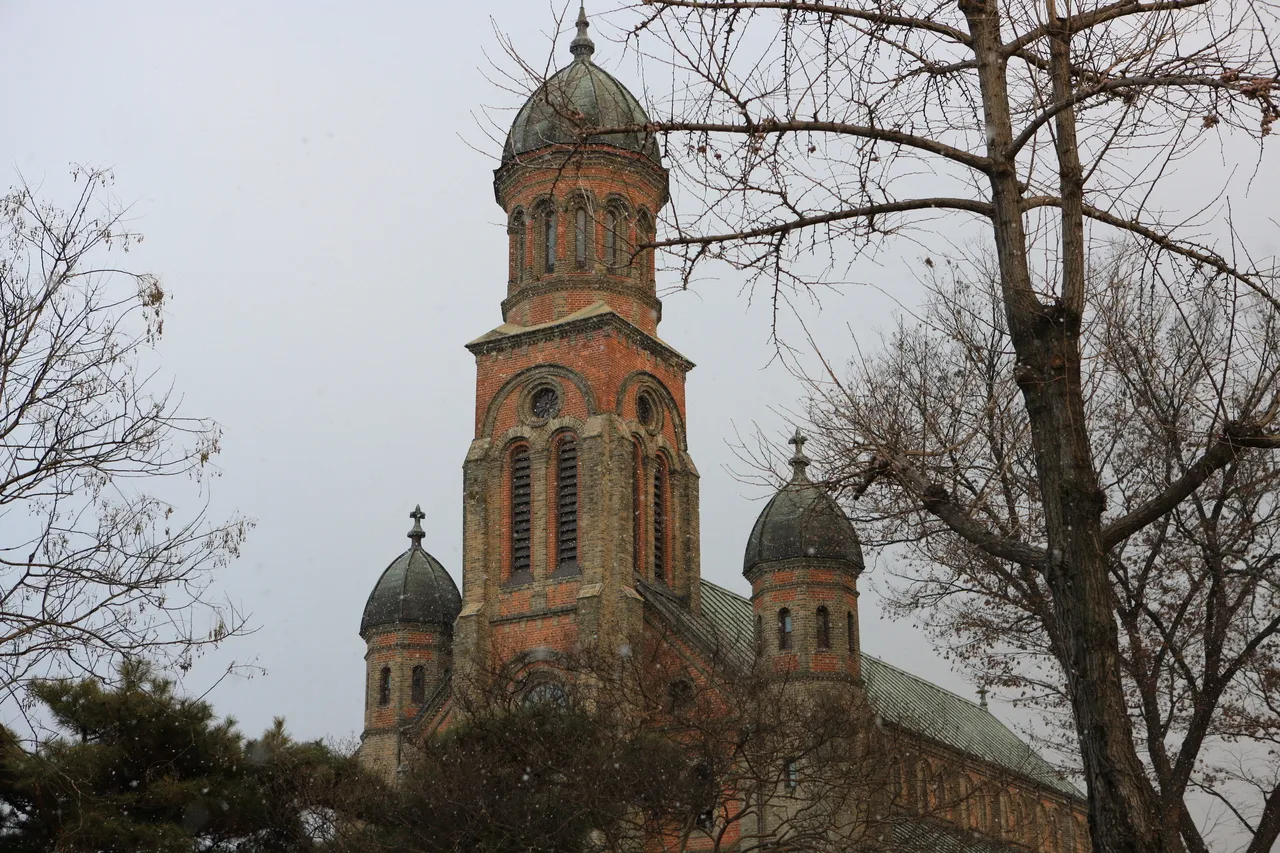
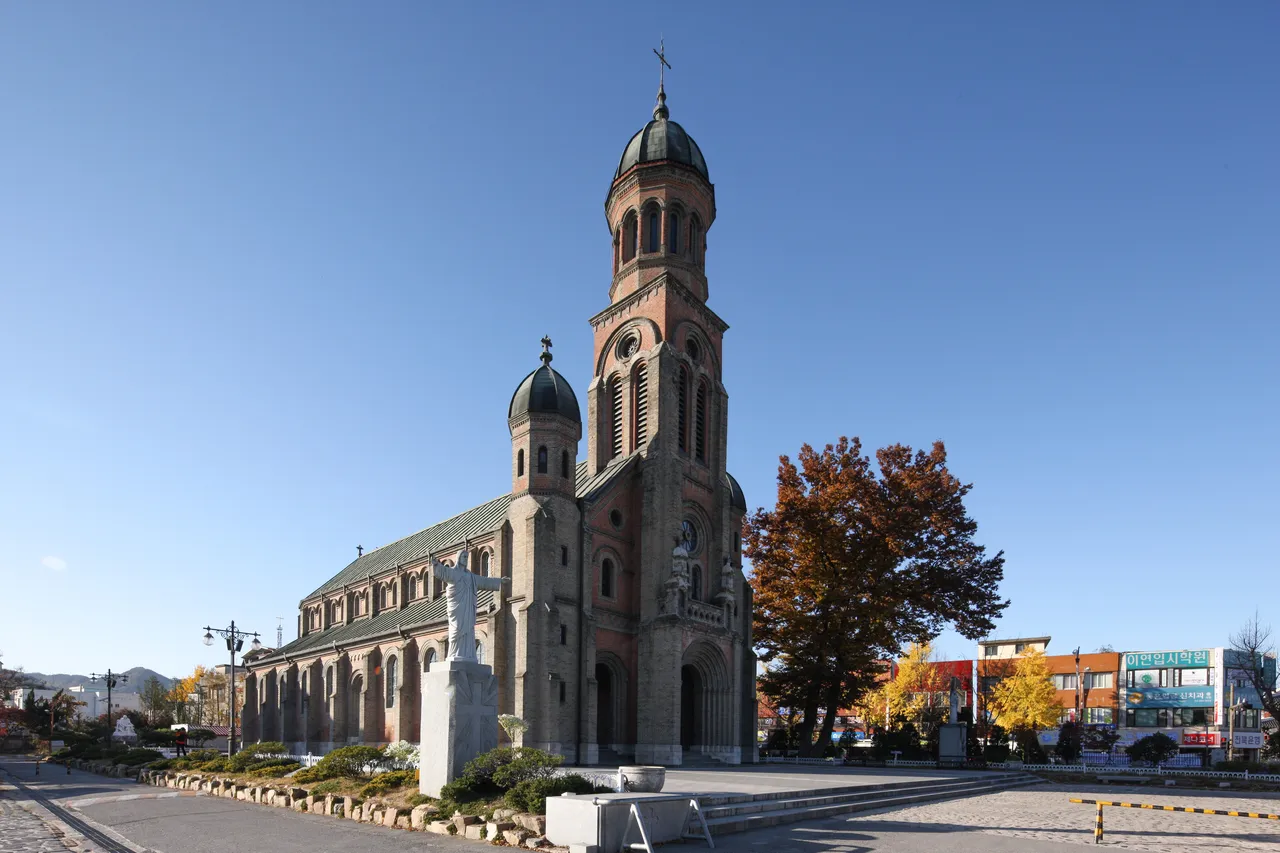
Jeondong Cathedral sits just beside it. It is an active church, so treat it as a landmark first and be quiet near services.
Jeonju City lists its hours as 09:00 to 17:00, subject to change by the parish. Interior access for visitors may be limited, so do not count on going inside.
Omokdae and the historic area
Omokdae is a hilltop viewpoint over the hanok rooftops. It is outdoors, with a slope and steps.
On a cold or icy day, do it in daylight and wear shoes with grip. If the path looks slick, skip it. It is not a bad-weather backup.
Jeonju Hyanggyo, a Confucian school, lies a little farther on the far side of the hill. It is optional, and I would add it only if you have spare daylight.
Wearing hanbok in winter
You can wear hanbok in winter, and some visitors do for photos in the lanes. It is a personal call, because the lanes are cold and the hem needs care on steps and ice.
Layer warm clothes under it and carry a coat. I am not listing what any shop offers for cold weather, since services vary by shop. Ask each shop what is included, and read the hanbok rental guide for the general rules.
Should you stay in a hanok?
A hanok stay can be the best part of a Jeonju overnight, or a mild disappointment, depending on the property.
Possible benefits are the traditional setting, a short walk to the sights, and quiet lanes in the evening. Possible caveats:
- Some rooms use floor bedding, and some have beds.
- Some bathrooms are private, and some are shared.
- Sound insulation varies, and some older houses are thin-walled.
- Heating varies by property, and luggage can be awkward in narrow lanes.
Many hanok rooms are heated through the floor (ondol), but not all, and I would not promise a comfort level. Confirm the room type, bathroom, bedding, and heating before you book. The where to stay in Jeonju guide compares areas.
What to eat in Jeonju
Food is a reason to come. Visit Korea notes that Jeonju was named Korea's first UNESCO Creative City of Gastronomy. A winter trip fits hot dishes.
- Jeonju bibimbap. Visit Korea describes it as rice topped with seasoned vegetables, beef, and yellow mung bean jelly, mixed with red chili paste. I am not making an origin claim.
- Kongnamul-gukbap. A bean sprout and rice soup. Visit Korea traces it to early meals for Nambu Market merchants and calls it a dish for the winter cold. It is not winter-only.
- Hwangpo-muk. Yellow mung bean jelly, colored with gardenia seeds, and a topping in the bibimbap above.
- Makgeolli. Rice wine served in the evening in makgeolli alleys with side dishes. Drinking is optional, and the legal age is 19. I am not giving prices or a number of free dishes.
Vegetarian, halal, and allergy-sensitive travelers should ask about ingredients first. Bibimbap often has beef, and broths can be meat based. See the what to eat in Korea guide for the wider menu.
Nambu Market
Nambu Market is a traditional market a short walk from the cathedral. Visit Korea describes it as active by day and night.
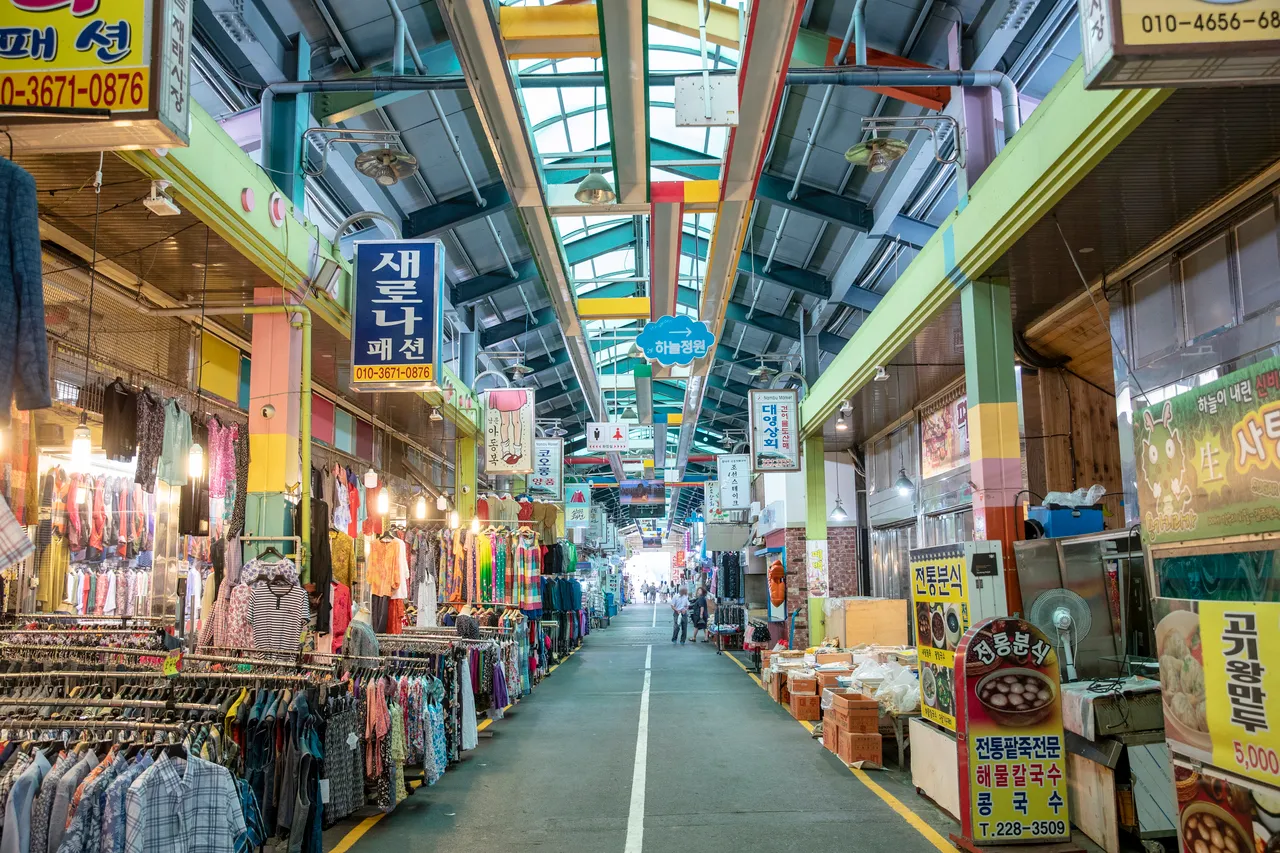
Photos show covered lanes, so it is partly sheltered. It is not a heated mall, and the edges and cross streets are open to the weather.
Night market
I could not confirm a winter 2026 to 2027 night market schedule. Visit Korea says the night market hours may be shortened in winter, and a local report said it paused over the 2023 to 2024 winter and reopened on March 1.
Treat it as not confirmed. I am not giving dates or hours, so do not plan an evening around it. If you want it, check the current notice from Jeonju City first.
Evening in Jeonju
An evening in the Hanok Village is mostly about walking, a warm meal, and your accommodation. I am not giving a lighting schedule, because I could not verify one.
If you are staying over, eat early, walk the lanes while it is quiet, and go in when it gets cold. Day trippers should keep the last train in mind before a long dinner.
What to wear
Dress for long outdoor walking.
- A warm coat and layers.
- Long pants and warm socks.
- Closed shoes with grip, because paths can be icy.
- Gloves and a scarf for the evening.
If snow or ice is forecast, traction soles help on Omokdae and the hill paths. The winter clothing guide has the full packing list.
One-day itinerary from Seoul
This is a flexible example, not a timetable. Fit it to the train you actually book.
- Take a KTX from Yongsan to Jeonju Station, then a taxi or city bus to the Hanok Village.
- Walk the lanes, then visit Gyeonggijeon well before its 17:00 last entry.
- See Jeondong Cathedral from outside, then have a bibimbap or kongnamul-gukbap lunch.
- Warm up in a cafe or the free Hanok Village History Museum, which is closed on Mondays.
- Visit Nambu Market, then take a taxi or bus back to the station.
- Confirm the last train to Seoul before you commit to the day.
Do not add every stop. Skip Omokdae if the weather is poor.
Two-day itinerary, one night
This is the stronger plan in winter, because it gives you a slower pace and a warm evening.
Day 1
- Arrive late morning and leave your bag at your stay if they allow it.
- Walk the Hanok Village, then visit Gyeonggijeon before the last entry.
- Have a local lunch, then walk to the cathedral and Nambu Market.
- Eat dinner early, take an evening walk in the lanes, and sleep in a hanok if you chose one.
Day 2
- Start with a warm breakfast such as kongnamul-gukbap.
- Climb Omokdae if it is dry, and add Jeonju Hyanggyo if you have time.
- Visit the History Museum if you want an indoor stop.
- Have a last meal, then return to the station for a train back to Seoul.
Bad-weather plan
Jeonju's core experience is outdoors, so bad weather means a smaller outdoor loop, not an indoor trip.
- Shorten the walk and keep to the flat streets.
- Use the free Hanok Village History Museum, which Jeonju City lists as open 10:00 to 18:00 with last admission at 17:45, and closed Mondays.
- Plan longer meals and cafe stops.
- Use Nambu Market's covered lanes, with the caveat that it is only partly sheltered.
- Move Omokdae to a better day, or skip it.
The Jeonju Hanji Museum is also free and closed on Sundays and Mondays, but it is in Deokjin-gu and not in the village. It needs a taxi or bus, so it is not part of the walking loop.
Where to stay
Choose by how you want your evening to feel.
| Area | Good for | Tradeoff |
|---|---|---|
| In or beside the Hanok Village | Atmosphere, short walks, evening lanes | Narrow lanes, and luggage can be awkward |
| Near Nambu Market | Food, early mornings | A working market area, not polished |
| Central downtown | Cafes, a normal hotel room | Less hanok mood |
| Near Jeonju Station | An early or late train | You commute to the sights |
Luggage storage at the station is something I could not verify, so do not assume lockers. Ask your accommodation, and see the luggage storage guide.
Common mistakes
- Going to Seoul Station by default. Check the departure station on your booking.
- Expecting Jeonju Station to be at the Hanok Village.
- Promising yourself a snowy village.
- Treating the Hanok Village as an indoor attraction.
- Planning around the night market without checking it.
- Day-tripping without checking the last train.
- Counting on the cathedral interior.
- Assuming every hanok has a private bathroom and a bed.
FAQ
Is Jeonju worth visiting in winter?
Yes, if you want a quiet heritage walk and warm food. Do not count on snow.
Does it snow in Jeonju?
It can, but it is not reliable. Check the forecast.
Can I count on snow?
No. A white Hanok Village on your dates cannot be counted on.
Is Jeonju Hanok Village open in winter?
Yes. It is an open neighborhood, and individual sights, museums, and shops have their own hours.
How cold is Jeonju?
Jeonju City reports an average January low of about -4.3°C. Dress in layers.
How do I get from Seoul to Jeonju?
By KTX in roughly 1.5 to 2 hours, mostly from Yongsan, or by express bus in roughly 2.5 to 3 hours.
Does KTX go to Jeonju?
Yes. KTX trains stop at Jeonju Station. Confirm times on Korail+.
Which Seoul station should I use?
Usually Yongsan. Seoul Station has limited Jeonju departures, so check your booking.
How do I get from Jeonju Station to Hanok Village?
By taxi or city bus. It is roughly 4 km in a straight line, so it is not a walk. Use a map app for the current bus.
Can I visit Jeonju as a day trip?
Yes, if you keep it to one loop and check the last train back.
Is one night enough?
Yes. One night covers the main sights, a slow evening, and a second morning.
Can I wear hanbok in winter?
Yes, with warm layers under it and a coat. Ask each shop what is included.
Should I stay in a hanok?
Only if the traditional setting matters more than hotel comfort. Confirm bathroom, bedding, and heating first.
What food should I try?
Jeonju bibimbap and kongnamul-gukbap are the usual first choices. Ask about ingredients if you avoid meat or allergens.
Is Nambu Market indoors?
Partly. Its lanes are covered, but it is not a heated mall and some edges are open.
Check before you go
- The current train and last train back on Korail+.
- Opening hours for Gyeonggijeon and any museum you plan to visit.
- Whether the Nambu night market is running.
- The weather and ice forecast for your dates.
- Your accommodation's bathroom, bedding, and heating.
Sources
- Jeonju City: climate normals (1991 to 2020, Jeonju weather station)Official government site
- Jeonju City Official TourismOfficial tourism site
- Visit KoreaOfficial tourism site
- KORAILOfficial transport site
- KOBUS (Express Bus Integrated Reservation)Official transport site
Information is compiled from official sources. Details such as prices, hours, and schedules can change. Confirm time-sensitive facts before you travel.
Last verified on
Related guides
Jeonju Travel Guide: Hanok Village, Bibimbap, Hanbok, and What to Eat
Jeonju is Korea's food-and-hanok city beyond Seoul: a slow, walkable trip built around the country's largest traditional hanok village, signature bibimbap, hanbok photos, and traditional markets. It works as a relaxed day trip or an easy one-night stay from Seoul.
Seoul to Jeonju by Train: Tickets, Stations, and Hanok Village Transfer
The train to Jeonju is straightforward once you know one quirk: most Jeonju trains leave from Seoul's Yongsan Station, not Seoul Station, and Jeonju Station itself is a short ride from the Hanok Village rather than right beside it. Booking, which Seoul station to use, the short station-to-village transfer (closer than Gyeongju's), and the day-trip-versus-overnight decision are all covered below. Fares, times, and bus numbers change, so confirm the official and map-app details before you go.