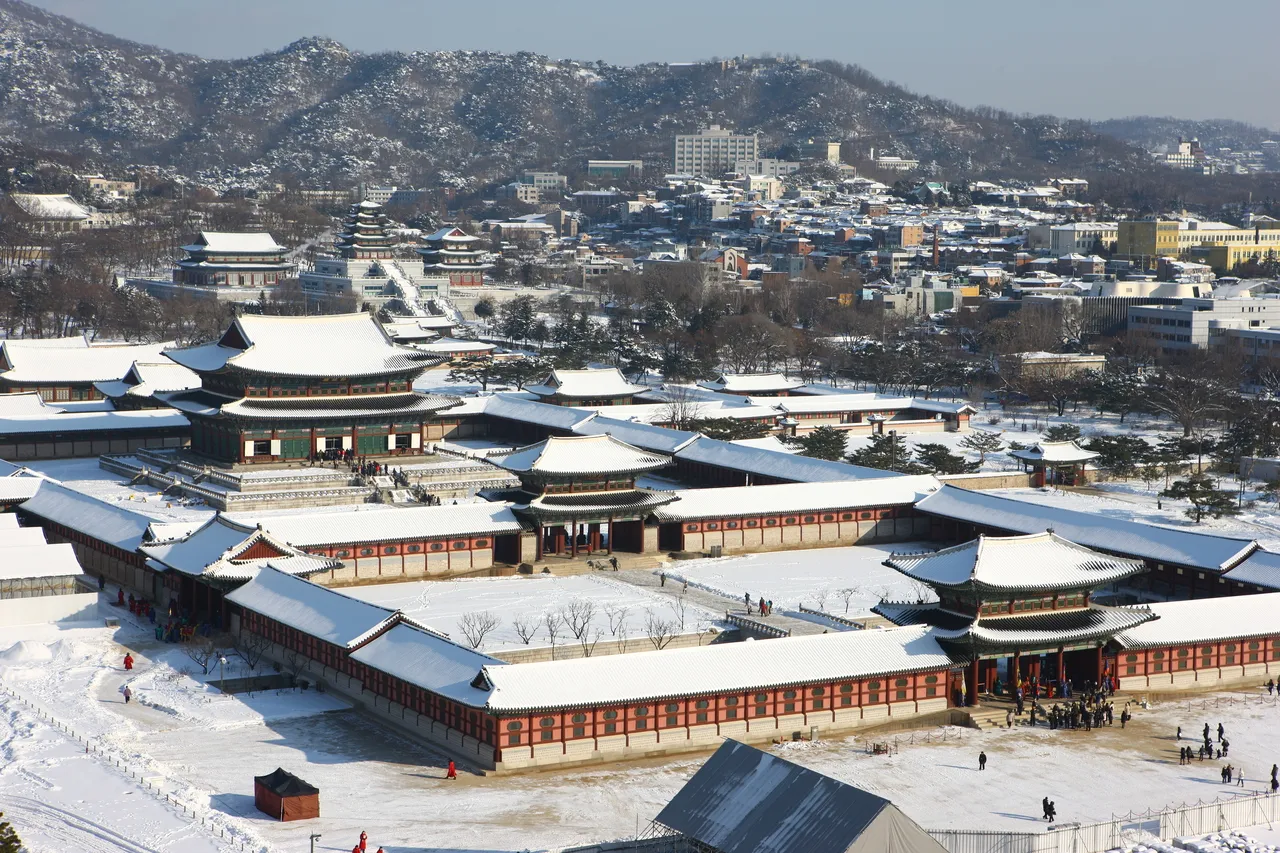
Yes, it snows in Seoul. A typical winter brings snow on a few days a month from December to February, but it is often light, brief, and gone by the afternoon.
The harder question is whether it will be snowing, or snow-covered, on your dates. This guide separates the two, using official Korea Meteorological Administration (KMA) data for Seoul instead of photos of the best days.
Quick answer
| Question | Answer |
|---|---|
| Does it snow in Seoul? | Yes. About 24 days a year on average, nearly all from November to March (KMA 1991 to 2020 normals) |
| Snow season | Mainly December to February, with some snow in November and March and very little in April |
| First snow | The KMA normal is 20 November, but single years vary by weeks |
| Best month | January, which leads on snow days and on days with snow on the ground |
| Snow on the ground | Averages about 8 days in January, and about 4 in December and 3 in February |
| Deep snow | Rare: 5 cm or more lies on the ground on fewer than 3 days even in January |
| White Christmas | Possible in some years, never a promise, and not predictable from normals |
| Better odds of snow | Higher ground such as Bukhansan, or the colder Gangwon highlands, but still no promise |
Cold is not the same as snow. January is the coldest month and also the driest, so a freezing day in Seoul is often a clear one.
Does it snow in Seoul?
Snow is a normal part of winter in Seoul, but it is not a daily scene. The KMA station in central Seoul counts about 24 days a year with snow, which is roughly one day in fifteen across the whole year, and almost all of them fall between December and February.
Many of those days bring a brief fall that melts on warm pavement. Seoul is a city of heated buildings and busy streets, so snow that falls often disappears from roads and sidewalks first and lingers on roofs, grass, and shaded ground.
How often does Seoul get snow?
These are the KMA 30-year climate normals (1991 to 2020) for its Seoul station, taken from the KMA Open Data Portal and rounded. The station is a single point in the city, so mountains such as Bukhansan and Namsan will differ.
| Month | Days with snow | Days with 1 cm or more on the ground | Days with 5 cm or more on the ground | Average low | Days with a low below 0 °C |
|---|---|---|---|---|---|
| November | 2.3 | 0.6 | 0.1 | 3.5 °C | 7.1 |
| December | 6.4 | 3.7 | 0.9 | -3.4 °C | 23.4 |
| January | 7.1 | 7.6 | 2.7 | -5.5 °C | 27.5 |
| February | 5.1 | 3.3 | 1.5 | -3.2 °C | 21.7 |
| March | 2.8 | 1.1 | 0.3 | 1.9 °C | 9.0 |
October averages no snow days, and April averages about 0.2, so the table covers the season. A normal is an average of many years, so a single winter can be much snowier or much drier than any of these figures.
"Days with snow" is KMA's count of days when snow was recorded. "Days with 1 cm or more on the ground" counts days when the daily deepest snow depth reached at least 1 cm, according to the KMA data definitions.
Snowfall versus snow cover
Snowfall and snow cover are different, and the data shows it. In December the station records snow on about 6 days, but snow of 1 cm or more lies on the ground on only about 4 of them. In March, snow falls on about 3 days, yet 1 cm or more on the ground averages about 1 day.
January is the exception. The count of days with 1 cm or more on the ground (7.6) is slightly higher than the count of snow days (7.1), because snow that fell earlier stays on the ground when the cold holds. Cold weather is what turns a snowfall into a snowy week.
A snow day can also mean a flurry or a few flakes, which may not settle at all. The snowy palace photos you see online are usually from a day after a real snowfall, not from a typical winter day.
When is the first snow in Seoul?
The KMA normal first-snow date for Seoul is 20 November, based on 1991 to 2020. That is an average, not a forecast, and individual years can differ by weeks.
KMA also states how the record is kept. Seoul's first snow is the first time an observer sees snow at the Seoul weather station in Jongno-gu, and the amount does not matter. A first snow can therefore be a light, brief fall that never accumulates.
For a sense of the swing, KMA's own announcement for 2021 reported a first snow on 10 November. That was 10 days earlier than the normal and 30 days earlier than the year before. Treat the date as a rough marker of the season starting, not as a date to plan around.
First snow also does not mean reliable snow. In the table above, November averages 2.3 snow days and 0.6 days with 1 cm or more on the ground. The season for lying snow starts later.
Best month to see snow in Seoul
January, by the numbers. It has the most snow days (7.1), the most days with 1 cm or more on the ground (7.6), and the most days with 5 cm or more (2.7) of any month in the KMA normals. It is also the coldest month, with a mean of -1.9 °C.
December and February are close to each other and clearly behind January. December has a few more snow days (6.4 against 5.1) and more days with 1 cm or more on the ground (3.7 against 3.3). February has more days with 5 cm or more (1.5 against 0.9), so neither is clearly ahead.
Even in January, snow on the ground is a minority of days, and deep snow is rare. January is a better bet, not a safe one.
Month by month
| Month | Snow possible? | Typical likelihood | What to expect |
|---|---|---|---|
| November | Yes, mostly late in the month | About 2 snow days; snow on the ground is rare (0.6 days with 1 cm or more) | Late autumn weather with the possibility of a first light snow; see Seoul in November |
| December | Yes | About 6 snow days; snow of 1 cm or more on the ground about 4 days | The first real winter month; snow is common, lasting snow is less so; see Seoul in December |
| January | Yes, the most likely month | About 7 snow days; snow of 1 cm or more on the ground about 8 days | The coldest month, and the best odds of snow lying on the ground, though many days are cold and dry |
| February | Yes | About 5 snow days; snow of 5 cm or more on the ground about 1 to 2 days | Still winter, but not the same as January; milder on average (mean 0.7 °C against -1.9 °C) |
| March | Sometimes, early in the month | About 3 snow days; 1 cm or more on the ground about 1 day | A winter-spring mix; any snow is usually short-lived, and it does not follow a fixed date |
KMA lists a normal last-snow date of 18 March for Seoul. Like the first-snow date, it is an average over 30 years, and snow in April is possible in some years, so no fixed spring date applies.
Will Seoul have a white Christmas?
Nobody can say in advance, and it should never be assumed. Some Christmases bring snow and many are cold, dry, and clear.
The normals give monthly snow-day counts, not the odds of snow on 25 December, so monthly statistics cannot give a Christmas probability. Do not divide December's 6.4 snow days by 31 and call it a chance. A snow day count says nothing about any given date.
If snow matters for a Christmas trip, treat it as a bonus and plan around lights, food, and warm indoor time. See Seoul in December for the December details and Korea in December for how Seoul compares with Busan and Jeju.
Where to see snow in Seoul
If snow has fallen, these are the places that suit a snowy day. None of them is a promise, and snow on the ground depends entirely on that day's weather.
Palaces
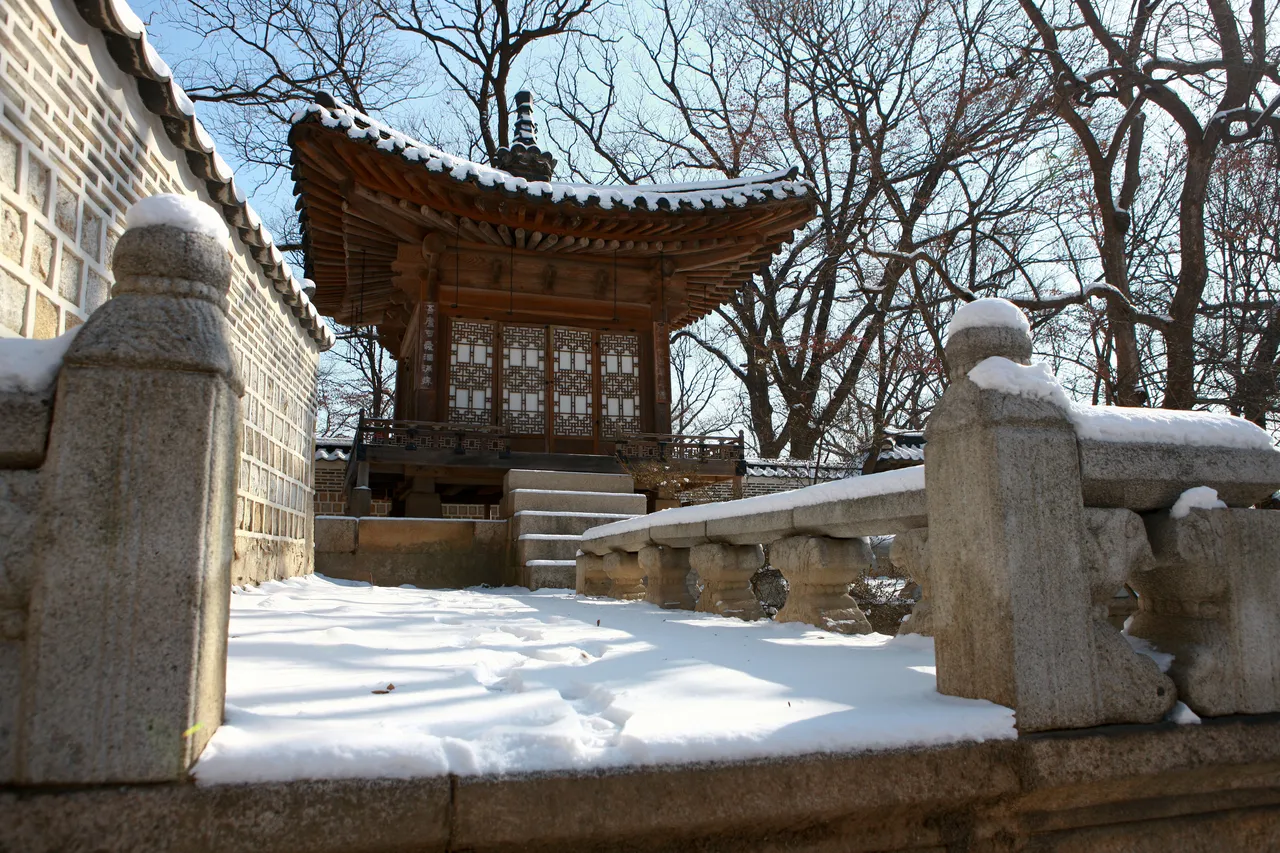
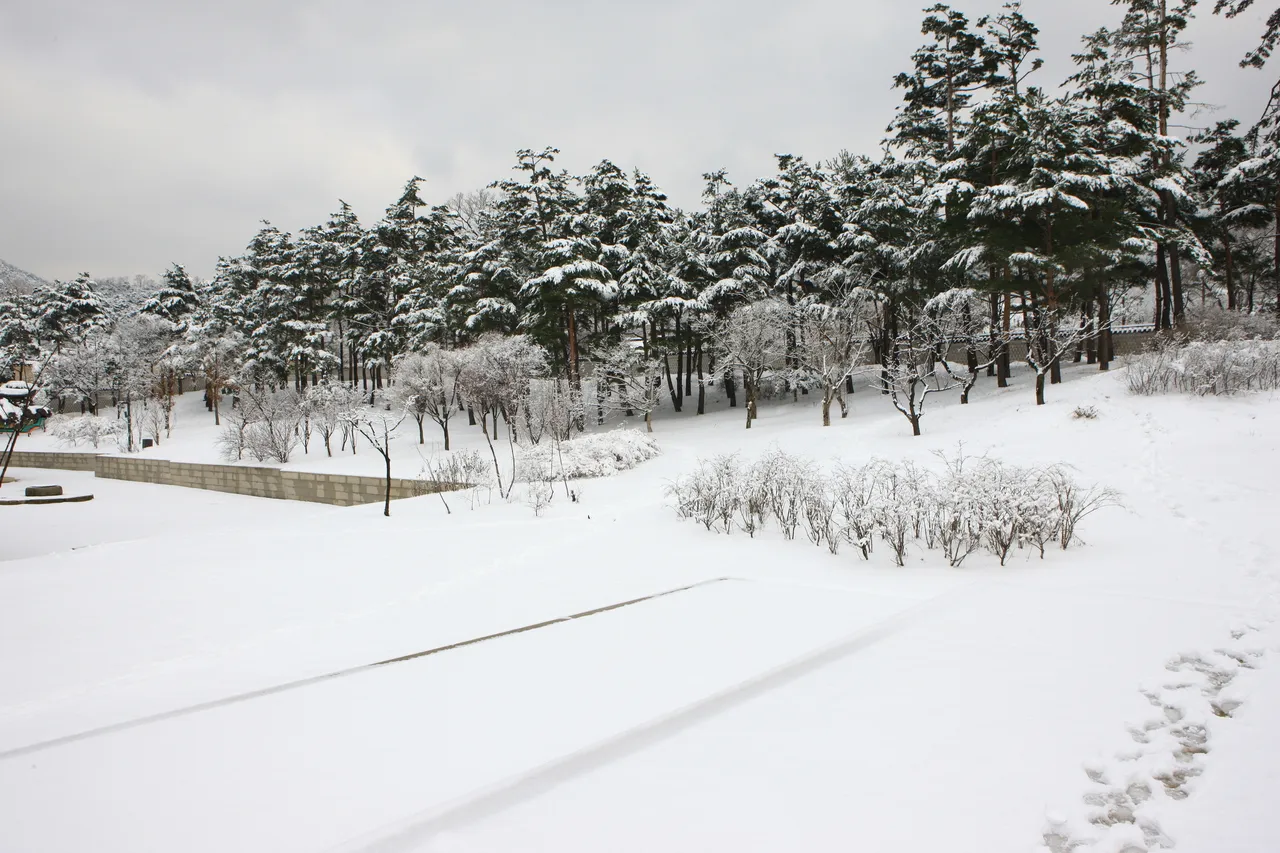
If snow has fallen, the palaces are the classic stop, because snow on tiled roofs and courtyards is easy to photograph. Gyeongbokgung is the largest and easiest to reach, and the Changdeokgung Huwon rear garden is a quieter option.
Do not assume the snow lasts for days on the roofs or ground. Sun and foot traffic remove it, and the best light is often the morning after a snowfall, before it melts. Check the palace notice for your date, because hours and closures can change.
Namsan
Namsan is a city mountain with a view over the skyline, and a snowfall can make the walk and the view look different. If you want to go, the N Seoul Tower guide covers getting there, the cable car, and the view.
Namsan paths and steps can be icy, and snow or wind can change how the cable car and walks work on the day. Check the operator's notice before you go.
Parks
Large parks give you open ground where snow shows well. Seoul Olympic Park is one example. A park is only snowy while snow lies there, so treat it as a fallback on a snowy day, not a destination to plan around.
Bukhansan
Bukhansan is a likelier place to find snow still on the ground when the city has lost it. If the park is open and trails are passable, the ridges can hold snow and rime longer than downtown.
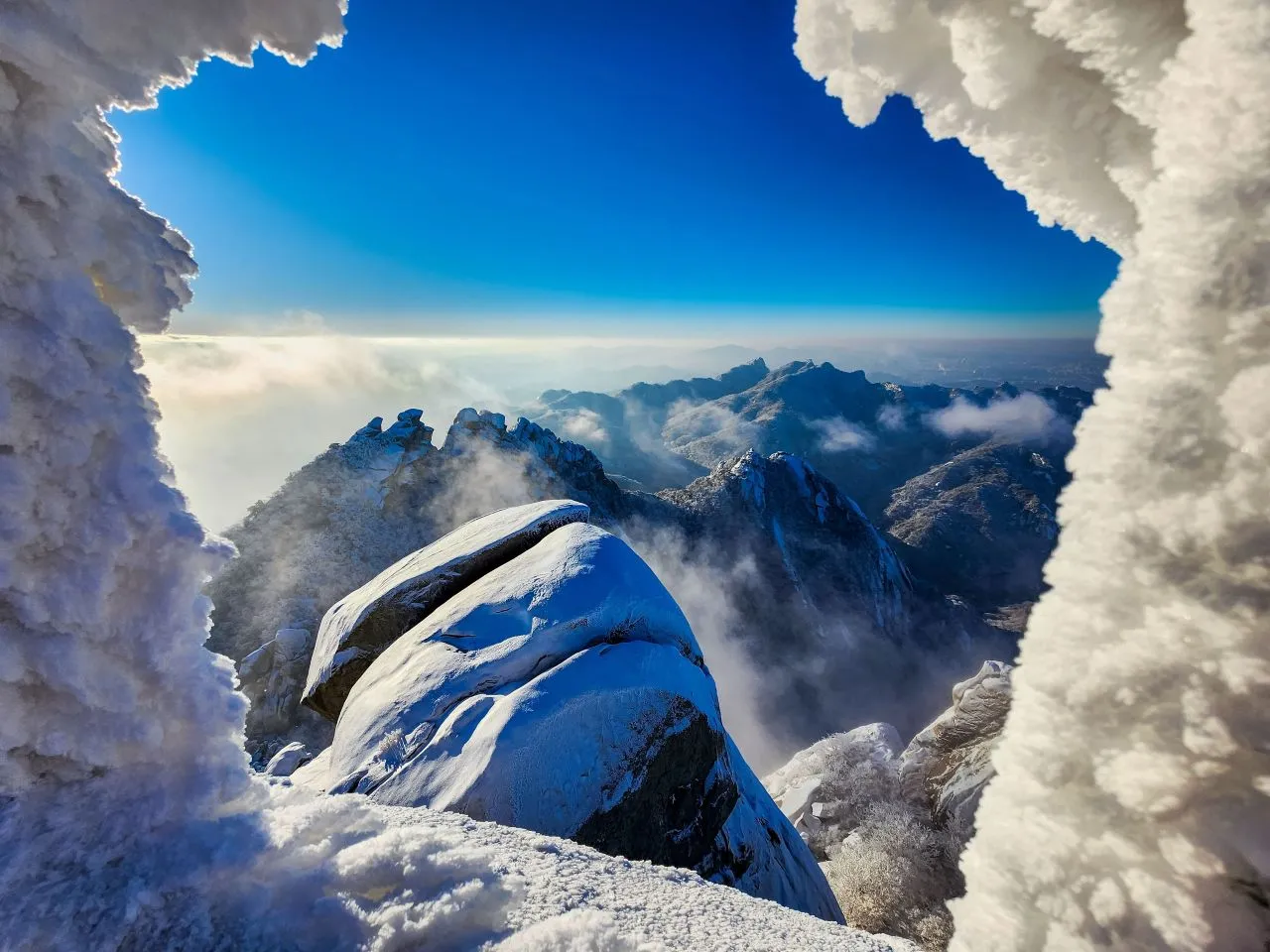
That also means ice, cold, and short daylight. Bring traction gear if the trail notice or the conditions call for it, wear layers, start early, and be ready to turn back. Check the Korea National Park Service notices for your trailhead, and read the Bukhansan hiking guide first if you have not hiked in Korea before. For lower options, see hiking in Seoul mountains by subway.
Where to find more reliable snow near Seoul
Two different things get called snow near Seoul, and they are not the same. The first is natural snowfall in colder, higher places. The second is a ski slope, which is groomed and often supported by snowmaking, so a white slope is not evidence of natural snowfall.
For the first, the Gangwon highlands are colder than Seoul. KMA's Daegwallyeong station has a January mean of -6.9 °C against -1.9 °C in Seoul, daily highs that stay below freezing on about 21 days against 9, and 53.1 mm of precipitation against 16.8 mm (rain and melted snow together). The KMA table does not give snow-day counts for Daegwallyeong, so this guide does not compare snow counts, and a colder place is still no promise of snow on your date.
For the second, ski resorts are a different plan with their own schedules, and the Korea winter travel guide covers the options near Seoul. Nami Island is a common winter day trip for a snowy scene, as the Nami Island guide explains, and the Daegwallyeong Sky Ranch guide says plainly that snow is not promised there either.
If seeing snow is the point of the trip, build a day around a mountain or a ski area and keep the weather as a bonus. The Korea winter itinerary shows how to add a snow day to a city trip.
What to wear on a snowy day
Dress for cold and wet ground, not for the postcard. A warm coat, layers underneath, gloves, a scarf, a hat, and warm socks cover most days in the city.
Shoes matter most. Closed shoes with grip are the baseline, and water resistance helps when snow is melting into slush. Most visitors do not need heavy snow boots for a city snowfall, but they are worth it if you plan to walk a mountain trail or stand outside for a long time.
Smooth-soled shoes on icy palace stone are a common mistake. Wet wool and cold feet end a day outside quickly, so bring a dry pair of socks if you plan to stay out.
Does snow affect transport?
It can, to different degrees. Much of the subway network runs underground, so it is generally less exposed to snow than buses, taxis, and roads. Even so, expect crowding, slower walks to stations, and slippery entrances.
On the surface, traffic may slow, buses and taxis can face delays, and sidewalks and slopes can be icy. Allow extra time, especially for airport transfers and trains. Check your own operator for the day, because service on any given morning depends on how much snow fell and where.
Black ice is a practical caution, not an alarm. Take care on sidewalks, stairs, slopes, palace stone paths, and mountain trails, and walk slowly in the first hours after a freeze.
Forecasts and photography
Check the KMA short-term forecast close to your trip, a few days before and again the evening before each outing. A forecast of snow near your dates can change, and the forecast tells you far more than any average. This guide has no live weather and cannot tell you whether it is snowing now.
For photos, the morning after a snowfall is usually the best chance, because snow is still on roofs and branches and the ground is not yet trampled. It can fall or melt within hours once the sun is out, so move early. A snowy photo shows one good day, not a typical winter day.
Common mistakes
- Treating a cold day as a snowy day
- Reading the first-snow date as the start of reliable snow
- Counting on snow on a specific date, Christmas included
- Planning a trip around snow with no plan for a dry, cold day
- Wearing smooth-soled shoes on icy stone and steps
- Assuming snow in the city means snow on the ridges, or the reverse
- Reading a white ski slope as proof of natural snowfall
- Assuming snow photos online show a typical winter day
Frequently asked questions
Does it snow in Seoul every year?
In a typical year, yes: the KMA 1991 to 2020 normal is about 24 days with snow. The normal says nothing about any single winter, so do not count on snow on your dates.
When is the first snow in Seoul?
The KMA normal for Seoul is 20 November (1991 to 2020), and single years vary by weeks. The record counts the first snow an observer sees at the station, and it can be light and brief.
Which month has the most snow in Seoul?
January, on the KMA normals. It has about 7 snow days, about 8 days with 1 cm or more of snow on the ground, and the highest count of days with 5 cm or more.
Does it snow in Seoul in December?
Yes, on about 6 days in an average December, but snow of 1 cm or more lies on the ground on only about 4. See the Seoul in December guide for more.
Does it snow in Seoul in January?
Yes, and January is the snowiest month on average. It is also the driest month for total precipitation, so many January days are cold and clear.
Does it snow in Seoul in February?
Yes, on about 5 days in an average February. February is milder than January on average, and it is not the same snow season.
Does Seoul have a white Christmas?
Sometimes, but never as a promise. The normals cannot give the odds of snow on 25 December, so plan around lights and warm indoor time and treat snow as a bonus.
Does snow stay on the ground in Seoul?
Sometimes. The KMA data counts about 8 days with 1 cm or more on the ground in an average January, about 4 in December, and about 3 in February. Snow tends to disappear first from roads and sidewalks.
Where can I see snow in Seoul?
If snow has fallen, try the palaces, Namsan, large parks, or Bukhansan. Check the forecast and each place's notice before you go.
Is Bukhansan snowy?
It can be snowier and icier than the city, and snow can last longer there. Check KNPS trail notices, bring traction if the conditions call for it, and mind the short daylight.
Can I count on snow near Seoul?
No. Colder Gangwon areas have better odds of natural snow, but no date is promised. Ski slopes are groomed and often use snowmaking, so a white slope is not evidence of natural snowfall.
Do I need snow boots in Seoul?
Usually not for a city snowfall. Closed, water-resistant shoes with grip and warm socks are enough for most days, and heavier boots help on mountain trails.
Does the subway stop when it snows?
Service can slow or be disrupted, but much of the network runs underground. Surface traffic, buses, taxis, and sidewalks are more exposed, so allow extra time and check your operator.
Can I plan a trip around seeing snow in Seoul?
Not around a date. Pick January for the best average odds, keep a plan for a cold and dry day, and put a mountain or ski day on the schedule if snow is the point.
Check before you go
- KMA short-term forecast and any snow, cold-wave, or wind warnings near your dates
- Palace, Namsan, and Bukhansan notices for hours, closures, and trail conditions
- Your transport operator on the day, especially for airport transfers and trains
- Traction gear if you plan to hike or walk on stone in freezing weather
Sources
- Korea Meteorological AdministrationOfficial weather service
- Korea Meteorological Administration Open Data Portal: 1991 to 2020 climate normals (Busan and Seoul stations)Official weather service
- Korea Meteorological Administration: regional climate characteristics, Seoul (1991 to 2020 normals, including seasonal first-snow date)Official weather service
- Korea Meteorological Administration, Seoul Metropolitan Regional Office: press release on the first snow in Seoul (criterion and year-to-year comparison)Official weather service
- Korea Meteorological Administration Open Data Portal: 1991 to 2020 climate normals (Daegwallyeong station)Official weather service
- Korea National Park Service — Bukhansan National ParkOfficial government site
- Royal Palaces and Tombs Center, visiting hours (official)Official government site
- Visit Seoul, Seoul Tourism Organization (official)Official tourism site
Information is compiled from official sources. Details such as prices, hours, and schedules can change. Confirm time-sensitive facts before you travel.
Last verified on
Related guides
Seoul in December: Weather, Snow, Christmas & What to Wear
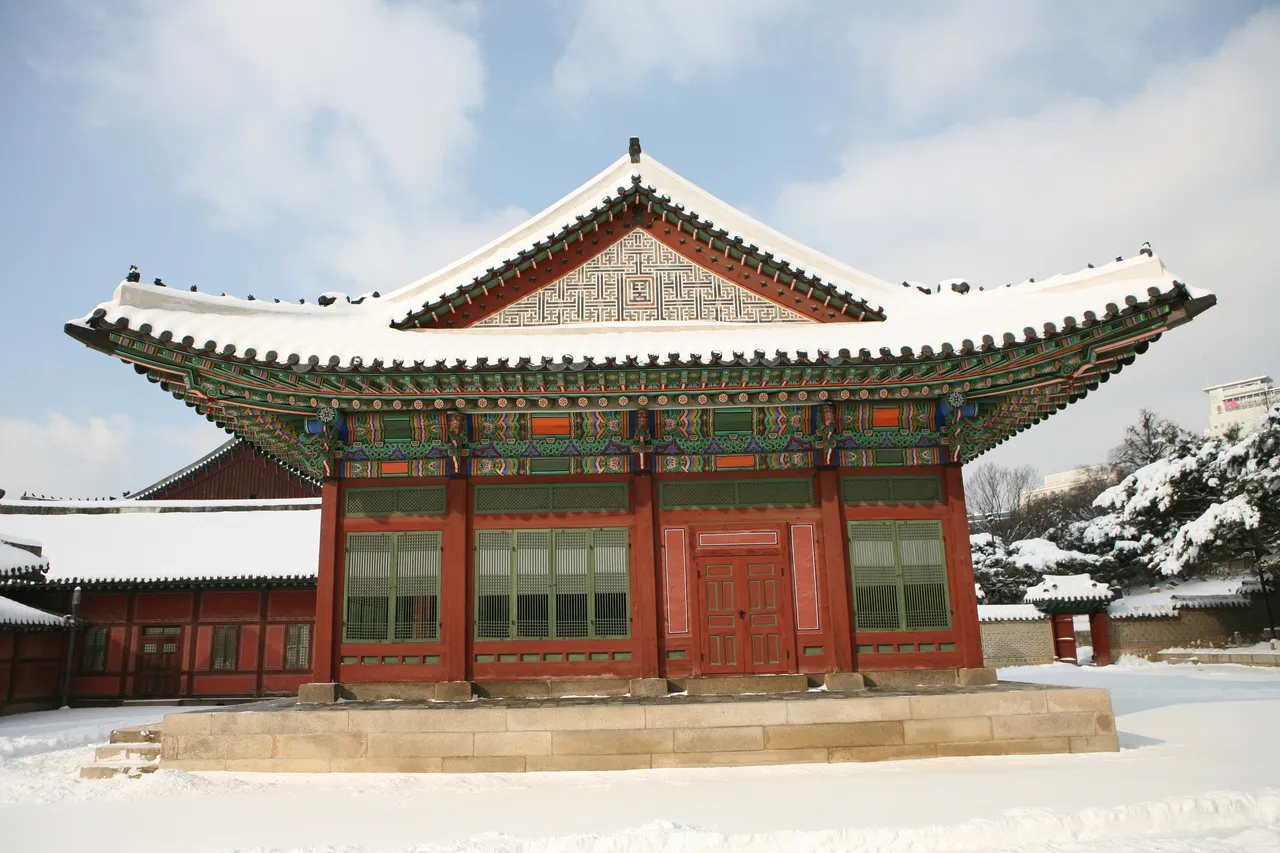
December is the first true winter month in Seoul. Official KMA normals put the average daily range at -3.4 to 4.2 °C, and the first ten days are clearly milder than the rest of the month. Snow is recorded on about 6 days in an average December, yet snow on the ground on a given date, Christmas included, cannot be promised. Below: the numbers, early versus late December, snow, Christmas, and what to wear.
Korea in Winter: Ice Fishing Festivals, Ski Resorts Near Seoul, and How to Survive the Cold
Korean winter is genuinely cold, Seoul regularly drops below freezing, but it's the country's most underrated season: the lowest airfares and hotel rates, palaces far quieter than in spring, snow-and-hanbok photos, and festivals built on the cold. How cold it really is, the Hwacheon ice fishing festival, ski resorts near Seoul, winter food and the jjimjilbang, snow scenery, and exactly what to wear are all below. Festival and resort dates shift every year, so treat timing as approximate and confirm the official dates.