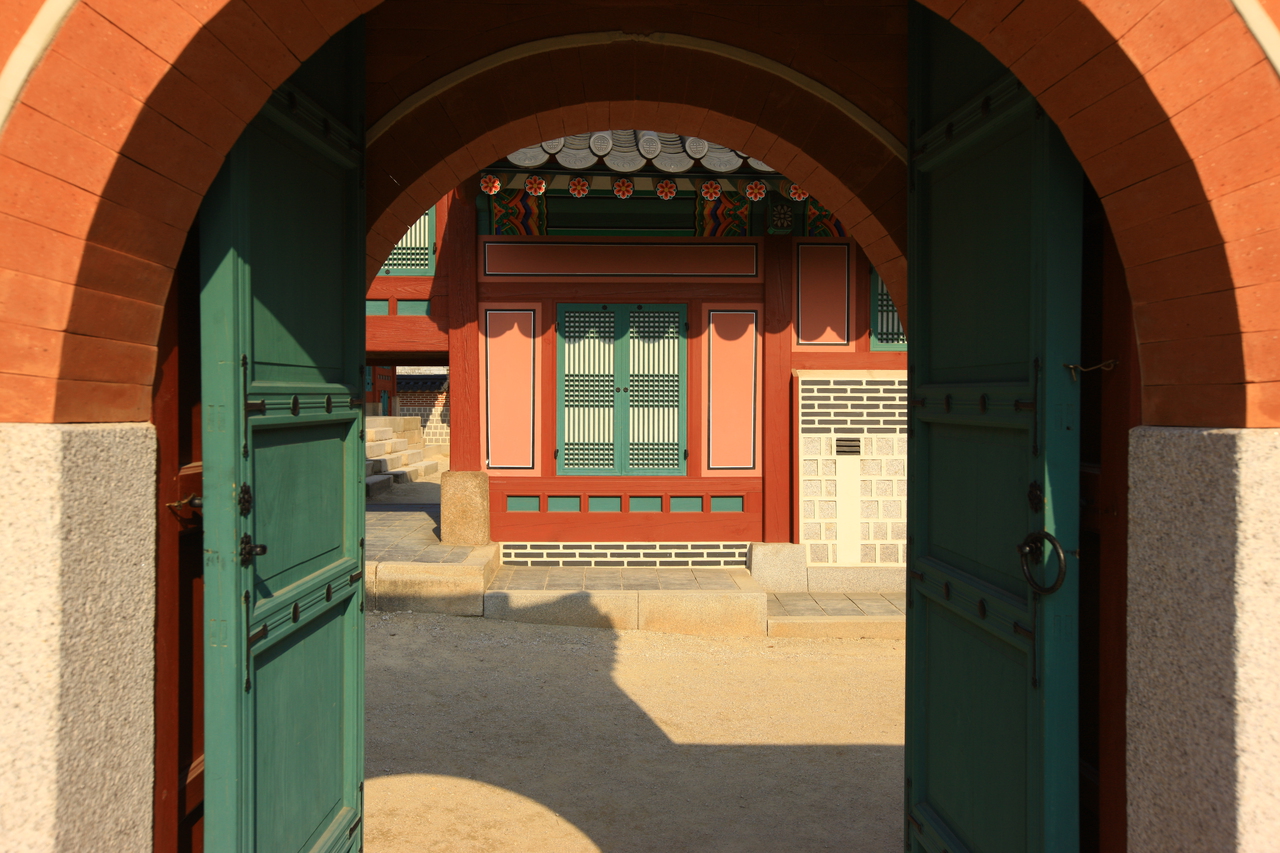
Gyeongbokgung (경복궁) is the largest of Seoul's Joseon palaces, laid out on a north-south axis behind Gwanghwamun. You buy a daytime ticket at the gate, with no online booking for ordinary opening hours.
The regular closed day is Tuesday. If Tuesday is a public holiday or a substitute holiday, the palace opens and closes on the next non-holiday instead.
Adults aged 19 to 64 pay ₩3,000. Qualifying hanbok is free for Koreans and foreigners.
The Royal Guard Changing Ceremony is free at Heungnyemun at 10:00 and 14:00, except closed days. Rain can cancel it.
Hours, tickets, and ceremony times come from the Korea Heritage Service Royal Palaces and Tombs Center, last checked 28 September 2026. Confirm before you go.
Quick facts
- Where
- 161 Sajik-ro, Jongno-gu, Seoul
- Station
- Gyeongbokgung (Line 3), Exit 5
- Closed
- Tuesdays (holiday exception)
- Adult ticket
- ₩3,000, or free in qualifying hanbok
Quick answer
| Question | Short answer |
|---|---|
| Nearest station? | Gyeongbokgung Station (Line 3), Exit 5, about a 2-minute walk |
| Main entrance? | Gwanghwamun, the south gate of the palace, not Gwanghwamun Station |
| Closed day? | Tuesday, with a public-holiday shift |
| Adult admission? | ₩3,000 (group of 10 or more: ₩2,400) |
| Free without hanbok? | Foreigners 18 and under and 65+ with ID. Koreans 24 and under and 65+. Last Wednesday is Culture Day |
| Hanbok free entry? | Yes, if the official dress rule is met. Foreigners qualify |
| Guard ceremony? | 10:00 and 14:00 at Heungnyemun, free, not on closed days |
| Daytime booking? | No for ordinary entry |
| Night opening? | Seasonal, not every night |
How to get to Gyeongbokgung
Gyeongbokgung Station (Line 3), Exit 5 is the first-timer choice. The palace office lists it as about a 2-minute walk to the grounds.
Walk toward the wide stone gate with two haetae statues. That gate is Gwanghwamun, the palace's main south entrance. Ticket booths sit on this approach.
Gwanghwamun Station (Line 5), Exit 2 is a longer walk, about 6 minutes on the official page. It drops you on the square south of the gate. Useful if you are already on Line 5. Worse if you want the shortest walk.
Anguk Station (Line 3), Exit 1 is also about 6 minutes. Use it when you plan to continue east into Bukchon.
Gwanghwamun Gate is not Gwanghwamun Station. The gate is the palace. The station is Line 5, a few blocks south.
Use Naver Map or KakaoMap for the live walk. See the Korea travel apps guide.
Opening hours and closed days
Daytime hours change by season. Last admission is one hour before closing.
| Period | Hours | Last admission |
|---|---|---|
| January to February, November to December | 09:00 to 17:00 | 16:00 |
| March to May, September to October | 09:00 to 18:00 | 17:00 |
| June to August | 09:00 to 18:30 | 17:30 |
Closed Tuesdays. If that Tuesday is a public holiday or a substitute holiday, the palace opens and takes the next non-holiday as its closed day.
Temporary closures happen for safety checks and events. Check the palace notice for your date.
Tickets and free admission
Ordinary daytime entry is a walk-up ticket. You do not need an online reservation for a standard visit.
| Category | Fee (official list) |
|---|---|
| Adults, 19 to 64 | ₩3,000 (group of 10+: ₩2,400) |
| Foreign visitors 18 and under | Free with ID |
| Korean visitors 24 and under | Free with ID |
| Ages 65 and over | Free with ID |
| Qualifying hanbok | Free |
| Culture Day (last Wednesday of the month) | Free daytime admission |
Bring photo ID for age-based free entry. A rental-shop receipt does not replace the clothing check at the gate.
A Royal Palace Pass is listed at ₩6,000, valid 6 months, for one entry each to Gyeongbokgung, Changdeokgung grounds, Changgyeonggung, Deoksugung, and Jongmyo. Changdeokgung's Secret Garden is not included.
Older English pages still show a ₩10,000 combination ticket. Use the current Royal Palaces fee page, not archived palace sites.
Hanbok free entry
The rule is published by the Royal Palaces and Tombs Center, not by rental shops. Koreans and foreigners both qualify.
What counts: traditional hanbok and living hanbok (생활한복). The set is a jeogori (top) with a closing collar, plus a skirt or trousers. Goreum ties are not required if the collar form is correct. Zipper-waist trousers can still count when the shape matches hanbok trousers.
What is refused:
- Jeogori with jeans, or a hanbok skirt with a T-shirt
- A durumagi (overcoat) alone
- A T-shirt-style top marketed as living hanbok
- A one-piece hanbok-style dress without a separate jeogori
- Excessive exposure
You still go through the entrance. Staff look at the outfit. A shop receipt does not override the guideline.
Hanbok does not automatically make night opening, Starlight Tour, or other ticketed programs free. Those have their own notices.
Shops cluster by Gyeongbokgung Station Exit 5. Details, including what the gate usually accepts, are in the Seoul hanbok rental guide.
Changing of the Guard
The Palace Royal Guard Changing Ceremony (수문장 교대의식) is a free reenactment at Heungnyemun, the next gate after Gwanghwamun.
The Royal Palaces events page lists:
- Guard changing: 10:00 and 14:00, about 20 minutes, except Tuesdays and other closed days
- Gwanghwamun guarding ceremony: 11:00 and 13:00, about 10 minutes
- Public training: 09:35 and 13:35, about 15 minutes
Watch from the Heungnyemun courtyard, where staff and barriers direct the crowd. Arrive somewhat before the start if you want a clearer viewing position. There is no reservation.
Visit Korea notes the events may be cancelled in rain. Heat, cold, or official business can also change the schedule. If the courtyard is empty at the listed time, it was called off.
The ceremony is not daily on Tuesdays, because the palace is closed.
What to see
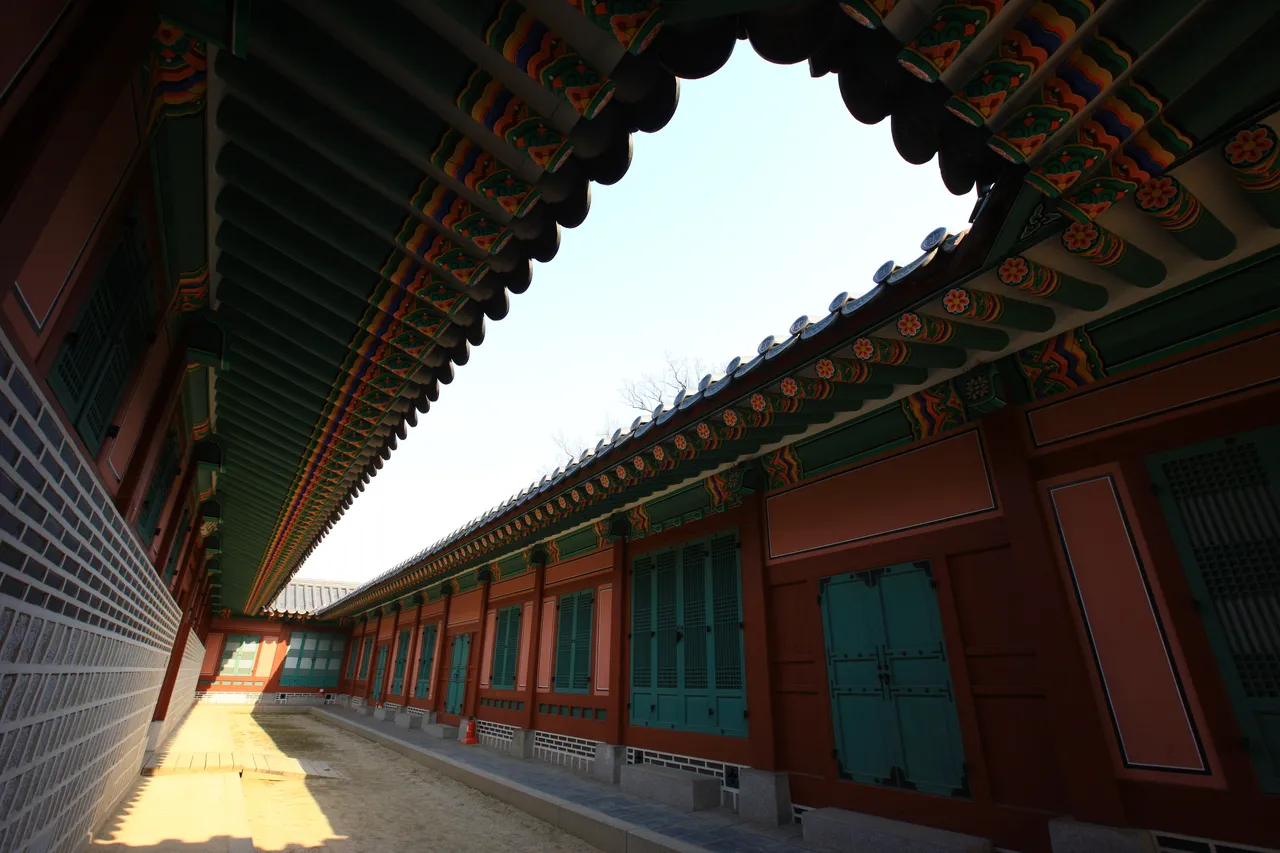
Stay on the public axis. You do not need every named hall.
Gwanghwamun. The three-arch south gate. The center arch was the king's. Photograph from the plaza, then go in.
Heungnyemun. The second gate, and the ceremony courtyard. The National Palace Museum of Korea sits to the west of this area, outside the inner residential courts.
Geunjeongjeon. The throne hall. This is the building most visitors come to see. From 2 September to 31 October 2026, the palace has restricted access to the woldae (stone platform) in front of Geunjeongjeon. You can still view the hall from the courtyard. Do not climb the platform if signs say no.
Sajeongjeon, Gangnyeongjeon, Gyotaejeon. The king's work hall and the royal living quarters behind the throne hall. Walk through. Do not treat side rooms as dressing rooms.
Gyeonghoeru. The large pavilion over a square pond, west of the inner courts. The exterior view is the visit. Interior access is a separate reserved program when it is offered. Do not assume you can walk inside.
Hyangwonjeong. A smaller pavilion on a pond in the north garden. Photograph from the path. The National Folk Museum of Korea sits to the east of this area, still on the palace grounds.
Suggested walking route
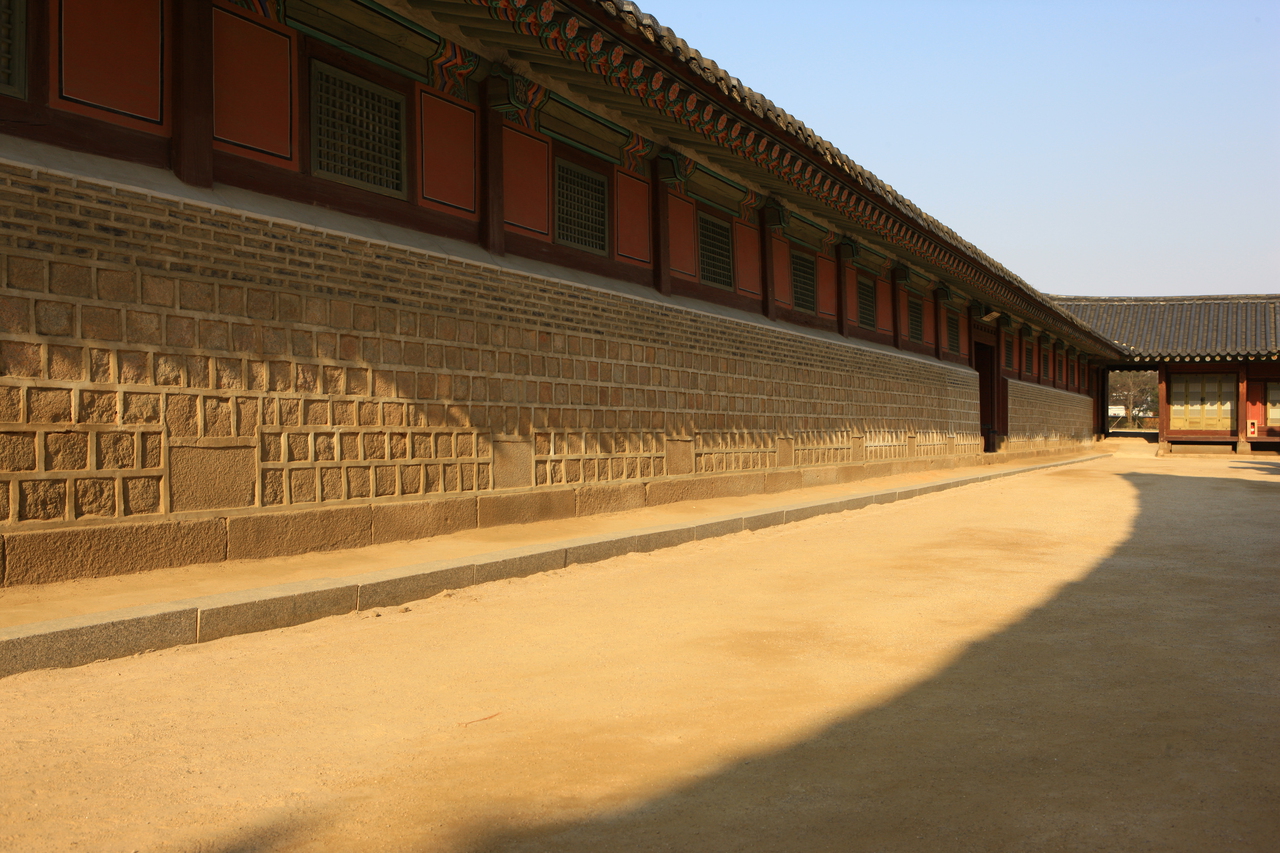
Short route (about 60 to 90 minutes): Gwanghwamun → tickets → Heungnyemun (stay if a ceremony is about to start) → Geunjeongjeon courtyard → back to Exit 5.
Normal first visit (about 2 to 3 hours):
- Gwanghwamun and tickets.
- Heungnyemun. Time this for 10:00 if you want the ceremony.
- Geunjeongjeon courtyard.
- Sajeongjeon and the residential courts.
- Gyeonghoeru from the pond edge.
- Hyangwonjeong.
- Exit east toward Bukchon after 10:00, or west back to Exit 5 and the Palace Museum.
Do not reverse that order if you also want Bukchon. The palace opens at 09:00. Bukchon's Red Zone is a tourist walk only 10:00 to 17:00.
How long to spend
Treat these as ranges, not a timetable.
| Visit | Range |
|---|---|
| Highlights only | About 60 to 90 minutes |
| Standard palace walk | About 2 to 3 hours |
| Palace plus one museum | A half day |
| Palace plus hanbok photos | A half day, starting at opening |
If you add Bukchon, leave the palace with enough time to walk the lanes and exit the Red Zone before 17:00.
Best time to visit
Weekday opening at 09:00 is the calmest window. Tour groups thicken around the 10:00 ceremony.
Late morning is busier on the main axis. Late afternoon is finer light, and you must watch last admission.
Summer is hot on the gravel. Start at 09:00 and use a museum as shade. Winter is cold and icy on stone. Spring and autumn are the usual photography seasons. Blossom and foliage weeks move every year, so do not plan a specific date from a blog.
Culture Day (last Wednesday) is free and more crowded.
Night opening
Night opening is seasonal. It is not a year-round evening palace.
The 2026 autumn night opening ran 2 September to 2 October, 19:00 to 21:30, last admission 20:30, closed Mondays and Tuesdays. Online tickets were capped. A smaller same-day quota at the Gwanghwamun booth was listed for foreign visitors with ID.
After 2 October 2026, do not assume another night is on sale. Wait for the next official notice. Ticket rules, open buildings, and prices change by season.
Hanbok and other free-entry categories for night programs follow that season's notice, not the daytime walk-up rule. Details and how night tickets differ from daytime entry are in the palace night viewing guide.
The two museums
They are not the same museum.
National Palace Museum of Korea sits west of Heungnyemun, beside the palace rather than deep in the inner courts. It is a separate building with its own hours and closed days, not the palace Tuesday rule. Admission is listed as free. Confirm hours on the museum site. Korean and English pages have not always matched.
National Folk Museum of Korea sits east of Hyangwonjeong, on the palace grounds. Exhibits are free, but the usual approach is through the palace after a palace ticket. Hours follow a seasonal daytime schedule, with a Wednesday evening extension. Closed 1 January, Seollal, and Chuseok. Permanent Exhibition Hall 1 is closed 30 September to 21 December 2026 for renovation.
Do not treat either museum as a substitute for the palace walk, and do not treat them as one ticket.
Gyeongbokgung and Bukchon
The efficient half day is palace first, Bukchon second.
- Enter Gyeongbokgung at 09:00 (skip Tuesdays).
- See Geunjeongjeon and, if you want it, the 10:00 ceremony.
- Exit east / northeast after 10:00.
- Walk Bukchon on public streets only.
- Leave Bukchon's Red Zone (Bukchon-ro 11-gil) before 17:00.
Bukchon is a residential neighborhood. Tourist visits in the Red Zone outside 10:00 to 17:00 can draw a fine. Do not go there at dawn or after dark for empty photos.
Hanbok works on this route if you rent near Exit 5 first. The same Bukchon quiet rules still apply.
For lunch nearby, see the Jongno restaurant guide. For a base in this part of Seoul, see where to stay in Jongno, Insadong, and Gwanghwamun. A first-time plan that already uses this cluster is the 2-night, 3-day itinerary.
Practical tips
- Gravel, steps, and long courtyards. The palace is not fully wheelchair accessible. Strollers work on the main axis better than in Bukchon's alleys.
- Toilets are at the palace, not a guarantee in Bukchon's lanes.
- Photos of architecture from public paths are normal. Do not climb halls, walls, or the Geunjeongjeon platform when it is closed.
- Rain does not automatically close the palace. It often cancels the ceremony.
- Food: follow posted signs. Do not picnic on halls or in exhibition rooms.
- Tuesday backup: Changdeokgung, Deoksugung, and Changgyeonggung are the usual Monday-closed palaces, so Tuesday is when they are open.
Common mistakes
- Showing up on a Tuesday
- Confusing Gwanghwamun Gate with Gwanghwamun Station
- Assuming a one-piece rental dress is free entry
- Treating night opening as a nightly walk-up
- Walking into Bukchon for photos before 10:00 or after 17:00
- Skipping last admission by lingering at Hyangwonjeong
FAQ
Is Gyeongbokgung free?
Not for most foreign adults. The walk-up adult ticket is ₩3,000. Free categories include qualifying hanbok, ages 65 and over, foreign visitors 18 and under, and Culture Day.
Can foreigners enter free wearing hanbok?
Yes, if the outfit meets the official set rule. The published Q&A says nationality does not matter. The gate still checks the clothes.
What day is Gyeongbokgung closed?
Tuesday, unless that Tuesday is a public holiday or substitute holiday, in which case it opens and closes the next non-holiday.
How long do I need?
About 2 to 3 hours for a first visit. An hour can cover the throne hall if that is all you want.
Is the guard-changing ceremony free?
Yes. No ticket beyond palace admission, and it is outdoors at Heungnyemun. It is not held on closed days, and rain can cancel it.
Do I need to book tickets?
Not for ordinary daytime entry. Night opening is a different, seasonal product and often needs a ticket in advance.
Can I visit in the rain?
The grounds usually stay open. The ceremony may not. Bring shoes that can handle wet gravel.
Can I bring food?
Follow posted signs. Do not eat in halls or on historic platforms.
Can I take photos?
Yes, of architecture from public paths. No climbing, and follow any no-tripod or no-drone signs.
Is Gyeongbokgung wheelchair accessible?
Only in parts. The main south-to-north courts are the easiest. Gravel, thresholds, and restricted platforms remain. Confirm current accessible routing at the information desk.
Can I visit Bukchon afterward?
Yes, after 10:00, and leave the Red Zone before 17:00. Read the Bukchon guide first.
Is night opening available every day?
No. It runs in announced seasons only, with extra Monday as well as Tuesday closures in the 2026 autumn window. After that window, check the next official notice.
Gyeongbokgung rewards a simple plan: Exit 5, a Tuesday check, a morning ticket, the throne hall, then east to Bukchon only inside its visiting hours. The ceremony is a bonus if the weather holds. The houses in Bukchon are still homes.
Sources
- Royal Palaces and Tombs Center, Korea Heritage Service (궁능유적본부)Official government site
- Royal Palaces and Tombs Center, visiting hours (official)Official government site
- Royal Palaces and Tombs Center, admission fees (official)Official government site
- Royal Palaces and Tombs Center, hanbok free-entry guidelines (official)Official government site
- Royal Palaces and Tombs Center, Gyeongbokgung directions (official)Official government site
- Visit Korea, Gyeongbokgung PalaceOfficial tourism site
- Visit Korea, Palace Royal Guard Changing CeremonyOfficial tourism site
- Korea Heritage Service (국가유산청)Official government site
- National Folk Museum of Korea (official)Official government site
- National Palace Museum of Korea (official)Official government site
- Visit KoreaOfficial tourism site
Information is compiled from official sources. Details such as prices, hours, and schedules can change. Confirm time-sensitive facts before you travel.
Last verified on
Related guides
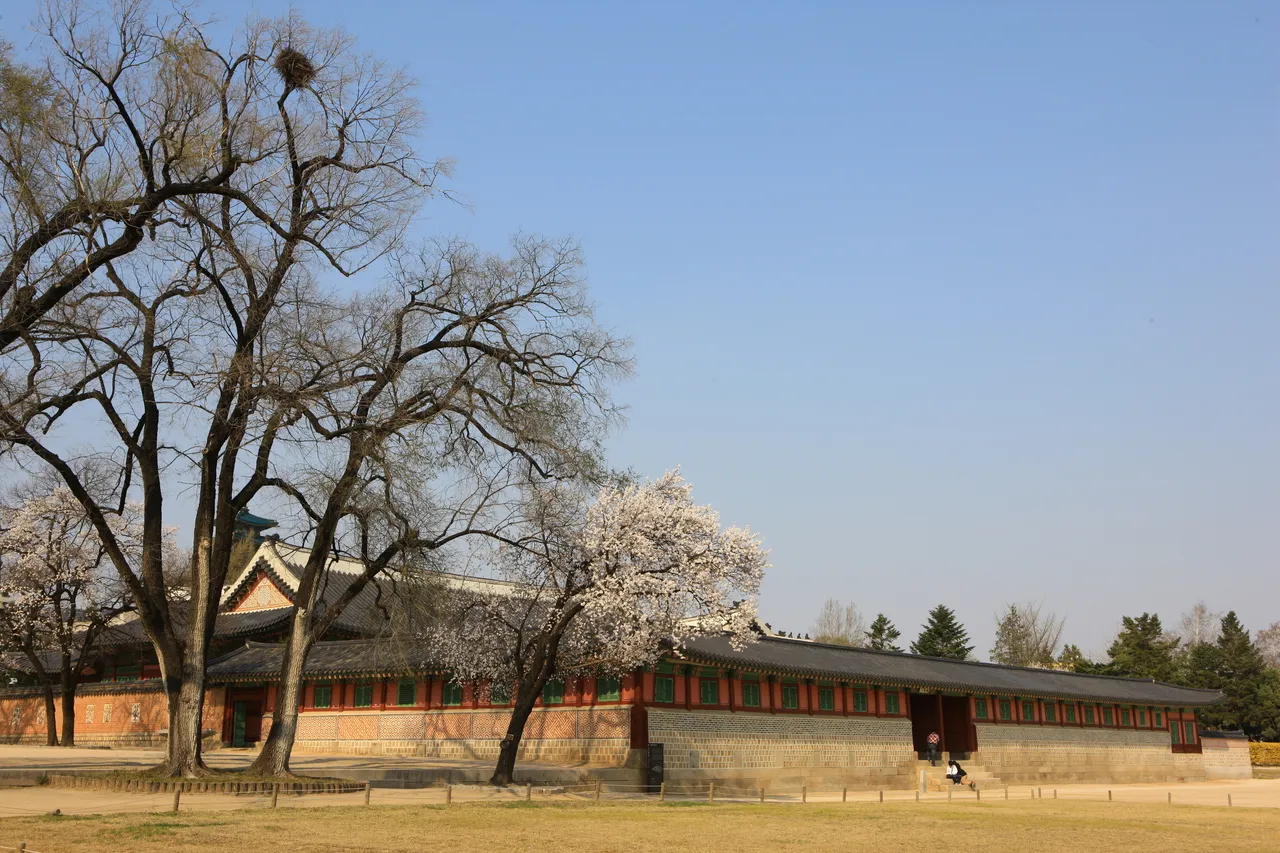
Seoul Hanbok Rental Guide: Gyeongbokgung, Palace Free Entry, Photo Routes, and What to Check
Renting a hanbok (한복) near Seoul's old palaces is among the easier and most rewarding cultural experiences for first-time visitors: choose an outfit, wear it for a few hours, and walk into the major palaces for free while you have it on. This guide focuses on areas, checklists, and the official rules: where to rent, exactly what qualifies for free entry (and what gets refused), photo routes, seasonal and etiquette notes, and what to confirm before you book. Prices, rental times, and shop rules vary, so check with the shop and the official palace sources before you go.
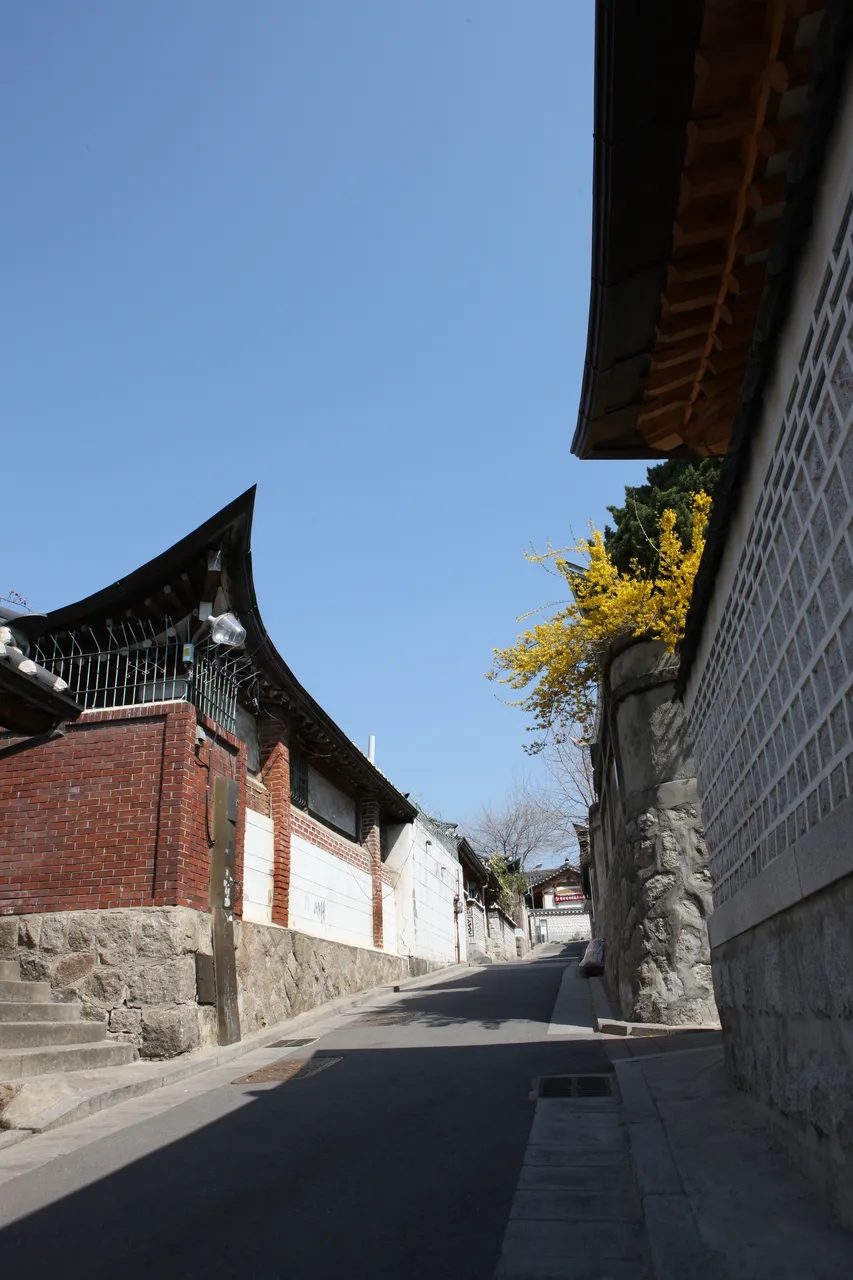
Bukchon Hanok Village Guide: How to Visit, What to See, and Current Visitor Rules
Bukchon is a lived-in hanok neighborhood between Gyeongbokgung and Changdeokgung, not a gated park. Start at Anguk Station (Line 3), Exit 2, and walk uphill. Tourist visits in the Red Zone on Bukchon-ro 11-gil are allowed only 10:00 to 17:00; sightseeing outside those hours can draw a ₩100,000 fine. Private homes are not attractions. Public cultural hanok and the craft museum nearby are the places you can actually enter.