Seoul vs Tokyo is one of the most common questions people ask when planning a first Asia trip. Here is the short answer before the detail.
Pick Seoul for a shorter trip. Palaces, hanok lanes, mountains, beauty shopping, and late-night streets sit close together, so four days go further.
Pick Tokyo for a longer one. It is a much larger city of distinct neighborhoods, and it rewards the extra days you give it.
Neither is better overall, and cost is not a reliable tiebreaker. What follows compares the things that actually change a trip.
Which city matches your priority
| If you mainly want | Lean toward |
|---|---|
| A compact first trip of 3 to 4 days | Seoul |
| A larger city over a week or more | Tokyo |
| Royal palaces and hanok streets | Seoul |
| Temples, shrines, and old districts | Tokyo |
| K-pop, K-drama, K-beauty | Seoul |
| Anime, manga, gaming | Tokyo |
| Mountains inside the city | Seoul |
| Rail exploration and day-trip variety | Tokyo |
| Late-night food and cafes | Seoul |
| Solo dining without friction | Tokyo |
Rows are tendencies, not rules. Every one gets qualified below.
Seoul vs Tokyo at a glance
| Seoul | Tokyo | |
|---|---|---|
| Shape | Main visitor areas sit fairly close | Many separate centers, spread wide |
| History | Royal palaces, hanok districts, city wall | Temples, shrines, gardens, old districts |
| Modern culture | K-pop, K-drama, K-beauty, cafes | Anime, manga, design, gaming |
| Transport | One subway and bus network | JR, metro, and private railways |
| Food | Barbecue, chicken, stews, markets | Sushi, ramen, izakaya, regional cuisine |
| Nature | Mountains and river inside the city | Parks and gardens; mountains further out |
| Day trips | Suwon, DMZ, Nami Island, Chuncheon | Kamakura, Nikko, Hakone, Yokohama |
Atmosphere and city shape
Seoul changes character between subway stops. A palace wall can sit minutes from a glass business district, and cafe streets, beauty shops, and residential lanes shift fast as you move.
Mountains are visible from much of the city and the Han River cuts through the middle.
Tokyo is larger and more decentralized. Each major area behaves like its own city, and a full day in Shibuya, Shinjuku, Asakusa, or Ginza will not exhaust it.
That means train travel becomes part of the experience rather than an interruption.
- Choose Seoul if you want less travel time between different kinds of days.
- Choose Tokyo if you enjoy working through many large neighborhoods.
History and traditional culture
Both cities have deep history. They present it differently.
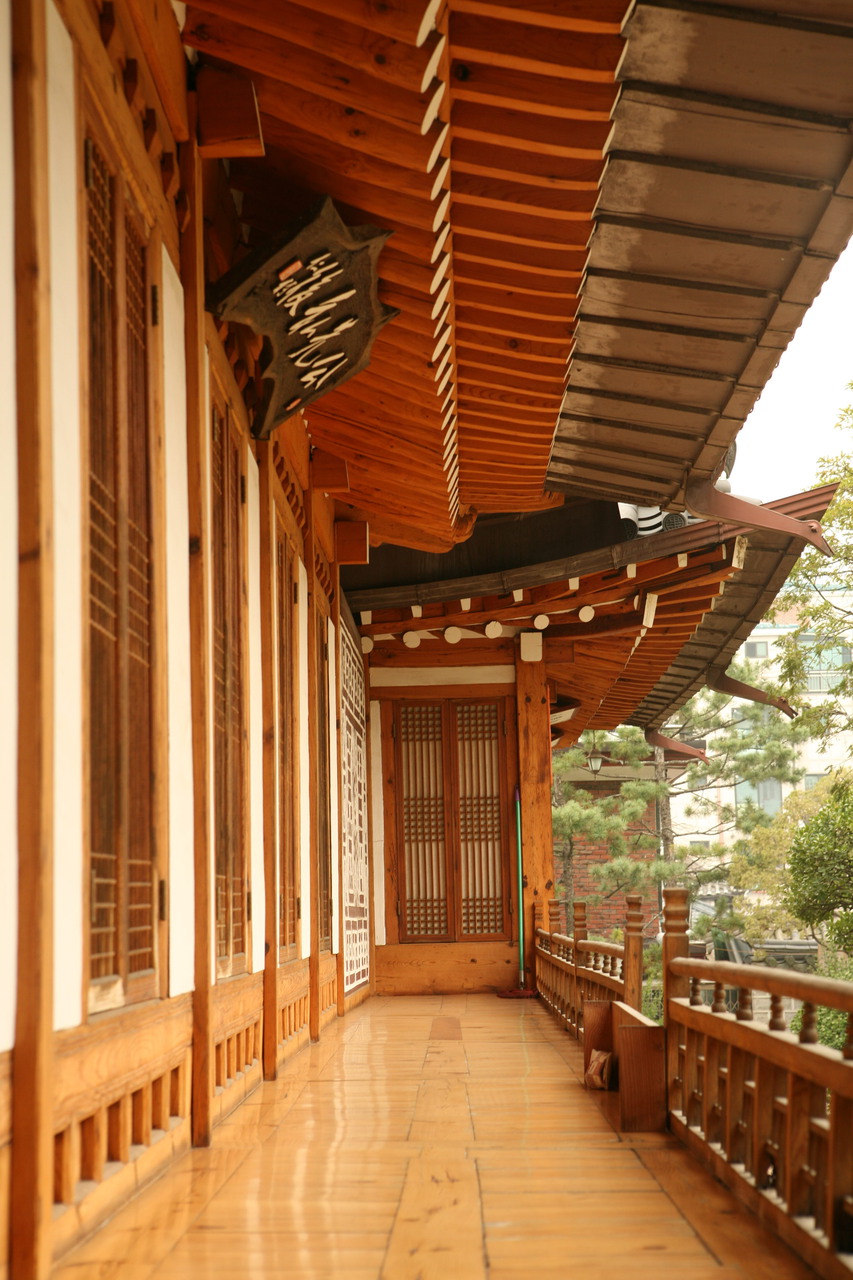
Seoul concentrates it. Gyeongbokgung, Changdeokgung, and Deoksugung palaces sit within a walkable core, alongside Jongmyo shrine and the hanok lanes of Bukchon and Seochon. A palace, hanok, and cafe route is easy to plan on a first visit. The National Museum of Korea covers the wider story.
Tokyo distributes it. Sensoji in Asakusa, Meiji Jingu near Harajuku, the Imperial Palace grounds, and the old lanes of Yanaka each sit in different parts of the city. For a stronger temple day, many visitors add Kamakura or Nikko.

Neither city lacks what the other has. Seoul has Buddhist temples; Tokyo has imperial history. The difference is how tightly it is clustered.
- Choose Seoul if you want traditional architecture in one concentrated route.
- Choose Tokyo if you are happy travelling between landmarks across a larger city.
Food
Neither city has better food. Your experience will depend far more on which restaurants you pick.
Seoul leans social and shared: barbecue, fried chicken, dakgalbi, bibimbap, cold naengmyeon, tteokbokki, and a deep range of stews. Markets and convenience stores cover the cheap end, and the cafe scene runs to large, design-led spaces. See what to eat in Korea for the dishes themselves.
Tokyo leans specialist: sushi, ramen, soba, tempura, tonkatsu, yakitori, izakaya plates, and curry, with regional Japanese cuisines unusually well represented. Its cafe culture runs to kissaten and precision coffee rather than large themed rooms.
| Seoul | Tokyo | |
|---|---|---|
| Solo dining | Workable, but some dishes are portioned for two | Strong, counter seating is normal |
| Late-night | Extensive in the right districts | Available, shaped by last-train timing |
| Cafes | Large, visual, dessert-led | Kissaten, specialty coffee, patisserie |
- Choose Seoul if you want shared meals, markets, and late-night eating.
- Choose Tokyo if you want single-dish specialists and easy solo meals.
Shopping and pop culture
Seoul concentrates shopping into walkable clusters. Beauty retail is the clearest strength, with Olive Young widespread and Myeongdong dense with cosmetics. Seongsu and Hongdae carry trend-led fashion and frequent pop-ups, and K-pop albums and merchandise are easy to find.
Tokyo rewards knowing what you want. Official Tokyo tourism material describes its shopping as neighborhood-specific, so pick districts by interest: Ginza for department stores, Shibuya and Harajuku for fashion, Akihabara and Nakano for electronics, anime, and character goods. Japanese stationery and kitchen goods are unusually deep.
On fandom the choice is usually straightforward. Seoul is the more direct destination for K-pop, K-drama, and beauty culture. Tokyo is the more direct destination for anime, manga, gaming, and arcades.
Getting around, and which airport
Both cities are fully navigable without a car. The difference is shape, not quality.
Seoul runs one extensive subway and bus network reaching most visitor destinations, with real-time bus information and multilingual ticket machines. A single card covers subway, bus, and many taxis, which the T-money card guide explains.
Tokyo has one of the most comprehensive urban rail networks anywhere. Official Tokyo guidance describes travel across JR East, the Tokyo Metro and Toei subways, and local private railways, using IC cards, passes, or individual tickets. The reach is exceptional; the trade-off is several operators and large interchange stations.
Airports matter more than people expect. Seoul is served mainly by Incheon, with Gimpo closer to the city. Tokyo is served by Haneda and Narita, and official figures put Haneda at roughly 15 km from central Tokyo, within about an hour of most major neighborhoods, while Narita sits around 50 to 60 km out.
For late arrivals in either city, check whether regular trains and buses still run when you land. Services stop overnight, and a late landing can mean a much more expensive transfer.
- Choose Seoul if you want a network that is quicker to learn on a short trip.
- It depends if you plan heavy day trips, where Tokyo's regional rail reach wins.
What it costs
Treating one city as the budget option is the most common planning mistake here.
Seoul is often perceived as more affordable for casual meals, cafes, and beauty shopping. Tokyo has a very large supply of inexpensive meals and business hotels, which offsets costs elsewhere.
| Cost area | Seoul tendency | Tokyo tendency |
|---|---|---|
| Budget food | Markets, convenience stores, casual spots | Chains, standing counters, convenience stores |
| Accommodation | Central popular areas get expensive | Central hubs get expensive |
| Attractions | Many low-cost or free cultural sites | Free districts plus paid museums and viewpoints |
Where to stay
| Travel style | Seoul | Tokyo |
|---|---|---|
| First-time sightseeing | Myeongdong or Jongno | Shinjuku, Ueno, or Asakusa |
| Nightlife | Hongdae or Itaewon | Shinjuku or Shibuya |
| Shopping | Myeongdong, Seongsu, Gangnam | Shibuya, Ginza, Shinjuku |
| Historic atmosphere | Jongno | Asakusa or Ueno |
Prices, noise, and how a street feels vary a lot within each area, sometimes block to block. Read the property's actual location rather than trusting the district name. Our where to stay in Seoul guide breaks down the Seoul side.
Staying far from a station to save a little usually costs more in time and taxis than it saves.
Nights out
Seoul concentrates evening life in Hongdae, Itaewon, Euljiro, and Gangnam. Late dining is a genuine feature: fried chicken, pocha tents, karaoke rooms, and cafes open past midnight in busier districts. Quieter residential areas still wind down early.
Tokyo builds nightlife around izakaya, small specialist bars, and compact districts such as Shinjuku, Shibuya, and Roppongi. Many of the most interesting bars seat only a handful of people.
If you do not drink, both cities work well after dark: night views, late cafes, shopping streets, and river or park walks. Our guide to things to do in Seoul at night covers the Seoul side.
Nature and day trips
Seoul has mountains inside the city. Bukhansan, Inwangsan, Namsan, and Achasan are reachable by public transport, with Han River parks and Seoul Forest as flatter options. You can hike and be back downtown for dinner.
Tokyo has large formal parks, gardens, and waterfront, with Mount Takao on the western edge and Hakone or Kamakura a rail journey away. The outdoor experience usually means travelling out.
| From Seoul | From Tokyo |
|---|---|
| Suwon Hwaseong fortress | Kamakura temples and coast |
| Nami Island | Nikko shrines |
| Chuncheon | Hakone hot springs |
| DMZ tours | Mount Takao and Kawagoe |
Tokyo offers greater regional variety. Seoul's popular day trips are easier to understand on a short first visit. Either way, budget the travel time honestly: a day trip is a day.
Travelling with kids, alone, or as a couple
Families. Seoul suits families wanting a compact mix of palaces, parks, food, and one theme park, with tighter sightseeing clusters. The catch is hills. Tokyo has a deeper bench of family attractions including the Disney resorts, aquariums, and hands-on museums, but very large stations and long transfers tire small children faster than the schedule suggests.
Solo travelers. Tokyo has the clear edge for eating alone: counter seating is normal and single portions are standard. Seoul suits solo days built around cafes, shopping, and cultural routes, though some Korean dishes are portioned for two or more.
Couples. Both work, in different registers. Seoul offers palace walks, river evenings, and cafe districts in a compact area. Tokyo offers gardens, observation decks, and quiet neighborhood bars across a larger city.
If you have dietary needs
Neither city should be treated as automatically halal-friendly, vegetarian-safe, or allergy-safe. Both require checking restaurant by restaurant.
In Seoul, Itaewon holds the most visible cluster of halal-certified and Muslim-oriented restaurants. Korean dishes may contain pork, meat or seafood broth, fish sauce, fermented shrimp, or alcohol-based seasoning, and grills are often shared. Our Korea food guide for Muslim travelers covers what to ask.
In Tokyo, halal and vegetarian options exist and are more numerous in major visitor districts, helped by sheer restaurant volume. Japanese broths and sauces frequently contain pork, fish, bonito, mirin, or alcohol, and dashi in particular turns many plant-looking dishes non-vegetarian.
Language, payment, and connectivity
Both cities are manageable without speaking the local language, and English signage is widespread across transit and tourist areas.
Tokyo's rail signage is extensively multilingual, though the network's complexity can still be disorienting. Seoul's tourist routes are simpler to follow, while Korean-only menus can be a hurdle.
On payment, neither stereotype holds: Japan is not cash-only, and Korea is not entirely cashless. Card acceptance is broad in both, but small restaurants, market stalls, and some facilities still want cash. Carry some of both, and see how to pay in Korea for the Korean side.
Both cities run rechargeable IC-style transit cards. Whether your phone's wallet can hold one depends on your device and where you bought it, so verify for your own handset rather than assuming.
How many days, and a four-day shape
| Trip length | Seoul | Tokyo |
|---|---|---|
| 3 days | Main highlights, selectively | Possible with a tight shortlist |
| 4 to 5 days | Key districts plus a day trip | Solid introduction to several districts |
| 7 days | Deeper neighborhoods and day trips | Strong for broad exploration |
| 10+ days | Add Busan, Gyeongju, or Jeju | Add wider regional travel |
Four days in Seoul: palaces and Bukchon; Seoul Forest and Seongsu; the National Museum and Namsan or Myeongdong; then a day trip. The Seoul 3-day itinerary is a tighter version.
Four days in Tokyo: Asakusa and Ueno; Meiji Jingu, Harajuku, and Shibuya; Shinjuku plus one museum or garden; then a day trip.
Neither city can be finished, and treating three days as full coverage is a mistake in both.
Can you do both?
Yes, and it is reasonable for a longer East Asia trip. Flights between Korea and Japan are frequent and short.
As a rough minimum, four nights in each gives a fair comparison. Do not try it in under a week: the flight is short, but door to door you lose most of a day to transfers, check-in, and immigration.
Check current flight routes, which airports they use, and baggage rules before booking. Entry conditions vary by nationality and change, so confirm the official position for your own passport.
Common mistakes
- Choosing purely on which city looks cheaper, when neighborhood and season matter more.
- Packing too many Tokyo neighborhoods into one day.
- Planning Seoul routes without accounting for hills.
- Underestimating transfer time from the farther airport.
- Forgetting to check the last train in Tokyo before a late evening.
- Assuming everywhere in Seoul stays open late, when that varies by district.
- Trying to do both cities in less than a week.
FAQ
Is Seoul or Tokyo better for a first trip to Asia?
Both work well. Seoul is often easier to cover in a short trip because the main sights sit closer together. Tokyo suits travelers with more days who want a much larger city.
Is Seoul cheaper than Tokyo?
Not reliably. Seoul is often perceived as cheaper for casual meals, cafes, and beauty shopping, but Tokyo has abundant low-cost food and hotels. Season, neighborhood, booking timing, and the exchange rate matter more than the city.
Which city has better food?
Neither. Restaurant choice decides this. Seoul leans toward shared, bold dishes and late-night eating; Tokyo toward specialist single-dish restaurants and solo dining.
Is Seoul or Tokyo easier to travel around?
Seoul's network is usually quicker to learn on a short trip. Tokyo's coverage is more comprehensive but involves several operators and large interchange stations. Both work well without a car.
Which city is better for families?
Seoul suits families wanting culture, parks, and a theme park in a tighter area. Tokyo suits families prioritizing Disney, character attractions, and indoor variety. Weigh Seoul's hills against Tokyo's long station transfers.
Which city is better for solo travelers?
Tokyo, for eating alone, where counter seating and single portions are standard. Seoul suits solo travelers focused on cafes, shopping, and cultural routes.
Which city is better for Muslim travelers?
Neither is automatically halal-friendly. Seoul has a more visible Muslim dining cluster around Itaewon; Tokyo has more restaurants overall but requires more filtering. Verify certification restaurant by restaurant.
Can I visit Seoul and Tokyo in one trip?
Yes, with about eight nights or more, split four and four as a minimum. Confirm current flight routes, airports, and entry requirements for your nationality before booking.
The bottom line
Choose Seoul if you have limited time and want K-culture, beauty shopping, palaces, hanok neighborhoods, mountains, and nightlife in one compact trip.
Choose Tokyo if you have more days, enjoy rail-based exploration, and are drawn to anime, design, specialist shopping, Japanese food variety, and a broader set of day trips.
Choose both if you have eight nights or more and are comfortable losing part of a day to an extra flight.
The better destination is the one that matches your interests, not the one that wins the most categories. If Seoul is where you land, the Seoul 3-day itinerary and the where to stay in Seoul guide are the practical next steps.
Sources
- Visit KoreaOfficial tourism site
- Visit Seoul, Seoul Tourism Organization (official)Official tourism site
- Seoul Metropolitan Government Open DataOfficial government site
- GO TOKYO, Tokyo Metropolitan Government official travel guideOfficial tourism site
- Japan National Tourism Organization (official)Official tourism site
Information is compiled from official sources. Details such as prices, hours, and schedules can change. Confirm time-sensitive facts before you travel.
Last verified on
Related guides

Seoul 2 Nights 3 Days Itinerary: A Compact Stopover Guide Before Japan or Asia
Two nights in Seoul is not three days. You get an arrival evening, two full days, and a departure morning that belongs to the airport, so a stopover plan has to solve entry paperwork, luggage, and the airport transfer before any sightseeing is worth planning. This page covers those first, keeps each half-day in one connected area, and is specific about what a short stay has to give up.
Where to Stay in Seoul: Best Areas for First-Time Visitors
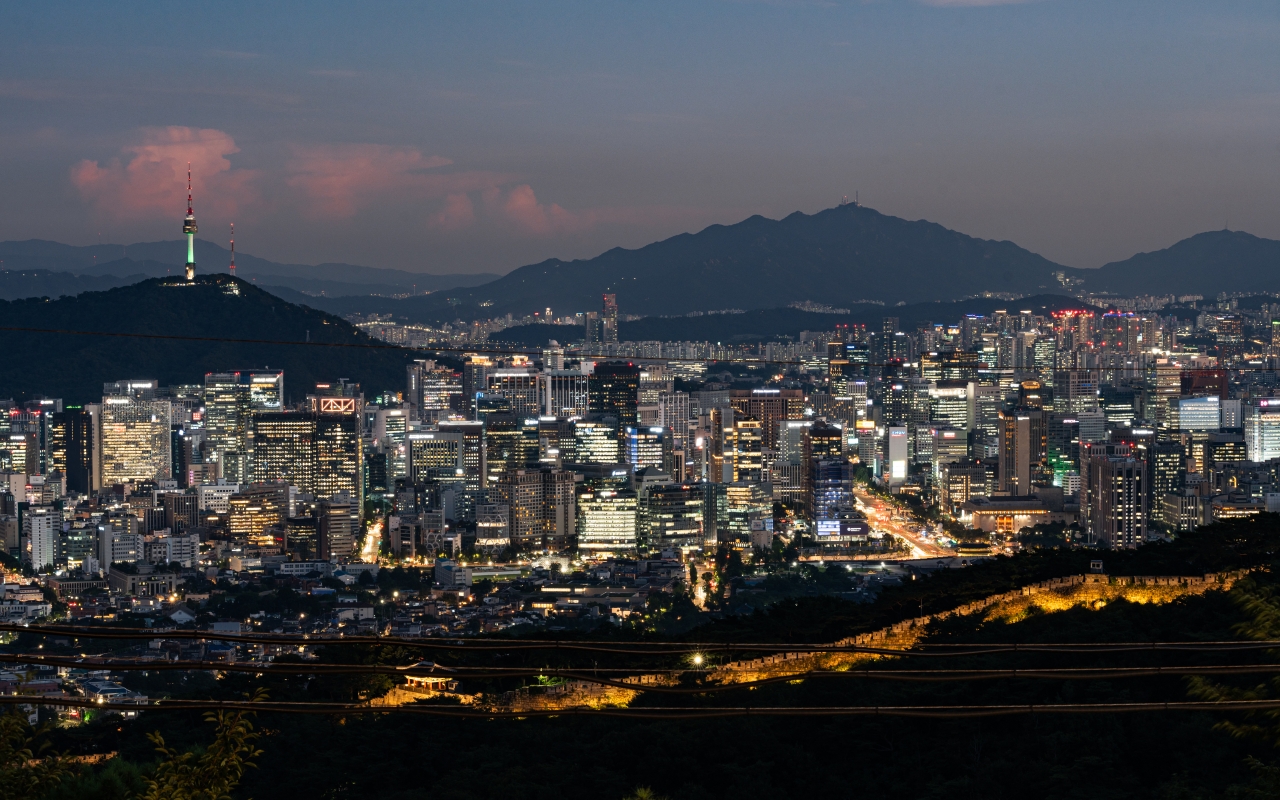
The smartest way to choose where to stay in Seoul is to think north vs south of the Han River first, then narrow to a neighborhood. North (Myeongdong, Jongno, Hongdae) is traditional and central: ideal for first-timers; south (Gangnam, Jamsil, Suseo) is modern, with shopping, Lotte World, and the SRT to Busan. This guide compares nine areas and helps you pick the one that fits your route, not just the most famous name.