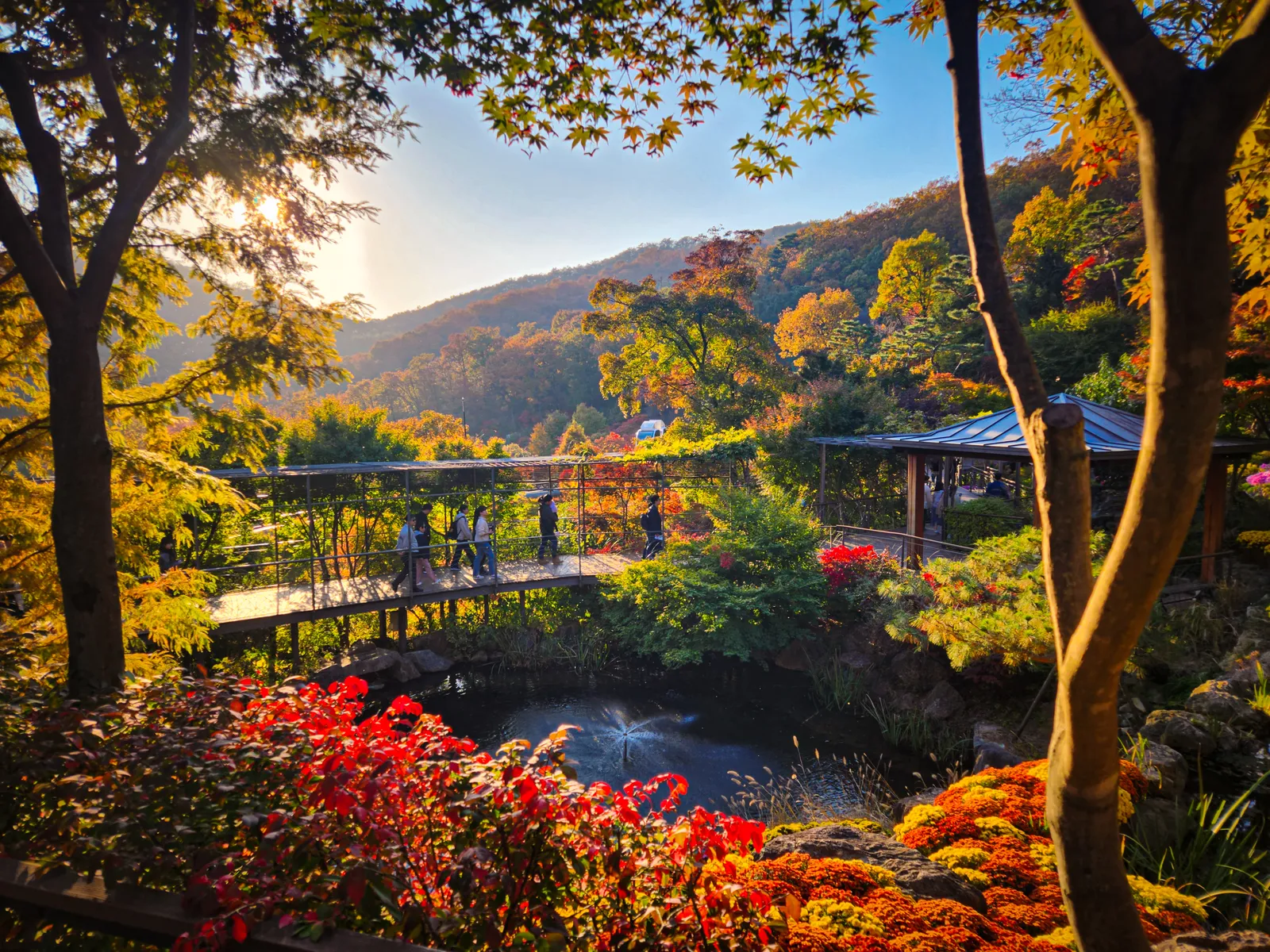
Korean autumn works best as a date-based plan, not a single "best peak day." High ridges turn first, valleys follow, and yellow ginkgo plus silver grass run on separate clocks.
This page owns four primary trips: Seoraksan, Yongmunsa ginkgo, Hwadam Botanic Garden, and Mindungsan silver grass.
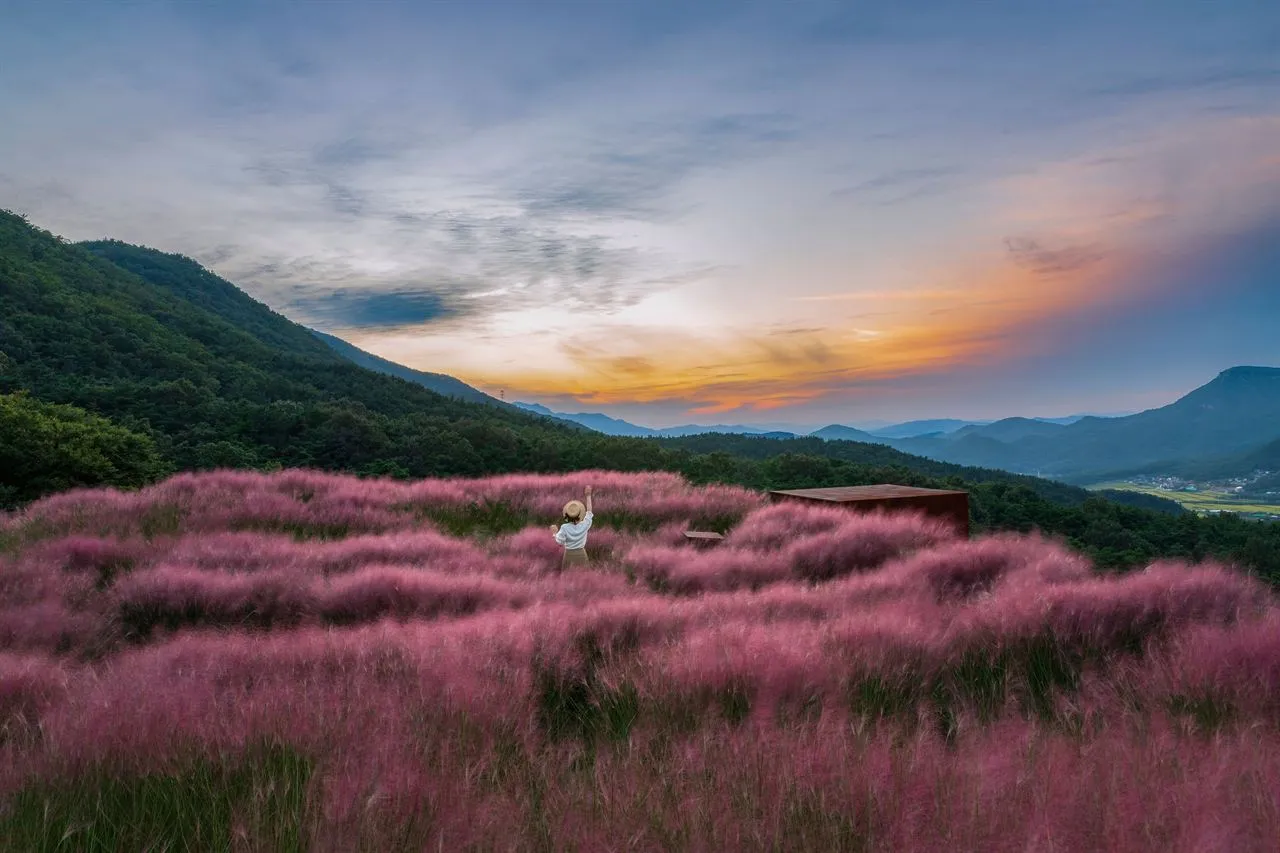
For the nationwide timing pattern, city parks, packing, and pink muhly overview, use the Korea autumn foliage timing hub.
Korea autumn status: 2026
| Field | Status (checked 2026-09-03) |
|---|---|
| Official 2026 nationwide foliage forecast | NOT YET PUBLISHED (Korea Forest Service / VisitKorea) |
| Seoraksan foliage | Not started (early September); pattern usually late Sept onward |
| Hwadam autumn booking | Confirm on hwadamsup.com; social posts are not enough |
| Mindungsan silver grass | Early season; peak usually mid-Oct to early Nov |
| Yongmunsa ginkgo | Still green in early September; yellow later |
Do not invent a 2026 peak date. Re-check Forest Service and VisitKorea once the yearly map posts.
Quick decision table
| Place | Main autumn feature | Trip style | Hiking | From Seoul | Reservation? |
|---|---|---|---|---|---|
| Seoraksan | Mountain foliage | Dedicated nature trip | Easy walks to serious trails | Long (bus to Sokcho) | Park free; cable car same-day |
| Yongmunsa | Giant yellow ginkgo + temple | Easy day trip | Light walk | Medium (train + bus) | Usually no timed garden booking |
| Hwadam Forest | Managed autumn garden | Easy scenic trip | Easy paths | Easy to medium | Advance booking required |
| Mindungsan | Silver grass (억새) | Mountain hike | Moderate | Long (train) | Trail free; festival dates vary |
Gyeongju is a later heritage-plus-foliage overnight, not one of the four mountain or garden trips above. Use the Gyeongju autumn guide.
Danyang is a river-town plus mountain-pass overnight in Chungbuk. Use the Danyang autumn guide.
How Korean autumn color moves
First color is not peak color. High elevations and northern mountains often show early red and orange while lower valleys are still green.
A useful conceptual timeline:
- Early autumn: high mountains; silver grass beginning
- Mid autumn: Gangwon and central mountain foliage
- Late autumn: Seoul and lower elevations; southern maple; yellow ginkgo
Weather, wind, rain, and tree species shift every year. Use the official forecast when it appears, then choose destinations by feature type.
Seoraksan: classic mountain foliage
Seoraksan National Park is the classic early mountain foliage destination. Outer Seorak's Sogongwon gate near Sokcho is the usual first-timer base. Other gates (Osaek, Baekdamsa, Jangsudae) serve different valleys.
For the Seoul-to-Sokcho overnight, cable-car vs walk vs hike chooser, and market food, use the Seoraksan and Sokcho autumn guide.
"Going to Seoraksan" does not mean hiking Daecheongbong. Most visitors mix temple walks, valley paths, and the cable car.
Easy Seoraksan option
- Bus to Sokcho, then local bus 7 / 7-1 toward Sogongwon
- Short walks around Sinheungsa and lower Outer Seorak paths
- Gwongeumseong cable car if operating
Official cable-car materials list adult round-trip fares around ₩16,000, sold same day on site, with hours that change for weather and wind. Do not promise cable-car availability. Confirm on the operator site before you leave Sokcho.
Hiker option
Experienced hikers may look at Biseondae / Cheonbuldong and other valley routes. Treat Daecheongbong as a serious climb with distance, elevation, entry cutoffs, and seasonal rules. Check Korea National Park Service guidance for your date.
Seoul transport and overnight advice
There is no practical tourist high-speed train that drops you at the park gate. Use express / intercity bus from Seoul (Gangnam Express Bus Terminal or Dong Seoul) to Sokcho, then the local park bus.
A same-day Seoraksan run is possible if you leave Seoul early and keep the itinerary short. For foliage queues and longer walks, one night in Sokcho is usually more comfortable. That is TripKopia advice, not a hard rule.
Yongmunsa: giant golden ginkgo
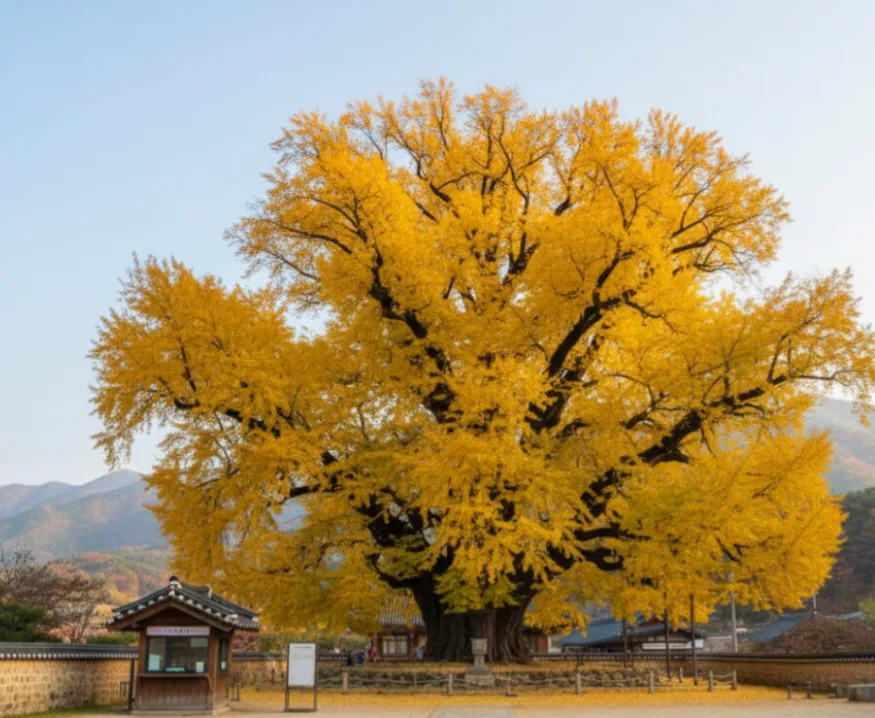
Yongmunsa Temple in Yangpyeong is famous for one tree: the Ginkgo Tree of Yongmunsa Temple, Natural Monument No. 30. Heritage materials describe a roughly 1,100-year-old ginkgo, among Korea's best-known ancient yellow ginkgo landmarks.
This trip is golden yellow ginkgo + temple, not a red-maple mountain circuit like Seoraksan or Naejangsan.
Timing warning
Ginkgo timing is not the same as Seoraksan maple timing. A mature ginkgo can move from green to bright yellow to rapid leaf fall in a short window after cold wind or rain. Check recent Yangpyeong or temple updates before traveling only for yellow leaves.
How to get there
- Train to Yongmun Station on the Gyeongui-Jungang Line (confirm ITX / regional options for your date in KORAIL+)
- Local bus toward Yongmunsa (commonly listed routes include the 7 family toward the temple; schedules are sparse)
- Short walk from the tourist-complex stop into the temple
Yongmunsa is not beside Yongmun Station. Use Kakao Map / Naver Map for the live bus on your day.
Keep the day simple: temple + ginkgo. Optional Yangpyeong add-ons only if time remains. See the Yangpyeong day trip guide for wider local context.
Hwadam Forest: easy autumn near Seoul
Hwadam Botanic Garden (화담숲) at 278-1 Docheokwit-ro, Docheok-myeon, Gwangju-si, Gyeonggi-do is the strongest no serious hiking autumn option near Seoul.
Official materials list adult admission around ₩11,000 in spring/summer/autumn seasons, with lower youth and senior rates. Monorail tickets are separate. Peak autumn discounts are often suspended. Confirm live prices on the official site.
Reservation is critical
Hwadam is not a casual walk-up park in foliage season. Online booking through the official site's NOL flow is the practical path. Peak weeks sell out. Do not plan as if you can reliably buy tickets at the gate.
As of 2026-09-03, confirm the exact 2026 autumn ticket-open date and visit window only on hwadamsup.com announcements. Social media claims are not enough.
Foreign visitors may hit NOL login, phone, or card friction. Have a Korean-speaking friend help if booking fails, or choose Yongmunsa / Seoul parks as a backup.
Transport without a car
Public options usually combine subway or bus toward Gwangju (Gyeonggi) / Konjiam with a final local hop. Exact routes change; pin 화담숲 in a map app for your date. Allow buffer time for the last transfer.
Mindungsan: silver grass, not reed
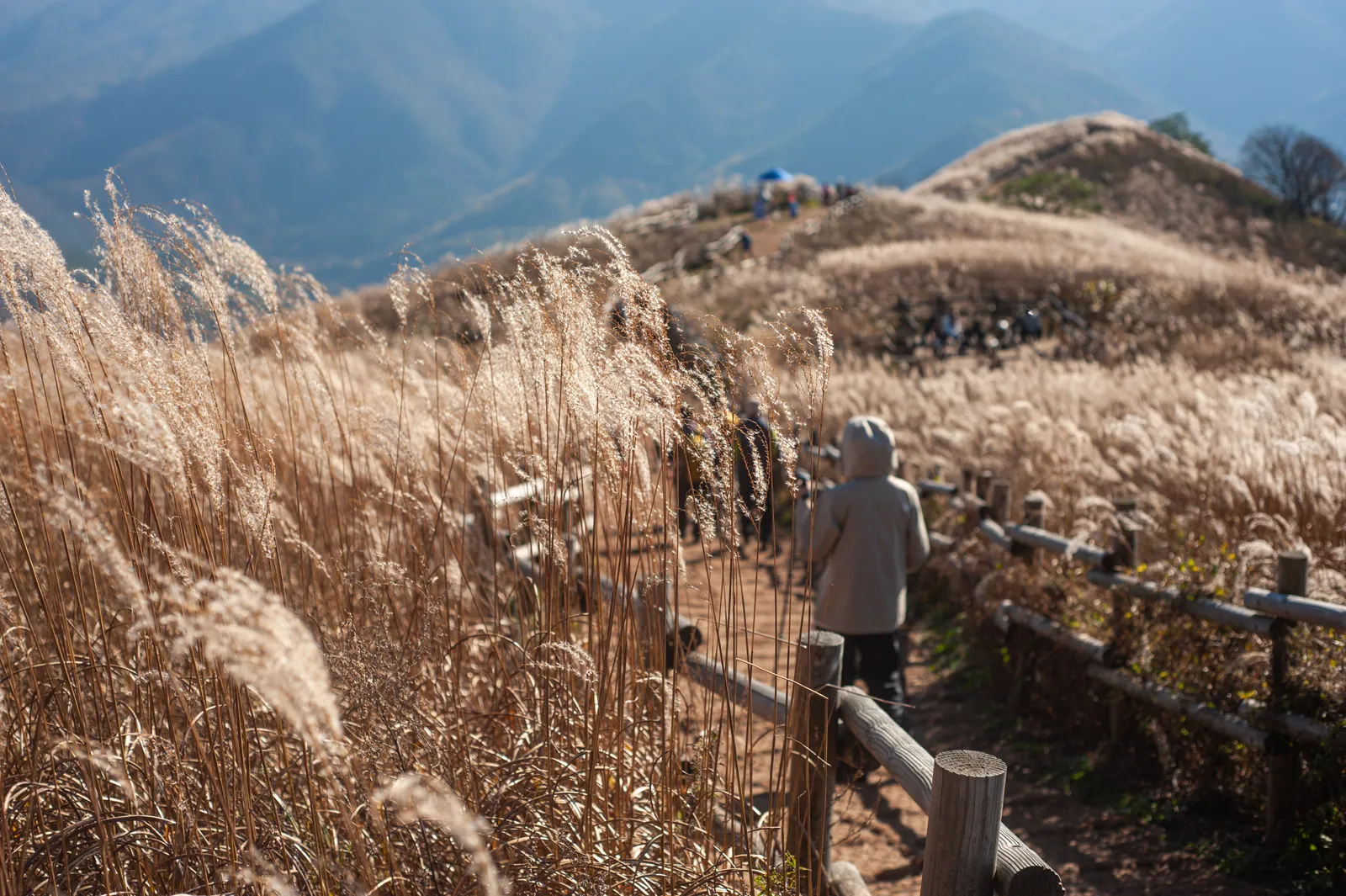
Mindungsan in Jeongseon is famous for highland silver grass (억새, Miscanthus), not coastal reed (갈대). Use the correct English term.
Jeongseon tourism describes wide silver-grass meadows near the summit and an autumn festival season typically spanning September to November. Exact 2026 festival open and close dates were not yet posted as fixed days on the county festival page as of early September 2026. Check Jeongseon tourism closer to autumn.
Hiking and access
Popular routes from the Jeungsan Elementary area are short in distance but include steep early sections. Expect a moderate climb, not a flat boardwalk. Wear proper shoes and start early on busy weekends.
Train access uses Mindungsan Station (Taebaek Line / regional services from the Cheongnyangni corridor; Jeongseon A-train also serves the stop on some schedules). Confirm live trains in KORAIL+. From the station, plan a short transfer or walk to the trailhead you choose.
This is a better overnight or long day than a casual Seoul afternoon.
If foliage is earlier or later than expected
- Re-check the official Forest Service / VisitKorea map once published
- Shift elevation: go higher if color is late, lower if peaks have already browned
- Switch feature type: maple mountain ↔ ginkgo ↔ silver grass ↔ city parks
- Prefer weekdays and early starts when crowds spike
Day trips vs overnight
| Better as day trip from Seoul | Better with an overnight |
|---|---|
| Hwadam Forest (if tickets secured) | Seoraksan / Sokcho |
| Yongmunsa ginkgo | Mindungsan / Jeongseon |
| Seoul palaces and city parks | North-to-south multi-mountain loop |
Secondary autumn options
Use these after the four primaries:
- Naejangsan: late southern maple bowl; very busy at peak
- Nami Island: foliage and metasequoia lanes; see the Nami day-trip guide
- Garden of Morning Calm: designed garden autumn lighting; check tickets
- Seoul city foliage: palaces, Seoul Forest, Seokchon Lake, ginkgo avenues
Common mistakes
- Treating "foliage has started" as full peak color
- Inventing or copying an unverified 2026 peak date
- Assuming Hwadam sells walk-up tickets in peak autumn
- Calling Mindungsan's 억새 "reed"
- Expecting Yongmunsa and Seoraksan to peak on the same week
- Forcing Seoraksan as a rushed day trip with a late return bus
- Skipping layers for mountain mornings
- Ignoring monorail and cable-car weather closures
FAQ
When does autumn color start in Korea?
Usually late September on high northern mountains, then later toward Seoul and the south. Confirm the yearly official forecast.
Which region changes color first?
High Gangwon mountains such as Seoraksan are typically among the earliest famous stops.
Where should I go in early October?
Often Seoraksan for early mountain color, or silver-grass areas if reports look good. Confirm live conditions.
Where should I go in late October?
Mountain foliage in Gangwon and central Korea, plus early reserved Hwadam dates if open.
What is good in early November?
Lower elevations, Seoul ginkgo and parks, southern maple such as Naejangsan, and late silver grass if still standing.
Is Seoraksan possible as a Seoul day trip?
Yes if you leave early and keep walks short. Overnight in Sokcho is usually more comfortable in foliage season.
Do I need a reservation for Hwadam Forest?
Yes for practical peak-autumn visits. Book through the official NOL flow and confirm the 2026 open notice on the garden site.
How do I reach Yongmunsa from Seoul?
Train to Yongmun Station, then a local bus toward the temple. It is not next to the station.
Can I reach Mindungsan by train?
Yes, to Mindungsan Station, then a short transfer to the trailhead. Confirm the live timetable.
Which places involve serious hiking?
Seoraksan ridge routes and Mindungsan climbs. Hwadam and Yongmunsa are the easier options.
Pending autumn information
Re-check before peak travel:
- Official 2026 Forest Service / VisitKorea foliage forecast
- Hwadam 2026 autumn ticket-open date and visit window on hwadamsup.com
- Mindungsan 2026 festival exact dates on Jeongseon tourism
- Same-day Seoraksan cable-car hours and Sokcho bus times
Sources
- Visit KoreaOfficial tourism site
- Korea Meteorological AdministrationOfficial weather service
- Korea Forest Service (산림청)Official government site
- Korea National Park Service — SeoraksanOfficial government site
- Seoraksan Cable Car (Gwongeumseong) official siteOfficial tourism site
- Korea Heritage Service — Ginkgo Tree of Yongmunsa Temple, Yangpyeong (Natural Monument No. 30)Official government site
- Hwadam Botanic Garden (화담숲) official siteOfficial tourism site
- Jeongseon tourism — Mindungsan / silver grass festivalOfficial tourism site
- KORAILOfficial transport site
Information is compiled from official sources. Details such as prices, hours, and schedules can change. Confirm time-sensitive facts before you travel.
Last verified on
Related guides
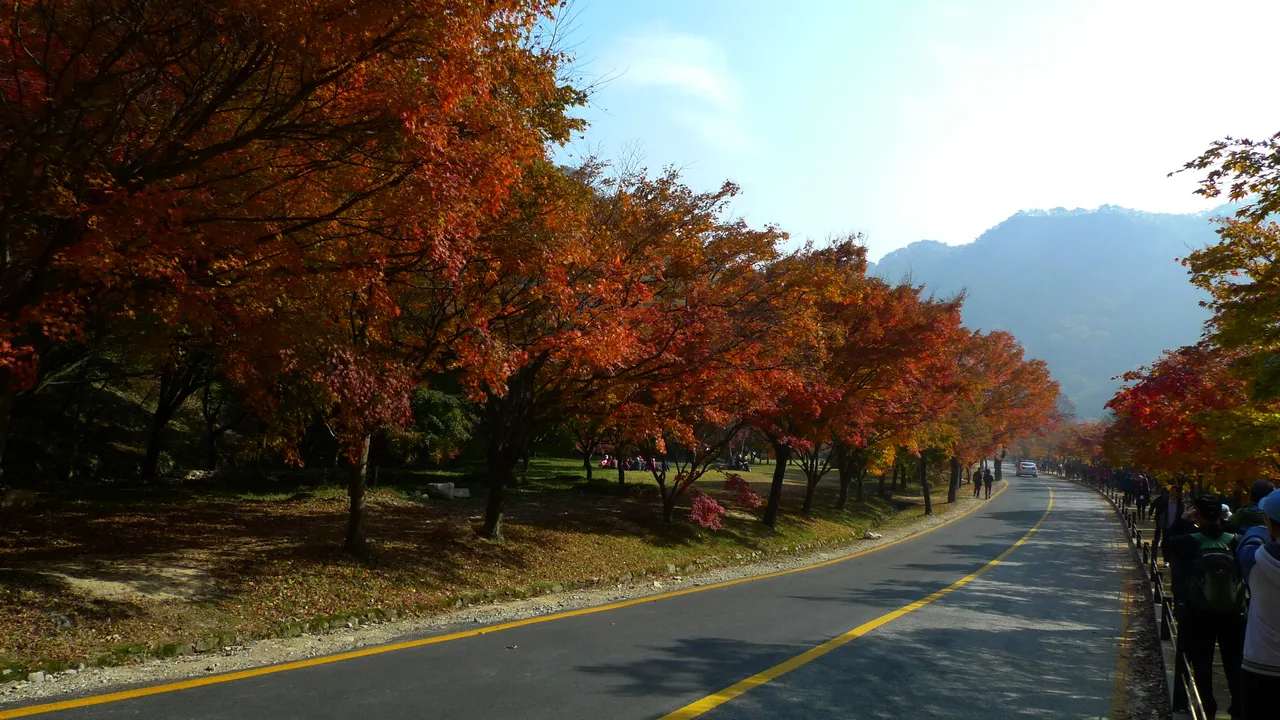
Korea in Autumn: When to Go, Fall Foliage Timing, and Best Places to See Autumn Colors
Autumn is one of Korea's best seasons, crisp weather and foliage that sweeps from the northern mountains down to the southern islands from late September to late November. Plan around the pattern rather than a fixed date: foliage starts high and north and moves south, peak comes roughly two weeks after the first color, and forecasts shift every year. Timing, the best city, day-trip, and mountain spots (including options for non-hikers), pink muhly, what to pack, and how to beat the peak-season crowds are all covered below. Check the official KMA and VisitKorea forecast before you lock in dates.
Korea in September: Weather, What to Wear & Where to Go
September in Korea is early autumn, not peak fall foliage. Early September can still feel warm and humid, while late September is cooler and clearer in many cities. Rain and typhoon risk remain possible. In 2026, Chuseok falls on 24 to 26 September, which can tighten intercity transport. Use this guide to choose timing, packing, and regions, then hand off peak foliage planning to the autumn season guide.