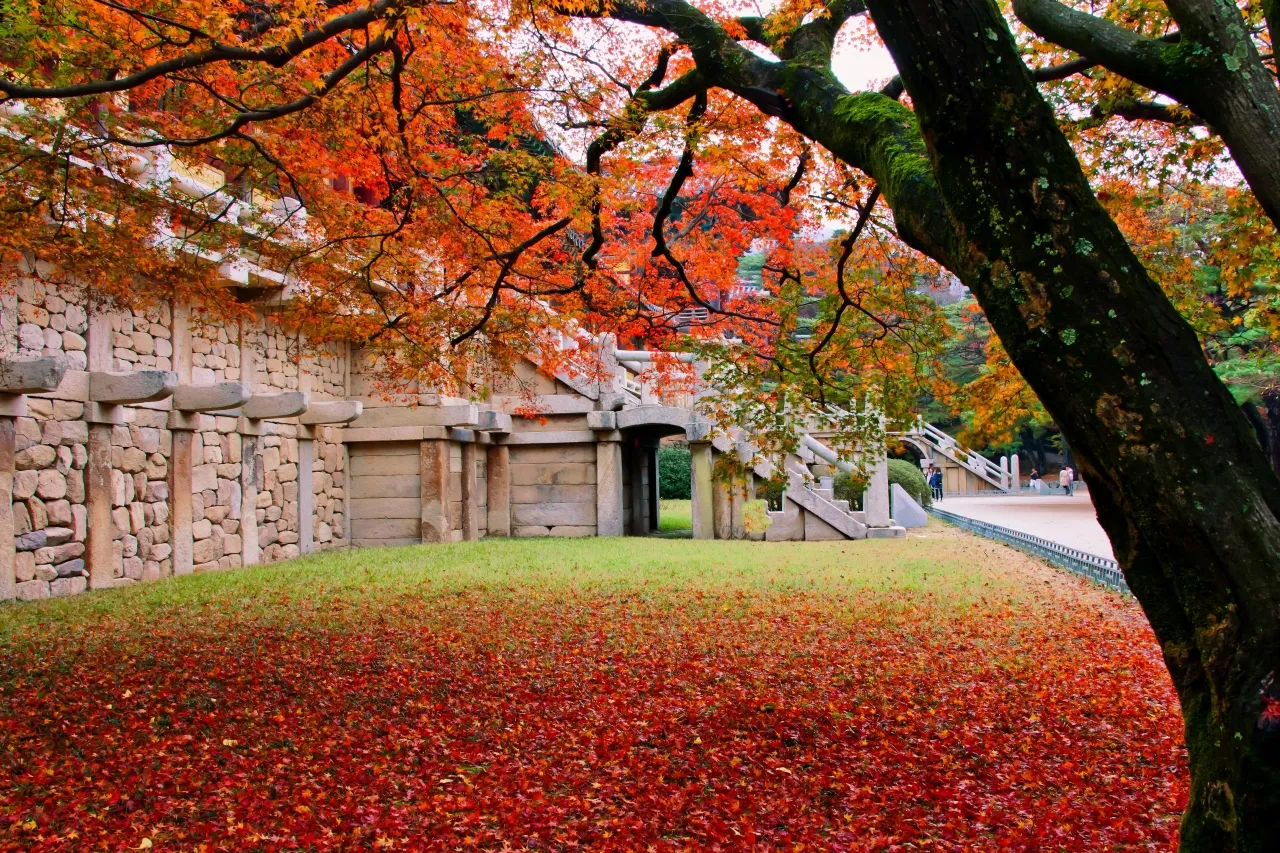
Gyeongju in autumn is a one-night Silla heritage trip, not a full city encyclopedia and not a Seoul day-hike.
The useful unit is KTX to Gyeongju Station, Bulguksa in daylight, then the walkable historic center after dark.
The high-speed station is not in the old town. It was renamed from Singyeongju, but it did not move.
Book Korail+. Confirm the Seoul-area departure station on your ticket.
Hours, buses, and foliage all move. Check Visit Korea, Gyeongju City tourism, and the temple site the day before you go.
2026 foliage (forecast, not a promise)
Visit Korea's 2026 Fall Foliage Forecast (8 September 2026) currently places first foliage at Seoraksan around 3 October, with nationwide peak from mid-October through early November.
That nationwide map does not publish a Bulguksa-specific peak date. Do not treat 10 November, or any other calendar square, as a reserved color day.
Gyeongju sits later than the Gangwon mountains. Temple maples and downtown trees are not on the same clock.
| Term | What it means here |
|---|---|
| First foliage | Color has started somewhere in Korea, often high and north, while Gyeongju may still look green |
| Gyeongju window | Often later in the nationwide peak span; still weather-dependent |
| After peak | Upper leaves can drop while courtyards still hold color, or the reverse after wind and rain |
A hot October, a storm, or an early cold snap can move the week. Recheck Visit Korea closer to travel.
Year-round site lists stay on the Gyeongju travel guide. Korea-wide date logic stays on the Korea autumn travel guide.
Quick facts
- From Seoul
- KTX to Gyeongju Station; then a bus or taxi
- Stay
- 1 night in the historic center is the practical default
- Daylight anchor
- Bulguksa Temple
- After dark
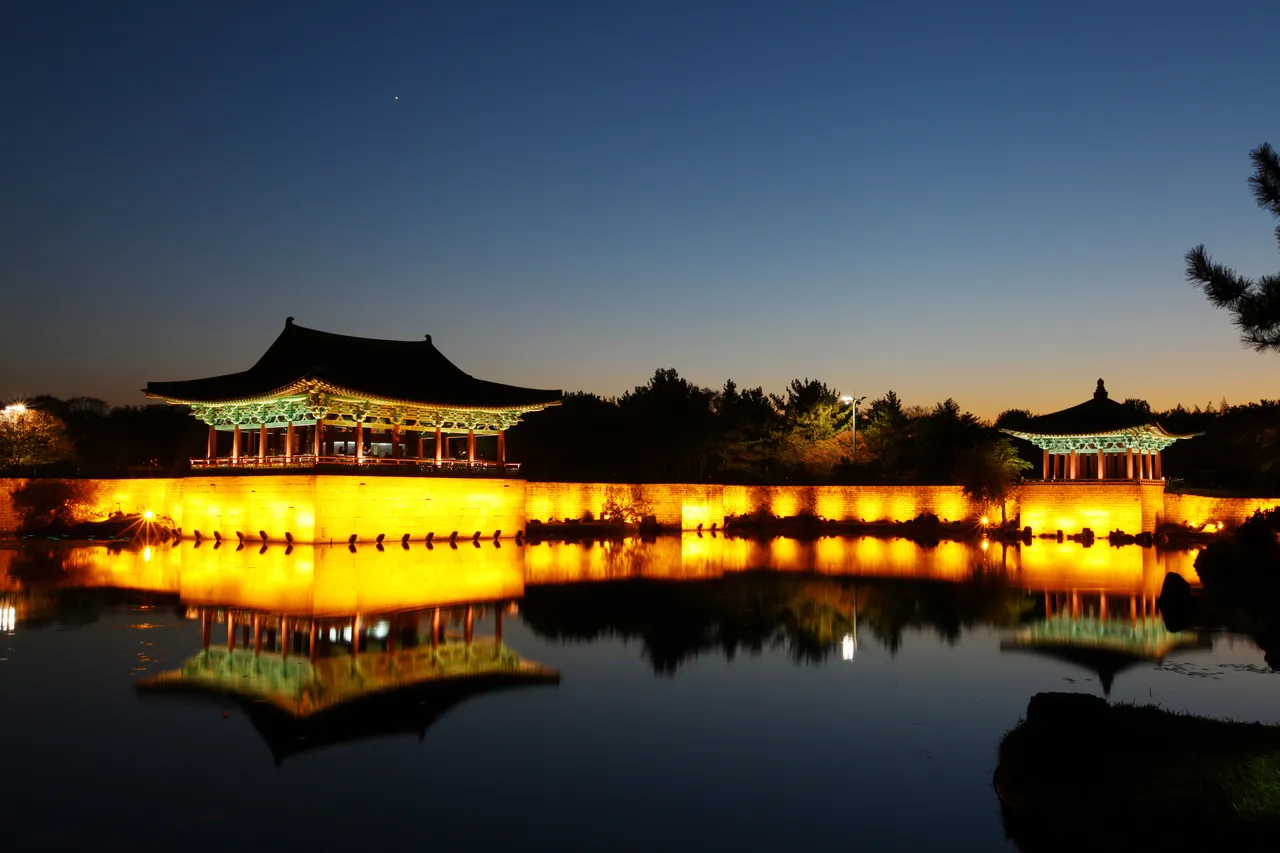
- Woljeonggyo, then Donggung and Wolji
Is this trip worth it?
Yes, if you want UNESCO stonework, later-season color, and a lit pond in one overnight.
This page is autumn execution. It is not a second Gyeongju master guide.
Good for
- Repeat Korea visitors who want UNESCO stonework plus color
- Travelers who will accept a station transfer and a weather backup
- Anyone who wants a lit pond and a restored bridge after dinner
Less ideal for
- First-timers with only two or three Korea days
- Anyone who needs the KTX to empty onto Hwangnidan-gil
- A same-day Seoul return that tries to stack Seokguram, every tomb, and night views
Seoul to Gyeongju Station
Book through Korail+ or the official KORAIL channel. See how to book KTX and the route page Seoul to Gyeongju by train for payment traps. Do not copy a full timetable here.
Representative rail time is about 2 hours, traffic in the timetable depending. Some Gyeongbu trains leave from Seoul Station, others from Suseo. Read the departure station on the ticket.
Call the stop Gyeongju Station (경주역). Older blogs and some maps still say Singyeongju Station. That is the same out-of-town KTX station, renamed on 28 December 2023 after the old downtown station closed.
Arriving here does not put you at Daereungwon, Hwangnidan-gil, or Bulguksa.
Station to the city, then to Bulguksa
The KTX station sits in Geoncheon-eup, a transfer away from the historic center.
| Leg | Practical option | Honest catch |
|---|---|---|
| Station → historic center | Taxi with bags, or a city bus confirmed on Naver Map / KakaoMap | Google Maps is weak for Korean buses |
| Center → Bulguksa | Gyeongju City currently highlights bus 10 toward Bulguksa via the tomb / Cheomseongdae side of town | Confirm the live number. Old blog routes are not a timetable |
| Station → Bulguksa direct | Taxi if you already dropped bags or travel light | Bulguksa is a separate eastern cluster, not "next to the tombs" |
A T-money card works on Gyeongju city buses. Carry a little cash as backup.
Luggage: lockers at stations and sites may exist, but sizes and availability change. For a 1-night trip, drop bags at the historic-center stay before you ride out to Bulguksa. Do not plan the day around a specific locker.
Bulguksa: the autumn daylight anchor
Bulguksa Temple (불국사) is this trip's seasonal hero: Silla Buddhist architecture on the slopes of Tohamsan, with stone terraces, paired pagodas, and maple around the courtyards when color arrives.
UNESCO lists Seokguram Grotto and Bulguksa Temple together (inscribed 1995). They are one World Heritage property, not "a UNESCO temple" in the abstract. Seokguram is the hilltop grotto. Bulguksa is the terrestrial temple complex.
Visit Korea currently lists Bulguksa as open year-round, about 09:00 to 18:00 with an exit around 19:00, and admission free. Pets are not allowed. Gyeongju City tourism matches the free-admission line. Confirm hours and any fee at the temple or the city page the morning you go. Older paid-ticket tables still circulate.
Give the courtyards 90 minutes to 2 hours. The photogenic stone stairs are not a flat plaza. Wear shoes you can climb in.
Autumn weekends get busy by mid-morning. An early KTX plus a bag drop beats a noon arrival.
Do not stack Seokguram onto the same rushed afternoon if you still need daylight for the downtown night walk.
Seokguram: optional extra, not the default stack
Seokguram Grotto (석굴암) is the paired UNESCO grotto, further uphill. Visit Korea currently lists it as free, with hours around 09:00 to 18:00 (viewing into the evening listed on that page, and hours subject to change). Gyeongju City posts a seasonal table, including a shorter October window.
The Buddha is viewed through glass for climate control. That is preservation, not a broken exhibit.
Visit Korea's distance note is about 3 km by trail and longer by road from Bulguksa. Confirm the current bus or taxi. Do not copy an old "hourly shuttle" table from a 2010s blog.
Day 2 morning is the honest slot. Skip it if legs, weather, or a return train are tight.
Downtown walking cluster (do this after Bulguksa)
Once you are in the historic center, the tombs, cafe street, observatory, bridge, and pond sit in a walkable loop. That is the evening half of the overnight.
Daereungwon
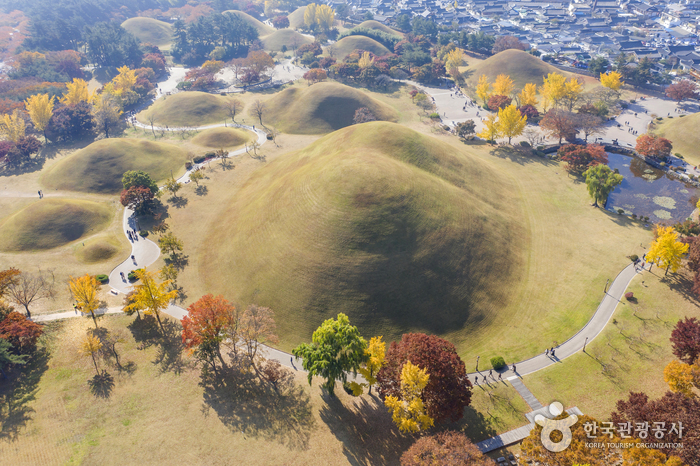
Daereungwon (대릉원) is the grassy royal-tomb park next to Hwangnidan-gil. Visit Korea currently lists the grounds as free, 09:00 to 22:00, with a separate fee to enter Cheonmachong (adults listed at ₩3,000). Confirm at the gate.
You do not need the interior tomb to get the autumn walk. The mounds are the landscape.
Hwangnidan-gil
Hwangnidan-gil (황리단길; also spelled Hwangridan-gil) is the cafe and restaurant street along the tomb wall. Use it for a meal and a short stroll, not as a heritage site.
It packs out on autumn weekends. Pick a place with a posted menu. This page does not rank shops.
Cheomseongdae
Cheomseongdae (첨성대) is the seventh-century stone observatory, a short walk from the tombs toward Wolji. The tower is visible from outside. Confirm any viewing-area fee on the city page. Do not add a long detour that doubles back across town.
Woljeonggyo
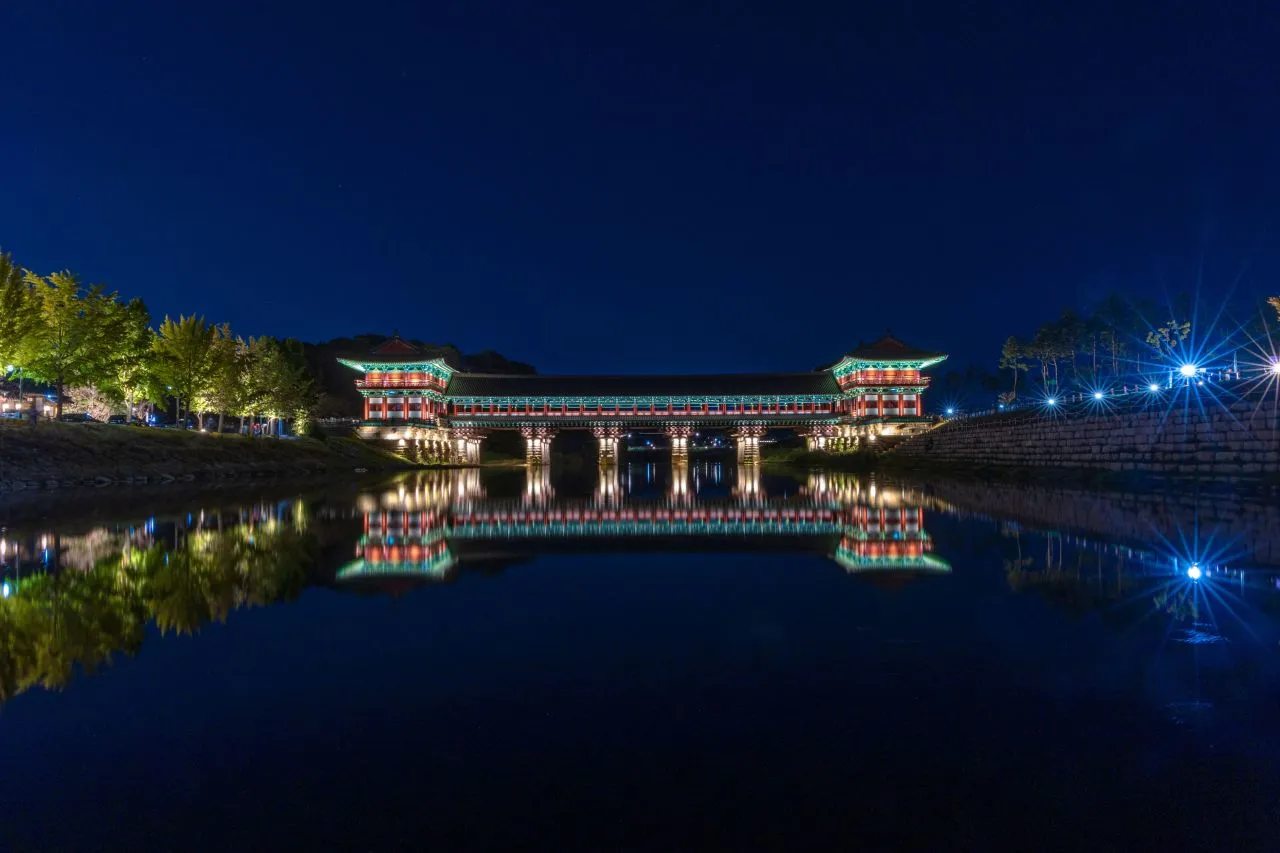
Woljeonggyo (월정교) is the restored Unified Silla wooden bridge over the Namcheon. Visit Korea currently lists 09:00 to 22:00, free, year-round.
The evening lights and the river reflection are the product. The upper corridor can close earlier than the outdoor view. Confirm on the day.
Donggung Palace and Wolji Pond
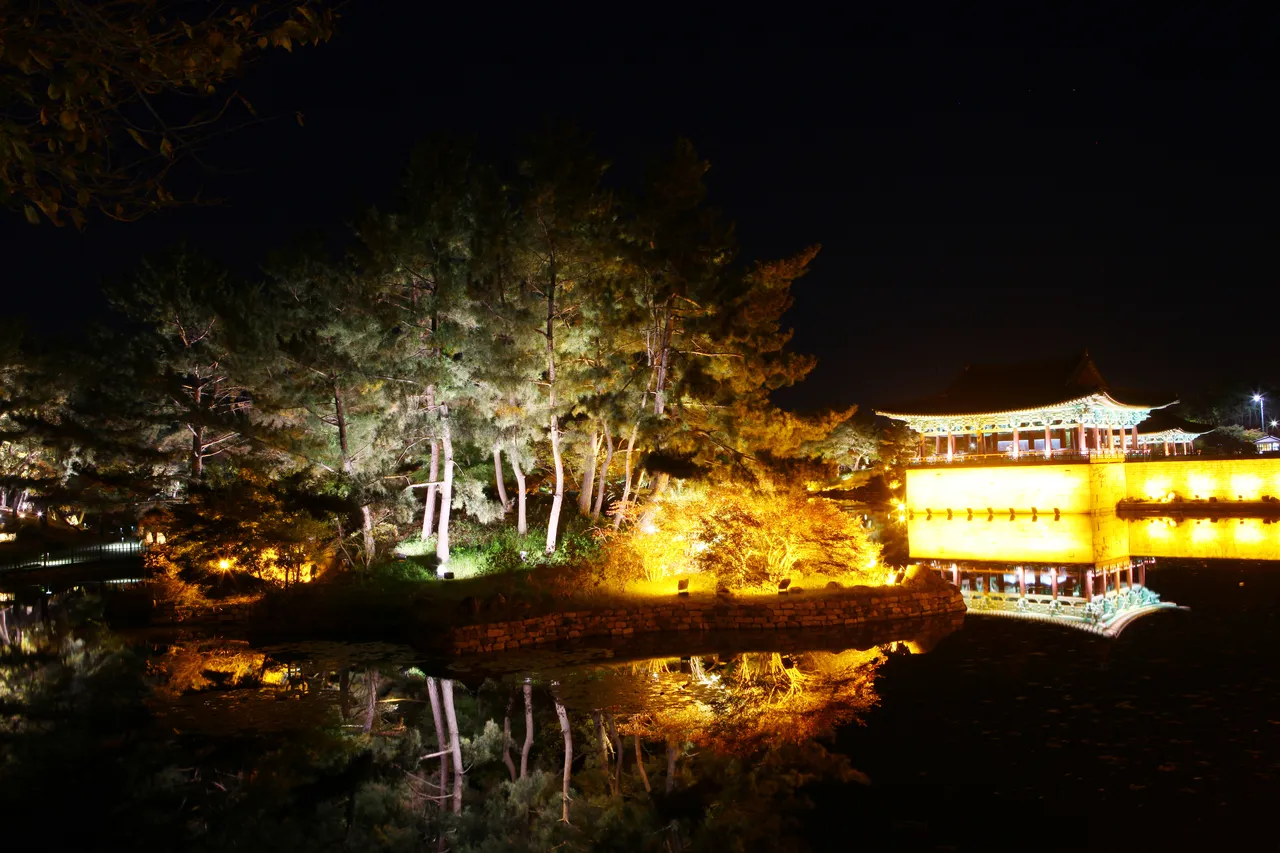
Donggung and Wolji (동궁과 월지; older name Anapji) is the Silla secondary-palace pond. Visit Korea currently lists 09:00 to 22:00, last ticketing and admission 21:30, adults ₩3,000.
Go after dusk, not at lunch, if you only have one visit. Lights on the pavilions are the reason to stay overnight.
Start the pond walk with a buffer before last entry. Do not arrive at 21:20 and expect a full circuit.
Food, without a 10-shop list
Gyeongju bread (경주빵 / hwangnam-ppang) is the local red-bean pastry sold at bakeries around the center. It is wheat and sweet bean, not a gluten-free snack.
Ssambap (leaf-wrap rice sets) and everyday Korean meals sit near the tombs and Hwangnidan-gil. Many bowls include meat. They are not a certified vegetarian or halal product. Ask before you order if you avoid pork, shellfish, or gluten.
Hwangnidan cafes are useful between sites. Hours and menus change. Skip a ranking.
Where to stay
| Area | Best for | Tradeoff | Next morning |
|---|---|---|---|
| Historic center (tombs / Hwangnidan-gil) | Night walk to Woljeonggyo and Wolji | Bus or taxi to Bulguksa | Easy pond leftover or Seokguram choice |
| Bomun lake / resort | Quieter hotel base | Not the walkable old town | Extra transfer both days |
Book earlier for October weekends. That is seasonal demand, not a scare line.
Without a car, stay downtown. A rental car helps only if you add Seokguram, Namsan, or Yangdong, which this 1N2D does not require.
1 night / 2 days (default)
Mountain-first (best with a morning KTX and a usable color week)
Day 1: KTX → drop bags downtown → Bulguksa → late-afternoon tombs / Hwangnidan-gil → Woljeonggyo at dusk → Donggung and Wolji after dark.
Day 2: Optional Seokguram, or a slower tomb / museum morning → KTX back.
City-first (best if you arrive after lunch or the temple weather looks poor)
Day 1: KTX → downtown cluster and night views.
Day 2: Early Bulguksa (Seokguram only if the train is late) → Seoul.
Do not zigzag: Bulguksa, then Seokguram, then back to Hwangnidan, then Bomun, then the pond. Pick one hills slot and one downtown night.
Day trip from Seoul?
Technically possible with a very early outbound, Bulguksa or the night cluster, and a watched return train.
It is a weak default in foliage season: rail time, the station transfer, and weekend crowds stack. One night is the planning default.
Rain and weather fallback
| If | Do this instead |
|---|---|
| Hard rain at Bulguksa | Short temple visit or skip the hills. Do tombs, cafes, and the covered parts of Woljeonggyo |
| Wind strips the maples | The stone terraces and pagodas still stand. Night lights still run if the sites are open |
| Early dark | Start the pond before last entry. Do not add Seokguram |
Gyeongju National Museum is the indoor backup (free permanent galleries on the usual city listing). Confirm hours. It is not a foliage substitute.
What to pack (compact)
Layers, real walking shoes for stone stairs, a rain shell, phone battery, and a warmer layer for the pond after sunset. Downtown evening air is not the same as a Seoul subway platform.
Common mistakes
- Planning as if KTX arrives on Hwangnidan-gil
- Using Singyeongju as the current station name without checking the map pin
- Inventing a Bulguksa peak day
- Stacking Seokguram and the full night route on a same-day Seoul return
- Copying an old Bulguksa-Seokguram shuttle timetable
- Treating Hwangnidan-gil as the UNESCO site
- Skipping last-entry time at Donggung and Wolji
FAQ
When should I go in 2026? Visit Korea currently dates first nationwide color around 3 October at Seoraksan, with peak from mid-October through early November. Gyeongju is later than that mountain start. Recheck the week you travel. There is no official Bulguksa peak day in that forecast.
Is there a train into the historic center? The current KTX stop is Gyeongju Station, outside town. You still transfer by bus or taxi.
Why do maps say Singyeongju? That is the old name for the same high-speed station. Check the address, not only the label.
Can I do Bulguksa and the night views as a Seoul day trip? Possible with an early train and no Seokguram. One night is more comfortable in foliage season.
Is Seokguram required? No. It is the UNESCO pair and a real extra climb. Save it for Day 2 if you have time.
Is Bulguksa free? Visit Korea and Gyeongju City currently list admission as free. Confirm at the gate. Parking is separate if you drive.
Is one night enough? Yes as the standard autumn shape: temple by day, tombs and lights after dark. Two nights only if you want Seokguram plus Yangdong or a slower museum day.
Final takeaway
Ride the KTX to Gyeongju Station, move bags downtown first, give Bulguksa the daylight, and keep Woljeonggyo plus Wolji for after sunset. Color will not wait on a single calendar square.
Sources
- Visit KoreaOfficial tourism site
- KORAILOfficial transport site
- Gyeongju City culture and tourism (official)Official tourism site
- Bulguksa Temple (official)Official tourism site
- UNESCO World Heritage Centre: Seokguram Grotto and Bulguksa TempleOfficial government site
Information is compiled from official sources. Details such as prices, hours, and schedules can change. Confirm time-sensitive facts before you travel.
Last verified on
Related guides
Gyeongju Travel Guide for First-Time Visitors
Gyeongju is Korea's open-air museum, the thousand-year capital of the Silla kingdom, where royal tomb mounds, a UNESCO temple, and an old observatory sit within easy reach. One full day covers the highlights; arrive by KTX to nearby Singyeongju station.
Seoul to Gyeongju by Train: KTX to Singyeongju and City Transfer
The KTX makes Seoul to Gyeongju an easy ride of a couple of hours, but the part first-timers miss is that the high-speed station sits outside Gyeongju's historic center, not in it, so you still have to plan the transfer into town. Below: booking the train, the recent station-name change, the ride from the KTX station to the walkable historic district, the separate and longer trip out to Bulguksa, and how many days the area really takes. Fares, times, and bus numbers change, so confirm the official and map-app details.