Plan East Jeju as a two-stop day, not a three-stop checklist. Pair Seongsan Ilchulbong with Seopjikoji by car, or pair Udo with Seongsan and treat the ferry as the fixed part of the day.
Doing Udo, the Seongsan summit and Seopjikoji in the same day is possible on paper, but it is not the default here. Each of the three wants its own block of time, and the ferry and the summit both have hard edges.
This page chooses the route. Ferry rules, tickets, hours and parking sit in the three place guides, and I link to them instead of repeating them.
Quick facts
- Duration
- 1 day, two main stops
- Default route
- Route A: Seongsan Ilchulbong + Seopjikoji
- Udo route
- Route B: Udo + Seongsan
- All three
- Not a default plan
- Anchor
- Route A: Seongsan hours. Route B: the return ferry
Quick answer
| Question | Short answer |
|---|---|
| Which route is the default? | Route A, the main-island day: Seongsan Ilchulbong, then Seopjikoji, with an optional short stop on the coast between them |
| I want Udo | Route B: Udo plus Seongsan. Add Seopjikoji only if you finish with real buffer |
| All three in one day? | Not recommended as a default. It suits only a traveler who accepts a rushed day |
| Udo first or Seongsan first? | It depends on your priority and the weather. See the order section below |
| Is a car needed? | A car makes Route A much simpler. Do not plan to take it to Udo without written confirmation |
| What sets the pace? | Route A: Seongsan's seasonal hours. Route B: the return ferry |
| Times and fares | Not printed here. Use the place guides and the official notices on the day |
What counts as East Jeju
In this plan, East Jeju means the coast around Seongsan: the Seongsan Ilchulbong cone, Seopjikoji to its south, Seongsan Port where the Udo ferry leaves, and Udo itself just offshore. The map on this page marks them, with Udo's Cheonjin Port shown as a separate island stop.
From map coordinates I measure the cone and Seongsan Port at about 2 km apart in a straight line, and the cone and Seopjikoji at about 4 km. Those are straight-line estimates, not road distances or travel times.
Udo is a separate island reached by ferry, so it is not a stop you can add on the way. Gwangchigi Beach sits roughly between the cone and Seopjikoji on the map, which makes it a natural short stop.
I have not included other east-side sights whose current opening status I did not verify. Three well-documented anchors make a better day than five uncertain ones.
Can you see East Jeju in one day?
Yes, if you pick two anchors and let the third be optional. The three places ask different things of you:
| Place | What it asks of your day |
|---|---|
| Seongsan Ilchulbong | Fixed seasonal hours, a paid and steep summit trail, and a block of time if you climb |
| Seopjikoji | A flexible coastal walk with no ticket gate to race, but exposed to wind |
| Udo | A ferry crossing, a return deadline, and weather that can delay sailings |
Seongsan plus Seopjikoji fits a relaxed main-island day. Udo plus Seongsan fits a day where the ferry sets the rhythm.
Adding the third place means a summit climb, a ferry round trip and a headland walk, with transfers between them. That is where the day turns into a checklist, and it is the first thing to cut when the weather or your energy turns.
Route comparison
| Route | Best for | Main stops | Walking | Transport complexity | Weather sensitivity | Biggest constraint |
|---|---|---|---|---|---|---|
| A: Mainland | First-timers, families, drivers, low-walking days | Seongsan Ilchulbong, Seopjikoji, optional Gwangchigi | Moderate; the summit is the hard part and can be skipped | Low with a car; moderate with buses or taxis | Moderate; wind and rain matter on stairs and the headland | Seongsan's seasonal hours |
| B: Udo | Beach and island-pace travelers who walk or cycle | Udo, then Seongsan, optional Seopjikoji with buffer | Higher; Udo is easiest on foot or by bike | Moderate; a ferry plus a transfer back on the mainland | High; sailings can be delayed or cancelled | The return ferry |
| All three | Only a traveler who accepts a rushed day | Seongsan, Udo, Seopjikoji | High | High | High | Time, not distance |
Route A: Seongsan Ilchulbong and Seopjikoji
- 1MorningSeongsan Ilchulbong
Summit trail or the free coastal area, depending on your energy.
- 2MiddayLunch, with a short stop at Gwangchigi Beach
The beach is on the coast between the cone and Seopjikoji.
- 3AfternoonSeopjikoji
The coastal walk, the lighthouse hill and views back to the cone.
- 4Optional final stopA second coastal look
Only if you still have energy and daylight.
Morning: Seongsan Ilchulbong
Start here because its hours are fixed by the season, while Seopjikoji is the more flexible stop. If you want the summit, do it early in your day and leave the rest loose.
Tickets, the current hours, the climb and the free coastal area are covered in the Seongsan Ilchulbong guide. If the climb is not for you, the free coastal area still gives you the cone from a distance, and you can spend the saved time elsewhere.
Midday: lunch and Gwangchigi
Eat on the east coast wherever suits you, and use the break to reset. I am not listing restaurants, because I did not verify current venues.
If you want a dedicated abalone meal, the Myeongjin Jeonbok guide covers a restaurant on the northeast coast. It is a detour from this route, so plan it as part of a north coast day instead.
Gwangchigi Beach is a short stop between the cone and Seopjikoji. Visit Jeju lists it as free and open at all times, and says its volcanic rock formations show at low tide. No tide times are given there, so do not plan the day around the tide.
Afternoon: Seopjikoji
Seopjikoji is the unhurried half of the day. The walk, the lighthouse hill, the parking and the wind are covered in the Seopjikoji guide.
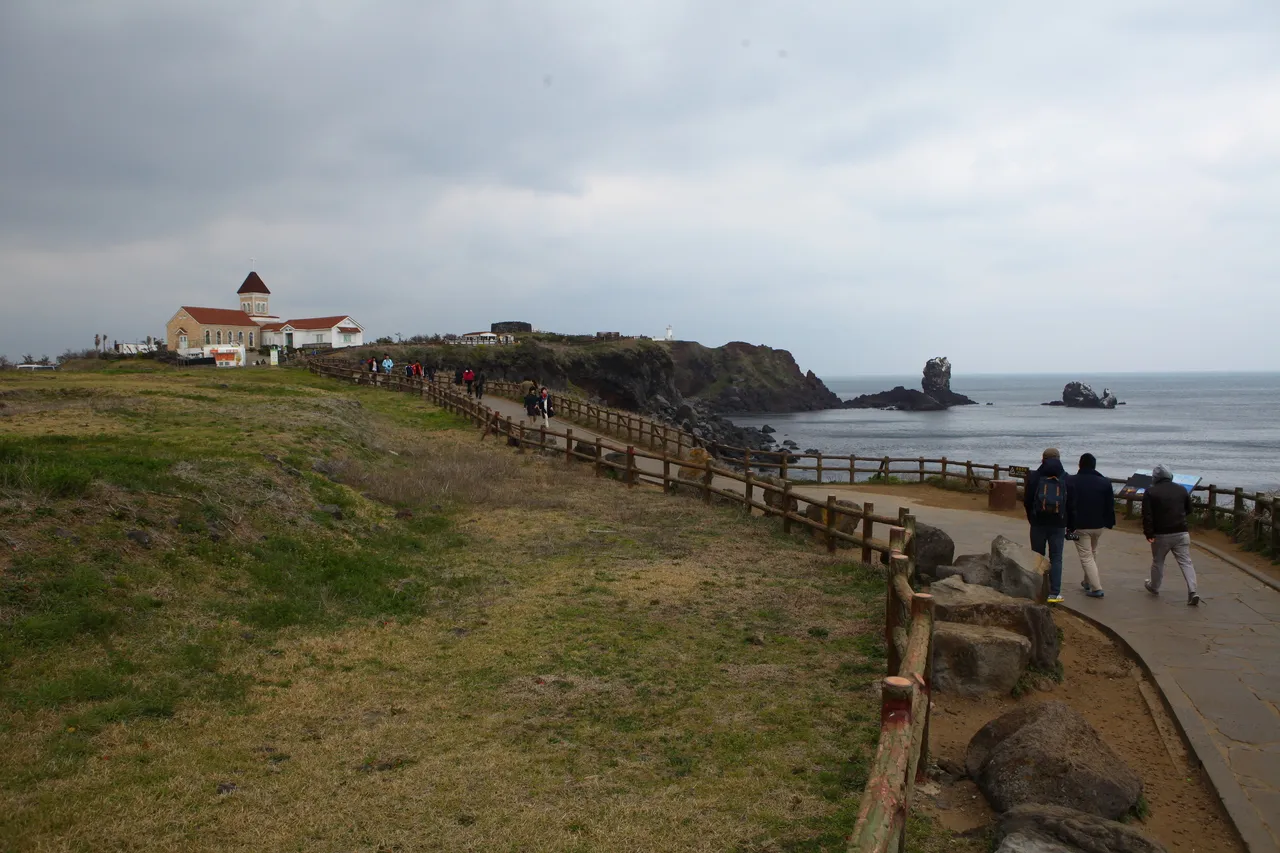
From the headland you can look back at the cone, which closes the loop neatly. A windy afternoon is a reason to shorten the walk, not to skip the stop.
Optional final stop
If you reach the end with energy and daylight to spare, go back to a free coastal viewpoint instead of adding a new ticketed stop. Gwangchigi works here if you skipped it at midday.
If you are tired, end at Seopjikoji. A shorter day with a calm finish beats a longer day that ends in a rush back to your hotel.
If you prefer to reverse Route A
You can do Seopjikoji first and Seongsan later. Only do it if you check the season's last ticket time for the summit, because that is earlier than closing time.
Route B: Udo and Seongsan
- 1Before the ferrySeongsan Port
Confirm the ferry notice and bring the ID the ticket office asks for.
- 2UdoA walk, bike or e-bike loop
Pick two or three stops, not every beach.
- 3ReturnBack to Seongsan
Treat the return ferry as the hard deadline.
- 4OptionalSeongsan Ilchulbong, then Seopjikoji only with buffer
The free coastal area is the lighter option.
Before the ferry
Seongsan Port is the main-island terminal, and it is a different place from the cone. Confirm sailings and weather first thing, and keep the main-island half of your plan flexible until the ferry is confirmed.
The ferry port, ID, tickets, timetable notes and vehicle rules belong to the Udo Island guide. I am not printing a ferry timetable or a fare here, because those change.
On Udo
Udo is easiest as a foot-passenger trip, on foot, by bicycle or by a permitted electric vehicle. The island guide covers the stops, beaches, lighthouse and getting around.
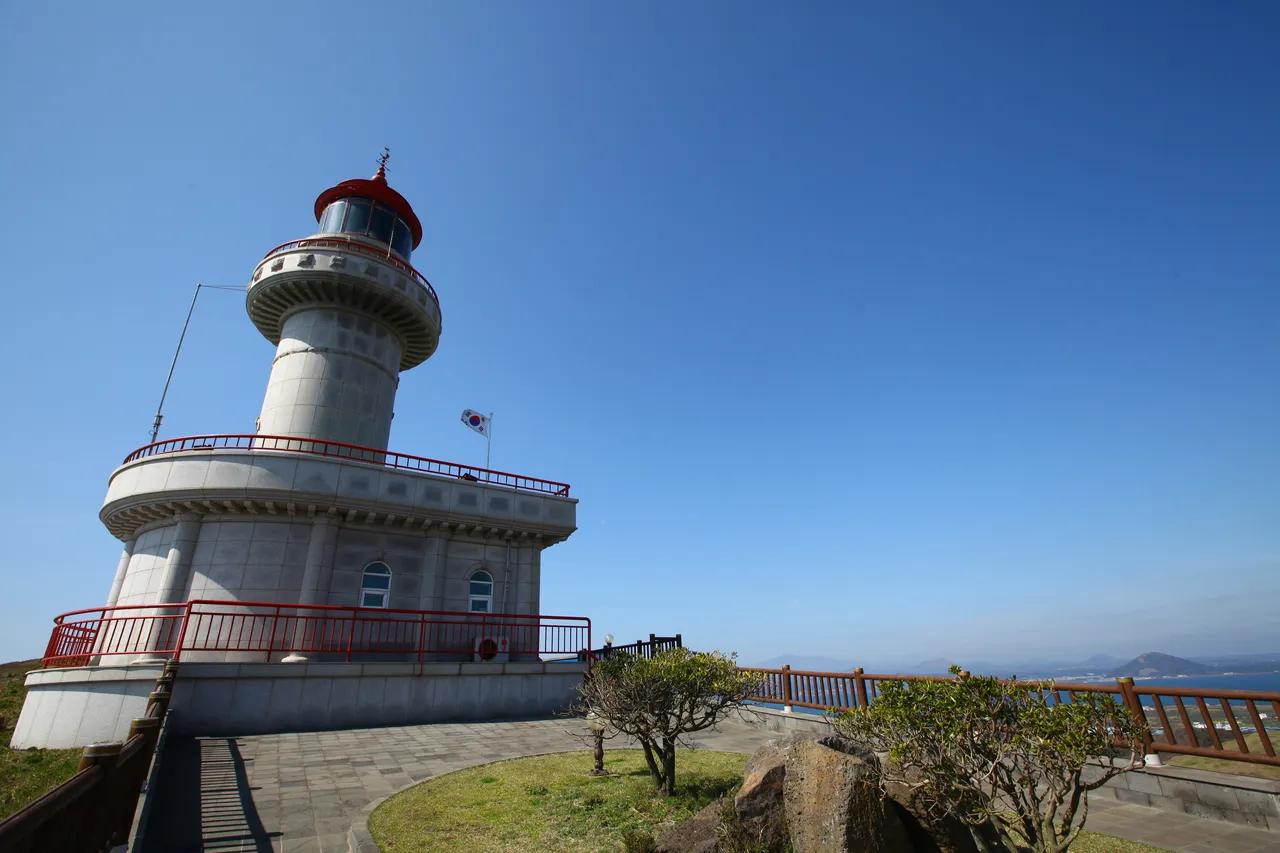
Choose two or three stops and leave the rest. Aim to be back at the pier with a clear buffer instead of at the last possible moment.
Back on the main island: Seongsan, and Seopjikoji only with buffer
The return ferry lands you back near Seongsan Port, and the cone is a separate short transfer away, so use a taxi or your car instead of assuming a walk. Whether the summit is still open depends on the season and your ferry, which is why the order question below matters.
If the ferry is late or the light is fading, the free coastal area is the lighter way to finish. Add Seopjikoji only if you land with real buffer and daylight, because it asks for another transfer and a walk on an exposed headland.
Udo first or Seongsan first?
There is no universal winner. The honest answer depends on what you care about most and what the weather looks like on the day.
| If this is true | Lean toward |
|---|---|
| The summit is your top priority, and its hours are fixed | Seongsan first, then Udo with the ferry buffer |
| You want the most relaxed time on Udo and the morning looks calm | Udo first, then a lighter Seongsan finish |
| The ferry notice or weather is uncertain | Start with the stop you can still do, and decide on the ferry once you have seen the notice |
| You are traveling with children or older relatives | Whichever order keeps the longer walk earlier in the day |
| You plan to climb Seongsan | Check the season's last ticket time before putting it second, since it is earlier than closing |
Whichever you pick, the return ferry is the one part of Route B you cannot reschedule.
Which route should you choose?
| Traveler | Suggested route | Why |
|---|---|---|
| First-timer | Route A | Fewer hard deadlines and the steadiest pair of anchors |
| Family with young children | Route A, summit optional | No ferry deadline. See the Seongsan guide on accessibility and children |
| No car | Route B, or Route A with taxis | Route B keeps you around Seongsan. Route A needs a hop to Seopjikoji by bus or taxi |
| Low walking | Route A, skipping the summit | Seopjikoji and the free coastal areas have less climbing. Udo is easiest on foot or by bike |
| Photography | Route A | Seopjikoji looks back at the cone, and Gwangchigi gives another angle. Check the light for your date |
| Bad weather | Route A, shortened | No ferry to be cancelled. See the decision tree below |
| Beach and island pace | Route B | Udo is the reason to come, and Seongsan is the add-on |
Getting around East Jeju
With a rental car
A car is the simplest way to link Seongsan, Gwangchigi and Seopjikoji. For licenses, rental rules and the basics, see the Jeju car rental guide.
Do not assume the car goes to Udo. The Udo guide explains the vehicle restrictions and why you should get written confirmation from your rental company before planning around it. The simple plan is to leave the car on the main island and walk on.
Without a car
Public buses serve the east coast, but I am not quoting route numbers. They change, and the only Visit Jeju bus article I found for this stretch was dated 2016.
Visit Jeju's public transportation page, dated 2022, supports one safe habit: check a real-time map or bus app on the day. Taxis cover the short hops, such as Seongsan Port to the cone. Without a car, Route A needs one longer leg to Seopjikoji, so price it in a taxi or check it in a live app before you commit.
From Jeju City
The east coast is a real leg of the day from Jeju City, not a quick detour. I am not quoting a duration, because it depends on traffic, route and mode.
Start earlier than feels necessary, especially for Route B. Check a live navigation app for your own departure time.
The northeast coast road, with Woljeongri Beach roughly 17 km northwest of Seongsan in a straight line (my estimate), is a separate stop and not part of these two routes. See the Woljeongri Beach guide if you want to add it on another day.
From Seogwipo
Seogwipo is on the south coast, and the east coast is still a real leg from there. I am not quoting a duration for this either.
If you stay in Seogwipo, Seopjikoji can be a natural first or last stop depending on direction. Check a live map for the order that wastes the least road time.
Where to stay
The trade-off is options against travel time. Staying in Jeju City or Seogwipo gives you more choice of lodging, food and transport, but it makes the east coast a longer leg each way.
Staying on the east coast near Seongsan makes early starts, the ferry and sunrise easier, but there is less choice and you may need a car or taxi for evenings. For areas and trade-offs across the island, see where to stay in Jeju.
Seasons
Spring canola is the draw at Seopjikoji in season, and the Seopjikoji guide covers the details. Summer brings long hours and heat on exposed stairs, and a swim on Udo for those who want one.
Autumn sits in between. Winter brings shorter hours, cold wind and a tighter margin for the summit. I am not naming a top month, so check the hours table for your own date.
Weather decision tree
I am not setting wind or rain thresholds, because I found no official ones. Visit Jeju says weather can delay or cancel Udo sailings, so the ferry is the first thing to check.
| Condition on the day | What to do |
|---|---|
| Sailings are running and the sea looks calm | Route B is reasonable. Keep the return buffer |
| Sailings are delayed, cancelled or unclear | Switch to Route A and keep Udo for another day |
| Strong wind | Shorten Seopjikoji's headland walk and take care on the Seongsan stairs |
| Rain | Wet stairs are slippery. Skip the summit and keep the free coastal areas |
| Fog | Views from the summit and headland can be limited. Delay the viewpoint stops if you can |
| Severe weather | Ask at the gate or terminal, and keep the day flexible. I found no official closure rule |
Sunrise caution
Seongsan is known as Sunrise Peak, but a sunrise start changes the whole day. The sunrise time, the summit's opening before dawn and the ferry's first sailing all depend on your date.
I am not printing a sunrise time here. The Seongsan Ilchulbong guide explains the sunrise question and links the source to check.
Common mistakes
- Stacking all three places. Udo, the summit and Seopjikoji each take their own block of time.
- Assuming the cone is at the ferry port. They are separate stops about 2 km apart in a straight line, so plan a transfer.
- Taking a rental car to Udo without confirmation. Get written confirmation from your rental company first.
- Using an old ferry timetable. Check the operator or the terminal notice on the day.
- Using an old bus route. Check a real-time app instead of a remembered number.
- Treating the return ferry as flexible. It is the one deadline you cannot move.
- Forgetting ID for Udo. The Udo guide explains the ID check.
- Reading closing time as the last ticket time. For the summit, the last ticket is earlier.
- Underestimating wind at Seopjikoji. The headland is exposed, so shorten the walk if it is rough.
- Planning to walk between stops. Seongsan Port, the cone and Seopjikoji are not an easy walk apart.
- Counting straight-line distance as travel time. Use a live map for the road.
- Having no flexible stop. Keep one free stop you can drop or add as the weather and your energy change.
FAQ
Can you see Seongsan, Seopjikoji and Udo in one day?
It is possible, but it is not recommended as a default. Each wants its own block of time, and the ferry and the summit both have hard edges.
What is the best route for a first-timer?
Route A, Seongsan Ilchulbong plus Seopjikoji. The basis is practical: no ferry is involved, so there are fewer hard deadlines.
Should I do Udo or Seongsan first?
There is no universal winner. Lean Seongsan first if the summit is your priority, and Udo first if the morning is calm and you want relaxed island time.
Is one day enough for East Jeju?
One day is enough for two anchors, not for everything. Pick Route A or Route B and treat the rest as optional.
Can I do East Jeju without a car?
Yes, with more planning. Buses serve the coast, but check a real-time app, and use taxis for short hops such as Seongsan Port to the cone.
Can I take a rental car to Udo?
Do not assume you can. The Udo Island guide explains the restrictions and says to get written confirmation from your rental company.
How early should I start?
Earlier than feels necessary, especially for Route B. The east coast is a real leg from Jeju City or Seogwipo, and I am not quoting a duration.
Can I watch sunrise and still do Udo?
It depends on your date. Check the sunrise time and the first sailing for that day, and see the Seongsan Ilchulbong guide.
What if the Udo ferry is cancelled?
Switch to Route A. Seongsan and Seopjikoji do not depend on a sailing, so the day still works.
Is Seopjikoji worth adding to a day on Udo?
Only if you finish with real buffer and daylight. It needs another transfer and a walk on an exposed headland.
Where should I stay for East Jeju?
Jeju City or Seogwipo gives more choice with a longer leg each way. Staying near Seongsan shortens early starts. See where to stay in Jeju.
Is Gwangchigi Beach worth a stop?
It is a short, free stop between the cone and Seopjikoji, according to Visit Jeju. It is a bonus, not a reason to restructure the day.
Is this plan good for children?
Route A is the easier fit, because there is no ferry deadline and the summit is optional. The Seongsan guide covers accessibility and children.
What is the easiest route with low walking?
Route A without the summit. Seopjikoji and the free coastal areas involve less climbing than the summit trail.
Can I do East Jeju from Jeju City in a day?
Yes, as a day trip with an early start. Plan the east coast as a leg of the day, and check a live app for timing.
Does this page list current ferry times and bus numbers?
No. Those change, so use the Udo guide for the ferry and a real-time app for buses.
If you have another day
If you did Route A first, give Udo its own day, since it works best with the ferry as the main event. If you did Route B, Seopjikoji and Gwangchigi make an easy second morning on the main island.
For beaches across the island, see the Jeju beaches guide, and for how the east fits the rest of the island, see the Jeju guide.
The bottom line
Choose two anchors, not three. Route A is the safer default, Route B is for travelers who want Udo, and the ferry decides whether Route B is on at all.
Sources
- Visit Jeju (official Jeju tourism)Official tourism site
- Visit Jeju: Seongsan IlchulbongOfficial tourism site
- Visit Jeju: Seopjikoji (hours, parking, description)Official tourism site
- Visit Jeju: Udo Island (Maritime Park)Official tourism site
- Jeju World Natural Heritage Center: Seongsan Ilchulbong (hours, admission, trail)Official government site
- Visit Jeju: Gwangchigi BeachOfficial tourism site
- Visit Jeju: Public transportation on Jeju (page dated 2022)Official tourism site
Information is compiled from official sources. Details such as prices, hours, and schedules can change. Confirm time-sensitive facts before you travel.
Last verified on
Related guides
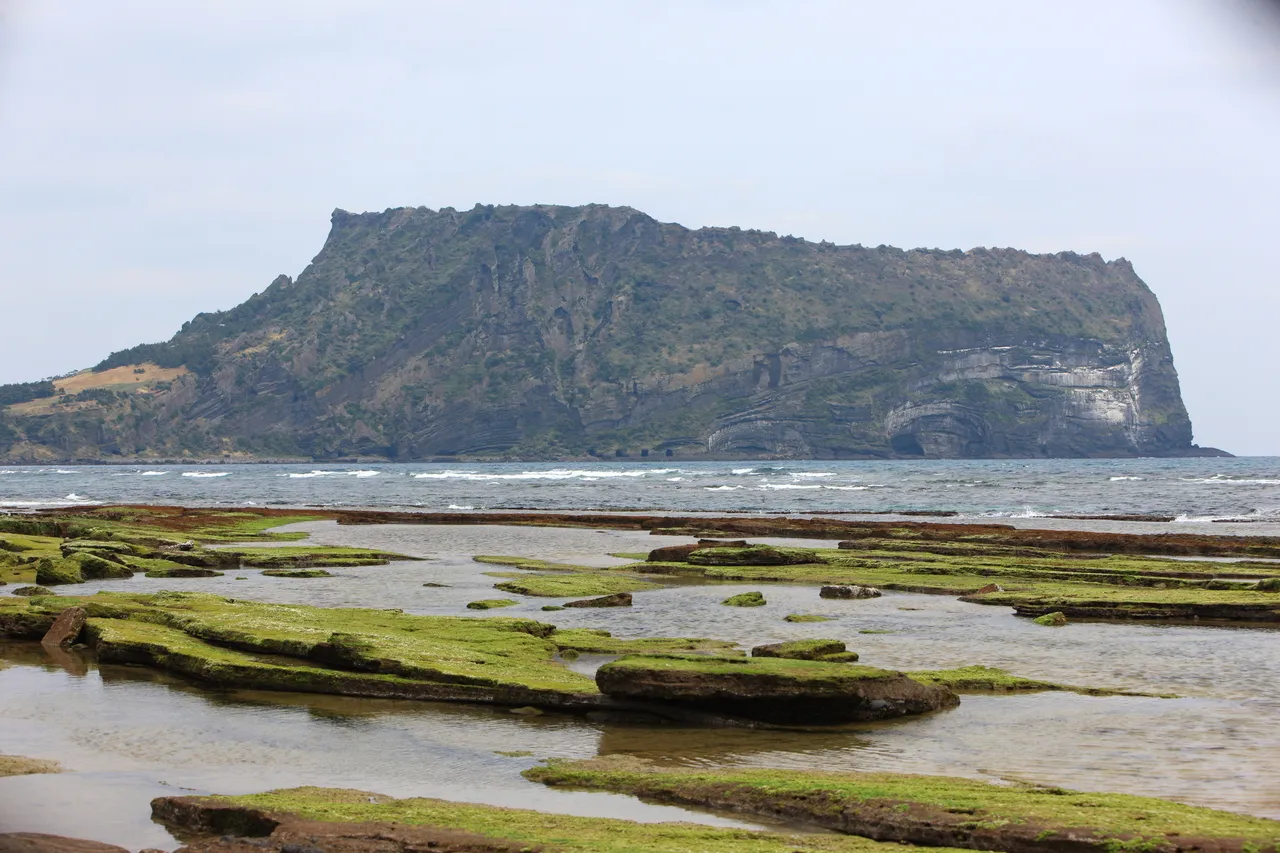
Seongsan Ilchulbong Guide: Sunrise, Hike, Tickets & How to Get There
Seongsan Ilchulbong is a volcanic cone on Jeju's east coast, part of the island's UNESCO World Natural Heritage property. The summit trail is paid and steep, takes roughly 30 to 40 minutes up, and opens before sunrise on every date under the current official hours. Hours and fees change, so confirm them on the official page and look up the sunrise time for your own date.
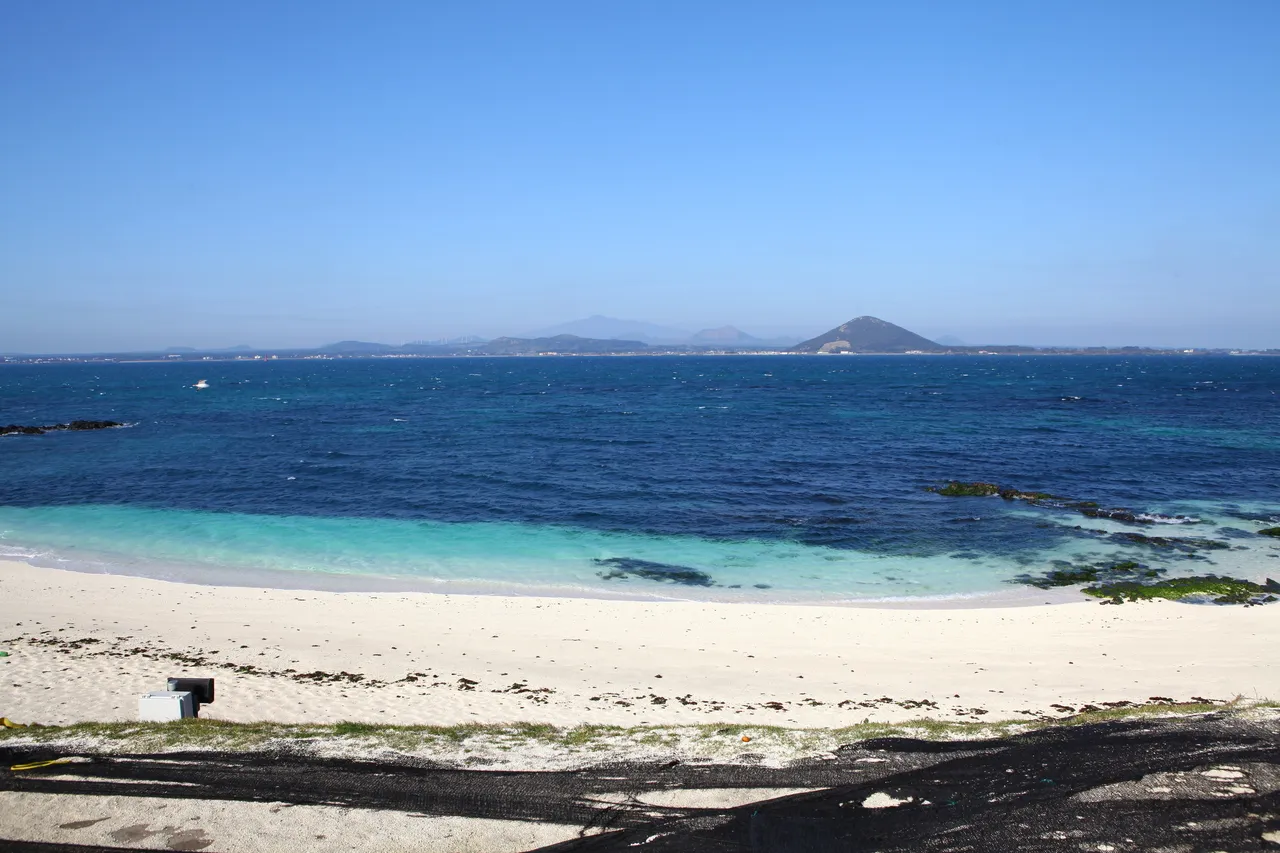
Udo Island Guide: Ferry, Beaches, Getting Around & a Day Trip Plan
Udo is a small island just off Jeju's east coast, reached by a short ferry from Seongsan Port or Jongdal Port. Most visitors go as foot passengers, bring a passport for the boarding ID check, and get around by bicycle, pedal-assist e-bike, a permitted electric vehicle or on foot. Vehicle rules are strict and change, so confirm them before you rely on a rental car or a two-wheeler.