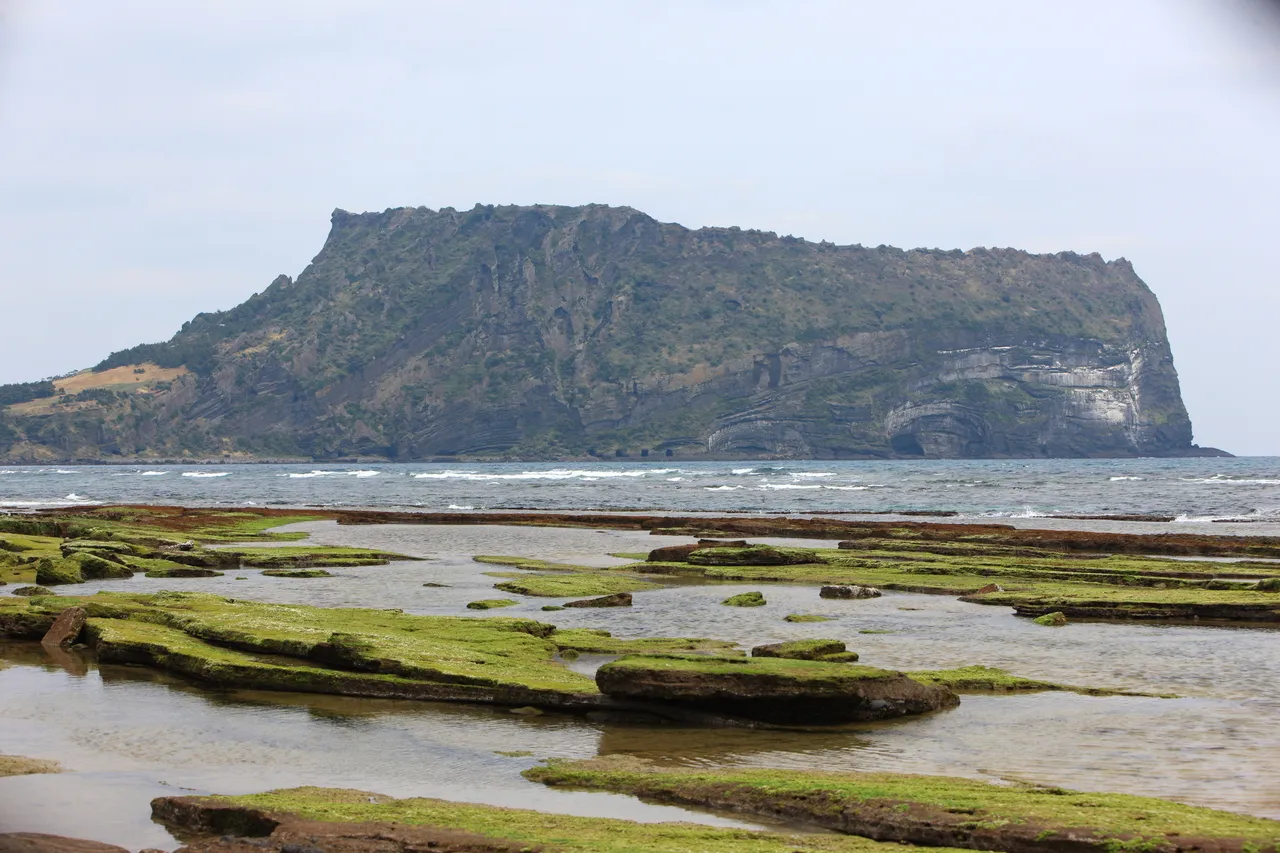
Seongsan Ilchulbong is a volcanic cone on Jeju's east coast with a paid, stair-heavy trail to a crater rim, and it is worth a visit if you have time on the east side. The name means "Sunrise Peak", but that describes the view, not the opening time.
Three things decide the visit: the season's opening hours, the date's sunrise time, and your energy for roughly 30 to 40 minutes of climbing. This page keeps those separate, because mixing them is how visitors end up at a closed gate or on the summit after the sun is up.
Quick answer
| Question | Short answer |
|---|---|
| What is it? | A tuff cone that rises from the sea on Jeju's east coast, with a crater on top |
| Is it a World Heritage site? | It is one component of Jeju's UNESCO property, not the whole property |
| Is there a fee? | Yes, for the summit trail. Adult ₩5,000 on the official page; check before you go |
| Opening hours? | Seasonal, from 04:30 to 06:00 depending on the month. See the table below |
| How long is the climb? | About 30 to 40 minutes up, per the official page |
| Sunrise from the summit? | Possible if you enter at opening and the margin on your date allows it. Not guaranteed |
| Closed days? | The first Monday of each month, per the official page |
| Free areas? | A gentle slope along the coast below the cone is outside the paid trail |
| How long to allow? | About 1.5 to 2 hours for the summit, my estimate |
What Seongsan Ilchulbong is
Seongsan Ilchulbong is a tuff cone, a volcano built when an eruption met shallow sea water and threw out ash that settled into a ring. It rises about 180 m from the shoreline and has a bowl-shaped crater roughly 600 m across, according to the official heritage page.
It is a component of Jeju Volcanic Island and Lava Tubes, which UNESCO inscribed as a World Natural Heritage property in 2007. The property also includes the Hallasan Natural Reserve and the Geomunoreum lava tube system, so Seongsan is a part of it rather than the whole.
The cone is also a protected Natural Monument (No. 420). The steep cliff faces the sea, which is why the shape looks so different from the shore than it does from the trail.
Is it worth a visit?
Yes, if you are on the east side of Jeju and can spare 1.5 to 2 hours. The crater rim gives a wide view of the coast and the sea, and the cone is one of the clearest examples of Jeju's volcanic landscape.
| You are | Verdict |
|---|---|
| A first-time Jeju visitor with an east-coast day | Good fit, usually the anchor of that day |
| Hoping for a sunrise on the summit | Possible, but plan around the date, not the name |
| Traveling with a stroller or wheelchair | The summit trail is stairs and a climb, so plan on the coastal area instead |
| Short on time | A coastal stop with a look at the cone is a fair substitute |
| Combining with Udo in one day | Doable with discipline; see the section below |
Tickets and opening hours
These are the current official hours and fees as checked on 2026-10-13. They are volatile: the provincial government moved the March and April opening from 07:30 to 05:00 from March 2025, according to a Newsis report, so older blog posts may show the earlier hours.
| Season | Opens | Ticket sales end | Closes |
|---|---|---|---|
| November to February | 06:00 | 17:00 | 18:00 |
| March to April, September to October | 05:00 | 18:00 | 19:00 |
| May to August | 04:30 | 19:00 | 20:00 |
Opening, last admission and closing are three different times. Ticket sales end one hour before closing, so treat that as the last entry, and do not arrive near it, because the climb and the descent both take time.
The site is closed on the first Monday of each month, and on the following day if that Monday is a public holiday, per the official page. Check the official page for any one-off closure on your date.
The paid area is the trail up to the crater. Adult admission (ages 25 to 64) is listed at ₩5,000, youth and military (13 to 24) at ₩2,500, and children (7 to 12) at ₩2,500, with a lower group rate for 10 or more. Other age bands and any exemptions are on the official page, so confirm there instead of relying on a blog list.
The official page lists a rule against bringing outside food in. Check the posted signs at the gate.
Can you watch sunrise from the summit?
Under the current official hours, the gate opens before sunrise on every date of the year. My own calculation puts the gap between opening and sunrise at about 45 minutes at its tightest, in late April and early November, and about two hours at its widest, in early March. That is an estimate from standard sunrise tables, not an official figure.
The climb is about 30 to 40 minutes, plus the ticket line. So on the tightest dates, arriving at opening can still leave little margin, and on a cloudy or foggy morning the sunrise may not be visible at all.
"Sunrise Peak" is why this goes wrong. The name says the cone is known for the sunrise view, not that the summit is open at any hour you like.
To plan it, look up the sunrise time for your own date on the Korea Astronomy and Space Science Institute site (KASI) and count back from it. Do not copy a sunrise time from a blog, because it will be for a different day of the year.
If you cannot reach the top in time, the free coast below the cone and Gwangchigi Beach west of it are alternatives for a view of the cone itself. I would not promise either as a sunrise spot, because cloud and the horizon decide it.
New Year's Day and the Sunrise Festival
New Year's Day is handled separately, and the arrangement changes from year to year. For 1 January 2026, the festival organizers restricted summit access until 09:00 to a pre-registered group of 500 climbers, with passes handed out from 04:30 to 06:00. That is a dated note for that year only.
I found no announcement for the next New Year when I checked on 2026-10-13. Check the festival's official site before you build a New Year plan around the summit.
The hike: what to expect
The paid trail starts at the ticket gate and climbs by stairs and uphill sections to the crater rim. The official page gives about 30 to 40 minutes up. It is a short climb, but steady and steep in places, so it is not a serious mountain hike and it is not easy for everyone.
I did not find an official stair count, so I am not quoting one. Expect many steps and a view that opens up as you gain height.
At the top you reach the crater rim and a viewing area. Whether you see the crater floor or the sea depends on cloud and wind that day, and I cannot promise a clear view.
How much time to allow
These are my planning estimates, not official figures.
| Plan | Time to allow |
|---|---|
| Quick stop (coastal look, no summit) | About 30 to 60 minutes |
| Summit visit (ticket, climb, time at the top, descent) | About 1.5 to 2 hours |
| Seongsan plus Udo in one day | Most of a day, with the ferry as the fixed point |
Free coastal area
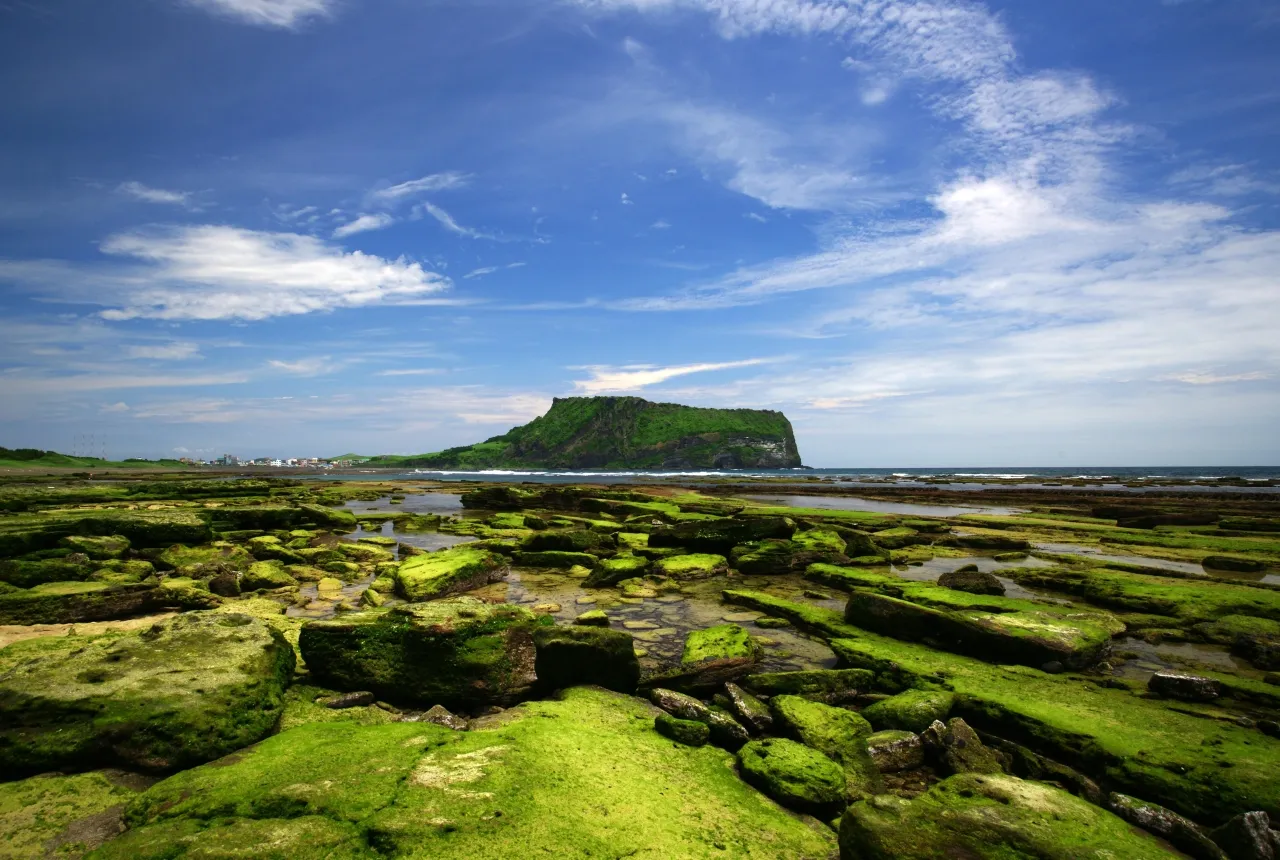
Not everything here needs a ticket. The official page describes a gentler slope along the Umutgae coast, below the cone, as a free section. The rock shore at Gwangchigi Beach, west of the cone, is a public beach with a wide view of it.
If you only want the shape of the cone and the coast, this is enough. If you want the crater rim, you need the paid trail.
Getting there
By rental car, Seongsan is a straightforward stop on the east coast, and it pairs well with Seopjikoji and the Udo ferry terminal. See the Jeju car rental guide for licenses and rules.
From Jeju City or Seogwipo, public buses serve the east coast, but routes and times change, so I am not quoting a route number or a duration. Check the current route in a navigation app on the day, or use a taxi if you are short on time.
The official page says parking is free. Confirm that on site, because lots near popular spots can fill up and rules can change.
Seongsan Ilchulbong and the ferry terminal
The cone and the Udo ferry terminal, Seongsan Port, are separate stops. On the map, the two pins are about 2 km apart in a straight line, which is my estimate from the coordinates, and the cone is not at the port.
I did not verify a walking route or a walking time between them, so check a live map and use a taxi or your car. Do not assume you can walk from the ferry gate to the ticket gate in a few minutes.
Seongsan and Udo in one day
You can do both, but only if you treat the return ferry from Udo as the hard deadline. The sequence matters more than the minutes, and this page does not cover ferry tickets, ID or vehicle rules. For those, see the Udo Island guide.
A simple sequence: climb Seongsan at opening, then go to Seongsan Port for Udo, then return on a ferry that leaves you a buffer. Seongsan's hours are fixed for the season, while the Udo ferry can be delayed by weather, so doing Seongsan first protects the part you cannot reschedule.
If the weather looks unsafe for the ferry, keep Udo as an optional extra and do the cone and the coast. If you reverse the order, check the last ticket time for the season, because it differs from closing.
Pairing with Seopjikoji
Seongsan and Seopjikoji can form a relaxed main-island day, since they sit on the same stretch of coast, a few kilometers apart. Udo needs its own block of time and a ferry, so I would not stack all three into one day unless you are comfortable with a rushed schedule.
For the coastal walk, parking and what is free there, see the Seopjikoji guide. For how the east coast fits with the rest of the island, see the Jeju guide.
Planning all of East Jeju? See the East Jeju one-day itinerary for how to choose between the routes.
Haenyeo near Seongsan
The coast around Seongsan is a working haenyeo area, where women divers harvest seafood by free diving. Treat it as a local livelihood, not a show, and keep a respectful distance if you see divers.
Some blogs and news items mention scheduled haenyeo demonstrations. I could not confirm a current official schedule, so I am not printing times. If you see a schedule posted, confirm it at the site.
Accessibility and children
The summit trail is stairs and a climb. I would not plan it with a wheelchair, and I am not claiming wheelchair access to the top. For access questions, the number on the official page is 064-710-7923.
For children, the main issues are the stairs, the wind and the drop-offs near the rim. The official pricing has a child band for ages 7 to 12, but I am not giving a minimum age, so judge it by your child and keep them close.
Best time of day and seasons
Early morning offers the sunrise option, but it also means a dark approach and cooler air. Later in the day you trade that for warmer light and more people. I am not predicting crowds, because they vary by date and weather.
I am not naming a "best month". Summer brings long opening hours and heat on exposed stairs, winter brings shorter hours and cold wind, and spring and autumn sit between them. Check the hours table for your month.
Sunset is not the reason to come here. Hours and sunset times shift through the year, so check both for your date before planning around it.
Bad weather
Wind, rain and fog change this visit more than almost anything else. Wet stairs are slippery, and fog can hide the crater and the sea.
I did not find an official weather-closure rule. If the weather is severe, expect that access could be limited, and ask at the gate or call the number above. Keep the rest of your east-coast day flexible.
Food
Keep it simple: the site rules out bringing outside food in, so eat before or after in the Seongsan area. Udo has its own food notes in the Udo Island guide.
Common mistakes
- Assuming the summit is open at sunrise on any date. Check the hours for your season, not the name.
- Trusting old blog hours. The March and April opening changed in 2025.
- Mixing up closing and last admission. Tickets stop one hour before closing.
- Thinking the whole area needs a ticket. The coastal slope and the rock shore are outside the paid trail.
- Underestimating the stairs. It is short, but steady and steep.
- Ignoring wind and rain. Both change the climb and the view.
- Packing Seongsan, Udo and Seopjikoji into one day. Udo needs its own block.
- Missing the Udo ferry. The return sailing is the hard deadline.
- Using an old haenyeo schedule. Confirm anything you see posted.
- Assuming the New Year festival repeats every year. The arrangement changes, so check the organizer.
- Using a sunrise time for the wrong date. Look up your own date on KASI.
FAQ
Is Seongsan Ilchulbong worth visiting?
Yes, if you are on the east side of Jeju and have 1.5 to 2 hours. A coastal stop is a fair substitute if you are short on time.
Is Seongsan Ilchulbong a UNESCO site?
It is a component of Jeju Volcanic Island and Lava Tubes, a UNESCO World Natural Heritage property. It is one part of that property, not the whole.
How much is the ticket?
The official page lists ₩5,000 for adults (25 to 64), ₩2,500 for youth and military (13 to 24), and ₩2,500 for children (7 to 12). Confirm current fees before you go.
What are the opening hours?
They vary by season: 06:00 to 18:00 from November to February, 05:00 to 19:00 in March, April, September and October, and 04:30 to 20:00 from May to August. Ticket sales end one hour before closing.
Is it open at sunrise?
Under the current official hours, the gate opens before sunrise on every date. Check your own date and season, because the hours can change.
Can I see sunrise from the summit?
Possibly, if you enter at opening and the margin on your date is enough for the climb. Cloud and fog can still block it, so it is never guaranteed.
Why is it called Sunrise Peak?
"Ilchulbong" means sunrise peak. The name refers to the sunrise view, not to special opening hours.
How do I find the sunrise time?
Use the Korea Astronomy and Space Science Institute (KASI) sunrise and sunset tool for your date and for Jeju. Do not rely on a time from an older post.
How long does the climb take?
The official page gives about 30 to 40 minutes up. Allow 1.5 to 2 hours for the whole summit visit, which is my estimate.
Is the hike hard?
It is short but steep, with many stairs. It is not a serious mountain hike, and it is not easy for everyone.
Is there a free area?
Yes. A gentle slope along the Umutgae coast is described as a free section, and the rock shore at Gwangchigi Beach is a public beach.
Is parking free?
The official page says so. Confirm on site, because lots can fill up and rules can change.
Can I do Seongsan and Udo in one day?
Yes, if you treat the Udo return ferry as the fixed deadline. See the Udo Island guide for the ferry, ID and vehicle details.
Should I do Seongsan or Udo first?
Seongsan first is the safer default, because its hours are fixed and the ferry can be delayed. Use your own forecast and the ferry notice on the day.
Can I add Seopjikoji?
Seongsan plus Seopjikoji works as a main-island day. Add Udo only if you are comfortable with a rushed schedule.
Is it suitable for young children?
It can be, with care. There is no minimum age that I could confirm, so judge it by your child and the weather.
Is it wheelchair accessible?
I am not claiming wheelchair access to the summit. Call 064-710-7923 with access questions, or plan on the coastal area.
Can I see the haenyeo?
The coast is a working haenyeo area, but I could not confirm a current official schedule. Treat any posted time as something to confirm.
What happens on New Year's Day?
The arrangement changes by year. For 1 January 2026 the organizers restricted access until 09:00 to 500 pre-registered climbers. Check the festival's official site for the next one.
The bottom line
Check the season's hours and your date's sunrise, then decide. The climb is short and steep, the view is not promised, and the ferry is the real clock if you add Udo.
Sources
- Visit Jeju: Seongsan IlchulbongOfficial tourism site
- Jeju World Natural Heritage Center: Seongsan Ilchulbong (hours, admission, trail)Official government site
- Newsis: Seongsan Ilchulbong opening hours extended from March 2025news_report
- UNESCO World Heritage Centre: Jeju Volcanic Island and Lava TubesOfficial government site
- Korea Astronomy and Space Science Institute: sunrise and sunset timesOfficial government site
- Seongsan Sunrise Festival: official siteofficial_service_site
- Seongsan Sunrise Festival: 2026 New Year summit pass noticeofficial_service_site
- Visit Jeju: Udo Island (Maritime Park)Official tourism site
Information is compiled from official sources. Details such as prices, hours, and schedules can change. Confirm time-sensitive facts before you travel.
Last verified on
Related guides
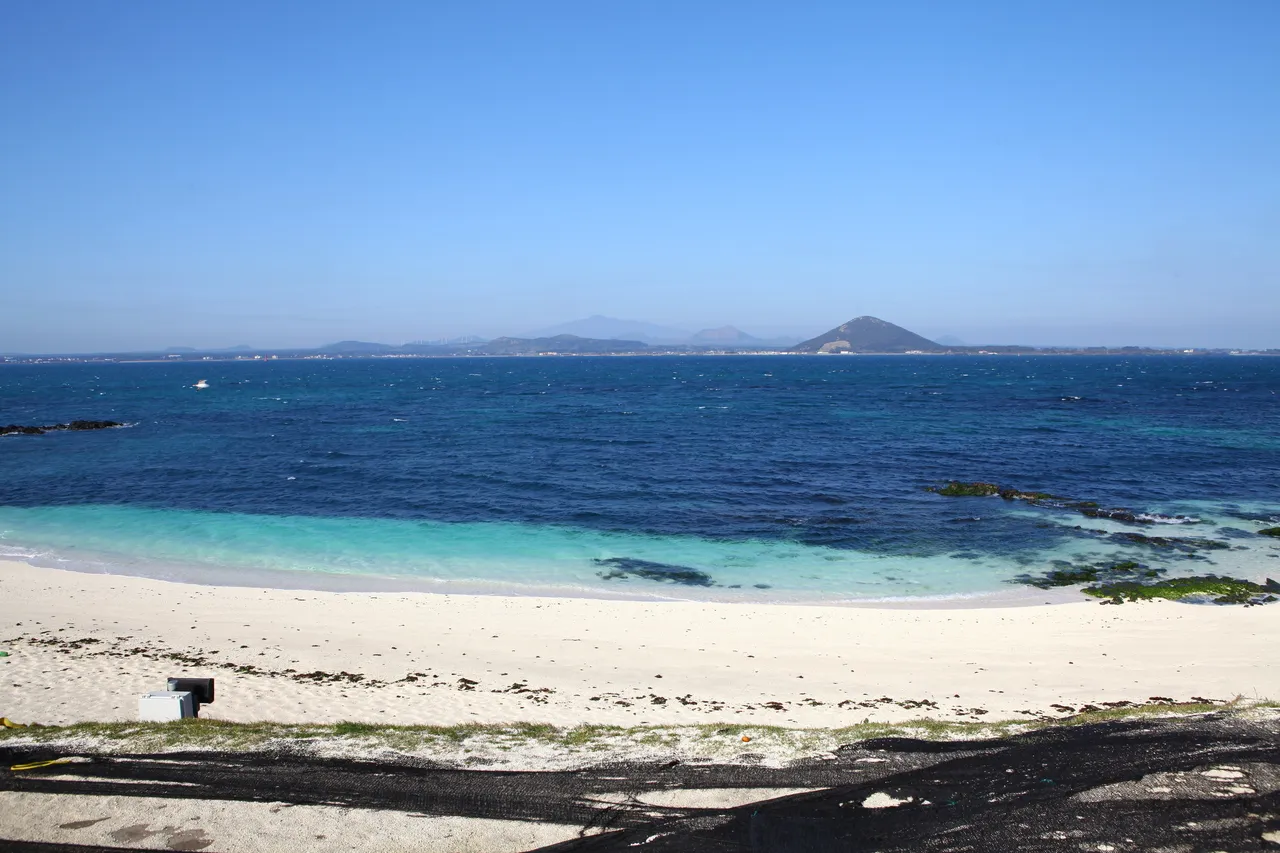
Udo Island Guide: Ferry, Beaches, Getting Around & a Day Trip Plan
Udo is a small island just off Jeju's east coast, reached by a short ferry from Seongsan Port or Jongdal Port. Most visitors go as foot passengers, bring a passport for the boarding ID check, and get around by bicycle, pedal-assist e-bike, a permitted electric vehicle or on foot. Vehicle rules are strict and change, so confirm them before you rely on a rental car or a two-wheeler.
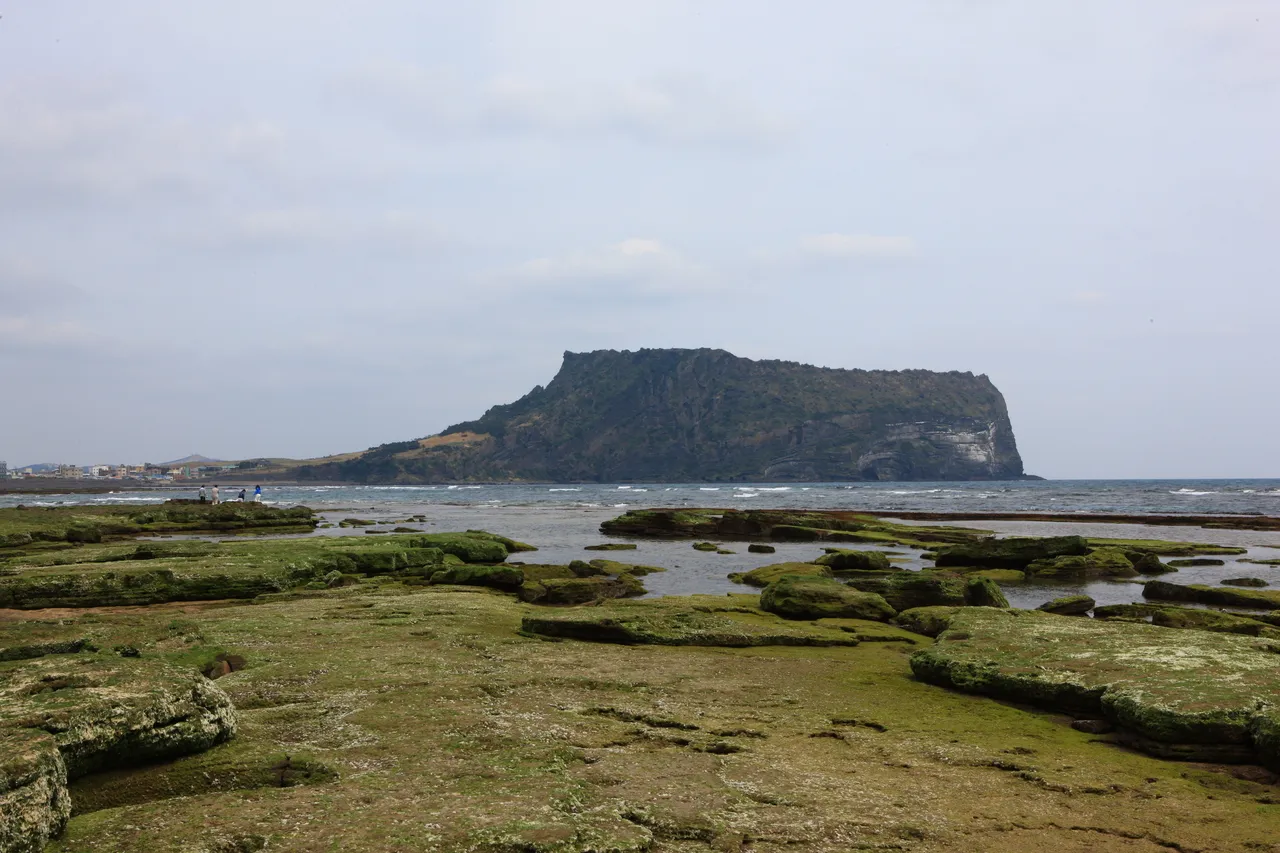
Jeju Island Travel Guide: Food, Hallasan, Olle Trails, Beaches, and Nature
Jeju is Korea's volcanic holiday island: a slower, nature-first counterpoint to Seoul and Busan, built around coastal drives, seafood and black pork, Hallasan, the Olle walking trails, and quiet beaches. Most visitors fly in, rent a car, and give it two to four days.