
If the food is the reason you are coming, plan the trip around the table. This 4-day Seoul-to-Busan route puts markets earlier and barbecue or chimaek later.
Pair it with the what-to-eat guide for dishes and order notes.
Who this plan is for
Travelers who would happily organize a day around one meal. It assumes you are comfortable pointing at what you want and trying things you cannot fully read.
4-day route at a glance
| Day | Base | Focus | Signature stops |
|---|---|---|---|
| 1 | Seoul | Markets + barbecue | Gwangjang → Insadong or Myeongdong → BBQ dinner |
| 2 | Seoul | Everyday + chimaek | Simple lunch → cooking class optional → fried chicken |
| 3 | Busan (KTX) | Seafood + street food | Jagalchi → BIFF Square → dwaeji gukbap |
| 4 | Busan | Slow second pass | Jagalchi or Nampo / Gamcheon / Haeundae, then leave |
Optional: Noryangjin in Seoul, or a Jeonju day if you add a fifth day.
Day 1: Seoul markets and barbecue
Morning
Head to Gwangjang Market. Arrive around 10 to 11 a.m. before the lunch crush.
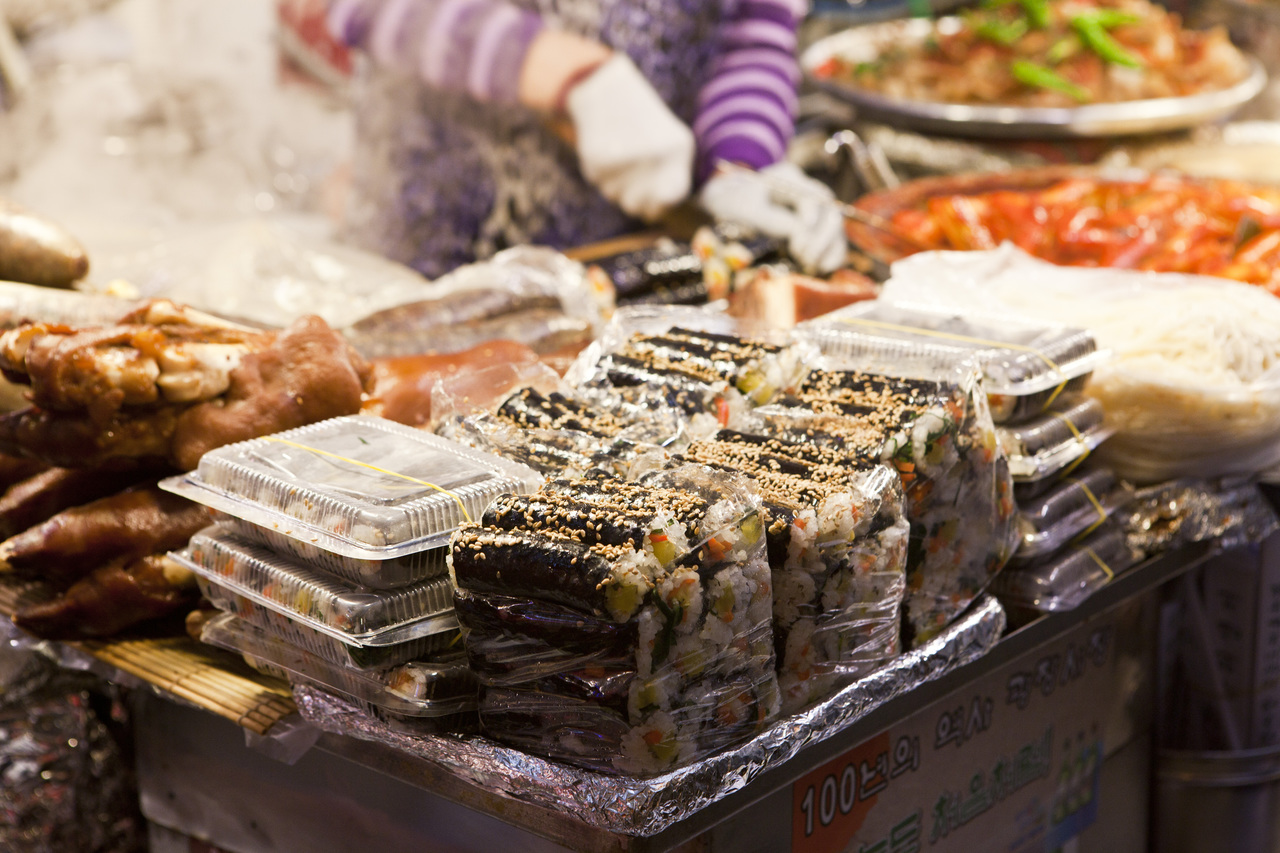
Start with bindae-tteok (mung-bean pancakes, fried to order) at a counter stall, then work through mayak gimbap (small seaweed rice rolls with mustard dip).
The market is a grazing experience. Sit, order one thing, eat it, move to the next stall.
Afternoon
Walk or subway to Insadong for a traditional tea or dessert stop, sikhye (sweet rice punch) or patbingsu (shaved ice) in season. Or head to Myeongdong for a kalguksu (knife-cut noodle soup) lunch at a busy counter restaurant.
Evening
Korean barbecue for dinner. Pork belly (samgyeopsal) is the standard choice: you grill it yourself at the table, cut it into pieces with scissors, and wrap each bite in lettuce with garlic and fermented soybean paste.
Barbecue restaurants are liveliest between 7 and 10 p.m.
Day 2: Seoul, deeper
Morning
Skip the usual tourist sights and go food-first. A bowl of doenjang jjigae (soybean paste stew) and rice at a simple sikdang (Korean lunch restaurant) costs little and takes 20 minutes. This is how most Koreans eat lunch on a weekday.
Afternoon
Try bibimbap for lunch at a sit-down restaurant, or explore the convenience store food: Korean convenience stores do packaged gimbap, triangle rice balls, and hot ramen cooked on site. This is also a good time for a cooking class if you booked one.
Evening
Chimaek, Korean fried chicken and beer. Order a whole chicken split half-and-half (half plain fried, half in yangnyeom sauce) for a table of two. Eat it while it is hot; sauced chicken softens after 20 minutes.
Use a T-money card to hop between Hongdae, Seongsu, or wherever feels lively.
Day 3: Busan by KTX
Morning
Take a morning KTX south (about 2.5 hours from Seoul Station or Suseo). In Busan, start at Jagalchi: Korea's largest fish market, where you pick fresh seafood from tanks downstairs and have it prepared and served upstairs. No reservation needed; go mid-morning and point at what looks good.
This is the hands-on seafood experience that Busan is known for.
Afternoon
Walk to BIFF Square for street-food snacks (eomuk (fish cake on a stick), hotteok (sweet fried pancakes), and tteokbokki) then catch your breath at a cafe with a view of the bridge from Gwangalli Beach.
Evening
Try dwaeji gukbap (pork-and-rice soup), the dish Busan is arguably most proud of, a milky white pork bone broth with sliced pork, served with rice inside the bowl. Simple, filling, and deeply Busan. See the what to eat in Busan guide for where to find it and what else is worth trying.
Day 4: Busan, slow
Keep this day unscheduled. Options:
- Revisit Jagalchi in the morning: it looks different from a different angle, and you may want to try a different fish.
- Nampo-dong for a full gukbap breakfast and a slow walk through the covered market.
- Gamcheon Culture Village for a mid-morning wander through the hillside murals before lunch.
- A coastal cafe in Haeundae with a coffee and the sea, before an afternoon train or flight home.
Optional add: Noryangjin Fisheries Market
Noryangjin Wholesale Fisheries Market (on the Seoul subway, Line 1) is the option for early risers. The wholesale floor opens before dawn; the retail section serving individual buyers starts around 6 a.m. You choose live seafood from tanks, negotiate a price, and have it prepared (sliced for sashimi or cooked) either by vendors on the first floor or by restaurants on the second floor.
It is a different experience from Jagalchi in Busan: rawer, louder, and more wholesale in feel. Best visited before 9 a.m. when the selection is widest and the activity highest. Use Naver Map to navigate from your accommodation; Noryangjin Station exit 1 is the most direct.
This works as a morning addition to Day 1 (before Gwangjang) if you are willing to start early and eat raw seafood at 7 a.m., which is exactly what a food trip is for.
Jeonju: a 1-day extension
If you have 5 days instead of 4, add Jeonju between Seoul and Busan. Jeonju is Korea's undisputed food city: the origin of bibimbap, a city with a Michelin Guide of its own, and a hanok village where the traditional architecture and the food market are within 10 minutes of each other.
Take the KTX from Seoul to Jeonju Station (about 1.5 hours); the hanok village is a short taxi ride from the station. One full day covers: a bibimbap lunch at a traditional house restaurant, a walk through the hanok village in the afternoon, a makgeolli (rice wine) and pajeon (green onion pancake) evening at one of the village bars, and a morning jeonju kongnamul-gukbap (soybean sprout soup and rice) breakfast before catching the KTX south to Busan.
See the Seoul to Jeonju train guide for transport details.
How to budget the food trip
Korean food at the range in this itinerary is affordable, but barbecue, chimaek, and Jagalchi can add up if you order generously. A rough guide based on conditions at last verification:
| Meal type | Per person rough range |
|---|---|
| Market grazing (2 to 3 items) | ₩8,000 to 18,000 |
| Gwangjang or Noryangjin visit | ₩15,000 to 35,000 depending on what you choose |
| Korean barbecue (pork, 2 people sharing) | ₩15,000 to 25,000 per person with sides and drinks |
| Chimaek (whole chicken + beer for 2) | ₩30,000 to 45,000 total |
| Jagalchi seafood (pick from tank, prepared) | Varies widely; agree the price before selecting |
| Convenience store meal | ₩3,000 to 7,000 |
These figures are at the time of last verification and will change. Budget more for barbecue and chimaek evenings; budget conservatively for market lunches. See the what-to-eat guide for broader context.
If the weather is bad
Heavy rain redirects the food trip rather than canceling it. Gwangjang is partially covered; Namdaemun is mostly covered. Department-store food basements (Lotte Myeongdong, COEX Gangnam, Lotte World Mall Jamsil) stay open. In Busan, Seomyeon department-store basements and covered BIFF Square still work in rain.
Practical tips
- Eat on the Korean schedule. Markets peak at lunch; barbecue and chimaek work best after about 7 p.m. Many street stalls open in the afternoon, not the morning.
- Carry some cash. Market stalls and some smaller restaurants still prefer it. See how to pay in Korea.
- Use Naver Map or KakaoMap. Google Maps often mislabels Korean eateries. Set maps up before you arrive: travel apps and T-money.
- Book the KTX to Busan in advance on weekends. Weekday seats are usually easier same day.
- Convenience stores count as real meals. Combos and hot-water ramen: convenience-store ramen guide.
- Pointing works. Photo menus are common; sitting at a market stall is often an implicit order. Linked food guides include short phrases.
Dietary notes (not allergy-safe claims)
Korean food uses pork broth and seafood bases in many dishes that look vegetarian. Doenjang jjigae and many soups may use anchovy or pork stock. Rice, grilled vegetables, and plain tofu are more often meat-free.
| Need | Practical note |
|---|---|
| Vegetarian | Insadong temple-food restaurants help; research each bowl |
| Halal | Highest density in Itaewon: Muslim-friendly Seoul |
| Markets | Ask clearly: "돼지고기 없어요?" (dwaeji gogi eopseyo? = no pork?) |
| Shellfish allergy | Sauces and broths often hide shrimp or clam; ask, do not assume |
| Gluten sensitivity | Soy sauce and many marinades use wheat; plain rice and plain grilled meat are safer starting points |
This guide does not certify any dish as allergy-safe. Confirm with staff using translated text when it matters.
Extra food stops (if you have time)
- Myeongdong evening street: egg bread, corn dogs, grilled snacks between sightseeing.
- Tongin Market: dosirak token system for assembling a lunch box.
- Noryangjin: best early for widest live seafood selection (optional add above).
- Supermarkets (Emart, Lotte Mart, Homeplus): tteok, dosirak, wider ramyeon lines: supermarket guide.
Common mistakes
- Over-ordering early: portions are generous and meant for sharing, so pace the day.
- Eating sauced fried chicken cold: it's best hot, while the crust is still crisp.
- Filling up at one stall when markets are built for grazing across several.
- Booking dinner too early: Koreans eat barbecue and chimaek late; leave room after a big lunch.
Frequently asked questions
Is four days enough for a Korea food trip?
Yes: two days in Seoul and two in Busan cover markets, barbecue, chimaek, and seafood without rushing. Add days to slow down or reach Jeonju.
How do I order if I can't read Korean?
Pointing works almost everywhere, and photo menus are common. Linked food guides include short phrases.
Seoul or Busan for food?
Both: Seoul for markets, barbecue, and variety; Busan for Jagalchi seafood and local specialties. This plan does both by KTX.
When should I eat the big meals?
Markets shine at breakfast and lunch; save barbecue and chimaek for dinner.
Is Korean food very spicy?
Some dishes are, but plenty are not: barbecue, knife-cut noodles, and many market snacks are mild.
Sources
- Visit KoreaOfficial tourism site
- KORAILOfficial transport site
- Korea Tourism Organization English TourAPIOfficial API
Information is compiled from official sources. Details such as prices, hours, and schedules can change. Confirm time-sensitive facts before you travel.
Last verified on
Related guides

What to Eat in Korea: A First-Timer's Food Guide
A starter list of Korean dishes worth seeking out (barbecue, stews, bibimbap, street food, and fried chicken) with how to order, rough prices, and notes for vegetarian and halal travelers.

Korean BBQ Guide: How to Order and Eat It
Korean barbecue is a grill-it-yourself meal of pork or beef cooked at your table and wrapped in lettuce with sides. The popular cuts, how to order, how the grilling works, what it costs, and the simple etiquette are all below.