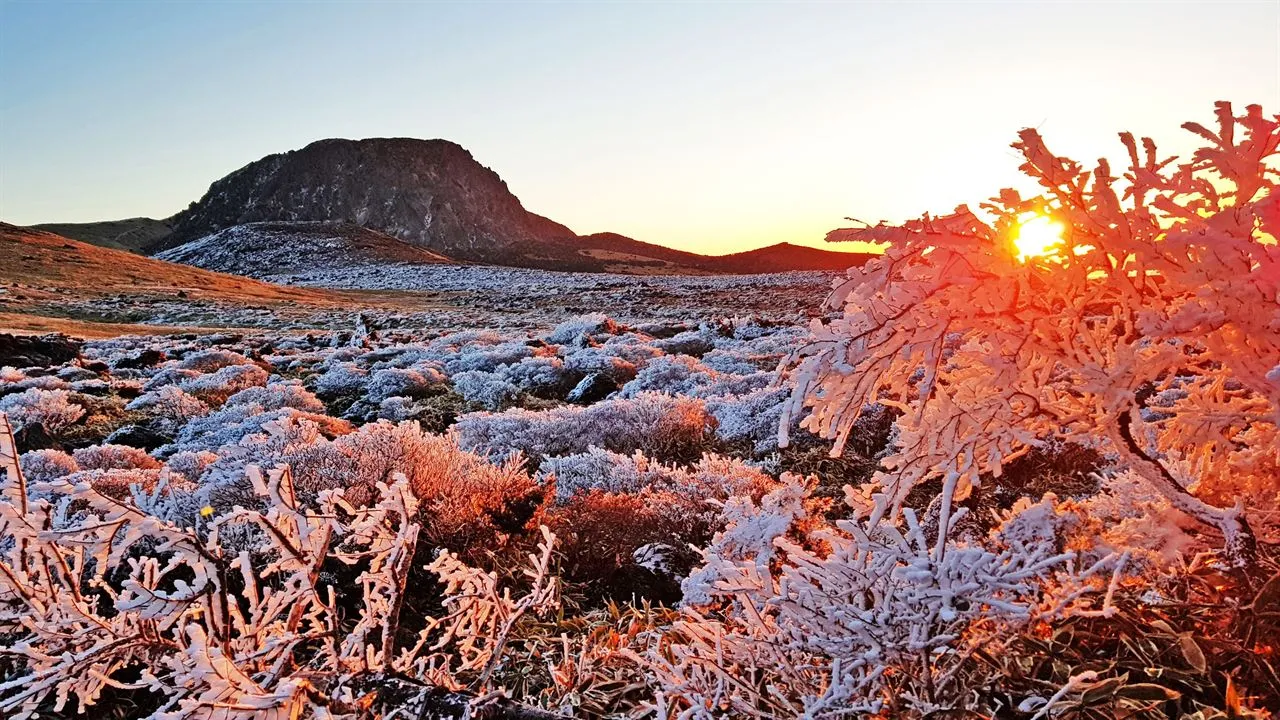
The coast of Jeju stays cool rather than freezing in December, while Hallasan can already be a full winter mountain. Planning around that gap matters more than the island's average temperature.
Wind, short days, and a mountain that makes its own weather decide how a December trip goes. The sections below separate the coast, the oreum hills, and Hallasan so you can dress and plan for each.
Quick answer
| Question | Answer |
|---|---|
| Is it cold? | Cool and windy on the coast; far milder than Seoul, but not warm |
| Typical temperatures | Jeju City about 6 to 11 °C, Seogwipo about 6 to 13 °C (daily lows to highs, KMA 1991 to 2020 normals) |
| Snow at sea level | Occasional and usually light; do not plan around it |
| Snow on Hallasan | Likely in some form at the top; conditions vary by year and by day |
| Wind | The main comfort factor, strongest in Jeju City and on open coast |
| Hallasan summit | Needs a reservation (Seongpanak or Gwaneumsa), winter entry cutoffs, and winter gear |
| Daylight | About 10 hours, with sunset around 17:30 |
| Swimming | Not a beach-swimming month for most visitors |
Is Jeju cold in December?
Cold enough for a proper jacket, but rarely freezing near the sea. Visit Jeju describes temperatures below 0 °C as rare on the island, and the KMA normals agree: daily lows fall below freezing on well under one day of the month at both stations.
The discomfort comes from wind and damp. A 9 °C afternoon with a steady gale off the water feels very different from 9 °C in a sheltered street.
Typical December weather in Jeju City and Seogwipo
These figures are the Korea Meteorological Administration's 30-year climate normals (1991 to 2020) for its Jeju City and Seogwipo stations, taken from the KMA Open Data Portal and rounded. They describe a typical December, not the forecast for your dates.
| Measure | Jeju City (north coast) | Seogwipo (south coast) |
|---|---|---|
| Average daily high | About 11 °C | About 13 °C |
| Average daily mean | About 8 °C | About 9 °C |
| Average daily low | About 6 °C | About 6 °C |
| Rainfall for the month | About 56 mm | About 56 mm |
| Days with recorded rain | About 11 to 12 | About 9 |
| Days with recorded snow | About 5 | About 3 |
| Average wind speed | About 4.1 m/s | About 2.4 m/s |
| Sunshine for the month | About 79 hours | About 159 hours |
Seogwipo is milder by day, calmer, and sunnier in these records. The gap in lows is small, and Seogwipo actually logs slightly more sub-zero mornings than the Jeju City station, so do not assume the south coast is warmer at every hour.
Both stations sit near sea level. Neither describes the upper slopes of Hallasan, and these numbers should not be applied to the mountain. The where to stay in Jeju guide compares the two bases.
Jeju City, Seogwipo, the coast, and the mountain at a glance
One forecast rarely fits the whole island. Use this table to decide which conditions apply to where you will actually be standing.
| Setting | What to expect | Basis |
|---|---|---|
| Jeju City | Cool, windier, and cloudier than the south coast | KMA normals |
| Seogwipo | Milder daytime highs, calmer air, more sun | KMA normals |
| Open coast and lighthouses | Feels colder than the town forecast because of wind | Wind data and general exposure |
| Oreum and exposed hills | Gusty summits; cold hands and ears even on mild days | General exposure, no station data |
| Hallasan high elevations | Winter conditions, possible snow and ice, closures in bad weather | Official park notices; no coastal figure applies |
For the mountain, use the park's same-day notices and the KMA forecast for Hallasan rather than a coastal number. Air usually cools with height and wind adds to it, but the size of the gap changes daily.
Early, mid, and late December
The KMA also publishes ten-day normals. They show a steady cooling through the month, not a sharp change.
| Period | Jeju City mean / high / low | Seogwipo mean / high / low |
|---|---|---|
| Days 1 to 10 | 9.4 / 12.3 / 6.6 °C | 10.6 / 14.4 / 7.3 °C |
| Days 11 to 20 | 8.1 / 10.7 / 5.5 °C | 9.2 / 12.7 / 6.0 °C |
| Days 21 to 31 | 7.4 / 10.0 / 4.9 °C | 8.5 / 12.2 / 5.3 °C |
Early December still feels like a cool late autumn on the coast. By the last third of the month the mornings are clearly colder, and a warmer mid-layer stops being optional.
The shift is about 2 °C in the mean over the month. That is small beside the day-to-day swings from wind and cloud, so the forecast for your dates matters more than the calendar.
Wind in Jeju in December
Wind is the factor that changes how December feels. Jeju City's average is about 4.1 m/s against 2.4 m/s at Seogwipo, and the KMA counts roughly 11 days of the month in Jeju City with a daily maximum wind of 8 m/s or more, against about 2 days in Seogwipo.
Open coast, lighthouse viewpoints, and oreum summits catch the most. A hood, a hat that stays on, and wind-resistant gloves do more than an extra sweater.
Strong wind can also disrupt boats to the smaller islands and, on some days, flights. Keep the last day of your trip flexible and check the airline and ferry operator.
Rain, sleet, and snow
Rainfall is moderate: about 56 mm for the month at both stations. Rain usually comes as showers, and the KMA counts rain on about 11 to 12 days in Jeju City and about 9 in Seogwipo.
Rain on the coast does not mean rain on the mountain. The same cloud can drop rain at sea level and snow or freezing drizzle higher up.
The normals count rain days and snow days separately and do not split out sleet. A single day can appear in both counts, so the two numbers should not be added together.
Does it snow in Jeju in December?
It depends on where you stand, and only one of the three answers is "yes, usually".
A. Coast and cities
Snow can fall, but it is not something to plan on. The KMA normals record snow on about 5 days of a typical December in Jeju City and about 3 in Seogwipo. Visit Jeju notes that snow is mainly seen at the top of Hallasan.
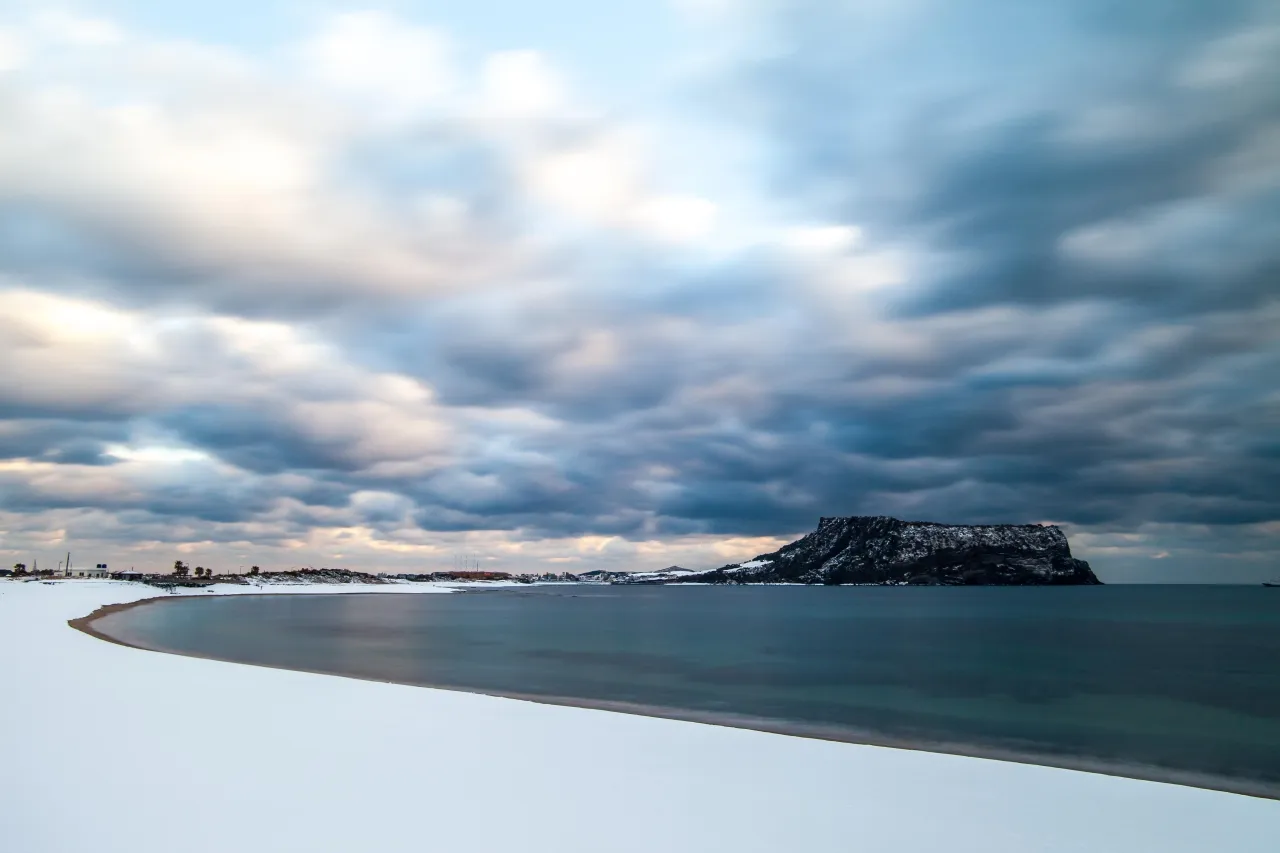
Flights and ferries are the practical risk on a snowy or stormy day, more than the snow itself. Check the airline before you leave for the airport.
B. Higher inland areas
Roads and oreum that sit well above the coast can be icy or snowy when the coast only has rain. The forecast for the town you are leaving may not match the road you are driving.
Treat mountain roads as a separate decision, described in the driving section below.
C. Hallasan
Hallasan is where snow is most likely. Whether there is deep snow on your dates depends on the year, so read the current notices rather than relying on an average. The park's rules treat heavy snow as a reason for partial or full trail closure, and they list snow of 30 cm or more blocking a trail as a closure trigger.
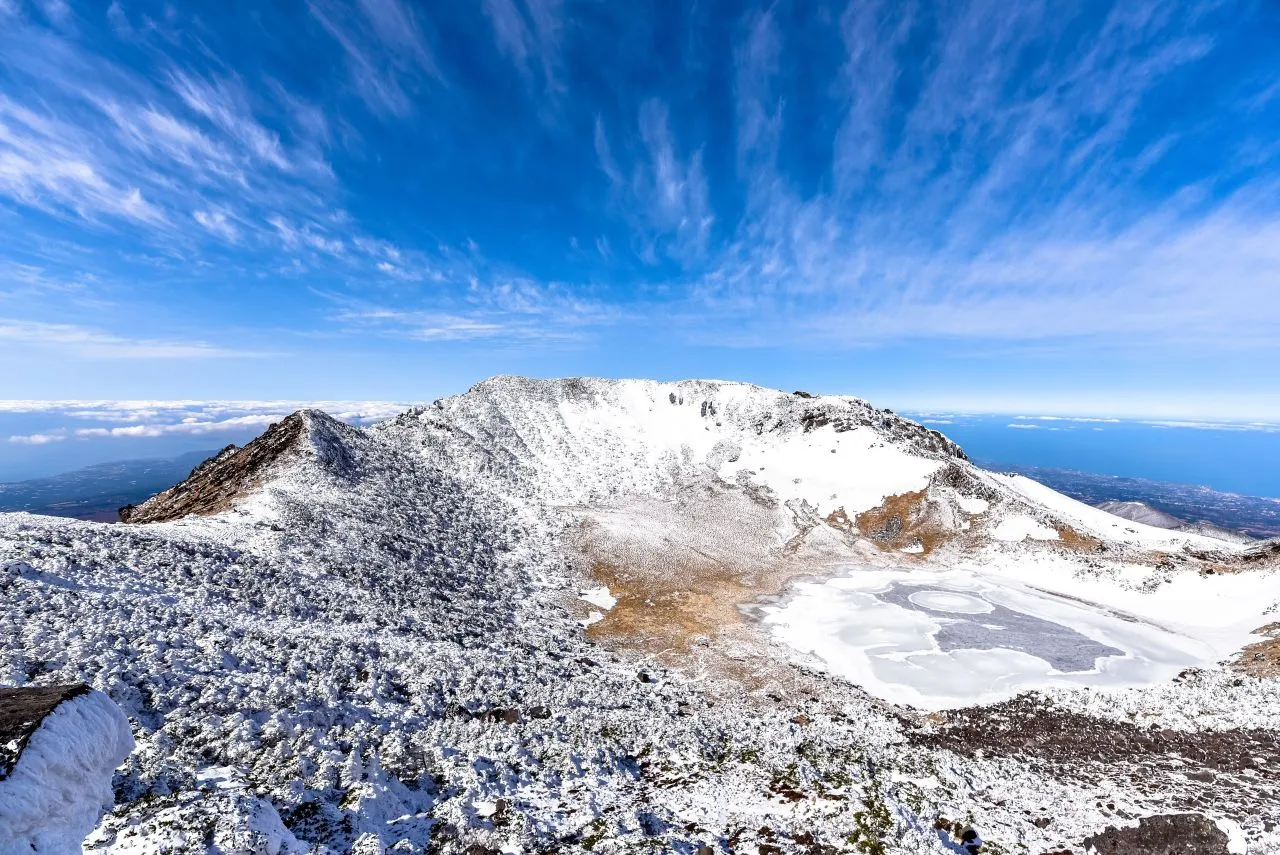
Hallasan in December
Hallasan's summit is at about 1,950 m, and the park describes a summit round trip as averaging roughly 9 hours. December falls inside the park's winter season (October to March), so winter entry rules apply.
Which trails
The summit (Baengnokdam crater) is reached only by the Seongpanak and Gwaneumsa trails, and the upper sections of both need a reservation, according to the park's notices. Eorimok, Yeongsil, Donnaeko, Seokgulam, and Eoseungsaengak need no reservation for their own routes but do not reach the summit.
Reservations and ID
Reservation slots open at 09:00 on the first business day of the previous month, according to the park's notice. Under that rule, December dates open in early November. A queue can form on release day and popular dates can fill.
One booking covers up to four people, and each person is limited to one hiking day per week. Cancel a booking you will not use before its entry window ends.
Bring photo ID. The park checks ID against the reservation QR code at the entrance, and its notice says a mismatch can mean being refused entry and a one-year entry ban.
Winter entry times
Entry opens at 05:00, and each point has its own last-entry time in winter, according to the park's entry-restriction notice.
| Point | Last entry, October to March |
|---|---|
| Seongpanak trail entrance and Jindallaebat shelter | 11:30 |
| Gwaneumsa trail entrance and Samgakbong shelter | 11:30 |
| Eorimok trail control post | 12:00 |
| Yeongsil trail control post | 12:00 |
| Witseoreum control post (toward Nambyeok) | 13:00 |
| Donnaeko | 10:00 |
| Eoseungsaengak and Seokgulam | 17:00 |
Descent deadlines apply as well: start down from Witseoreum by 15:00, from the summit's east ridge by 13:30, and from the Nambyeok junction by 14:00. Since 1 December 2025, Seongpanak and Gwaneumsa reservations use two entry windows, 05:00 to 08:00 and 08:01 to 11:30.
The notice stays in force until the park announces a change, so confirm the times before you book.
Weather closures
The park can close trails partly or fully for weather warnings such as heavy snow, strong wind, heavy rain, or a cold wave. It lists dense fog or strong wind that limits visibility as further reasons, and a wind of 14 m/s or more can lead to a partial or full closure.
After a weather closure, the notice says to cancel the same-day booking and rebook another date. Build a spare day into the trip if the summit matters to you.
Crampons and winter gear
The park's winter notice names crampons, insulated outerwear, snacks, water, and a warm hat as gear that matters for safety, and says Hallasan's weather is a different world from the coast. It does not present crampons as a legal requirement in the notices reviewed here.
Treat traction as part of a winter summit pack and confirm the day's conditions with the park. On a day with little snow they may stay in the bag. On an icy or snowy day, a lack of them is a reason to turn back.
Getting to the trailhead without a car
The Seongpanak lot is small and fills early, and the park's notice recommends public transport. Its June 2026 notice names bus 281 (about 45 minutes from Jeju Bus Terminal, running 06:00 to 22:00), express bus 181 from the airport, and bus 182 from Seogwipo.
The notice also lists a free overflow lot near Jeju International University on the 5.16 Road, and roadside parking near Seongpanak is enforced. Check the current timetable against your entry window, and note that the trail has no shop, so carry food and water.
Check the trail on the same day
Status can change at short notice. Read the park's notices on the morning you hike, follow staff instructions at the entrance, and call 119 in an emergency.
A simple question for a ranger or the trailhead office.
Polite오늘 한라산 등산로 열려 있나요?
o-neul hal-la-san deung-san-ro yeol-lyeo it-na-yo
Is the Hallasan trail open today?
Korean audio isn't available on this device or browser. Use the romanization above to say it.
What to wear in Jeju in December
Think in three layers: a base layer, a warm mid-layer, and a windproof, water-resistant shell. The shell matters most on Jeju.
A. Jeju City and Seogwipo
A warm mid-layer (fleece or light down) under a windproof jacket covers most days. Add a scarf and thin gloves for evenings, and closed shoes with real grip for wet pavement and lava rock. Seogwipo often allows one fewer layer by day, but evenings are still cool.
B. Windy coast
Coastal paths and lighthouse viewpoints feel colder than the forecast. Add a hat that covers your ears, wind-resistant gloves, and a neck warmer, and dress for a few degrees colder than the town forecast.
An umbrella is hard to manage in a gale, so a hood is more reliable.
C. Oreum
Oreum are short climbs on open, exposed ground. Start warm, expect to shed a layer on the way up, and put it back on at the top where the wind hits. Shoes with grip matter on wet, muddy slopes.
D. Hallasan
Wear moisture-wicking layers, not cotton, with an insulating mid-layer and a waterproof, windproof shell. Add a warm hat, insulated gloves, and sturdy boots with good grip. Pack a spare layer, food, water, and traction devices for any summit attempt.
Treat the park's winter-gear notice as the baseline, and adjust to that day's conditions.
E. Early December
On the coast, one warm layer under a shell is usually enough by day, with a heavier layer for evenings. Hallasan is already a winter outing.
F. Late December
Add a heavier mid-layer, a warmer hat, and gloves for mornings and evenings. The ten-day normals show the coldest part of the month, and short days mean you will be out in the cooler hours.
Packing checklist
- Windproof, water-resistant jacket with a hood
- One or two warm mid-layers (fleece or light down)
- Quick-drying base layers for hiking days
- Shoes with real grip; hiking boots if you plan any trail
- Warm hat, neck warmer, and gloves
- Compact day pack with water, snacks, and a spare layer
- Sunglasses and sunscreen for bright winter days
- Power bank and an offline copy of your bookings
- Photo ID (checked at Hallasan entrances)
- Crampons or a traction device for summit hikes
Jeju tangerines in December
December is inside Jeju's mandarin season. The Jeju Agricultural Products Supply and Demand Management Center lists open-field satsuma mandarins as harvested from about October to December, and open-field and protected-cultivation mandarins as in season from October to February.
Late varieties come after that. The center places hallabong, red-hyang, and cheonhyehyang mainly from January onward, so early December is usually too soon for them. Timing varies by variety and year.
Orchards are private property. Pick only at a farm that welcomes visitors, and never take fruit from roadside trees.
Camellias in December
Visit Jeju says camellias bloom from mid-November into early spring. Bloom timing varies by place and year, so there is no single peak date, and December is one part of a long season.
Visit Jeju also lists Hueree Natural Park (November to January) among places to see them. Camellia Hill in Andeok-myeon, Seogwipo, is open year-round according to Visit Jeju, with November to February hours of 08:30 to 18:00 and last admission at 17:00. Hours and prices change, so check before you go.
Oreum, Olle, and coastal sightseeing
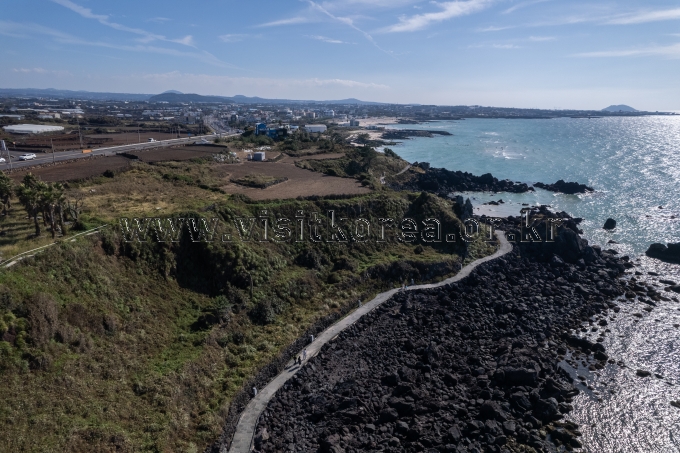
Pick one or two. Oreum climbs are short and work best on a clear, lower-wind morning, and you should be ready to skip the summit if gusts or cloud move in. Jeju's Olle trails follow coast and inland routes and can be walked in sections, with wind on open shoreline. The Olle Foundation's site has route details and any temporary detours.
Coastal sightseeing works well in December as long as you treat the sea as scenery, not a swimming spot. The Jeju beaches guide covers the main beaches for walks.
Driving and daylight
A car makes it easier to reach oreum, coastal stops, and trailheads. On coastal roads December driving is ordinary. Mountain roads that climb toward Hallasan can be affected by fog, wind, ice, or snow, so check conditions before you set out, and ask your rental company about its winter-road policy and what equipment the car carries. The Jeju car rental guide covers permits and pickup.
Daylight is short, at roughly 10 hours. An astronomical estimate puts Jeju sunrise at about 07:20 to 07:40 and sunset at about 17:25 to 17:35 across the month, with sunset near 17:30 around the solstice. The exact time for any date is published by the Korea Astronomy and Space Science Institute, so look up your own days. Plan to finish outdoor stops with daylight to spare.
Planning by weather
Use the forecast for each day, and choose from this table.
| Forecast | Good choices | Skip or shorten |
|---|---|---|
| Clear and calm | Oreum, coastal walks, a Hallasan summit attempt if you hold a reservation | Nothing; start early |
| Windy | Sheltered sights, museums, gardens, Seogwipo area | Exposed oreum summits, boat trips |
| Rain | Indoor stops, cafes, covered markets | Long coastal walks, mountain driving |
| Snow warning or heavy snow | Indoor plans, flexible days | Hallasan trails, mountain roads |
Is December a good time to visit Jeju?
A good fit if you:
- Like coastal sightseeing and short walks without summer crowds or heat
- Want a far milder winter than the Korean mainland
- Are flexible enough to swap an outdoor day for an indoor one
- Are interested in tangerine season and winter camellias
Look at another month if you:
- Need warm sea days or a beach-centered trip
- Are set on a guaranteed clear, snow-free summit view
- Have a fixed schedule with no room for wind, rain, or a closed trail
For the month just before, see Jeju in November. For the wider winter picture, see the Korea winter travel guide.
Jeju or Seoul in December?
Seoul is a colder continental city winter and Jeju is a milder, windier island winter. In the KMA normals, Seoul's December mean is about 0 °C with a daily high near 4 °C and low near minus 3 °C, against a Jeju City mean near 8 °C.
| Seoul | Jeju | |
|---|---|---|
| Feel | Colder and drier; real sub-zero days | Cool and windy; rarely below freezing on the coast |
| Main draw | City sights, lights, palaces, markets | Coast, tangerines, camellias, Hallasan |
| Snow | More frequent in the city | Mostly on Hallasan |
| Main risk | Cold snaps | Wind, rain, and closed trails |
Many visitors combine the two. For the capital, see Seoul in December.
Frequently asked questions
Is Jeju cold in December?
Cool and windy, but rarely freezing near the coast. Typical daily highs are about 11 °C in Jeju City and 13 °C in Seogwipo, with lows near 6 °C (KMA 1991 to 2020 normals).
How warm is Jeju City in December?
The KMA normals give a mean near 8 °C, a daily high near 11 °C, and a low near 6 °C. Wind can make it feel colder.
Is Seogwipo warmer than Jeju City?
By day, yes: the average high is about 2 °C higher and the air is calmer. Morning lows are close, so it is not warmer at every hour.
Does it snow in Jeju in December?
Occasionally at sea level, and usually lightly. Hallasan is where snow is most likely, and Visit Jeju notes snow is mainly seen at the top of the mountain.
Can I hike Hallasan in December?
Yes, if the trail is open. Summit sections need a reservation, winter entry closes earlier, and heavy snow or strong wind can close trails.
Do I need crampons for Hallasan in December?
For a summit hike, pack them. The park's winter notice lists crampons among important gear, and conditions vary by year and by day. Confirm with the park on the day.
What should I wear on Jeju's coast in December?
A warm mid-layer under a windproof, water-resistant jacket, plus a hat, gloves, and shoes with grip. Dress for the wind, not just the temperature.
What should I wear on Hallasan in December?
Moisture-wicking layers, an insulating mid-layer, a waterproof shell, a warm hat, insulated gloves, and boots. Add traction devices, food, and water.
Is it windy in Jeju in December?
Yes, especially in Jeju City and on the open coast. The KMA counts roughly 11 days with daily wind of 8 m/s or more in Jeju City, against about 2 in Seogwipo.
Does it rain a lot in Jeju in December?
Rainfall is about 56 mm for the month, falling as showers on roughly 9 to 12 days. Plan an indoor backup.
Is December a good time to visit Jeju?
It suits coastal sightseeing, tangerines, and winter camellias, but not swimming or a guaranteed clear summit. Pick it if you accept wind and variable weather.
Are tangerines in season in December?
Yes. The provincial citrus authority lists open-field satsuma mandarins as harvested around October to December, and later varieties such as hallabong come mainly from January.
Are camellias blooming in December?
Often, yes. Visit Jeju says they bloom from mid-November into early spring, with timing varying by place and year.
Is it okay to rent a car in December?
Yes on coastal roads. Check conditions before mountain roads, ask the rental company about winter-road policy, and start early because of short days.
How early does it get dark in Jeju in December?
Sunset is around 17:30, for roughly 10 hours of daylight. Look up your exact dates from KASI.
Is Jeju or Seoul better for a December trip?
Seoul is colder with city sights, and Jeju is milder but windy, with coast and mountain outings. They suit different trips, and many visitors combine them.
Check before you go
- KMA forecast and any wind, snow, or heavy-rain warnings near your dates
- The Hallasan reservation site's notices for trail status, entry times, and closures
- Airline and ferry notices for wind-related changes
- Bus timetables if you are heading to the trailhead without a car
- Sunrise and sunset times for each of your days
Sources
- Korea Meteorological AdministrationOfficial weather service
- Korea Meteorological Administration Open Data Portal: 1991 to 2020 climate normals (Jeju and Seogwipo stations)Official weather service
- Korea Meteorological Administration Open Data Portal: 1991 to 2020 climate normals (Busan and Seoul stations)Official weather service
- Hallasan National Park reservation system: official notices (entry restrictions, winter hours, reservation rules)Official government site
- Visit Jeju: Jeju weather and seasonsOfficial tourism site
- Jeju Agricultural Products Supply and Demand Management Center: citrus informationOfficial government site
- Visit Jeju: where to see camellias on Jeju in winterOfficial tourism site
- Visit Jeju: Camellia Hill (hours and location)Official tourism site
- VisitKorea: winter camellias in KoreaOfficial tourism site
- Jeju Olle Foundation: trailsOfficial tourism site
- Korea Astronomy and Space Science Institute: sunrise and sunset timesOfficial government site
Information is compiled from official sources. Details such as prices, hours, and schedules can change. Confirm time-sensitive facts before you travel.
Last verified on
Related guides
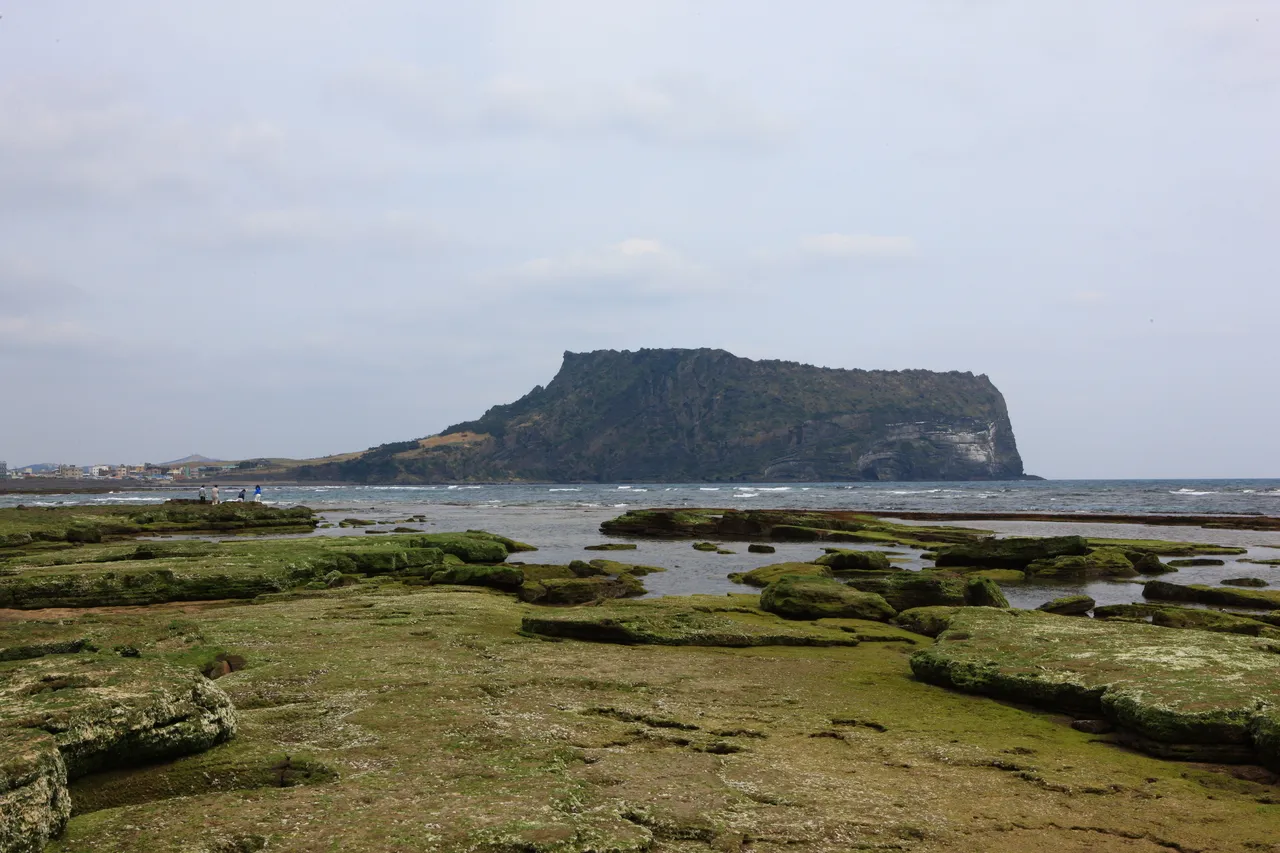
Jeju Island Travel Guide: Food, Hallasan, Olle Trails, Beaches, and Nature
Jeju is Korea's volcanic holiday island: a slower, nature-first counterpoint to Seoul and Busan, built around coastal drives, seafood and black pork, Hallasan, the Olle walking trails, and quiet beaches. Most visitors fly in, rent a car, and give it two to four days.
Jeju Car Rental Guide for Foreigners: IDP, Insurance, Driving Rules, Parking, and Road Trip Tips
A rental car is the practical way to see Jeju, where buses are slow and much of the coast is spread out, but a license alone won't get you the keys. This is a preparation guide, not legal advice, focused on what's different about Jeju: you pick the car up by shuttle from outside the terminal, over half the fleet is now electric, there are no tolls, and Udo may restrict rental cars. The documents, insurance exclusions, driving and parking realities, and a route that doesn't cram the whole island into one day. Prices, fees, insurance, and rules vary by company and change, so always confirm current official info and your rental contract before you drive.