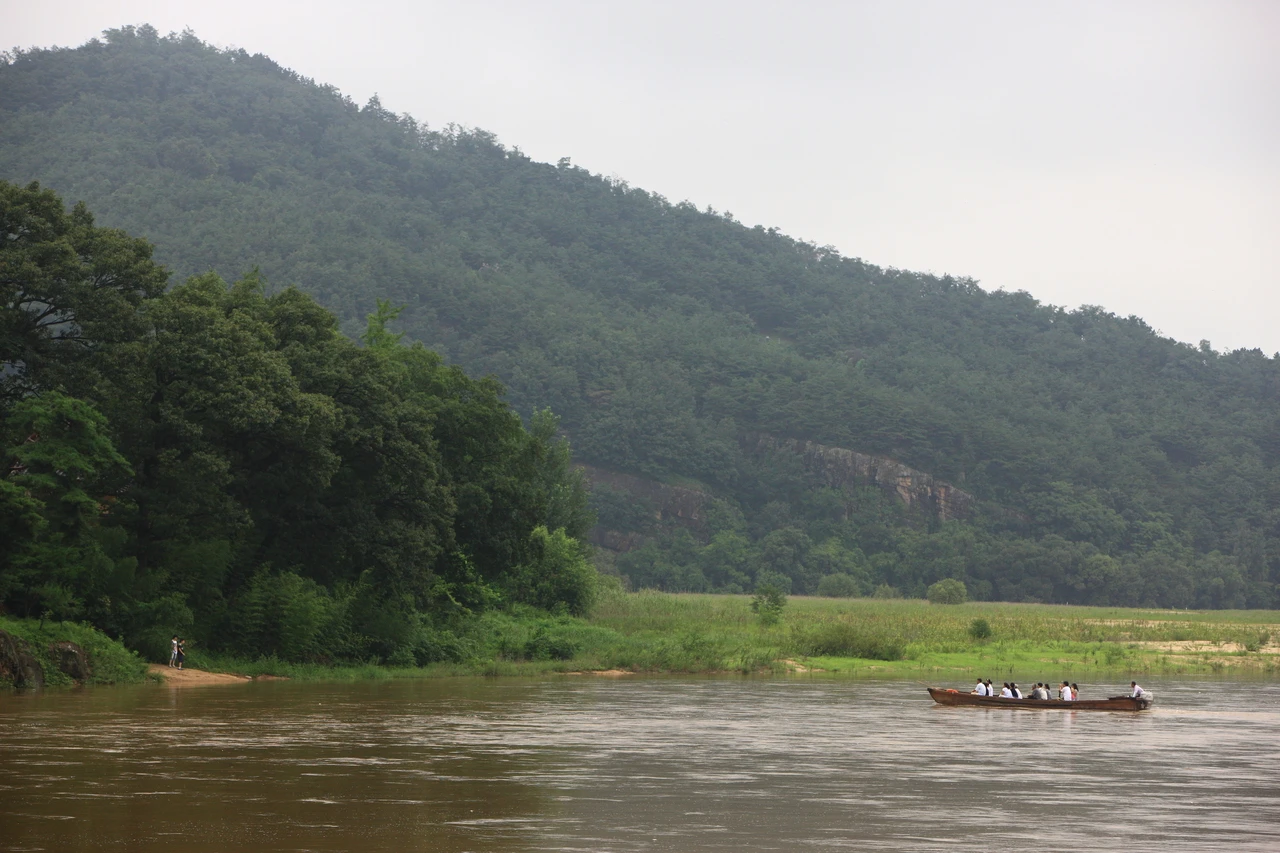
Hahoe Folk Village is the main reason to go to Andong, and it takes a rail ride plus a bus or taxi to reach. It is a working clan village on a bend of the Nakdong River, not a museum set.
Decide early whether you are doing a long day trip or staying a night. That choice changes how much of the area around Hahoe you can see.
Quick answer
| Question | Short answer |
|---|---|
| Worth it? | Yes, if you want a lived-in Joseon-era village and slow walking more than a checklist |
| From Seoul | KTX-Eum to Andong Station; roughly 2 to 2.5 hours depending on the train and the Seoul-side station |
| Seoul-side station | Cheongnyangni is the usual boarding point; some trains start at Seoul Station, so check Korail Talk |
| Andong Station to Hahoe | Bus or taxi; not walkable |
| Time in Hahoe | About 2 to 3 hours for the village, plus time for the mask dance or museum if you want them |
| Entry | Paid for visitors: adults ₩5,000, youths ₩2,500, children ₩1,500 (individual rates listed by Andong City) |
| Mask dance | A regular free performance is listed on set days; it is not the Mask Dance Festival |
| Day trip or 1 night | A day trip is possible and tight; 1 night is more comfortable |
Fees, hours, performances, and bus routes can change. Andong City and the Andong tourism site were checked on October 9, 2026.
Is Hahoe worth visiting?
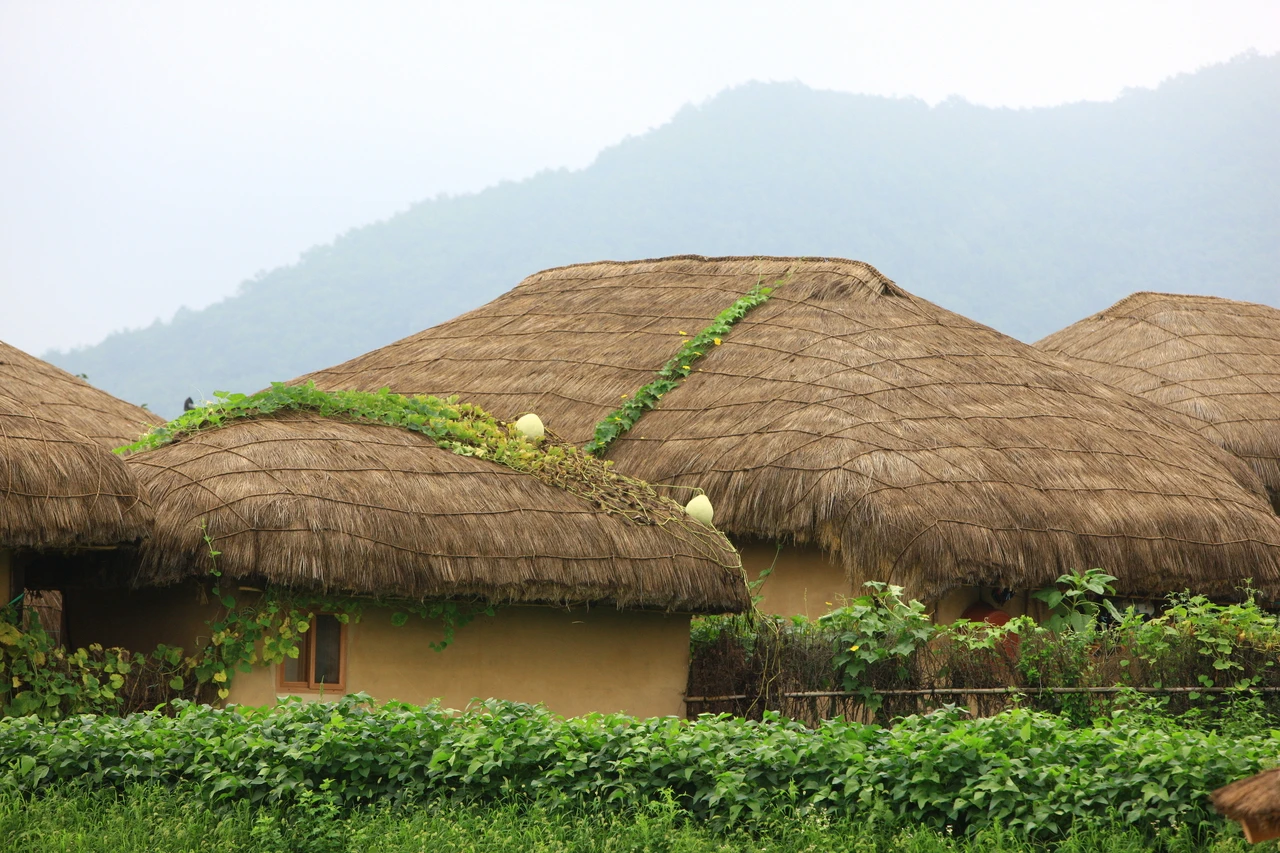
Go for the setting: tiled and thatched houses, narrow lanes with stone walls, and a river that curves around the village. Hahoe is the home of the Pungsan Ryu clan, and families still live there.
It suits slow walkers and people curious about Confucian-era life. It suits less well if you want shops, cafes, and a dense list of sights, or if you only have a few hours between trains.
Hahoe is not Yangdong, the other village in the same UNESCO listing, and it is not Bukchon in Seoul or the Jeonju Hanok Village. Search for 안동 하회마을 (Andong Hahoe Maeul) when you use a Korean map app.
Seoul to Andong by rail
The usual route is KTX-Eum, a Korail service that reaches Andong without a transfer. The Andong tourism site lists a ride of roughly 2 hours from Cheongnyangni and roughly 2.5 hours from Seoul Station, depending on the train.
For most visitors, Cheongnyangni is the practical Seoul-side station. It is served by Subway Line 1 and the Gyeongui-Jungang Line. Some departures start at Seoul Station, so choose the departure in Korail Talk instead of assuming one station.
Train frequency, fares, and first and last departures are not listed here because they change. Search your date, and book the return seat at the same time. The KTX booking guide covers Korail Talk and seat reservation.
A Korail pass may or may not pay off for a single round trip. See the Korail Pass guide before you buy.
An intercity bus is another option. Andong tourism lists a ride of roughly 3 hours from Dong Seoul and Gangnam terminals, so rail is usually easier if a train suits your time.
Andong Station: use the current one
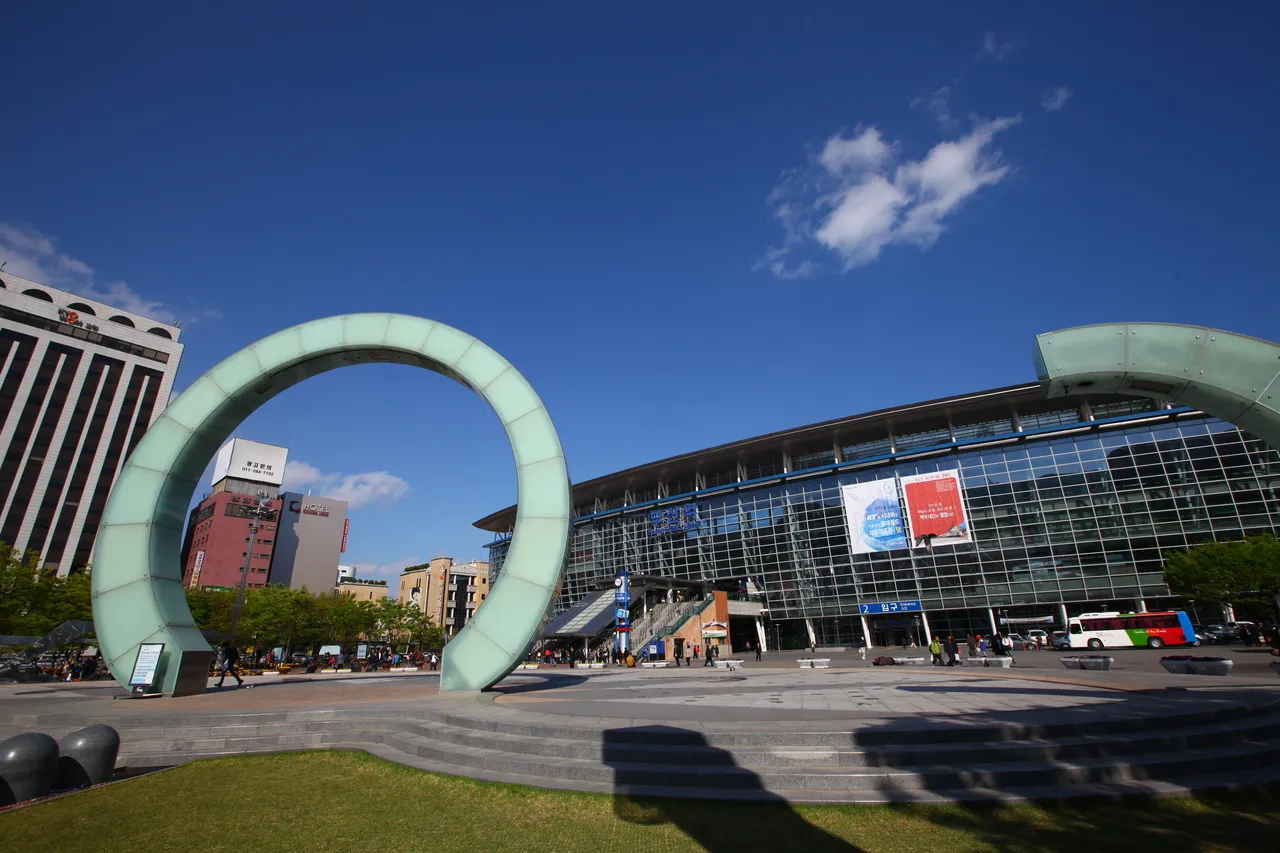
Andong Station moved in December 2020 to a new building in Songhyeon-dong, next to the Andong bus terminal. It is on the edge of the city, not in the old downtown.
The old downtown station is no longer the arrival point. Older blogs and some maps still use it, so navigate from 안동역 at the current address.
Treat the station as a transfer point. The terminal beside it is where you find local buses and taxis.
Andong Station to Hahoe
Hahoe is a separate trip from the station. Plan a local bus or a taxi, not a walk.
Andong City lists a city bus that stops at Hahoe, with a limited number of runs each day. Route numbers and times differ between official pages, so check the bus in Naver Map or Kakao Map for your day, and ask at the terminal or the Andong tourist information center.
A taxi is simpler if you have luggage, are traveling with two or more people, or are short on time. Set the destination to 하회마을 (Hahoe Maeul), and ask the driver or your accommodation about the return ride before you are dropped off. Fares are not listed here because they change.
Parking at Hahoe is free, according to Andong City, and a free shuttle is listed between the car park and the village. Check the shuttle's current schedule on arrival.
Day trip or one night?
A day trip from Seoul is possible, but it is a long day. The train ride alone is roughly 4 to 5 hours round trip, plus the bus or taxi leg each way.
| Option | Good for | Watch for |
|---|---|---|
| Day trip | Hahoe only, an early start, and a fixed return train | No slack if a bus or taxi runs late; Buyongdae and Byeongsan are hard to add |
| 1 night | Hahoe, plus the mask dance, a second site, and Andong food | One more night of lodging |
| 2 days with a car or taxi | Hahoe, Buyongdae, Byeongsan Seowon, and a city evening | Public transit is thin between these sites |
If you are undecided, stay one night. It removes most of the time pressure, and slow walking is the best part of the area.
Tickets, hours and getting in
Hahoe Folk Village is paid for visitors. The individual fees listed by Andong City are ₩5,000 for adults, ₩2,500 for youths, and ₩1,500 for children, with group rates for 30 or more.
Children under 6, seniors aged 65 and over, people with disabilities, and certain other groups are listed as free. Bring ID if you think you qualify.
Hahoe opens at 09:00. Closing time changes with the season, and the official pages list different times (from 17:00 to 19:00), so confirm before you plan a late arrival.
The village information desk and the Andong tourist information center can help with questions. Staffing hours vary, so use them as a backup, not your only plan.
What is inside the village
Hahoe is a cluster of houses along lanes that follow the old clan layout, with the Nakdong River curving around it. It is meant to be walked, not ticked off.
Expect these features on a normal walk:
- Lanes between tiled and thatched houses, many with stone walls and wooden gates
- Clan compounds, including large head-house complexes, some open to visitors and some not
- A riverside edge where the village meets the Nakdong River
- Fields and open ground between the houses, because this is still a farming village
Not every building is open, and it is not always clear from the lane. A closed gate means the house is a home. Skip it and move on.
Hahoe is lived in: how to behave
People live here, work here, and farm here. Private houses are homes, not attractions.
- Do not enter a gate, yard, or house that is not marked for visitors.
- Keep your voice down, and avoid pointing cameras at windows or into yards.
- Ask before photographing a resident.
- Do not fly a drone over homes.
- Stay off crop beds and walls, and take your trash with you.
Some houses offer paid stays or tea. Treat these as separate businesses with their own rules and prices.
UNESCO: what the listing covers
In 2010, UNESCO inscribed Hahoe and Yangdong together as The Historic Villages of Korea. Yangdong is a separate village in the Gyeongju area, not part of Andong.
The World Heritage listing is for the villages' architecture, layout, and landscape. Mask dance drama (talchum) is a different matter: it is intangible heritage, a performing tradition rather than a building. Do not treat the two as the same listing.
Hahoe Byeolsingut Mask Dance
Hahoe is closely tied to a mask dance drama known as Hahoe Byeolsingut Talnori. Andong City lists a regular free performance at the Hahoe Folk Village Performance Hall.
The current listing is 14:00 to 15:00, on Saturday and Sunday in January and February, and Tuesday to Sunday from March to December. Weather, holidays, and events can change a show, so check the schedule on the day or at the information desk.
Dialogue is in Korean. Watching still works without Korean, because the masks, music, and movement carry most of the story.
Hahoe World Mask Museum
The Hahoe World Mask Museum is listed at 206 Jeonseo-ro, Pungcheon-myeon. Andong lists it as open from 09:30 to 18:00, closed on Lunar New Year and Chuseok, with free parking.
It shows masks from Korea and abroad, and takes about an hour. It is a paid museum, and the fee is not listed here, so confirm it on the official page. Check how to get there before you plan it as a walk from the village, and note that it is separate from the village ticket.
Mask Dance Festival is a different event
The Andong International Mask Dance Festival is held in downtown Andong, at Talchum Park, not in Hahoe village. Andong tourism describes it as a ten-day event that usually runs from the last Friday of September to the first Sunday of October.
Dates and programs are announced each year, so check the official festival page before you plan around it. Do not assume the festival and the regular Hahoe performance are the same show.
Buyongdae Cliff
Buyongdae is a cliff on the opposite bank of the river from Hahoe. From the top, you see the village and the river bend from above.
It is free and open at any time, according to Andong. Andong lists no public transportation to it and describes it as roughly 10 minutes by car from Hahoe, so it is not a five-minute stroll from the village gate.
Plan a taxi or a car for Buyongdae, and sort out the ride back before you go up. Do not assume a river crossing is running. Late afternoon works well, but allow time for the climb.
Byeongsan Seowon
Byeongsan Seowon is a Confucian academy beside the river, east of Hahoe. It is part of the 2019 UNESCO listing of Korean seowon, and it is a separate stop from the village.
Andong lists it as free, open 09:00 to 18:00 from March to October and 09:00 to 17:00 from November to February. A visit takes about 30 minutes, and there is free parking.
It is a few kilometers from Hahoe, not a next-door walk. A city bus is listed with a small number of departures, so check it on the day or take a taxi or car. On a day trip, treat Byeongsan as a bonus, not a requirement.
The rest of Andong
If you stay a night, spend the evening in the city, not at Hahoe.
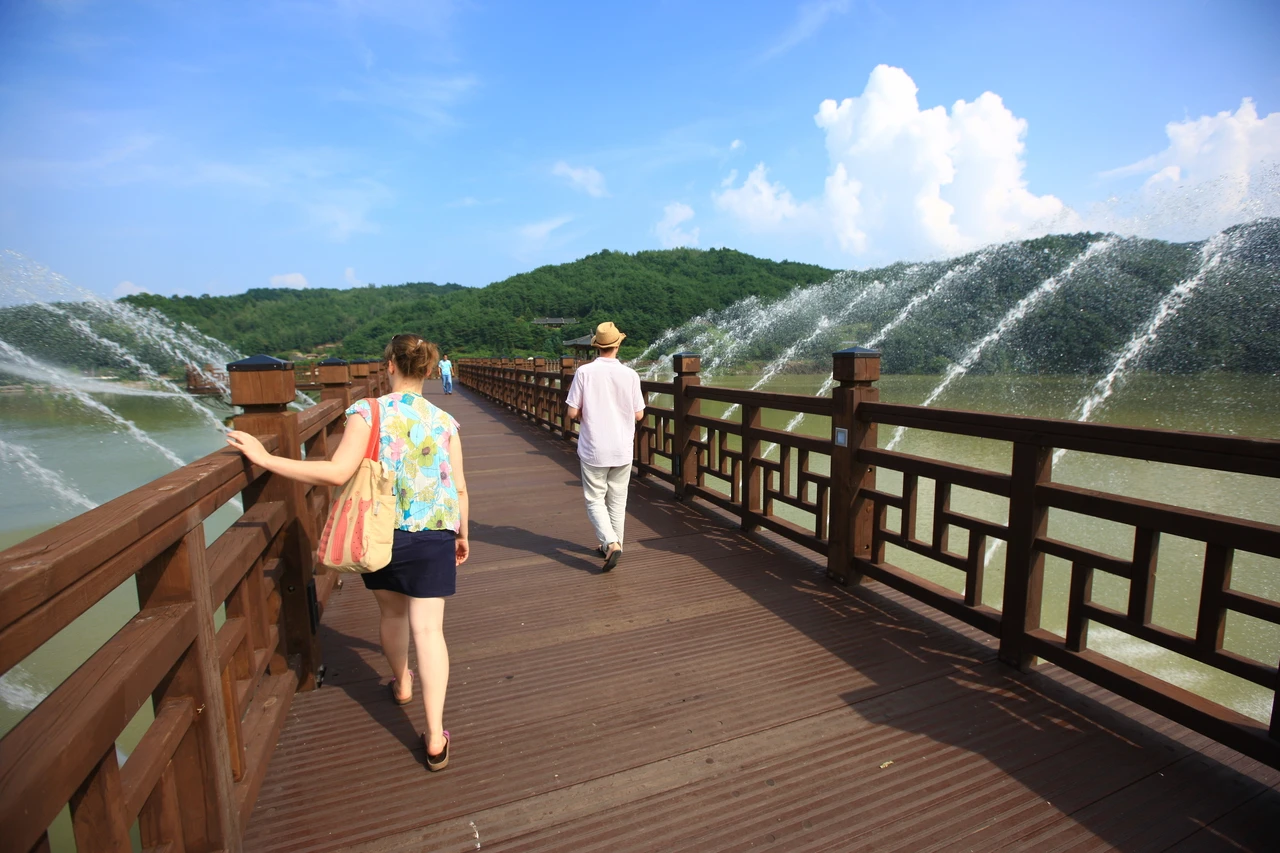
- Woryeonggyo Bridge is a wooden footbridge on the east side of Andong. It is free to walk, and it is a ride from both the station and Hahoe.
- Andong Old Market has a street of jjimdak restaurants and a nearby alley known for barley rice.
- Museums around the city, such as the Andong Folk Museum and the Confucian Culture Museum, have their own hours and closing days.
- Dosan Seowon and Bongjeongsa are in other parts of the Andong area and need a car or taxi. Treat them as a separate day, not an add-on.
Andong food
Andong is known for a handful of regional dishes, and you can try most of them near the old market.
- Andong jjimdak is chicken braised with soy sauce, glass noodles, and vegetables. The Old Market has a street with more than 30 restaurants that serve it. It is usually ordered as a pot to share.
- Heotjesabap is a bibimbap-style dish built from the foods served at ancestral rites.
- Andong guksu covers several noodle styles, from warm broth to cold and bean-based noodles.
- Andong sikhye is not the sweet rice drink you may know. The local version is a fermented, spicy radish dish eaten with a spoon, so ask before you order.
- Salted mackerel (ganjaengi) is a local specialty, usually grilled or steamed.
- Andong soju is a traditional distilled spirit, listed at 45% alcohol by Andong tourism. Sip it slowly, drink water between rounds, and do not drive after drinking.
Most of these dishes use chicken, beef, fish, soy, or wheat. Halal, vegetarian, and allergy-safe options are not guaranteed, so ask the restaurant directly and show an allergy card if you need one. Prices differ by restaurant and are not listed here.
Where to stay
Stay near Andong Station and the bus terminal if you want easy rail connections and taxis. Stay in the city center near the Old Market if you want an evening walk and local food.
Staying in or near Hahoe is limited and suits travelers who want a quiet night. Book ahead, check the rules and check-in time, and treat any listing as a separate business.
Half-day plan: Hahoe only
Use this if you are already in Andong or arrive early.
- Take a taxi or bus from Andong Station to Hahoe.
- Buy a ticket and walk the lanes and the riverside edge.
- Watch the mask dance if the schedule fits.
- Return by bus or taxi, leaving a buffer before your train.
One day from Seoul
This is a long day, and the train is the limit. Book the return seat first, then plan the rest around it.
- Take the earliest KTX-Eum that fits from Cheongnyangni or Seoul Station.
- Go straight from Andong Station to Hahoe by taxi or bus.
- Walk the village, and see the 14:00 mask dance if it runs that day.
- Take a taxi back to the station area with a margin before your train. Skip Buyongdae and Byeongsan unless you have a car.
Two days, one night
- Day 1: Take the morning train and go to Hahoe. See the village and the mask dance, then return to the city for jjimdak at the Old Market.
- Evening: Walk Woryeonggyo if you have energy and a ride.
- Day 2: Take a taxi or car to Buyongdae in the morning, then Byeongsan Seowon. Return to the station for the afternoon train.
If you have no car, pick Buyongdae or Byeongsan, not both.
Seasons and weather
Spring and autumn are the most comfortable for outdoor walking. Summer is hot and humid, and winter is cold and quieter.
The village, cliff, and academy are all outdoors, so check the forecast before you go. Rain makes earth lanes muddy, so wear shoes with grip.
Accessibility
Hahoe has uneven earth lanes, stone steps, and slopes, so it is hard with a wheelchair or stroller. A free shuttle is listed between the car park and the village, which helps with the longest part of the approach. Ask the information desk about help if you need it.
Common mistakes
- Walking from Andong Station to Hahoe. It is a bus or taxi ride.
- Using the old downtown station address from an older blog.
- Booking the outbound train but not the return.
- Treating the Mask Dance Festival and the regular mask dance as the same event.
- Planning Buyongdae or Byeongsan as a five-minute add-on.
- Entering a private house because the gate was open.
- Arriving late and finding the village or the performance closed.
FAQ
Is Hahoe Folk Village worth visiting?
Yes, if you want a lived-in historic village and slow walking. It is less suited to travelers who want a dense list of sights.
Which Seoul station do I use for Andong?
Cheongnyangni is the usual boarding point for KTX-Eum, and some trains start at Seoul Station. Pick the departure in Korail Talk.
How long is the train from Seoul to Andong?
Andong tourism lists roughly 2 hours from Cheongnyangni and roughly 2.5 hours from Seoul Station. The exact time depends on the train.
Where is Andong Station?
The current station is in Songhyeon-dong, beside the Andong bus terminal, on the edge of the city. It moved there in December 2020.
How do I get from Andong Station to Hahoe?
Take a local bus or a taxi. Check the bus in a map app for your day, as route numbers and times change.
Can I walk from Andong Station to Hahoe?
No. The distance is far too long to walk, so plan a bus or taxi.
Is Hahoe a day trip or an overnight?
A day trip is possible with an early start and a fixed return train. One night is more comfortable and lets you add Buyongdae, Byeongsan, and the city.
How much time do I need in Hahoe?
Allow about 2 to 3 hours for the village. Add time for the mask dance, the museum, or Buyongdae.
Is there an entrance fee?
Yes. Andong City lists ₩5,000 for adults, ₩2,500 for youths, and ₩1,500 for children, with some groups free.
Is Hahoe a real living village?
Yes. Families still live there, so private houses are not open to visitors.
Is the mask dance running every day?
No. A regular free performance is listed on set days, at 14:00. Check the schedule, because it can change.
What is the difference between the mask dance and the Mask Dance Festival?
The mask dance is a regular performance in Hahoe. The festival is a separate annual event in downtown Andong.
Can I walk to Buyongdae from the village?
Plan a taxi or car instead. Andong lists no public transport and about 10 minutes by car.
Can I visit Byeongsan Seowon on the same day?
Yes, with a car or taxi, as a short extra. It is not a walk from Hahoe.
What should I eat in Andong?
Jjimdak is the usual first choice, and the Old Market has a street of restaurants for it. Ask about ingredients if you have dietary needs.
The bottom line
Go for Hahoe, and stay a night if you can. The village is the reason to visit, and the extra time buys you the sites and food around it.
Sources
- Visit KoreaOfficial tourism site
- KORAILOfficial transport site
- Andong City tourism (official English)Official tourism site
- Andong Hahoe Folk Village official helper (Andong City)Official government site
- UNESCO — Historic Villages of Korea: Hahoe and YangdongOfficial government site
- UNESCO — Seowon, Korean Neo-Confucian AcademiesOfficial government site
Information is compiled from official sources. Details such as prices, hours, and schedules can change. Confirm time-sensitive facts before you travel.
Last verified on
Related guides
How to Book KTX Train Tickets in Korea: KORAIL, SRT, Korail Pass, and Foreigner Tips
Korea's high-speed trains have been one system since 1 September 2026, when KTX and SRT stopped being two companies with two apps. Every high-speed train, including the Suseo departures that used to be SRT, is now booked in the integrated Korail+ app, on the KORAIL site, or at a station. Below: how to book, which Seoul station fits your trip, paying with an overseas card, and what the fare cut does and does not cover.
Korail Pass Guide for Foreigners: When It Saves Money and When It Does Not
The Korail Pass can be great value, or a waste of money, depending entirely on how much you ride. This guide is a buying-decision tool, not a sales pitch: it explains what the pass covers (KORAIL trains like KTX and ITX, not subways or Jeju), why former SRT coverage after 1 September 2026 is not yet published, who can buy it, how seat reservations still work, and a simple way to check whether it beats single tickets for your trip. Pass types, prices, and rules change, so confirm the current details on the official KORAIL site before you buy.