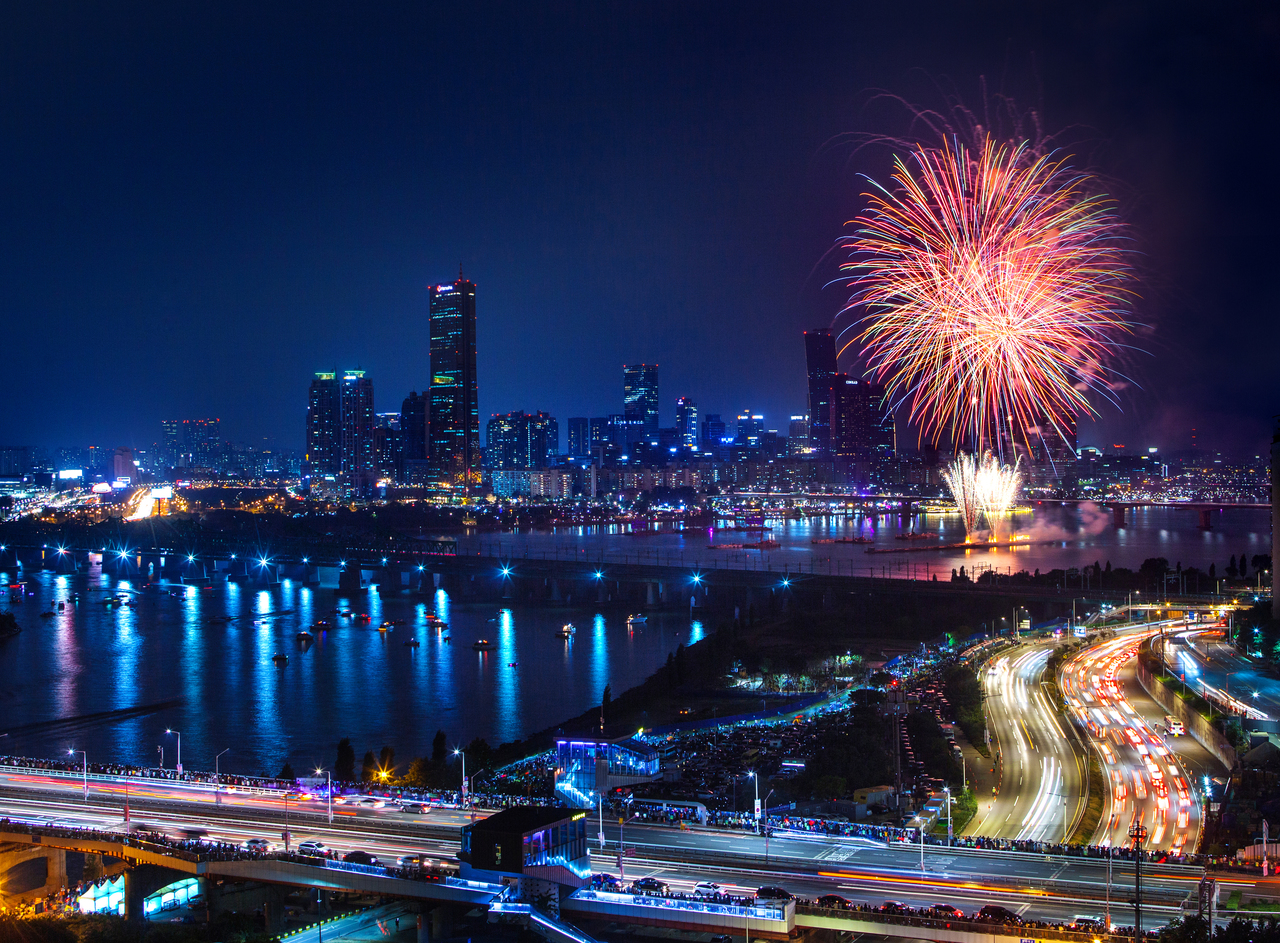
The show is the easy part. Seoul's international fireworks festival returns to Yeouido on Saturday, September 5, 2026, and watching from the riverbank costs nothing.
What takes planning is everything around it. Hundreds of thousands of people converge on a few square kilometers of riverside park, the main road beside the venue closes for nine hours, and the subway station closest to the fireworks is the one most likely to be restricted.
This guide is for deciding, before you leave your hotel, whether to go and where to stand.
When it is, and what happens on each day
Seoul lists the 2026 festival across two days, but they are not two equivalent fireworks nights.
| Date | What it is | Official window |
|---|---|---|
| Friday, September 4 | Eve program (전야제), Nodeul Island | 13:00 to 20:20 |
| Saturday, September 5 | Main fireworks show (불꽃쇼) | 13:00 to 22:00 |
The city describes the festival as running at Yeouido and Ichon Hangang Parks, with an eve program, citizen participation programs, the invited international fireworks show, and food truck zones.
If you can only go one night, go on September 5. That is the day the invited teams fire.
Three teams are officially announced for 2026: Korea, the United Kingdom, and the United States.
Is it free?
Yes, for the ordinary way of watching it. Yeouido Hangang Park is a public riverside park, and there is no ticket, no gate, and no fee to stand or sit along the river and watch.
There is one paid exception. Nodeul Island operates as a separate reserved area called the Orange Play Zone, sold in advance through the official ticketing channel. Seoul's festival listing shows four zones for 2026 priced between roughly ₩110,000 and ₩220,000 per seat, plus a booking fee.
Those are 2026 prices from the official listing at the time of writing, and ticketed events sell out, so treat the number as an indication of what tier of spend is involved rather than a guarantee of availability.
Paying is not the normal way to attend. It buys a defined space and a calmer environment, not a better festival.
Where to watch
There is no single best spot, only trade-offs between how close you are, how crowded it gets, and how long it takes to leave.
| Area | What the view is like | Crowd | Best for | Main drawback |
|---|---|---|---|---|
| Yeouido Hangang Park | Closest, directly under the display, full festival atmosphere | Heaviest | Wanting the event itself, not just the fireworks | Hardest arrival and by far the hardest exit |
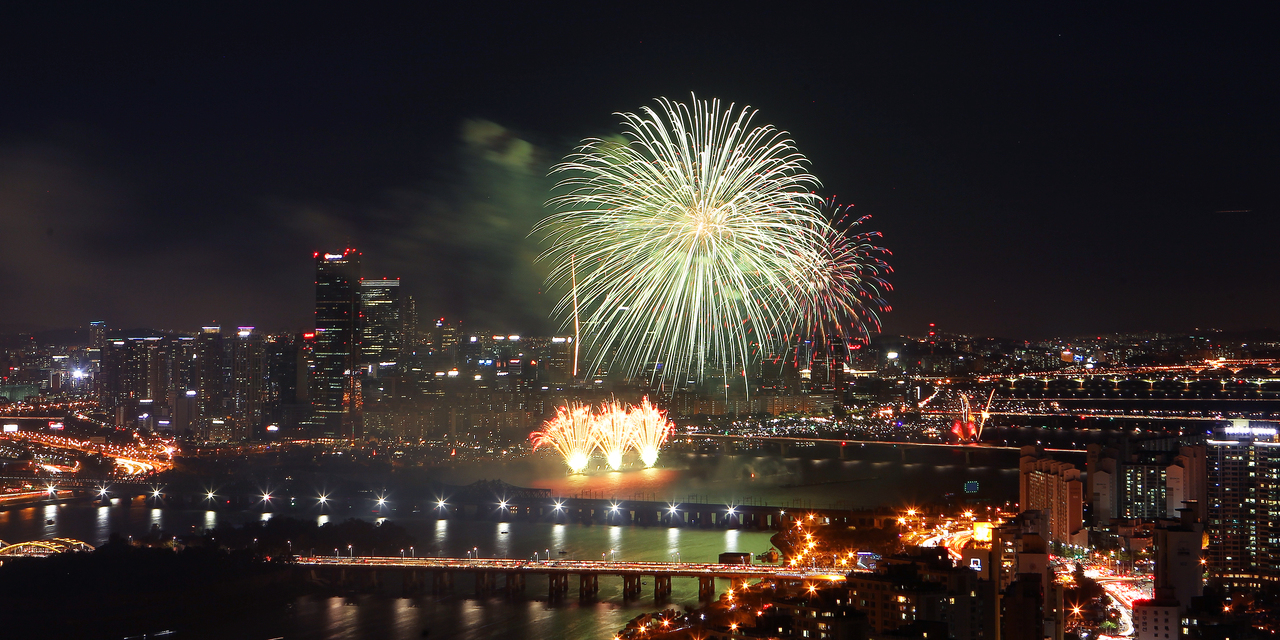
| Ichon Hangang Park (north bank) | Across the water, fireworks with the Yeouido skyline behind | Heavy but generally less extreme | A wider photograph and a slightly calmer evening | Farther from the program; still a crowded walk out |
| Nodeul Island Orange Play Zone | Reserved seating on the island | Controlled | Not standing for hours; travelers who dislike dense crowds | Paid, sells out, fixed location |
Yeouido Hangang Park
This is the main venue and where the atmosphere is. Food trucks, the event plaza program, and the largest share of the crowd are all here.
It is also where every constraint is worst. Prime riverside positions are taken well before evening, the surrounding footpaths fill steadily through the afternoon, and the walk back to a station afterward is slow.
Ichon Hangang Park and the north bank
Seoul lists Ichon Hangang Park as part of the festival, and the view from the north side is genuinely different rather than merely worse. From across the water you see the fireworks with the Yeouido towers and the 63 Building behind them, which is the composition most photographs of this festival use.
You give up proximity and the program. You do not escape crowds, only the densest ones.
What not to do
Do not go looking for a "secret viewpoint" from an old blog post. Bridges, rail structures, apartment grounds, construction sites, and private rooftops are not public viewing areas, access changes year to year, and staff close things off on the day.
What time to arrive
Official sources do not publish a recommended arrival time, so treat what follows as our recommendation rather than event instruction.
For a first visit where you want a place in the main Yeouido area, plan to be there in the afternoon. Programs at the event plaza start in the early afternoon, and that is roughly when the good positions begin to go.
Arriving an hour before the fireworks is the plan that fails. By then the approaches are congested, the riverside is full, and you spend the show standing wherever the crowd stopped moving.
If you are watching from the north bank you can usually arrive later than that, but not much later.
Getting there by subway
Take the subway. This is not a night to drive, and it is not a night to expect a taxi to drop you at the river.
The stations that matter:
| Station | Line | Relationship to the venue |
|---|---|---|
| Yeouinaru | 5 | Closest to Yeouido Hangang Park |
| Yeouido | 5, 9 | A longer walk in, and usually the more workable option |
| Saetgang | 9 | South-west side of Yeouido, quieter approach |
| National Assembly | 9 | North-west side of Yeouido |
| Mapo | 5 | North bank, one stop before the river crossing |
| Ichon | 1, 4 | For the north-bank viewing area |
The closest station is often the least useful one. In past editions Seoul has run extra trains on lines 5 and 9 and has had trains pass Yeouinaru without stopping when the station became too congested, with passengers redirected to Yeouido or Mapo.
Walking in from a station one stop farther out is frequently faster than queuing to exit the nearest one. It is almost always faster on the way home.
Road closures
This part is confirmed for 2026. Yeouidong-ro, between the south end of Mapo Bridge and the area in front of the 63 Building, closes from 15:00 to 24:00 on September 5, and reopens once pedestrians have cleared the roadway.
What that means in practice:
- A taxi cannot drop you beside the festival zone during those hours.
- Bus routes that normally use that road are diverted.
- Driving to Yeouido and parking near the river is not a workable plan.
- Getting a taxi immediately after the show, from inside the closure, is unlikely.
If you are staying somewhere that would normally be a short taxi ride from Yeouido, plan the return as a subway trip anyway.
Getting home is harder than getting there
This is the part most people underestimate.
The festival's own guidance is that leaving about 30 minutes after the show ends makes the trip home more manageable. That is official advice, and it is worth taking seriously, though nobody can promise a specific wait clears the congestion.
Ways to handle the exit:
- Wait it out. Stay where you are for half an hour or so and let the first wave go. Bring something to sit on and this is easy.
- Walk to a farther station. Yeouido, Saetgang, National Assembly, or Mapo instead of Yeouinaru. The extra walking is usually less than the extra queuing.
- Leave a little early. You miss the finale, which is the part most worth staying for, so this is a poor trade unless you have a train to catch.
- Do not count on a taxi. Roads are closed or saturated, and app-based cars cannot reach you any faster than a driver could.
Whatever you choose, agree it with your group before the show starts, while you can still hear each other.
What the crowd is actually like
Large, dense, and slow moving, but organized. Seoul runs this event every year with substantial staffing.
Practical behavior in that environment:
- Follow barriers and staff instructions, including detours that feel like they are going the wrong way.
- Do not stop suddenly in a moving pedestrian flow, and step aside before checking your phone.
- Do not sit down in a walking corridor.
- Agree a meeting point and a meeting time before you separate, because finding someone by phone in a crowd this size is unreliable.
- Give children a card with your phone number and the name of your hotel.
- Do not climb barriers, fences, or structures for a better view.
Mobile networks can slow down where tens of thousands of phones are concentrated. Screenshot your route, your hotel address, and your meeting point before you walk in, so a slow connection is an inconvenience rather than a problem.
Food, toilets, and what to bring
Seoul lists food truck zones as part of the 2026 program, and Yeouido has convenience stores and restaurants away from the river.
The festival specifically advises bringing your own food, because delivery into the crowded festival area is difficult. Ordering to a picnic spot on the grass is not a plan that works on this night.
Use the toilets before the show rather than during it. Lines grow through the evening, and the worst time to need one is in the middle of the display.
A short list worth carrying:
- A picnic mat or something to sit on, which also makes waiting out the exit rush easy
- Water and snacks bought before you arrive
- A portable battery
- A light layer, since the riverside cools after dark in early September
- A small trash bag, since bins fill up
- Comfortable shoes, because you will walk more than you expect
Photography
Phone photography of fireworks is mostly about holding still and not filming the whole show. Brace your arms, lower the exposure if your camera app lets you, take a handful of shots early, then put the phone down and watch.
If you are bringing a tripod, check the organizer's current rules first, and do not set it up in a walking route. A tripod in a pedestrian flow is both a hazard and the fastest way to be asked to move.
The wide compositions with the skyline behind the fireworks generally come from the north bank rather than from inside the main park.
Three ways to do it
First visit, want the full event. Arrive in Yeouido during the afternoon, walk the food truck area, find toilets and a position while there is still room, sit through the early program, watch the show, then wait about half an hour before walking to Yeouido or Saetgang station.
You mainly want the photograph. Head for the north bank at Ichon instead, arrive early enough to choose a position rather than take what is left, check tripod rules in advance, and stand somewhere you are not blocking the path.
Crowds are not your thing. Either take a Nodeul Island seat if tickets remain, or watch from farther along the north bank and accept a smaller display in exchange for being able to walk away afterward. Skipping the main park is a reasonable choice, not a lesser experience.
Who should skip it
Be honest with yourself about the format. This is several hours of waiting, standing or sitting on the ground, dense crowds, long toilet lines, and a slow exit, in exchange for a display of a bit over an hour.
If that sounds unpleasant, it will be. Travelers with limited mobility, small children who tire early, or a low tolerance for crowds will get more out of an ordinary evening by the Han River on a different night.
Common mistakes
- Arriving shortly before the fireworks. The good positions went hours earlier.
- Assuming Yeouinaru works like a normal day. It is the station most likely to be restricted.
- Taking a taxi to the riverside. The road beside the venue is closed from 15:00.
- Planning the arrival and not the departure. The exit is the harder half.
- Depending on food delivery. The festival itself advises against it.
- Standing or sitting in pedestrian corridors. Staff will move you, and you are in the way.
- Trusting a "hidden viewpoint" from an old post. Access changes and much of it was never public.
- Assuming last year's traffic measures apply. They are re-announced each year.
- Leaving the moment the last shell fades. So does everyone else.
Frequently asked questions
When is the Seoul International Fireworks Festival 2026? The main fireworks are on Saturday, September 5, 2026. Seoul also lists an eve program on Friday, September 4.
Where is it held? Yeouido Hangang Park in Seoul is the main venue. The city lists the festival as running at Yeouido and Ichon Hangang Parks.
Is it free? Watching from the public riverside parks is free. Nodeul Island operates as a separate ticketed area.
What time do the fireworks start? Not published on the official site as of 29 August 2026. The city's window for September 5 is 13:00 to 22:00, with afternoon programs first. Check on the day.
Which countries are taking part in 2026? Korea, the United Kingdom, and the United States.
Which subway station should I use? Yeouinaru is closest but the most likely to be congested or restricted. Yeouido, Saetgang, or National Assembly are usually more workable, and Ichon serves the north bank.
How early should I arrive? For a spot in the main Yeouido area on a first visit, plan on the afternoon. This is our recommendation, not official guidance.
Can I watch from the other side of the river? Yes. Ichon Hangang Park on the north bank is part of the festival, and the view there puts the Yeouido skyline behind the fireworks.
Can I take a taxi to Yeouido? Not to the riverside during the event. Yeouidong-ro between Mapo Bridge and the 63 Building is closed from 15:00 to 24:00 on September 5.
Can I bring my own food? Yes, and the festival recommends it, since delivery into the crowd is difficult.
What happens if it rains? No 2026 cancellation or postponement policy was published as of 29 August 2026. Check the forecast on the morning of the festival and the official site for any announcement.
Sources
- Hanwha Seoul International Fireworks Festival (official)Official tourism site
- Seoul Metropolitan Government (english.seoul.go.kr)Official government site
- Seoul Metropolitan Government festival information (festival.seoul.go.kr)Official government site
Information is compiled from official sources. Details such as prices, hours, and schedules can change. Confirm time-sensitive facts before you travel.
Last verified on
Related guides

Getting Around Korea: Transportation Guide
Korea is easy to get around with public transport. Take the Airport Railroad into the city, ride subways and buses with a T-money card, cover long distances on the KTX high-speed train, and use taxis for short hops. A Korean map app ties it together.
Han River Picnic Guide: Parks, Food, and Etiquette
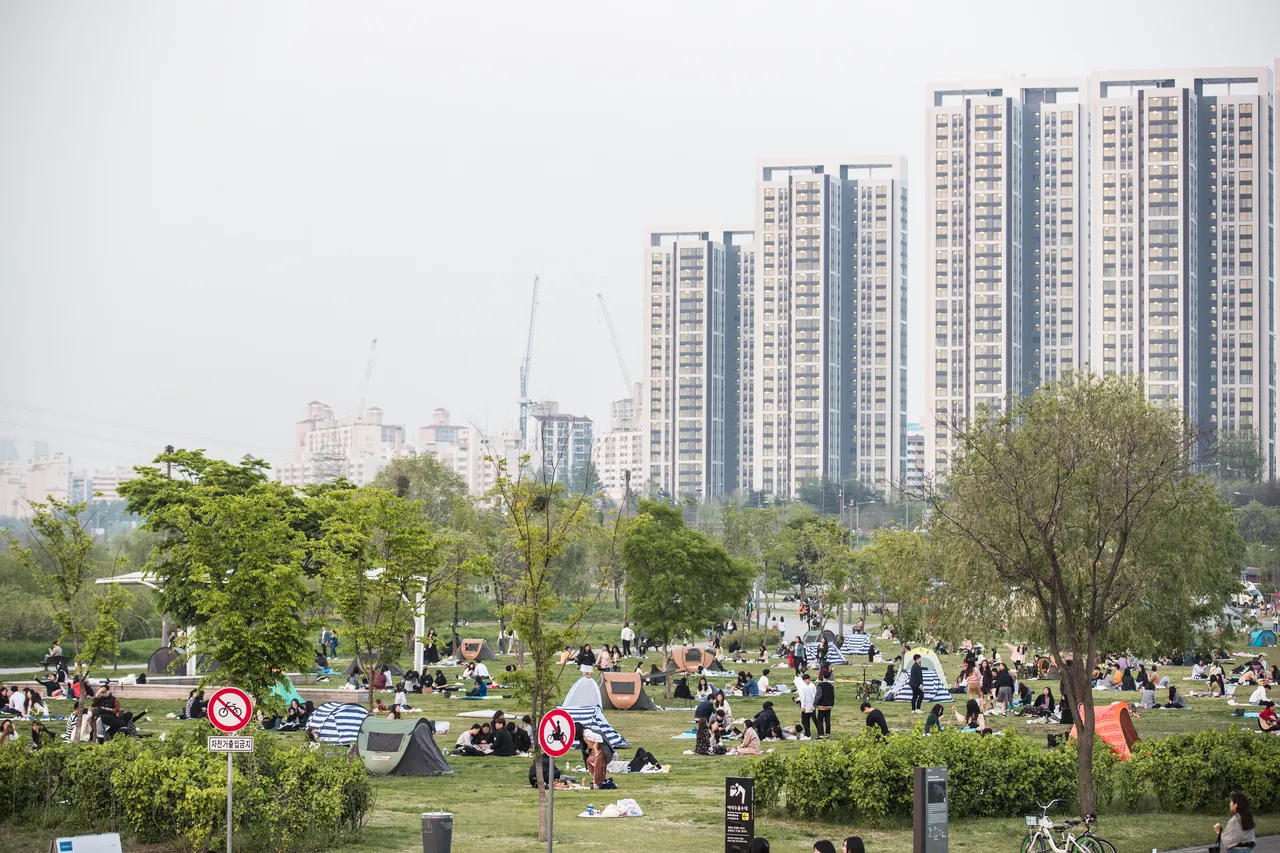
A Han River (한강) picnic is one of Seoul's easiest, cheapest evenings out: pick a riverside park like Yeouido, Ttukseom, or Banpo, bring a mat and food, and relax by the water. Convenience stores and takeout are the simplest way to eat, and a few drinking and litter rules keep it pleasant for everyone.