
A Korean escape room can be one of the most memorable indoor hours of a Seoul trip, if you pick a theme your group can actually read and play.
The Korean word is 방탈출 (bang-tal-chul), literally “escaping a room.” The practical question for most visitors is whether you can book, brief, and solve that specific game without fluent Korean.
Foreign-visitor spending on escape rooms rose sharply in the first half of 2025, according to Korea Tourism Organization figures reported by major Korean media. English-ready themes are still a minority.
Quick answer
| Question | Short answer |
|---|---|
| Can I play without Korean? | Sometimes. It depends on the theme, not only the brand. |
| English website = English room? | No. Confirm language for the exact theme you book. |
| Do I need a Korean phone number? | Sometimes. Requirements follow the booking system. |
| Are foreign cards accepted? | Venue-dependent. Website payment and in-store terminals can differ. |
| How scary is 공포도? | Operator-specific scare rating. Not a shared national scale. |
| How long is a game? | Commonly about 60 minutes of play. Some themes run longer. |
| Arrive early? | Yes. Many venues ask for 10 to 20 minutes before start. Check yours. |
Quick facts
- Where
- Nationwide; densest in Seoul nightlife and university areas
- Time needed
- About 1.5 to 2.5 hours for one game, including briefing
- Cost
- Often roughly ₩20,000 to 30,000 per person; confirm with venue
- Best for
- Groups who can confirm English support for a specific theme
What “방탈출” and “테마” mean
방탈출 is the everyday Korean name for an escape-room game. Staff and booking pages also talk about a 테마 (tema).
In this industry, “theme” usually means the specific game or scenario, not just the décor style. If someone asks “Which theme did you book?”, they mean which room title you reserved.
Useful terms you may see on a Korean booking page:
| Korean | Rough meaning |
|---|---|
| 예약 | Reservation |
| 힌트 | Hint |
| 난이도 | Difficulty |
| 공포도 | Horror / scare level |
| 인원 | Number of players |
| 플레이 시간 | Play time |
| 예약금 | Reservation deposit |
| 현장결제 | Pay on site |
| 노쇼 | No-show |
You do not need all of these memorized. Screenshot the theme page before you book.
How Korean escape rooms may differ
Many popular Korean rooms put weight on narrative, set detail, electronics, and timed story beats. Some premium or immersive rooms add stronger audio/video, physical interaction, or staff/actor elements.
That is a trend description, not a rule for every venue. Some rooms are still lock-and-search puzzles with lighter story. Operator quality and style vary widely.
Compared with many overseas rooms, the practical differences for travelers are often:
- denser clusters in one neighborhood (especially Hongdae)
- Korean-first booking and confirmation flows
- clear 난이도 and 공포도 labels on theme pages (scales differ by brand)
- strict start-time schedules because the next group is already booked
Language barrier: the deciding factor
An escape room can be technically playable without Korean. Language dependence still varies enormously by theme.
Low language dependence
Visual puzzles, locks, spatial observation, mechanical interaction, and numeric codes. You can progress mostly by seeing and doing.
Medium language dependence
Some written clues, short Korean instructions, or narrative text that helps but is not constant. A translation app or Korean friend can bridge gaps.
High language dependence
Korean wordplay, diary or document reading, audio dialogue, historical context, or Hangul-based puzzles. Without Korean, these themes often feel much harder than their posted difficulty suggests.
Do not assume an English website means the room itself is in English. An English marketing page can sit next to a fully Korean game. Confirm for the theme, not only the brand. One operator may run both language-light and language-heavy rooms.
If you are unsure, ask the venue in writing:
“Can this specific theme be played without Korean? Are puzzles, story text, and hints available in English?”
How to find English-friendly rooms
Stronger evidence than “foreigners have visited” includes:
- official English support stated for that theme
- multilingual clue or hint systems described by the operator
- an English booking or FAQ path that names English play
- minimal-language design that the venue confirms for non-Korean speakers
Weaker signals (not enough on their own): Instagram posts in English, one TripAdvisor review, or staff who know a few greetings.
Search tips that work in practice:
- Search “escape room” plus the neighborhood on Maps, then open the operator site.
- Look for an English toggle, FAQ, or theme note that mentions English.
- If the site is Korean-only, use a translate tool and still email or message the store about that theme.
- Prefer private bookings when available. Shared “mixed” sessions with strangers are less common for tourist-friendly English rooms, but ask if you are unsure.
Booking reality for foreigners
Booking channels vary by venue: operator website, Naver Booking, phone, KakaoTalk, Instagram DM, or a Korean reservation platform. Do not assume every venue uses Naver Booking.
Common friction points:
| Friction | What often happens |
|---|---|
| Korean-only booking UI | Translate the page, or book through an English path if the venue has one. |
| Korean mobile verification | Some systems expect a Korean number. Others accept email or overseas numbers. |
| Short booking window | Some venues only open slots about 1 to 2 weeks ahead. |
| Confirmation messages | If you do not confirm the way they ask, the slot can be cancelled. |
| Deposit vs pay later | Models differ: full prepay, deposit, or pay on arrival. |
Traveler reports and operator notices both point to the same risk: unconfirmed bookings get cancelled, especially when the venue cannot reach you on a Korean phone flow. Read the confirmation instructions in your booking email carefully.
Korean phone number
Requirements depend on the booking system. Some venues accept an overseas number, email confirmation, or Instagram contact. Others expect a Korean mobile number for SMS confirmation.
There is no nationwide rule. If a booking form rejects your number, contact the venue by email or social channel and ask how foreigners confirm. Do not invent a Korean number.
Payment: website vs door
Possible models:
- full prepayment online
- reservation deposit, remainder on site
- full payment on arrival
Foreign cards are not accepted everywhere. A website may use a Korean payment gateway that fails overseas cards, while the in-store terminal accepts the same card, or the reverse. Cash acceptance also varies.
Practical approach:
- Attempt the booking method the venue prefers.
- If online payment fails, ask whether you can reserve and pay on site.
- Bring a backup card and some cash. Confirm with staff if you rely on one method only.
Planning ranges you will often see in Seoul are roughly ₩20,000 to ₩30,000 per person for a standard game, with group size and weekday/weekend affecting the total. Treat every figure as something to re-check on the operator page.
Arrive early, late arrival, and no-shows
Escape-room bookings usually run on a fixed schedule. Venues need time for briefing, lockers, payment, rules, restroom, and story introduction.
Representative operator notices differ:
- some ask for at least 10 minutes early (for example, Earth Planet Escape Room’s public notice)
- others ask for about 15 minutes early (for example, Codehunter’s English site)
- some traveler guides for Breakout Hongdae mention about 20 minutes early
Do not collapse these into one universal number. Check the venue’s required arrival time.
Late arrival can reduce play time or cancel the reservation, depending on that venue’s policy. No-show and late-cancel penalties also differ. Deepthinker’s English site, for example, states a ₩26,000 penalty for cancellations or time changes within 2 hours of start. That is one operator’s rule, not a national standard.
Game length and player count
Play time is often about 60 minutes, but 65 to 80 minute themes and longer premium experiences also exist. Door-to-door time is longer because of briefing and debrief.
Official minimum and maximum players are theme-specific. For many traveler groups, 2 to 4 players balance puzzle participation and communication. That is editorial guidance, not an operator rule. Some themes are built for larger groups or enforce a minimum. Book within the published range for that theme.
Solo play is uncommon. If you are traveling alone, you usually need friends, a meetup group, or a venue that explicitly allows joining.
Difficulty (난이도)
난이도 means difficulty. Ratings are not standardized across brands. A “4/5” at one company is not mathematically equal to “4/5” elsewhere.
For foreigners, language dependence can make a moderate Korean room feel much harder than the stars suggest. When language support is weak, choose a lower posted difficulty than you would at home.
Horror level (공포도)
공포도 means horror or scare level. Many booking pages show difficulty, horror level, and recommended players together.
A horror theme can involve darkness, loud sound, sudden lighting, disturbing imagery, jump scares, actor interaction, separation from teammates, or confined spaces. 공포도 3 is not a shared national unit such as “three jump scares.” It is that operator’s own scale.
Content warning: stronger horror themes can be intense. Skip them if you have claustrophobia, heart conditions, pregnancy concerns, or low tolerance for scare media. Venues often restrict drinking guests, young children, or people who cannot move safely in the set. Ask before booking if you have any of those concerns.
If a theme lists high 공포도 and you still want to play, ask staff what kind of scare it uses (atmosphere vs jump scare vs actor contact) without requesting spoilers.
Actors, physical activity, phones, and what to wear
Actors are not standard in every Korean escape room. Some immersive or horror themes include staff or actor interaction. Others never do. Verify theme by theme, and respect spoiler policies if staff will not detail the experience.
Physical demands also vary. Some themes ask for crawling, crouching, climbing short elements, or moving quickly. Deepthinker’s English theme page for Ongyi’s Dream, for example, recommends comfortable clothes and notes that pants can be provided. If mobility is limited, ask the venue before you book.
Phones are usually not allowed inside the game. Expect lockers for phones, bags, and coats. Photography inside themes is commonly banned to protect puzzles and other guests.
Wear:
- comfortable clothes you can bend and kneel in
- socks (some venues require shoe removal or provide indoor shoes)
- closed shoes you can walk in if outdoor shoes stay on
- avoid heels, long skirts, or outfits you cannot move in
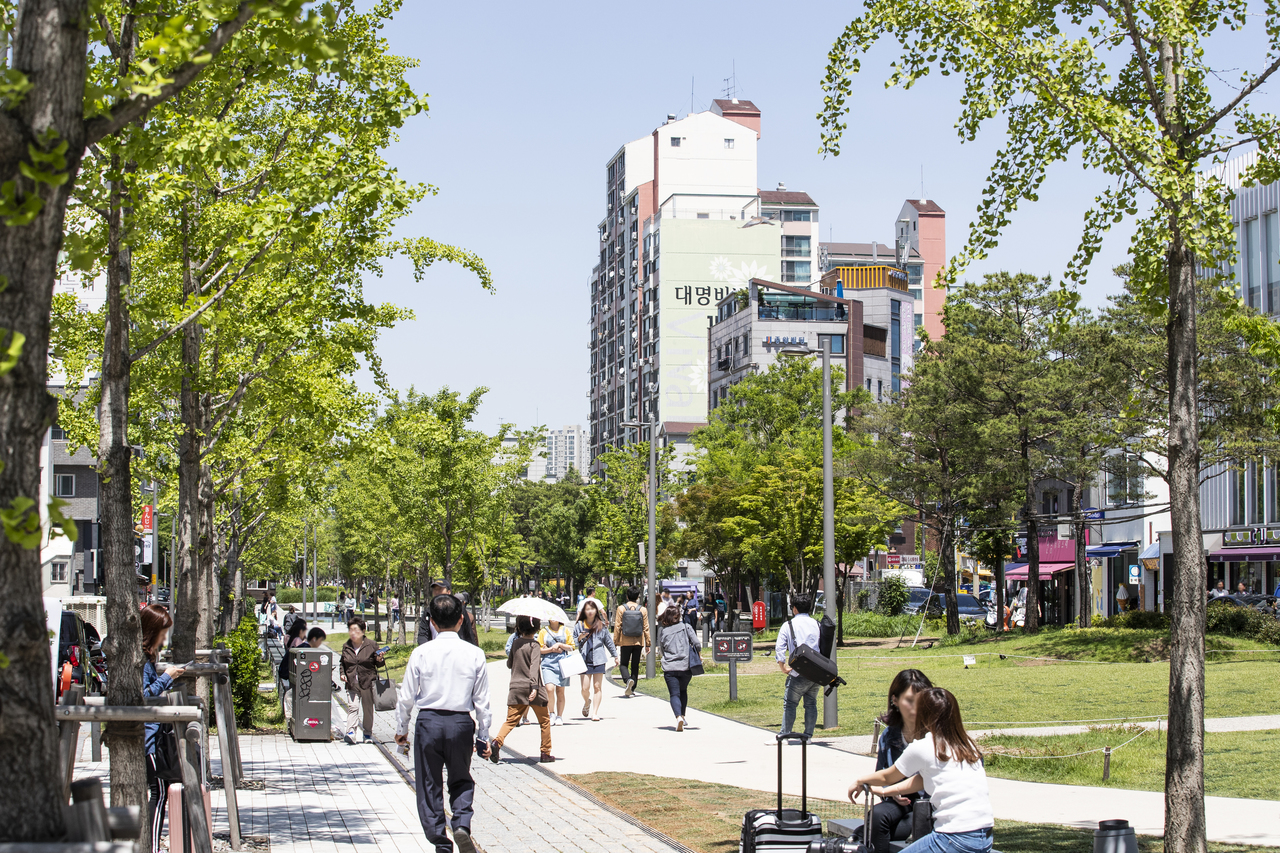
Seoul neighborhoods with dense options
Escape rooms exist nationwide, but foreign travelers usually start in Seoul.
| Area | Why it matters for travelers |
|---|---|
| Hongdae / Hapjeong / Yeonnam | Highest density of English-mentioned venues near nightlife and AREX/Line 2. |
| Gangnam / Yeoksam | Fewer English-forward rooms than Hongdae, but some operators market English play near Gangnam Station. |
| Sinchon | Student entertainment area with some English-available products sold via travel platforms. Confirm theme language with the venue. |
| Konkuk Univ. / Seongsu / others | Growing leisure clusters. English support is less consistent; ask theme by theme. |
Hongdae is the easiest first search area for most visitors because several operators publicly advertise English play there. That still does not mean every Hongdae theme is English-ready.
Named venues and themes (examples, not a ranking)
These are examples with stronger English-support signals, not a top list and not an ad for one chain. Theme status can change. Re-confirm before booking.
| Theme / venue | Area | Language note (verified basis) | Horror / notes | Booking path |
|---|---|---|---|---|
| Real Escape Challenge: Gumiho, Lost, Sherlock, Arbeit, Cupid | Hongdae | Official site presents bilingual theme text and states English puzzles/hints for tourists | Arbeit lists horror 5.0/5.0; Sherlock lists 0.0/5.0 on the official site | Operator book-now page |
| Deepthinker: Ongyi’s Dream | Hongdae | Official English site and English theme page; comfortable clothes recommended | Story-driven; not marketed as high horror on the English page | English reservation page |
| Breakout Escape Game themes (e.g. Hocus rooms) | Hongdae | Official English site; Naver Booking labels some themes as English escape rooms | Difficulty shown per theme (operator scale) | English site / Naver Booking |
| Codehunter: Elephant Rescue Team, Scout Mission, Prince & Princess | Gangnam | Official English site claims full English puzzles, instructions, and staff support | Beginner-friendly comic/adventure marketing; arrive early per site | Contact / English site process |
Themes verified with official English support signals above: the REC set, Deepthinker’s Ongyi’s Dream, Breakout Hongdae themes labeled English on booking surfaces, and Codehunter’s English-listed themes.
If a theme is not on an official English list, treat it as ask first, even at the same brand.
Is an escape room worth adding to a Korea itinerary?
Yes, if your group likes puzzles and you can confirm language support for one theme. It fits rainy days, evening plans, and travelers who want a local leisure activity beyond museums and cafés.
Skip or postpone it if nobody can confirm English support, your only free slot conflicts with a tight train, or anyone in the group is uncomfortable with confined spaces or horror.
A noraebang or PC bang is usually easier without Korean if the escape-room language question stays unresolved.
Common mistakes
- Booking a theme because the brand looks English-friendly, without checking that theme.
- Ignoring confirmation messages and losing the slot.
- Arriving at the printed start time instead of the required early arrival window.
- Choosing high 공포도 without asking what kind of scare it uses.
- Wearing clothes or shoes that block crawling or shoe-change rules.
- Assuming overseas cards will work on every Korean booking gateway.
- Spoiling puzzles for other guests by posting set photos.
FAQ
Can I play if I do not speak Korean?
Sometimes. Choose themes with official English support or clearly low language dependence, and confirm with the venue.
Do staff give hints in English?
At English-supported themes, hint systems are often swapped to English or delivered by English-speaking staff. At Korean-only themes, expect Korean hints. Ask before you start.
Do I need a Korean phone number?
Not always. It depends on that venue’s booking and confirmation system.
Can foreigners pay with an overseas card?
Often yes in person, sometimes no online. There is no universal rule. Bring a backup method.
What happens if I am late?
Policies vary. Play time may be shortened, or the reservation may be cancelled. Check the venue’s notice.
Are there actors?
Only in some themes. Do not assume actors are part of every Korean room.
Can I bring my phone inside?
Usually no. Expect lockers and a no-photo rule inside the set.
How many people should play?
Follow the theme’s min/max. Many traveler groups do well at 2 to 4 when the theme allows it.
Is 공포도 the same everywhere?
No. It is operator-specific.
Is this worth it for a short Seoul trip?
If you can book an English-supported theme and your group likes puzzles, yes. Otherwise choose an easier indoor activity.
Useful booking phrases
Two short lines for confirming language and arrival.
When messaging or asking staff about a specific theme.
이 테마, 영어 가능해요?
i te-ma, yeong-eo ga-neung-hae-yo?
Can this theme be played in English?
Korean audio isn't available on this device or browser. Use the romanization above to say it.
After you book, to confirm the arrival window.
몇 분 전에 오면 돼요?
myeot bun jeo-ne o-myeon dwae-yo?
How many minutes early should we arrive?
Korean audio isn't available on this device or browser. Use the romanization above to say it.
Bottom line
Korea’s escape-room culture is large and often impressive, but the foreigner’s first filter is language and booking logistics. Confirm the theme, not just the brand. Arrive early, bring a payment backup, and choose horror only after you understand that venue’s 공포도 scale.
If those pieces line up, a Korean 방탈출 can be a strong indoor highlight. If they do not, pick another plan for that evening and try again when you find a verified English-ready theme.
Sources
- Visit KoreaOfficial tourism site
- Real Escape Challenge (Hongdae), official siteofficial_service_site
- Deepthinker Escape Room, official English siteofficial_service_site
- Breakout Escape Game Hongdae, official English siteofficial_service_site
- Codehunter Escape (Gangnam), official English siteofficial_service_site
- Earth Planet Escape Room (지구별방탈출), official siteofficial_service_site
- Korea JoongAng Daily, Escape rooms and palaces are a breakout hit among tourists (KTO spending figures, 2 October 2025)news_report
- The Korea Times, Korea looks to escape rooms to drive next wave of tourism (KTO K-Quest Tour, 12 September 2025)news_report
Information is compiled from official sources. Details such as prices, hours, and schedules can change. Confirm time-sensitive facts before you travel.
Last verified on
Related guides

Noraebang Guide: How to Sing at a Korean Karaoke Room
A noraebang (노래방) is a private Korean karaoke room you rent by the hour, or, at a coin noraebang, pay per song. You get your own room, a song book, and a remote; English and other foreign songs are often included, though selection varies. It is a low-stress night out whether or not you drink.

Korean PC Bang Guide for Foreigners: Gaming, Food, Prices, Etiquette, and What to Know
A PC bang (PC방) is Korea's gaming café: rows of high-spec computers rented by the hour, screen-side food ordering, and one of the country's most everyday social spaces. It's more than an "internet cafe": part gaming lounge, part diner, part quick culture experience. Expect to pay from around ₩1,000 an hour, order food from your own screen, and run into one real limit: most Korean-server online games need Korean identity verification, so plan to play on your own Steam or global-platform account instead. Prices, hours, and menus vary by location, so treat this as a starting point and check the specific venue.