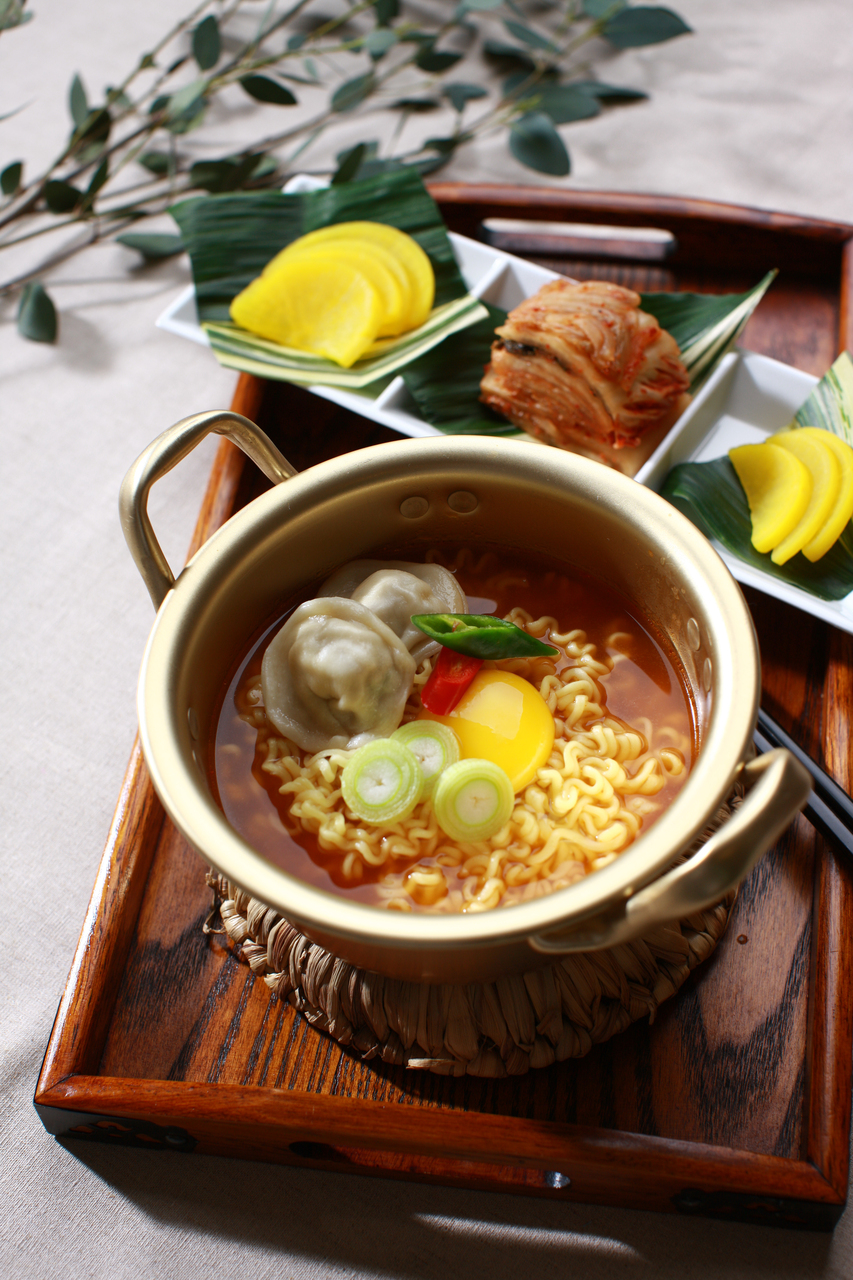
This page owns packaged supermarket ramyeon: heat levels, bag vs cup, cooking notes, and named spicy picks.
Non-spicy biscuits belong in the snacks guide. Shopping chains and mixed packing belong in the supermarket guide.
Korean instant ramyeon is practical to buy at a supermarket and easy to pack, but it is not a gentle snack category.
The two products that international visitors ask about most as of this writing are both spicy.
Bag format packs far more efficiently than cup format. A single bag takes less space and can survive a suitcase without the structural limitations of a foam cup.
Check each product's allergy label before buying. Neither of the products below is mild, and neither is automatically halal-certified in standard domestic Korean packaging.
Spice reference
Korean ramyeon products vary widely in heat. A rough scale for context:
| Level | What it means | Example |
|---|---|---|
| Mild | Little to no heat, broadly accessible | Chapaguri (짜파구리) if made without added spice |
| Medium | Noticeable heat, manageable for most adults | Classic Shin Ramyun |
| Hot | Real chili heat, uncomfortable for low-tolerance eaters | Shin Ramyun Toomba |
| Very hot | Builds quickly, lingers | Samyang Carbonara Buldak |
| Extremely hot | Challenging even for spice-tolerant eaters | Original Buldak (불닭볶음면) |
Both products featured below fall in the Hot to Very Hot range. Neither is suitable as a mild or family-friendly option without adjusting the sauce quantity.
Samyang Carbonara Buldak Ramen (까르보불닭볶음면)
- Korean name: 삼양식품 까르보불닭볶음면
- Common English name: Samyang Carbonara Buldak Ramen / Buldak Carbonara
- Brand: Samyang Foods
- Category: Instant stir-fried noodles (bag and big-cup formats)
- What it is: The Buldak "fire noodle" line combined with a creamy carbonara-style sauce. The name refers to an Italian pasta preparation, but the heat level is genuine Buldak. Don't expect mild pasta flavors.
- Flavor: Spicy and creamy together. The dairy-forward sauce softens the sharpness somewhat versus a straight chili powder noodle, but this remains a hot product.
- Spice level: High. The cream does not neutralize the chili heat to a mild level.
- Format: Available in bag (approx. 130 to 140g) and a larger big-cup version. The bag packs better in a suitcase. The big-cup takes up more space and is more fragile.
- Cooking style: Stir-fried, not soup. You cook the noodles in water, drain most of it, then add the sauce packet. Read the instructions before cooking; the stir-fry method differs from a standard soup ramen.
- Best for: Spicy food fans, travelers already familiar with the Buldak line, a recognized gift for someone who likes real heat.
- Watch out for: "Carbonara" sounds gentle because of the Italian pasta association. The heat level is genuinely high. Using less of the sauce packet reduces the burn if needed.
- Allergy notes: Contains wheat and dairy at minimum. Check the current package for the full allergen list, including soy and any other ingredients in the specific variant. Standard domestic packaging is generally not halal-certified. See the dietary section below.
- Availability: Widely stocked as of this writing. Confirm current bag vs. big-cup availability in store.
Nongshim Shin Ramyun Toomba (신라면 툼바)
- Korean name: 농심 신라면 툼바
- Common English name: Shin Ramyun Toomba
- Brand: Nongshim
- Category: Instant noodles, spin-off of classic Shin Ramyun
- What it is: Launched in late 2024, Shin Ramyun Toomba adds cream and cheese to the familiar Shin Ramyun spice base. The result sits between a stir-fried noodle and a creamy soup noodle.
- Flavor: Rich, cheesy, and spicy. Meaningfully different from regular soup-style Shin Ramyun; don't expect the same eating experience.
- Spice level: Spicy. The cream softens the heat compared to a straight chili-based noodle, but this is still a hot product for anyone with low spice tolerance.
- Format: Bag (approx. 137g) and a big-bowl cup format. The bag packs more efficiently than the cup. The bag version uses a liquid sauce rather than a powder packet; read the contents before cooking.
- Best for: Fans of cheese and cream flavors who still want real spice, travelers curious about a recent product that took off quickly.
- Watch out for: The liquid sauce in the bag version is easy to miss if you're used to only powder packets. Confirm current bag and cup availability in store, since it's a relatively new product.
- Allergy notes: Contains wheat and dairy (cream, cheese) at minimum. Check the current package for the complete allergen list.
- Availability: Sold in both formats as of this writing. Confirm in store.

Bag vs. cup: packing trade-offs
| Factor | Bag format | Cup format |
|---|---|---|
| Suitcase space | Compact; stacks easily | Bulky; takes up real volume |
| Fragility | Noodles can break inside the bag, but the bag itself is fine | The foam or paper cup can crush or warp under pressure |
| Weight | Light | Slightly heavier due to the cup structure |
| Hotel-room cooking | Needs a pot, kettle, or microwave-safe bowl | Self-contained; just add hot water |
| Carry-on rules | No liquid component in bag format | No liquid component in cup format |
| Cost | Usually cheaper per serving | Usually more expensive per serving |
For travel packing, the bag format is practical. For eating in a hotel room without a kitchen, the cup format is more convenient.
How to cook stir-fried ramyeon (bag format)
Most of the products above are stir-fried style, not soup style. The cooking process differs from a standard soup ramyeon:
- Bring water to a boil in a pot or kettle.
- Cook the noodles for the time specified on the package (usually 4 to 5 minutes), stirring occasionally.
- Drain most of the cooking water, leaving only a small amount (typically 2 to 3 tablespoons, or as specified on the package).
- Add the sauce packet(s) and stir to coat the noodles evenly.
- Serve immediately.
If the heat is too intense, use less of the sauce packet. Adding a fried egg or a small amount of extra butter can also soften the sharpness.
Dietary and allergy notes
Korean ramyeon sold in domestic Korean supermarkets is not automatically halal, vegan, or vegetarian. A few specifics:
- Halal: Standard domestic Buldak packaging is generally not halal-certified. Some export versions in other markets carry halal certification, but that is a different product line from what's on a Korean domestic shelf. Check for an explicit certification mark rather than assuming.
- Pork: Both products may include pork-derived ingredients in seasoning. Check the current label.
- Dairy: Both featured products contain dairy (cream, cheese, or milk-derived ingredients). Not suitable for dairy avoidance.
- Wheat and soy: Both contain wheat. Soy is also commonly present; check the label.
- Vegan and vegetarian: Neither product is automatically vegan or vegetarian. Dairy and possibly other animal-derived seasonings are present.
- Gluten: Both products contain wheat, making them unsuitable for a gluten-free diet.
Always check the current package label. Formulations can change, and the same product can have different certification status across production batches.
FAQ
Is Carbonara Buldak Ramen very spicy?
Yes. The creamy carbonara sauce does not neutralize the Buldak heat to a mild level. Expect real chili heat under the dairy-forward sauce. Using less of the sauce packet reduces the intensity.
What is Shin Ramyun Toomba?
A cream-and-cheese spin-off of Nongshim's classic Shin Ramyun, launched in late 2024. It's noticeably richer and creamier than the original Shin Ramyun, with the same spicy base.
Should I buy the bag or the cup format?
For packing in a suitcase, the bag format is more efficient. For eating in a hotel room without kitchen equipment, the cup is more convenient.
Can I bring Korean ramyeon through customs?
Often yes, but rules vary by destination country, especially around meat-derived seasoning packets and agricultural restrictions. Check your destination's official customs guidance rather than assuming.
Are there any mild Korean ramyeon options at the supermarket?
The two products above are both spicy. For milder options, look at non-spicy noodle lines like Nongshim's Chapagetti (짜파게티, a jajangmyeon style) or Ottogi's Jin Ramen Mild (진라면 순한맛). Confirm what's currently in stock in the specific store you're in.
Are Buldak noodles halal?
Standard domestic Korean packaging is generally not halal-certified. Some export versions in other markets are certified separately. Don't assume a package bought in a Korean supermarket is halal unless it carries an explicit certification mark.
The bottom line
Korean ramyeon at the supermarket is practical to buy and easy to pack. The bag format saves the most space. Both products that attract the most international attention are genuinely spicy; neither is a safe bet for low-tolerance eaters without using less sauce. Check the current package for allergens and certification before buying.
Sources
- Visit KoreaOfficial tourism site
- Korea Tourism Organization (VisitKorea Practical Info)Official tourism site
Information is compiled from official sources. Details such as prices, hours, and schedules can change. Confirm time-sensitive facts before you travel.
Last verified on
Related guides
Korean Supermarket Guide: Where to Shop and How to Choose Categories
This page owns the supermarket shopping mechanics: which chains to use, how food-souvenir categories differ, what packs well, and dietary caution. Named snack SKUs live in the snacks guide, ramyeon depth in the ramyeon guide, and coffee, seaweed, and sauces in the grocery souvenirs guide. Use this hub to choose a path, not as a second full product list.
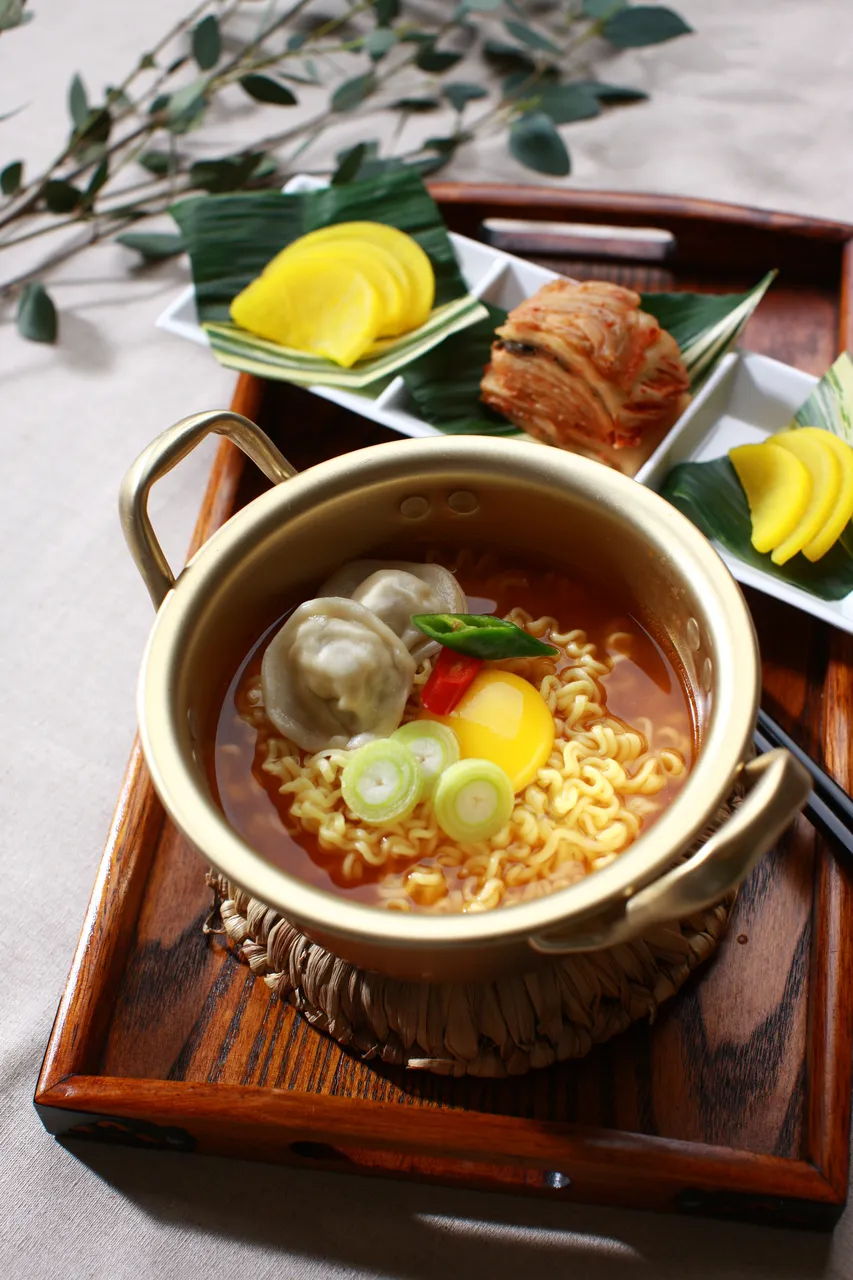
Korean Convenience Store Ramen Combos: Buldak, Shin Ramyun, Jjapaguri, Cheese, and Rice
Korean convenience stores are a cheap, fun way to eat instant ramen exactly how you like it: soup or stir-fried, mild or fiery, plain or loaded with cheese, egg, kimbap, and more. Ten beginner-friendly combos follow, with how to put them together and the things that actually matter: how spicy is too spicy, what to check if you avoid pork or eat halal or vegetarian, and common allergens. Brands are named only as examples; what's on the shelf changes by store and day, so read the package.