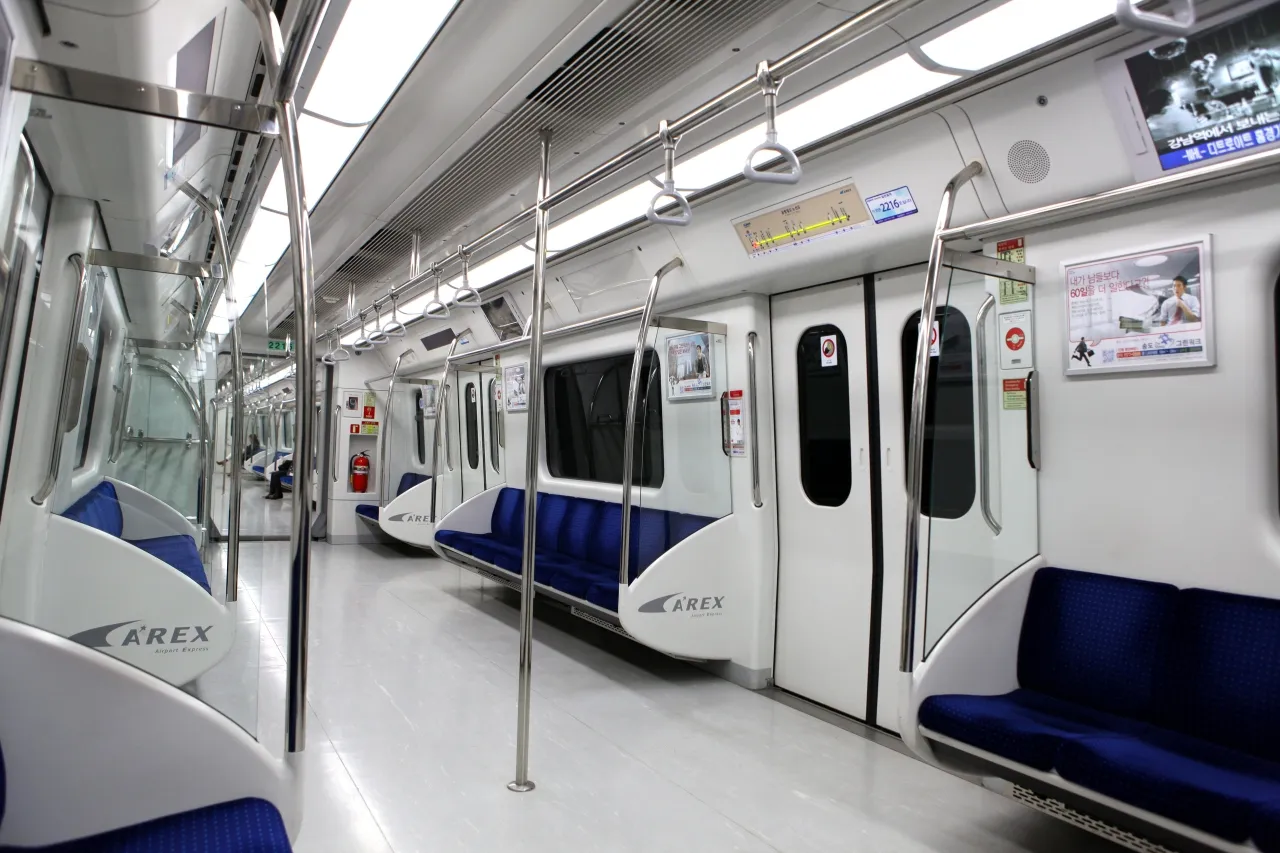
Korea's public transport is among the easier things about traveling here: clean, cheap, punctual, and covered by a single tap-in card. What catches visitors out isn't the system.
It's the social side. Trains and buses are noticeably quiet, seats have specific rules, and buses in particular have a boarding routine that, if you get it wrong, can actually overcharge you.
This is a transit-only deep dive. If you want the big-picture "how to behave in Korea" overview, that's the 10 things not to do guide, which covers transit as one item among ten.
Here we go further: buses in detail, a subway-vs-bus comparison, rush hour, luggage, and accessibility. For fares, transfers, and card top-ups, we'll keep it light and send you to the T-money card guide.
And the usual reassurance: nobody expects visitors to be perfect, and an honest effort is always appreciated.
Quick answer
| Situation | What to do |
|---|---|
| Getting on a bus | Board at the front, tap your card |
| Getting off a bus | Exit at the back, and always tap out |
| Priority / pink seats | Leave them free unless you need them |
| Talking on the phone | Keep it short and quiet, or text |
| A big backpack | Carry it on your front or set it down |
| Escalators | Hold the handrail, don't run, follow signs |
| Getting off a crowded train | Let people out first, then board |
| Not sure what to do | Follow station signs and staff |
Why transit etiquette matters here
Korea isn't a "strict" place where you'll be scolded, the point isn't fear. It's that everyone shares these spaces at high volume, so small considerate habits keep things flowing and comfortable.
The simplest approach for any visitor: watch what people around you do, and follow the flow. You'll pick it up within a ride or two.
Subway etiquette

The subway is where the "quiet, considerate" culture is most visible.
- Let people off before you get on. Stand to the side of the doors, let the car empty, then board, pushing on early creates a human traffic jam.
- Move inside and don't cluster by the doors; take your backpack off in a crowd (see below).
- Keep it quiet. Short, low phone calls are fine; loud calls, speakerphone, and video or music without headphones are what bother people.
- Follow the platform floor markings and let the safety doors do their job.
- Go easy on food. A sealed drink is fine; messy or strong-smelling food in a packed car isn't the moment (check any posted rules).
Bulky backpacks
Seoul's own tourism office specifically flags big backpacks as a common complaint: in a crowded car, a pack on your back swings into people you can't see. Carry it on your front or set it down by your feet. It's a small move that's very noticeable to locals.
Escalators
You'll see many people standing on one side so others can pass, and that's a real habit, but don't treat it as an ironclad rule. Official safety guidance actually asks riders to hold the handrail and not walk or run (standing on both sides is encouraged for safety), and campaigns change over time. So: hold on, don't run, and follow the posted signs rather than any fixed left/right formula.
Priority seats and pink seats
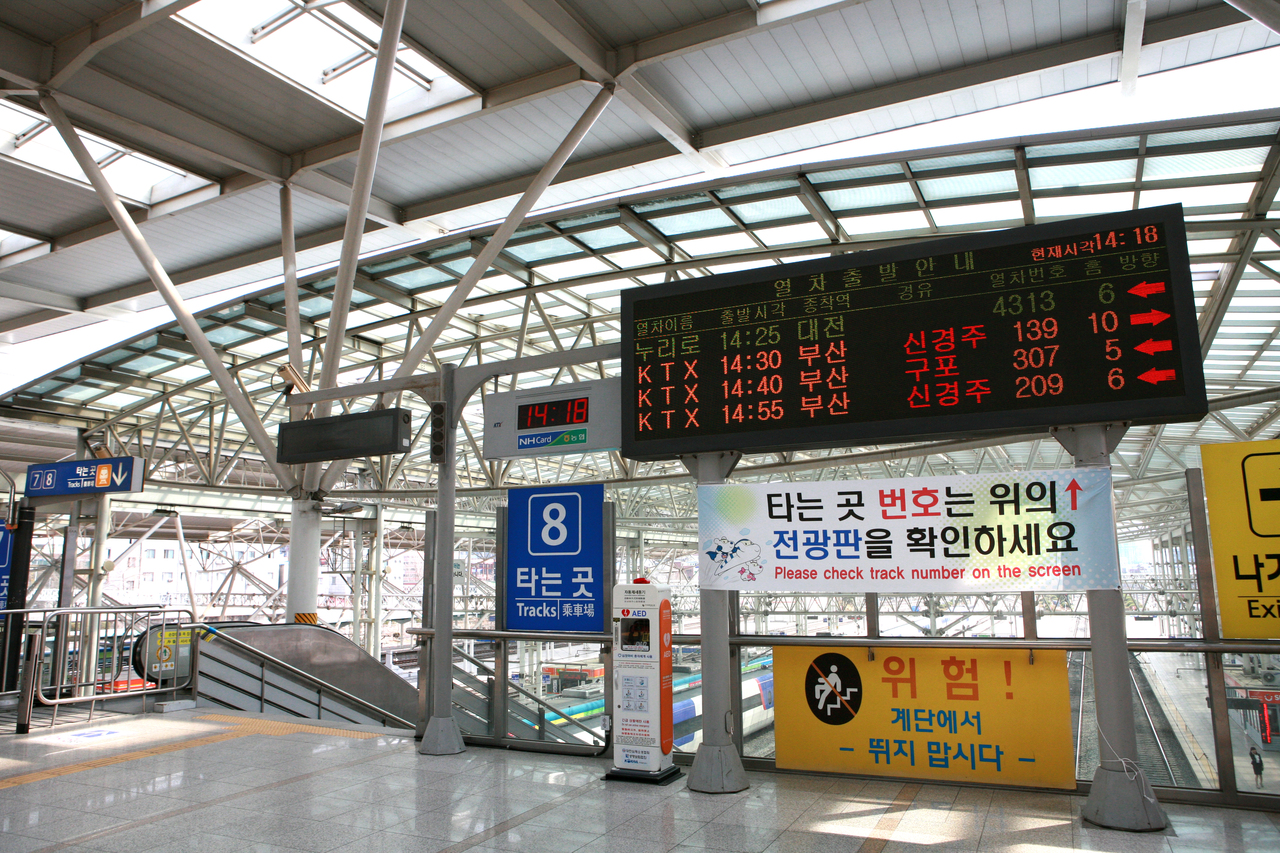
This is the seat question every visitor asks, so here's the careful version. About 30% of subway seats are priority (transport-vulnerable) seats (for elderly, disabled, pregnant, or injured passengers, and passengers with infants) usually in sets of four at each end of the car. The pink seats are for pregnant passengers, and officially that includes early pregnancy that doesn't visibly show: which is exactly why you shouldn't judge by appearance.
The traveler-friendly rule of thumb:
| Seat | What to do |
|---|---|
| Priority seats (ends of the car) | Avoid them if you don't need them; sit elsewhere |
| Pink (pregnancy) seats | Leave free: someone may need them who doesn't look like it |
| You sat down and someone needs it | Quietly get up: no drama needed |
| It's totally empty and off-peak | Some locals do sit; the safe, respectful default is still to leave them |
Two things to note: this is about courtesy and social norms, not a fine: you won't be penalized for sitting, but leaving these seats free is the considerate move. And don't decide who "qualifies" by looking: disability and early pregnancy are often invisible.
Bus etiquette
Buses have a specific routine that's worth learning, because getting it wrong can cost you money.
- Board at the front door, exit at the back door. Seoul's transport authority designs buses this way, and following it keeps everyone moving. (You'll see people do the opposite, but the front-on/back-off flow is the norm to follow.)
- Tap your card when you board, and, crucially, tap out at the back door when you leave. This isn't just etiquette: if you don't tag out, the system can't tell where you got off, so it may charge you the maximum fare for that route (often several times the real fare) and you'll lose your transfer discount on the next leg. Always tap the reader by the rear door.
- Press the stop bell in advance, and if it's safe, move toward the back door before your stop.
- Hold on. Korean city buses can start and stop sharply: grab a rail or strap, especially if you're standing.
- Mind your luggage. Keep big cases out of the aisle and doorway; in rush hour, the subway, a taxi, or an airport bus may be easier with heavy bags.
- Ask the driver only when stopped. If you need to check something, do it while the bus is stationary, not moving.
Bus seats are a little less formal than the subway's priority-seat culture. But the expectation to give up your seat for someone who needs it (elderly, pregnant, disabled, or traveling with a small child) still holds. If a seat is marked as priority and you don't need it, leave it.
For the money side of all this (fares, the transfer window, and how tag-out affects transfers) see the T-money card guide. We're keeping fares out of this etiquette guide on purpose.
The "quiet rule": what it really means
The quiet reputation is real, but it's often misunderstood. It's a strong social norm, not a law, and it does not mean total silence.
| Do | Better than |
|---|---|
| Talk quietly with your companion | Loud group conversation |
| Take a short call in a low voice | A long call on speakerphone |
| Use headphones | Playing video or music out loud |
| Let kids be kids, gently guided | Letting a group get rowdy |
It matters most on the last trains, night buses, and during commutes. If your child gets loud, a gentle nudge is all anyone expects, no one is keeping score.
Luggage and airport travelers
| Situation | Tip |
|---|---|
| Big suitcase on the subway | Stand near the end of the car, out of the aisle; avoid rush hour |
| Airport transfer | The AREX airport railway and airport buses handle luggage better than a packed subway |
| Rush hour with bags | Consider a taxi or airport bus instead of squeezing on |
| Using elevators | Fine with heavy luggage: but yield to wheelchair and stroller users first |
Photos, video, and livestreaming
Transit is a shared, everyday space, so keep cameras low-key. Don't photograph or film strangers, children, sleeping passengers, staff, or any dispute up close, don't block the aisle to get a shot, and don't livestream in a way that puts other people's faces on camera. This is about privacy and courtesy: shoot the scene, not the people, and ask if you're unsure.
Elevators, accessibility, and strollers
Elevators are priority for wheelchair users, strollers, older passengers, and people with heavy luggage: use the stairs or escalator if you're able. Keep the tactile paving (the yellow guide strips) and designated wheelchair spaces clear. And if you'd like to help someone, ask first: don't grab a stroller or wheelchair without permission.
Food, drinks, smells, and trash
A sealed coffee or a quiet snack is normal, but skip messy, greasy, or strong-smelling food in a crowded car (and check any route-specific rules). Watch for spills, take your trash with you since bins can be scarce, eat street food before you board or after you get off, and don't drink alcohol on board.
Rush hour etiquette
| Rush-hour move | Why |
|---|---|
| Take your backpack off | Space is tight; packs hit people |
| Move all the way in | Lets the doors close and others board |
| Don't block the doors | People need to flow on and off fast |
| Have your card ready | Keeps the gates and boarding moving |
| Consider off-peak with luggage | Far less stressful with big bags |
What to do if you make a mistake
Everyone gets something wrong at first, and it's genuinely fine. If you board the wrong door, forget to tap, or sit in the wrong seat, don't panic: move calmly, a quick "죄송합니다" (sorry) covers it, and there's no need to argue or over-apologize. Look at what people around you are doing and follow along.
Most travelers are learning as they go, and locals know it.
Useful Korean phrases
Handy phrases for transit
A couple of polite lines that smooth over the small moments.
죄송합니다
joe-song-ham-ni-da
Korean audio isn't available on this device or browser. Use the romanization above to say it.
잠시만요, 내릴게요
jam-si-man-yo, nae-ril-ge-yo
Korean audio isn't available on this device or browser. Use the romanization above to say it.
A few more that help: 실례합니다 (sil-lye-ham-ni-da, "excuse me"), 감사합니다 (gam-sa-ham-ni-da, "thank you"), and 여기 세워 주세요 (yeo-gi se-wo ju-se-yo, "please stop here," useful in a taxi).
Etiquette by traveler type
| You are | Keep in mind |
|---|---|
| A solo traveler | Easy: just follow the quiet, let-people-off norms |
| A family with kids | Gently manage noise; use elevators with strollers |
| A group of friends | Keep group volume down, don't block aisles |
| Traveling with big luggage | Off-peak, AREX, or airport buses are your friends |
| A Muslim or observant traveler | The same etiquette applies to everyone; just note that strong-smelling food and on-board drinking are best avoided |
Subway vs bus: a quick comparison
The two systems have different unwritten rules. This is the part first-timers most often mix up:
| Subway | Bus | |
|---|---|---|
| Boarding | Any door; let people off first | Front door on, back door off |
| Tapping | Tap in (and follow gate rules) | Tap in at the front, tap out at the back: always |
| If you don't tap out | (See the T-money guide) | Risk the max fare + lost transfer discount |
| Seats | Formal priority/pink-seat culture | Less formal, but still give up your seat if needed |
| Noise | Very quiet | Quiet, but a bit more relaxed |
| Luggage | Tight in rush hour | Aisles are narrow; keep bags clear |
| Motion | Smooth | Can brake sharply: hold on |
Common mistakes
- Boarding a bus at the back or getting on before people get off the train.
- Forgetting to tap out on the bus: the costly one.
- Sitting in priority or pink seats when you don't need them.
- Judging who "qualifies" for a seat by appearance.
- Wearing a big backpack in a packed car.
- Loud calls, speakerphone, or out-loud video.
- Blocking doors, tactile paving, or elevators meant for those who need them.
- Treating the escalator "stand on one side" habit as a hard rule instead of following safety signs.
FAQ
Yes, always tap the reader at the back door when you get off. If you don't, you can be charged the maximum fare for the route and lose your transfer discount.
Board at the front, exit at the back.
No. It's about courtesy, not a fine. But it's considerate to leave priority and pink seats free, and to get up quietly if someone needs one.
Pregnant passengers, including those in early pregnancy that doesn't show, so they're best left free.
No. It's quiet, not silent. Talk in a low voice, use headphones, and keep calls short.
Many people stand on one side, but official safety advice is to hold the handrail and not walk or run. Follow the posted signs.
Near the end of a subway car, out of the aisle; on buses, keep it clear of the door and aisle. Off-peak is much easier.
A sealed drink or small snack is usually fine; avoid messy or smelly food in a crowded car and check posted rules.
That's covered in the T-money card guide, this guide sticks to etiquette.
Avoid photographing strangers, children, or staff up close, and don't block the aisle or livestream people's faces.
It mainly slows everyone down. Step aside, keep doors clear, and you're fine.
Signs and announcements include English, staff are helpful, and a simple "sorry" covers most slip-ups.
Yes, and while bus seating is less formal than the subway, you should still give up a seat for someone who needs it.
On buses, tap out every time. Everywhere, be quiet, considerate, and follow the signs.
The bottom line
Korea's transit runs on a handful of quiet, considerate habits: let people off first, keep it quiet, leave the priority and pink seats free, mind your backpack, and, on buses, board at the front, exit at the back, and always tap out. Leave the fare math to the T-money card guide, follow the station signs when in doubt, and don't stress about being perfect. A little awareness is all it takes to ride like a local.
Frequently asked questions
Can I eat or drink on the Seoul subway?
Eating is technically allowed but widely frowned upon, especially on the newer lines. Drinks in sealed containers are generally fine. Strong-smelling food draws disapproving looks.
On intercity trains (KTX, SRT), eating at your seat is accepted.
Is it OK to talk on the phone on the Seoul subway?
Keep phone conversations short and speak quietly. Watching video or playing audio without headphones is considered rude. If a call will be long, step off at a station.
Mobile data is excellent throughout the system.
What are priority seats and who should use them?
Priority seats (marked pink) are reserved for elderly passengers, pregnant women, people with disabilities, and those with young children. Do not sit in them if those passengers are nearby or boarding. Offering your ordinary seat to an elderly passenger is also appreciated.
Do I need to tap out on the Seoul subway?
Yes. Tap out when you exit or you will be charged the maximum fare for that journey. The card reader is at the exit gate.
On buses, tapping out is also required and gives you a transfer discount within a 30-minute window.
What should I do if I accidentally take a reserved KTX seat?
Move to your assigned seat immediately when asked by the seat holder or train staff. KTX seats are numbered and assigned at booking; check your ticket for the car number and seat before boarding.
Sources
- Seoul Metropolitan Government (english.seoul.go.kr)Official government site
- Visit Seoul, Seoul Tourism Organization (official)Official tourism site
- Visit KoreaOfficial tourism site
Information is compiled from official sources. Details such as prices, hours, and schedules can change. Confirm time-sensitive facts before you travel.
Last verified on
Related guides

T-money Card Guide for Visitors to Korea
A T-money card is a rechargeable transit card that works on subways, buses, and most taxis nationwide. Buy one at any convenience store or station machine for about ₩3,000 to 5,000, load cash onto it, and tap in and out. It is the simplest way for visitors to get around Korea.
10 Things Not to Do in Korea: Travel Etiquette, Manners, and Mistakes Foreign Visitors Should Avoid
Korea is an easy, welcoming place to travel, and you don't need to be perfect, but a handful of small habits will make your trip smoother and show respect for the people around you. Ten common missteps follow, from loud phone calls on the subway to smoking outside designated areas, each with what to do instead. It separates actual legal rules (like smoking fines) from cultural manners (which are flexible), and keeps the tone practical rather than preachy. Rules and fines vary by district and change, so check local signs and official info as you go.